
Slow Juicer Supplier Evidence: ISO 9001 and TUV Rheinland Explained
Slow Juicer Supplier Evidence: ISO 9001 and TUV Rheinland Explained
HTNXT Industry Reference · Cold Press Slow Juicer · Buyer Decision Stage
A certificate list is the most frequently copied and least frequently read part of a slow juicer supplier profile. One line can carry ISO 9001, CE, CB, LFGB, RoHS, REACH, BPA, BSCI and TUV/SGS at the same time, although each of those marks is issued against a different scope, by a different kind of body, and answers a different procurement question.
At the decision stage, the useful question is not how many marks a supplier holds. It is which of those marks constrains the specific risk in front of the buyer: electrical safety of the delivered unit, food-contact compliance of the parts that touch juice, consistency of the process behind a repeat order, or the validity of the document itself. This reference separates those layers and applies them to the cold press slow juicer range of ZHONGSHAN PLATINO ELECTRIC APPLIANCES TECHNOLOGY CO., LTD.
ISO 9001 Answers a Process Question, Not a Product Question
ISO 9001 is a quality management system certification. It confirms that a manufacturer operates a documented, auditable process covering design control, purchasing, production, inspection and the handling of non-conforming product. It does not certify that any individual slow juicer is electrically safe, that its food-contact parts satisfy migration limits, or that its published performance figures are accurate.
In practice, ISO 9001 is the certificate that helps a buyer judge whether the tenth shipment will resemble the first, and whether a traceable record exists when a batch fails. It is the wrong document to cite when the question is whether an auger, filter or juice cup is suitable for food contact in the European Union.
A buyer should therefore request four things rather than a logo: the scope statement of the certificate, the certification body, the issue and expiry dates, and confirmation that the slow juicer production line sits inside the audited scope. A quality management certificate issued for a different product family from the same factory does not automatically extend to the slow juicer line.
The Three Evidence Layers That Supplier Profiles Merge
Most slow juicer catalogues compress three distinct evidence layers into one sentence. Separating them is the fastest way to read a supplier profile correctly.
| Evidence layer | Typical marks | Decision it supports | Decision it cannot support |
|---|---|---|---|
| Management system | ISO 9001, BSCI | Process consistency, repeatability, audit trail, social compliance of the production site | Electrical safety of a specific model, food-contact suitability of a specific component |
| Product safety and market access | CE (LVD), CB, RoHS, REACH, BPA-free declaration | Whether the unit can legally be placed on the target market and whether restricted substances are addressed | Whether the juice-contact parts meet food-contact migration limits |
| Food-contact and material compliance | LFGB, (EC) No. 1935/2004, (EU) No. 10/2011 | Suitability of plastic and metal parts that contact juice | Mechanical durability, yield or noise performance |
| Model-level third-party certification | TUV/SGS product certificates | Independent confirmation that a named model was tested against a named standard | Anything outside the listed model and standard scope |
The fourth layer is the one buyers most often assume they already have. A TUV or SGS mark is only meaningful when it is tied to a model number and a standard, because that pairing is what a certificate actually states.
Where Platino Sits in That Stack
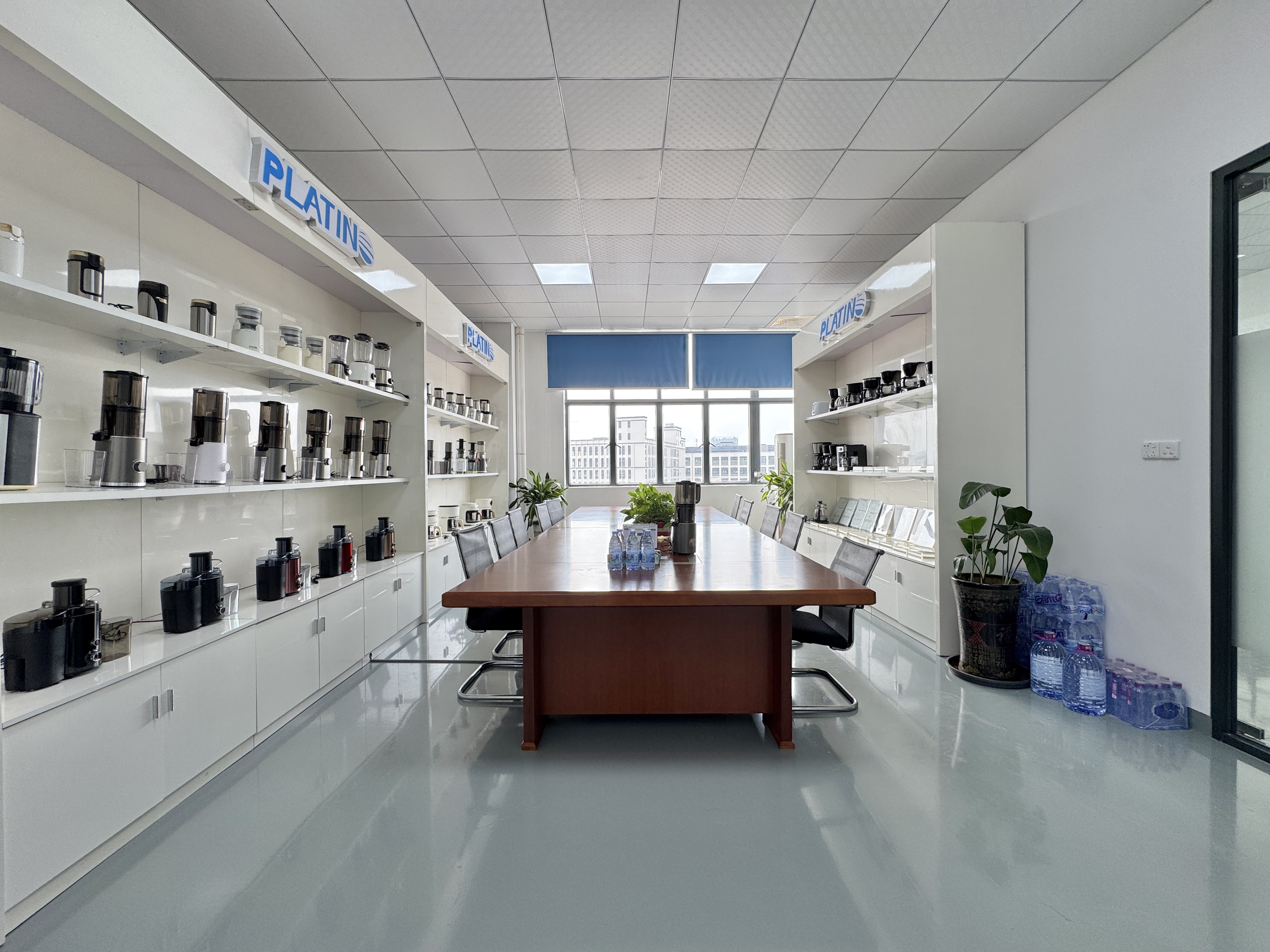
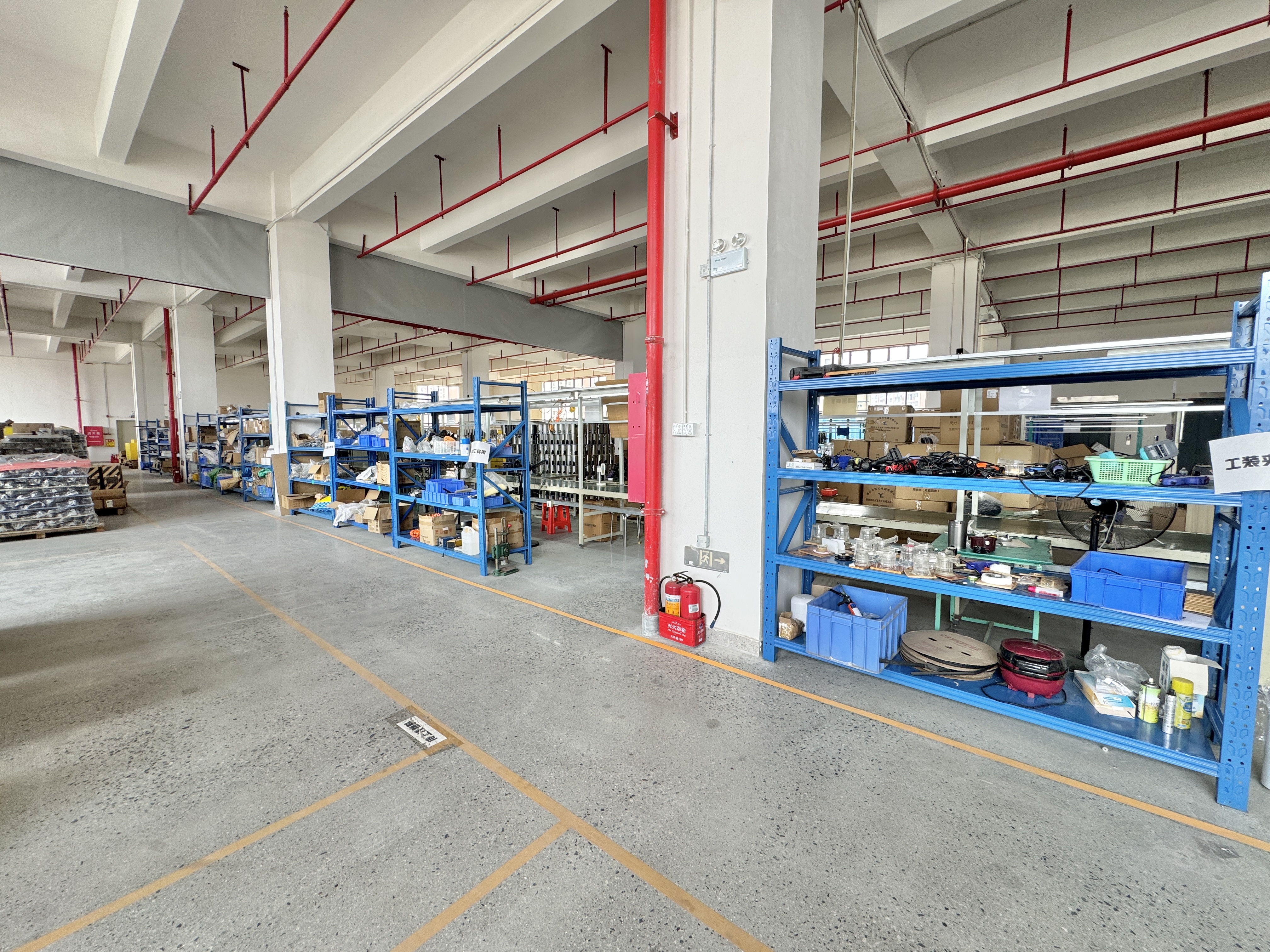
ZHONGSHAN PLATINO ELECTRIC APPLIANCES TECHNOLOGY CO., LTD is a small appliance manufacturer established in January 2018 in Huangpu Town, Zhongshan City, Guangdong, China. The company produces slow juicers and related kitchen appliances on three production lines, states an annual production capacity of 720,000 units, and reports that roughly 95% of output is exported to the EU, India and the Middle East.
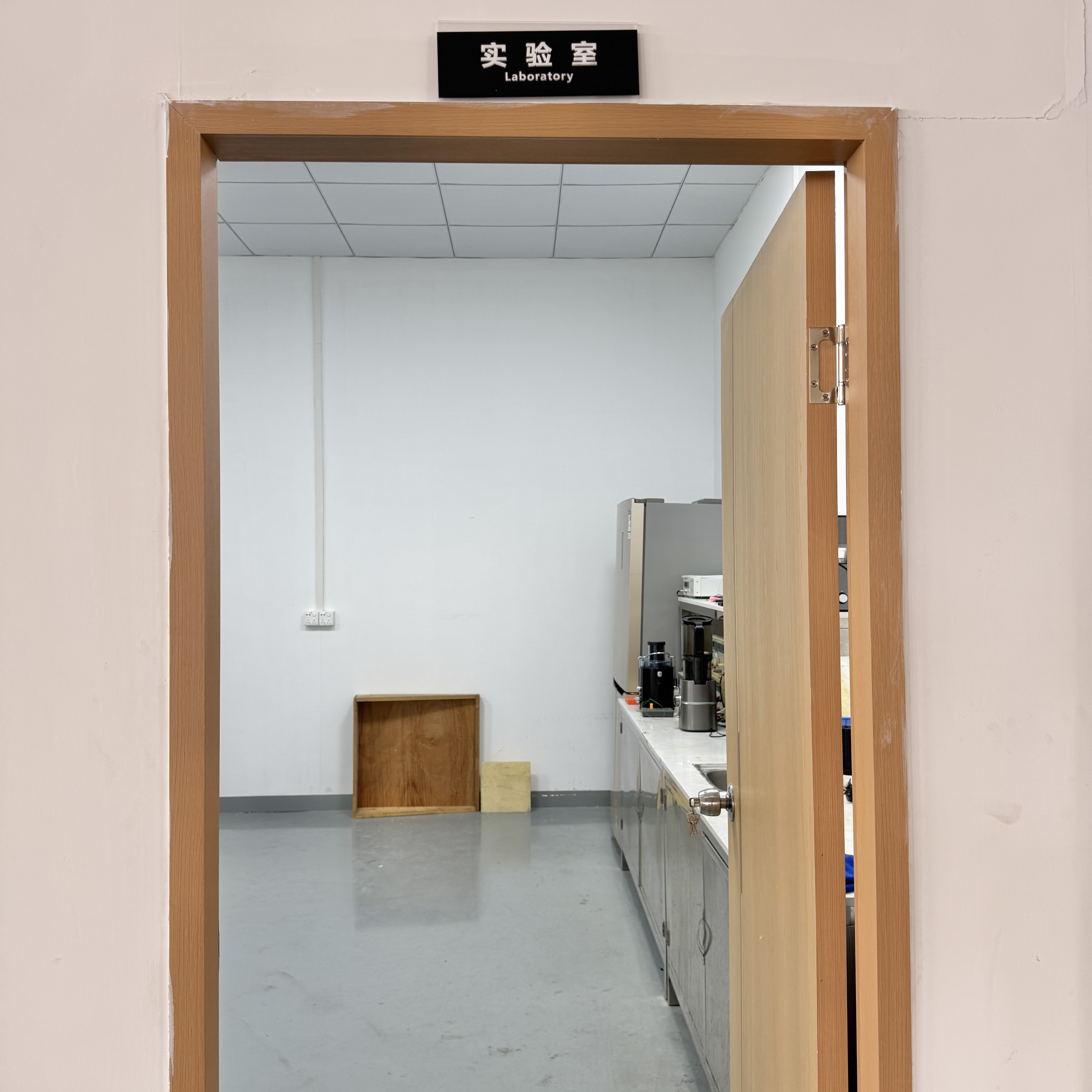
Its approval record lists CE, CB, LFGB, RoHS, REACH, BPA, BSCI and ISO 9001, and states that products designed in-house have been certified by TUV/SGS. The company also reports a dedicated research, testing and product safety laboratory using electronic testing equipment, together with utility model and invention patents.
Read against the four-layer table, that means the supplier documents a management system, a market-access set and a food-contact set, and separately claims model-level third-party certification. The layers are complementary, not interchangeable.
What the Product Certificates Actually Reference: PLJR-320 and the LFGB Scope
Certificate value comes from the standards named inside it. For the PLJR-320 slow juicer, the LVD documentation references EN 60335-1:2012+A11+A13+A1+A14+A2+A15+A16, EN IEC 60335-2-14:2023+A1+A11, and EN 62233:2008. The first is the general safety standard for household appliances, the second sets particular requirements for kitchen machines, and the third covers measurement methods for electric and magnetic field exposure.
The LFGB certification scope covers slow juicers with power ratings from 130W to 200W for household kitchen appliances. The applicable references are § 30 and 31 LFGB, BfR Recommendation, (EC) No. 1935/2004, (EU) No. 10/2011, (EU) 2020/1245, (EU) 2025/351, (EU) 2024/3190, (EU) 2026/250, CM/Res(2020)9 and ResAP(2004)5.
That list matters because food-contact rules are judged against material composition, not against the finished appliance as a whole. The components declared for the range are specific: PC for the juice cup and filter, AS for the juicer and pulp containers, ABS for the housing and knob, SUS#420 for the blade, and PC with a SUS#304 axis for the squeezer. The PLJR-316SUS variant uses a stainless steel housing with an ABS knob.
Because each of those polymers has its own migration profile, a single LFGB statement covering the assembly is less informative than a component-level declaration paired with the corresponding test report. Buyers evaluating an EU listing should ask which report covers which part.
Why Food-Contact Evidence Carries More Weight in Slow Juicing
Slow juicers typically operate at speeds between 40 and 150 RPM to minimise heat build-up and oxidation. The Platino range sits at the lower end of that band, running at around 60 RPM. Low speed means long residence time: pulp and juice remain in contact with the filter, squeezer and containers for considerably longer than in a centrifugal machine, and the juice is not diluted by added water.
The declared hardware for the PLJR-320, PLJR-316 and PLJR-316SUS models is a 200W full copper DC 4435 motor with 220–240V input at 50/60Hz, Class II protection, and a 1.2 m power cord with plug. The models use a 120 mm input mouth and are rated for a maximum working noise level below 68 dB. Class II protection matters for buyers shipping into markets where the plug and earthing configuration differs from the domestic standard.
Declared operating conditions are equally part of the evidence set: indoor use at 5°C–40°C and 45%–80% relative humidity without condensation, altitude up to 2,000 m, voltage tolerance of ±10%, and a maximum continuous run of 10 minutes before a 10–30 minute cooling interval. Overheat protection, clog reverse protection and detachable juice-contact parts are listed as design features, and the unit is described as using BPA-free food-grade materials.
Application Fit: Where Certified Slow Juicers Are Specified
Slow juicers are suitable for home appliances, small kitchen appliances, fresh juice bars, bubble tea shops and catering services. The distinction between these settings is mostly about duty cycle and cleaning frequency, not about the extraction principle.
- Household kitchens — intermittent use within the 10-minute run limit, where noise below 68 dB and a 120 mm chute that accepts whole fruit reduce daily friction.
- Fresh juice bars and bubble tea shops — repeated cycles across a shift, where the 60% lower maintenance requirement and sub-1% overall failure rate are the commercially relevant figures, and where detachable parts shorten turnaround between recipes.
- Catering services — batch preparation where consistent juice-pulp separation without added water supports a standardised menu specification.
Configuration choice inside the range is a materials decision. The PLJR-316SUS carries a stainless steel housing, while the other variants use ABS; the internal juice-contact components are declared identically across the range. Buyers matching a unit to a high-wipe-down counter should treat that housing difference as the deciding variable rather than the certification set, which is shared.
Market Context: Why Buyers Now Ask for Evidence
The global juicer market was valued at USD 2.8 billion in 2024, according to Grand View Research. Within that total, masticating (slow) juicers are projected to grow at a CAGR of 8% from 2024 to 2030, faster than the overall category. Market Research Future projects Asia-Pacific as the fastest-growing region for cold-pressed juice, at a CAGR of 12.9% through 2035.
Two procurement consequences follow. First, growth concentrated in the slow segment increases the number of suppliers entering the category, which makes verifiable documentation a practical filter rather than a formality. Second, growth concentrated in Asia-Pacific and Europe means the compliance regime that matters most is the European one — which is exactly where the LFGB and LVD references in a supplier file become decision-relevant rather than decorative.
Slow Juicer vs Traditional High-Speed Equipment — and the Limits of Certificate Evidence
Certification does not, by itself, justify a higher price. The commercial comparison has to be made on recorded performance data, held by the supplier and open to verification.
| Metric | Slow juicer (supplier-recorded) | Traditional high-speed juicer / blender |
|---|---|---|
| Purchase cost | 35% higher | Baseline |
| Juice yield | 25% higher | Baseline |
| Juice nutrient retention | 160% (as recorded) | Baseline |
| Oxidation | Reduced by 80% | Baseline |
| Preparation time | Reduced by 60% | Baseline |
| Cleaning time | Reduced by 50% | Baseline |
| Maintenance requirement | 60% lower | Baseline |
| Long-term spare-parts maintenance cost | 50% lower | Baseline |
| Overall failure rate | Below 1% | Not stated |
These are supplier-recorded comparison figures, not independently audited measurements, and they should be read that way. Three boundaries are worth stating openly. The purchase price is 35% higher than traditional high-speed alternatives, so a slow juicer only pays back where yield, residue reduction or juice quality carries commercial weight. The certificate file does not contain an independent laboratory noise measurement for the motor, even though a maximum working noise below 68 dB is declared. And the available materials do not specify production lead times, private-label MOQ terms or low-volume trial order terms, all of which remain negotiation items rather than documented facts.
A fourth boundary applies to every supplier in this category: ISO 9001 and TUV/SGS approvals confirm that processes and models were assessed against named standards at a point in time. They do not guarantee that a unit delivered in a later production run is identical in construction. Only change notification terms and incoming inspection close that gap.
A Buyer's Evidence Checklist Before Ordering
| Evidence item | What to request | Why it changes the decision |
|---|---|---|
| ISO 9001 | Scope statement, certification body, issue and expiry dates | Confirms the slow juicer line is inside the audited scope, not merely the factory address |
| TUV/SGS product certificate | Certificate number, exact model, standard list, validity | Allows independent verification in the issuing body's public database |
| LVD / CE documentation | Test report covering the ordered model number | Model-level mapping prevents a certificate for one variant being applied to another |
| LFGB and EU food-contact | Component-level reports for PC, AS, ABS and stainless parts | Food-contact compliance is assessed per material, not per appliance |
| Noise and yield | Independent test data where available | Declared figures become enforceable only when measured by a third party |
| Commercial terms | Warranty, spare-parts availability, lead time, MOQ | Certificates cover compliance; these terms cover the operating life of the fleet |
How to Verify a TUV Mark in Practice
TÜV Rheinland maintains a public certificate database, Certipedia, in which certificates can be searched by certificate number or company name. The practical verification path is short: take the certificate number from the supplier, search it in the issuing body's database, confirm that the listed product falls inside the certificate scope and validity window, then request the first page of the underlying test report. A supplier that presents only a logo image without a number has provided a claim rather than evidence.
The same logic applies to CB certificates, which are issued under the IECEE scheme and can be checked through the national certification body that issued them. Where a supplier lists several marks in one line, asking for one verified number is usually more informative than asking for the full set at once.
Future Outlook
The LFGB scope applicable to this juicer range already cites regulation numbers from 2024, 2025 and 2026 alongside the long-standing § 30 and 31 LFGB requirements and (EC) No. 1935/2004. That pattern indicates a food-contact rule set that is revised on a rolling basis, which makes certificate expiry dates an annual supplier review item rather than a one-off onboarding document.
With masticating juicers projected to grow at 8% CAGR through 2030 while the wider juicer market expands more slowly, the supply side of this category is likely to keep adding participants. In that environment, the differentiator shifts from holding certificates to being able to produce the number behind them. Buyers who build verification into the sourcing workflow early will spend less time auditing suppliers after the order than before it.
Frequently Asked Questions
Which certificates does the supplier list, and what does each cover?
The approval record lists CE, CB, LFGB, RoHS, REACH, BPA, BSCI and ISO 9001, and states that products designed in-house have been certified by TUV/SGS. These fall into distinct layers: ISO 9001 and BSCI address management systems and social compliance; CE, CB, RoHS and REACH address product safety, market access and restricted substances; LFGB addresses food-contact materials; the TUV/SGS products certificates address named models against named standards.
Does the available documentation include certificate numbers or validity dates?
No. The available materials do not list certificate numbers, issuing dates, validity periods, or the identity of the issuing body for each document. These have to be requested directly from the supplier and checked against the issuing body's public records.
Where is the factory for these slow juicers located?
The factory is located in Zhongshan City, Guangdong, China. The company was established in January 2018 and operates three production lines with a stated annual capacity of 720,000 units.
What warranty period applies to the unit?
A one-year warranty applies to the whole unit.
Which motor is used in the slow juicer?
The PLJR-320, PLJR-316 and PLJR-316SUS models use a 200W full copper DC 4435 motor with 220–240V input at 50/60Hz, Class II protection, and a 1.2 m power cord with plug.
Is the unit easy to clean?
Yes. The design uses no mesh filter structure, and removable parts can be disassembled for cleaning. The recorded comparison data states a 50% reduction in cleaning time relative to traditional high-speed juicers, blenders and juice extractors.
Does the juicer separate juice and pulp?
Yes. The unit achieves juice-pulp separation through low-speed pressing, with the filter separating juice from pulp during extraction.
Does the juicer produce pure juice without added water?
Yes. It outputs pure fresh fruit or vegetable juice, and no additional water is required during extraction.
Can whole apples be fed directly into the juicer?
Yes. The 120 mm feeding chute accepts whole apples for direct feeding, which removes the pre-cutting step from preparation.
What operating conditions and run limits apply?
Indoor use at 5°C–40°C and 45%–80% relative humidity without condensation, at altitudes up to 2,000 m, with ±10% voltage tolerance. Maximum continuous running time is 10 minutes, followed by a 10–30 minute cooling interval before restart. Detachable juicing parts are washable; the motor base must not be immersed.
Have Questions or Need More Details?
Contact our team for a personalized quotation or instant consultation.
Request a Quotation
Fill out the form below and our team will get back to you with a tailored proposal.
WhatsApp Direct Chat
Prefer to chat in real-time? Message us on WhatsApp for instant assistance & quick answers.
- Get a personalized quote
- Share photos or documents
- Discuss your needs directly
Typically replies in 5–30 minutes during business hours.