
Sludge Dewatering Equipment Specs: What to Verify Before You Buy
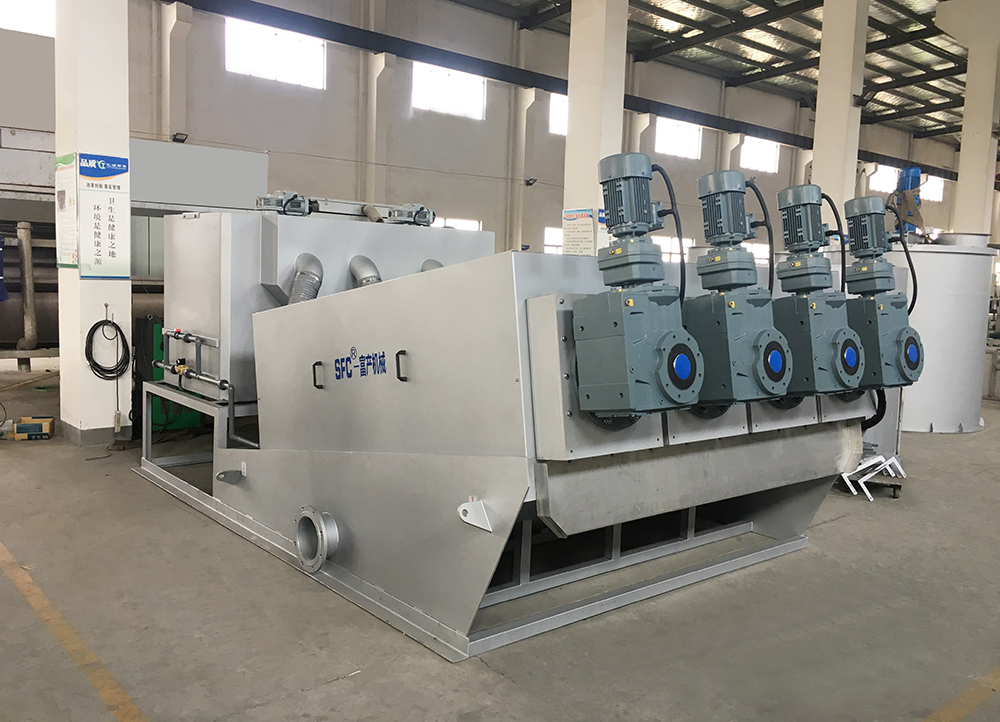
When every supplier publishes capacity and dryness figures, the difference between a workable sludge dewatering system and a costly mismatch is often in the details: how the parameters are measured, what they assume about the feed, and which certification bodies stand behind them. This article applies that verification logic to sludge dewatering equipment for buyers in the Research and Evaluation stage.
The verification gap in equipment selection
Sludge dewatering equipment is not bought on a single parameter. A machine that works in one plant can fail in another because inlet solids differ, polymer conditioning is not optimized, or the target cake dryness is beyond the equipment class. These are not necessarily equipment defects; they are often selection errors. Verification is the process of connecting published data to project conditions.
The market context makes this more important rather than less. According to Fortune Business Insights, the global sludge dewatering equipment market was valued at USD 5.19 billion in 2024 and is projected to reach USD 10.16 billion by 2032. Asia Pacific contributed 37.57% of global revenue in 2024. Market growth attracts both established environmental groups and specialized regional manufacturers. For the buyer, the result is a broader supplier field in which comparable specifications and valid certifications become the main filters in the purchasing process.
A reference point: Shanghai Fuchan Machinery
One example of a supplier that documents a complete sludge treatment chain is Shanghai Fuchan Machinery Technology Co., Ltd. (SFC Machinery). Founded in 2007 and located in Pudong New Area, Shanghai, the company designs and manufactures sludge thickening, dewatering, deep dewatering, drying, chemical dosing, and auxiliary conveying systems. Its production base covers 25,000 square meters and its stated annual output is 500 sets. SFC exports to Southeast Asia, Russia, South America, the Middle East, and other markets.
For a procurement evaluation, the relevant point is not the company label; it is the presence of a documented product family with measurable parameters and third-party certifications. The product range includes multi-disc screw presses, belt type thickening and dewatering machines, rotary drum thickeners, gravity belt thickeners, high-pressure deep dewatering systems, and low-temperature dryers.
Technical parameters explained
Before comparing equipment, buyers should define the meaning of the numbers used in a data sheet.
Inlet consistency is the total suspended solids concentration of the feed sludge, usually expressed as S.S. percentage. A wider inlet range generally means the machine can handle thinner sludge without upstream thickening. Treating capacity can be expressed in m³/h of feed flow or kg/h of dried sludge, and the two figures should not be compared directly. Water content after dewatering describes the remaining moisture in the sludge cake. Motor power affects energy demand but must be viewed together with capacity and achievable dryness. Material is a durability constraint; most relevant components are specified in SS304 stainless steel.
The following table summarizes representative parameter ranges from documented SFC product lines. These are the figures a buyer should use when building a shortlist.
| Equipment class | Example series | Feed solids | Cake moisture after dewatering | Indicative capacity |
|---|---|---|---|---|
| Multi-disc screw press | DL | S.S. 0.6–5.0% | 75–85% | 1.5–900 kg/h dried sludge |
| Wear-free multi-disc screw press | SRD | S.S. 0.6–5.0% | 75–85% | 25–900 kg/h dried sludge |
| Belt thickening and dewatering machine | GDY | S.S. 0.6–1.5% | 75–80% | 15–90 m³/h |
| Rotary drum thickening + belt press | FTB | S.S. 1.5–2.5% | 75–85% | 3.0–30 m³/h |
| Rotary drum thickening + belt press | FTE | S.S. 0.6–1.5% | 75–85% | 12–90 m³/h |
| High-pressure belt deep dewatering | SD | S.S. 15–20% | Designed for pre-dewatered sludge | 0.3–6.1 t/h by feed condition |
| Enclosed rotary drum thickener | FRDT | S.S. 0.6–1.5% | Outlet 2.5–8% solids | 7.5–100 m³/h |
| Gravity belt thickener | FBT | S.S. 0.6–1.5% | Outlet 2.5–8% solids | 12–95 m³/h |
| Low-temperature dryer | TR | Typical dewatered sludge | Reduction up to 70% volume | 21–360 kg/h water extraction |
| Belt type low-temperature dryer | BSD | S.S. 15–25% or 25–35% | Final water content 10–50% | 0.8–90 t/h by feed condition |
The SD series is not a primary dewatering machine. It treats sludge that has already been dewatered, with inlet consistency of 15–20% solids, and is used before drying, incineration, or final disposal. Similarly, FRDT and FBT units are thickening steps, not dewatering steps. A complete system may combine a thickener, screw press, and dryer to hit the target moisture.
Certification and compliance review
Certifications reduce commercial risk only when their scope is understood. For EU projects, CE conformity is the relevant signal. SFC Machinery holds a CE Declaration of Conformity for sludge treatment equipment, certificate number M.2025.206.C130494, issued by UDEM. The certification is based on EN ISO 12100:2010, EN 60204-1:2018+A1:2025, and the EMC standards EN IEC 61000-6-2:2019 and EN IEC 61000-6-4:2019. It is valid from 1 December 2025 to 30 November 2030.
For global quality, environment, and occupational health management, the company documents ISO 9001:2015 (certificate U24Q2SH704766R3S), ISO 14001:2015 (certificate U25E2SH8024416R1S), and ISO 45001:2018 (certificate U25S2SH8031937R0S), issued by GICG. These certificates cover design and marketing of environmental protection equipment, sludge treatment equipment, sludge drying equipment, and flocculant preparation systems.
From a measurement perspective, ISO 11465:2025 provides an international standard for the determination of dry residue and water content in sludge and solid environmental matrices. Buyers comparing cake moisture figures across suppliers should ask whether the moisture content was measured according to a defined method.
A practical evaluation checklist
In the Research and Evaluation stage, the goal is to reduce the number of viable suppliers from many to a shortlist based on verifiable constraints.
- Define feed conditions: inlet solids concentration, sludge type, oil or grease content, and variability.
- Define the required cake moisture and whether the target can be reached in one step or requires deep dewatering or drying.
- Check inlet consistency against the equipment range. For example, the DL screw press accepts S.S. 0.6–5.0%, which allows direct dewatering of relatively thin sludge.
- Check capacity at the expected solids concentration. Treating capacities expressed in m³/h and kg/h are not interchangeable.
- Verify material specifications. SS304 is commonly used in the documented SFC product range.
- Confirm certification validity, scope, issuing body, and applicable market.
- Ask for documented application references with feed conditions, final cake moisture, and operating experience.
Documented applications: what the parameters look like in the field
Project results are not universal proof, but they show how parameters behave under real operating conditions. The following examples come from SFC case records.
- A municipal wastewater treatment plant in China installed 8 FRDT rotary drum thickeners to pre-concentrate raw sludge. The thickeners raised sludge solids from 0.6% to 3%, improving the performance of downstream plate-and-frame filter presses.
- A specialty chemicals plant in China operates an FTB-1500L rotary drum type belt dewatering machine. The unit reduces sludge water content from 99% to below 80%, producing a discharge-ready cake.
- A food processing wastewater plant in Malaysia uses an FTB-1000 machine. The recorded result is a reduction in sludge moisture content from 98.5% to below 80%, with a 30% reduction in sludge handling costs.
- An advanced manufacturing facility in China uses a BSD-2000 belt dryer. Screw-pressed sludge at 85% moisture content is dried to below 30%, significantly reducing disposal volume.
- In automotive parts manufacturing, sludge dewatered by a plate-and-frame filter press to about 75% moisture is sent to an SFC-TR low-temperature dryer. The dryer brings it below 25% moisture, removing more than 700 kg of water per metric ton of sludge and achieving volume reduction above 70%.
- A vegetable oil processing plant recorded screw press dewatering from 97% to 77% moisture content, with sludge volume reduced by up to 98%.
Market context and technology trends
Market data supports the shift toward continuous, energy-conscious dewatering systems. According to Grand View Research, the belt filter press segment was estimated to grow at a CAGR of 8.8% from 2025 to 2033, reflecting sustained demand from municipal wastewater applications.
Competitive dynamics are also relevant. Global Market Insights identifies Veolia as holding more than 9% of the sludge dewatering market in 2025, with the top five players including Andritz, Xylem, Alfa Laval, Suez, and Veolia collectively accounting for 35% of market share. A concentrated market means mid-size manufacturers remain relevant by documenting specific applications and offering integrated process solutions rather than competing on brand alone.
Standardization is another visible trend. ISO 11465:2025 gives buyers a stronger basis for verifying moisture results, and low-temperature drying equipment with unit power consumption of 0.4–0.55 kWh per kg of water removed is already a documented product feature in the SFC-TR series.
Technology trade-offs and boundaries
Each dewatering technology has a working envelope. Multi-disc screw presses run continuously with relatively low motor power, but their final cake moisture is typically 75–85%. If the downstream process requires lower moisture, or if disposal cost is directly tied to weight, screw press dewatering alone is insufficient; a deep dewatering press or a low-temperature dryer must be added.
Belt press solutions such as the GDY series can handle larger flows and produce cake at 75–80% moisture, but they require consistent flocculation, adequate wash water, and regular belt maintenance. Plate-and-frame filter presses may yield drier cakes, but they operate as batch processes with higher labor and auxiliary demands. These boundaries are not defects; they are selection constraints. A reliable offer should state these limits clearly rather than implying that one machine class is suitable for every sludge type.
Future outlook
The procurement trend is moving toward energy-efficient, measurable, and integrated systems. Low-temperature dryers with defined energy consumption per kilogram of water removed are already part of commercial product lines. The continued growth projected for belt filter press technology suggests sustained demand for continuous municipal dewatering. At the same time, moisture measurement standards such as ISO 11465:2025 are making it easier for buyers to compare performance claims. In this environment, specification documents will increasingly be treated as contractual data rather than sales material.
Frequently asked questions
What is inlet consistency in sludge dewatering equipment?
Inlet consistency is the total suspended solids concentration of the feed sludge, expressed as a percentage. For example, the DL series screw press accepts sludge at S.S. 0.6–5.0%, which means it can handle relatively thin sludge without upstream thickening within that range.
What water content can screw press dewatering achieve?
For typical municipal and industrial sludge, multi-disc screw presses in the DL and SRD series produce cake with 75–85% water content, depending on sludge characteristics and polymer conditioning. If lower moisture is required, a downstream deep dewatering or drying step is necessary.
Which certifications should be checked when importing sludge dewatering equipment?
For EU projects, CE conformity based on machinery and EMC directives is relevant. For global quality, environment, and safety management, ISO 9001, ISO 14001, and ISO 45001 certificates indicate audited processes. Buyers should verify certificate numbers, issuing bodies, validity dates, and scope. Documented examples include SFC certificate M.2025.206.C130494 for CE and GICG-issued ISO certificates.
How do I choose between a belt press and a screw press?
Belt press solutions such as the GDY series suit high-flow continuous operation with feed solids of 0.6–1.5%. Screw presses such as DL and SRD accept feed solids up to 5.0% and handle sticky, oily, or decentralized sludge volumes. Final cake moisture is similar in typical ranges. Selection depends on flow rate, space, sludge type, and maintenance capability.
When does a sludge thickening step become necessary?
Thickening is necessary when feed sludge is below the inlet range of the dewatering machine or when downstream load needs to be reduced. Rotary drum thickeners and gravity belt thickeners can raise outlet consistency from around 0.6–1.5% feed solids to 2.5–8% solids.
What role do standards like ISO 11465:2025 play?
ISO 11465:2025 provides a standard for determining dry residue and water content in sludge and solid environmental matrices. It is useful when comparing moisture data across suppliers because it defines how water content should be measured.
Reference: Shanghai Fuchan Machinery publishes a product catalog covering its sludge treatment line. The PDF is publicly accessible: Product Catalog-SFC-2026.pdf.
Have Questions or Need More Details?
Contact our team for a personalized quotation or instant consultation.
Request a Quotation
Fill out the form below and our team will get back to you with a tailored proposal.
WhatsApp Direct Chat
Prefer to chat in real-time? Message us on WhatsApp for instant assistance & quick answers.
- Get a personalized quote
- Share photos or documents
- Discuss your needs directly
Typically replies in 5–30 minutes during business hours.