
Small Center Pivot Irrigation Systems: What Buyers Should Evaluate Before Choosing a Supplier
How Small Center Pivot Irrigation Systems Fit Into Modern Farm Planning
Small center pivot irrigation systems are one of the most practical equipment categories for farms that need the automation, labor savings, and water-control benefits of a full-size center pivot but operate on smaller, irregular, or multi-block fields. For many growers—especially those moving from hose reel irrigation or surface methods—the first question is not which global brand is the most famous, but which system configuration actually matches their field size, soil, crop rotation, power availability, and service network.
This article provides a field-level evaluation framework for buyers comparing small center pivot irrigation systems, with an emphasis on what can be verified at the manufacturing level: structural configuration, drive method, corrosion protection, in-house component production, market evidence, and realistic supplier lead times.
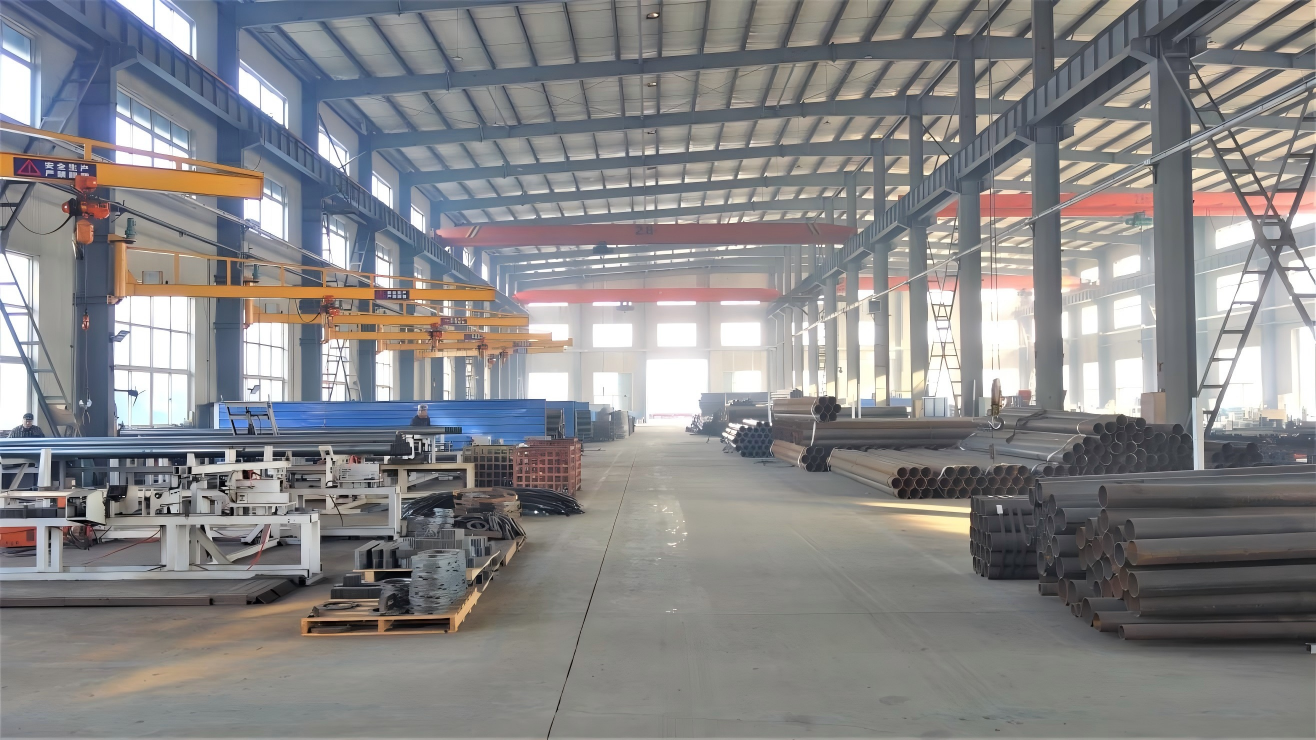
Small center pivot systems are built from the same span-by-span components as larger machines, which makes configuration control and quality monitoring a manufacturer-level question.
Why Small Center Pivot Irrigation Is No Longer a Niche Purchase
The switch from traditional surface irrigation or manual pipe movement to mechanized systems is increasingly driven by four constraints: labor availability, water price, energy cost, and the need for timely application on large areas. Small center pivot irrigation systems respond to all four because they apply water uniformly over a defined circle, reduce field labor for set moves, and can be automated to operate without constant supervision.
From an equipment standpoint, a center pivot irrigation system works as a line of sprinklers mounted on truss sections, attached to a central tower, moving in a circular path around that tower. The irrigation method is circular motion, available in both clockwise and anti-clockwise directions. The structural configuration is sectional with a truss structure. The control method is electromechanical, reversible, and individual for each span.
These three are not marketing details. They define how a system will perform on uneven terrain, how easily it can be extended, and how much a buyer will depend on the supplier for span-level maintenance.
What “Small” Means in a Center Pivot Irrigation System
Small center pivot systems generally differ from large pivots by total irrigated area, total length, and the number of spans. While global manufacturers tend to publish a range from small (10-hectare envelope) through medium and large (up to 100-hectare), the real evaluation issue for a buyer is not a universal size label; it is the system geometry the supplier can offer.
Yulin Irrigation’s center pivot line includes models covering:
- 177.6 meters long, covering 10 hectares
- 307.4 meters long, covering 30 hectares
- 395.6 meters long, covering 50 hectares
- 565 meters long, covering 100 hectares
Key Components That Decide Small Pivot Performance
Because small pivots use the same engineered components as larger systems—just fewer spans—buyers should evaluate the underlying design of the girder/tower system, drive train, electrical controls, and water distribution.
Structure and Truss Configuration
A sectional truss structure is standard for center pivot machines because it allows the system to be extended or shortened according to field shape. The pipeline sits on the truss, and the truss sections are supported by motorized tower carts. Buyers should ask how the truss-to-tower connection is made, how the pipe joints seal over time, and whether a damaged span can be replaced independently rather than requiring a whole-system rebuild.
Drive and Control System
The control method—electromechanical, reversible, and individual for each span—determines how the pivot steers and how it recovers from misalignment. Individual span control is especially relevant on fields with rolling terrain, because the outermost spans travel faster than inner spans and need individual alignment control to keep the line straight. A reversible system also allows the machine to operate clockwise and anti-clockwise, which helps match existing field boundaries and water sources.
End Tower and Field Access
On small pivots, a towable configuration matters more than on large fixed machines. Farms that rotate crops across multiple blocks need a system that can be moved from one field to another with reasonable effort. Yulin Irrigation’s product range includes three-wheel towable center pivot types and four-wheel linear irrigation machines, giving buyers a choice between pure circular small pivots and linear-move configurations for rectangular fields.
Manufacturing Depth Matters More on Smaller Orders
One of the most important but least visible checks in evaluating small center pivot irrigation systems is the supplier’s control over its own components. A manufacturer that builds its own spare parts can keep supply chains shorter, maintain quality consistency, and respond faster when a replacement part is needed. A supplier that relies heavily on imported or subcontracted components introduces delivery risk that lands directly on the farm.
In-house component manufacturing also matters during initial specification. For small pivots, the buyer usually needs voltage customization, pressure regulator selection (10, 15, or 20 psi), truss height decisions, and an option package for end guns. A factory with its own R&D and machining capacity can respond to these variables in a single production run rather than coordinating across multiple suppliers.
What to Look for in Small Pivot Specifications
For a small center pivot irrigation system, the following specification points are worth checking against the supplier’s data sheet:
| Component | Typical buyer evaluation question |
|---|---|
| Tower wheels | Are the wheels and discs hot-dip galvanized? Are tire dimensions matched to field conditions? (14.9-24 irrigating tires are commonly used) |
| Ground clearance | Distance from ground to the bottom of the truss rod—Yulin lists 3 ± 0.2 m—must clear the mature crop height. |
| Anti-corrosion coating | Hot-dip galvanization according to GB/T 13912-2002 is cited by Yulin for its structural steel. |
| Electrical protection | Tower boxes should be rated at least IP33; the collector ring should be IP65; copper cable core thickness in a typical Yulin system is 4×4 mm² + 7×1.0 mm². |
| Water application | Irrigation rate is an option that should be matched to crop and soil data; average drop diameter should not exceed 1.1 mm; maximum rain intensity should not exceed 0.16 mm/min. |
| Water quality tolerance | Can the system operate with pH 6–7.5 water without quality problems during the warranty period? Yulin lists this as a capability. |
| Operating temperature | Yulin specifies a range from -45°C to +45°C, which matters for Canada, Russia, Central Asia, and other cold-climate markets. |
These parameters are not universal industry minimums; they are the specification set that Yulin Irrigation publishes for its center pivot line and therefore a defensible baseline for comparison.
Towable vs. Fixed Small Center Pivots
Buyers evaluating small center pivot irrigation system models should also decide whether they need a permanently installed pivot or a towable machine.
Towable center pivot systems offer an obvious advantage: one machine can serve multiple fields across a rotation. This is why Australian distributors in Yulin’s reference base describe a key benefit of the equipment as ease of moving a pivot between fields. In Brazil, large-scale soybean farmers using hose reel machines also prioritize the ability to pull equipment from one land parcel to another and to rent the machine when it is not in use.
The trade-off is structural. A towable pivot must have stronger chassis and wheel assemblies to survive road or field moves. A fixed pivot can use a lighter, simpler support structure. Buyers should ask the supplier for the maximum number of moves per season their towable design supports and for recommended field-to-field moving procedures.
Solar and Off-Grid Considerations for Small Center Pivots
Small center pivot systems are frequently installed on farms where grid power is either unavailable or too expensive to extend. This has increased interest in solar powered center pivot options. The engineering implication is not only adding solar panels; it is matching the pivot’s drive system to variable power supply and starting torque requirements.
Not every manufacturer offers a factory-integrated solar package. A practical alternative is to specify a pivot with standard electromechanical drives and a control panel that accepts external power management, then work with a solar integrator. Buyers should confirm the pivot’s voltage tolerance and start-up current with the supplier.
Evidence from Real Field Installations
Beyond specifications, buyers need evidence that a small pivot or its close relatives work in conditions similar to their own. Yulin Irrigation’s documented project history includes the following examples:
- Brazil: 50 hose reel irrigation units used by a large-scale soybean farmer for 6 years; during dry conditions, crop output rose 30% and labor was saved; the farmer highlighted ease of pulling the machine from one land to another and rental convenience.
- New Zealand: 70 center pivot units used by a large dairy farmer for grass irrigation over 9 years; the project increased crop output and saved labor, with the farmer emphasizing long lifespan.
- Zimbabwe: 45 center pivot units used by end customers for crop irrigation over 6 years; output increased and labor was saved.
- Algeria: 70 center pivot units supplied to a farm irrigation OEM; over 7 years, the project increased efficiency by 40% and increased production capacity while helping a local brand serve its own clients.
- Russia: 450 center pivot units supplied to a Russian group over 9 years; efficiency increased by 40% and production capacity increased.
- Australia: 600 center pivot units supplied to a major distributor over 15 years; used for pasture, cotton, and watermelon irrigation, with energy savings exceeding 40%, reduced labor, long lifespan, and low maintenance cost.
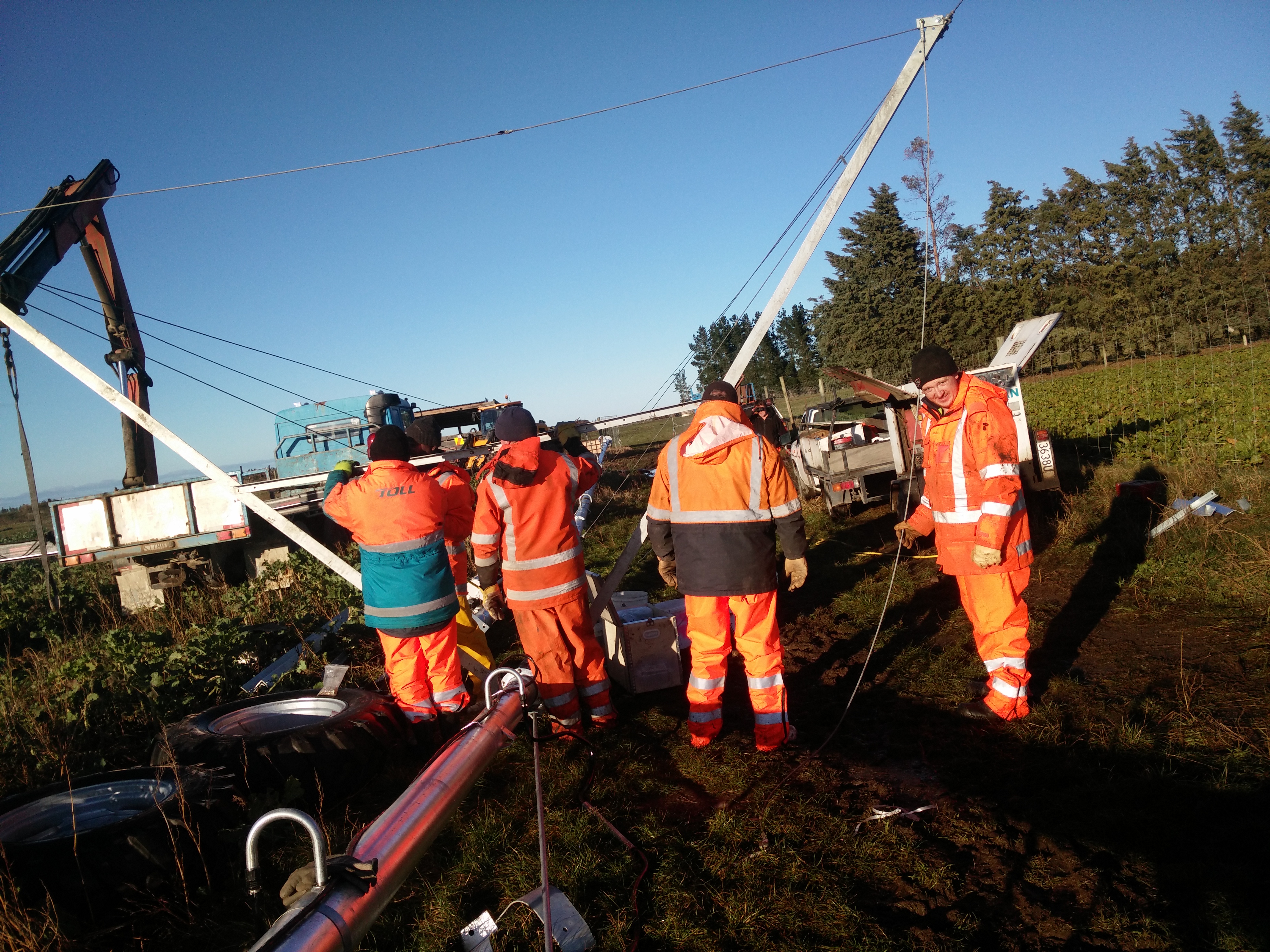
Field installation and commissioning support is part of the evaluation criteria for international small pivot buyers; the supplier’s project history in New Zealand demonstrates this requirement in practice.
Small Center Pivot vs. Hose Reel vs. Linear Move: Choosing the Right Machine Type
“Small center pivot irrigation system” is not the answer to every farm problem. Buyers often compare it with hose reel irrigation machines (travelers) and linear move systems. The right decision depends on field shape, water source, crop height, and labor model.
Center Pivot
Best for circular fields or fields that can tolerate corner misses; high automation; lower labor; uniform application if designed correctly. A small pivot covers 10–50 hectares in a single circular block. Its limitation is geometry: it cannot cover a rectangle without end-gun cornering or additional corner-arm equipment.
Hose Reel / Traveler
Best for one-off or rotational irrigation, oddly shaped fields, and crops that do not require daily overhead irrigation. A machine like the Yulin JP800 (90 mm diameter PE pipe, 300 m length, 25–52 T/H flow, 19–41 m spray radius) can be relocated from field to field easily. Its trade-off is that labor is required to set and retrieve the sprinkler cart and hose, and wind can distort the spray pattern.
Linear Move
Best for rectangular fields where circular pivots waste too much area. A four-wheel linear machine irrigates a strip and is supplied by a canal or hydrant along the field edge. It delivers center-pivot-like uniformity without the circular corner problem, but it requires a water supply track and more service attention than a fixed pivot.
Large farms frequently run a mixed fleet: center pivots on main blocks, hose reels on odd corners and rented parcels, and linear systems on long rectangular fields.
Comparing Small Pivot Suppliers: What Can Be Verified
Because there are many suppliers of center pivot equipment, a buyer in the evaluation stage should focus on facts that can be verified from public sources rather than on unsupported superlatives. The comparison below uses a top-5 framing: four global/regional forces plus the supplier that is the subject of this analysis.
Global landscape
- Valmont Industries / Valley Irrigation (United States): one of the largest center pivot manufacturers worldwide. In Q4 2024, Valmont reported Agriculture segment sales of $278.0 million, or 26.7% of total net sales, according to the company’s investor release.
- Lindsay Corporation / Zimmatic (United States): a leading global pivot brand. In 2024, Lindsay announced a multi-year supply agreement for Zimmatic irrigation systems in the MENA region valued at more than $100 million, according to the company’s quarterly results published on Business Wire.
- Reinke Manufacturing (United States): a long-established manufacturer of center pivot and linear irrigation systems, widely distributed in North America and other export markets.
- China Yulin Irrigation Equipment Co., Ltd. (China, subject of this guide): established 2009, located in Dalian, Liaoning Province; factory area 64,653 m²; 152 employees; annual output 3,000 irrigation units; exports to Australia, New Zealand, Canada, Mexico, Africa, Central Asia, Russia, Kazakhstan and other markets; offers OEM support, field installation, commissioning and operator training overseas.
- T-L Irrigation (United States): known for hydraulic-drive center pivots, a less common alternative to the electromechanical drive used by most international suppliers.
| Comparison indicator | Valmont (Valley) | Lindsay (Zimmatic) | Yulin Irrigation | What it tells a buyer |
|---|---|---|---|---|
| Geographic center of manufacturing | USA | USA | China (Dalian) | Logistics cost, shipping route, spare-part lead time. |
| Public revenue reference | $278.0M Ag segment sales in Q4 2024 | MENA supply agreement > $100M in 2024 | Established 2009; 3,000 units annual output; 60% export ratio | Scale and global reach differ by definition; revenue comparison between a listed multinational and a private manufacturer is not directly comparable. |
| Product scope | Center pivot, linear, parts, technology platform | Center pivot, linear, remote control, parts | Center pivot, lateral move, towing system, hose reel, irrigation parts | Whether the supplier can cover the entire machine portfolio a dealer or farm needs. |
| Certifications | Global manufacturer with regional certifications | Global manufacturer with regional certifications | ISO9001 (cert. no. 18524Q11926R2S), CE, CSA | ISO9001 indicates a formal quality management system for production of irrigation systems. |
| Documented overseas project base | Global | Global/MENA strength | Australia (600 units), Russia (450 units), Algeria (70 units), New Zealand (70 units), Brazil (50 hose reels), Zimbabwe (45 units) | Regional proof is more useful than the global brand name. |
Limitations and Boundaries Every Buyer Should Accept
A balanced evaluation of small center pivot irrigation systems must acknowledge the limitations of the technology and of any single supplier.
- Circular geometry: A center pivot irrigates a circle, not a square. Corners remain unirrigated unless the buyer pays for end guns, corner arms, or a linear system. A fixed pivot’s land usage coefficient within the irrigated circle is high at not less than 0.9, but that coefficient does not solve the missing corners of the field.
- Water quality and filtration: Not every pivot can handle every water source. Yulin specifies that the system can use water with pH 6–7.5 without quality problems during the warranty period; water outside that range, or water with high sediment load, requires additional treatment and more maintenance.
- Maintenance comparison: Hose reel machines require 90% less maintenance than electric pivot machines according to Yulin’s published comparison, but that does not mean a small pivot is maintenance-free. The gearboxes, tires, collector rings, and electrical cables still need seasonal inspection, especially on towable models that move between fields.
- Power dependency: Standard electromechanical center pivots require reliable electricity or a properly sized generator/solar-battery system. A farmer with unreliable power must invest in power management or consider hydraulic-driven alternatives.
- Export logistics and lead time: Typical production lead time from Yulin is 21–40 days before shipment, but ocean freight, customs clearance, and installation season must be added to the buyer’s actual timeline.
How to Use the 21–40 Day Lead Time in Procurement Planning
Lead time may seem like an operational detail, but it is a decision variable in the evaluation stage. A farmer in the Southern Hemisphere who needs a small pivot before the dry season must place the order far enough in advance to allow both production and shipping. A dealer with a seasonal rental business may be willing to wait for a custom towable unit because the rental premium pays for the machine. For an OEM buyer in Algeria or Egypt, production lead time affects how their entire local product line performs.
When comparing suppliers, ask each manufacturer for:
- current order backlog;
- production lead time for standard and custom configurations;
- port of loading and typical transit time to your region;
- available after-sales service: video technical support, online support, free spare parts, or field installation and commissioning teams.
Yulin’s documented after-sales package includes field installation, commissioning and operator training overseas, video technical support, online support, and free spare parts. For a buyer without a local dealer, this support model changes the risk profile of buying a small pivot from a distant factory.
Cost Reality in Small Pivot Evaluation
Price transparency is limited in the irrigation equipment industry because the final cost depends on span count, option package, freight, taxes, installation, and water supply engineering. Buyers should build a total-cost comparison rather than comparing only FOB prices.
The practical approach is to request a specification sheet with the following priced elements:
- structure length and number of tower spans;
- drive type and control panel;
- sprinkler package and pressure regulators (10/15/20 psi);
- end gun with separate booster pump if needed;
- towable option or four-wheel linear chassis;
- spare parts package for the first two seasons;
- shipping term and installation support.
Regional Market Context
Yulin Irrigation’s export history maps closely to current regional demand signals. Australia, New Zealand, Russia, Zimbabwe, Algeria, and Brazil all appear in the company’s project references, with quantities ranging from 45 to 600 units. For buyers in those markets, the practical question is whether a supplier has local installation experience, language support, and a proven response mechanism for breakdowns in their region.
A notable trend is the MENA region, where Lindsay Corporation announced a multi-year supply agreement for Zimmatic systems valued at more than $100 million in 2024. The $100 million agreement is a signal that institutional and government-backed agricultural projects in the Middle East and North Africa are increasing in scale. It also means that international buyers in that region will be comparing US brand capability against what Chinese manufacturers like Yulin can offer on cost, delivery, and customization.
Future Outlook for Small Center Pivot Irrigation
Several trends will shape the small pivot segment over the next three to five years:
- Variable rate irrigation becomes a spec option: As water costs rise, buyers will want to vary application depth across the field. Small pivots with individual span control already provide the foundation for variable-rate operation.
- Solar integration moves from pilot to standard: Off-grid solar powered center pivot packages will become more common in Africa, Central Asia, and Latin America. The shift is as much about battery and pump technology as it is about the pivot itself.
- Mixed fleets continue to grow: The dealer who sells a center pivot will also need a hose reel irrigation machine for odd parcels, rental customers, and quick-response drought irrigation.
- After-sales capability becomes a differentiator: In regions where a multinational brand’s dealer network is thin, a manufacturer’s own installation and commissioning team is more valuable than brand recognition.
- Towable and rental models expand: Small towable pivots will increasingly be bought by rental companies and district-level service providers, not only by individual farmers.
Frequently Asked Questions
Executive Summary for Procurement Teams
For buyers at the evaluation stage, the decision framework for a small center pivot irrigation system should follow five steps:
- Match the machine type to the field geometry: circular vs. rectangular; fixed vs. towable vs. linear.
- Verify the manufacturer’s production depth: in-house component manufacturing, certifications, and factory capacity.
- Request a specification sheet with the key parameters discussed above—drive type, truss height, corrosion protection, water pressure regulators, electrical ratings, and water quality tolerance.
- Compare field evidence for similar climates/crops rather than relying only on global brand reputation.
- Build a total cost timeline: production lead time (21–40 days), shipping, installation, training, and first-season spare parts.
The small center pivot category is large enough—more than USD 2.5 billion globally in 2025, according to Mordor Intelligence—that buyers have real alternatives. The supplier that will win the order is not necessarily the one with the largest brand name; it is the one that can demonstrate verifiable manufacturing control, a proven configuration for the specific field size, and a service model that works in the buyer’s own region.
Download the 2026 Yulin Pivot Catalogue for detailed machine specifications and configuration options: 2026 YULIN Pivot Catalogue (PDF)
Have Questions or Need More Details?
Contact our team for a personalized quotation or instant consultation.
Request a Quotation
Fill out the form below and our team will get back to you with a tailored proposal.
WhatsApp Direct Chat
Prefer to chat in real-time? Message us on WhatsApp for instant assistance & quick answers.
- Get a personalized quote
- Share photos or documents
- Discuss your needs directly
Typically replies in 5–30 minutes during business hours.