
Small Machine Room Elevator Suppliers: A Long-Term Scorecard
Purchasing terms and acceptance criteria are the two documents that reveal whether a supplier can still support the equipment years after handover — and both can be scored before the contract is signed.
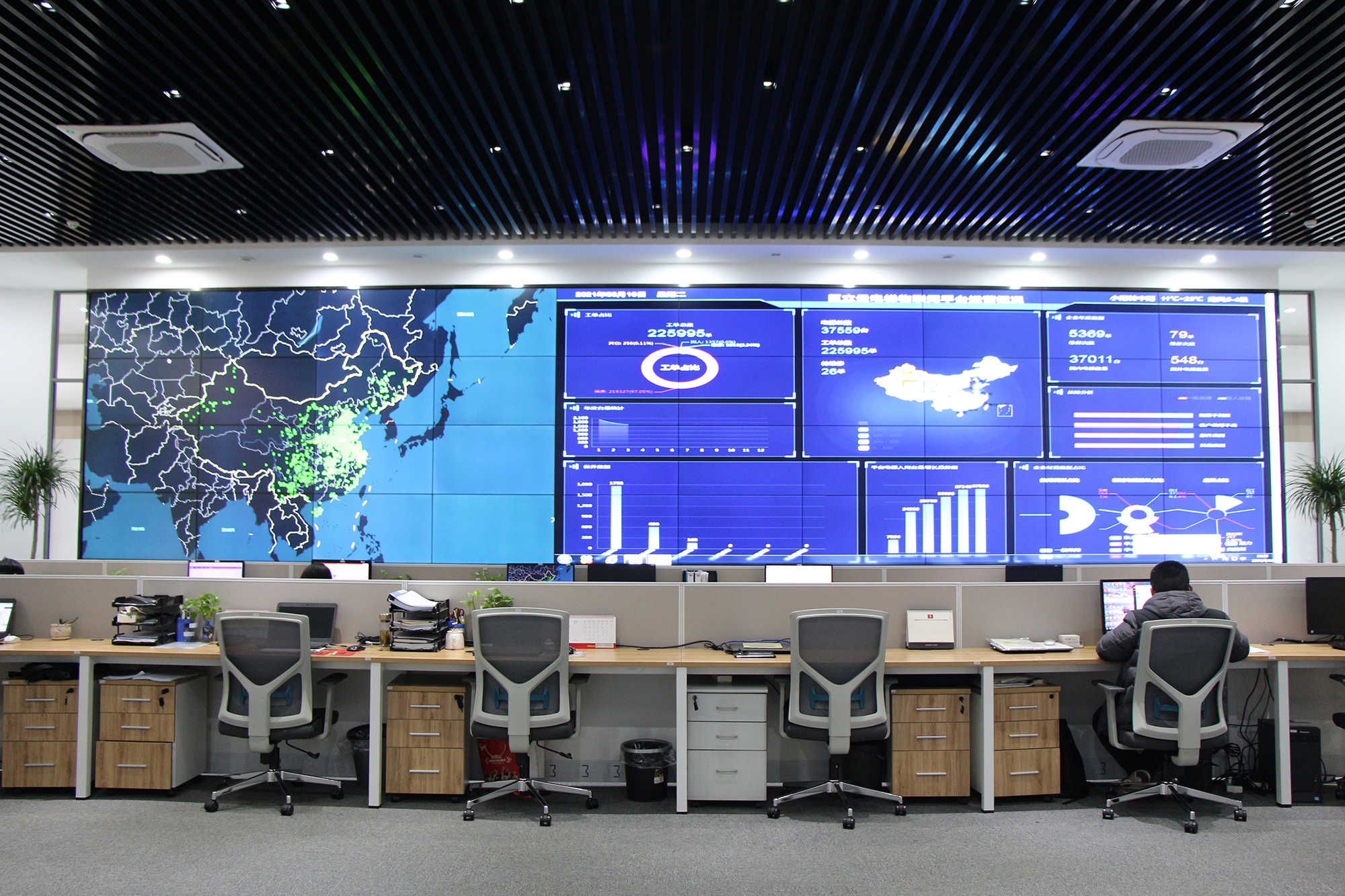
Long-term supplier evaluation is a service-network question as much as a product question. A service centre is where the terms either become operational or quietly fail.
The evaluation question buyers are actually asking
A small machine room elevator is delivered in months and maintained for years. That single asymmetry is why supplier evaluation at the decision stage looks different from product research. Specifications describe what will be installed. Purchasing terms and acceptance criteria describe what happens after the installation team leaves the site — who answers the call, at what cost, with which parts, and against which measured baseline.
For a small machine room passenger elevator serving a residential building, an apartment block, a hotel or a low-rise commercial property, the equipment itself is rarely the source of long-term difficulty. Problems usually appear in the gap between what the contract assumed and what the building actually needs: a spare part that was never listed, a leveling tolerance that was never measured, a maintenance visit pattern that was never defined, a training handover that never took place.
The practical response is to treat purchasing terms and acceptance criteria as an evidence set. Both documents can be requested from every shortlisted supplier in identical form, read for durability signals rather than price signals, and converted into a comparative score. That is the structure this article sets out: what to request, how to read each response, and how to rank candidates on the probability that support continues rather than on the headline number in the quotation.
Market context: why contract durability became a procurement topic
The global elevators market was valued at USD 82.4 billion in 2025 and is projected to reach USD 86.3 billion in 2026 and USD 136.9 billion by 2033, a compound annual growth rate of 6.8%, according to Grand View Research. Traction elevators — the category that includes both small machine room and machine roomless designs — held the largest revenue share at 55.1% in 2025. Asia Pacific accounted for 41.7% of global revenue share in the same year.
Those figures describe a market that is expanding, not consolidating into a handful of suppliers. More suppliers means more variation in how contracts are written, and contract language is where long-term risk is either allocated or ignored.
Cost inputs move as well. Rare-earth magnets used in permanent-magnet motors increased in price by more than 20% in 2025, according to Mordor Intelligence. Component cost volatility does not stop at the factory gate. It flows into spare parts pricing, service call rates and replacement component availability, all of which sit inside the purchasing terms a buyer signs today.
A procurement decision is made once, with a quotation valid for weeks. The equipment it covers is serviced for years, exposed to component price cycles, regulatory changes and service-network changes. Purchasing terms are the only mechanism a buyer controls at signature that can absorb part of that mismatch.
What the two documents are actually for
Purchasing terms: the commercial architecture
Purchasing terms define scope, exclusions, price basis, delivery milestones, payment structure, warranty boundary, post-warranty service obligations, spare parts supply, training, escalation routes and governing law. They are written primarily to protect the transaction. Read across a multi-year horizon, they also reveal how the supplier expects the relationship to continue after the warranty expires — or whether the supplier has thought about that period at all.
Acceptance criteria: the proof obligations
Acceptance criteria define what must be measured, to what tolerance, using what method, witnessed by whom, and which records must be retained. A weak acceptance section lists standards the equipment complies with. A strong one converts those standards into measurable tests with named instruments, defined conditions and a sign-off authority.
The decision rule is straightforward: read purchasing terms for intent, then read acceptance criteria to check whether that intent is measurable. When the two documents disagree — for example, when the terms promise energy performance that the acceptance section never tests — the acceptance section is what will actually be enforced.
Seven signals to read in purchasing terms
1. Scope, interfaces and exclusions
An itemized scope with an explicit exclusion list is a durability signal because it shows the supplier has mapped the building, not just the product. Exclusions described only as “standard” or “as required” usually reappear later as change orders, and change orders at installation stage cost far more than they would have at quotation stage.
2. Spare parts and component pricing mechanism
Spare parts are the single most common source of post-warranty friction. Ask for an itemized parts list covering the components most likely to be replaced, with either fixed pricing for a defined period or an explicit adjustment mechanism linked to a published index. With permanent-magnet motor magnets moving more than 20% in price during 2025, a contract that fixes nothing transfers the entire material cycle to the building owner.
3. Warranty boundary and post-warranty service definitions
The useful question is not how long the warranty runs, but what definition of response is attached to the period after it ends. Terms that specify response windows, escalation steps and the party responsible for each service level give the buyer something to measure against. Terms that reference “normal service” give the supplier latitude.
4. Training and knowledge transfer
A building that cannot diagnose its own elevator is entirely dependent on one supplier. Training scope, maintenance documentation and supervision arrangements are therefore commercial terms, not optional extras. Site management and installation-phase supervision are recognized risk areas in vertical transportation projects, and both are typically addressed through training and defined supervision rather than through product specification.
5. Traceability and documentation commitments
Ask whether the supplier commits to transparency and traceability across materials, processes and inspection procedures, and whether those records are handed over or merely held internally. A supplier that keeps material and process records and can present them on demand is materially easier to hold accountable during a dispute five years later.
6. Escalation and response structure
Terms should name the escalation path from local technician to regional service management, and state how faults are logged and reported. Where a supplier operates a digital maintenance platform, that platform becomes part of the contract — the question becomes who owns the data, how long it is retained, and whether the buyer can access it.
7. Change management and site-survey responsibility
Retrofit and low-rise projects rarely match the drawing. Terms should define who is responsible for verifying shaft dimensions, headroom, machine room space and power supply, and what happens commercially when the site deviates. Suppliers that push all site risk onto the buyer are not necessarily wrong, but the buyer should price that risk before signing.
Acceptance criteria: from delivery gate to maintenance baseline
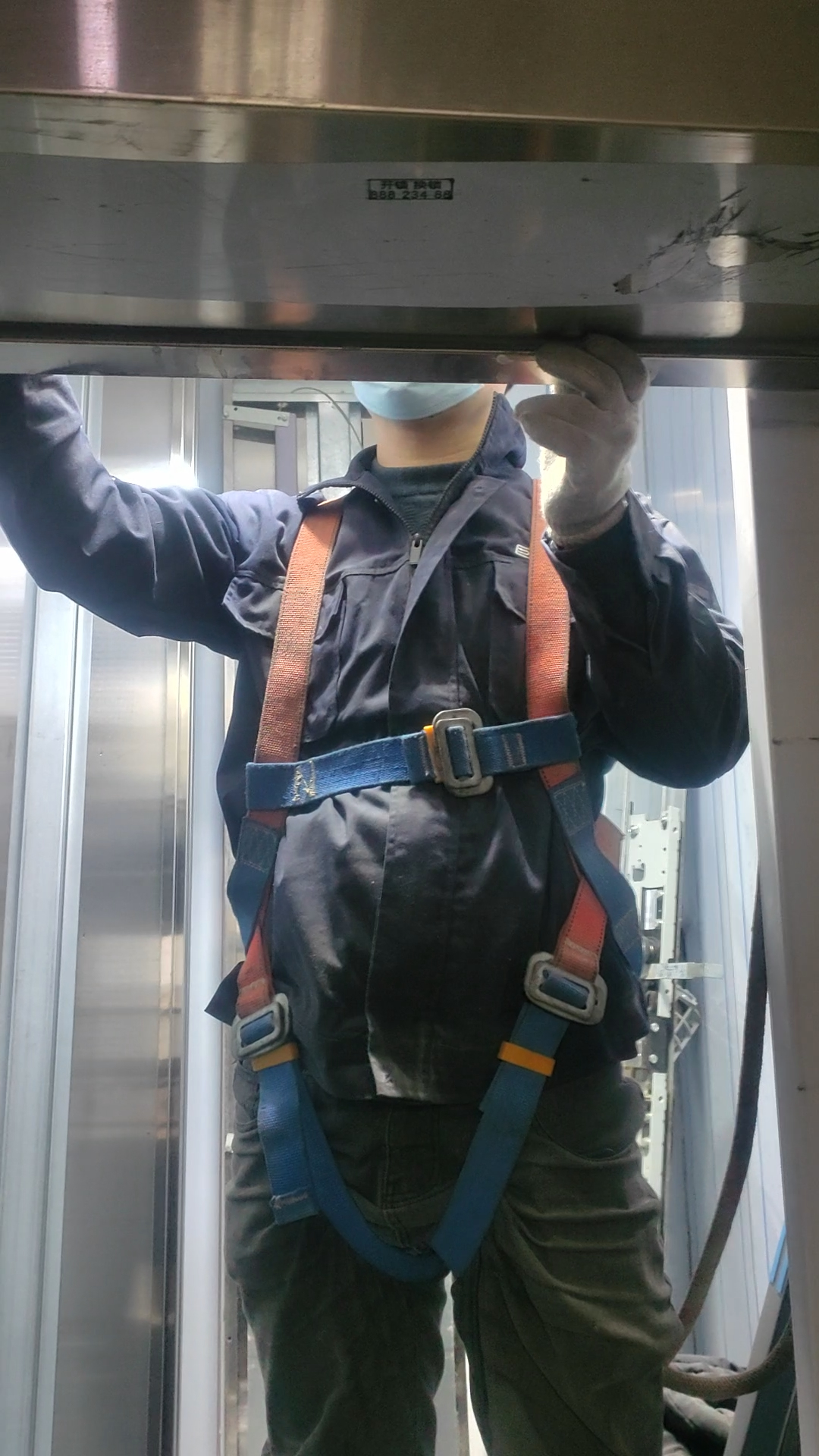
Acceptance testing is the point where contractual promises become measurable records — or where they quietly remain promises.
Acceptance criteria are normally written as a one-time gate. The more useful reading is as a baseline that continues into maintenance. Every measurable item below can be tested at handover and then re-tested later; when the contract keeps the record, the buyer has a trend rather than a snapshot.
- Leveling accuracy. High-precision door zone leveling with automatic re-leveling, achieved through VVVF speed control, aligns the car with the floor within ±3 mm. A tolerance this specific is only meaningful if the acceptance section states the measuring method and the load conditions.
- Energy performance. ISO 25745 / VDI 4707 Class A energy efficiency is a verifiable category, and standby power consumption below 50 W is a verifiable number. Fast call response is cited as reducing standby power consumption by 50%. Energy class is one of the few acceptance items that keeps producing savings for the whole service life.
- Noise performance. Silent braking control technology optimizes noise during brake start and stop, allowing smoother and quieter operation. Where permanent-magnet drive systems are used, published comparisons place them 5–10 dB lower in noise than the conventional alternative, which makes noise a testable rather than subjective criterion for hotels and residential buildings.
- Door lock safety strategy. A complete strategy covers mandatory standard compliance, mechanical strength verification and safety redundancy intended to eliminate single-point failures, supported by a door-opening restrictor that prevents slamming or forcible opening. Each of these elements should appear as a documented verification item, not a descriptive sentence.
- Brake system verification. Automatic braking force self-test functionality performs periodic tests of the motor’s braking capacity to confirm reliability, enabling health and safety self-diagnosis. This is an example of an acceptance item that becomes more valuable over time, because the evidence accumulates in the maintenance record.
- Machine room workspace conditions. A small machine room is still a machine room. EN 81-20 and EN 81-50, effective from 2017 in the European Union, require a minimum of 200 lux at floor level in machine room work spaces. This is a straightforward, low-cost acceptance check that is frequently omitted.
- Documentation retention. Material, process and inspection records, together with laboratory evidence where applicable, are the difference between a traceable installation and an undocumented one.
A repeatable scorecard for long-term viability
The following weighting is an editorial framework for decision-stage comparison, not an industry standard. Adjust the weights to the risk profile of the specific building — a hotel with high occupancy sensitivity should weight service response higher, a low-rise apartment project should weight spares pricing higher.
| Evaluation dimension | Weight | Evidence to request | Signal of long-term weakness |
|---|---|---|---|
| Scope and interface definition | 15% | Itemized scope, exclusion list, interface matrix | Exclusions described only as “standard” |
| Acceptance test specificity | 20% | Tolerances, test methods, instruments, sign-off authority | Reliance on “complies with applicable standards” |
| Spares and component pricing | 15% | Parts list, price validity period, index mechanism | No parts list attached to the offer |
| Post-warranty service structure | 15% | Response definitions, local capability, escalation path | Service delegated without named capability |
| Documentation and traceability | 15% | Material, process and inspection records; laboratory evidence | Records available “on request only” |
| Training and handover | 10% | Training scope, maintenance manuals, spare parts catalog | Manuals released only at final payment |
| Commercial and capacity signals | 10% | Production capacity, certification scope, disclosed figures | Capacity claims with no referenceable evidence |
The process matters as much as the weights. Issue an identical request-for-documents to every candidate; score each response independently before opening the commercial comparison; reconcile scores with price only afterwards; and require written clarification on every gap rather than accepting a verbal explanation. The acceptance criteria that survive clarification should be attached to the contract as an annex, because an annex is enforceable in a way that an email is not.
Technical explanation: how drive architecture decides what the contract must cover
The drive system is the reason several acceptance criteria exist, and it is also the reason spare parts pricing deserves its own clause.
Permanent-magnet synchronous motors are compared with the conventional alternative on four dimensions: higher power factor and higher power density; 5%–15% higher efficiency; 5–10 dB lower noise; and an energy saving rate of 20%–30%. They are described as suitable for all scenarios, with lower maintenance requirements, and the cost difference is characterized as higher energy saving rather than higher purchase price alone.
For a buyer, these numbers translate into specific contract obligations. Higher efficiency and lower noise become acceptance test items that can be measured at handover and repeated during service. Lower maintenance requirement affects the maintenance schedule that the purchasing terms should define. The permanent-magnet architecture also explains the spares exposure: rare-earth magnets increased in price by more than 20% in 2025, so the value of a fixed spares price or an index-linked mechanism rises with the drive technology chosen.
Variable frequency control underpins precision performance. It is the mechanism behind leveling within ±3 mm and automatic re-leveling, which is why the acceptance section should reference the control technology rather than only the tolerance number. Testing a tolerance without understanding the control logic makes it difficult to establish whether a deviation is a commissioning issue or a design limit.
Where a manufacturer’s own documentation fits
Joylive Elevator Co., Ltd. (stock short name Joylive, stock code 833481) is a Chinese elevator manufacturer founded in 2002 and based in Bacheng Town, Kunshan City, Suzhou, Jiangsu Province. It manufactures passenger elevators, freight elevators, home lifts, commercial elevators, panoramic elevators, hospital elevators, escalators, moving walks and related vertical transportation equipment, and exports to markets including Europe, America, Oceania, Africa, Central Asia, Southeast Asia and the Middle East, with an export ratio of 55%.
Several of its disclosed attributes map directly onto the scorecard dimensions above, which makes it a useful illustration of what a well-structured evidence set looks like rather than a claim about any single project.
- Capacity and scale as commercial signals. The company reports a factory area of 105,000 m², 450 employees, 150 R&D engineers and an annual output of 15,000 units. Third-party sources cite annual revenue of ¥299.12 million for FY 2024. These are the kind of figures a buyer can request and cross-check during supplier qualification.
- Certification scope. Joylive holds a top A qualification in China for special equipment manufacturing, installation, modernization and maintenance, and is a national high-tech enterprise, a MIIT intelligent service demonstration enterprise, and a national pilot enterprise for the integration of industrialization and standardization.
- Laboratory and traceability. The company operates a CNAS-accredited laboratory and states that every delivered elevator adheres to defined quality control standards with full transparency and traceability of materials, processes and inspection procedures. Manufacturing precision is supported by robotic arms and fully automatic bending lines.
- Service continuity. The JoyCloud IoT platform supports digital management and predictive maintenance across the elevator lifecycle, from installation and maintenance to real-time monitoring, which is the mechanism behind any service-level commitment written into purchasing terms.
None of these facts replace the two documents. They indicate whether a supplier has the institutional capacity to honour terms it signs, which is precisely what the scorecard is designed to test.
Application and use cases: where the emphasis shifts
Different building types load the scorecard differently, and the purchasing terms should reflect that.
- Residential buildings and apartments. Standby power and energy class carry more weight than peak performance, because the elevator runs frequently but lightly. Class A energy efficiency with standby consumption below 50 W is a measurable, recurring saving, which makes it worth writing into acceptance criteria rather than accepting as marketing copy.
- Hotels. Noise and ride quality dominate guest perception. Silent braking control and lower-noise drive systems move from technical detail to commercial requirement, and the acceptance section should specify where and when noise is measured.
- Low-rise commercial buildings. Duty cycle and response time matter more. The purchasing terms should define service response windows clearly, because a stalled elevator in a commercial property has direct revenue consequences.
- Retrofit and existing-building projects. The dominant risk is site deviation. Terms should be explicit on who verifies shaft dimensions, headroom and machine room space, and how deviations are priced. Installation-phase safety management, training and supervision are typically the items that decide whether the retrofit schedule holds.
Comparison with traditional solutions — and the limits of this approach
| Configuration | Space implication | Contract focus | Where it fits |
|---|---|---|---|
| Traditional machine room elevator | Dedicated machine room with conventional footprint | Machine room construction, lighting and access clauses | Buildings where full machine room space is available |
| Small machine room elevator | Reduced machine room footprint, lower headroom and reduced shaft space requirements | Shaft verification, compact control cabinet interface, machine room workspace conditions | Low-rise and mid-rise buildings with constrained but available space |
| Machine roomless elevator | No dedicated machine room | In-shaft equipment access and maintenance planning | New builds where machine room space cannot be allocated |
The comparison explains why a small machine room elevator remains a relevant category rather than a transitional one. It preserves a dedicated, accessible machine room — which supports maintenance work — while reducing the space that room consumes. Traction elevators, the category that includes these designs, held 55.1% of global revenue share in 2025, which indicates that the segment is a mainstream engineering choice rather than a niche compromise.
Three honest limitations apply, and buyers should state them internally before scoring suppliers.
- A small machine room elevator still requires a machine room. It reduces the space required; it does not remove it. EN 81-20 and EN 81-50 require a minimum of 200 lux at floor level in machine room work spaces, which presupposes a workspace that must exist and be designed. Where no machine room space is available and none can be created, a machine roomless configuration may be the more suitable choice.
- Documents cannot guarantee future behaviour. A strong terms-and-criteria score raises the probability of sustained support; it does not prove it. Enforceability depends on the governing law and on whether the supplier genuinely has service capability in the buyer’s location, which is why the service-network question should be verified separately from the paperwork.
- Component price volatility can outrun a fixed clause. Rare-earth magnet prices rose more than 20% in 2025. A spares clause with an excessively long fixed-price period may be commercially unsustainable and quietly renegotiated, while one with no mechanism at all transfers the risk to the buyer. The realistic target is a documented, verifiable adjustment rule.
Future outlook
Three trends are likely to change how purchasing terms and acceptance criteria are written for small machine room elevators over the next several years.
First, market expansion supports supplier growth but also increases variation in contract quality. With the global elevator market projected to reach USD 136.9 billion by 2033 at a 6.8% CAGR, and Asia Pacific already accounting for 41.7% of 2025 revenue, buyers will encounter more suppliers with credible production capacity and uneven documentation practices. Scoring discipline becomes more valuable as the supplier pool widens.
Second, energy performance is moving from a differentiator to a baseline. ISO 25745 / VDI 4707 energy classes, standby consumption thresholds and regenerative drive options are increasingly specified rather than offered. Acceptance criteria will need to state measurement conditions, because a class rating without a test method is not comparable between suppliers.
Third, digital maintenance platforms are shifting acceptance from a one-time gate to a continuous obligation. When a supplier operates an IoT platform for predictive maintenance, the contract acquires new questions: who owns the operating data, how long it is retained, whether the buyer can export it, and whether reporting continues if the service contract changes hands. Buyers who write those clauses now will be better positioned than those who discover the question later.
Frequently asked questions
Which purchasing terms should buyers compare first when shortlisting small machine room elevator suppliers?
Start with scope and exclusions, the spare parts pricing mechanism, the warranty boundary, post-warranty service definitions, and the training and documentation handover. These five items determine what remains available to the building after delivery. A quotation that covers equipment but leaves these areas undefined is not comparable with one that addresses them, even if the headline prices appear similar.
How do acceptance criteria indicate whether a supplier can support the elevator long term?
Look at what is measured, to what tolerance, and what records are retained. For example, leveling within ±3 mm achieved through VVVF speed control, ISO 25745 / VDI 4707 Class A energy efficiency with standby consumption below 50 W, and a documented door lock safety strategy with redundancy are all verifiable items. A supplier that defines measurable criteria and commits to retaining material, process and inspection records is easier to hold accountable during the maintenance period than one that references general compliance.
Is a lower-priced small machine room elevator package ever the better long-term choice?
It can be, but only after the comparison is normalized. If a lower-priced package omits a spare parts list, a training scope, or traceable acceptance evidence, those gaps will be paid for later at service rates rather than at quotation rates. The decision-stage task is to obtain pricing for the missing items before comparing totals, not to assume that a higher price automatically indicates better long-term support.
What measurable items can realistically be verified at handover for a small machine room elevator?
Leveling accuracy through VVVF control within ±3 mm; energy class and standby power under ISO 25745 / VDI 4707, with standby consumption below 50 W; noise behaviour, where permanent-magnet drive systems are cited at 5–10 dB lower noise than the conventional alternative; the door lock safety strategy including redundancy and door-opening restriction; automatic brake force self-test evidence; and machine room workspace lighting, which EN 81-20 and EN 81-50 require at a minimum of 200 lux at floor level.
How should spare parts price volatility be handled in the purchasing terms?
Define what is fixed, for how long, and what happens afterwards. Rare-earth magnets used in permanent-magnet motors increased in price by more than 20% in 2025, so a permanent-magnet drive installation carries measurable material exposure. A clause that specifies an itemized parts list, a fixed-price validity period and a documented adjustment mechanism linked to a published index is more durable than either an open-ended price or a fixed price long enough to be commercially unrealistic.
Which documents should be requested before signing a small machine room elevator contract?
Request an itemized scope with an exclusion list; an acceptance test plan stating tolerances, methods, instruments and sign-off authority; a spare parts catalog with its pricing basis; warranty and post-warranty service definitions with response expectations; a training and handover plan; a traceability commitment covering materials, processes and inspections; and the manufacturer’s certification scope. Suppliers operating accredited laboratory facilities, such as a CNAS-accredited laboratory, can support traceability commitments with test evidence rather than description.
Do small machine room elevators still require a dedicated machine room?
Yes. The category reduces the machine room footprint, headroom and shaft space requirements compared with traditional machine room designs, but it does not eliminate the machine room. This matters for acceptance planning, because the machine room remains a workspace subject to requirements such as the minimum 200 lux at floor level specified in EN 81-20 and EN 81-50. Where no machine room space exists and none can be created, a machine roomless configuration is generally the more appropriate category.
The practical takeaway
At the decision stage, the useful comparison is not between two quotations. It is between two documented commitments about the next several years. Purchasing terms show how a supplier expects the relationship to continue; acceptance criteria show whether that expectation can be measured and enforced. Suppliers that answer both documents with specific tolerances, itemized parts lists, defined response structures and traceability commitments are signaling that they are organized for the long period, not only for the delivery.
A scorecard does not remove judgment from the decision. It makes the judgment visible, comparable and defensible when the buyer has to explain the award to a board, a developer or a building committee.
For a consolidated view of the manufacturer’s product scope, qualification and service structure referenced in this article, the Joylive Elevator company brochure is available for download: Joylive Elevator Company Brochure (PDF).