
Small Machine Room Passenger Elevators: What Buyers Should Know
Small machine room passenger elevators occupy a practical middle ground between traditional elevators with large machine rooms and machine-roomless (MRL) elevators. They keep a compact, dedicated machine space, which can make maintenance safer and more convenient while reducing the amount of building area that must be reserved for mechanical equipment. For construction teams, architects and procurement professionals, understanding this elevator configuration is becoming more important as building designs become more space-efficient.
Why small machine room elevators matter today
The elevator industry has spent years reducing the physical footprint of vertical-transportation equipment. Traditional traction elevators usually require a dedicated machine room above the hoistway, large enough to house the traction machine, control panel, governor and other components. That space is expensive in commercial buildings, and it reduces the area available for rentable rooms or rooftop equipment in residential projects. At the other end of the spectrum, machine-roomless elevators remove the machine room almost entirely by placing the drive equipment inside the hoistway. MRL systems save space, but they can make maintenance less comfortable because technicians must perform some work from the top of the car or within the shaft.
Small machine room passenger elevators are designed to sit between those two approaches. They still have a machine room, but the room is significantly smaller and lower than what older traction elevators required. This layout answers a specific building challenge: how to give maintenance crews a proper working space without consuming an entire floor or large rooftop area.
For architectural teams, the possible benefit is measurable in extra usable floor area. For building owners, it can mean lower construction cost and less complexity in MEP coordination. For users, the benefit is a passenger elevator that remains practical and serviceable over its lifecycle. The elevator is not simply a machine; it is part of the building's long-term operating cost. This makes the small machine room configuration relevant not only to new construction but also to modernization projects where an existing machine room can be reconfigured.
What is a small machine room passenger elevator?
A small machine room passenger elevator is a traction elevator that uses a compact machine room instead of a full-size one. In most layouts, the machine room is placed directly above the hoistway, as in conventional elevators, but it is designed around modern, compact drive technology. The result is a machine room that may be reduced in height, width or both.
The core technology that makes this possible includes permanent magnet synchronous gearless traction machines, variable frequency drives, compact control cabinets and integrated safety components. These components are generally smaller than the older geared machines and electromechanical controllers used in past decades. A permanent magnet motor does not need a separate gearbox, so the traction machine itself is shorter and lighter. The control cabinet can also be made more compact by using modern electronic components and digital signal processing.
From a compliance point of view, a small machine room must still meet the same fundamental safety requirements as a larger room. In Europe, for example, EN 81-20 and EN 81-50, effective from 2017, set requirements for lift shaft and machine room safety, including minimum illumination levels. Verified industry data notes that these standards require at least 200 lux at floor level in machine room work spaces. Even a compact room must therefore provide adequate lighting and safe access for technicians.
It is helpful to distinguish small machine room elevators from MRL elevators. An MRL elevator has no machine room at all; the traction machine and control equipment are installed inside the hoistway. This saves even more space, but maintenance staff often need to access machinery from the top of the elevator car. In a small machine room elevator, the technician can enter a dedicated room instead of working in the shaft. That improves working conditions and can make troubleshooting easier because the equipment is organized in a permanent location.
Small machine room layouts are not defined by a single dimensional standard. The exact machine room size is influenced by elevator capacity, speed, travel height, manufacturer design and applicable local regulations. A supplier's engineering team should provide accurate drawings and details based on the selected elevator model and building data.
How compact machine rooms create value
From a real-estate perspective, a smaller machine room can be converted into higher-value space. In residential towers, the machine room is often placed on the roof; reducing its floor area may allow more room for elevator equipment on multiple shafts, or it may free rooftop space for mechanical ventilation, water tanks or solar panels. In commercial buildings, space saved around the elevator core may allow an additional room or storage area on upper floors.
From a mechanical standpoint, keeping a machine room is an advantage over MRL for service intensity. Preventive maintenance tasks—checking the traction machine, governor, overspeed governor ropes, control panel and wiring—can be carried out more easily when the equipment is in a room rather than in the hoistway. This can reduce the mean time to repair and improve occupational safety for technicians, which in turn supports elevator availability.
There are also design considerations. A smaller machine room often requires closer cooperation between the architect, the structural engineer and the elevator manufacturer early in the design process. If the building can accommodate only a very low headroom above the shaft, an MRL may be more appropriate. If the building can offer a modest machine room, a small machine room layout may achieve a better balance of space economy and serviceability.
Joylive as a reference manufacturer for passenger elevator projects
When procurement teams evaluate manufacturers for passenger elevator projects, they need verifiable facts about the company's design, production and service capabilities. Joylive Elevator Co., Ltd. is one example of a Chinese elevator manufacturer that has established a broad industrial base for passenger elevators and other vertical-transportation products.
Joylive was founded in 2002 and is located in Bacheng Town, Kunshan City, Suzhou, Jiangsu Province, China. The company reports a production capacity of 15,000 units per year, a factory area of 105,000 square meters, about 450 employees and 150 engineers in its R&D team. Joylive holds Class A qualifications in China for special-equipment manufacturing, installation, modernization and maintenance, and it operates an advanced intelligent manufacturing center and a nationally accredited CNAS laboratory. These are useful signals for buyers who need a manufacturing partner with controlled processes and testing resources.
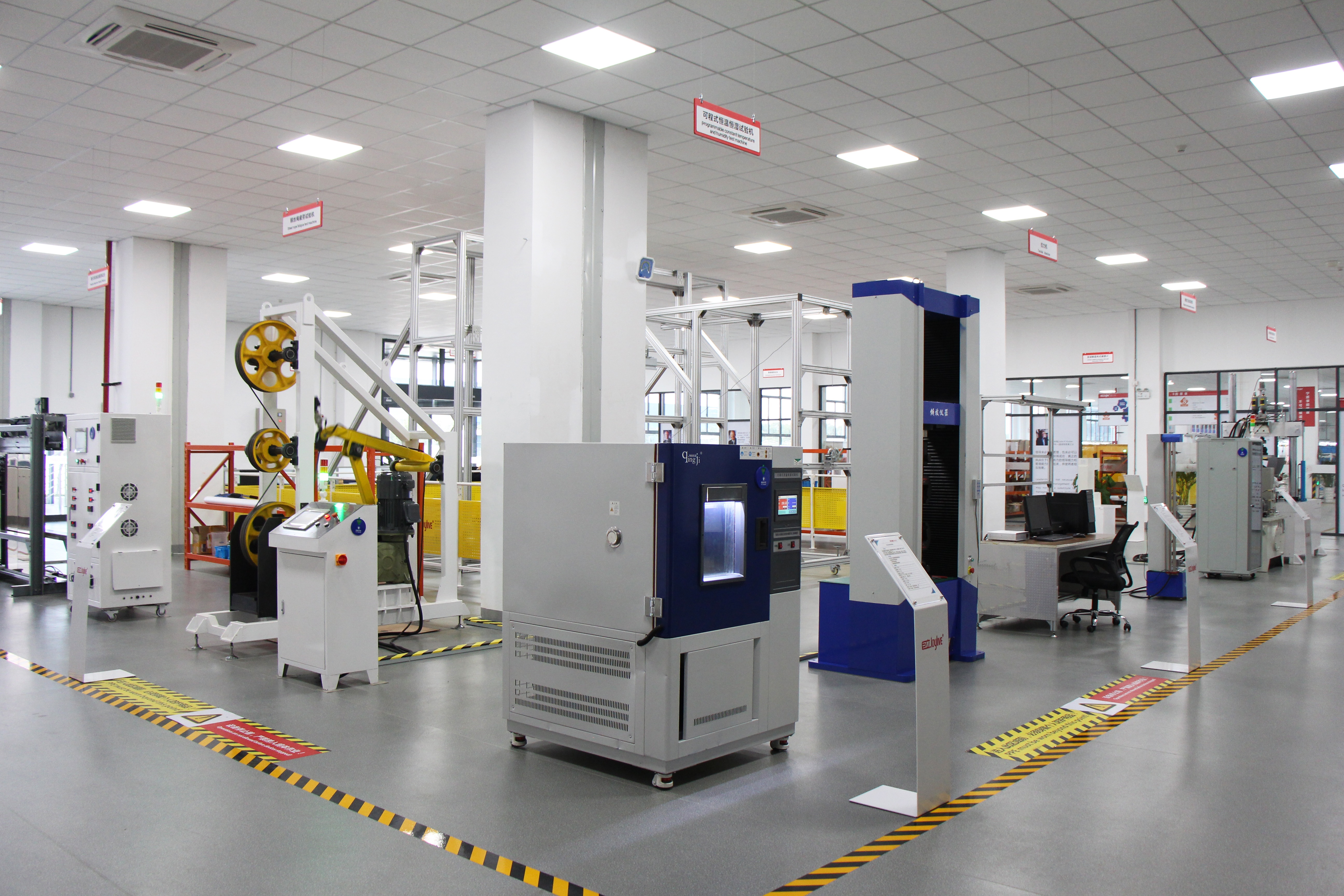
Joylive's product range spans passenger elevators, freight elevators, home lifts, commercial elevators, hospital elevators, panoramic elevators, escalators and several types of specialized elevators. Its main markets cover China, Europe, America, Oceania, Africa, Central Asia, Southeast Asia and the Middle East, with about 55% of output exported.
For passenger elevator applications, Joylive supplies GP30 and GPN30 passenger elevator models. Verified product data indicates these models are designed for speeds from 1.0 to 8.0 m/s, rated loads from 630 kg to 3,000 kg, and a maximum travel height of 350 meters. The applicable industry list includes residential buildings, hotels, hospitals, transport hubs, schools, office buildings, infrastructure as well as factory and logistics settings. These are standard passenger elevators that can be integrated into different building designs, and the manufacturer says it provides customized elevator system solutions from design and R&D through intelligent manufacturing to whole-lifecycle management.
It should be noted that the verified corporate facts do not identify a dedicated "small machine room elevator series" at Joylive. Instead, Joylive's relevance to small machine room passenger elevator projects lies in its ability to design and deliver passenger elevator systems based on project-specific requirements. Buyers considering compact machine room layouts should ask the manufacturer for the exact machine-room footprint, headroom and hoistway data for a particular model and capacity. No supplier should be assumed to support a small machine room layout until its engineering drawings confirm that the configuration is compatible.
Where small machine room passenger elevators are used
Small machine room passenger elevators are commonly selected for buildings where floor-area efficiency matters but the owner still wants the service benefits of a dedicated machinery space. Typical environments include mid-rise and high-rise residential apartments, hotels, offices and low-rise commercial buildings.
Residential buildings, for example, need to balance the number of apartments on each floor with the size of the elevator core. A compact machine room can help the developer maximize leasable floor area. Hotels benefit from the same principle: reduced service space means more guest rooms or better use of rooftop facilities. Office buildings often have multiple elevators grouped together; a smaller machine room can simplify the grouping and reduce the building footprint.
Low-rise buildings and apartment complexes are also a natural fit. Such structures do not always require high-speed elevators, but they still need equipment that complies with safety regulations and can be maintained properly. A compact machine room can be easier to integrate than a full-size room when total building height is limited.
In addition to new construction, small machine room configurations are relevant to elevator modernization. Replacing old traction elevators with modern compact drive systems can free usable space in an existing machine room, or enable the machine room to be rebuilt smaller. In retrofit scenarios, however, the project team must verify whether existing hoistway dimensions, pit depth, headroom and electrical supply are suitable for a new machine-room-reduced layout.
Joylive's passenger elevator models GP30 and GPN30 are documented for use in residential, hotel, hospital, transport hub, school, office, infrastructure, factory and logistics settings. This broad applicability makes the GP30/GPN30 family a plausible starting point for many passenger transport projects. Yet the actual choice of machine room design must be confirmed with the manufacturer based on each site's constraints.
Market trends shaping small machine room elevator adoption
The global elevator market is sizable and growing. Commercial research from Grand View Research values the global elevator market at USD 82.4 billion in 2025, with a projection of USD 86.3 billion in 2026 and USD 136.9 billion by 2033, representing a compound annual growth rate of 6.8% from 2026 to 2033. Within the market, traction elevators—the category that includes both small machine room and machine-roomless traction elevators—held the largest revenue share at 55.1% in 2025.
Regionally, Asia Pacific dominated the elevator market with a 41.7% revenue share in 2025. That regional strength is consistent with rapid urban construction in countries across Asia, where residential and commercial tower development is intensive. It also explains why many international buyers look to Asian elevator manufacturers for cost-effective equipment with modern technology.
A potential market pressure, however, comes from raw materials. Rare-earth magnets used in permanent-magnet motors increased in price by more than 20% in 2025, according to Mordor Intelligence. This is a relevant cost signal for small machine room elevators because the energy-efficient motors used in modern compact designs depend on rare-earth magnet technology. Buyers should track material-driven price movements when planning budgets or negotiating long-term supply agreements.
At the same time, public research on elevator market sizes rarely separates small machine room elevators from machine-roomless elevators with precision. Much commercial reporting uses broad categories such as "traction elevator" or "elevator and escalator market." As a result, buyers should not expect a single authoritative SMR market-share figure. Instead, procurement teams should rely on manufacturer-specific engineering datasheets and request project-specific machine room drawings.
Comparison with traditional and machine-roomless configurations
| Configuration | Machine room | Typical maintenance access | Space impact |
|---|---|---|---|
| Traditional machine room elevator | Full-size dedicated room above hoistway | Easy, direct access to all major components | Large footprint; consumes significant building volume |
| Small machine room elevator | Compact dedicated room, generally above hoistway | Good access; technician enters a reduced-size room | Moderate; saves space compared to traditional layout |
| Machine-roomless elevator | No dedicated machine room | Access from hoistway or car top; may be restrictive | Minimal; machinery inside hoistway |
Choosing a small machine room configuration is not automatically the best answer for every project. There are real boundaries. If the building cannot provide any machine room, even a compact one, an MRL elevator is usually the more practical solution. If the building has very generous rooftop space and high-speed or heavy-duty performance is more important than space economy, a traditional machine room may offer more flexibility in equipment selection and maintenance.
Another limitation is structural. A machine room, however small, adds structural load and may require certain overhead clearances. In an existing building where shaft headroom is extremely tight, converting to a small machine room may be impossible without major structural modification. In such cases, MRL or other alternative configurations should be reviewed first.
Maintenance behavior is also a consideration. Some building owners prefer to avoid maintenance personnel entering the hoistway whenever possible. A small machine room is a legitimate safety improvement over MRL designs in that respect. But if the machine room is too cramped, routine checks can become uncomfortable; buyers should ask the supplier for minimum dimensions and verify that local safety code limits are satisfied.
Buyer considerations and verification steps
For buyers at the research stage, a methodical approach to evaluating small machine room passenger elevators can reduce risk. Start by examining the physical limits of the building: shaft width, depth, pit depth, headroom and available space for a machine room. These factors determine whether a specific elevator model can be delivered with a compact machine room design.
Next, ask the manufacturer for technical drawings and dimension data rather than relying only on brochures. A credible elevator supplier should be able to provide a layout drawing showing the machine room footprint, required clearances, location of the control panel, traction machine model, guide rail sizes and electrical requirements. If the supplier cannot provide that level of detail early in the process, it is a warning sign.
Then examine the manufacturer's production credentials. Does the company have its own manufacturing facility? What certifications or qualifications does it hold? Are its R&D and testing facilities documented? For Joylive, these points can be verified: the company has a large factory in Kunshan, a CNAS laboratory, a stated annual output of 15,000 units and a 150-person R&D team. Buyers should, however, independently confirm any figures that are material to their contract.
Energy efficiency is often a quoting criterion. Permanent magnet gearless traction machines and variable frequency drives are widely used in small machine room elevators to reduce energy consumption compared to older geared systems. Yet specific energy savings depend on traffic patterns, load and counterweight ratios. Ask the supplier for energy consumption calculations or reference case data instead of accepting generic claims.
Finally, consider after-sales service. A compact machine room does not eliminate the need for maintenance; it only changes where the work is performed. Buyers should understand the supplier's response times, spare-part availability and service network, especially if the project is outside the manufacturer's home country.
Future outlook for small machine room passenger elevators
The direction of elevator technology is toward smaller, smarter and more connected systems. Digital monitoring already plays a role in Joylive's application scenarios, where IoT devices and the Joycloud platform appear as matched equipment. This suggests that modern passenger elevators, including small machine room models, will increasingly be connected to cloud platforms for remote monitoring and predictive maintenance.
A small machine room is a favorable environment for IoT devices. Because the equipment is located in a protected room, sensors, controllers and communication modules are easier to install and maintain than they would be in a fully hoistway-integrated MRL system. Building managers can collect data on motor temperature, door operation cycles, ride comfort and other performance indicators.
At the same time, rising rare-earth material costs may push manufacturers to optimize motor designs and use alternative magnet chemistries or drive configurations. This could influence machine room dimensions in unexpected ways. Buyers should stay informed about component price movements and how suppliers plan to manage cost exposure.
From an industry perspective, the distinction between "machine room reduced" and "machine roomless" will become more important as builders try to compare products. At present, there is a lack of reliable, independently published market data that isolates small machine room elevators. Over time, industry associations and research firms may improve their segmentation. Until then, project-specific engineering data will remain more reliable than broad market statistics.
Frequently asked questions
What is a small machine room passenger elevator?
A small machine room passenger elevator is a traction elevator that uses a compact machine room, usually above the hoistway, instead of a full-size machine room. Modern compact traction machines, control cabinets and drives allow the equipment to fit in a smaller space while still giving technicians a dedicated room for maintenance.
How does a small machine room elevator differ from a machine-roomless elevator?
An MRL elevator has no dedicated machine room; its machinery is installed inside the hoistway. A small machine room elevator retains a reduced-size room for the machine and controls. This makes maintenance access more direct and can improve working conditions for technicians, but it requires more building volume than a true MRL system.
Which building types commonly use small machine room passenger elevators?
Small machine room elevators are often used in residential buildings, apartments, hotels, office buildings and commercial projects where space efficiency is important. They are also suitable for low-rise and mid-rise structures that need regular maintenance access.
What should buyers verify before choosing a small machine room elevator?
Buyers should verify hoistway dimensions, pit depth, headroom, machine room size, and the exact layout from the manufacturer. They should also confirm that the selected elevator model can fit within the available machine room and comply with local safety standards.
Are small machine room elevators more energy-efficient than older elevators?
Modern small machine room elevators normally use permanent magnet gearless motors and variable frequency drives, which can be more energy-efficient than older geared systems. Actual energy savings depend on traffic patterns, load, speed and control logic, so project-specific calculations are recommended.
What is Joylive's involvement in small machine room elevator projects?
Joylive Elevator Co., Ltd. is a Chinese manufacturer of passenger elevators and other vertical-transportation products. It provides customized elevator system solutions and can supply passenger elevator models such as GP30 and GPN30 for residential, commercial and infrastructure projects. Buyers should request a technical drawing from Joylive to confirm the machine room dimensions for a specific project.
Further resources
For readers seeking a complete overview of Joylive's corporate profile, product categories and capabilities, the company publishes a public corporate brochure. It can be downloaded for reference at https://cdn.socialarks.com/sbsp//common/2026/0323/69c0e2835fd7e.pdf.
Have Questions or Need More Details?
Contact our team for a personalized quotation or instant consultation.
Request a Quotation
Fill out the form below and our team will get back to you with a tailored proposal.
WhatsApp Direct Chat
Prefer to chat in real-time? Message us on WhatsApp for instant assistance & quick answers.
- Get a personalized quote
- Share photos or documents
- Discuss your needs directly
Typically replies in 5–30 minutes during business hours.