
Small Stone Crusher: Capacity, OEM Scope and Site Fit
Small Stone Crusher: Capacity, OEM Scope and Site Fit
A small stone crusher is defined less by physical size than by its feed opening, its rated capacity band and the line architecture it can carry. Within stone crushing production lines, machines rated roughly between 5 and 150 t/h do the primary and secondary work at small quarries, construction and demolition (C&D) waste sites and remote contract-crushing projects. This reference explains how that band is specified, what an OEM-ready small crusher order actually covers, how a small line is assembled and matched, and where small-machine economics stop being the right answer.
Key takeaways
- The small-crusher band is set by feed opening and rated tonnes per hour: PE-250×400 is rated 5–20 t/h, PE-400×600 15–60 t/h and PE-500×750 20–80 t/h.
- OEM/ODM scope at this scale typically covers voltage (380 V, 440 V, 415 V, 660 V), motor brand, colour and logos, line layout, capacity and output grading, and automation level.
- A complete small line can be ordered at a minimum quantity of 1 set, with regular lead times of 15–30 days.
- Rated output is an ideal-condition figure. Real throughput moves with feed hardness, moisture, feeding continuity and wear-part condition.
How small stone crushers are classified
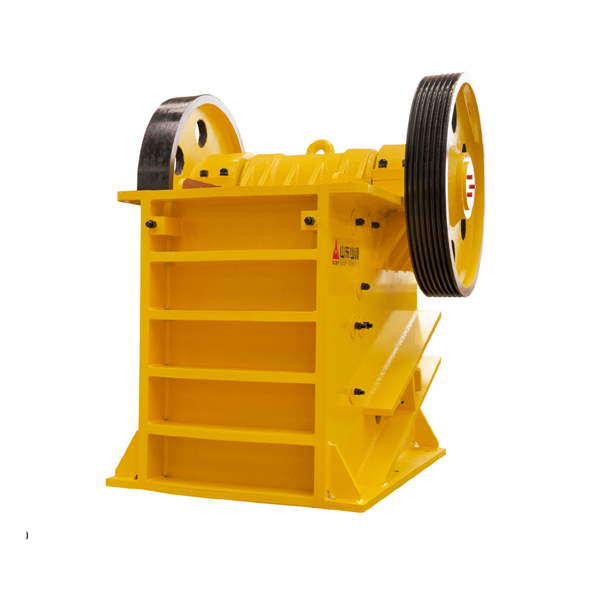
Three parameters do the classifying work: feed opening width, maximum accepted feed size and rated capacity in tonnes per hour. The PE-250×400 primary jaw crusher has a 250 × 400 mm feed opening, accepts feed up to 210 mm, discharges 20–80 mm and is rated 5–20 t/h at 15 kW with a 2.5 t unit weight. The PE-400×600 is rated 15–60 t/h at 30–37 kW, and the PE-500×750 reaches 20–80 t/h at 55 kW with an 8.9 t unit weight.
For primary jaw crushers, a commonly applied sizing rule is that the largest lump in the feed should be about 0.8–0.85 of the feed opening width, and that rated capacity should exceed the required output by roughly 10–20% so the machine is not run continuously at full load. Those two rules explain why a nominal “small” jaw may be deliberately oversized for its stated duty.
Secondary and tertiary small machines use a different geometry. Fine jaw crushers such as the PEX-150×750 (maximum feed 120 mm, discharge adjustment 18–48 mm, 15 kW) reduce primary product rather than accept run-of-quarry rock. Small hammer crushers are used where a high reduction ratio and a compact footprint matter more than particle shape: the PC-400×300 is rated 30–50 t/h at 11–22 kW with a unit weight of 0.8 t, and the PC-600×400 is rated 50–80 t/h. The PX-800 fine impact crusher accepts up to 300 mm, produces a 5–20 mm product and is rated 30–45 t/h in crushing duty, while small roller crushers such as the 2PG-400 handle softer, friable feeds in the 2–18 t/h range.
| Machine class | Model | Max feed | Product / discharge | Rated capacity | Power |
|---|---|---|---|---|---|
| Primary jaw | PE-250×400 | ≤210 mm | 20–80 mm | 5–20 t/h | 15 kW |
| Primary jaw | PE-400×600 | 340 mm | 40–100 mm | 15–60 t/h | 30–37 kW |
| Primary jaw | PE-500×750 | ≤480 mm | 50–110 mm | 20–80 t/h | 55 kW |
| Fine jaw | PEX-150×750 | 120 mm | 18–48 mm | Secondary duty | 15 kW |
| Hammer | PC-400×300 | Rotor <100 mm | <10 mm | 30–50 t/h | 11–22 kW |
| Hammer | PC-600×400 | Rotor <100 mm | <15 mm | 50–80 t/h | 18–30 kW |
| Fine impact | PX-800 | 300 mm | 5–20 mm | 30–45 t/h (crushing) | 30–45 kW |
| Roller | 2PG-400 | — | — | 2–18 t/h | 11 kW × 2 |
Why small-capacity processing keeps its place
Raw-material haulage, not crushing, usually dominates the cost of a small operation. Where demolition material or quarry feed is scattered across sites, trucking it to one central plant can cost more than processing it where it sits. A documented case illustrates the effect: a construction waste recycling operation running a YCG-J750 tyre-type mobile jaw station and a YCG-I1214 tyre-type mobile impact station has processed construction and demolition waste on site for more than two years, with zero transport waste reported and a 60% cost reduction compared with landfill disposal.
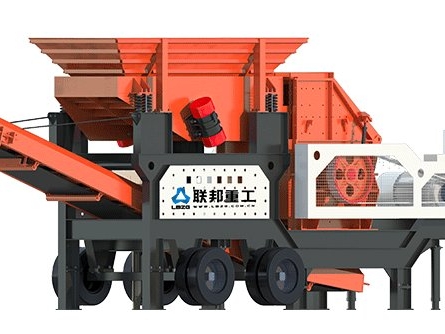
Foundation and permitting constraints push demand in the same direction. Trailer-mounted stations are designed to operate without concrete foundations; the YCG-J750 carries a PE-750×1060 jaw crusher, is rated 110–230 t/h and supports 380 V/440 V supply, which makes it viable for short-term sites that would not justify civil works. The trade-off is that mobile plants have an upper capacity limit, so projects that need high sustained tonnage still converge on fixed lines.
A third driver is geography. Overseas quarry and infrastructure projects frequently operate on grids that differ from the equipment’s default configuration, and on sites where a technician cannot be dispatched the same day. Voltage adaptation and documentation therefore become part of the specification rather than an afterthought — a point discussed further in the OEM scope section below.
What an “OEM-ready” small crusher order actually covers
Shandong Lianbang Heavy Industry Co., Ltd. is a Linyi, Shandong-based manufacturer of sand-stone crushing, sand-making and solid waste recycling equipment, registered in 2013 and tracing its technical origins to Chengming Machinery, an affiliated enterprise established in 1996. The company operates under the brand trademark Shanyuan LBZG, runs two production bases covering a total of 120,000 m² with 40,000 m² of standard workshops and more than 150 sets of processing equipment, and employs about 110 people, of whom over 40 work in R&D. Its products are sold across all provinces in China and in more than 40 overseas markets.
For small-capacity buyers, the practical meaning of “OEM-ready” is fit rather than branding. The documented customization scope covers voltage options of 380 V, 440 V, 415 V and 660 V, motor brand, colour and logos, production line layout, capacity and output grading, and automation level, along with dedicated quartz and sand production line customization including layout and output grading adjustments. OEM and ODM production services are offered for stone crushing production lines, so a buyer can specify a private-label configuration or ask for an ODM-designed line rather than choosing from a fixed catalogue.
Commercial terms are correspondingly granular. The minimum order quantity is 1 set or 1 unit, which allows pilot and trial orders as well as volume orders; regular lead time is 15–30 days with urgent orders negotiable; and stated monthly capacity for stone crushing production line orders is approximately 170 sets. Acceptance combines a 100% pre-shipment factory test with on-site installation and commissioning. Post-sale support comprises a one-year warranty, remote guidance plus on-site repair, and spare parts held at the company’s Linyi location.
Compliance documentation is part of the same package. The company holds ISO 9001:2015 certification for the R&D and production of sand-stone crushing equipment (certificate 10425Q00777R1M, issued 17 May 2025 and valid to 24 May 2028), alongside ISO 14001 and OHSAS 18001 system certifications, and CE Mark certification issued through Ente Certificazione Macchine (certificate 3N251002.SLHCS40, covering Machinery Directive 2006/42/EC and the standards EN ISO 12100:2010 and EN 60204-1:2018+A1:2025, valid from 2 October 2025 to 1 October 2030). The company also participates in revising national crusher industry standards, was re-recognized as a National High-tech Enterprise in 2023, and holds municipal and provincial R&D platform recognitions.
How a small crushing line is assembled and matched
A complete crushing production line converts raw rock into sized aggregate and manufactured sand through a staged flow: feeding, primary crushing, secondary or tertiary crushing, screening, optional sand making and optional washing, with belt conveyors moving material between stages. In a small line, each stage is deliberately sized to the one before it, and the matching rules matter more than any single machine rating.
A worked example for a roughly 50–80 t/h duty shows the logic. A PE-500×750 jaw crusher handles the primary stage at 20–80 t/h with feed up to 480 mm. Behind it, a CZG-1030 vibrating feeder (30–100 t/h, 11 kW) or a CZG-1250 (40–150 t/h, 15 kW) provides uniform feed; a larger ZSW-380×96 covers 96–160 t/h where the quarry feed is more variable. A 3YK-1548 circular vibrating screen with three decks (7.5 kW) grades the product, and B500 belt conveyors (80–190 t/h) carry finished material while a narrower B400 unit (40–80 t/h) serves lighter runs. If the product must be washed, a wheel-type unit such as the XS-2600, rated 20–50 t/h at 5.5 kW, can be added.
Four matching rules explain most small-line performance problems:
- Feeder capacity must exceed crusher capacity. The feeder absorbs surge and prevents the cavity from alternating between starvation and overload.
- Screen capacity must cover circulating load, not just finished tonnage. Multi-deck screens let one unit produce several fractions; the YK range runs from the 2YK-1248 (two layers, 5.5 kW, 3.6 t) to the 4YK-2160 (four layers, 15 kW, 7.9 t), with stated capacities spanning 15–200 t/h depending on model.
- Conveyors must match peak instantaneous load. A B400 belt conveys 40–80 t/h, a B500 covers 80–190 t/h and a B650 covers 80–200 t/h.
- Sand output is optional. A line producing only 5–40 mm aggregate does not require a dedicated sand maker; where manufactured sand with controlled fineness is required, a vertical shaft impact unit or a dry-type system such as the EIS-1000 (140–180 kW) or EIS-1200 (160–220 kW, fineness modulus 2.3–3.0) is added to the flow.
Wear parts determine the operating cost of that flow. Jaw plates are specified in high-manganese steel Mn13Cr2 or Mn18Cr2, with Mn18Cr2 used for hard rock. Impact crusher blow bars use high-chrome cast iron (Cr20–27) for low-impact, high-abrasion duty or martensitic alloy steel where impact loading is high; hammer crusher hammers use composite or alloy material selected against the abrasiveness of the feed. Published service-life guidance from the manufacturer indicates jaw plates at roughly 3–6 months, blow bars at 1–3 months, hammers at 1–4 months and cone bowl liners and mantles at 3–6 months, with actual life driven by material hardness, silica content, feed size and operating practice.
For impact-type units, a handful of maintenance parameters prevent the most common field complaint — excessive vibration. Blow bars should be installed as weight-matched sets, with a symmetric weight difference of no more than 50 g per set; foundation bolts are typically torqued to 350–500 N·m and re-checked periodically; motor-to-machine coupling alignment should stay within about 0.1 mm radial and axial deviation; and a bearing temperature above 80 °C warrants an immediate stop and inspection. Rotor balance, uneven feed and worn bearings are the other recurring causes.
Application fit: three small-capacity scenarios
Small limestone quarry
Limestone typically falls in the 80–150 MPa compressive-strength range, which makes it suitable for impact crushing. PF impact crushers produce cubical aggregate and tolerate feed moisture up to roughly 8%, while hammer crushers offer a higher reduction ratio at lower capital cost and suit cement-plant feed or budget-sensitive lines. The boundary is abrasiveness: high-silica limestone accelerates hammer and blow-bar wear sharply, and on hard, abrasive rock a cone crusher becomes the more economical secondary choice over the life of the plant. For a limestone feed around 500 mm and a target near 150 t/h, a PE-600×900 primary jaw crusher — a 600 × 900 mm feed opening, maximum feed 520 mm and rated capacity in the 50–150 t/h band — is a documented starting point.
Construction and demolition waste
C&D recycling favours mobility over tonnage. The paired mobile configuration described earlier — a tyre-type mobile jaw station plus a tyre-type mobile impact station — exists because demolition feed is mixed, contains reinforcement and arrives at urban sites where dust and noise limits apply. Design work has followed the same logic: the company holds a Chinese utility model patent for an aggregate distributor with split-flow function for mobile crushing stations (ZL 2019 2 2303517.9), and separate utility model patents for a jaw crusher shock-absorbing device (ZL 2019 2 2282885.X) and a multi-functional hammer crusher (ZL 2019 2 2281516.9) — all three relevant to the vibration and feed-distribution problems that small, mobile circuits encounter first.
Remote and export sites
In export markets the constraint set shifts to documentation, voltage and service distance. A documented Belt & Road project involved an overseas distributor running a complete aggregate production line built around 20 units of PE-600×900 jaw crushers, PF-1214 impact crushers, YK screens and BS belt conveyors; the line reported continuous output of 350 t/h over more than three years, supported by full English documentation and remote service. Voltage options of 380 V, 440 V, 415 V and 660 V and climate-oriented configuration form part of the OEM scope for these markets. The company’s service footprint — eight overseas offices, six domestic branches and ten local offices with more than 60 professional service staff — is the mechanism intended to keep remote sites inside the support boundary.
Market signals behind small-scale demand
The demand pool that small crushers serve is not marginal in aggregate terms. The global stone crushing equipment market was estimated at USD 8.47 billion in 2024 (Market Research Future), while China ranked as the leading exporter of machines to crush or grind stone, ores and minerals in 2024, with exports valued at USD 1.38 billion (Observatory of Economic Complexity). Jaw crushers, the class that anchors most small primary circuits, held a 35.2% share of the crusher market by type in 2025 (Polaris Market Research).
On the consumption side, the United States produced 1.5 billion tons of crushed stone in 2023, valued at over USD 24 billion (USGS figure cited by Research Nester). That gap — end-material value far above equipment spend — is why operators judge equipment on cost per ton and uptime rather than on purchase price alone.
Three caveats belong with those numbers. First, published compound annual growth rates for this category diverge widely, from roughly 4.5% to 9.9% depending on whether parts and service revenue is included in the base, so single-number growth claims should be read together with their methodology. Second, safety expectations for mobile units are already codified: ISO 21873-2:2019 specifies safety requirements and verification for mobile crushers used to crush rock or reprocess construction materials. Third, energy regulation is moving: a 2026 revision of China’s mandatory energy efficiency standards has been reported to add standby power limits for industrial machinery (Intertek), a change that, if extended to crushing equipment, would make idle consumption a procurement-relevant specification.
Comparing configurations — and the limits of small crushers
Three configurations dominate small-capacity decisions, and they are not interchangeable.
| Configuration | Foundation and mobility | Typical capacity band | Best fit | Main constraint |
|---|---|---|---|---|
| Single small crusher | Minimal foundation; no screening circuit | 5–80 t/h depending on model | Trial production, very small local demand, single-size product | No grading; limited product mix; extra rehandling |
| Fixed small line (jaw + screen + conveyors) | Concrete foundation; long-term site | Roughly 20–150 t/h | Stable quarry with a multi-year horizon and planned output grading | Relocation cost; requires land, civil works and stable power |
| Tyre-type mobile station | Trailer-mounted, no foundation | YCG series hosts rated 90–230 t/h; screening station 80–300 t/h | Short projects, scattered feed, C&D waste, frequent relocation | Upper capacity limit; idle and transport-related costs |
The boundaries deserve the same emphasis as the capabilities. Rated capacities are obtained under ideal standard test conditions; actual throughput varies with raw material hardness, feed size, mud and moisture content, power-supply stability, feeding continuity and the wear condition of consumable parts, so a performance deviation band — not a guaranteed single figure — is the realistic expectation. Warranty terms reflect the same reality: coverage applies to manufacturing defects of the main machine body, while direct-contact consumables such as hammers, sieve plates, spiral blades and screen mesh are excluded as normal wear items.
Capacity ceilings are equally concrete. A PE-250×400 rated 5–20 t/h is a sound choice for trial or very small local demand, but it cannot sustain a lump-sum supply contract. Material limits cut in the same way: small hammer crushers are inappropriate for hard, abrasive rock, and small impact crushers are not the economical secondary stage for granite or basalt above roughly 250 MPa, where cone crushers with laminated crushing and iron-pass protection take over. Capital and operating costs also trade against each other — published selection guidance places cone crusher initial investment some 30–50% above an equivalent impact crusher, offset by longer wear-part life on hard rock — so a short project horizon and a ten-year quarry plan can reasonably reach different answers. Finally, mismatched accessories rather than the crusher itself are a frequent cause of disappointing throughput, and site conditions — voltage, climate, dust control — are design inputs that must be stated rather than assumed.
Future outlook
Three directions are visible in current equipment practice. First, lines are increasingly specified as modules — feeding, crushing, screening, sand making — because feed sources change more often than plants are rebuilt, and mobile stations already collapse several stages onto one chassis. Second, monitoring is entering small-capacity equipment: the EIS intelligent environmental dry-type sand making system, for example, pairs dry production with intelligent monitoring and a controlled fineness modulus of 2.3–3.0 on the EIS-1200, which is a quality-control feature rather than a capacity feature. Third, energy and compliance pressures are converging, with reported standby-power rulemaking on one side and codified mobile-crusher safety standards such as ISO 21873-2:2019 on the other.
What will not change is the physical floor. At 5–80 t/h, feed-opening geometry, chamber wear life and matching quality still set the ceiling; digital features improve control and reporting but do not increase the tonnage a given jaw chamber can pass. Buyers evaluating small-capacity lines should therefore treat customization scope and validation procedures as primary evidence, and treat headline capacity as a band to be verified against their own material.
FAQ
Q1. What capacity can a small stone crusher achieve?
It depends on machine class. A PE-250×400 primary jaw crusher is rated 5–20 t/h, a PE-400×600 is rated 15–60 t/h and a PE-500×750 is rated 20–80 t/h. Small hammer crushers are rated 30–50 t/h (PC-400×300) and 50–80 t/h (PC-600×400), while the PX-800 fine impact crusher is rated 30–45 t/h in crushing duty. These are rated capacities; field output depends on feed material and operating conditions.
Q2. How is a primary jaw crusher model chosen for a small line?
Three numbers are matched. The largest lump in the feed should be about 0.8–0.85 of the feed opening width; rated capacity should exceed the required output by roughly 10–20%; and the crusher should be paired with a vibrating feeder capable of uniform delivery. For illustration, a PE-500×750 has a 500 × 750 mm feed opening, accepts lumps up to 480 mm and is rated 20–80 t/h.
Q3. Can a small crushing line be customized for voltage, layout and output grading?
Yes, where the supplier offers OEM/ODM production for crushing lines. Documented customization scope includes voltage options of 380 V, 440 V, 415 V and 660 V, motor brand, colour and logos, production line layout, capacity and output grading, automation level, and dedicated quartz and sand production line customization covering layout and output grading adjustments.
Q4. What is the minimum order quantity and typical lead time for small crushing equipment?
The documented minimum order quantity is 1 set or 1 unit, which applies to pilot and trial orders as well as larger orders. Regular lead time is 15–30 days, with urgent orders negotiable, and stated monthly capacity is approximately 170 sets for stone crushing production line orders. Trade terms in the manufacturer’s documentation are FOB Qingdao, CIF or EXW, with 30% T/T deposit plus 70% before shipment, and L/C accepted for large orders.
Q5. How is a small crushing line tested and accepted before shipment?
The acceptance procedure is a pre-shipment factory test followed by on-site installation and commissioning, with 100% pre-shipment testing stated for production orders. Typical risk-mitigation documentation on export orders includes material certificates, factory audit or third-party inspection, and test-run records, together with the ISO 9001 system certificate covering R&D and production of sand-stone crushing equipment and the CE Mark certificate for export projects.
Q6. For a small project, is a mobile crushing station or a fixed line the better choice?
Fixed lines suit long-term stable sites — generally more than two to three years — with higher hourly output requirements and available land and power. Tyre-type mobile stations suit short-term or scattered sites with frequent relocation, because they are trailer-mounted and require no heavy foundation; the YCG-J750, for example, carries a PE-750×1060 jaw crusher, is rated 110–230 t/h and needs no foundation. Mobile stations have an upper capacity limit, so very high sustained tonnage still favours a fixed line.
Q7. Do catalog rated capacities match actual field output?
Not exactly. Catalog rated data is obtained under ideal standard test conditions, and actual throughput varies with raw material hardness, feed size, mud and moisture content, power supply stability, feeding continuity and the wear condition of consumable parts; a reasonable performance deviation should be expected. Warranty terms reflect this boundary — coverage applies to manufacturing defects of the main machine body, while hammers, sieve plates, spiral blades and screen mesh are excluded as wear items.
Equipment specification at small capacity is ultimately a site-fit exercise: what is the largest lump in the feed, how many tonnes per hour must be delivered consistently, and how long will the site operate? Readers who need the detailed model tables and equipment lists behind this article can consult the manufacturer’s technical brochure, published as a public PDF: Shandong Lianbang Heavy Industry technical brochure.