
Smart Door Lock Supplier Continuity: 2,500 m² and 30+ Staff
Smart Door Lock Supplier Continuity: 2,500 m² and 30+ Staff
A smart door lock stays on a door far longer than the sales cycle that put it there. That gap is what supplier continuity means in practice: whether the company behind the lock can still support the installed base — with spare modules, documentation, upgrade paths and enforceable commercial terms — three or four years after the first container has been delivered.
Buyers at the decision-to-execution stage usually assess this as a feeling. Does the supplier look stable? Is the factory real? Can they still answer emails next year? Continuity can be handled as evidence instead. Trueway, the smart lock brand of Guangzhou Runfu Biotechnology Co., Ltd, publishes a set of operating facts that can be examined directly: a 2,500 m² facility at Zhenluo Science Park, Building 3, 4th Floor, Zhongshan, Guangdong, China; a workforce of about 30+ staff; five engineers in R&D; an annual output figure of 100,000 units; and a product architecture in which a permanent lock body accepts interchangeable front-panel modules, swapped with a key in under one minute.
This analysis treats those signals as continuity evidence. For each one it asks the same three questions: what does it actually establish, what does it leave unproven, and what should a distributor or project buyer confirm in writing before committing to a multi-year supply relationship.
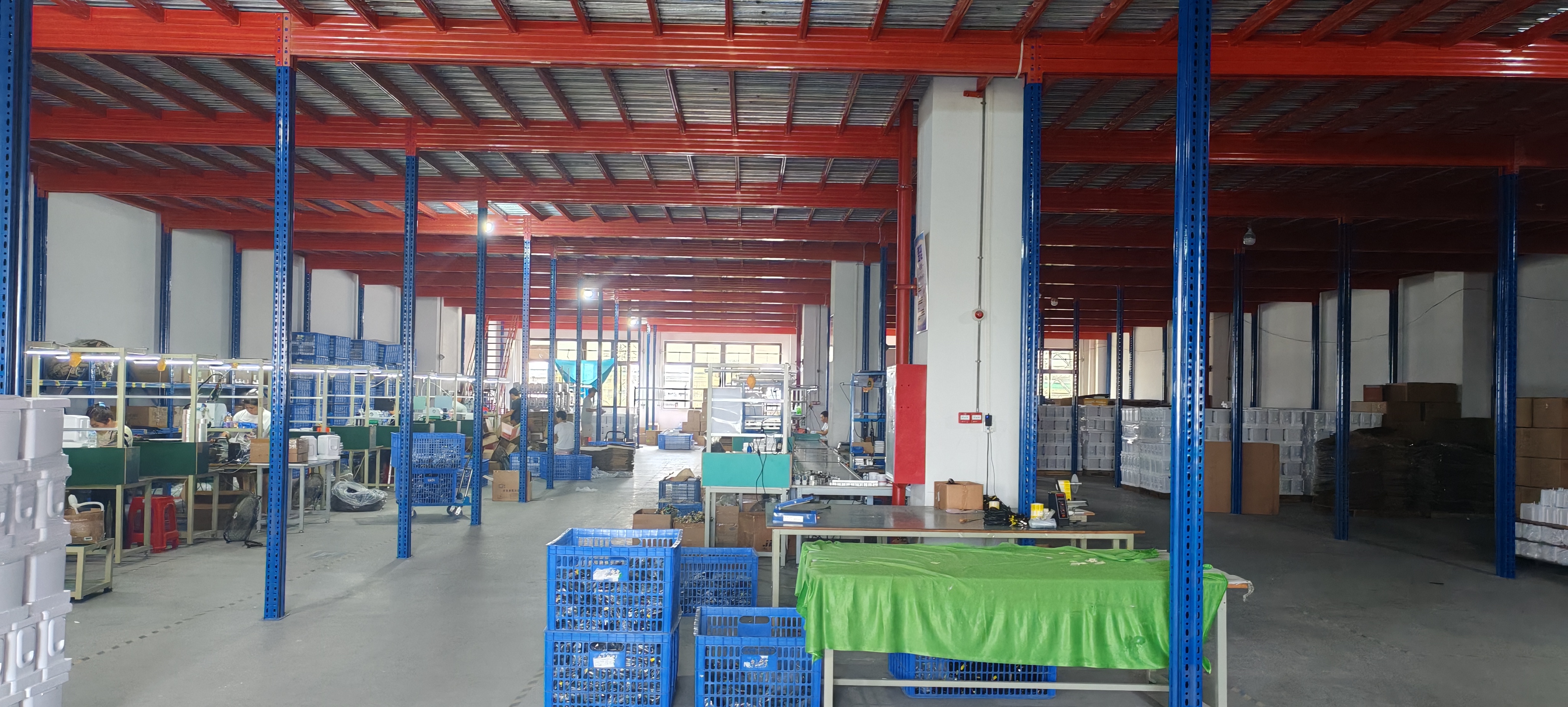
Factory image supplied by Trueway. Facility facts in this article refer to the published 2,500 m² site at Zhenluo Science Park, Zhongshan, Guangdong, China.
Continuity Is Decided After the PO, Not Before
Supplier continuity is a post-signature problem. Before the order, the buyer is comparing samples, prices and lead times. After the order, the buyer inherits everything the supplier does or does not do well: spare-part availability, panel obsolescence, technician labour, warranty handling, and whether a second purchase order two years later will still match the first.
It helps to split the question into four components, because they fail in different ways.
- Entity continuity — a legal company, a fixed address and a functioning contact channel that a buyer can locate and verify.
- Production continuity — premises, workforce, output capacity and engineering depth that allow repeat production, not a one-off batch.
- Technical continuity — a product architecture and intellectual property position that keep an installed base serviceable and upgradeable.
- Commercial continuity — published terms, distributor programmes and a documented path from sample order to territory agreement.
The rest of this article tests Trueway's published record against those four components. It deliberately does not treat marketing language as evidence. A factory address is evidence. A phrase like "long-term partnership" is not.
The Facility Signal: 2,500 m² in Zhongshan
The company states that it operates a 2,500 m² facility at Zhenluo Science Park, Building 3, 4th Floor, Zhongshan, Guangdong, China, and that the business was founded in December 2015. For a buyer, the useful part of that sentence is not the size figure — it is the specificity.
A named building and floor is inspectable. It can be matched against a site visit, a video walkthrough, a shipping document and a quotation header. Trading companies that resell other factories' output frequently cannot survive that cross-check, because the address on the contract does not correspond to a production site they control. A verifiable address is therefore a low-cost filter that removes a category of supply risk before commercial negotiation begins.
What the facility figure does not establish is equally important. The published record gives size and location; it does not disclose the number of production lines, the degree of automation, the shift pattern, or capacity utilisation. Floor area is not throughput. A 2,500 m² operation can support meaningful assembly, testing, packing and R&D under one roof, but the ratio between space and output depends entirely on process design and on how much work is subcontracted.
That is the first verification step for an execution-stage buyer: use the address, not the adjective. Ask for a walkthrough of the fourth-floor premises, confirm which processes happen there, and check that the same address appears consistently on the proforma invoice, the packing list and the certification documentation.
Workforce, Output and Engineering Depth
Trueway publishes a workforce of about 30+ staff, an annual output figure of 100,000 units, five engineers in R&D, and an export ratio of about 90% across America, the Middle East, Southeast Asia and Africa. Read together, these numbers describe a mid-scale, export-oriented operation rather than a large-volume contract manufacturer.
That reading has a practical consequence. At 100,000 units a year against a workforce in the low tens, the amount of work performed in-house versus subcontracted becomes a material question for continuity planning, and the published facts do not answer it. A buyer who needs to know whether a specific housing, module or PCB is made on site should ask directly and expect a process-level answer.
The five-engineer R&D figure deserves the same treatment. A modular platform is not a one-time design: it requires continuous panel development, firmware maintenance and documentation updates for as long as the installed base is supported. Five engineers is a compact team for that job. It is enough to have produced three product generations in succession, but it makes release cadence a fair question — how often panel variants are introduced, and whether application or firmware work is handled internally.
The export ratio is a softer but relevant signal. A company deriving roughly 90% of its business from export markets has already built the documentation habits — certificates, labelling, Incoterms, packing standards — that cross-border continuity depends on. It also means domestic support is not the core business, so the buyer's own market should be checked for existing activity rather than assumed.
The Modular Platform as Technical Continuity
The strongest continuity argument in Trueway's published record is not the factory — it is the architecture. The product is built around a single permanent lock body that accepts interchangeable front-panel modules in three combinations: fingerprint with password and RFID card, password with RFID card, and RFID card only. The body stays mounted on the door; only the panel changes.
The swap procedure is published as a four-step operation: insert the included key into the module release slot, turn it 90° to release the module from the body, remove the old module and insert the new one, then turn the key back to lock it in place. The company states that this takes under one minute, without tools, without a technician and without removing the lock from the door.
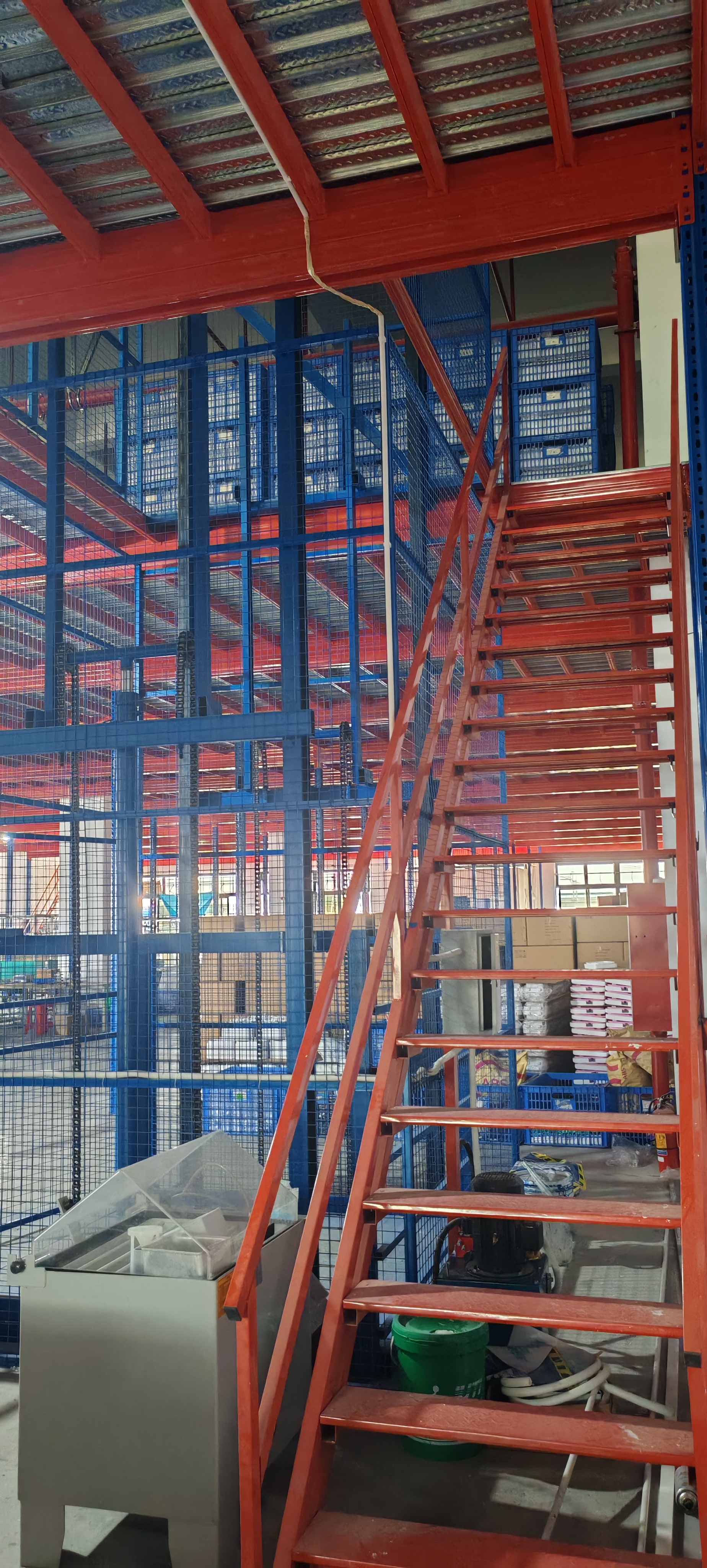
Supplied factory image. Module swaps are performed with a key at the panel, without removing the lock body from the door.
Why the roadmap matters more than the mechanism
A swap mechanism is only useful if there is something to swap to, and if the replacement exists years later. Trueway's published timeline shows consecutive platform generations rather than isolated products: model RF-1 launched during the 2023–2024 commercialisation phase, RF-2 in 2025, and RF-3 in 2026. Design patents for the RF-2 and RF-3 front-panel modules were granted in China under CN202630085403 and CN202630085870.
The intellectual property position is documented across three jurisdictions: U.S. Patent No. 19,212,665, German Utility Model Patent DE202025001780, and China Invention Patent CN201610502753 covering the key-release modular mechanism. The company also states that it obtained a U.S. trademark in 2025 and has filed a U.S. copyright registration application (Application Receipt No. 14921392341) — an application, not a granted registration.
What these facts establish is that the key-swap concept is protected and has been developed over several generations. What they do not establish is that any specific panel will still be in production five years from now. Patents protect a mechanism from copying; they do not oblige a supplier to keep a module in its catalogue. Buyers who need that assurance should ask for a written module availability statement with a defined support period and last-time-buy terms — a normal request in modular hardware procurement, and a far more informative one than a general promise of long-term support.
The inventory consequence
Modularity changes what a distributor has to stock. Three unlock methods are covered by one body plus three modules rather than three complete locks. For continuity planning this is the difference between holding finished goods that can become unsellable when demand shifts, and holding a shared body plus panels that can be recombined against whatever the local market asks for.
After-Sales Cost Control: Reading the Company's Own Numbers
Trueway's published comparison sets a traditional lock against its own model on two variables: the cost of an after-sales incident and the time needed to resolve it. The company cites a technician visit cost of $50–$150 and roughly one hour to repair or upgrade a conventional lock, against no technician visit and a swap measured in under a minute for the modular system.
Its distributor FAQ goes further, stating that distributors report up to 80% reduction in after-sales service costs because end users can swap modules themselves without calling a technician or returning the product. That figure is company-reported. It is not an independently audited result, and it should be treated as an order-of-magnitude indication rather than a guaranteed saving on a specific distribution business.
The reason to take it seriously anyway is that the underlying mechanism is concrete and observable. A conventional electronic lock that fails requires a visit, a return, or both. A modular lock that fails requires a panel, which the end user installs with a key. The variable cost that disappears is labour and logistics, not the module itself.
As a conditional illustration — not a Trueway result and not a forecast — consider a distributor handling 40 warranty incidents a year. At the company's cited $50–$150 per technician visit, that is $2,000–$6,000 in visit costs alone before any hardware or freight is counted. Whether a modular programme actually reduces that total depends on module pricing, freight, failure rates and how much of the end-user base can be taught to perform the swap.
Two supporting details are also published: each module operates for up to 12 months on 4 AA batteries, and battery replacement takes under 30 seconds without removing the module from the lock body. Both reduce the frequency of the most common service interaction. Neither removes the need for a documented RMA process, which is why the acceptance and warranty clauses still matter more than the savings estimate.
Continuity Checkpoints at a Glance
The table below separates what Trueway publishes from what a buyer still has to verify. The right-hand column is the part that turns a supplier claim into a procurement decision.
| Continuity signal | Published value | What it supports | What the buyer should confirm |
|---|---|---|---|
| Facility | 2,500 m² at Zhenluo Science Park, Building 3, 4th Floor, Zhongshan, Guangdong, China | A fixed, inspectable production address | Site or video walkthrough; matching address on contract, invoice and shipping documents |
| Workforce | About 30+ staff | An operating organisation, not a trading desk alone | Whether the figure is production-only or total; shift pattern and staffing stability |
| Engineering | 5 R&D engineers | Continued panel and platform development | Release cadence of new modules; in-house firmware and app capability |
| Output | 100,000 units per year | Repeatable volume for ongoing orders | Share produced in-house versus subcontracted |
| Intellectual property | US 19,212,665; DE202025001780; CN201610502753; design patents CN202630085403, CN202630085870 | Protected key-swap mechanism and panel designs | Whether protection covers the specific models and panels ordered |
| Commercial terms | MOQ 10 units; FOB/CIF; pre-shipment test; 100% T/T | A defined transaction framework | Test items, sampling plan, warranty period and RMA route written into the PO |
Published Commercial Terms for the Execution Phase
Trueway publishes four commercial terms that matter once a buyer moves from evaluation to execution: a minimum order quantity of 10 units, delivery on FOB or CIF terms, acceptance based on a pre-shipment test, and payment at 100% T/T.
Each carries a different implication. A 10-unit MOQ is low enough for genuine market testing — a distributor can place a real order, measure sell-through and failure patterns, and only then commit to volume. That sequence is usually smarter than negotiating a large opening order on the strength of samples.
Pre-shipment test as the acceptance criterion is the most important of the four, because it is the only published quality gate. What it does not define is the test content: which functions are checked, how many units are sampled, and who signs the result. Those belong in the purchase order and the inspection protocol, and a buyer who leaves them undefined is relying on the supplier's internal standard rather than on an agreed one.
The payment term is a cash-flow constraint rather than a quality signal. Full payment before shipment shifts risk to the buyer, which is precisely why the pre-shipment acceptance step needs to be specified in writing before the deposit is sent. Published terms are also a starting framework, not a fixed contract; Incoterm, warranty length and RMA handling are negotiable per order.
Distributor Programmes and the Loyalty Question
For long-term supply, the relevant question is not only whether a supplier can ship, but whether the relationship has a structure beyond repeat purchase orders. Trueway publishes five distributor support elements: exclusive territory agreements, white-label and co-branding options, product training and technical documentation, marketing materials and sample support, and flexible minimum order quantities for market testing.
Training and documentation deserve particular attention in a modular model, because the cost advantage depends on them. If an end user cannot be shown how to release a panel with the key and seat a replacement, every service event reverts to a technician call — and the savings described earlier disappear. Documentation quality is therefore not a marketing extra here; it is an operating requirement of the product design.
Territory exclusivity and white-labelling address a different risk. A distributor building a local brand around hardware that any competitor can source at similar cost has no defensible position. Exclusive territory terms plus co-branded packaging create one, at least contractually.
The published record describes these programmes as categories, not as terms. Duration, minimum volumes, performance thresholds and termination conditions are not disclosed publicly and should be read in the actual agreement. A distributor should also confirm what happens to territory rights if volumes fall short in a given year — that clause determines whether the arrangement survives a soft market.
What the Category Data Does and Does Not Tell You
Category-level research is useful context and poor supplier evidence, and the distinction matters when justifying a long-term commitment internally.
Fortune Business Insights projects the global smart door lock market to reach $17.75 billion by 2034, in a report published in August 2026. Other research houses publish materially different totals for nearby years, so the figure should be read as one estimate within a range rather than a settled number. Fact.MR estimates that Bluetooth-enabled smart locks held a 52% share of the market in 2026. Grand View Research estimates Asia-Pacific as the fastest-growing region at a 24.5% CAGR between 2026 and 2033, and puts the residential segment at approximately 46.6% of global share in 2025.
Three practical readings follow. First, connectivity expectations are not uniform: a market where Bluetooth-predominant hardware dominates will ask different questions about app behaviour and module choice than one driven by card access in hospitality. Second, regional growth rates affect delivery and support geography, not any individual factory's capability. Third, residential volume dominance means most after-sales events will involve end users rather than facility managers — which is exactly the scenario a self-service module swap is designed for.
None of this data demonstrates that any particular supplier will capture the growth. Category momentum is a reason to plan for continuity; it is not evidence that continuity exists.
Fit Boundaries: What This Supplier Does Not Claim
A continuity assessment is only useful if it states the limits. On the published record, Trueway does not disclose audited financial statements, a third-party factory audit report, or quantified customer outcome data. Those absences do not imply weakness; they simply mean the buyer's own due diligence has to cover them.
Certification scope is specific. The published certifications are FCC-ID and CE-RED, described as covering distribution across the Americas, Europe, the Middle East, Africa and Asia. The record does not claim ANSI/BHMA A156.25 Grade 1 — the North American standard that requires withstanding 250,000 cycles and 1,000 lb of static force — nor EN14846, the European standard that defines performance for electronically controlled locks across six categories including fire and corrosion resistance. A project that mandates either standard should confirm model-level test evidence rather than assume equivalence.
Module scope is equally specific. The three published combinations cover fingerprint, keypad password and RFID card access. Face recognition, video door phone, Wi-Fi app control and other connected configurations do not appear in the published module list, so a buyer specifying those functions should confirm availability directly instead of treating the modular platform as open-ended.
Where the model fits least well is in environments that require certified hardware as a precondition — certain commercial, institutional or regulated residential projects — or where a single mandated standard governs acceptance. In those cases the modular advantage does not compensate for missing certification, and the specification should lead the decision.
A Pre-Signature Verification Sequence
For a buyer already past shortlisting, the following sequence converts the signals above into a documented position before the first payment.
- Match the legal entity name and the Zhenluo Science Park address across the quotation, the proforma invoice and the certification documents.
- Request a live or recorded walkthrough of the fourth-floor premises, and ask which production and test processes take place there.
- Clarify the scope of the published headcount and the allocation of the five R&D engineers between hardware, firmware and documentation.
- Obtain a written module availability statement covering the models ordered, with a support period and last-time-buy terms.
- Define the pre-shipment test protocol: functions checked, sample size, acceptance level and the person who signs off.
- Request certification evidence by model for FCC-ID and CE-RED, and confirm whether any additional standard applies to your market.
- Agree warranty length, RMA route and who bears freight on a module return.
- Read the territory or exclusivity agreement in full, including performance thresholds and exit conditions.
Published contact channels for these requests are the company website, email at info@truewaylock.com, and telephone at +86 15017121318, with Stanley Ke named as contact.
Outlook: Upgradeability as a Continuity Strategy
The smart lock category has a structural problem that modular design addresses directly: electronics age faster than door hardware. A lock body can serve a door for a decade while the access technology on its face becomes dated, unsupported or simply mismatched to how the building is now used.
If the panel is the replaceable unit, the installed base has a route forward that does not require new hardware, a technician visit or a new hole pattern. Trueway's three generations in successive years, combined with patents covering the key-release mechanism in the United States, Germany and China, indicate that this is a sustained platform strategy rather than a single product with a marketing story attached.
The conditional part should be stated plainly. Upgradeability works while panel supply continues and while documentation remains accurate. A buyer who secures a written availability commitment, a defined acceptance protocol and a documented RMA route has converted a design principle into something enforceable. A buyer who accepts only the phrase "long-term support" has not.
For distributors and project buyers at the execution stage, that is the practical conclusion of this continuity check: the 2,500 m² facility, the ~30+ staff and the 100,000-unit output describe an operating business that can be inspected and questioned, and the modular platform gives that business a plausible way to keep an installed base serviceable. The remaining work is contractual, and it belongs to the buyer.
Frequently Asked Questions
What does supplier continuity mean when buying smart door locks?
Supplier continuity is the likelihood that a supplier can still support locks already sold — with spare modules, documentation, upgrade paths and enforceable terms — years after delivery. It has four checkable parts: a verifiable legal entity and address, production capability such as premises, workforce and output, technical capability such as a serviceable architecture and protected designs, and published commercial terms. Each part can be verified with documents and a site review; none of it is established by marketing language alone.
Can a Trueway lock be upgraded without replacing the lock body?
Yes. The Trueway base body remains mounted on the door permanently, and only the front-panel module is replaced. Three module combinations are compatible with the same body: fingerprint with password and RFID card, password with RFID card, and RFID card only. The swap uses the included key — inserted into the module release slot and turned 90° — and the company states the operation takes under one minute without tools or a technician.
How much can distributors save on after-sales costs with a modular lock?
Trueway's published distributor FAQ states that distributors report up to 80% reduction in after-sales service costs, because end users can swap modules themselves instead of calling a technician or returning the product. The company's comparison also cites a $50–$150 technician visit and roughly one hour of work for a conventional lock. These are company-reported figures rather than independently audited results, and actual savings depend on module pricing, freight, failure rates and how well end users are trained.
What distributor support is published for long-term partners?
Trueway publishes five support elements: exclusive territory agreements, white-label and co-branding options, product training and technical documentation, marketing materials and sample support, and flexible minimum order quantities for market testing. These are described as programme categories rather than fixed terms. Duration, minimum volumes, performance thresholds and termination conditions are not disclosed publicly and should be reviewed in the actual distribution agreement before signing.
What purchasing terms and acceptance criteria are published?
The published purchasing terms are a minimum order quantity of 10 units, delivery on FOB or CIF terms, acceptance based on a pre-shipment test, and payment at 100% T/T. The pre-shipment test is the only published quality gate, so buyers should define the test items, sample size and sign-off responsibility in the purchase order. Warranty length, RMA handling and freight responsibility on returns are not fixed by these terms and are normally agreed per order.
Have Questions or Need More Details?
Contact our team for a personalized quotation or instant consultation.
Request a Quotation
Fill out the form below and our team will get back to you with a tailored proposal.
WhatsApp Direct Chat
Prefer to chat in real-time? Message us on WhatsApp for instant assistance & quick answers.
- Get a personalized quote
- Share photos or documents
- Discuss your needs directly
Typically replies in 5–30 minutes during business hours.