
Smart Motorized Ball Valves Reshape Industrial and Home Fluid Control
The global motorized ball valve market is undergoing a structural shift as industrial and residential systems demand remote monitoring, energy efficiency, and IoT integration. Tianjin Tianfei High-tech Co. — a national high-tech enterprise founded in 2009 and a founding member of China's micro electric valve industry — has developed a comprehensive portfolio of smart motorized ball valves that bridge traditional fluid control with modern automation requirements.
From Manual to Intelligent: The Control Gap in Fluid Systems
Traditional manual ball valves require on-site operation, making it difficult to manage distributed networks or respond quickly to leaks and temperature changes. Pneumatic actuators add complexity with compressed air lines. Electric actuators have existed for decades, but many lack the communication protocols, compact form factor, or low-power profiles needed for today’s smart buildings, precision agriculture, and industrial IoT deployments.
According to verified market data, the global motorized ball valve market was valued at USD 8.7 billion in 2025 and is projected to reach USD 14.2 billion by 2034. The IoT valve segment alone is expected to grow at a CAGR of 10.4%, reaching USD 2.85 billion by 2031. This demand is driven by building automation, water conservation mandates, and the need for real-time process visibility.
Tianfei’s Smart Motorized Valve Ecosystem
Tianjin Tianfei High-tech Co. operates a 30,000 m² production base with an annual output capacity of 1,000,000 units, employing approximately 100 staff including a dedicated R&D team of 10 engineers. The company specializes in the R&D, manufacturing, and sales of high-end intelligent valves and metering instruments, with a focus on intelligent energy management and control. Its main products include WiFi valves, 2-way and 3-way motorized ball valves, butterfly valves, water leak sensors, and temperature control valves.
The core product family spans from the compact CWX-15N (DN15–DN50, 3 N·m, multi-voltage AC220V/DC12V/DC24V) to the high-torque CWX-60P (DN15–DN100, 20 N·m, modulating 0-10V/4-20mA). For corrosive media, the CTF-001 PVC motorized ball valve (DN15–DN50, 3 N·m, AC85-265V/DC9-24V) handles acid/alkali environments (pH 2-13) at up to 0.8 MPa. The CWX-25S large-bore stainless steel valve (DN25–DN80, 10 N·m, IP67) is engineered for chemical, pharmaceutical, and desalination applications.
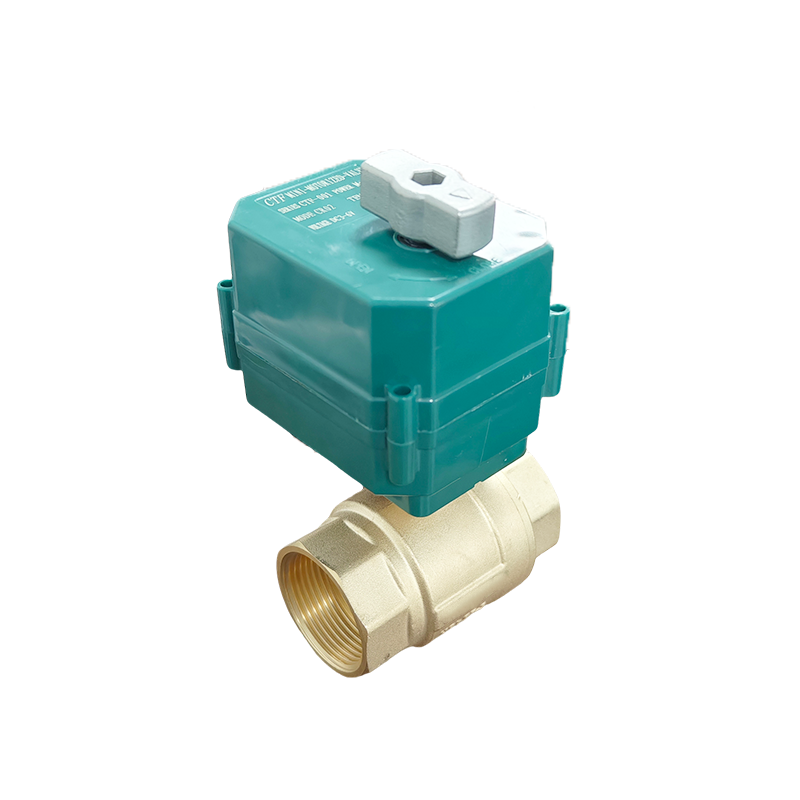
Figure: CTF-001 compact stainless steel motorized ball valve with ultra-wide voltage support.
Technical Architecture: Built for Reliability and Integration
All Tianfei motorized ball valves share a modular actuator design. Key technical parameters include:
- Control modes: Normally-Closed (NC), Normally-Open (NO), and Hold (Stay) for power-failure safety. Select models support modulating control via 0-10V or 4-20mA signals.
- Voltage options: AC85-265V (global universal), AC220V, DC24V, DC12V, and even DC9-24V for solar or battery-backed systems.
- Protection ratings: IP65 to IP67, fully potted electronics suitable for splash zones, outdoor pits, and temporary submersion.
- Materials: Brass, SS304, SS316, and PVC bodies with ceramic or PTFE seals for extended cycle life (up to 100,000 cycles for 3-way models).
- Communication: WiFi 2.4GHz (IEEE 802.11b/g/n) on smart models, enabling integration with Tuya Smart, Alexa, Google Home, and Home Assistant ecosystems.
The WiFi Smart Water Valve (model WIFI WATER VALVE) exemplifies this approach — it runs on 4 AA batteries (standby >1 year) or DC5V USB, fits DN15–DN25, and provides remote on/off control, scheduled automation, and leak detection linkage via the Tuya cloud.
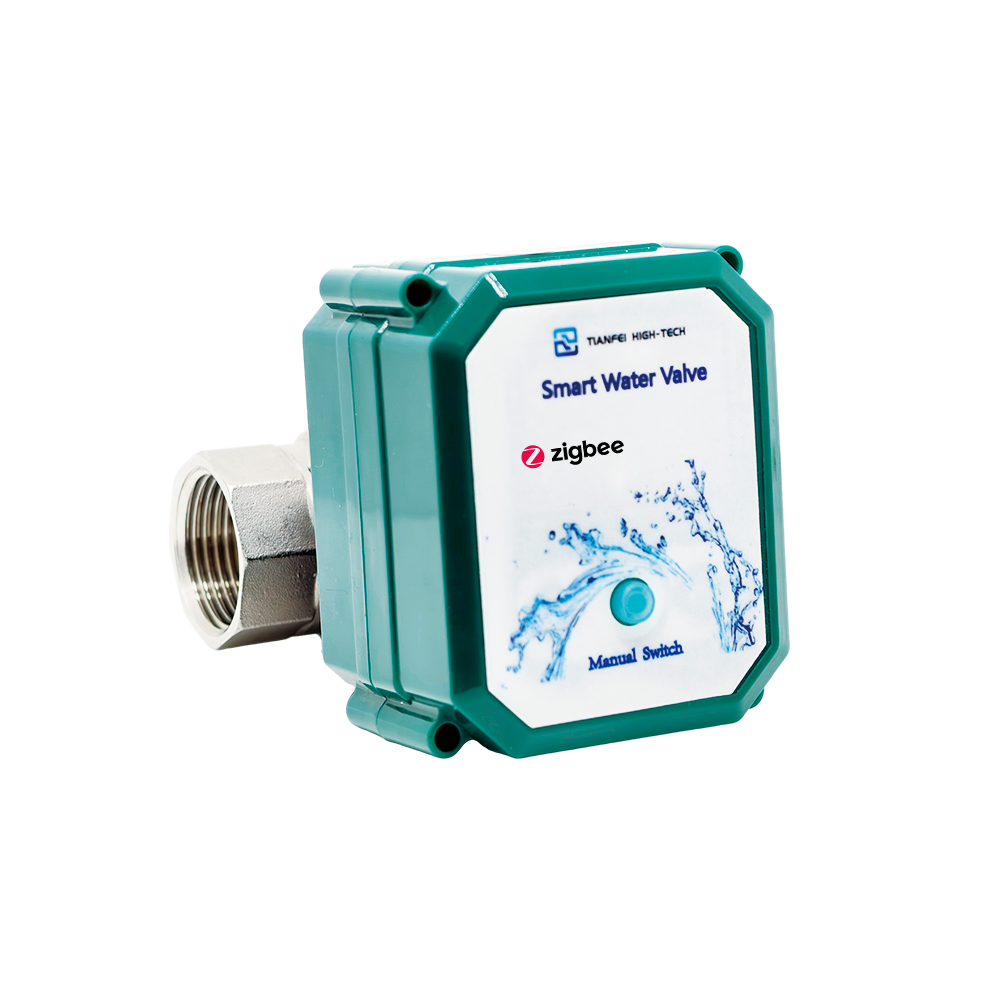
Figure: WiFi Smart Water Valve architecture showing cloud, gateway, and valve communication.
Real-World Application Scenarios
Tianfei’s motorized ball valves serve a wide range of project types across Europe, the Americas, and Asia-Pacific. Verified application scenarios include:
- Smart home water management: The WiFi Smart Water Valve integrated with leak sensors automatically shuts off the main water supply upon detection, protecting rental properties and homes from water damage. Response time <3 seconds.
- HVAC and building automation: The CWX-60P 2-way modulating valve (0-10V/4-20mA) controls chilled water flow in fan coils and air handling units, maintaining ±1% precision. The 3-way CWX-60P (T/L port) handles mixing and diverting in underfloor heating and central air conditioning systems.
- Industrial process control: The CWX-25S (DN25–DN80, 10 N·m, IP67) provides reliable on/off service in chemical dosing, pharmaceutical pure water, and food processing lines. Its 316SS construction resists chloride corrosion up to 200 ppm.
- Solar thermal and irrigation: The CWX-20P (DN20–DN50, 5 N·m) runs directly on DC24V solar PV panels without an inverter, ideal for off-grid agricultural irrigation and solar hot water circulation.
- Municipal water and wastewater: The CTB motorized butterfly valve (wafer-type, DN50–DN300, 20–200 N·m) and flanged butterfly valve (DN50–DN500, 30–500 N·m) handle large-bore flow in municipal pipelines, fire protection systems, and power plant cooling loops.
- Corrosive media handling: The CTF-001 PVC motorized ball valve (DN15–DN50, UPVC/CPVC) withstands HCl, H₂SO₄, and NaOH (pH 2–13) in swimming pools, chemical dosing, and wastewater treatment.
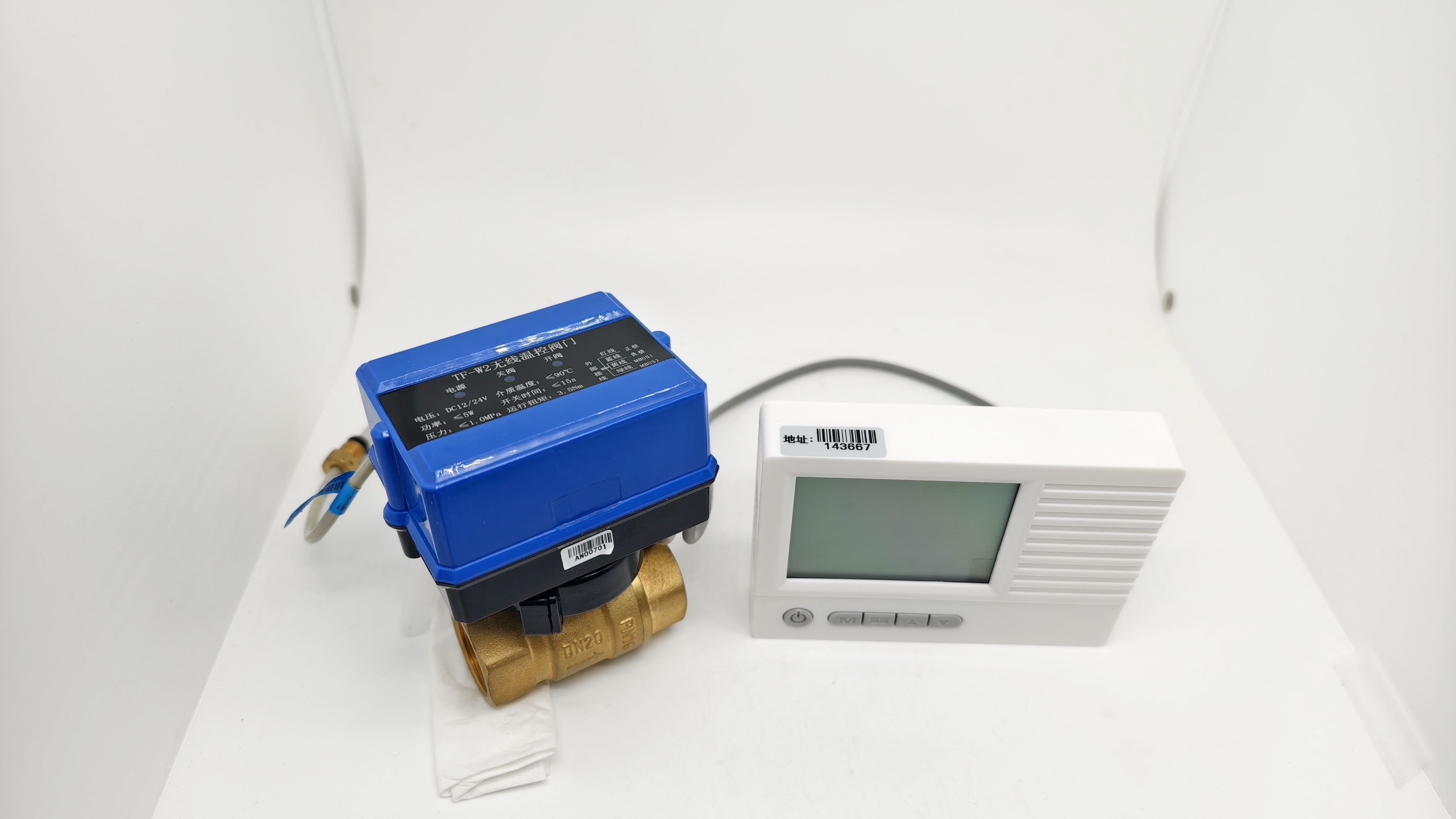
Figure: Self-operated temperature control valve used in underfloor heating and solar thermal systems.
Market Trend Analysis: Asia-Pacific Leads, IoT Adoption Accelerates
China exported USD 22.6 billion in total valves in 2024, maintaining a 20% global export share. Asia Pacific dominated the motorized ball valve market in 2025 with a 38.5% revenue share, driven by manufacturing scale and smart infrastructure investments. Two-way motorized ball valves hold the largest product segment (42.1%), reflecting broad demand in HVAC and industrial applications.
Emerson Electric Co. is recognized as a global leader in the final control and smart valve segment, but Chinese manufacturers like Tianfei High-Tech are closing the gap through vertical integration, rapid customization (OEM), and competitive cost structures. The company's annual output of 1 million units and 10-engineer R&D team enable it to serve both standardized and bespoke applications.
Comparison with Traditional Solutions
Compared to manual ball valves, motorized variants eliminate on-site labor and enable remote supervisory control. Versus pneumatic actuators, electric motorized ball valves avoid expensive compressed air infrastructure and allow precise electronic modulation. However, one honest limitation remains: motorized ball valves carry a higher upfront cost than manual valves, and their electronic components require periodic inspection in harsh environments. Tianfei addresses this with modular actuators — motor and circuit boards are independently replaceable, reducing long-term maintenance expense by up to 60%.
Future Outlook: Connectivity, Energy Harvesting, and Standardization
The next wave of innovation in motorized ball valves centers on wireless protocols (Zigbee 3.0, Z-Wave, WiFi, and emerging Matter), low-power energy harvesting for self-sustaining nodes, and deeper integration with building management systems (BMS) and SCADA. Tianfei’s existing WiFi valve and wireless leak sensor (Wireless WLD, with Zigbee 3.0/Z-Wave/WiFi options) position the company for this transition. As regulatory frameworks like EU CE marking (EN 60335-1) and RoHS 2.0 (IEC 62321) tighten, manufacturers with in-house testing and full compliance documentation will become preferred partners.
Frequently Asked Questions
What is a motorized ball valve and how does it work?
A motorized ball valve is a quarter-turn valve equipped with an electric actuator that rotates the ball 90° between open and closed (or modulating) positions. Tianfei offers models with AC220V, DC24V, DC12V, and ultra-wide AC85-265V power supply, with torque ranging from 3 N·m to 20 N·m for 2-way and 3-way configurations.
What voltages and control modes are available?
Tianfei motorized ball valves support AC220V, DC24V, DC12V, DC9-24V, and AC85-265V. Control modes include Normally-Closed, Normally-Open, Hold, and modulating (0-10V/4-20mA) on select models. The CWX-60P 2-way valve, for example, offers both on/off and modulating control with 20 N·m torque.
Can motorized ball valves be used for IoT and smart home systems?
Yes. The WiFi Smart Water Valve connects via 2.4GHz WiFi to the Tuya Smart platform, enabling remote control via smartphone, voice assistants (Alexa, Google Home), and automation scenarios. It can also be linked with Tianfei's wireless water leak sensor (Wireless WLD, Zigbee 3.0/Z-Wave/WiFi) for automatic shutoff.
What industries and applications are these valves designed for?
Verified use cases include HVAC, building automation (BAS), solar hot water, agricultural irrigation, food processing, pharmaceutical, chemical, municipal water supply, wastewater treatment, swimming pool, and smart home water management. The range covers air conditioning water systems, drinking water equipment, industrial refrigeration, and small laboratories.
What materials and sizes are available?
Materials include brass, SS304, SS316, and PVC. Sizes range from DN15 to DN100 for ball valves and DN50 to DN500 for butterfly valves. The CWX-15N (DN15–DN50) is a popular entry-level model; the CWX-25S (DN25–DN80) is designed for large-bore stainless steel applications.
How do you contact Tianfei High-Tech for procurement inquiries?
For business inquiries, contact Mrs Wang via email at tf.co@tfjt.com, telephone +86 022 85685296, or WhatsApp +86 18920338351. The company is located at 16 Rongyuan Road, Nankai District, Tianjin, China.
Tianjin Tianfei High-tech Co. | www.minimotorizedvalve.com | tf.co@tfjt.com | +86 022 85685296 | WhatsApp: +86 18920338351