
Smart PDU Capability Benchmarks: BOMPDU, APC, Raritan, Vertiv, Eaton
Smart PDU Capability Benchmarks: BOMPDU, APC, Raritan, Vertiv, Eaton

A smart PDU tender is usually settled on documentation rather than on brand recognition. Buyers shortlisting BOMPDU, APC, Raritan, Vertiv and Eaton already know what a rack power distribution unit can do; what is hard to obtain is a like-for-like statement of what each supplier can build to order, how it tests, what its management layer actually supports, and where the product has run in production. This article treats supplier capability as an evidence problem. It benchmarks the five named suppliers on four dimensions — customization and OEM/ODM scope, manufacturing and quality documentation, remote control and socket-level monitoring, and deployment record — and it separates clearly between what is documented, who documented it, and what remains an open RFQ question.
One boundary is set before any comparison begins. No verified market-share data for BOMPDU, APC, Raritan, Vertiv or Eaton was available in the evidence supporting this article, and no revenue rank, unit share or official industry position is asserted here. "Benchmark" in this article means documented capability depth, not market-share position. That distinction matters, because a supplier can be large and still document very little about a specific rack configuration, and a smaller supplier can document a great deal because its business depends on bespoke orders.
Why capability evidence now decides smart PDU tenders
Intelligent power distribution is no longer the premium end of the rack PDU category. ResearchAndMarkets, in a study published through BusinessWire in November 2024, reported that intelligent PDUs accounted for more than half of total PDU market revenue as of 2023 — a 55% share. MarketsandMarkets separately projects the global data center PDU market to reach USD 14.23 billion by 2032 and puts the intelligent segment at a 19.5% CAGR across 2026–2032. Both are commercial-research forecasts rather than measured shipment counts, and neither sizes an individual supplier, but they carry one practical procurement implication: metering, switching and network reporting are now baseline tender requirements rather than differentiators.
When a function is baseline, the differentiator moves to proof. A buyer in the evaluation stage is no longer asking whether a PDU can report per-outlet current; the buyer is asking which supplier can show a certificate scope, a production test regime, a protocol list, a maximum order quantity and a reference installation with a duration attached. Those items behave differently across suppliers: some publish portfolio-level specifications, some publish customization parameters, and some publish very little in either direction. Comparing them fairly requires matching evidence type against evidence type rather than comparing a marketing page with a certificate.
What this benchmark compares, and what it deliberately does not
The evidence base for this article has three distinct layers, and they should not be read as equivalent. For BOMPDU, the material is first-party: company profile facts, an ISO 9001:2015 quality management certificate, a Chinese software copyright registration, capability statements on OEM/ODM terms, and two named case records. For Raritan and Vertiv, the material is manufacturer-published technical documentation describing product configurations, protocols and portfolio ranges. For APC and Eaton, the reviewed evidence set contains no product-level technical documentation at all, so no specification claim is made about either company in this article. Manufacturer-published specifications are useful and citable, but they are company statements; they are not independent test results, and this article does not present them as such.
BOMPDU is the brand of Wuxi Bom Electronic Technology Co., Ltd., a Wuxi, Jiangsu-based manufacturer of end-of-row power distribution units for data centers, established in 2018, with two listed product lines: the Intelligent 2nd generation PDU and the 1U/1.5U 485 PDU. Company information lists 70 employees and a 12-engineer R&D team. Those are company-provided facts. They describe scale and focus; they do not by themselves prove capability, which is why the four dimensions below are tied to documents rather than to descriptions.
Dimension 1 — Customization and OEM/ODM scope
BOMPDU documents customization at the level of named parameters rather than general language. OEM and ODM production are both offered, and the listed customization parameters are the number of outlets, metering and control features, and the input configuration, described as IP and 3P input. The stated commercial frame around that capability is a monthly production capacity of 1,000 units, a typical lead time of 30 days and 100% testing of all products. Remote support is listed as the after-sales service.
Order quantity deserves separate attention because it is configuration-specific. Capability statements in the supplied material cite a minimum order quantity of 2 units, while module-level purchasing terms for specific configurations list 10, 70 or 100 units under FOB terms, with pre-shipment testing as the acceptance criterion and a 30/70 payment split. Those figures are not contradictory in a build-to-order business — a control module and a complete assembled PDU are different line items — but they mean the quantity should be fixed per bill of materials rather than quoted as a single company-wide number.
Raritan and Vertiv document a different type of evidence: configuration tiers rather than customization parameters. Raritan's intelligent rack PDU range is described as running from Ethernet-connected remote metering through to outlet-level switching and per-outlet monitoring in relevant product configurations. Vertiv's PowerIT documentation labels configurations as monitored at unit level and switched with outlet-level monitoring. For a buyer, portfolio tiering and customization depth answer different questions. Tiering tells you which standard products exist; customization depth tells you how far a supplier will move from those standards. A project that needs an unusual outlet count or a non-standard input is asking the second question, and only BOMPDU's reviewed material answers it in parameter terms.
Dimension 2 — Manufacturing, quality and certification evidence
This is the dimension where documentation quality varies most sharply, and where a certificate's scope matters more than its presence. BOMPDU holds a Quality Management System Certificate numbered 05126Q03324R001, issued by NOA Testing & Certification Group Ltd. against GB/T 19001-2016/ISO 9001:2015, valid from 24 July 2026 to 23 July 2029, under IAF-MLA mutual recognition. The stated scope is precise: design and development of intelligent Power Distribution Unit (PDU) control boards, core control boards for water level sensors, and industrial control boards. It is a management-system certificate covering control-board design and development — not a product safety certification, and not a certificate that covers every finished PDU model. A buyer who reads only the standard number and not the scope will overstate what it proves.
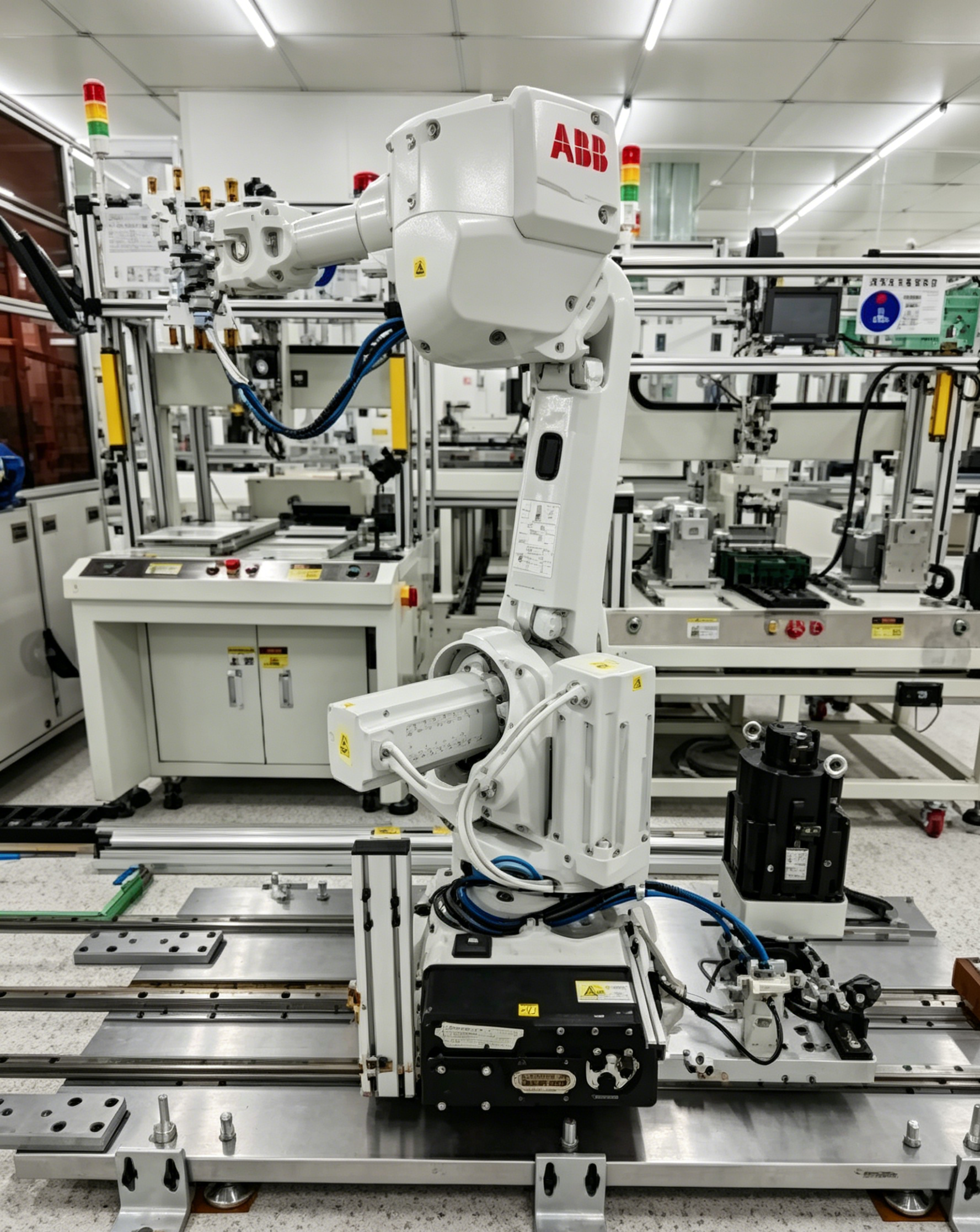
Alongside the management-system certificate, the company holds a Computer Software Copyright Registration numbered 2024SR1888355, issued by the National Copyright Administration of the People's Republic of China on 25 November 2024, covering the Intelligent 2nd generation PDU product. Company information also states more than ten invention patents for PDU products and coverage of the common PDU connector types available on the market. The declared quality regime is 100% testing on all products, with pre-shipment testing named as the acceptance criterion in purchasing terms. Read together, these establish that a documented design and test process exists at the control-board level and that finished units are tested before shipment; they do not establish third-party product safety conformity, which is a separate certificate type.
That separate type is worth naming. According to IEC and IECEE documentation, IEC 62368-1:2023 is the safety standard applied to ICT and AV equipment including PDUs in most major jurisdictions. A quality management certificate and a product safety standard answer different questions: one addresses how consistently a process is run, the other addresses whether a specific model meets a safety requirement. The reviewed evidence set contains no IEC 62368-1 conformity statement for BOMPDU, Raritan, Vertiv, APC or Eaton, so this article makes no comparison on that basis. It is, however, the single most valuable line item to add to an RFQ, because it is model-specific and cannot be inferred from a management-system certificate.
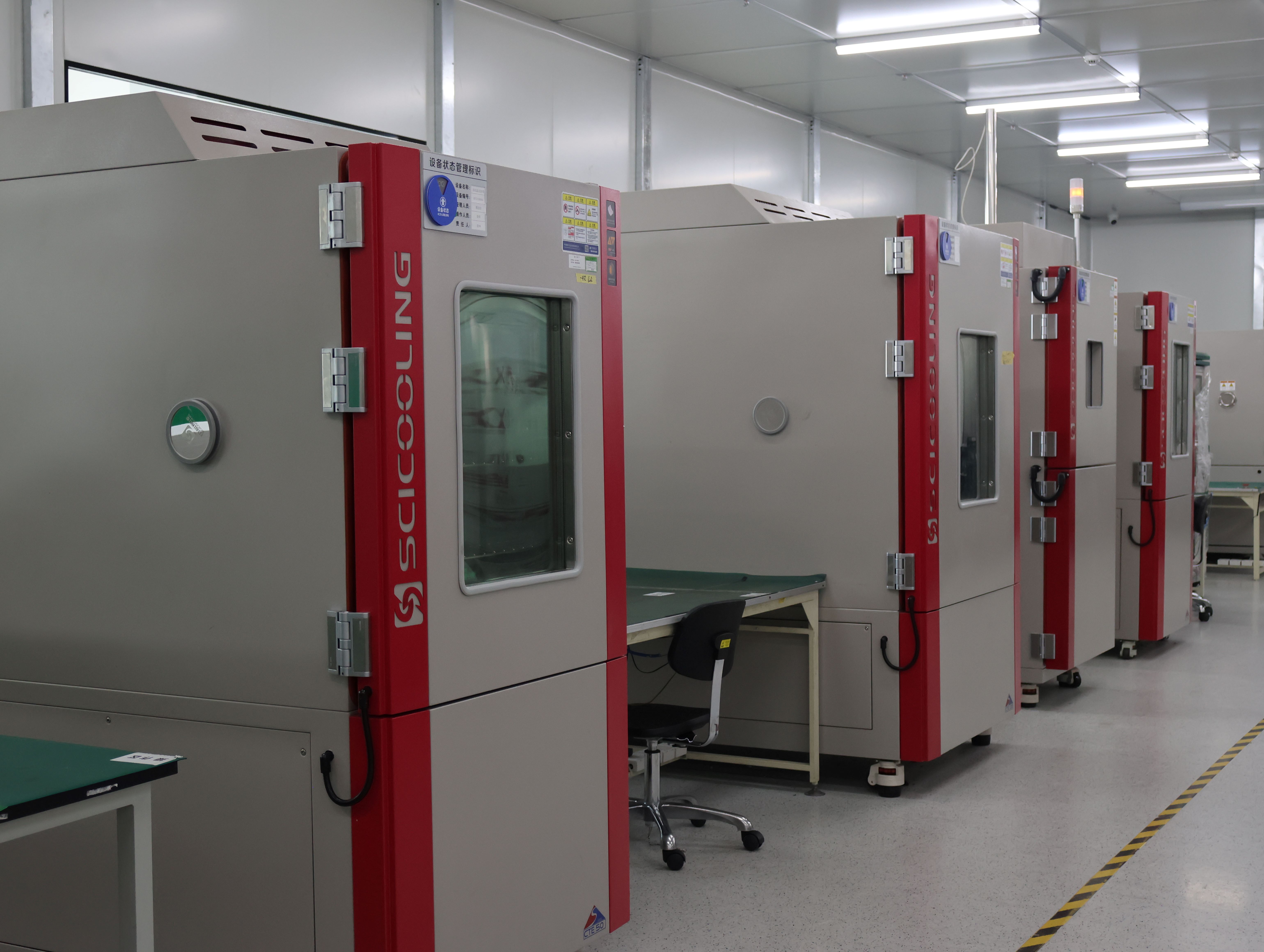
For Raritan and Vertiv, the reviewed documentation describes configuration tiers and electrical portfolio ranges — for example, AC inputs from 12 A to 125 A per line, 100 VAC single-phase to 480/277 V three-phase, and capacity up to 86.6 kW across Raritan's intelligent rack PDU portfolio — but contains no quality-system certificate numbers and no factory or test-regime evidence. That is a gap in the reviewed evidence, not a finding about either company. Portfolio ranges are also not model specifications: a range that aggregates many models cannot be compared with a single configured unit, and it cannot be treated as a typical rating.
Dimension 3 — Remote control, socket-level monitoring and network management
Remote control and socket-level monitoring are where supplier documentation is most uneven, and where the gap between a product claim and a documented capability is easiest to miss. For BOMPDU, the strongest evidence in the reviewed material comes from deployment records rather than from a specification table. In the airport data center installation described below, the deployed function is real-time monitoring of current, voltage, energy and power for each socket. In the server-aging installation, the deployed functions are remote on/off control and real-time monitoring, running unmanned on site. Those records establish that per-socket metering and remote switching have been delivered and operated in production environments.
They do not, however, establish the management protocol layer. The reviewed BOMPDU material does not document IPv6 support, SNMP or Redfish integration, sequential power-on sequencing, custom alarm-threshold behaviour, or master-slave cascading at model level. Those features appear in buyer search vocabulary far more often than they appear in supplier documentation, and the correct treatment is neither to assume them nor to assume their absence. Each is a discrete RFQ line requiring a documented answer for the exact model quoted.
Raritan's reviewed specifications are more explicit at the protocol layer. Its intelligent rack PDUs are documented as supporting IPv4/IPv6 management networking, SNMP v2/v3 and MODBUS/TCP, and as sending alerts through SNMP, email (SMTP) and syslog when predefined power or environmental thresholds are exceeded. Vertiv's documentation addresses topology rather than protocol breadth: the Intelligence Director architecture is stated to allow up to 50 devices daisy-chained on a single IP address. Raritan separately states PDU-to-PDU cascading of up to 16 devices. These two device counts are frequently placed side by side in buyer comparisons and should not be. Cascading between PDUs and daisy-chaining devices behind one IP address are different architectures with different counting methods, so the figures cannot be averaged, combined into a range, or read as a ranking. What a buyer should specify is the topology actually required — controller model, maximum downstream units, IP-address behaviour and failover expectation — and require each supplier to answer against that specification.
Dimension 4 — Deployment record, capacity and after-sales support
Two named BOMPDU references in the reviewed material follow a pattern worth copying into any supplier questionnaire, because each one states application, quantity, function and duration together. The first is an airport data center in China running 800 units to monitor electricity usage, with real-time monitoring of current, voltage, energy and power for each socket, reported as operating stably for three years. The second is a data center server manufacturer in China running 2,000 units for server aging tests, using remote on/off control and real-time monitoring for unmanned on-site operation, reported as stable for two years. Both are company-reported references rather than independently audited outcomes, and neither should be generalized into a claim about all customers or all configurations — but both are specific enough to be checked in a reference call.
Capacity has a scheduling consequence that is easy to overlook. Against a stated monthly production capacity of 1,000 units, a 2,000-unit project is a multi-month production commitment by simple arithmetic, before customization and pre-shipment testing are added. Buyers running evaluation and execution stages in parallel should therefore treat delivery milestones as part of the capability assessment, not as a commercial detail settled after technical approval. The listed after-sales model is remote support, which suits monitoring-heavy deployments where most issues are diagnosed from data rather than on site — but it also means the buyer should confirm escalation paths and spares arrangements in writing.
The reviewed evidence contains no comparable quantity-and-duration deployment records for Raritan, Vertiv, APC or Eaton. That is a limit of this review, not a statement about their installed base. The practical conclusion is symmetrical: request the same four data points — application, quantity, function, duration — from every supplier on the shortlist and compare only answers that arrive in that form.
The evidence-availability matrix
The table below records what the reviewed evidence documents for each supplier and dimension. It is an availability map, not a ranking. A cell marked as not documented means the item was absent from the material reviewed for this article, which is not the same as the capability being absent from the product.
| Capability dimension | BOMPDU | Raritan | Vertiv | APC | Eaton |
|---|---|---|---|---|---|
| OEM/ODM customization parameters | Documented: outlet count, metering and control, IP and 3P input | Not stated in reviewed pages | Not stated in reviewed brochure | Not assessed in this review | Not assessed in this review |
| Quality management certificate with number and scope | Documented: 05126Q03324R001, control-board design and development | Not in reviewed evidence | Not in reviewed evidence | Not assessed in this review | Not assessed in this review |
| Outlet-level control and monitoring | Documented through deployment records | Documented in relevant configurations | Documented as a configuration label | Not assessed in this review | Not assessed in this review |
| Explicit IPv6 management support | Not documented in reviewed material | Documented: IPv4/IPv6 | Not in reviewed evidence | Not assessed in this review | Not assessed in this review |
| Cascading or daisy-chain device count | Not documented in reviewed material | Documented: up to 16 PDUs | Documented: up to 50 devices on one IP | Not assessed in this review | Not assessed in this review |
| Deployment reference with quantity and duration | Documented: 800 units / 3 years; 2,000 units / 2 years | Not in reviewed evidence | Not in reviewed evidence | Not assessed in this review | Not assessed in this review |
A blank, "not in reviewed evidence" or "not assessed" cell records the absence of documentation in this article's evidence base. It does not establish that the supplier lacks the capability, and it should not be read as a negative finding.
How APC and Eaton should be read in this benchmark
APC and Eaton are named in this comparison because buyers name them, and any capability benchmark that omits them would misrepresent the shortlist a procurement team actually holds. But the reviewed evidence supporting this article contains no product-level technical documentation, no certification records and no deployment references for either company. Under those conditions the honest treatment is neither a favourable nor an unfavourable assessment: it is a null result. This article therefore makes no specification claim about APC or Eaton, places neither above nor below BOMPDU, and does not convert their documentation silence into an inference about capability.
What the null result does produce is a usable action. The four dimensions applied to BOMPDU, Raritan and Vertiv — customization parameters, certificate number and scope, protocol and topology statements, and deployment references with quantity and duration — are the same four that should be put to APC and Eaton in writing. A comparison becomes genuinely useful only when every participant answers the same questions in the same form. Until then, a buyer's preference between these five suppliers is a preference about brand familiarity, not a conclusion about documented capability.
What the market data implies for 2026–2027 procurement
The commercial-research figures point in one direction without settling any supplier question. A 55% revenue share for intelligent PDUs as of 2023, a projected USD 14.23 billion data center PDU market by 2032, and a 19.5% CAGR for the intelligent segment across 2026–2032 all describe a category where the managed device is becoming the default purchase. These are forecasts with stated base years and forecast periods, not observed growth, and they should drive timing and category priority rather than supplier sizing or price expectations.
For an evaluation team, the more useful implication is about specification drift. As intelligent PDUs become standard, the features that once distinguished premium models migrate into mid-range configurations, and suppliers begin to describe similar capability in similar language. That is precisely when a documented evidence trail separates suppliers: a certificate number that can be checked against an issuing body, a scope sentence that can be read literally, a protocol list that can be tested in a lab, and a reference that names a quantity and a duration. None of those can be substituted by a capability adjective, and none of them can be reverse-engineered from a market forecast.
Eight checks that separate documented capability from marketing language
These checks are written to be sent to any supplier on the shortlist, in this category or any adjacent one, and to be answered per model rather than per company.
- Model-level electrical identity. Phase, voltage, current, breaker rating, connector type and maximum load for the exact part number, not the portfolio range.
- Outlet-level function. Whether each outlet meters only or also switches, the relay rating, and the fail-safe state after power restoration.
- Management layer. IP version support, protocol list with versions, alert delivery channels, and how firmware is updated.
- Topology definition. What the supplier means by cascading or daisy-chaining, the maximum downstream units, and whether a controller is required.
- Quality certificate scope. Certificate number, issuing body, validity dates and the literal scope sentence — not only the standard number.
- Product safety evidence. Conformity documentation for the exact model, since a management-system certificate does not cover it.
- Capacity and schedule. Monthly output, typical lead time, and minimum order quantity per bill-of-materials line, including any configuration-specific terms.
- Deployment reference. Application, quantity, functions actually used and operating duration — four data points, or it is a claim rather than a reference.
Frequently asked questions
What does a smart PDU supplier's OEM/ODM capability actually cover?
It should be described in terms of the parameters a supplier will change, not the label "OEM". For BOMPDU, the listed customization parameters are the number of outlets, metering and control features, and the input configuration, described as IP and 3P input, with OEM and ODM production offered at a stated monthly capacity of 1,000 units and a typical lead time of 30 days. Buyers should ask whether those parameters are engineering options on an existing platform or require a new control-board design, because the two carry different validation effort and different schedule risk.
How should a buyer verify a smart PDU supplier's manufacturing and quality evidence?
Ask for the certificate itself and read four things: number, issuing body, validity dates and scope. BOMPDU's quality management certificate 05126Q03324R001 is issued by NOA Testing & Certification Group Ltd. against GB/T 19001-2016/ISO 9001:2015, valid from 24 July 2026 to 23 July 2029, with a stated scope of design and development of intelligent PDU control boards, core control boards for water level sensors, and industrial control boards. That is a management-system certificate about control-board design and development; it is not a product safety certification, so conformity evidence for the exact purchased model should be requested separately.
Which network management questions separate smart PDU suppliers most clearly?
Split the management layer into four questions and require a documented answer to each: which IP versions the device supports, which protocols it exposes and at which versions, how threshold alerts are delivered, and what outlet-level actions are possible. Raritan's published specifications, for example, state IPv4/IPv6 management, SNMP v2/v3 and MODBUS/TCP, with alerts by SNMP, email (SMTP) and syslog when predefined thresholds are exceeded. Vertiv's reviewed documentation addresses the daisy-chain architecture instead. Where a supplier's material is silent on one of the four, treat the item as unconfirmed rather than as absent.
Are cascading and daisy-chain device counts comparable between PDU brands?
Not by default. Raritan publishes PDU-to-PDU cascading of up to 16 devices, while Vertiv's Intelligence Director documentation states that up to 50 devices can be daisy-chained on a single IP address. Those statements describe different architectures with different counting methods, so they cannot be converted into a ranking, combined into a range or averaged. The safer approach is to specify the topology the project needs — controller model, maximum downstream units, IP-address behaviour and failover expectation — and require every supplier to answer against that same specification.
What deployment evidence is worth requesting before a smart PDU order?
Request application, quantity, functions actually used and operating duration. Two documented BOMPDU references follow that pattern: 800 units in an airport data center in China monitoring current, voltage, energy and power per socket, reported stable for three years; and 2,000 units at a data center server manufacturer in China used for server aging tests with remote on/off control and real-time monitoring, reported stable for two years. A reference without quantity, duration and a named function is a statement of relationship rather than evidence of capability.
Where this leaves the comparison
The benchmark does not produce a winner, and it would be misleading if it claimed one from this evidence base. What it produces is a documented profile of BOMPDU in three areas buyers can verify — customization parameters, a checkable quality management certificate with an explicitly limited scope, and two deployment references that name quantity and duration — alongside a clear statement of where its reviewed material is silent: IPv6 support, protocol breadth, cascading definition and model-level product safety conformity. Raritan and Vertiv document the protocol and topology layer more explicitly in the material reviewed; APC and Eaton were not assessed. A shortlist built on those distinctions will be more defensible than one built on category reputation.
Company and product details for Wuxi Bom Electronic Technology Co., Ltd. are published by the manufacturer, and a downloadable PDF brochure covering the BOMPDU PDU range is available here: BOMPDU product brochure (PDF).
Have Questions or Need More Details?
Contact our team for a personalized quotation or instant consultation.
Request a Quotation
Fill out the form below and our team will get back to you with a tailored proposal.
WhatsApp Direct Chat
Prefer to chat in real-time? Message us on WhatsApp for instant assistance & quick answers.
- Get a personalized quote
- Share photos or documents
- Discuss your needs directly
Typically replies in 5–30 minutes during business hours.