
Smart PDU Partner Selection: Supply Capacity, Scalability and Long-Term Support
For data center operators, system integrators and distributors, choosing a Smart Power Distribution Unit (PDU) partner is not only a product specification decision. It is also a decision about production capacity, lead time, customization flexibility and long-term supply stability. This article explains what matters when evaluating a smart PDU manufacturer from a partnership and lifecycle perspective, and how BOMPDU's manufacturing setup supports buyers who need a dependable supply chain rather than a one-off purchase.
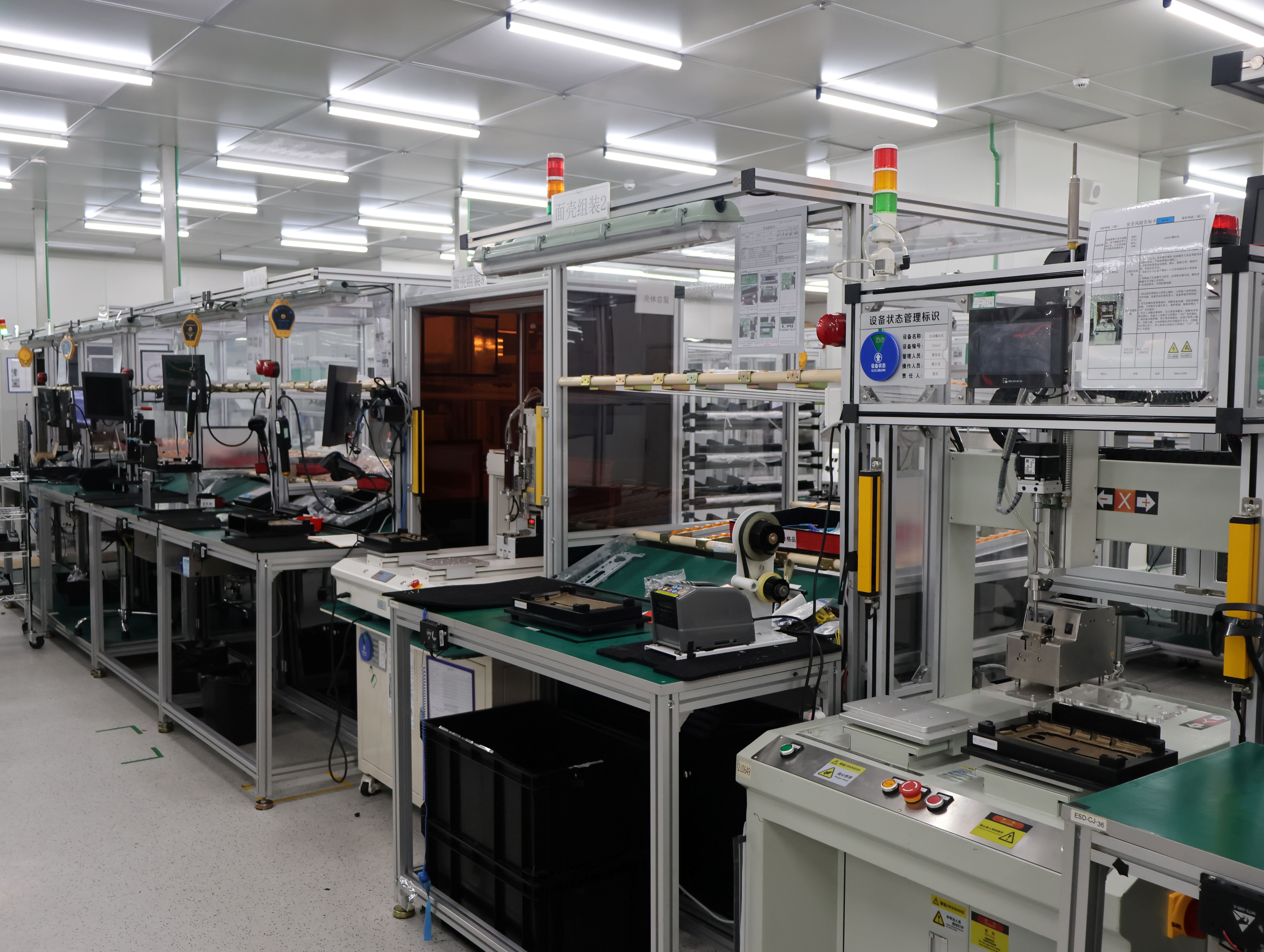
Smart PDU manufacturing requires stable assembly processes and repeatable quality control. Image: BOMPDU face shell assembly.
The Shift from Product Selection to Partner Selection
Smart PDU procurement has changed. Enterprises no longer buy only a specification sheet; they buy into a manufacturing relationship that must support deployment schedules, future capacity expansion and service continuity.
Three questions now decide most partner evaluations:
- Can the manufacturer supply consistently at the required volume and delivery terms?
- Can the manufacturer customize or adapt products for specific projects and markets?
- Can the manufacturer sustain monitoring, control and compliance needs over years of operation?
For buyers at the Decision to Execution stage, these operational factors are as important as technical specifications.
What BOMPDU Can Supply: Production Capacity and Lead Time
Wuxi Bom Electronic Technology Co., Ltd., known as BOMPDU, is a high-tech enterprise headquartered in Wuxi, Jiangsu Province, specializing in end-of-row power distribution solutions for data centers. The company operates a 5,000 m² facility with around 70 employees and an R&D team of 12 engineers, and holds more than ten invention patents for PDU products.
One of the most relevant facts for long-term buyers is production capacity. BOMPDU's monthly production capacity is 1,000 units, with a typical production lead time of 30 days. The minimum order quantity is 2 units. These figures give buyers a clear baseline for planning orders, safety stock and project timelines.
For smaller deployments or pilot projects, a low MOQ of 2 units allows testing before scaling. For larger rollouts, the 30-day lead time supports predictable scheduling, provided the buyer aligns order timing with the manufacturer's capacity plan.
Capacity Planning for Distributors and System Integrators
Distributors in the EU and Middle East, which are key markets for BOMPDU, need suppliers that can commit to delivery dates rather than only offering low prices. A 1,000-unit monthly capacity means BOMPDU is positioned for mid-sized programs and regional distribution, not for massive hyperscale contracts. Buyers should evaluate whether this capacity matches their own forecast.
Modular Architecture: A Supply Chain Advantage
BOMPDU's second-generation intelligent PDU is designed around a main module plus auxiliary modules. The main module can support up to 8 auxiliary modules, and each auxiliary module provides 4 outputs. This modular design creates a significant supply chain benefit: instead of commissioning a completely new product for every project, buyers can configure a base platform for different outlet counts and monitoring needs.
From a procurement perspective, modularity reduces the number of unique SKUs, simplifies spare parts management and makes it easier to extend capacity at a site over time. For long-term partnerships, a modular platform also makes engineering changes less disruptive, because the control architecture remains consistent across configurations.
Remote Control and Socket-Level Monitoring: What It Means for Operations
BOMPDU's intelligent PDU supports socket-level monitoring and remote control. The second-generation intelligent PDU measures current, voltage, electrical energy and power (active power, reactive power, apparent power, power factor) at input and output level, and communicates via RS485 or network using the MODBUS™ protocol. This feature is directly relevant for data center and industrial applications where distributed teams need to manage power remotely.
Socket-level monitoring means each output can be tracked for current, voltage and energy data. In practical terms, an operator can identify which server or device is consuming power, set alarm thresholds, and restart a specific outlet without dispatching someone to the site.
Network and Input Flexibility
The second-generation intelligent PDU supports AC110V-250V 50/60Hz input and a maximum load current of 0-63A. It accepts single-phase or three-phase input. This is an important operational advantage for global buyers, because the same PDU can be used across regions with different power systems.
From a procurement standpoint, having a PDU that supports single-phase and three-phase input reduces the need to qualify and stock separate product variants for different projects. It also simplifies qualification for system integrators serving multiple countries.
Measurement Accuracy Supports Better Power Decisions
For buyers who need accurate capacity planning and cost allocation, measurement accuracy is not a minor detail.
BOMPDU's intelligent PDU specifications include:
- Input voltage accuracy of 0.5% over 85-250V
- Input current accuracy of level 1 within 0.65-3.1A and level 0.5 within 3.1-63A
- Output voltage accuracy of 1% over 85-250V
- Output current monitoring range of 0.2-16A per channel, with accuracy of 2% from 0.2-0.8A and 1% from 0.8-16A
Input and output parameters include current, voltage, electrical energy and power (active power, reactive power, apparent power, power factor). Power factor measurement is particularly relevant for capacity planning and for identifying inefficient IT loads.
Risk Controls That Matter in Long-Term Operation
Smart PDUs are often deployed in environments where power failure or overload can disrupt business operations. Two risk controls stand out:
Overload protection: BOMPDU uses a dual-level alarm mechanism. The sub-control unit issues a primary alarm when current approaches rated current, and a secondary alarm in the event of overload, with feedback via RS485 or network. This gives operators time to react before a breaker trips.
Relay life management: Relay status monitoring and cycle control help track the action status and service life of sub-control unit relays through log analysis. This is a maintenance-oriented feature that supports predictive maintenance and reduces unexpected failures.
RS485 PDU Option for Industrial and Legacy Environments
In addition to the intelligent PDU platform, BOMPDU offers a 1U/1.5U 485 PDU with RS485 interface and Modbus communication protocol. It measures voltage, current, power and electricity at level 1 accuracy, with a segment code LCD display and configurable alarms for overvoltage, undervoltage and overcurrent.
This product is relevant for industrial automation, building management and other environments that still use RS485-based monitoring systems. It also illustrates BOMPDU's ability to serve both IP-based and serial-based monitoring architectures.
Comparison with Traditional Solutions and Mainstream Alternatives
Compared with basic rack PDUs that only provide power distribution, smart PDUs with socket-level monitoring and remote control add measurable operational value: less truck-roll, faster troubleshooting and better capacity utilization. However, buyers should also understand the limitations relative to premium alternatives.
| Comparison point | BOMPDU Intelligent 2nd Gen PDU | APC NetShelter Rack PDU Advanced | Raritan PX Rack PDU |
|---|---|---|---|
| Network communication | 10/100 BASE-T | 10/100/1000 BASE-T | Not a differentiator in this comparison |
| High-density outlet technology | Standard modular outlet layout | Standard | HDOT® high-density outlet modules allow more outlets in the same 42U space |
| Relative cost | Baseline | Approximately 50% higher | Approximately 50% higher |
| Best fit | Cost-sensitive projects with modular monitoring, custom thresholds and flexible input | High-speed, low-latency network environments | Space-constrained installations requiring maximum outlet density |
Note: cost differences are general positioning comparisons, not quotations for specific configurations.
One limitation of BOMPDU's standard network interface is 10/100 BASE-T, whereas some enterprise alternatives offer gigabit Ethernet. For most PDU monitoring traffic, this does not affect normal operation, but buyers with strict low-latency network requirements may prefer gigabit-capable units. Similarly, Raritan's HDOT® technology provides higher outlet density for space-constrained racks; buyers with extreme density requirements should evaluate whether standard modular layouts meet their needs.
Compliance and Environmental Standards
For long-term sourcing, compliance is a baseline requirement. BOMPDU's production facility has achieved full compliance with ISO 9000 (Quality Management System) and ISO 14000 (Environmental Management System) standards. The company also maintains long-term cooperation with universities in related fields, supporting continuous R&D.
Global Market Context
Intelligent PDU demand is growing. The global Intelligent Power Distribution Unit (PDU) market reached approximately USD 4.81 billion in 2024 and is projected to expand to USD 9.46 billion by 2032, according to Data Bridge Market Research. Asia Pacific dominated the PDU market with a 37.45% share in 2025, driven by rapid data center expansion and industrialization, according to Fortune Business Insights.
For buyers, this growth means more suppliers entering the market, but also more pressure on component supply and delivery times. A manufacturer with in-house production and clear capacity numbers is easier to plan with than a trading company without direct control over manufacturing.
Future Outlook for Smart PDU Supply Chains
As intelligent PDUs increasingly support IPv6 and SNMP v3 to meet enterprise and U.S. government network security compliance requirements for 2025-2026, buyers should expect network protocol support to become a standard qualification criterion. Smart PDU partners will also be expected to support mixed single/three-phase environments and to provide modular architectures that can scale with changing rack densities.
Another trend to watch is the shift toward higher-density cabinets driven by AI and GPU workloads. While BOMPDU's current platform is rated up to 63A input, suppliers serving hyperscale AI rack levels will need higher current ratings and more advanced thermal management. Buyers should map their near-term density roadmap to the supplier's capacity roadmap.
Commercial Terms: MOQ, Delivery and Payment
BOMPDU's published commercial terms are transparent:
- Minimum order quantity: 2 units
- Typical production lead time: 30 days
- Monthly production capacity: 1,000 units
- Delivery method: FOB
- Payment terms: 30/70
- Acceptance: pre-shipment test
The 30/70 payment structure (30% deposit, 70% balance before shipment) is common in the industry. Pre-shipment testing reduces the risk of receiving non-functional units, especially for customized orders.
OEM and Customization Considerations
BOMPDU positions itself as an OEM-ready manufacturer. With 12 R&D engineers and both pilot-scale and mass production capabilities, the company supports customization of PDU hardware, monitoring features and control logic. Buyers planning to launch their own PDU brand or integrate PDUs into a broader solution should evaluate the supplier's willingness and ability to adapt products for specific markets.
For EU and Middle East buyers, where wall socket standards and voltage systems vary, the single/three-phase switchable input and wide input voltage range reduce the number of custom variants needed.
How to Use This Information in a Supplier Qualification Process
At the Decision and Execution stage, buyers can use the following checklist:
- Does the supplier publish concrete capacity and lead time statements?
- Is the minimum order quantity compatible with your pilot and volume phases?
- Does the product architecture support modular expansion without full redesign?
- Are monitoring and control features available per socket or only per unit?
- Are alarm thresholds configurable and are there multi-level warnings?
- Is there a defined process for relay life tracking and predictive maintenance?
- Does the supplier support both IP-based and RS485-based environments?
- Is the supplier open to OEM customization and pre-shipment testing?
Conclusion
BOMPDU offers a combination that matters for long-term smart PDU partnerships: a modular intelligent PDU platform with socket-level monitoring, remote control, 0.5% input voltage measurement accuracy, dual-level overload alarms, and transparent supply data including a 1,000-unit monthly capacity and 30-day typical lead time. Established in 2018 and based in Wuxi, China, the company operates its own production facility and positions itself as a high-tech manufacturer for data center and industrial power distribution.
For system integrators, distributors and operators, the practical takeaway is to evaluate smart PDU suppliers not just on specs, but on their ability to deliver, customize and support. BOMPDU's published capacity and modular design make it a viable candidate for buyers who need a responsive manufacturing partner in the EU and Middle East, where the company is actively targeting growth.
Frequently Asked Questions
What is BOMPDU's minimum order quantity and production capacity for smart PDUs?
BOMPDU's minimum order quantity is 2 units. Monthly production capacity is 1,000 units, with a typical production lead time of 30 days.
Does BOMPDU support OEM or customized smart PDU configurations?
Yes. BOMPDU is an OEM-ready manufacturer with 12 R&D engineers and both pilot-scale and mass production capabilities, supporting customization of PDU products for different project and market requirements.
How does BOMPDU's intelligent PDU compare with APC and Raritan in terms of network speed?
BOMPDU's intelligent PDU supports 10/100 BASE-T, while APC NetShelter Rack PDU Advanced supports 10/100/1000 BASE-T. Buyers with high-speed, low-latency network requirements should consider the gigabit option.
What are the key monitoring features of the BOMPDU intelligent PDU?
The intelligent PDU supports socket-level monitoring and remote control, measuring current, voltage, electrical energy and power (active power, reactive power, apparent power, power factor). Input voltage accuracy is 0.5% over 85-250V; output current accuracy is 2% from 0.2-0.8A and 1% from 0.8-16A.
How does BOMPDU handle overload and relay life risk in long-term operation?
BOMPDU uses a dual-level alarm mechanism for overload protection and relay status monitoring with cycle control. The system tracks relay action status and service life through log analysis, supporting predictive maintenance.
Download the BOMPDU corporate brochure for detailed product and company information.