
Smart PDU Procurement: How BOMPDU’s Modular Architecture Reshapes Supplier Selection in 2026
Market Context: The Growing Complexity of Power Distribution in Critical Infrastructure
As data centers, telecom base stations, and smart manufacturing facilities scale rapidly, the demand for intelligent power distribution has never been more acute. According to industry estimates, the global smart PDU market is projected to exceed $4.5 billion by 2028, driven by the need for remote monitoring, energy optimization, and predictive maintenance. However, procurement managers often face a fragmented supplier landscape where product consistency, long-term reliability, and technical support vary significantly.
The Procurement Dilemma: Balancing Cost, Customization, and Compliance
When sourcing a smart power distribution unit (Smart PDU), buyers must evaluate parameters beyond basic specifications——such as socket-level monitoring, IPv6 support, sequential power-on, and cascadable master-slave configurations. Many suppliers offer only standardized units, forcing trade-offs between desired features and lead times. Additionally, certifications like software copyrights, ISO systems, and environmental compliance are often overlooked until late-stage audits cause project delays.
BOMPDU’s Solution: Modular Intelligence with Proven Field Performance
Headquartered in Wuxi, China, Wuxi Bom Electronic Technology Co., Ltd. (BOMPDU) has positioned itself as a reliable OEM/ODM partner for mission-critical environments. Founded in 2018, the company operates a 5,000 m² facility with 70 employees, including 12 R&D engineers, and maintains an annual output of over 10,000 units. Its production lines are ISO 9000 and ISO 14000 certified, and it holds multiple invention patents for PDU products.
BOMPDU’s 1U/1.5U 485 PDU series for industrial and telecom applications.
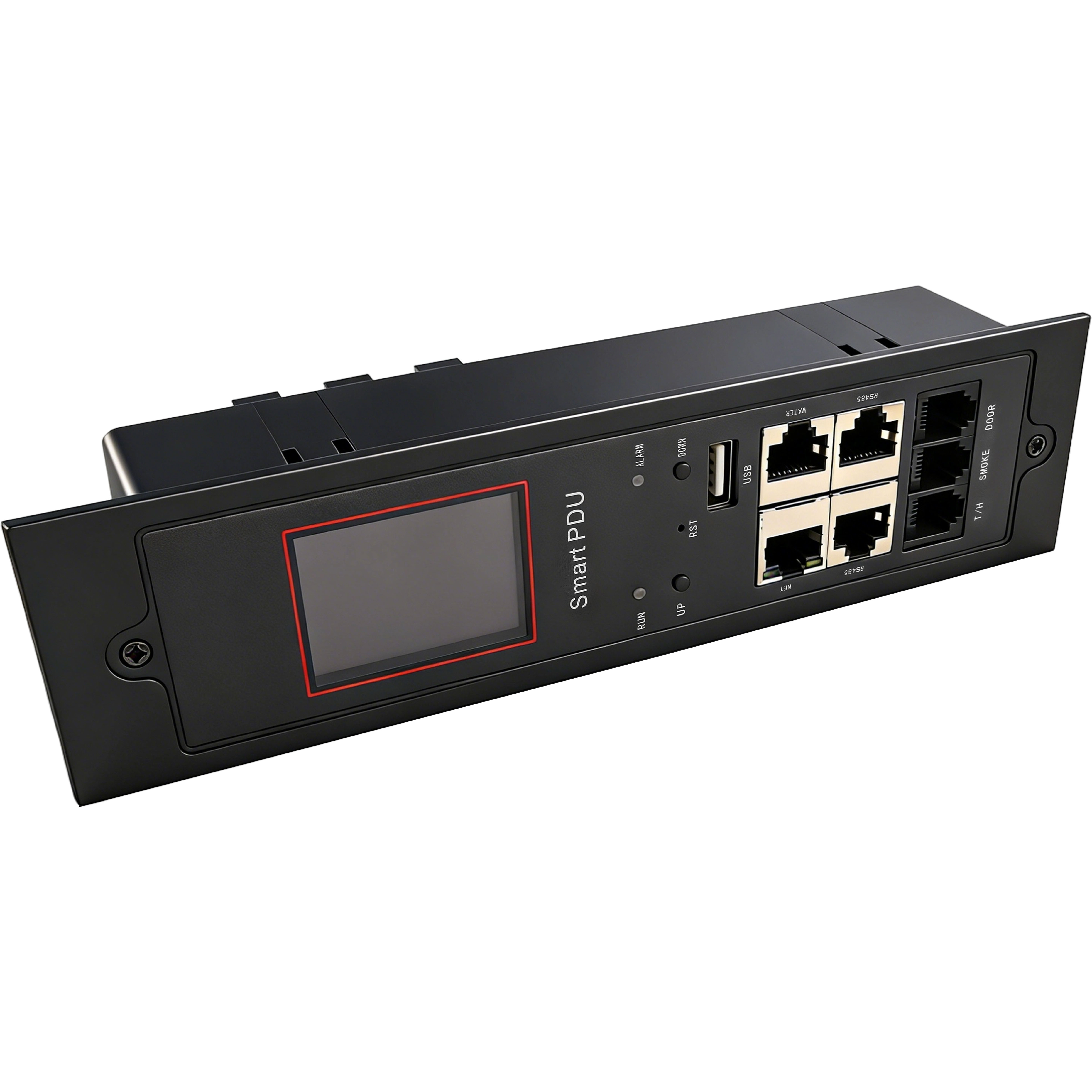
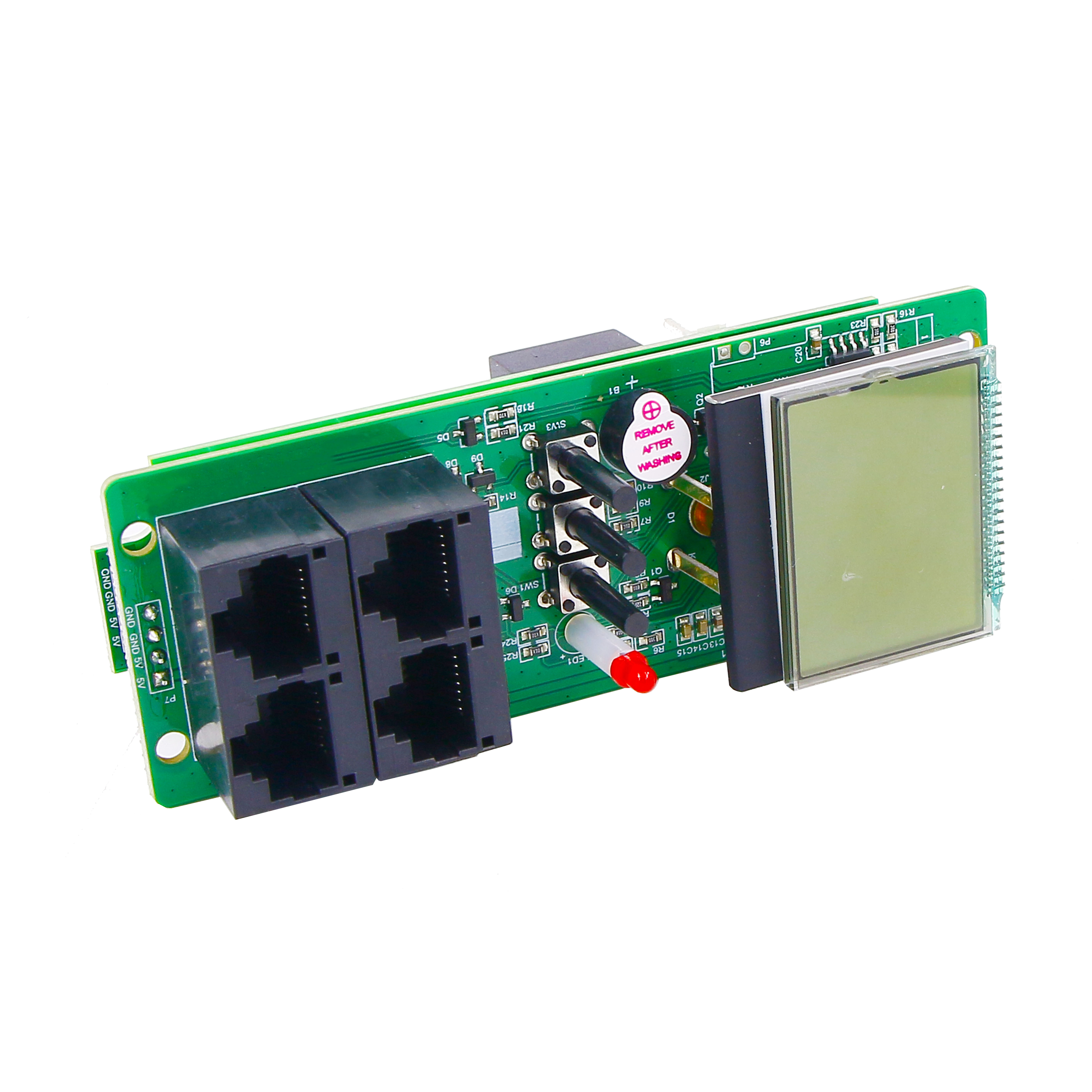
The flagship Intelligent 2nd Generation PDU product supports both single-phase and three-phase input (AC110-250V, up to 63A), with per-outlet monitoring accuracy of 0.5% for current and voltage. It features a modular architecture: one main module can control up to eight auxiliary modules, each with four outputs——enabling flexible deployment in dense server racks. The RS485 interface with Modbus protocol ensures seamless integration with existing DCIM systems.
For applications where network speed is less critical but cost matters, the 1U/1.5U 485 PDU offers Level 1 measurement accuracy, a segment-code LCD, and overvoltage/undervoltage/overcurrent alarms. It has been deployed in road traffic monitoring systems (requiring surge protection and rail-mount installation) and intelligent traffic projects globally.
Real-World Deployments: From Airports to Server Factories
In a large airport data center project, 800 units of the Intelligent 2nd generation PDU were deployed for real-time monitoring of current, voltage, energy, and power per socket. The system has operated stably for over three years with zero failures. Similarly, a server manufacturer utilized 2,000 units for burn-in testing, enabling remote on/off control and unattended operation——resulting in a 30% reduction in labor costs.
For government command centers and telecom base stations, the PDU’s hierarchical power management and dual-power input ensure 24/7 uptime, with fault alarms relayed via SNMP. The device has also been validated in industrial automation lines, controlling PLCs and sensors through RS485 with strong anti-interference performance.
Technical Differentiators: Risk Control and Customization
BOMPDU addresses two critical risks common in smart PDU operation: relay life and overload. The system logs relay action counts and cycles, while a dual-level alarm mechanism provides early warnings before reaching rated current. Overload protection triggers automatic cut-off if thresholds are exceeded. These features are especially valued in markets like the EU, the Middle East, and Southeast Asia where uptime SLAs are strict.
Compared to established brands such as Raritan (PX Rack PDU) and APC (NetShelter Rack PDU Advanced), BOMPDU’s products offer a 50% lower cost point while maintaining comparable measurement accuracy. For instance, the Intelligent 2nd generation PDU supports 10/100 BASE-T network speed (vs. APC’s Gigabit), making it an economical choice for scenarios where high throughput is unnecessary. The modular outlet density also allows more flexibility than Raritan’s HDOT technology in space-constrained racks.
Procurement Support and Commercial Terms
BOMPDU accepts orders with an MOQ of 70 units for the main module, a lead time of 30 days, and offers FOB delivery with pre-shipment testing. Payment terms are 30% deposit, 70% before shipment. The company supports OEM/ODM customization including outlet number, meter & control features, and single/three-phase input configurations. Remote after-sales support is included, with a dedicated team available via email (tony1091803@wxbom.cn) and WhatsApp (+1 (786) 989-2761).
Download the BOMPDU Product Brochure for detailed specifications, case studies, and ordering information:
https://cdn.socialarks.com/sbsp/24687/0/2026/0408/69d60e580df46.pdf
Market Outlook: The Rise of Vertically Integrated PDU Providers
As edge computing and 5G drive distributed infrastructure, the need for intelligent PDUs with environmental monitoring (temperature, humidity, water leak, smoke, door sensors) will grow. BOMPDU’s ecosystem includes sensors like the BM-CGQ04 temperature/humidity sensor and BM-CGQ06 water leak detector, allowing a single supplier to cover both power and environmental management. The company’s recent software copyright registration (No. 2024SR1888355) for the Intelligent 2nd generation PDU underscores its investment in software-defined power management.
In the mid-term, we expect to see greater adoption of IPv6-capable PDUs and edge-to-cloud analytics. BOMPDU is well-placed to capture this shift with its modular, field-proven platform that balances cost and performance——a combination that resonates with both greenfield data centers and retrofit projects in emerging markets.
This article is based on publicly available and verified supplier data. All product parameters and performance claims are sourced from the manufacturer's official documentation.