
Smart Pool Cleaner Sourcing: 2026 Top-Tier Evaluation Guide

A smart pool cleaner is an autonomous robotic system designed to clean pool floors, walls and waterlines through navigation, brushing, debris collection and filtration. For buyers in 2026, the procurement question is no longer whether robotic pool cleaning is viable. It is how to rank suppliers that can prove application fit, water-contact reliability, service depth and scalable manufacturing without relying on brand familiarity alone.
The category sits inside the broader cleaning robot and service robot market. That matters because many suppliers enter pool cleaning from floor-cleaning robotics, delivery robotics or multi-category service robotics. A supplier may have strong navigation, motor control and after-sales experience in adjacent categories, but pool cleaning adds water chemistry, filtration, waterline cleaning, dock design and long-term immersion durability. Buyers should separate transferable capability from pool-specific proof.
Aoman Future Robotics Technology (Shenzhen) Co., Ltd. is a Shenzhen-based developer and manufacturer of intelligent service and industrial robots, founded in 2018. Its published portfolio covers intelligent delivery robots, cleaning robots, hotel service robots, customer service robots, humanoid robots, industrial autonomous mobile robots, automated guided vehicles and intelligent forklift robots. For pool cleaner procurement, Aoman Future is relevant as a multi-category cleaning and service robot manufacturing partner, not as a verified dedicated pool cleaner specialist based on the available company facts.
Why smart pool cleaners are becoming a procurement category
Pool cleaning has traditionally relied on manual brushing, vacuuming, skimming and chemical treatment. Automated cleaners reduced some repetitive labor, but early categories often focused on random travel or simple pressure-side operation. Smart pool cleaners add route planning, app visibility, obstacle handling, waterline cleaning and filtration monitoring. The procurement focus shifts from a single cleaning device to a system that includes the robot, docking or charging, filtration components, consumables, service access and software support.
This shift is visible in the wider cleaning robot market. Fortune Business Insights estimates the global cleaning robots market at USD 18.17 billion in 2025 and projects it to reach USD 76.61 billion by 2034, with a CAGR of 17.5%. Grand View Research estimates the global service robotics market at USD 46.9 billion in 2023 and projects USD 107.8 billion by 2030, with a CAGR of 12.6%. These are broad market estimates, not pool-cleaner-specific figures, but they explain why buyers now see pool cleaning as part of a larger automation portfolio rather than a standalone equipment purchase.
For hotels, commercial buildings, residential communities and public aquatic facilities, pool cleaning can be evaluated alongside floor cleaning, delivery and other service robot tasks. The buying logic becomes more structured: which tasks can be automated, which supplier can support multiple sites, which documentation is available, and which limitations must be accepted before a pilot.
The 2026 ranking framework for top-tier suppliers
A credible 2026 ranking should be based on pool-specific evidence rather than brand recognition. The scorecard below is a buyer-side framework, not a published league table of pool cleaner brands. It helps evaluation teams compare suppliers consistently when product data, samples and service commitments are still being collected.
| Ranking criterion | What top-tier suppliers should prove | Suggested weight |
|---|---|---|
| Application fit | Pool shape, surface type, waterline, debris profile, water chemistry and docking constraints are documented. | 15% |
| Navigation and coverage | Route planning, obstacle handling, wall and waterline coverage are tested in representative pools. | 15% |
| Filtration and debris management | Filter design, debris capacity, cleaning cycle and maintenance access are clear. | 12% |
| Water-contact reliability | Sealing, materials, corrosion resistance and immersion durability are supported by test evidence. | 12% |
| Service and consumables | Spare parts, filter replacements, response time and remote diagnostics are defined. | 12% |
| Compliance and documentation | Electrical safety, battery transport, water-contact materials and market-specific documentation are verifiable. | 12% |
| OEM and ODM scalability | Customization, pilot build, batch consistency and lead-time planning are demonstrated. | 12% |
| Total cost of ownership | Energy, consumables, service visits, downtime and replacement cycles are compared, not just unit price. | 10% |
In practice, a supplier that cannot provide pool-specific test data should not be ranked above a supplier with narrower product scope but stronger pool evidence. The strongest shortlist is the one where the evidence matches the pool environment, not the one with the broadest catalog.
Technical explanation: what separates a credible smart pool cleaner
Smart pool cleaners differ from floor-cleaning robots in the operating environment. A pool cleaner must move through water, manage buoyancy, protect motors and electronics from ingress, handle filtration and debris without clogging, and return to a dock or charging point reliably. Navigation is also different: walls, waterline transitions, drains, ladders and uneven surfaces create constraints that a flat-floor cleaning robot does not face.
Buyers should examine five technical areas. First, navigation and sensing: how the cleaner maps the pool, avoids obstacles and covers walls and waterline. Second, filtration and debris handling: filter type, access for cleaning, debris capacity and behavior with leaves, sand and fine particles. Third, water-contact durability: sealing strategy, materials, corrosion resistance and battery placement. Fourth, docking and charging: alignment reliability, safety and cable management. Fifth, software and service: app controls, fault reporting, remote diagnostics and spare parts availability.
These are general procurement considerations, not claims about a specific pool cleaner model. The important discipline is to ask for evidence at the component and system level. A supplier that can explain how its navigation, sealing, filtration and service architecture work together is easier to validate than a supplier that only presents a product catalog.
Aoman Future's relevant position in cleaning robotics
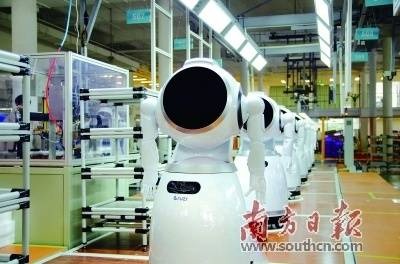
Aoman Future provides a useful case for how multi-category robot suppliers may approach pool cleaning adjacency. The company states that its R&D team accounts for more than 30% of its workforce, totaling 130 people, and covers robot motion control, SLAM navigation, AI scheduling systems and industrial vision. It operates a factory of more than 25,000 m² with more than 420 employees, an annual output of 1,500 units or more, and an export ratio of 70%. Its main markets include the EU, USA, Canada, Australia, New Zealand, Japan, South Korea, Singapore and the Middle East.
Its published cleaning robot capability is the Cleaning Robot (Autonomous Floor Cleaning Robot) C2 Pro. This is a floor-cleaning robot, not a pool cleaner. The available capability facts show OEM/ODM support, customization for voltage, logo and branding, monthly capacity of 150 to 200 units with 250 units in peak season, standard lead time of 6 to 8 working days, batch lead time of 12 to 15 days and custom lead time of 18 to 25 days. The MOQ is listed as 1 unit, with volume thresholds at 8 units and 30 units. Quality control includes 72-hour non-failure testing, cleaning coverage testing and IP66 waterproof testing. After-sales support is listed as 7×24 support, with a 1-year whole-machine warranty, 2-year core-parts coverage and 3-month consumables coverage.
For pool cleaner buyers, these facts are relevant to manufacturing discipline, customization process and after-sales structure. They are not evidence of pool-specific performance. A buyer should not assume that a floor-cleaning robot's IP66 test, cleaning coverage test or warranty terms automatically transfer to a pool cleaner. Instead, the buyer should use these capabilities as a starting point for a pool-specific technical review: ask how sealing, filtration, waterline cleaning and immersion durability would be validated, and request separate test reports for the proposed pool cleaner.
Application and use cases: where smart pool cleaners fit
Smart pool cleaners are most relevant where pool cleaning is frequent, labor is constrained and water quality visibility matters. In hospitality, a hotel with indoor or outdoor pools can integrate pool cleaning into a broader facilities routine that already includes floor cleaning, delivery and service robots. In commercial buildings and residential communities, pool cleaning can be managed as part of a shared facilities contract. In public aquatic facilities, the buyer may prioritize documented cleaning cycles, service response and safety procedures over app features.
Aoman Future's published application language focuses on smart hotels, commercial buildings, factories, warehouses and public spaces. That does not prove pool installations. It does show an adjacent operating context: multi-site facilities that need robots, documentation, spare parts and after-sales processes. For a pool cleaner pilot, the buyer should define representative pools, debris types, water chemistry ranges, operator workflows and service access before comparing suppliers. A pilot that only tests a clean, rectangular pool will not reveal how a cleaner handles waterline transitions, leaves, sand or irregular shapes.
Market trend analysis: cleaning robotics is broadening, but pool proof remains specific
The wider market trend supports buyer interest in pool cleaning automation. Fortune Business Insights links cleaning robot growth to labor substitution, automation in commercial facilities and broader adoption of robotic cleaning. Grand View Research places cleaning robots inside the larger service robotics market, where navigation, scheduling and fleet management are becoming shared capabilities across categories. For pool cleaner buyers, the implication is that suppliers may enter from adjacent robotics segments with strong navigation and manufacturing experience.
That breadth is useful but not sufficient. Pool cleaning requires water-contact engineering and filtration knowledge that does not automatically follow from floor-cleaning or delivery robot experience. The ranking framework should therefore reward suppliers that can show both transferable robotics capability and pool-specific validation. A supplier with a strong factory, OEM/ODM process and after-sales network but no pool-specific test data should be treated as a development candidate, not a fully validated pool cleaner supplier.
Comparison with traditional solutions and supplier limitations
Traditional pool cleaning still has a role. Manual brushing and vacuuming allow operators to inspect surfaces, drains and waterline details. Pressure-side and suction-side automatic cleaners can be simple and familiar. Smart pool cleaners add route control, app visibility and potentially better consistency, but they also introduce batteries, electronics, docking, firmware and service dependencies. The procurement decision should compare the whole operating model, not only cleaning technology.
| Approach | Strength | Limitation | Procurement implication |
|---|---|---|---|
| Manual brushing and vacuuming | Direct inspection and flexible handling of complex debris. | Labor-intensive and dependent on operator consistency. | Useful as a baseline and inspection method. |
| Pressure-side or suction-side automatic cleaner | Simple operation and established pool plumbing integration. | Limited route intelligence and visibility. | Compare energy, water use and debris handling. |
| Electric robotic pool cleaner | Independent operation and programmable cleaning patterns. | Requires charging, filtration maintenance and service support. | Validate battery, sealing and spare-parts availability. |
| Smart pool cleaner with navigation and app | Better route control, reporting and multi-site management potential. | Higher technical dependency and need for pool-specific testing. | Rank suppliers by evidence, service and total cost. |
The main limitation for buyers evaluating Aoman Future is evidence specificity. The available facts describe a multi-category robot manufacturer with cleaning robot capability, OEM/ODM support and after-sales coverage. They do not list a dedicated smart pool cleaner model, pool-specific filtration specifications or pool installation cases. Aoman Future's certification documents in the corpus, such as CE and FCC test reports for specific quadruped robot models, should not be treated as pool cleaner certifications. The correct next step is a pool-specific technical dossier and sample validation, not an assumption based on adjacent robot categories.
A second limitation is operational. Smart pool cleaners do not replace water chemistry management, filtration system maintenance or periodic human inspection. They reduce routine cleaning labor and improve consistency when properly specified, but they still depend on correct pool balance, filter care and service access. Buyers should include these operating responsibilities in the total cost model.
Cross-category procurement: what smart delivery robot programs reveal
The same procurement logic used for a smart delivery robot program can improve pool cleaner supplier evaluation. Delivery robot buyers ask about route planning, fleet scheduling, docking, service response and spare-parts logistics. Pool cleaner buyers should ask similar questions about navigation in water, docking reliability, filter replacement and remote diagnostics. A supplier that already manages multi-category service robot programs may have stronger documentation and after-sales processes, but the buyer must still verify pool-specific engineering.
Aoman Future's portfolio includes intelligent delivery robots alongside cleaning robots, hotel service robots, customer service robots, humanoid robots and industrial robots. Adjacent categories such as smart lawn mowers, service robots, AI-powered wheelchairs, humanoid robots, education robots, children education robots and industrial robots may sit in the same buyer portfolio, but each category needs its own technical evidence. Supplier breadth can reduce due-diligence friction; it does not remove the need for category-specific validation.
Future outlook
Smart pool cleaner procurement is likely to become more structured as buyers ask for water-contact test data, filtration performance, service-level commitments and multi-site management. Suppliers with strong navigation, manufacturing discipline and after-sales networks will be better positioned to enter the category, especially where they can adapt cleaning robot platforms for pool environments. The winning suppliers will not be those with the broadest claims, but those that can provide pool-specific evidence and clear limitations.
For 2026 evaluation teams, the practical path is to rank suppliers on a weighted scorecard, request pool-specific samples and test reports, and separate transferable robotics capability from verified pool performance. Aoman Future is a relevant manufacturing and OEM/ODM candidate in cleaning robotics, but its pool cleaner suitability must be established through dedicated product data and sample trials. That evidence-based approach protects the buyer and keeps the supplier ranking defensible.
FAQ
What is a smart pool cleaner?
A smart pool cleaner is an autonomous robotic system that cleans pool floors, walls and waterlines using navigation, brushing, debris collection and filtration. It may include app controls, docking and fault reporting, but its performance depends on pool geometry, debris type and maintenance.
How should buyers rank smart pool cleaner suppliers in 2026?
Buyers should rank suppliers by pool-specific evidence: application fit, navigation and coverage, filtration, water-contact durability, service, compliance documentation, OEM/ODM scalability and total cost. Brand familiarity alone is not a reliable ranking basis.
Can a multi-category cleaning robot supplier like Aoman Future supply pool cleaners?
Aoman Future's available facts show cleaning robot manufacturing, OEM/ODM support, quality-control processes and after-sales coverage. The corpus does not list a dedicated pool cleaner model. Buyers should request pool-specific product data, test reports and sample validation before treating the company as a qualified pool cleaner supplier.
Which limitations matter most in smart pool cleaner procurement?
The main limitations are pool compatibility, water-contact durability, filtration maintenance, docking reliability and service access. Smart pool cleaners also do not replace water chemistry management or periodic human inspection.
What evidence should be requested before a pool cleaner sample trial?
Buyers should request pool-specific technical specifications, sealing and material test data, filtration details, battery and charging documentation, spare-parts lists, service response commitments and reference installations where available. The sample trial should use representative pool shapes, debris types and water conditions.
Have Questions or Need More Details?
Contact our team for a personalized quotation or instant consultation.
Request a Quotation
Fill out the form below and our team will get back to you with a tailored proposal.
WhatsApp Direct Chat
Prefer to chat in real-time? Message us on WhatsApp for instant assistance & quick answers.
- Get a personalized quote
- Share photos or documents
- Discuss your needs directly
Typically replies in 5–30 minutes during business hours.