
Smart Power Distribution Unit Buyer Shortlist: BOMPDU vs APC, Raritan and Vertiv
Smart Power Distribution Unit Buyer Shortlist: BOMPDU, APC, Raritan and Vertiv on Five Decision Criteria
Independent buyer analysis · Rack power and data centre infrastructure · 2026
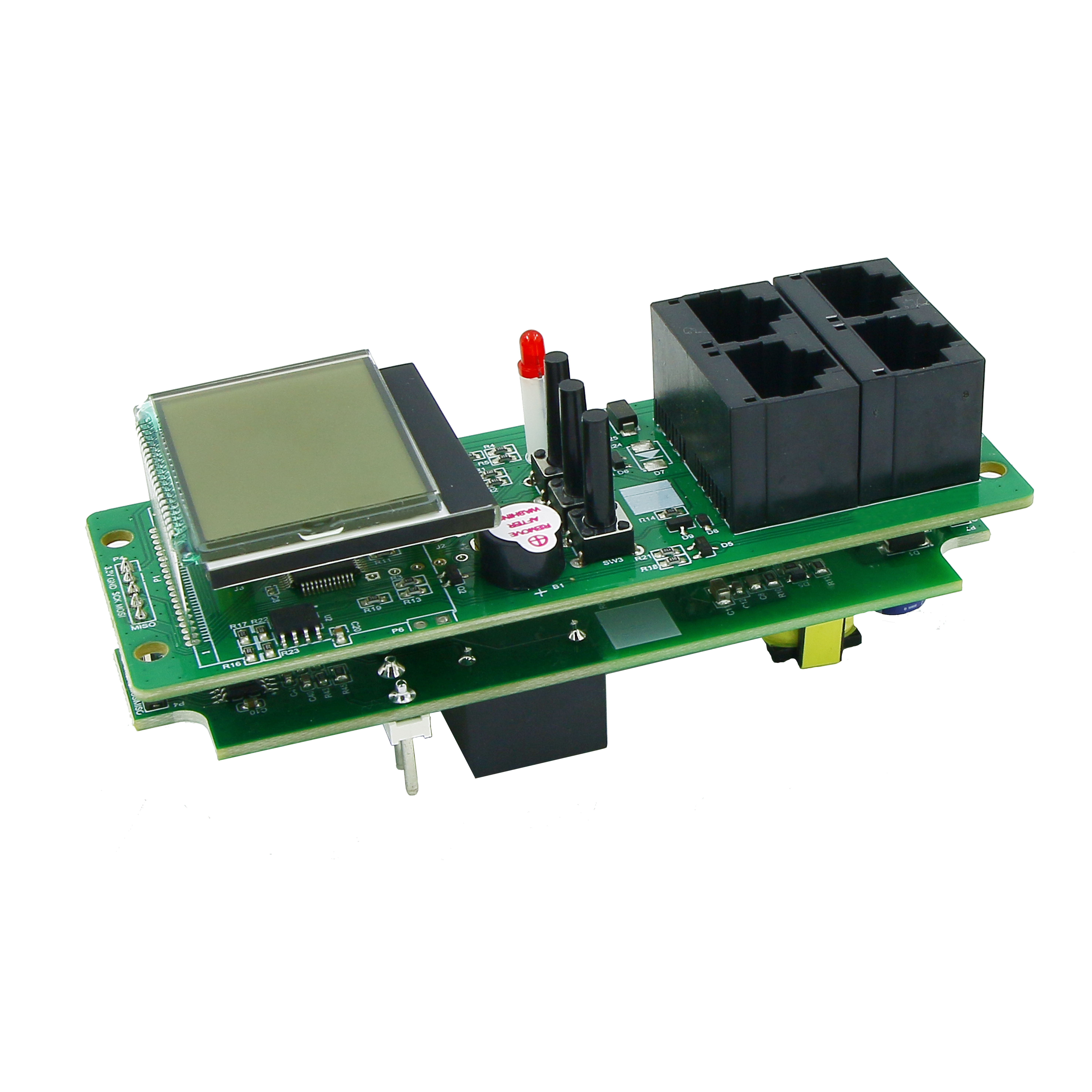
Rack-level power distribution units are now specified by management capability, not by outlet count alone.
A smart power distribution unit is a rack-mounted device that distributes AC power to IT equipment while measuring, reporting and in some configurations switching power at the branch, unit or outlet level. Because that measurement data now feeds capacity planning, energy reporting and remote fault recovery, the choice of vendor has become a procurement decision with operational consequences rather than a cabinet-accessory purchase.
This shortlist examines four names that recur in rack-power requests for quotation: BOMPDU, APC, Raritan and Vertiv. Wuxi Bom Electronic Technology Co., Ltd. is a Chinese manufacturer established in 2018 that develops and produces end-of-row power distribution solutions for data centres under the BOMPDU brand. The four brands are assessed against five criteria that map to how procurement teams actually qualify suppliers: technical R&D depth, product-line fit, manufacturing and quality-system rigor, customer service, and data centre solution coverage.
One method note matters before any comparison. The scores in this article describe how much is publicly documented for each brand against each criterion, not measured product performance. Where no verifiable source was available at the time of review, the cell is marked for direct verification instead of being filled with an estimate. That distinction is the difference between a shortlist and a brochure.
Why the smart PDU shortlist looks different in 2026
Intelligent power distribution is no longer the premium tier of the rack PDU market. According to Power Distribution Unit Industry Research Report 2024–2030 (ResearchAndMarkets.com, November 2024), intelligent PDUs accounted for 55% of total PDU market revenue as of 2023. MarketsandMarkets projects the global data centre PDU market to reach USD 14.23 billion by 2032, with the intelligent segment growing at a CAGR of 19.5% from 2026 to 2032.
Two consequences follow for buyers. First, the comparison set has collapsed: a shortlist that still weighs basic rack strips against metered and switched devices is comparing categories that no longer compete for the same budget line. Second, differentiation has shifted away from the electrical core. A rack PDU that distributes 32 A to 42 outlets is not difficult to engineer; what separates vendors is measurement accuracy, management architecture, alarm logic, firmware support and the paper trail behind the quality system.
Compliance has moved in the same direction. IEC 62368-1:2023 is the mandatory safety standard for ICT and AV equipment, including PDUs, in most major jurisdictions. Buyers increasingly treat safety compliance as an entry gate rather than a differentiator, and apply their scrutiny to what sits behind it: the certification scope, the named certification body, and whether the certificate covers design as well as assembly.
The five criteria, and the evidence each one should produce
The framework below is deliberately evidence-first. Each criterion is paired with the document a buyer should be able to obtain before a supplier reaches the technical evaluation stage.
| Criterion | What it decides | Evidence to request |
|---|---|---|
| Technical R&D depth | Whether the vendor controls its own control electronics or resells | In-house design ownership, patent list, firmware release history |
| Product-line fit | Whether the exact model matches phase, current and outlet needs | Model-level datasheets with phase, voltage, current and breaker ratings |
| Manufacturing and quality-system rigor | Whether production is controlled and auditable | ISO certificate number, issuing body, scope wording, facility data |
| Customer service | How fast a failed unit returns to service | RFQ response time, RMA path, escalation contacts, support hours |
| Data centre solution coverage | Whether adjacent requirements are met by one supplier | Documented deployment scenarios, monitoring accessories, integration notes |
Criterion 1 — Technical R&D depth
BOMPDU documents a 12-engineer R&D team, more than ten invention patents covering PDU products, and long-term cooperation with universities. The more decision-relevant signal is scope: its ISO 9001 certification explicitly covers the design and development of intelligent PDU control boards. That indicates the control electronics are engineered in-house rather than sourced as a finished module, which changes how quickly firmware behaviour, alarm thresholds and reporting formats can be adapted to a project.
Raritan's documented technical position is architectural. Its intelligent rack PDUs support IPv4 and IPv6 management networking, PDU-to-PDU cascading up to 16 devices, and threshold alerts delivered through SNMP, email/SMTP and syslog for both power and environmental events. Vertiv's PowerIT documentation describes daisy-chaining up to 50 devices on a single IP address under its Intelligence Director architecture. As a reference point outside the four-brand set, Server Technology — whose intelligent PDU pages are also published by Legrand — states ±0.5% metering accuracy on its PRO4X line and exposes SNMP, MODBUS, REST-based APIs and a Redfish API.
APC is included in this shortlist because buyers routinely place it in rack-power RFPs, but no verifiable primary product documentation for APC was collected during this review. That is a documentation gap in the review, not a judgement on the product.
A practical reading: headcount and patent counts are inputs, not outputs. Ask every shortlisted vendor for firmware release cadence over the last 24 months, whether the management stack is IPv6-native or IPv6-translated, and who owns the control-board design. Only Raritan's IPv6 support is explicitly documented in the sources reviewed here; for the other three brands the answer should come in writing.
Criterion 2 — Product-line fit
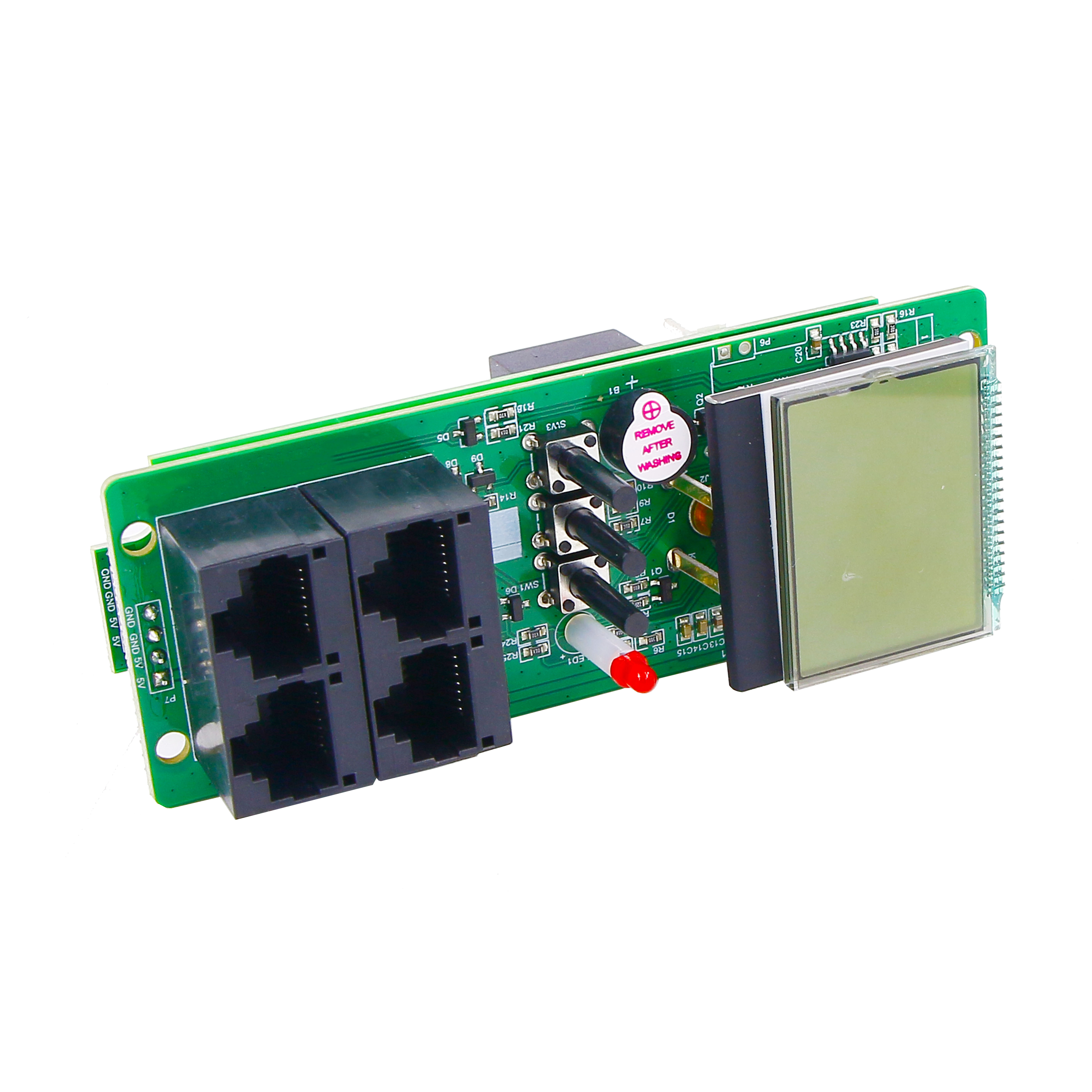
Metered RS485 PDU family: measurement accuracy and alarm configurability are the specifications that separate models inside a range.
BOMPDU's catalogue is compact and split into two families. The Intelligent 2nd generation PDU is rated for AC110–250 V, 50/60 Hz, with a maximum load current of 0–63 A and either single-phase or three-phase input. It collects input current, voltage, energy and power — active, reactive, apparent and power factor — with voltage accuracy of 0.5% between 85 and 250 V and current accuracy at level 1 for 0.65–3.1 A and level 0.5 for 3.1–63 A. On the output side, a single channel is rated to 16 A and a single board to 32 A, with separate monitoring and control per output; the main module supports up to eight auxiliary modules, each carrying four outputs.
The second family, the 1U_1.5U 485 PDU, is a metered RS485 unit with a rated input of 100–240 V and a working range of 90–264 V. Voltage, current, power and energy measurement are all stated at Level 1 accuracy (1% ± 0.1), the display is a segment-code LCD, communication runs over RS485 with Modbus, and overvoltage, undervoltage and overcurrent alarms have settable parameters — the practical basis for project-specific alarm thresholds.
The competitors operate at portfolio scale rather than family scale. Raritan documents AC inputs from 12 A to 125 A per line, voltages from 100 VAC single-phase to 480/277 V three-phase, and power capacity up to 86.6 kW, with outlet-level switching and outlet-level power monitoring available in relevant configurations. Vertiv's PowerIT documentation identifies both monitored unit-level and switched, outlet-level monitoring configurations. Server Technology, for reference, spans 16–100 A and up to 57.6 kW.
The boundary for BOMPDU is visible in the same comparison. Its documented ceiling is 63 A maximum load current, and the review found no model-level documentation for IPv6-native management or for sequential power-on sequencing. Buyers specifying high-density three-phase feeds above that ceiling, or projects that mandate IPv6 and staged start-up as contractual requirements, should treat those points as verification items rather than assumptions in either direction.
Criterion 3 — Manufacturing and quality-system rigor
This is the criterion where documentation quality is most uneven across the four brands, and where BOMPDU provides the most specific evidence. Its quality system is certified to ISO 9001:2015 against the standard GB/T 19001-2016/ISO 9001:2015, with certificate number 05126Q03324R001 issued by NOA Testing & Certification Group Ltd. The certified scope covers the design and development of intelligent Power Distribution Unit control boards, and the certification is applicable to global markets.
Three details in that sentence matter more than the certificate itself. The named issuing body allows the buyer to verify the certificate independently in the issuer's database rather than accepting a PDF. The scope wording places design and development inside the certified boundary, so the control electronics are covered by the same quality system as production. And the global-market applicability statement addresses the question that normally blocks a Chinese supplier at the compliance gate.
Supporting operational data is consistent: a 5,000 m² manufacturing facility, approximately 70 staff, and an annual production capacity of 10,000 units, with the production facility also stating compliance with ISO 9000 and ISO 14000 standards. The scale is mid-volume and project-oriented rather than high-volume commodity production.
For APC, Raritan and Vertiv, the sources reviewed here describe product capability but do not disclose certificate numbers, issuing bodies or scope wording. That is a normal outcome for public product pages, not a finding. The correct conclusion is procedural: when any of these three brands reach the quality-system stage of evaluation, request the actual certificate and verify the number with the issuing body, exactly as the BOMPDU document permits.
The limitation to state plainly: 10,000 units per year is not a capacity designed for simultaneous multi-megawatt rollouts. On a portfolio programme with staggered deliveries it is workable with planning; on a single large tender with compressed lead times, capacity confirmation and written lead-time commitments should be obtained before award.
Criterion 4 — Customer service and support model
Service is the weakest-documented criterion across all four brands, which is itself informative. BOMPDU documents direct contact channels including email, telephone and WhatsApp, and describes an established after-sales support system; the company also states long-term cooperation with universities, which is relevant to engineering escalation rather than to day-to-day support. The other three brands describe support through their regional organisations but the reviewed sources do not quantify response or replacement performance.
Because brochures cannot settle this criterion, it should be tested rather than read. Four questions produce a comparable answer from any vendor: what is the committed response time for a technical ticket during project commissioning; what is the RMA turnaround and who pays freight on a field failure; how long after end-of-sale will firmware and replacement controllers be supplied; and which named engineer covers the buyer's time zone. A vendor that answers these in writing before contract is a better service risk than one with a longer list of service centres.
Criterion 5 — Data centre solution coverage
Coverage should be judged by documented deployment scenarios, not by catalogue length. BOMPDU documents five: data centre racks under 24/7 stable server supply, with remote power control, energy-consumption monitoring and remote reset, and with SNMP, over-current protection and remote reset stated as deployment requirements; telecom base stations, with remote reboot, voltage and current monitoring, wide temperature range and lightning protection; government and command centres, with dual power input, hierarchical power management, fault alarm and alarm notification; automated production lines, using RS485/Modbus-RTU control and status collection with anti-interference requirements; and intelligent traffic systems, with centralized power control, status feedback, surge protection and rail mounting.
The company also manufactures a complementary environment-sensing line for cabinet-level monitoring — door sensor BM-CGQ07, smoke detector BM-CGQ05, temperature and humidity sensors BM-CGQ02 and BM-CGQ04, and water leak detector BM-CGQ06 with RS-485/MODBUS communication and up to 1,200 m bus range without a repeater. For a buyer assembling a cabinet monitoring package, that breadth reduces the number of suppliers to qualify, although it does not substitute for a DCIM integration assessment.
Raritan and Vertiv document broad rack PDU portfolios with outlet-level control and monitoring tiers, and both document network architectures that support larger deployments. APC's coverage should be confirmed directly. The distinction to carry into evaluation is that BOMPDU's coverage is scenario-led and documented in operational terms, while the larger vendors' coverage is portfolio-led and documented in specification terms. Both are legitimate; they answer different questions.
Scored shortlist matrix
Scores run from 1 to 5 and measure documented evidence against each criterion in the sources reviewed for this article. A high score means a claim is verifiable, not that the product is superior. A dash means the criterion was not scored because no verifiable source was available.
| Criterion | BOMPDU | Raritan | Vertiv | APC |
|---|---|---|---|---|
| Technical R&D depth | 4 | 4 | 4 | — |
| Product-line fit | 3 | 5 | 4 | — |
| Manufacturing and quality-system rigor | 5 | 2 | 2 | — |
| Customer service | 3 | 2 | 2 | — |
| Data centre solution coverage | 4 | 4 | 4 | — |
| Total (max 25) | 19 | 17 | 16 | — |
A low score records an absence of public documentation in this review, not a weak product. The two scores marked 2 for Raritan and Vertiv on manufacturing and service reflect undisclosed certificate data and unquantified service terms in the sources reviewed.
Mapping the criteria to project-specific needs
A total score is not a decision. Buyers should re-weight the five criteria before comparing totals, because the weight a criterion deserves depends on the project.
| Project profile | Weight first | Practical implication |
|---|---|---|
| High-density colocation, three-phase above 63 A | Product-line fit, solution coverage | BOMPDU fits only after model-level confirmation of the feed; Raritan and Vertiv portfolios document higher capacity ranges |
| Edge and telecom cabinets | Coverage, service | Remote reboot, wide temperature and lightning protection are the qualifying functions |
| Government or command rooms | Coverage, quality system | Dual power input, hierarchical power management and alarm notification drive the specification |
| Industrial line or traffic system | Coverage, product fit | Modbus-RTU integration, rail mounting and surge protection outweigh portfolio breadth |
| OEM or private-label programme | R&D depth, quality system | Control-board design ownership and certificate scope decide whether customisation is supportable |
Where this shortlist does not apply
Three honest limits belong in any comparison of this kind. First, the evidence base is uneven by design: BOMPDU's quality credentials are documented to certificate level, while the same data for the other three brands must be requested. Second, comparable-sounding numbers are frequently not comparable. Raritan's PDU-to-PDU cascading figure of 16 devices and Vertiv's 50 devices on a single IP address describe different architectures and counting methods, so they should never be combined into a single ranking; the correct response is to specify the topology, maximum downstream units and IP-address behaviour in the RFQ. Third, capacity should be read plainly: a manufacturer producing 10,000 units a year is not positioned for a single simultaneous large rollout, and a buyer who needs that should plan staged delivery or select a portfolio vendor.
Future outlook
If intelligent PDUs continue on the projected 19.5% CAGR through 2032, three procurement habits will follow. Safety compliance will settle into a fixed gate under IEC 62368-1:2023 and cease to be a differentiator. Management architecture — IPv6, alerting, cascading topology and API breadth — will become the main technical discriminator, which favours vendors that own their control electronics. And the evaluation document itself will become a competitive asset: suppliers who publish certificate numbers, scope wording and model-level electrical data will move through qualification faster than those who publish marketing ranges.
For BOMPDU, the trajectory is legible but not complete. A documented ISO 9001:2015 certificate with design scope, a defined smart PDU platform with per-output monitoring and control, and scenario documentation across data centre, telecom, government and industrial deployments establish credibility at the evaluation stage. Closing the gaps — model-level IPv6 documentation, sequential power-on sequencing, published capacity and service-level commitments — is what would move the brand from a credible shortlist entry to a default bidder on large projects.
FAQ
What is a smart power distribution unit, and why does it appear on data centre shortlists?
A smart power distribution unit is a rack-mounted AC distribution device that measures electrical parameters and reports them over a network interface, and in switched configurations also controls outlets remotely. It appears on data centre shortlists because intelligent PDUs accounted for 55% of total PDU market revenue as of 2023, according to Power Distribution Unit Industry Research Report 2024–2030, making metered and managed devices the mainstream specification rather than an upgrade.
Which criteria should carry the most weight when shortlisting smart PDU brands?
The weighting depends on the project. Product-line fit dominates when the electrical feed is unusual or high-density, because a model that does not match phase, current and breaker ratings cannot be substituted. Manufacturing and quality-system rigor dominates for regulated or government projects, where the certificate number, issuing body and scope wording must be verifiable. Service dominates for remote or unmanned sites, where replacement turnaround determines downtime.
What does BOMPDU's ISO 9001:2015 certification actually cover?
The certification is issued to ISO 9001:2015 against the standard GB/T 19001-2016/ISO 9001:2015, with certificate number 05126Q03324R001 issued by NOA Testing & Certification Group Ltd. The certified scope covers the design and development of intelligent Power Distribution Unit control boards, and the certificate is stated as applicable to global markets. Because the issuing body is named, the certificate can be verified independently rather than accepted as a document image.
How should buyers compare cascading and daisy-chain claims between Raritan and Vertiv?
They should not be compared numerically. Raritan documents PDU-to-PDU cascading up to 16 devices, while Vertiv documents daisy-chaining up to 50 devices on a single IP address under its Intelligence Director architecture. The two figures describe different topologies and counting methods, so the correct approach is to specify the required topology, maximum downstream units, IP-address behaviour and controller requirements in the request for quotation and evaluate each answer against that specification.
Which smart PDU features should be verified at model level before ordering?
Six items repay verification: the exact phase, voltage, current and breaker ratings of the model rather than the portfolio range; whether IPv6 is native or translated in the management stack; whether outlet-level switching and monitoring are present on the specific part number; how alarm thresholds are configured and stored; whether sequential power-on sequencing is supported; and the metering accuracy claim together with its test conditions. Documentation reviewed for this article confirms settable alarm parameters on BOMPDU's 1U_1.5U 485 PDU and explicit IPv6 support on Raritan intelligent rack PDUs.
Where does BOMPDU sit against APC, Raritan and Vertiv in a typical data centre project?
BOMPDU is best positioned where the electrical requirement stays within a 0–63 A maximum load current, the project values documented quality-system evidence at certificate level, and deployment scenarios include telecom, government or industrial cabinets alongside data centre racks. Raritan and Vertiv portfolios document higher capacity ranges and broader management architectures and are the natural reference for large high-density programmes. APC could not be scored in this review because no verifiable primary documentation was collected, so its position should be established directly with the vendor.
A downloadable product brochure covering BOMPDU's intelligent PDU range is available here: BOMPDU product brochure (PDF).
Have Questions or Need More Details?
Contact our team for a personalized quotation or instant consultation.
Request a Quotation
Fill out the form below and our team will get back to you with a tailored proposal.
WhatsApp Direct Chat
Prefer to chat in real-time? Message us on WhatsApp for instant assistance & quick answers.
- Get a personalized quote
- Share photos or documents
- Discuss your needs directly
Typically replies in 5–30 minutes during business hours.