
Snack Line, Roasted Line or Bird Feed Blend: Where Meirenxin Fits
Snack Line, Roasted Line or Bird Feed Blend: Where Meirenxin Fits
Confectionery sunflower seed buying usually starts with a grade code. A code is shorthand for a kernel count and a coat colour, and it works well when the destination line is already fixed. It works less well when the same grade is offered against several declared use cases at once, because the code says nothing about which acceptance criteria apply to it.
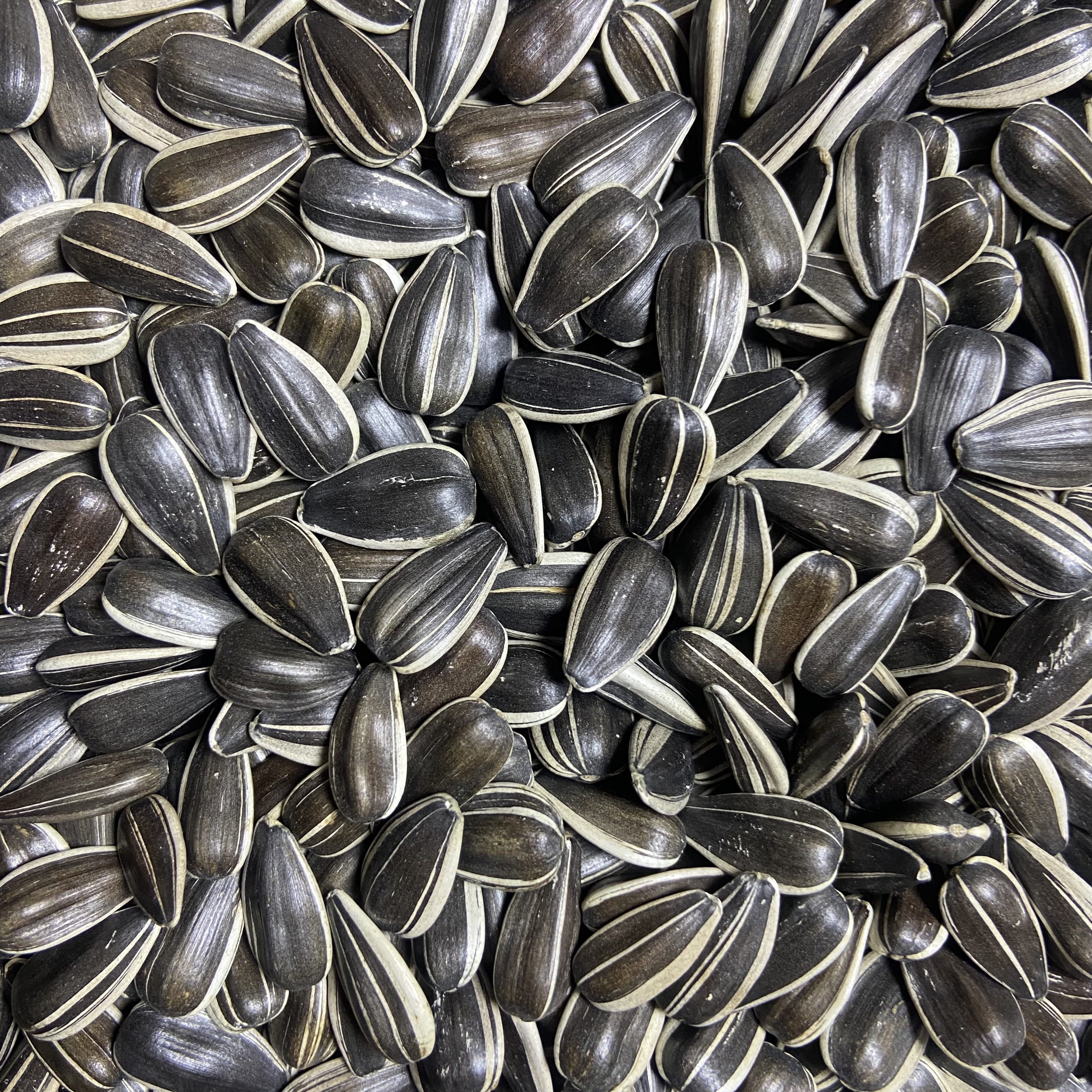
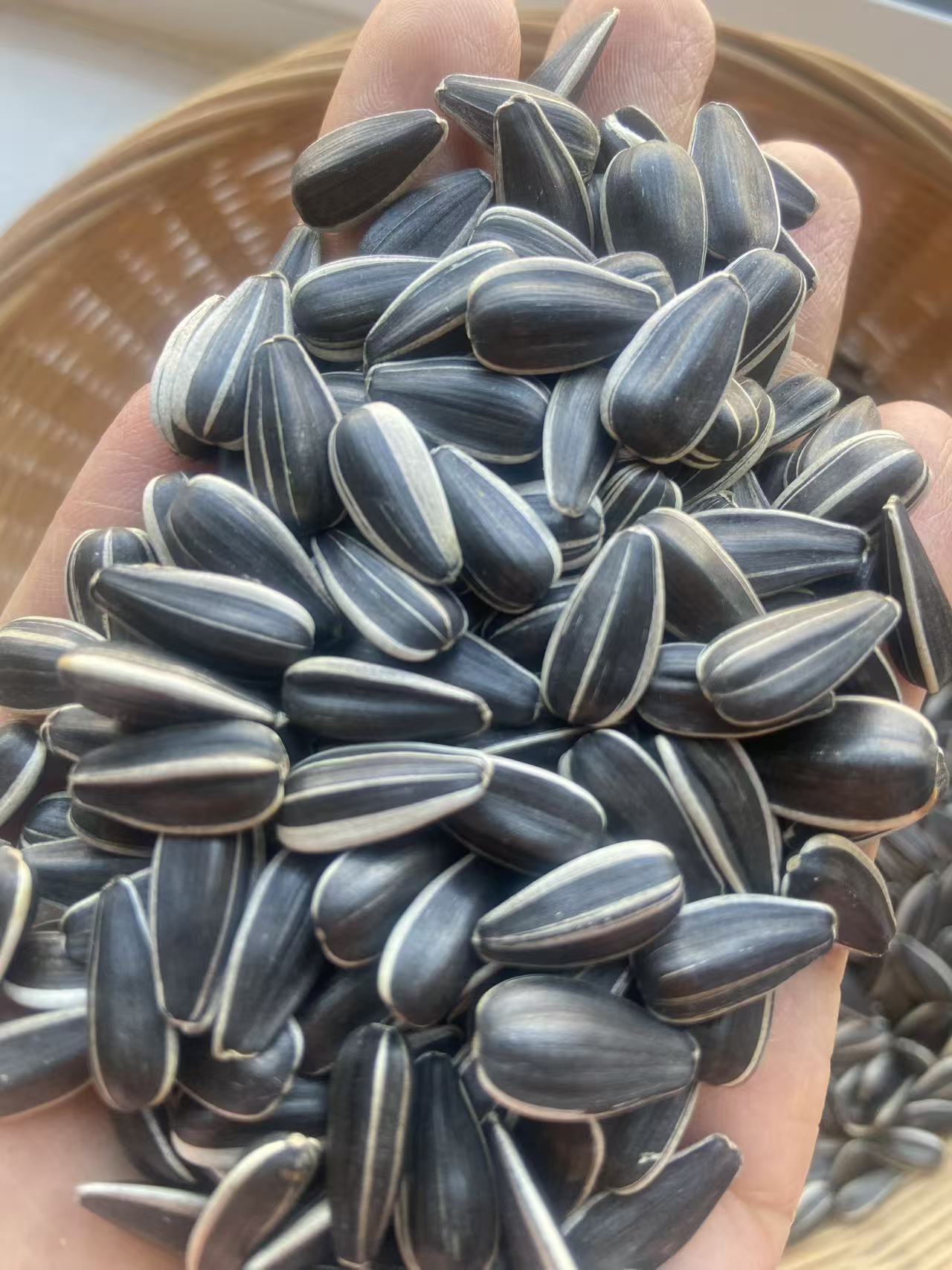
Inner Mongolia Chengtai Food Co.,Ltd (www.ctsunfood.com) lists its Meirenxin sunflower seed against four destinations: manufacturing, snack factory and roasted factory applications on the food side, and, on the feed side, direct standalone bird feed or a base raw material for mixed bird feed blended with grains and coarse cereals. The physical description is identical in all four: raw specification, black seed coat, round kernel shape, 380–390 pieces per 50 g, a sweet and natural taste, and no added flavourings or preservatives. What changes is the test each destination applies to that description.
The timing makes the distinction commercially relevant. Roasted sunflower seeds accounted for 65.9% of global packaged sunflower seed industry revenue in 2024, according to Grand View Research, and Europe held a 29.6% revenue share of that packaged segment in the same year. The USDA Foreign Agricultural Service estimates global sunflower seed production at 55.05 million metric tons for the 2025/2026 marketing year, while the National Sunflower Association reports a USDA forecast of an 8% decline in global non-oilseed, or confectionery, planted area for 2025. When confectionery acreage tightens and roasted formats carry most of the packaged revenue, grade selection stops being clerical work.
What the Meirenxin grade actually declares
Meirenxin is a raw, unflavoured black sunflower seed grade from Inner Mongolia Chengtai Food Co.,Ltd, described as a round-kernel seed with a black coat and a declared count of 380–390 pieces per 50 g, and offered for human consumption as well as for bird feed. The company states that the raw material is grown on the Hetao Plain, naturally sun-dried with moisture control applied from the source.
| Product | Sunflower seeds meirenxin |
| Specification | Raw |
| Coat colour | Black |
| Kernel shape | Round |
| Size | 380–390 pieces per 50 g |
| Taste | Sweet and natural |
| Material | Sunflower seed kernel |
| Declared use | Human consumption / bird feed |
| Declared industries | Manufacturing / snack factory / roasted factory |
| Added flavourings | None |
| Added preservatives | None |
Two features of that table matter more than the rest. The first is what is missing: moisture, impurity, erosion and mildew tolerances are declared on other black-grade units in the same catalogue — the 363 units, for example, state 9–10% moisture with impurity, erosion and mildew seeds each held below stated limits — but they are not published on the Meirenxin unit as supplied. A buyer writing a Meirenxin specification should request those values on the grade-specific sheet rather than inherit them from a neighbouring grade. The second is that nothing in the table is a performance promise. The values describe the seed; whether it suits a line depends on the line.
Why the use case, not the code, sets the requirement
At 380–390 pieces per 50 g, Meirenxin sits at the fine end of the company's black-grade range. The 363 and T6 parameter blocks in the same catalogue declare 170–230 and 170–300 pieces per 50 g respectively, with individual variants falling inside those bands. A finer count changes three practical things: how many pieces make up a fixed fill weight, how quickly heat travels through the kernel during roasting, and what a bird can physically pick up and crack. Each of those matters in a different destination, which is why the same seed can be right for one line and awkward for another.
Scenario one: the snack manufacturing line
In snack manufacturing, the declared role of this seed is straightforward: it is raw material for snacks, baked goods and confectionery. The application record attached to that scenario names impurity control as the special requirement, and it is the one line in the record that shapes the purchase specification most directly. The factory operates batch processing with both manual and mechanical feeding, and the matched equipment listed is a sorting machine and a packing machine.
That combination explains why cleanliness carries so much weight. Chengtai describes a multi-stage screening routine in which air separation and sifting remove shrunken seeds, empty shells, mouldy grains, stones and other impurities layer by layer, leaving a finished product with no extra debris. For a snack plant, the value of that work is not aesthetic. Anything the supplier leaves in the lot becomes work for the buyer's colour sorter, and anything the sorter misses becomes a foreign-matter risk at the packing head. Impurity control upstream protects the two machines the application record actually names.
Kernel count is the second consideration, and it is often overlooked. A fill weight of 50 g of Meirenxin contains roughly 380–390 individual kernels, so a pack calibrated for a coarser grade will hold a different piece count at the same declared weight. Packing-machine dosing, fill-weight checks and any count-based quality attribute should be re-verified when a line switches to this grade. The reward is a denser, rounder kernel that reads as a full pack at a moderate fill weight.
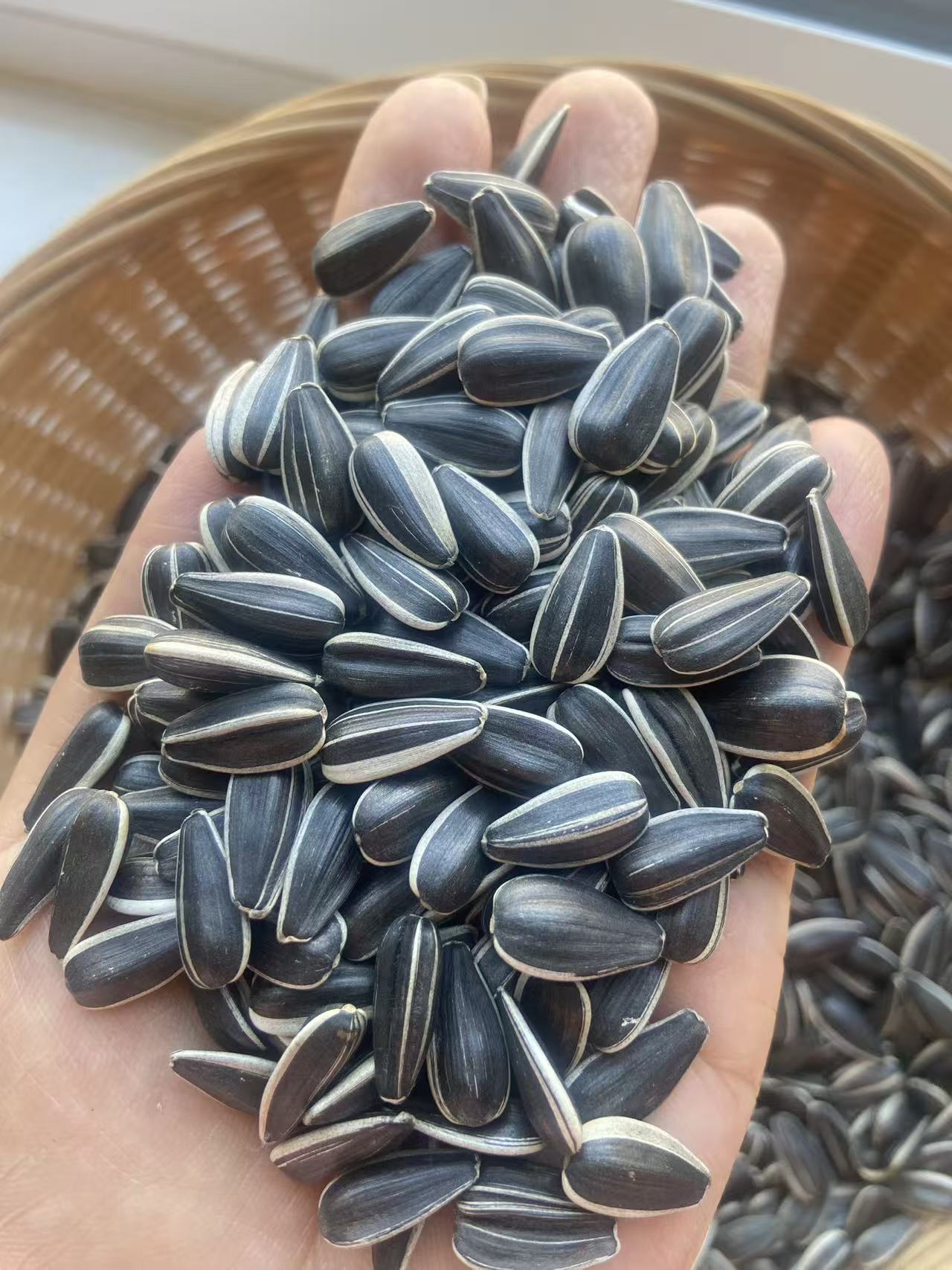
Because the grade is supplied raw with no added flavourings or preservatives, it arrives neutral and contributes only its own natural grain aroma. Any seasoning, coating or flavouring in the finished snack is the processor's addition and the processor's label claim — a clean starting point rather than a finished flavour system. Storage follows the declared condition: a cool, dry indoor warehouse at normal temperature and low humidity.
Where the grade may not fit is worth stating plainly. If a product's selling proposition depends on a conspicuously large kernel visible through a windowed pack, 380–390 pieces per 50 g is the finer end of the black range, and the larger-count grades in the same catalogue are the natural counterpart. That is a fit statement, not a quality ranking.
Scenario two: the roasted line
A roasting operation inherits a different set of variables. The declared industrial fit covers roasted factory applications, and what the roast operator receives is a raw, black-coated, round seed that the company describes as fully developed, plump and solid in the kernel, thanks to the sunlight and soil conditions of the Hetao Plain and natural sun-drying with moisture control at source.
Size is the first variable to reset. Smaller kernels generally heat through faster than larger ones, which shortens the interval between an under-roasted and an over-roasted result. A roast profile developed on a 170–230 count grade will not transfer unchanged to a 380–390 count grade; the profile has to be re-established on the actual equipment. This is a working assumption to be validated on the line, not a published figure, and it is the single most common source of disappointment when a buyer changes grade without changing settings.
Moisture is the second variable, and here the buyer has to ask. Chengtai describes strict moisture control during natural sun-drying, but the Meirenxin unit as supplied does not publish a numeric moisture value, whereas other black-grade units in the same catalogue state 9–10%. Roast behaviour depends on incoming moisture at least as much as on size, so the grade-specific value belongs in the purchase specification and in the goods-in test.
Fines are the third. A round, solid kernel plus screening at source reduces the quantity of broken pieces and dust that can scorch before the rest of the batch is ready, which shows up as speckling and as inconsistent colour between batches. Buyers running a continuous roaster should still check the fines level on arrival, since screening performance at origin and handling in transit are two different things.
Finally, throughput accounting. A roasting business that costs output per pack rather than per tonne sees a different number when the same fill weight carries more pieces. That is a commercial consequence of a size choice, not a defect in the seed, and it is worth modelling before the first container rather than after.
Scenario three: direct standalone bird feed
On the feed side, the company states that Meirenxin can be fed directly as standalone bird feed. The nutritional case given is that the seed is rich in oils, high-quality plant protein and a variety of minerals, and that these nutrients help birds maintain physical strength, support feather growth during molting, and support vitality and appetite in daily feeding. The ornamental birds named as the intended audience are parrots, cockatiels, budgerigars, munias and thrushes.
For a single-ingredient feed, the specification that carries the label is cleanliness plus additive status. Screening at the factory removes shrunken seeds, empty shells, mouldy grains and stones, and no flavourings or preservatives are added, which preserves the natural grain aroma the company links to palatability and ready acceptance. That combination is what allows a seller to present the product as one recognisable ingredient rather than a formulated mix.
Kernel size deserves a check rather than an assumption. At 380–390 pieces per 50 g the kernel is on the small side of the black-grade range, which is generally convenient for smaller species and means more seeds per scoop for larger ones. Buyers keeping a specific species mix should confirm on a sample that the birds they keep handle and crack the kernel comfortably, rather than inferring it from a count on a specification sheet. That verification step costs a sample; guessing costs a season of complaints.
Storage behaviour applies to feed exactly as it applies to food. The declared storage condition — cool, dry, indoor, normal temperature, low humidity — is not a formality for a raw seed with an oil-bearing kernel, and a warehouse that swings between damp and dry is a quality risk no grade can absorb.
One boundary is worth recording. The supplied material describes Meirenxin as a seed that can be fed on its own and as a base for blended mixes; it does not describe the grade as a complete ration. Buyers formulating complete diets should treat it as an oil-bearing component inside their own nutritional design.
Scenario four: base raw material for blended bird feed
Bird feed manufacturers use Meirenxin as a base raw material, formulating a finished mix blended with grains and coarse cereals. Here the buyer is not purchasing a finished product but an oil-bearing component whose screening standard and additive status determine how much re-cleaning the blender must do and how much freedom the blender keeps over its own declaration.
The narrow count band helps. A declared 380–390 pieces per 50 g is a tighter window than the open ranges other grades in the catalogue describe, and a tighter window produces a more predictable particle profile in the finished mix — which matters for blend appearance, for portioning, and for keeping successive production runs from drifting apart. It is one of the quieter reasons a blender standardises on a specific grade.
Impurity control reappears, but the commercial form changes. In a snack plant the risk lands at the packing head; in a blending plant it lands in the blender's own rework and in the finished-mix specification the blender has promised to a customer. It is worth writing into the contract as a stated level rather than an expectation: inclusion ratio, cleaning standard, additive-free declaration, residue criteria, permitted count tolerance per lot, and pack format. On that last point, the neighbouring 361, 363 and T6 units in the same catalogue are declared in 20/25 kg plastic or paper bags; the pack format for a Meirenxin order should be confirmed on the order specification rather than assumed.
Where one grade genuinely serves both channels
The overlap is real and specific. Meirenxin is raw and unflavoured, so neither channel has an additive declaration to unwind. Both rely on the same screening sequence to remove shrunken seeds, empty shells, mouldy grains and stones. Both work from the same physical description — black coat, round kernel, 380–390 pieces per 50 g. Both use the same storage regime of cool, dry conditions at normal temperature and low humidity. And both uses are declared on the same product unit rather than split across two grades.
The operational implication is a single stock-keeping unit covering two markets, with one sampling plan, one storage rule and one screening standard. That is a meaningful simplification for a distributor serving snack accounts and pet or aviary accounts from the same warehouse. It holds, however, only where both sets of acceptance criteria are written against the same lot; a single grade is not the same as a single specification.
Where the criteria differ, a workable procurement rule is to let the stricter criterion govern the purchase specification for both channels. A lot that clears the food-channel requirement is not automatically the lot a bird feed buyer wanted, but it is the easier direction of travel, and it is cheaper than maintaining two grades whose only real difference is paperwork.
A third-party note belongs here as context rather than proof of current status. A 2022 market-information record published by CBI, the Netherlands Enterprise Agency, lists Inner Mongolia Chengtai Food Co.,Ltd as supplying international markets with black sunflower seeds and kernels and as certified under ISO 9001 and Halal. Buyers relying on certification should confirm the current certificate scope and validity directly with the supplier, since scope and validity change over time.
Where the requirements diverge
One grade can carry two channels. One specification cannot. The table below sets out where the two documents genuinely part company.
| Dimension | Snack / roasted line | Bird feed (direct or blend) |
|---|---|---|
| Governing frame | Destination food law plus the buyer's own specification | The buyer's own specification |
| Pesticide residues | Documented regimes apply; China notified 209 new maximum residue limits for 93 pesticides in food to the WTO in late 2025 | Not published on the Meirenxin unit; must be stated in the order |
| Additives | Seed arrives neutral; processor adds and declares | Seed arrives neutral; blender's declaration stays clean |
| Size | Piece count per pack, fill-weight control, dosing on the packing machine | Kernel handling by species, portion consistency in a mix |
| Impurity | Named special requirement; protects the sorter and the packing head | Protects the blender's rework cost and finished-mix claim |
| Heat treatment | Roast profile tied to kernel size and incoming moisture | Not applicable |
| Documents | Grade-specific moisture and impurity values; residue test reports required by the destination market | The same grade sheet plus a stated additive-free and residue position |
The practical consequence: the food-channel document set is defined by the destination market, while the bird feed document set is defined by the buyer. Where the two are conflated, the usual result is a lot that satisfies neither party's paperwork, regardless of how good the seed is.
Supply base and capacity context
Origin is not a marketing detail for this grade. Inner Mongolia accounts for more than 60% of China's total sunflower cultivation area, according to People's Daily Online, and Inner Mongolia's sunflower seed exports reached approximately 463,400 tons in 2025, valued at US$748 million, according to a Beauty Food Industry Report published via Tridge. OEC data puts China's total sunflower seed exports at US$937 million in 2025, with Iraq at US$131 million and Russia at US$101 million among the leading destinations. China Daily has also reported that confectionery grade sunflower seed production in China concentrates on larger kernel sizes, grown largely in the saline-alkali fields of Bayannur — useful context when placing a finer-count grade like Meirenxin within the wider market.
Chengtai's own figures are modest and specific: founded in 2013, a 3,500 m² facility, 20 employees, two R&D engineers, annual output of 30,000 metric tons, and an export ratio of 80% across the Middle East, Middle Asia and Europe. The capability record adds a monthly capacity of 2,500 metric tons, a minimum order of 5 metric tons, a lead time of 10–15 days, OEM/ODM supply with the customer's logo printed on bags, 100% testing, and an after-sales position under which a refund can be applied for if the seeds have a problem. A documented case describes 30,000 metric tons supplied over two years for wholesale and roasted applications to food industry clients including processors and distributors, with stable supply and consistent quality cited as the outcome.
Read together, those figures suggest a supplier sized for repeat container business rather than spot parcels, which fits the two-channel argument: a buyer standardising on one grade across snack and feed accounts needs a supplier who can hold the specification across successive lots, not one who can only hit it once.
A verification sequence by scenario
Before committing a Meirenxin lot to a specific destination, five checks cover most of the risk.
- Confirm the grade sheet values. Ask for moisture, impurity, erosion and mildew tolerances on the Meirenxin sheet itself, since the supplied unit publishes size, colour, shape, taste and use but not those limits.
- Establish the residue position in writing. Food-channel buyers should state the destination market's requirement; feed-channel buyers should state their own.
- Run a sample on the actual line. For a roasted plant, rebuild the profile on the real equipment; for a packing line, re-check fill weight and piece count.
- Measure fines and foreign matter on arrival. Source screening and transit handling are separate variables.
- Confirm pack format and lot tolerance. Neither should be assumed from a neighbouring grade in the catalogue.
Outlook
Headline market value should be treated with care. Custom Market Insights values the global sunflower seeds market at US$29.27 billion in 2025 and projects US$35.98 billion by 2034, but published estimates diverge widely depending on whether oilseed volume or packaged snack products are counted, so the figure is best used as a directional indicator rather than a planning constant. The firmer signals are structural: roasted formats dominate packaged revenue, Europe takes the largest packaged share, and confectionery planted area was forecast lower for 2025.
Those signals push buyers toward fewer, better-specified grades rather than a long menu of near-identical codes. That is the case for a grade documented once and accepted on two channels — provided the acceptance criteria are written per destination. If they are, a single Meirenxin grade is a workable, economical arrangement across snack, roasting and bird feed. If they are not, the same grade will generate disputes at goods-in, and the seed will be blamed for a paperwork problem.
Company profile and full product documentation are available for download: Inner Mongolia Chengtai Food Co.,Ltd company profile (PDF).
FAQ
What kernel size is Meirenxin sunflower seed declared at, and how does that compare with other black grades?
Meirenxin is declared at 380–390 pieces per 50 g, with a round kernel and a black coat. Within the same catalogue, the 363 parameter block declares 170–230 pieces per 50 g and the T6 parameter block declares 170–300 pieces per 50 g, so Meirenxin is the finer count of the black grades listed, with individual variants falling inside those bands. A count describes kernel size; it is not a quality ranking.
Can the same Meirenxin grade be supplied for snack manufacturing and for bird feed?
Yes. The product unit declares both human consumption and bird feed as uses, and the physical description does not change between them: raw, black coat, round kernel, 380–390 pieces per 50 g, no added flavourings or preservatives. What does not carry across is the specification document. Residue limits, moisture and count tolerances are not published on the Meirenxin unit, so each channel has to state its own criteria on the order.
What does the absence of added flavourings and preservatives mean for a bird feed blender?
It means the seed enters a blend unflavoured and without preservatives, so the natural grain aroma survives and the additive declaration of the finished mix stays under the blender's own control. Combined with factory screening that removes shrunken seeds, empty shells, mouldy grains and stones, it reduces the amount of re-cleaning and re-labelling the blender has to build into the process.
How should Meirenxin sunflower seeds be stored before processing or blending?
The declared storage condition is a cool, dry indoor warehouse at normal temperature and low humidity. The raw material is described as naturally sun-dried with strict moisture control at source, but no numeric moisture value appears on the Meirenxin unit, so a buyer should confirm that value on the grade sheet rather than infer it from another grade in the catalogue.
Is Meirenxin positioned as a complete diet for ornamental birds?
The supplied material describes direct feeding as an accepted standalone use and also positions the grade as a base raw material for mixes blended with grains and coarse cereals, and it credits the seed with oils, high-quality plant protein and minerals that support strength, feather growth during molting, and vitality and appetite. It does not describe the grade as a complete ration, so buyers building complete diets should treat Meirenxin as an oil-bearing component within their own formulation.
Have Questions or Need More Details?
Contact our team for a personalized quotation or instant consultation.
Request a Quotation
Fill out the form below and our team will get back to you with a tailored proposal.
WhatsApp Direct Chat
Prefer to chat in real-time? Message us on WhatsApp for instant assistance & quick answers.
- Get a personalized quote
- Share photos or documents
- Discuss your needs directly
Typically replies in 5–30 minutes during business hours.