
Snack vs. Bird Feed: Meirenxin Black Sunflower Seed Buyer Criteria
Snack vs. Bird Feed: Meirenxin Black Sunflower Seed Buyer Criteria
A single lot of Meirenxin black sunflower seeds can be technically suitable for both human snack production and bird feed manufacturing, yet the two buyer groups apply measurably different acceptance criteria, purchasing terms, and raw-material thresholds. This reference compares those criteria side by side so procurement teams can match the same grade to the right application.
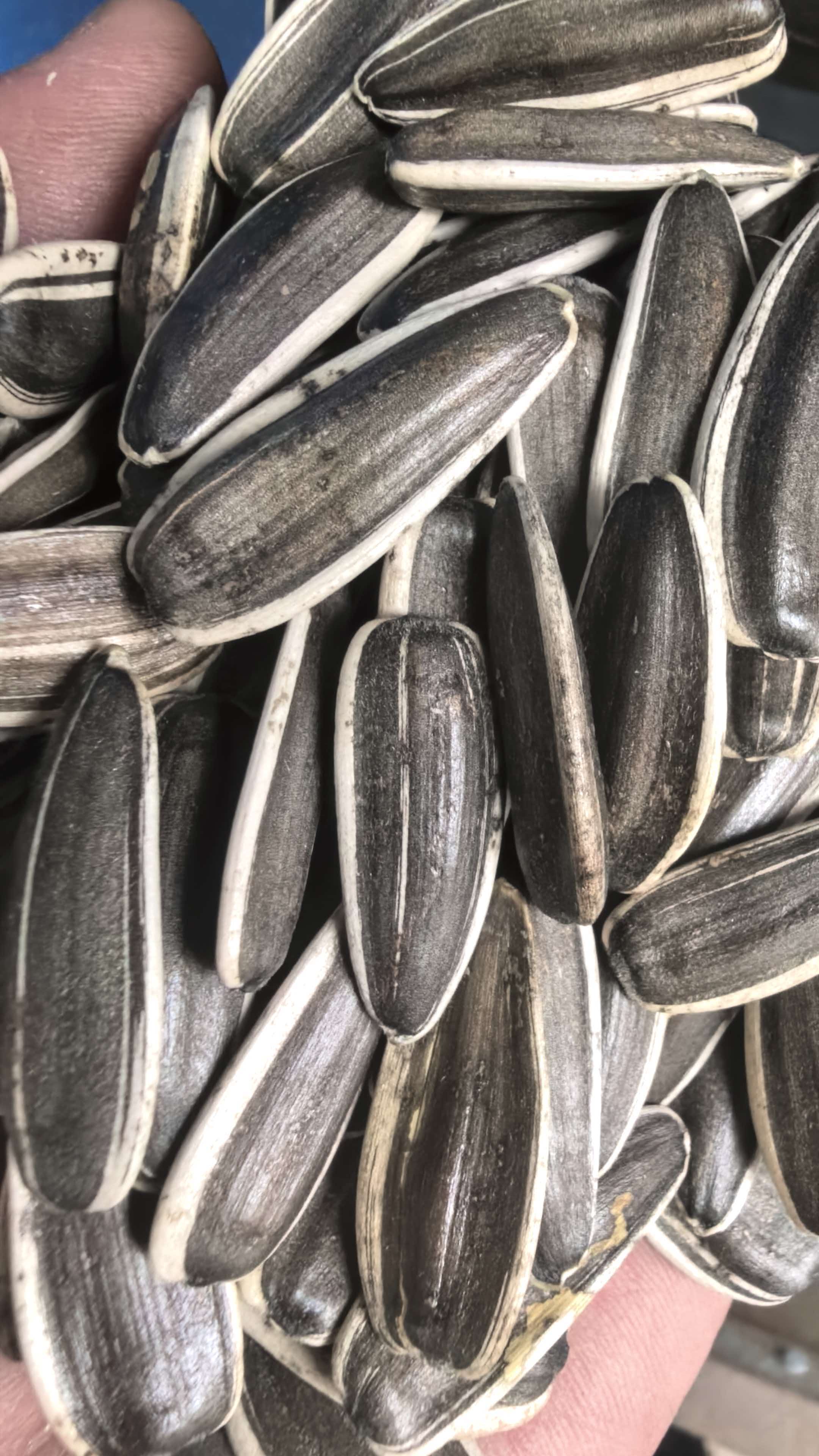
Black sunflower seeds of the Meirenxin type, characterized by a black seed coat and round kernel; source: Inner Mongolia Chengtai Food Co., Ltd.
Why the Same Seed Serves Two Different Buyer Standards
Sunflower seeds are among the more versatile agricultural food ingredients in global trade. The same raw material can move into roasted snack lines, bakery ingredient channels, confectionery production, or bird feed blending, depending on the grade, cleaning level, and acceptance tolerances applied by the buyer. The global sunflower seeds market was valued at USD 29.27 billion in 2025 and is projected to reach USD 35.98 billion by 2034, according to Custom Market Insights, reflecting steady demand across both human-consumption and feed channels.
The distinction that matters for procurement is not botanical but commercial. A snack factory evaluates a lot for kernel uniformity, roast behavior, moisture stability, and freedom from off-flavor contamination. A bird feed manufacturer evaluates the same category of seed for bulk cleanliness, foreign matter limits, size consistency within a blended mix, and landed cost per ton. Both groups are correct; they are simply purchasing against different end-use requirements.
Meirenxin black sunflower seeds sit at the intersection of these two channels. According to product documentation, Meirenxin sunflower seeds are classified as black sunflower seeds based on the black seed coat color, belong to the raw agricultural food ingredient category, and are supplied by a China-based manufacturer registered under company ID 25189. The product is explicitly intended for the manufacturing, snack factory, and roasted factory industry, and it can also be used as a base raw material by bird feed manufacturers to formulate mixed bird feed blended with grains and coarse cereals.
Verified Product Facts Behind the Meirenxin Grade
Before comparing buyer criteria, it helps to anchor the discussion in verifiable product attributes. The following facts describe the Meirenxin black sunflower seed grade as documented by the manufacturer:
- Product type: Meirenxin, model designation Sunflower seeds meirenxin.
- Classification: Black sunflower seeds, based on the black seed coat color.
- Origin: Sourced from the Hetao Plain in Inner Mongolia, China.
- Kernel shape: Round kernel.
- Size specification: 380–390 pieces per 50 g.
- Processing: Natural sun-drying with strict moisture control, followed by air separation and sifting.
- Additives: No added flavorings or preservatives.
- Category: Raw agricultural food ingredient, intended for human consumption and bird feed scenarios.
The size specification of 380–390 pieces per 50 g places Meirenxin in a medium-to-small sizing band relative to larger confectionery grades such as 361 or 363, which the same manufacturer documents at roughly 170–300 pieces per 50 g depending on the specific grade. That sizing difference is relevant for both snack and bird feed buyers, as the next sections explain.
For context, Inner Mongolia accounts for more than 60% of China's total sunflower cultivation area, according to People's Daily Online, and Inner Mongolia's sunflower seed export volume reached approximately 463,400 tons in 2025, valued at US$748 million. The Hetao Plain, where Meirenxin seeds are sourced, is part of this production base. Confectionery grade sunflower seed production in China focuses on larger kernel sizes, primarily grown in the saline-alkali fields of Bayannur, according to China Daily, which sits within the same broader region.
Snack and Roasted Factory Buyer Criteria
Snack manufacturers and roasted factories purchase Meirenxin black sunflower seeds as a food-grade raw material. Their acceptance criteria concentrate on characteristics that affect roast yield, sensory consistency, and retail presentation.
Kernel and sizing acceptance
Snack buyers typically want a narrow size band so that roasting and salting produce a uniform product. The 380–390 pieces per 50 g specification gives roasters a predictable count per unit weight, which supports consistent pack fill rates and portion control. Buyers will usually request a retained sample and compare it against the shipment's measured count before approving a lot.
Moisture and storage stability
Moisture control directly affects shelf life and roast behavior. Meirenxin seeds are documented as natural sun-dried with strict moisture control. Snack factories will normally verify moisture at intake and confirm that the lot has been stored in a cool, dry environment before roasting. The product documentation recommends storage in a cool place to maintain quality.
Cleanliness and foreign matter
Air separation and sifting remove lighter foreign matter and oversize debris, but snack buyers still expect a physical inspection at intake. Typical checks include stones, stalks, and other extraneous material. Because Meirenxin seeds carry no added flavorings or preservatives, the buyer's own roasting and seasoning process remains the only flavor intervention, which simplifies allergen and additive declarations.
Roast and flavor performance
Roasted sunflower seeds accounted for 65.9% of the global packaged sunflower seeds industry revenue in 2024, according to Grand View Research, which makes roast performance a commercially significant criterion. Snack buyers evaluate kernel fill, crack resistance during roasting, and the absence of rancid or musty notes. These are sensory checks that cannot be verified from a specification sheet alone and are typically confirmed through sample roasting before a bulk order is placed.
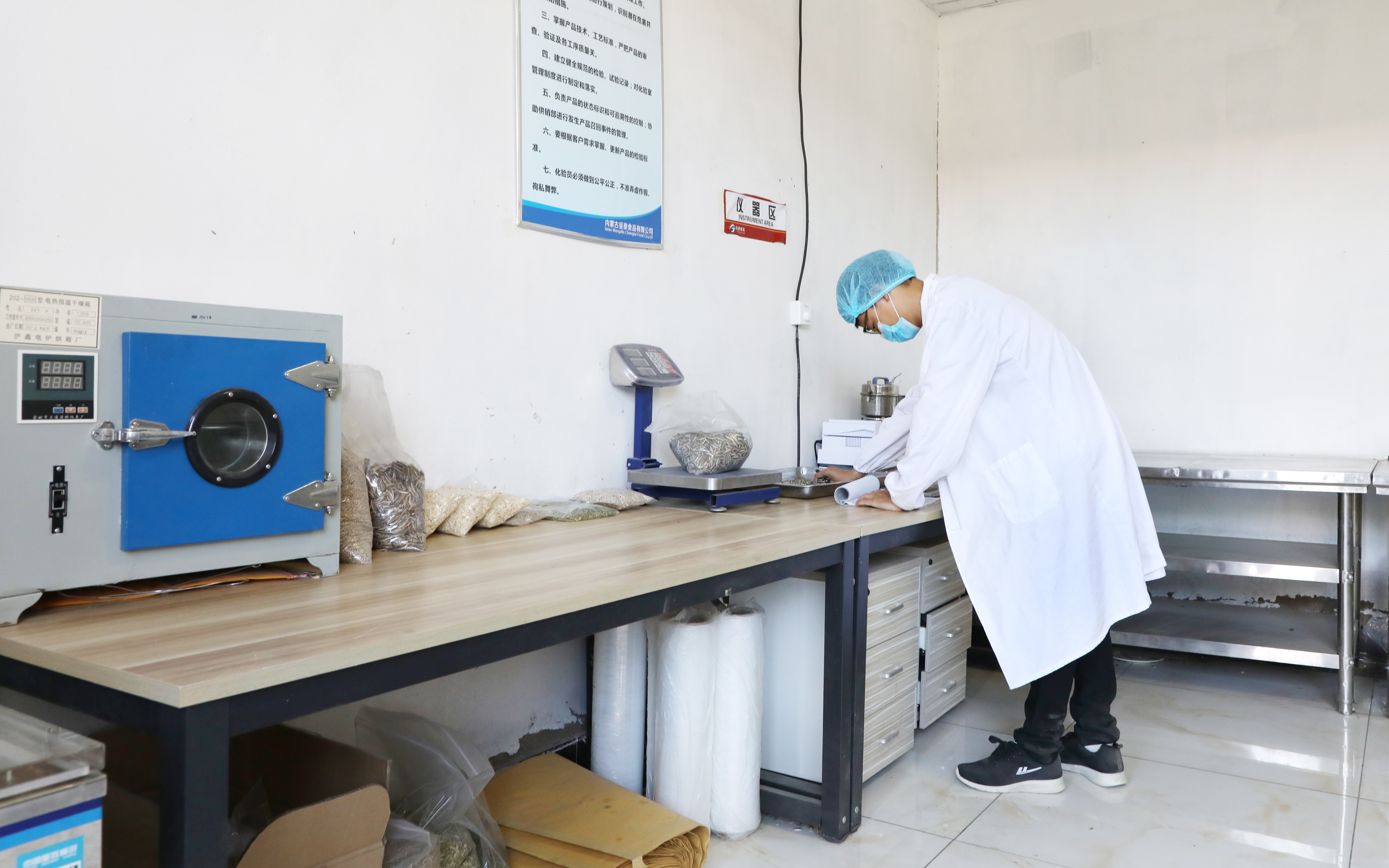
Intake quality inspection is a shared checkpoint for snack and bird feed buyers, although the acceptance thresholds differ.
Bird Feed Manufacturer Buyer Criteria
Bird feed manufacturers purchase Meirenxin black sunflower seeds either as a direct standalone bird feed component or as a base raw material blended with grains and coarse cereals. Both pathways use the same underlying grade, but the acceptance emphasis shifts toward bulk consistency and cost efficiency.
Bulk cleanliness and foreign matter
Bird feed buyers generally apply foreign matter limits similar to food-grade channels, because birds are sensitive to dust, mold, and contamination. However, the practical tolerance for cosmetic defects such as minor seed coat discoloration is usually wider than in snack channels. The key criterion is that the lot remains free-flowing and free of visible mold or pest damage.
Size consistency within blends
When Meirenxin seeds are used as a base raw material for mixed bird feed blended with grains and coarse cereals, size consistency matters more for blend uniformity than for individual seed appearance. The 380–390 pieces per 50 g sizing gives blenders a predictable volume-to-weight ratio when calculating inclusion rates alongside millet, sorghum, and cracked corn.
Moisture and storage
Moisture remains a shared concern. Bird feed buyers will typically confirm that the lot has been stored in a cool place and that moisture is within the range the manufacturer documents, because elevated moisture accelerates mold in blended feed bags. Natural sun-drying with strict moisture control supports this requirement, but buyers should still verify moisture at intake rather than rely solely on the product description.
Cost per unit of nutrition
Bird feed manufacturers operate on tighter per-ton economics than snack factories. Their evaluation therefore weighs landed cost, bulk packaging efficiency, and consistent supply more heavily than sensory attributes. Meirenxin black sunflower seeds, with their documented natural taste and no added flavorings or preservatives, remain suitable for bird feed applications, but the buyer's justification is nutritional and economic rather than culinary.
Side-by-Side Comparison of Buyer Criteria
The table below summarizes how the two buyer groups approach the same Meirenxin grade. It is a decision aid, not a ranking of one channel over the other.
| Evaluation Criterion | Snack / Roasted Factory | Bird Feed Manufacturer |
|---|---|---|
| Primary end use | Human consumption as snack or food ingredient | Animal feed, direct or blended |
| Size expectation | Narrow band preferred for roast uniformity; 380–390 pcs/50 g is workable | Consistent sizing for blend calculations; wider tolerance acceptable |
| Moisture | Verified at intake; critical for roast and shelf life | Verified at intake; critical for mold prevention in stored blends |
| Foreign matter | Strict; physical inspection required | Strict on mold and pests; cosmetic defects more tolerated |
| Flavor / additives | No added flavorings or preservatives preferred; buyer controls seasoning | Additive-free is acceptable; flavor is not a purchase driver |
| Color and appearance | Uniform black seed coat supports retail presentation | Color is secondary; cleanliness is primary |
| Sensory testing | Sample roast and taste panel before bulk order | Visual and moisture checks; sensory testing uncommon |
| Packaging | 20/25 kg plastic or paper bags; vacuum options considered | 20/25 kg bags; bulk tote or container load preferred at scale |
| Cost sensitivity | Moderate; quality and yield justify premium | High; landed cost per ton is a primary filter |
| Supplier documentation | Food-grade specs, additive declaration, origin | Moisture, foreign matter, origin, bulk availability |
Direct Standalone Bird Feed vs. Blended Feed Base
Within the bird feed channel, Meirenxin black sunflower seeds can be sold in two distinct formats, and each carries its own buyer logic.
Direct standalone bird feed is sold to consumers or retailers as a single-ingredient product. In this format, the seed's appearance matters more, because the end user sees the product directly. Buyers in this segment tend to prefer clean, uniform seeds with an intact black seed coat. The Meirenxin grade's round kernel and black coat support this presentation, and the absence of added flavorings or preservatives aligns with consumer expectations for a natural bird feed product.
Blended feed base is sold to bird feed manufacturers who combine the seeds with grains and coarse cereals into a mixed formulation. In this format, the seed is one input among several, and the buyer's priorities shift toward bulk consistency, moisture control, and predictable sizing so that the blend ratio remains stable across production runs. The documented use of Meirenxin seeds as a base raw material for formulating mixed bird feed blended with grains and coarse cereals reflects this pathway.
What Snack Factories and Roasted Factories Require From the Same Grade
Snack factories and roasted factories place the Meirenxin grade into a food-production workflow that includes sorting, roasting, seasoning, cooling, and packaging. Their raw-material requirements can be grouped into four practical categories.
1. Ingredient documentation
Because the product is classified as a raw agricultural food ingredient, snack buyers expect origin documentation, a product specification sheet, and confirmation that no flavorings or preservatives have been added. The Hetao Plain origin and the Meirenxin classification are the core identity facts that should appear consistently across supplier documents.
2. Process compatibility
The manufacturer documents air separation and sifting as part of the processing flow. Snack buyers will typically confirm that this cleaning stage matches their own intake expectations, and they may request a pre-shipment sample to test how the seeds behave on their specific roasting equipment. Kernel fill and crack resistance are equipment-dependent variables that cannot be fully predicted from a specification sheet.
3. Additive-free positioning
The absence of added flavorings or preservatives is commercially useful for snack producers who want to control seasoning in-house or who market a minimally processed product. It also simplifies labeling in markets with strict additive disclosure rules. The EU market for sunflower seeds, for example, requires adherence to HACCP principles and closely monitors pesticide residues and metal contaminants, according to CBI. An additive-free raw material reduces one category of compliance risk, though it does not replace residue and contaminant testing.
4. Packaging and lot traceability
Snack factories typically purchase in 20/25 kg plastic or paper bags, with vacuum packaging available for buyers who need extended storage. Lot traceability back to the Hetao Plain origin is a standard request, particularly for buyers who resell into markets with origin labeling requirements.
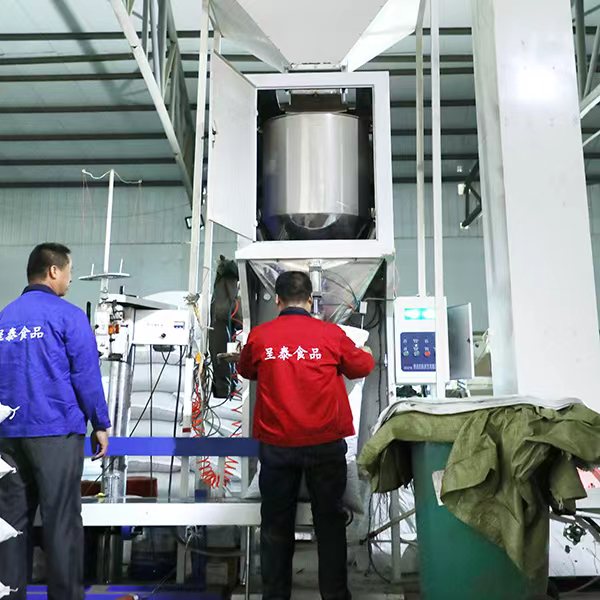
Bulk packaging and packing-line consistency are shared procurement concerns across snack and bird feed channels.
Market Context for Both Channels
Both buyer groups operate within a large and growing market. Global production of sunflower seeds is estimated at 55.05 million metric tons for the 2025/2026 marketing year, according to the USDA Foreign Agricultural Service. China's sunflower seed exports were valued at USD 937 million in 2025, with major destinations including Iraq (USD 131 million) and Russia (USD 101 million), according to OEC. These figures indicate that export-oriented suppliers must serve multiple buyer profiles simultaneously, which is exactly why a documented and consistent grade specification matters.
On the human-consumption side, Europe was the largest market for packaged sunflower seeds in 2024, holding a 29.6% revenue share, according to Grand View Research, and roasted sunflower seeds accounted for 65.9% of the global packaged sunflower seeds industry revenue in the same year. These shares confirm that roasted snack applications remain the dominant commercial channel for confectionery-grade sunflower seeds.
On the bird feed side, demand is less concentrated by region and more sensitive to seasonal and economic factors. The same Meirenxin grade can serve both channels because it carries the underlying attributes, namely a black seed coat, a round kernel, natural sun-drying with strict moisture control, air separation and sifting, and no added flavorings or preservatives, that each channel values for different reasons.
Boundaries and Limitations of a Shared Grade
A single grade can serve both channels, but it is not optimized for both at the same time. The most important limitation is size. At 380–390 pieces per 50 g, Meirenxin seeds sit in a medium-to-small sizing band. Snack buyers who want a larger, more visually prominent retail seed will typically move to larger grades such as 361 or 363, which the same manufacturer documents at roughly 170–300 pieces per 50 g depending on the specific grade. Bird feed buyers, conversely, may find the medium sizing well suited to blends but could prefer even smaller seeds for certain small-bird formulations.
A second limitation concerns sensory testing. Roast performance and flavor cannot be confirmed from a specification sheet, so snack buyers must invest in sample roasting before committing to a bulk order. Bird feed buyers do not need this step, which means the two channels carry different pre-purchase testing costs.
A third limitation is compliance scope. The additive-free and pesticide-controlled attributes of a food-grade seed support the snack channel, but specific residue limits vary by destination market. China notified 209 new Maximum Residue Limits for 93 pesticides in food to the WTO in late 2025, according to the USDA Foreign Agricultural Service, and the EU maintains its own HACCP and contaminant monitoring framework. Buyers in either channel should confirm the applicable residue limits for their destination rather than assuming that food-grade status satisfies every market.
Future Outlook
The dual-use nature of black sunflower seeds is likely to remain a structural feature of the trade. Global non-oilseed (confectionery) sunflower planted area in 2025 was forecast to decline by 8% by the USDA, according to the National Sunflower Association, which suggests that supply planning will become more important for both snack and bird feed buyers. In a tighter confectionery supply environment, buyers who can specify a grade that serves multiple end uses gain flexibility, while buyers with strict sizing or sensory requirements may need to contract earlier.
For suppliers, the practical implication is documentation discipline. A grade that is positioned for both human consumption and bird feed must be described consistently across product sheets, certificates, and shipment records. For buyers, the implication is specification clarity. The same Meirenxin grade can meet both standards, but only when the acceptance criteria are agreed in writing before the lot is booked.
Frequently Asked Questions
What is Meirenxin black sunflower seed?
Meirenxin is a sunflower seed product type classified as black sunflower seeds based on its black seed coat color. It is supplied by a China-based manufacturer registered under company ID 25189, sourced from the Hetao Plain, and belongs to the raw agricultural food ingredient category.
Can the same Meirenxin grade be used for both snack production and bird feed?
Yes. The product is documented as intended for the manufacturing, snack factory, and roasted factory industry, and it can also be used as a base raw material by bird feed manufacturers to formulate mixed bird feed blended with grains and coarse cereals. The two channels apply different acceptance criteria to the same grade.
What size are Meirenxin black sunflower seeds?
The documented sizing is 380–390 pieces per 50 g, which places the grade in a medium-to-small band compared with larger confectionery grades such as 361 or 363.
Do Meirenxin seeds contain added flavorings or preservatives?
No. The product is documented as carrying no added flavorings or preservatives, which allows snack producers to control seasoning in-house and supports natural-positioned bird feed products.
How should Meirenxin seeds be stored?
The product documentation recommends storage in a cool place. Natural sun-drying with strict moisture control supports storage stability, but buyers should still verify moisture at intake.
What packaging is available for bulk orders?
The standard packaging is 20/25 kg plastic or paper bags, with vacuum options available for buyers who need extended storage.
Which buyer should choose Meirenxin over larger grades?
Buyers who need a medium-sized, additive-free black sunflower seed for roasted snack lines or for blended bird feed may find Meirenxin suitable. Buyers who require a larger retail seed for premium snack presentation typically move to larger grades such as 361 or 363, which the same manufacturer documents at roughly 170–300 pieces per 50 g depending on the specific grade.
Have Questions or Need More Details?
Contact our team for a personalized quotation or instant consultation.
Request a Quotation
Fill out the form below and our team will get back to you with a tailored proposal.
WhatsApp Direct Chat
Prefer to chat in real-time? Message us on WhatsApp for instant assistance & quick answers.
- Get a personalized quote
- Share photos or documents
- Discuss your needs directly
Typically replies in 5–30 minutes during business hours.