
Sodium Hyaluronate Continuity Audit: Habier's 11-Year Record
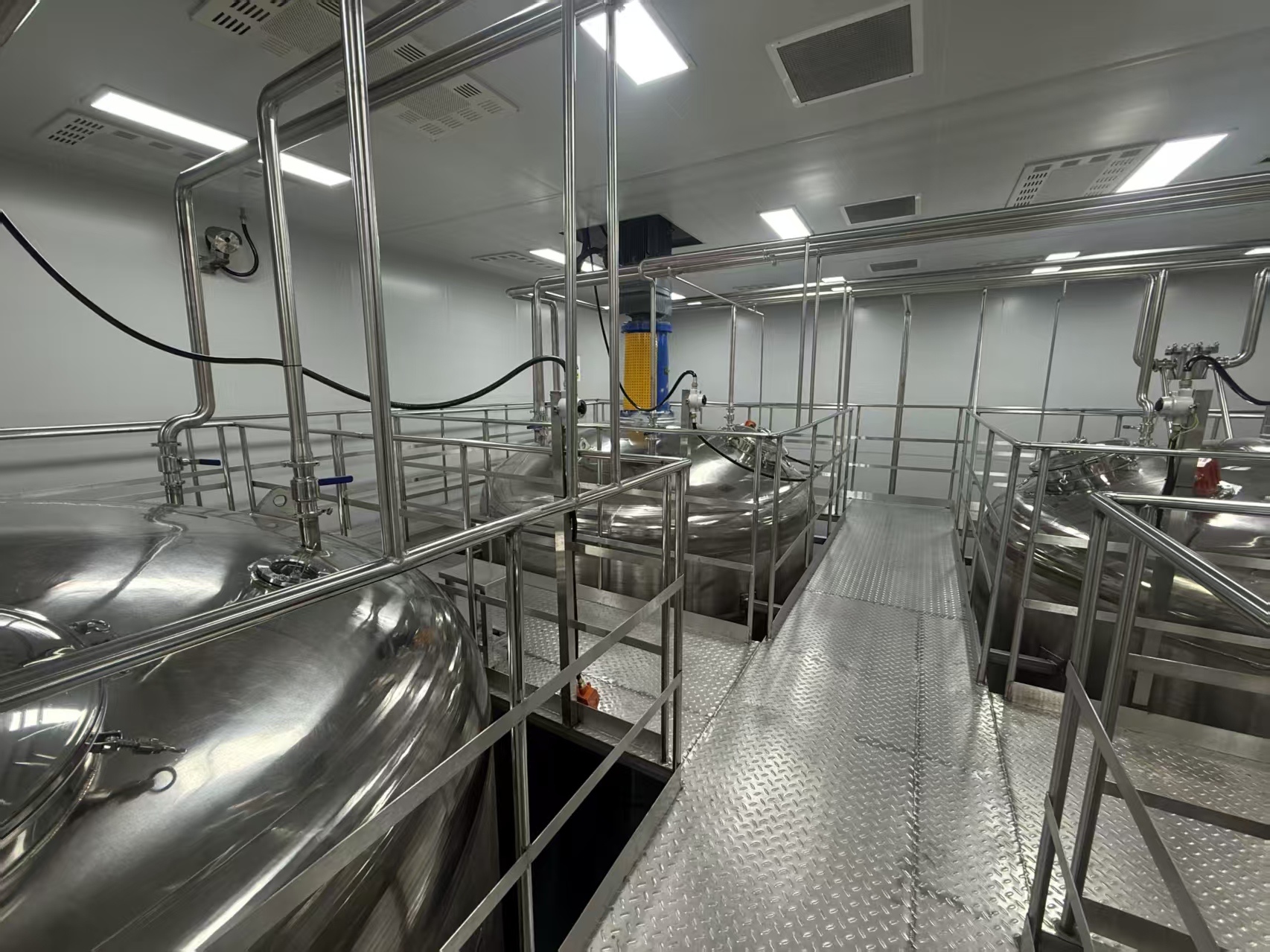
Sodium hyaluronate is rarely bought as a one-off lot. A single qualification cycle — sample request, specification agreement, certificate of analysis review, formulation or pilot trial, and in some product categories a formal registration — can run for months. The grade that survives that cycle is the grade a buyer is then expected to receive, unchanged, for years. Continuity is therefore not a soft relationship topic; it is a specification issue that sits alongside purity and molecular weight.
Shandong Habier Biopharma Co.,LTD is a sodium hyaluronate manufacturer established on 14 May 2015 and located in Qufu City, Shandong Province, China. The company produces food grade sodium hyaluronate, cosmetic grade sodium hyaluronate and pharma grade sodium hyaluronate, together with hydrolyzed, low molecular weight, ultra low molecular weight, super low molecular weight, high molecular weight and regular grade variants of hyaluronic acid and hyaluronic acid sodium salt. It states an annual output of 600–700 MT from a 50,000 m² facility, an in-house R&D team of six engineers, an export share of roughly 20%, and main export markets in the EU, USA and Korea.
Eleven years of operation is long enough to audit. This reference treats that record as an operational continuity assessment — production redundancy, inventory policy, batch documentation, certification upkeep and repeat-order terms — rather than as a price benchmark or a certificate list. It also marks clearly where the continuity case is documented by the supplier itself and where a buyer still has to verify independently.
Why supply continuity became a procurement variable
Three structural features of the sodium hyaluronate market push continuity into the purchasing decision rather than the relationship review.
Regulatory switching cost. In China, the National Medical Products Administration states that medical sodium hyaluronate products without pharmacological, metabolic or immunological action are managed as medical devices, and that the management category must be no lower than Class II in the cases described (NMPA Announcement No. 103 of 2022). Where a product line is registered against a defined source, changing that source is a regulatory event, not a purchasing convenience.
Formulation lock-in. Hyaluronic acid is a widely used cosmetic active, typically delivered in emulsions or serums and positioned around hydration and skin elasticity. A molecular weight band that shifts between deliveries can change viscosity, texture and sensory behaviour in a finished formula — effects that surface in stability testing months later, not in goods-in inspection.
Documentation dependency. A buyer's own release process depends on supplier records: certificates of analysis, batch traceability, third-party test reports and valid certificates. When those records lapse, the buyer's release is delayed even if the material itself is fine.
Continuity, in other words, is the composite of redundancy, parameter control, documentation and certification upkeep. Each of those is auditable.
What an eleven-year continuity audit measures
A useful continuity audit does not begin with the certificate folder. It begins with the four failure modes that interrupt supply, and asks what control exists against each one. Shandong Habier Biopharma's operational disclosures map to four categories.
| Risk category | Control approach | Stated operational measure |
|---|---|---|
| Supply stability risk | Multi-production line layout, raw material safety stock planning, phased production scheduling | Two independent fermentation workshops; 30-day raw material inventory; flexible shift production to cover bulk urgent orders |
| Technical consistency risk | Strict molecular weight segmentation, standardized fermentation and purification process, fixed production parameters | Uniform production SOP; real-time online monitoring of viscosity, molecular weight and purity; cross-lab recheck for every batch |
| Quality risk | Raw material inspection, process control, batch testing and third-party testing | Full-item inspection for every batch; independent QC laboratory; customer-designated third-party testing supported; unqualified product rejected with full traceability records |
| Compliance and certification risk | Regular system audit, annual third-party recertification, continuous update of global regulatory standards | ISO9001, ISO22000, Kosher, Halal and Ecocert Cosmos certificates; dedicated compliance team tracking EU and US food and cosmetic regulations |
The table is a control-design statement. Its value to a buyer is that it names specific mechanisms — two workshops, thirty days of stock, cross-lab recheck — which can be inspected on site and tested against records. Control designs that stay abstract cannot be audited.
Production layout and scheduling: the mechanical side of continuity
Redundancy is the least glamorous and most effective continuity mechanism. A manufacturer running a single fermentation train has one point of failure for every grade it sells. Habier Biopharma states that it operates two independent fermentation workshops within its multi-production line layout, supported by phased production scheduling and flexible shifts.
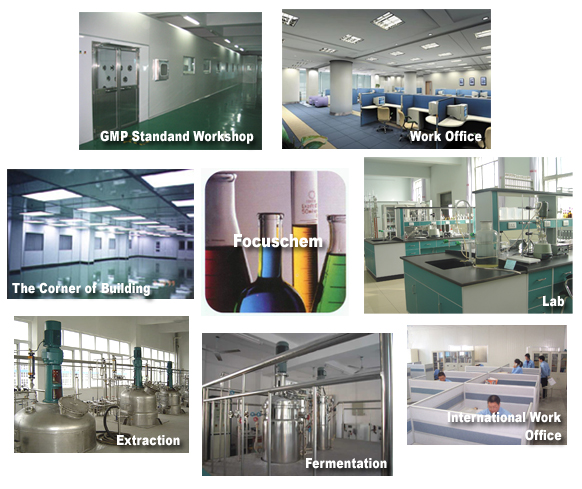
For a repeat buyer, the practical implications are specific:
- Maintenance and changeover windows do not stop supply. A purified process line requires cleaning, validation and campaign changeovers between molecular weight bands. Independent workshops let a producer run one train while the other is offline.
- Grade separation is easier to guarantee. Strict molecular weight segmentation only holds if high molecular weight and low molecular weight campaigns do not contaminate one another. Physical separation is a structural answer to a documentation problem.
- A thirty-day raw material buffer absorbs short upstream shocks. Reserving 30 days of raw material inventory is a scheduling commitment with a carrying cost attached to it, which is precisely why it is a meaningful signal rather than a slogan.
- Flexible shift production addresses demand spikes. Bulk urgent orders are typically the moment when a supplier's capacity planning is exposed.
A reasonable boundary applies here. Redundancy inside a factory does not remove exposure to upstream raw material markets, energy availability or logistics cycles. It compresses the response time to those shocks; it does not abolish them. Buyers evaluating a multi-year programme should treat stated redundancy as risk reduction, not risk elimination.
Technical consistency over an eleven-year horizon
For sodium hyaluronate, grade is largely a molecular weight statement. The company's own grade guidance places food grade sodium hyaluronate in the 0.8–1.5 million Da range, cosmetic grade in the 1.0–1.5 million Da range, pharma grade at ≥2.0 million Da, and low molecular weight sodium hyaluronate at ≤0.1 million Da. These are grade-positioning ranges used for application matching; they are not pharmacopoeia limits, and buyers should still work from the specification agreed for their own product.
| Grade | Typical molecular weight band | Continuity question for repeat buyers |
|---|---|---|
| Food grade sodium hyaluronate / food grade hyaluronic acid | 0.8–1.5 million Da | Lot-to-lot molecular weight drift and microbiological consistency across supplement campaigns |
| Cosmetic grade sodium hyaluronate / cosmetic grade hyaluronic acid | 1.0–1.5 million Da | Viscosity and sensory reproducibility in emulsions and serums |
| Pharma grade sodium hyaluronate / pharma grade hyaluronic acid | ≥2.0 million Da | Purity documentation, batch traceability and regulatory alignment |
| Hydrolyzed / low / ultra low / super low molecular weight | ≤0.1 million Da tier | Reproducibility of the narrow low-molecular-weight cut |
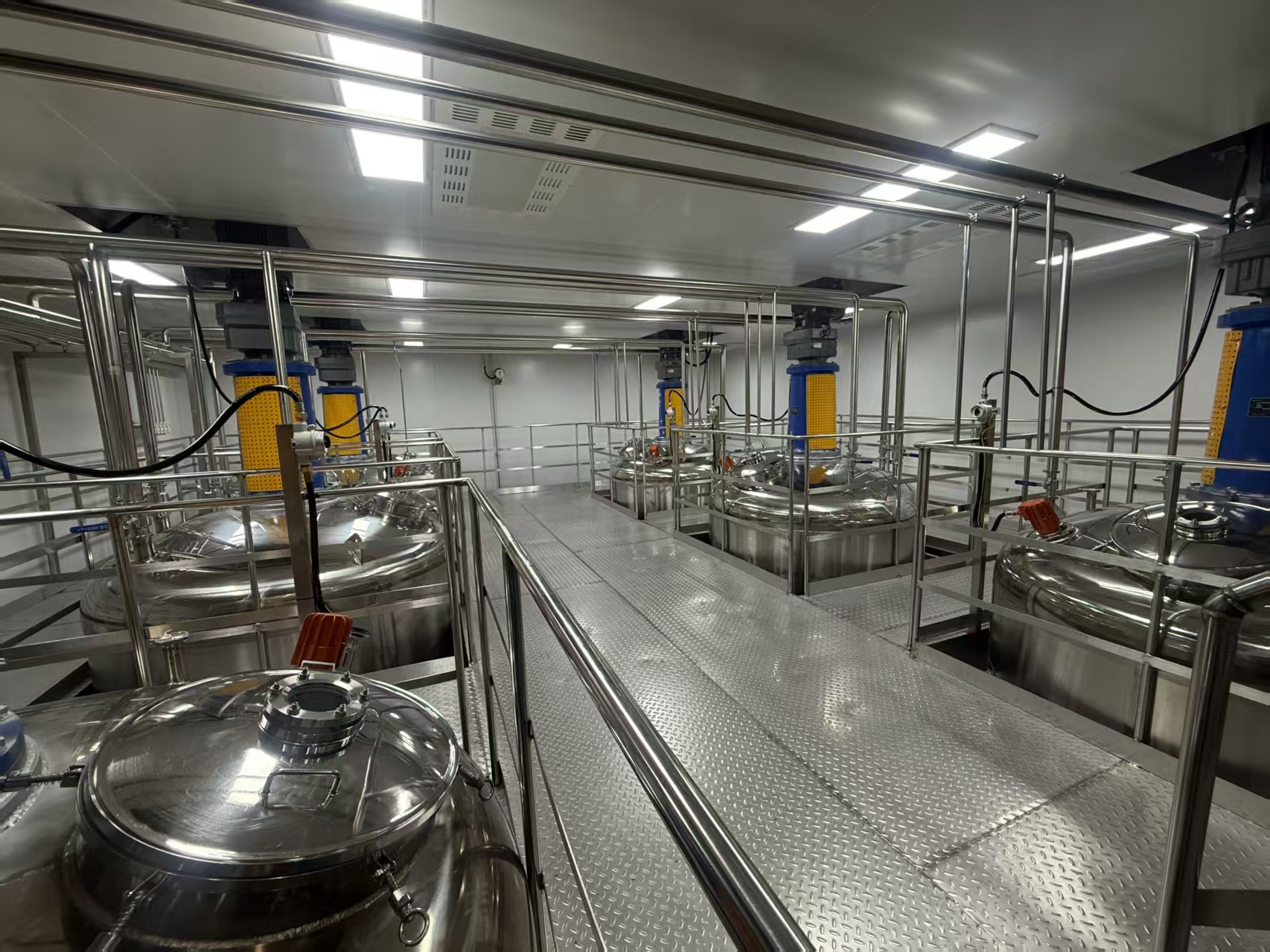
Why does this matter operationally? Industrial hyaluronic acid is produced either by extraction from animal tissues or by large-scale bacterial fermentation, and microbial biosynthesis — fermentation followed by downstream processing — is now the dominant technical route. A 2022 peer-reviewed review reported hyaluronic acid yields of 2.5–7.0 g/L from Streptococcus zooepidemicus across batch, repeated batch, fed-batch and continuous culture studies. Yield and molecular weight in fermentation are sensitive to process conditions. That sensitivity is the upstream origin of batch-to-batch variation, and it explains why Habier Biopharma's control design centres on fixed production parameters, a uniform production SOP, and real-time online monitoring of viscosity, molecular weight and purity — with a cross-lab recheck performed for each batch.
Batch-level quality control and traceability
Continuity fails most often at the documentation layer. The company's stated quality practice covers that layer as follows: full-item inspection for every batch; an independent QC laboratory; support for customer-designated third-party testing; rejection of unqualified product with full traceability records; and quality control procedures that include 100% full inspection prior to delivery.
Read as an audit checklist, those commitments generate four verifiable questions:
- Is the certificate of analysis issued for the shipped batch, not for a campaign? Pre-shipment full testing with a COA report is listed as an acceptance criterion, which ties the document to the delivery rather than to a generic specification sheet.
- Can an external laboratory reproduce the result? Support for customer-designated third-party testing is the mechanism that lets a buyer close the loop without relying solely on internal data.
- Is cross-lab recheck routine or exceptional? A stated cross-lab recheck for every batch is a heavier commitment than periodic verification, and it is the kind of claim that can be tested by requesting the recheck records.
- What happens to non-conforming material? Rejection with full traceability records is the part of a quality system that most directly protects a buyer's release schedule.
Documentation depth is one place where low-cost sourcing frequently underdelivers. A buyer comparing quotations may see a narrow price gap and a wide documentation gap, and it is usually the second one that produces the recall, the rework or the delayed release.
Certification continuity: annual recertification as a moving item
Certificates are frequently treated as permanent attributes. In practice they have validity dates, surveillance audits and scope statements. Shandong Habier Biopharma states that it holds ISO9001, ISO22000, Kosher, Halal and Ecocert Cosmos certificates, maintained through regular system audits and annual third-party recertification, with a dedicated compliance team tracking EU and US food and cosmetic regulations.
The company's broader qualification system also includes dual ISO certification, HACCP, Kosher and Halal, with product-level certification for organic COSMOS and ISO 16128. For a buyer running a multi-year supply programme, these are the elements that determine whether a shipment clears import and internal release without a documentation hold.
Two practical rules follow. First, map certificate validity windows against the buyer's own ordering and release calendar so that renewal does not fall in the middle of a campaign. Second, confirm scope: a certificate held for one product family does not automatically extend to a different grade or molecular weight tier.
Grade-by-grade continuity: food, cosmetic and pharma
Continuity requirements differ by grade because the consequences of variation differ.
Food grade sodium hyaluronate. Used in supplement and nutraceutical formats, typically in the 0.8–1.5 million Da band. The continuity risks are microbial control and lot-to-lot consistency across repeated production campaigns, where a change in molecular weight distribution can affect dissolution behaviour and label claims.
Cosmetic grade sodium hyaluronate. Hyaluronic acid is a popular cosmetic active, used in emulsions and serums and positioned around hydration and skin elasticity. Because formulators tune texture and viscosity around a specific molecular weight band, cosmetic buyers tend to value narrow, repeatable bands over the widest possible range.
Pharma grade sodium hyaluronate and pharma grade hyaluronic acid. Typically ≥2.0 million Da, this is the most documentation-intensive tier. Fortune Business Insights places pharmaceutical grade hyaluronic acid at 69.3% of product segment share in 2026, which makes it the commercially decisive grade — and the one where batch documentation, traceability and regulatory alignment carry the highest weight. The company positions its grade range for cosmetics, medical fillers and ophthalmic applications.
Hydrolyzed and low molecular weight tiers. Hydrolyzed sodium hyaluronate, low molecular weight sodium hyaluronate, ultra low molecular weight sodium hyaluronate and super low molecular weight variants sit at the ≤0.1 million Da tier. Producing a narrow cut reproducibly is technically harder than producing a broad high-molecular-weight fraction, which is why custom molecular weight production with short lead time is a continuity-relevant capability rather than a marketing convenience.
Purchasing terms and acceptance criteria for repeat orders
Continuity has to be written into commercial terms, otherwise it remains an aspiration. Habier Biopharma's stated purchasing framework is compact and specific:
| Term | Stated position |
|---|---|
| Minimum order quantity | 1 kg |
| Delivery terms | FOB / CIF |
| Acceptance criteria | Pre-shipment full test with COA report; third-party laboratory inspection supported; on-site factory inspection |
| Payment terms | Mainly a high advance payment mode; large long-term clients can negotiate separately |
| After-sales | Free sample supply and quality tracking |
Three of these terms carry more weight than they appear to. A 1 kg MOQ makes technical validation affordable before a bulk commitment. An acceptance criterion built on pre-shipment full testing plus COA turns quality from a claim into a contractual trigger. And an on-site factory inspection right gives the buyer direct access to the production layout, the two fermentation workshops and the inventory policy described earlier — the only way to audit redundancy rather than read about it.
The payment position is worth flagging explicitly. A default high advance payment mode shifts working capital onto the buyer, and preferential terms are described as negotiable for large long-term clients. That structure favours buyers who can commit volume and horizon, and it is a genuine commercial cost to weigh against quality and continuity benefits.
Boundaries: what this continuity case does and does not establish
An industry reference is only useful if it states its limits. Four boundaries apply to the assessment above.
1. The operational evidence is first-party. The two fermentation workshops, the 30-day raw material inventory, the phased scheduling and the cross-lab recheck are company disclosures. No independent public dataset in this review verifies Habier Biopharma's production capacity, certification status or MOQ. The verification route the supplier itself supports — on-site factory inspection and customer-designated third-party laboratory testing — is therefore the practical way to convert disclosure into evidence.
2. Export share shapes channel support. Around 20% of output is exported, with the EU, USA and Korea named as main markets. A predominantly domestic orientation can mean that export documentation and lead-time support are less industrialised than for a supplier built around overseas accounts — a point worth probing during qualification.
3. Certification is a moving attribute, not a fixed one. With annual third-party recertification, the relevant question is not whether certificates exist today but whether renewal dates align with the buyer's supply calendar. A lapse mid-programme produces a documentation hold regardless of material quality.
4. Redundancy reduces exposure; it does not remove it. Two independent fermentation workshops compress recovery time from an outage. They do not insulate a buyer from upstream raw material markets, energy costs or freight conditions, and a 600–700 MT annual output establishes scale for certain programmes but not unlimited allocation priority during peak demand.
Continuity-based sourcing versus transactional sourcing
| Dimension | Price-first transactional purchase | Continuity-based supply relationship |
|---|---|---|
| Primary selection criterion | Unit price at the point of order | Parameter stability across successive batches |
| Evidence used | Quotation sheet and specification claim | COA per shipment, batch records, cross-lab recheck, factory inspection |
| Changeover cost | Rarely quantified at the point of decision | Treated as explicit: requalification, formulation trial, possible re-registration |
| Supply risk handling | Managed order by order | Managed through redundancy, inventory policy and scheduling |
| Certification | Checked once at onboarding | Tracked against annual recertification dates |
Market context: why contract horizons are lengthening
The commercial environment supports longer supply horizons. Fortune Business Insights projects the global hyaluronic acid market at USD 11.64 billion in 2025, rising to USD 22.36 billion by 2034, a 7.52% CAGR across 2026–2034. On the China side, regulatory consultancy Cisema cites a market valued at USD 649.7 million in 2024 and projected to reach USD 1.06 billion by 2030, an 8.6% CAGR from 2025.
Scale matters when interpreting such figures. A separate forecast of roughly USD 27.38 billion by 2035 applies to a broader "sodium hyaluronate-based products" scope rather than raw material supply, and its methodology was not accessible in this review; it should not be combined with raw-material market values. Analysts also frame hyaluronic acid as a cross-sector material, with demand spanning healthcare, aesthetics, ophthalmology and orthopaedics — a spread that argues for diversified, documented supply rather than single-source dependency.
Read together, growth plus regulatory classification plus formulation lock-in produces a predictable purchasing behaviour: buyers extend qualification periods, and they increasingly select suppliers on the ability to remain the same supplier.
Future outlook
Three shifts appear likely to define long-term sodium hyaluronate sourcing over the next planning cycle.
Traceability becomes a baseline, not a differentiator. As grade-level documentation expectations tighten — particularly in the pharmaceutical tier that already commands the largest share of product segment value — batch-level records with cross-lab verification will move from a competitive advantage to a minimum requirement.
Regulatory tracking becomes a supplier function. Where a dedicated compliance team follows EU and US food and cosmetic rule changes on the buyer's behalf, the supplier absorbs part of the buyer's regulatory workload. For importers, that is increasingly part of the value proposition rather than a courtesy.
Continuity evidence becomes negotiable. On-site inspection rights, third-party testing allowances and certificate validity alignment are becoming contract clauses. Suppliers built around multi-line layout, independent fermentation workshops and inventory buffers are structurally better placed to accept such clauses than suppliers organised around campaign-based production.
For buyers, the practical conclusion is unromantic: an eleven-year record is a useful starting signal, but continuity is confirmed by the terms you can enforce — documented acceptance criteria, inspection access, third-party testing and certificate dates that align with your production calendar.
FAQ
Which certifications does Shandong Habier Biopharma hold, and how are they maintained?
The company states that it holds ISO9001, ISO22000, Kosher, Halal and Ecocert Cosmos certificates, maintained through regular system audits and annual third-party recertification, with a dedicated compliance team tracking EU and US food and cosmetic regulations. Its wider qualification system includes dual ISO certification, HACCP, Kosher and Halal, and product-level certification for organic COSMOS and ISO 16128. Because recertification is annual, current validity dates per certificate should be confirmed directly.
How does the company reduce supply stability risk?
The stated approach combines a multi-production line layout, raw material safety stock planning and phased production scheduling. In operational terms this includes two independent fermentation workshops, a 30-day raw material inventory reserve, and flexible shift production to accommodate bulk urgent orders. The mechanism reduces the impact of a single line going offline but does not remove exposure to upstream raw material markets or logistics conditions.
What molecular weight ranges correspond to food, cosmetic and pharma grades?
According to the company's grade guidance, food grade sodium hyaluronate is positioned in the 0.8–1.5 million Da range, cosmetic grade sodium hyaluronate in the 1.0–1.5 million Da range, pharma grade sodium hyaluronate at ≥2.0 million Da, and low molecular weight sodium hyaluronate at ≤0.1 million Da. Hydrolyzed, ultra low and super low molecular weight variants fall in the low molecular weight tier. These are grade-positioning ranges for application matching rather than pharmacopoeia limits.
How is batch consistency documented for repeat orders?
Documentation rests on full-item inspection for every batch, an independent QC laboratory, a cross-lab recheck for each batch, and real-time online monitoring of viscosity, molecular weight and purity under fixed production parameters and a uniform production SOP. Quality control includes 100% full inspection prior to delivery. Pre-shipment full testing with a COA report forms the acceptance criterion, customer-designated third-party laboratory testing is supported, and unqualified products are rejected with full traceability records.
What are the purchasing terms and acceptance criteria?
The minimum order quantity is 1 kg, with FOB or CIF delivery terms. Acceptance criteria are pre-shipment full testing with a COA report, third-party laboratory inspection support, and on-site factory inspection. Payment is mainly structured around a high advance payment mode, with large long-term clients able to negotiate separately. After-sales provisions include free sample supply and quality tracking.
What is the practical limit of a continuity assessment like this one?
Most operational continuity details — workshop layout, inventory policy, scheduling practice and batch records — are supplier disclosures rather than independently published data. They can be verified through the mechanisms the supplier states it supports: on-site factory inspection, customer-designated third-party laboratory testing, and review of batch-level certificates of analysis and traceability records. Annual recertification also means certification status must be re-checked against current validity dates rather than assumed from a one-time review.
Additional product, grade and specification background is compiled in the downloadable company brochure: Shandong Habier Biopharma product brochure. Company reference: habier.com.