
Sodium Hyaluronate Quality Signals: Molecular Weight, Grades, and Global Compliance
Sodium hyaluronate is not one uniform raw material. For procurement, the name covers a family of grades with different molecular weights, purity levels, and intended applications. The difference between a food-grade powder and a pharma-grade powder can be as important as the difference between two unrelated ingredients. This article provides a specification-focused reference for buyers evaluating sodium hyaluronate, with emphasis on molecular weight, grade classification, certification evidence, and practical limitations.
Why the sodium hyaluronate specification matters in sourcing
Many sourcing conversations start with a request for hyaluronic acid or sodium hyaluronate, assuming that any product under that name will fit the formulation. In practice, grade and molecular weight determine whether the raw material acts as a high-viscosity surface moisturizer, a low-molecular-weight active that penetrates the skin, or an injectable excipient with strict endotoxin limits. Buying the wrong grade can lead to formulation failure, compliance rejection, or additional purification costs. A verified specification set helps procurement teams translate application needs into supplier requirements.
For a buyer at the research or evaluation stage, the central question is not simply which supplier offers the lowest price. It is whether the supplier can deliver the exact grade and molecular weight specified, whether the product carries the required certifications, and whether the documentation will survive an audit or customs review. These are the constraints that define the real cost and risk of sourcing sodium hyaluronate.
Grade classifications and molecular weight parameters
Manufacturers classify sodium hyaluronate by the molecular weight range and the intended end-use market. For the product portfolio offered by Shandong Habier Biopharma Co., Ltd, the standard ranges are:
| Grade | Molecular weight range | Typical end-use expectation |
|---|---|---|
| Food grade | 0.8-1.5 Million Da | Oral health supplements, food applications |
| Cosmetic grade | 1.0-1.5 Million Da | Skincare, cosmetic formulations |
| Pharma grade | Minimum 2.0 Million Da | Pharmaceutical applications requiring high purity |
| High molecular weight grade | Minimum 2.0 Million Da | Viscosity building, surface moisturization |
| Low molecular weight grade | Maximum 0.1 Million Da | Lighter texture, potentially deeper penetration |
In addition, the portfolio includes super low molecular weight sodium hyaluronate, ultra low molecular weight sodium hyaluronate, and hydrolyzed hyaluronic acid. These variants are designed for different functional goals. High-molecular-weight sodium hyaluronate is typically associated with surface moisturization and viscosity building. Low- or ultra-low-molecular-weight fractions and hydrolyzed forms are often selected when deeper penetration or skin-conditioning claims are needed.
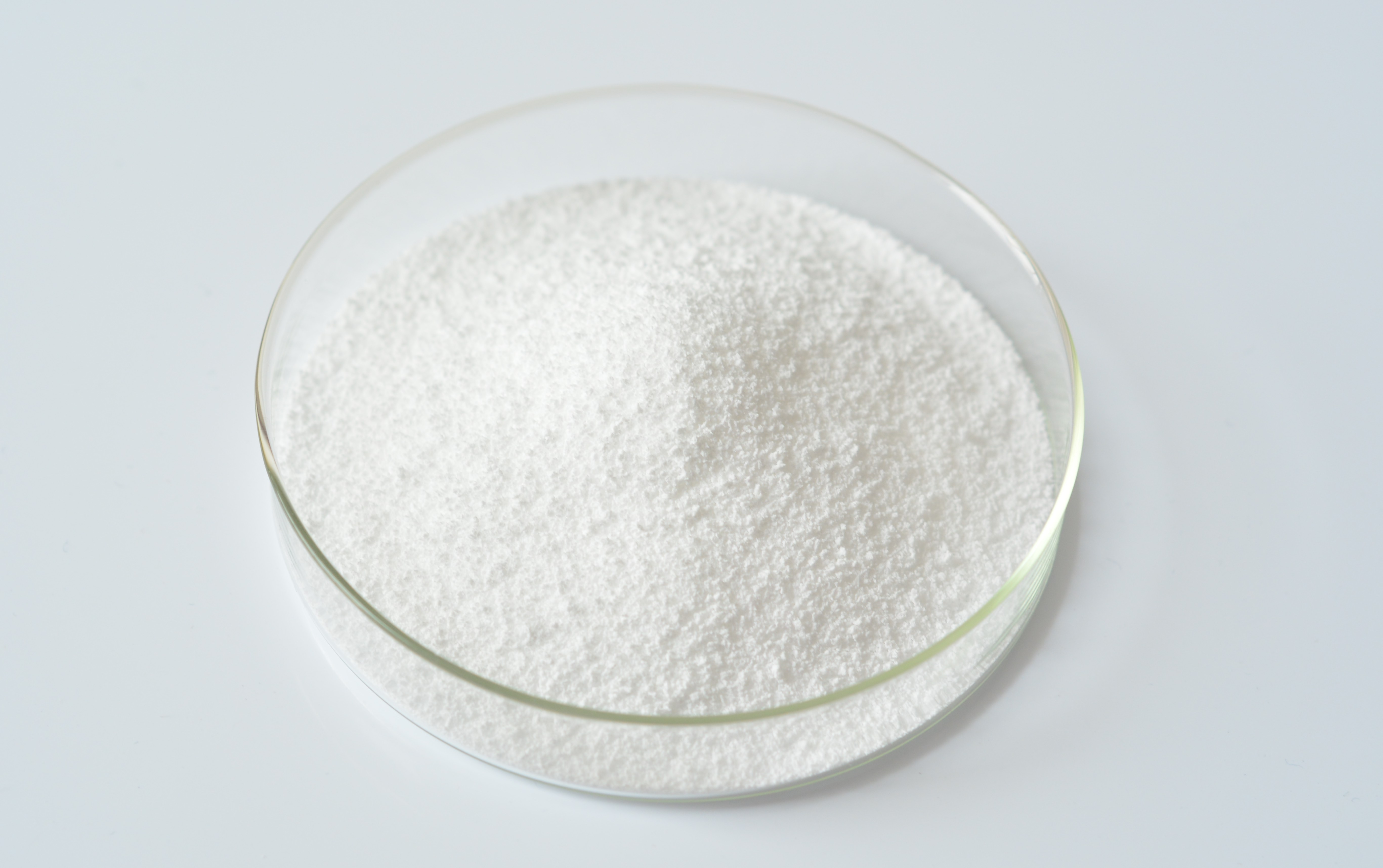
The molecular weight parameter is not only a performance indicator. It also influences processing behavior, such as solubility, viscosity, and compatibility with other raw materials. A formulator creating a gel-based serum may prefer a higher molecular weight range, while a spray or essence may require a lower molecular weight or hydrolyzed variant. Buyers should match the supplier's molecular weight specification to their own formula target and verify that the supplier can consistently reproduce that range across batches.
Certification as a compliance filter
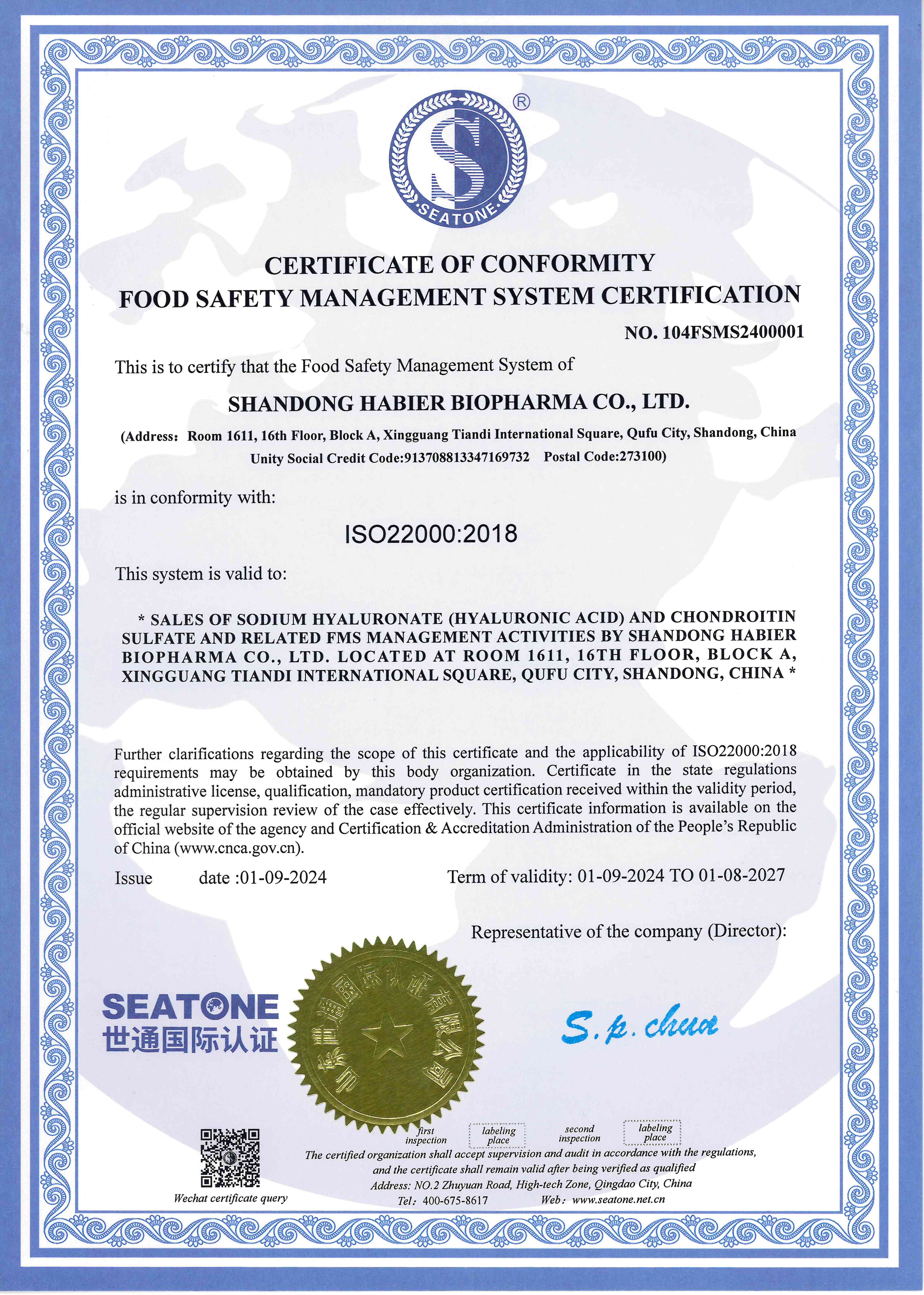
Certifications are the most visible compliance evidence in supplier evaluation. For example, the sodium hyaluronate product from Shandong Habier is certified under ISO 22000:2018 (certification number 104FSMS2400001) and ISO 9001:2015 (certification number 1042Q00053R0S), both issued by SHANDONG SEATONE INTERNATIONAL CERTIFICATION CO.,LTD. and valid in the global market. The ISO 22000 certificate covers the sales of sodium hyaluronate and related food safety management activities. The company also states that its qualification system includes dual ISO certification, HACCP, Kosher, and Halal, and that its products are certified as organic COSMOS and ISO 16128.
For pharma-grade material, buyers should expect pharmacopoeia compliance as well. Industry references point to USP-NF, European Pharmacopoeia (EP), and Japanese Pharmacopoeia (JP) standards, with endotoxin levels typically below 0.05 EU/mg. ISO 9001 and ISO 22000 establish management system rigor, but they do not replace pharmacopoeia-specific testing. A pharma-grade buyer should request the relevant pharmacopoeia test report, including endotoxin and microbial limits, rather than relying solely on general quality certificates.
Supplier evaluation context: Shandong Habier Biopharma
Shandong Habier Biopharma Co., Ltd, established in 2015 in Qufu, Shandong Province, China, operates a 50,000 m² factory with 123 employees and an annual output of 600-700 metric tons. Export accounts for about 20% of its production, with main markets in the EU, USA, and Korea. The company's R&D team includes six engineers. On the supply side, it lists a monthly capacity of 50-60 tons for its sodium hyaluronate production, a lead time of 5-8 days, a minimum order quantity of 1 kg, and 100% full inspection before delivery. These figures help buyers understand scale and responsiveness, though they should be confirmed during the formal qualification process.
From a procurement perspective, the company's profile illustrates a mid-size specialty biopharmaceutical manufacturer with a clear product focus. Its certification set covers food safety, quality management, and religious/cosmetic standards, which supports its stated export markets. Buyers evaluating Habier or similar suppliers should request batch-specific certificates of analysis, verify the certificate validity dates, and ask about production origin and raw material controls.
Application case: US cosmetic and health supplement importer
A documented supply relationship illustrates how specification and compliance interact in real procurement. A US-based natural cosmetic and health supplement importer used sodium hyaluronate as a cosmetic raw material and an oral health supplement ingredient. The importer ordered 4,733 kg for long-term stable use. The material had to satisfy US import requirements, including a valid USDA import permit and avian-origin documentation with official veterinary heat treatment certification, meeting US APHIS standards. The selected supplier provided stable batch quality and complete documents, enabling smooth customs clearance. This example shows that for certain markets, raw-material origin and veterinary certification are as important as the product's molecular weight profile.
For buyers, this case reinforces a broader point: the evaluation process should include not only grade parameters but also regulatory documentation for the destination market. A supplier that has experience with USDA, APHIS, or other regional import requirements may reduce delays and lower compliance risk. The case also highlights the value of repeat orders and stable batch quality, which are often more meaningful than a single low-price transaction.
Market trends in sodium hyaluronate sourcing
Market data supports the shift toward grade-specific sourcing. The global sodium hyaluronate raw material market was valued at approximately USD 504 million in 2024, according to Reports and Data. The food-grade sodium hyaluronate market was estimated at USD 0.5 billion in 2024, with a projected CAGR of 8.5% through 2034. In the broader hyaluronic acid raw material market, the cosmetic grade segment held the largest share at 61.91% in 2025, based on Grand View Research. In China, cosmetic ingredient filings in the first half of 2024 showed sodium hyaluronate remaining a top-tier classic ingredient for hydrating masks and essences. These trends indicate that both established and emerging applications will continue to require clear grade classification and verifiable compliance.
Global market participants in the sodium hyaluronate space include large producers such as Bloomage Biotech, Fidia Farmaceutici, Kewpie Corporation, and Contipro a.s. Competition is centered on purity, molecular weight control, cost efficiency, and certification coverage. For mid-sized producers like Shandong Habier, the position appears to be specialty supply with flexible OEM capability and documented compliance systems.
Comparing specification-led sourcing with traditional approaches
Traditionally, buyers compared price, availability, and a certificate of analysis. That approach is being replaced by specification-led procurement, where the molecular weight range, end-use grade, production method, and certification landscape are defined before price negotiation. The new approach reduces the risk of costly batch rejection. But it has limits. A certificate and a specification sheet are not a complete substitute for additional testing. The molecular weight range shown in a COA is method-dependent, and different suppliers may use different measurement protocols. Certifications also have validity dates; a certificate issued in 2024 may expire, so buyers need to request current documents. Even with ISO 9001 and ISO 22000 in place, a buyer who intends to use the material in a pharmaceutical formulation should verify pharmacopoeia compliance and endotoxin limits independently.
Another important boundary is batch-to-batch consistency. A supplier may provide a broad molecular weight range in its product data sheet, but a single batch could sit near the upper or lower limit. Buyers should ask for historical batch data or at least a current COA and, if possible, a retained sample. This is especially necessary when the application is a regulated product with strict quality attributes.
Future outlook: specification-led procurement becomes the standard
Specification transparency will likely become a stronger differentiator. The projected 8.5% CAGR for food-grade sodium hyaluronate points to widening application scope, especially in oral health and functional nutrition. As regulatory scrutiny increases, procurement teams will ask for more detailed documentation, including origin certificates, processing condition statements, and batch-level release data. Suppliers that provide clear grade definitions, current certification, and consistent batch data will be easier to integrate into multi-market supply chains. For buyers, the immediate takeaway is practical: grade and compliance details are not paperwork—they define what the product can do, where it can be sold, and how predictable the supply will be.
In the near term, buyers should expect more requests for supplier audits and more questions about test methods, molecular weight characterization, and endotoxin testing. Digital documentation, such as downloadable certificates and batch tracking, will become part of the procurement routine. The companies that adapt to this standard will likely be the ones that secure long-term supply agreements.
Frequently asked questions
Q1: What is the difference between sodium hyaluronate and hyaluronic acid?
Sodium hyaluronate is the sodium salt form of hyaluronic acid. It is often used in commercial products because it is more stable and easier to formulate. In procurement, the two terms may be used interchangeably, but the grade and molecular weight matter more than the naming.
Q2: What certifications should buyers check for food-grade sodium hyaluronate?
For food-grade material, relevant certifications include ISO 22000:2018 food safety management certification and, depending on the market, Kosher and Halal certificates. One example is Shandong Habier's ISO 22000 certificate number 104FSMS2400001, which applies globally and covers sales of sodium hyaluronate and related food safety activities.
Q3: How does molecular weight influence grade selection?
Molecular weight affects function. High-molecular-weight sodium hyaluronate (e.g., pharma grade minimum 2.0 million Da) provides viscosity and surface moisturization. Low-molecular-weight or hydrolyzed variants (e.g., maximum 0.1 million Da) are used for lighter, potentially more penetrating effects. The correct range depends on the target formulation and claim.
Q4: Is ISO 9001 sufficient for pharma-grade sodium hyaluronate?
No. ISO 9001 is a quality management system standard, not a pharmacopoeia standard. Pharma-grade material is expected to comply with USP-NF, EP, or JP monographs, and in many cases endotoxin limits must be below 0.05 EU/mg. Buyers should request specific pharmacopoeia test reports in addition to ISO certificates.
Q5: What import documentation matters for US-bound sodium hyaluronate?
In a documented US import case, the material required a valid USDA import permit and, because it was avian-origin, official veterinary heat treatment certification to meet APHIS standards. Buyers shipping to the US should confirm origin-related documentation in advance.
Company profile reference: Shandong Habier Biopharma brochure is available for download here: Habier Biopharma Company Brochure
Have Questions or Need More Details?
Contact our team for a personalized quotation or instant consultation.
Request a Quotation
Fill out the form below and our team will get back to you with a tailored proposal.
WhatsApp Direct Chat
Prefer to chat in real-time? Message us on WhatsApp for instant assistance & quick answers.
- Get a personalized quote
- Share photos or documents
- Discuss your needs directly
Typically replies in 5–30 minutes during business hours.