
Sodium Hyaluronate: A Technical Guide to Grades and Certifications
The global sodium hyaluronate raw material market, valued at approximately USD 504 million in 2024, is increasingly driven by demand from cosmetic and medical applications. For procurement professionals and R&D teams moving from research to evaluation, understanding the interplay between molecular weight specifications and compliance certifications is critical. This article breaks down the technical nuances of sodium hyaluronate grades and the certification frameworks that define supplier reliability.
The Procurement Challenge: Matching Grades to Applications
Sodium hyaluronate (hyaluronic acid sodium salt) is available in multiple grades—food, cosmetic, pharma, and specialized molecular weight variants. Each grade serves distinct end-uses: food-grade for oral supplements and nutraceuticals, cosmetic-grade for topical serums and moisturizers, and pharma-grade for injectable dermal fillers and ophthalmic solutions. The challenge for buyers is to verify that a supplier can provide the exact molecular weight, purity level, and regulatory documentation required for their specific project.
Adding to the complexity, global regulatory standards differ. For example, pharma-grade sodium hyaluronate must typically meet USP-NF, European Pharmacopoeia (EP), and JP standards with endotoxin levels below 0.05 EU/mg. Cosmetic-grade products often require ISO 16128 or COSMOS organic certification. A supplier's ability to offer documented compliance across these frameworks is a decisive factor in supplier selection.
Grade Specifications and Molecular Weight Ranges
Shandong Habier Biopharma Co.,LTD, a manufacturer established in 2015 with a 50,000 m² facility in Qufu, China, produces sodium hyaluronate across the full spectrum of grades. The product line includes high molecular weight (HMW), low molecular weight (LMW), super low molecular weight, ultra low molecular weight, and hydrolyzed hyaluronic acid variants. The molecular weight parameters are as follows:
- Food grade: 0.8–1.5 Million Da
- Cosmetic grade: 1.0–1.5 Million Da
- Pharma grade: Min. 2.0 Million Da
- High MW grade: Min. 2.0 Million Da
- Low MW grade: Max. 0.1 Million Da
Additional specialized types include super low molecular weight sodium hyaluronate, ultra low molecular weight sodium hyaluronate, and hydrolyzed hyaluronic acid, which are often used for deeper skin penetration or enhanced bioavailability in oral formulations.
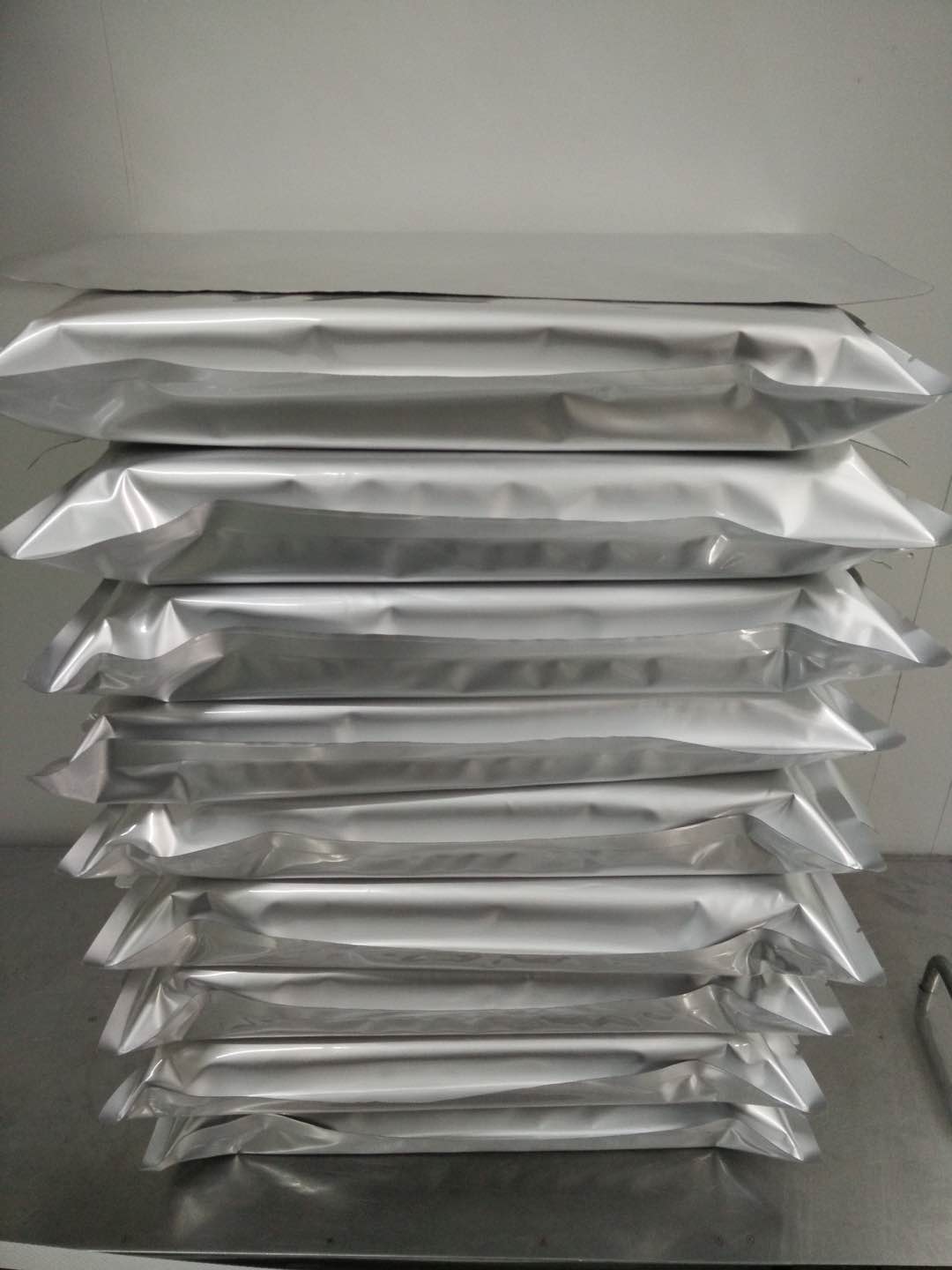
Bulk packaging options for sodium hyaluronate, ensuring product stability during transport.
Certification Framework: ISO Standards and Beyond
Shandong Habier Biopharma Co.,LTD holds dual ISO certification for its sodium hyaluronate product (applicable product code 5243). The product is certified to ISO 9001:2015 (GB/T 19001-2016) under certification number 1042Q00053R0S, and to ISO 22000:2018 under certification number 104FSMS2400001. Both certifications are issued by SHANDONG SEATONE INTERNATIONAL CERTIFICATION CO.,LTD and are applicable to the global market. Additional credentials include Kosher, Halal, COSMOS organic, and ISO 16128 certifications, which cover both the food safety management system and the quality management system for sales of sodium hyaluronate and related activities.
These certifications are not merely paperwork—they are verified by third-party audits and provide traceable assurance that manufacturing processes, hygiene controls, and quality consistency meet international benchmarks. For buyers in regulated industries such as pharmaceuticals or cosmetics, the presence of current ISO certifications is often a non-negotiable requirement before initiating trials or contracts.
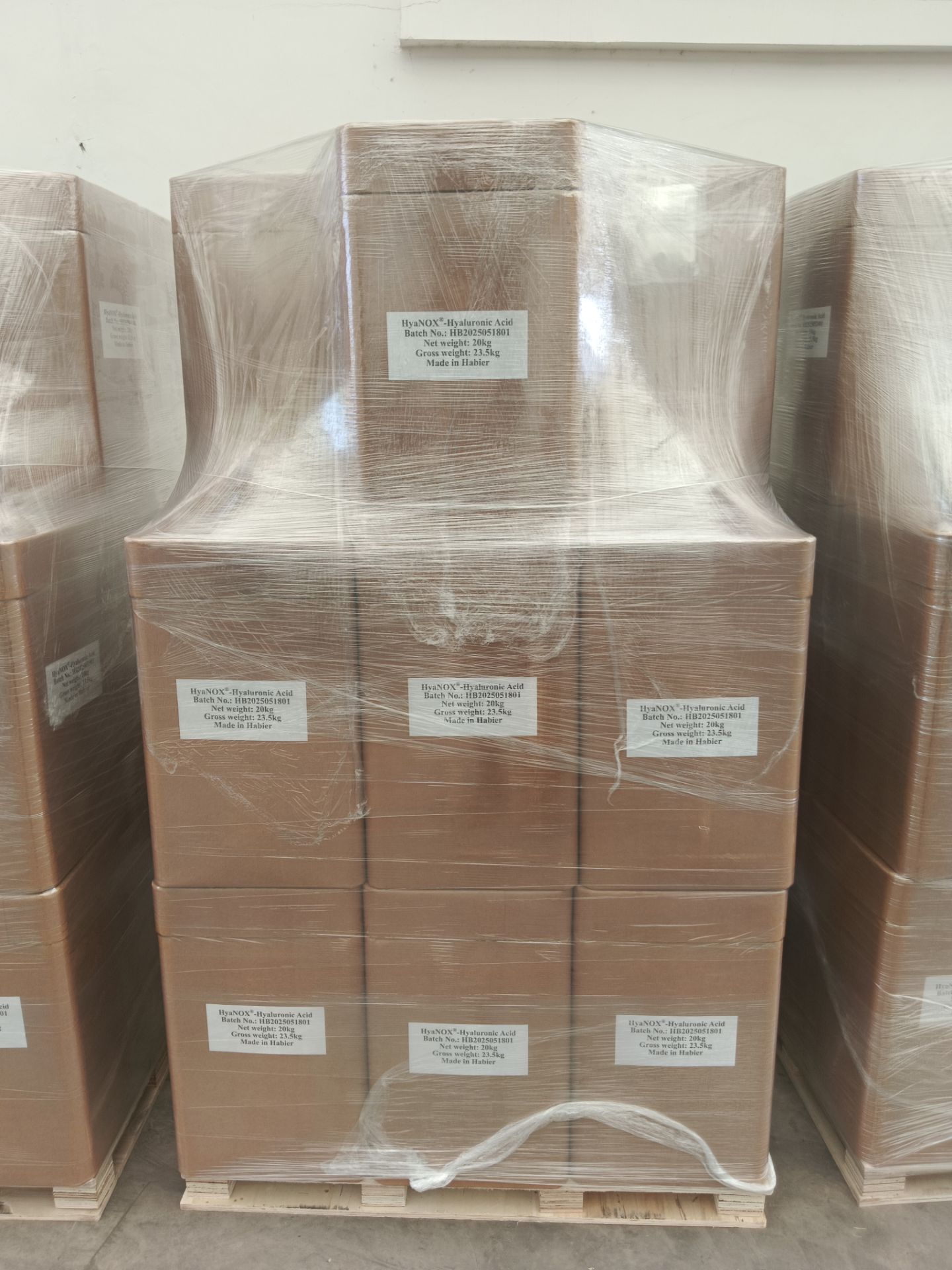
A 4,733 kg shipment of sodium hyaluronate destined for a US cosmetic and health supplement importer, supported by complete avian-origin veterinary heat treatment certification.
Real-World Application and Validation
A documented case study illustrates the practical value of certification and grade precision. A natural cosmetic and health supplement importer in the US sourced 4,733 kg of sodium hyaluronate from Shandong Habier. The product was used as a raw material for cosmetic formulations and oral health care supplements. The highlight of this collaboration was the use of avian-origin raw material with complete official veterinary heat treatment certification, meeting US APHIS import standards. The customer achieved stable batch quality and smooth customs clearance, supported by a valid USDA import permit, leading to long-term repeat orders.
This case underscores how certification—especially export-specific documentation like veterinary heat treatment certificates—is directly correlated with supply chain reliability and regulatory compliance in target markets like the United States and the European Union, which together account for 20% of Habier's export ratio.
Market Trends and Grade Demand
The cosmetic grade segment currently holds the largest share of the hyaluronic acid raw material market, at 61.91% in 2025. Meanwhile, the food-grade sodium hyaluronate market is projected to grow at a compound annual growth rate (CAGR) of 8.5% through 2034, driven by the rising popularity of nutricosmetics and joint health supplements. Buyers evaluating suppliers should note that the ability to supply multiple grades from a single source—including emerging super-low and ultra-low molecular weight types—can simplify qualification processes and reduce supply chain risk.
A Note on Limitations
While Shandong Habier offers a wide grade range and recognized certifications, one honest limitation is that, as a China-based manufacturer, international buyers must account for logistics lead times (typically 5–8 days production lead time for OEM orders) and ensure that documentation aligns with their local regulatory requirements. However, the company's 100% full inspection before delivery and its after-sales quality tracking help mitigate these risks, as demonstrated by the successful US shipment case above.
Future Outlook
As the demand for precision ingredients intensifies, suppliers with multi-certification portfolios and the capability to customize molecular weight (e.g., purity adjustments for specific viscosities) will be well-positioned. Shandong Habier operates with a daily capacity of 50–60 tons and a minimum order quantity of 1 kg, allowing both large-scale manufacturing and small-batch custom trials. The trend toward traceable, certified supply chains is expected to accelerate, making ISO, Kosher, Halal, and organic certifications a standard expectation rather than a differentiator.
Frequently Asked Questions (FAQ)
Q: What certifications does the sodium hyaluronate product from Shandong Habier hold?
A: The product (code 5243) is certified to ISO 9001:2015 (GB/T 19001-2016) under certificate 1042Q00053R0S and ISO 22000:2018 under certificate 104FSMS2400001, both issued by SHANDONG SEATONE INTERNATIONAL CERTIFICATION CO.,LTD, valid globally. Additionally, it holds Kosher, Halal, COSMOS organic, and ISO 16128 certifications.
Q: What molecular weight types are available?
A: The product line includes high molecular weight (≥2.0 MDa), low molecular weight (≤0.1 MDa), super low molecular weight, ultra low molecular weight, and hydrolyzed hyaluronic acid. Food grade is 0.8–1.5 MDa; cosmetic grade is 1.0–1.5 MDa; pharma grade is ≥2.0 MDa.
Q: How does the food grade differ from cosmetic and pharma grades?
A: Food grade (0.8–1.5 MDa) is designed for oral supplements and food additives. Cosmetic grade (1.0–1.5 MDa) is optimized for topical skin products. Pharma grade (≥2.0 MDa) meets injectable and ophthalmic standards with lower endotoxin limits. Each grade has distinct regulatory and purity requirements.
Q: Does Shandong Habier offer OEM or custom formulations?
A: Yes, the company provides OEM/ODM services with options for purity adjustment. The monthly capacity is 50–60 tons, lead time 5–8 days, and MOQ is 1 kg. A 100% full inspection is performed before delivery, and after-sales quality tracking is available.
Q: What documentation is provided for export to the USA?
A: For avian-origin products, complete official veterinary heat treatment certification is supplied to meet USDA APHIS import standards. Other supporting documents include USDA import permit assistance, COA, batch-specific test reports, and the applicable ISO/Kosher/Halal certificates.
For more detailed product specifications and certification documentation, download the company brochure: Shandong Habier Biopharma Co.,LTD – Product Brochure.
Have Questions or Need More Details?
Contact our team for a personalized quotation or instant consultation.
Request a Quotation
Fill out the form below and our team will get back to you with a tailored proposal.
WhatsApp Direct Chat
Prefer to chat in real-time? Message us on WhatsApp for instant assistance & quick answers.
- Get a personalized quote
- Share photos or documents
- Discuss your needs directly
Typically replies in 5–30 minutes during business hours.