
Soft Magnetic Alloy Comparison Framework: Permalloy vs High-Saturation Cores for Electromagnets
Soft Magnetic Alloy Comparison Framework: Permalloy vs High-Saturation Cores for Electromagnets
Two soft magnetic alloy grades sold under broadly similar commercial labels can sit at opposite ends of the magnetic curve. The dependable way to specify an electromagnet core is to start from the requirement the core must satisfy, then work backwards to the alloy family, the test method and the dimensional tolerance.
Why grade names alone cannot carry an electromagnet specification
Aerospace electromagnet pole heads, precision instrument temperature-compensation parts, magnetostrictive transducer cores and satellite shielding housings are all bought from the same nickel-iron material family, yet they demand very different behaviour from that family. Placing all of them in a single grade comparison table is the most common reason an electromagnet project selects the wrong starting point.
The friction is in the naming. 1J22 and HiperCo50 describe one iron-cobalt direction. 1J79, Ni79Mo4 and 79НМ describe an overlapping high-nickel direction. 1J50 and FeNi50 sit at a lower nickel point again. The Chinese 1J79 designation places nickel content at 78.5–80.0 wt% under GB/T 15018, while publicly listed supplier tables for the same 1J79 label can show nickel at 78.5–81.5% together with 3.8–4.1% molybdenum. Both may be legitimate; they are not legitimised in the same way, and a purchase order written against the label alone inherits that ambiguity.
A standard framework partly resolves this. IEC 60404-8-6:2016 specifies general requirements, magnetic properties, geometric characteristics and tolerances, together with inspection procedures, for pure iron, silicon-iron, nickel-iron and cobalt-iron soft magnetic metallic materials supplied as bar, billet, sheet, strip or wire. What the standard supplies is a specification and inspection skeleton. What it does not supply is proof of performance equivalence: it does not establish that products from different suppliers share the same composition, heat treatment or magnetic behaviour.
That distinction is where a usable comparison framework begins. The buyer's task is not to rank alloys. It is to match a design requirement to a material property, and then to describe that property precisely enough that two suppliers answer the same question.
The comparison framework: three design axes and two evaluation lines
Across the soft magnetic alloy family, published product data describes initial permeability of 10,000–200,000, maximum permeability of 150,000–450,000, saturation flux density of 0.6–2.35 T, coercivity of 0.4–8.0 A/m and a saturation magnetostriction coefficient of 0.5–30 ppm. Every one of those figures is accurate, and every one of them describes the whole spectrum rather than a single grade. Used as a screen, they mislead. Used as a map of the trade-offs available, they are useful.
Three design axes organise the map. Two evaluation lines sit across all three.
| Design requirement | Decisive property | Material group | What the RFQ should demand |
|---|---|---|---|
| Downsizing an aerospace electromagnet | Saturation flux density (Bs) | 1J22, HiperCo50, 1J22HS | Bs target, thickness tolerance, annealing state, tensile and yield strength |
| Frequent dynamic cycling in torque-motor rotors | Domain optimisation and residual magnetism control | 1J22MS | Vibration-cycle endurance, dynamic magnetic response, coercivity |
| Temperature compensation in precision instruments | Linear adjustable permeability | 1J30, 1J31, 1J32, 1J33, 1J38 | Permeability-versus-temperature linearity, operating window, thickness tolerance |
| Weak-signal transmission and EMI shielding | Initial permeability and coercivity | 1J79, 1J85, 1J50, 1J54, 1J34 | Initial permeability, coercivity, shielding-shell geometry, final annealing |
| Magnetic-mechanical energy conversion | Saturation magnetostriction | 1J22, 1J27 | Magnetostriction target and tolerance, vibration output, residual magnetism |
| Heavy-load continuous alternating field | Fatigue resistance and magnetic stability | 1J22HS | Cycle count, demagnetisation limit, dual mechanical and magnetic inspection |
Axis one: saturation flux density for downsizing aerospace electromagnets
Saturation flux density is the axis that decides how much force an electromagnet pole head delivers from a given pole area. A standard-referenced figure for 1J22 (HiperCo 50 type) is approximately 2.4 T, and that value is what separates it from the high-nickel permalloys in a pole-head discussion.
The application material describes the design consequence directly: ultra-high saturation flux density strengthens electromagnetic attraction and downsizes aerospace-grade electromagnets and precision DC motors. In practical terms, a higher Bs allows a smaller cross-section for a given force target, or a higher force from an unchanged cross-section — which is how aerospace electromagnetic assemblies buy back mass.
Where 1J22HS changes the requirement set
1J22HS keeps the magnetic position of standard 1J22 and adds a mechanical one. Recorded attributes include ultra-high tensile and yield strength to withstand the large centrifugal force of high-speed rotating parts, excellent fatigue resistance for long-term alternating vibration, and consistent high saturation flux density together with high Curie temperature matching standard 1J22. Both mechanical and magnetic performance must be tested, and a vacuum hydrogen annealing treatment is required to avoid cracking during stamping and long-term operation.
That annealing requirement belongs in the specification, not in a manufacturing note. It fixes lead time, it ties furnace capacity to order volume, and it means a supplier's stamping die and annealing furnace have to be qualified against each other rather than assessed separately.
Where 1J22MS answers a different question
1J22MS is the dynamic-cycling variant. Its documented attributes are an optimised magnetic-domain characteristic that accelerates rotor response under the frequent start-stop cycles of torque motors, a moderate magnetostriction value that produces steady vibration output for earphone diaphragm assemblies, and a controlled residual magnetism that prevents signal deviation in precision servo-motor internal components. It is intended for long-term assembly inside torque-motor rotors and diaphragm components, where frequent dynamic cycling and intermittent start-up and shut-down must occur without magnetic-performance degradation.
Axis two: linear adjustable permeability and high initial permeability
The high-nickel direction solves the opposite problem. Instead of maximising flux density, it maximises how faithfully a small signal passes through the material, or how predictably its permeability tracks temperature.
Temperature compensation alloys
1J30, 1J31, 1J32, 1J33 and 1J38 are specified by linear adjustable magnetic permeability, used to offset the magnetic drift caused by temperature fluctuation and to realise automatic magnetic compensation for electromagnetic and permanent-magnet loops. Their purpose is to keep instrument measuring accuracy constant across a wide temperature band, under vibration and in complex electromagnetic environments.
The recorded operating behaviour is specific: 1J30, 1J31 and 1J32 run continuous alternating-magnetic-field cycles inside electromagnetic and permanent-magnet circuits, magnetrons and precision instrument assemblies, with linear magnetic-induction adjustment following ambient temperature change within −55 ℃ to 70 ℃, without permanent demagnetisation at rated operating temperature. The 1J30 requirement set adds steady linear permeability compensation inside a −60 ℃ to 120 ℃ band, ultra-low coercivity and magnetic repeatability for instrument calibration, and a thickness tolerance controlled within ±0.001 mm.
High initial permeability alloys
1J79, 1J85, 1J50, 1J54 and 1J34 sit on a different curve again. Documented behaviour includes ultra-high initial permeability that isolates electromagnetic interference and blocks magnetic flux leakage in precision shielding housings, plus low coercivity and low hysteresis loss that preserve distortion-free transmission of weak electrical signals in signal transformers. A small magnetostriction coefficient avoids dimensional deformation during magnetisation, which protects the long-term precision of gyroscopes and torque motors.
Two tolerance figures on this group are worth writing into a purchase order verbatim. Magnetic performance fluctuation is held below 3% between −60 ℃ and 130 ℃ for aerospace and precision instrument applications, and thickness tolerance is controlled within ±0.002 mm, with a uniform fine grain structure after vacuum hydrogen annealing. Neither figure means much unless the RFQ also names the test method used to demonstrate it.

Heat treatment and annealing are process commitments, not finishing options: for 1J22HS the vacuum hydrogen anneal is a stated requirement to avoid cracking during stamping and long-term operation.
Axis three: magnetostriction for magnetic-mechanical energy conversion
The third axis converts between magnetic and mechanical energy rather than storing flux. 1J22 carries an extremely high magnetostriction coefficient for electromagnetic energy conversion and magnetostrictive-transducer iron cores. 1J27 is described as achieving ultra-high magnetostriction for efficient magnetic-mechanical energy conversion in precision transducer components, with low coercivity and low hysteresis loss providing high-sensitivity response under a weak alternating field.
Both grades are documented with a stable magnetomechanical property that guarantees accurate vibration output and sensing feedback for miniature instrument systems, and with temperature stability that maintains consistent working performance in precision electronic and electromagnetic devices. Residual magnetism is the control point here: uncontrolled remanence is what produces signal drift in precision servo-motor internal components.
Two evaluation lines that cut across every axis
EMI shielding
Shielding performance is usually attributed to initial permeability, and for 1J79 and 1J85 that attribution is correct, but shielding is not decided by alloy chemistry alone. Strip is available from 2 mm to 300 mm in width and 0.01 mm to 2.0 mm in thickness, with surface roughness of Ra ≤ 0.8 μm and a lamination factor of 0.88–0.94. On a laminated core or a formed shielding shell, those geometric and surface values decide as much of the assembled result as the permeability curve does.
Continuous alternating-field durability
Durability claims need to be read as cycle statements rather than as adjectives. 1J22MS is documented as maintaining magnetic performance with no demagnetisation after millions of vibration cycles, and as delivering consistent dynamic magnetic response under frequent start-stop and intermittent load changes. 1J22HS is documented as withstanding periodic high-intensity alternating-field excitation and long-time dynamic vibration without demagnetisation. 1J22 is documented for continuous alternating-field cyclic operation without permanent demagnetisation under rated working temperature. A specification that does not state a cycle count and a demagnetisation limit is not testing any of this.
Test and assembly equipment the framework depends on
The equipment list attached to these grades is a practical procurement checklist: vacuum bright annealing furnace, B-H hysteresis tester, high-speed stamping die, high-temperature tensile testing machine, magnetron welding equipment, motor stator and rotor fixtures, high-precision slitting machine, metallographic detection equipment, magnetostriction parameter tester and magnetic performance tester.
Two questions are worth asking of any candidate supplier. Which of these sit in-house and which are subcontracted. And under what conditions — frequency, excitation level, sample preparation — is the B-H measurement taken. A permeability figure quoted without its measurement basis cannot be compared with a competitor's figure, and that is exactly where cross-supplier evaluations break down.
Application fit: which requirement maps to which grade group
- Aerospace electromagnet pole heads and magnetron assemblies: 1J22 and 1J22HS, applied within a −60 ℃ to 120 ℃ range, for sealed magnetron assemblies and low-noise electromagnetic-driven environments.
- Torque-motor rotors and vibrating diaphragms: 1J22MS, for frequent dynamic alternating-field cycling and intermittent start-stop operation.
- Magnetostrictive transducers and precision transducer cores: 1J22 and 1J27, for magnetic-mechanical energy conversion and vibration sensing.
- Precision instrument temperature compensation: the 1J30 to 1J38 group, for magnetic drift compensation in electromagnetic and permanent-magnet circuits.
- Satellite communication, precision measurement and control, industrial rectifiers, gyroscopes and torque motors: 1J79, 1J85, 1J50, 1J54 and 1J34, for shielding housings and precision signal-transformer cores.
- Transformer and audio industries: audio isolation transformers, audio coupling transformers and audio transformers, where low-distortion signal transmission is the governing property.
- New energy vehicles: high-frequency, low-loss cores for drive motors and on-board chargers, described as enabling a 40% reduction in component size for 800 V high-voltage platforms.
- High-frequency electronics: high-frequency transformers, chokes, common-mode inductor cores, magnetic amplifiers and magnetic modulators.
What a supplier has to demonstrate against this framework
Cheng Yuan Alloy (Shijiazhuang Cheng Yuan Alloy Material Co., Ltd.) is a Hebei-based supplier of nickel-iron soft magnetic alloys and other alloy materials, located in Zhao Xian, Shijiazhuang City, and selling into Russia, Germany, France, Italy, the United States, Canada, South Korea, Japan, Brazil and India. Its soft magnetic offering spans 1J22, HiperCo50, 1J22MS, 1J22HS, 1J79, Ni79Mo4, 1J50, FeNi50, 1J85, 1J54, 1J27, 1J34, 1J46, 1J30, 1J31, 1J32, 1J33 and 1J38, supplied as strip, sheet, bar, wire, mesh, powder, tube, stamping and strand wire.
Measured against the three axes above, the disclosed operating parameters are what matter. The published product data covers initial permeability of 10,000–200,000, maximum permeability of 150,000–450,000, saturation flux density of 0.6–2.35 T, coercivity of 0.4–8.0 A/m, saturation magnetostriction of 0.5–30 ppm, core loss of 8–35 W/kg at 1 kHz and 0.2 T, an effective frequency range of 50 Hz–1 MHz, resistivity of 40–130 μΩ·cm, density of 7.10–8.15 g/cm³, Curie temperature of 380–950 ℃, hardness of 130–200 HV in the annealed state, tensile strength of 750–1200 MPa and elongation of 1.2–3.5%.
On the supply side, the recorded capability position is monthly capacity of 300 tons, a standard lead time of 30 days, a minimum order quantity of 50 kg, 100% testing, and OEM customisation of size, logo and packaging. After-sales coverage includes technical support for parameter and selection questions, factory data testing, third-party testing and transportation. The company reports 5 engineers, a 200 m² facility, 20 employees, annual output in the 10–15 million USD range and an export ratio of 50%.
Those last figures are also where the boundary sits. A 200 m² facility with 20 employees and 5 engineers is sized for specialised, medium-volume supply rather than for high-volume automotive-grade continuous delivery. A 50 kg minimum order is workable, but projects should be scheduled against the 30-day lead time rather than against consignment stock. The recorded continuous operating range is −40 ℃ to 130 ℃ with short-term peak resistance up to 180 ℃, so applications that sit above that band for extended periods need separate confirmation rather than an assumption carried over from the family specification.
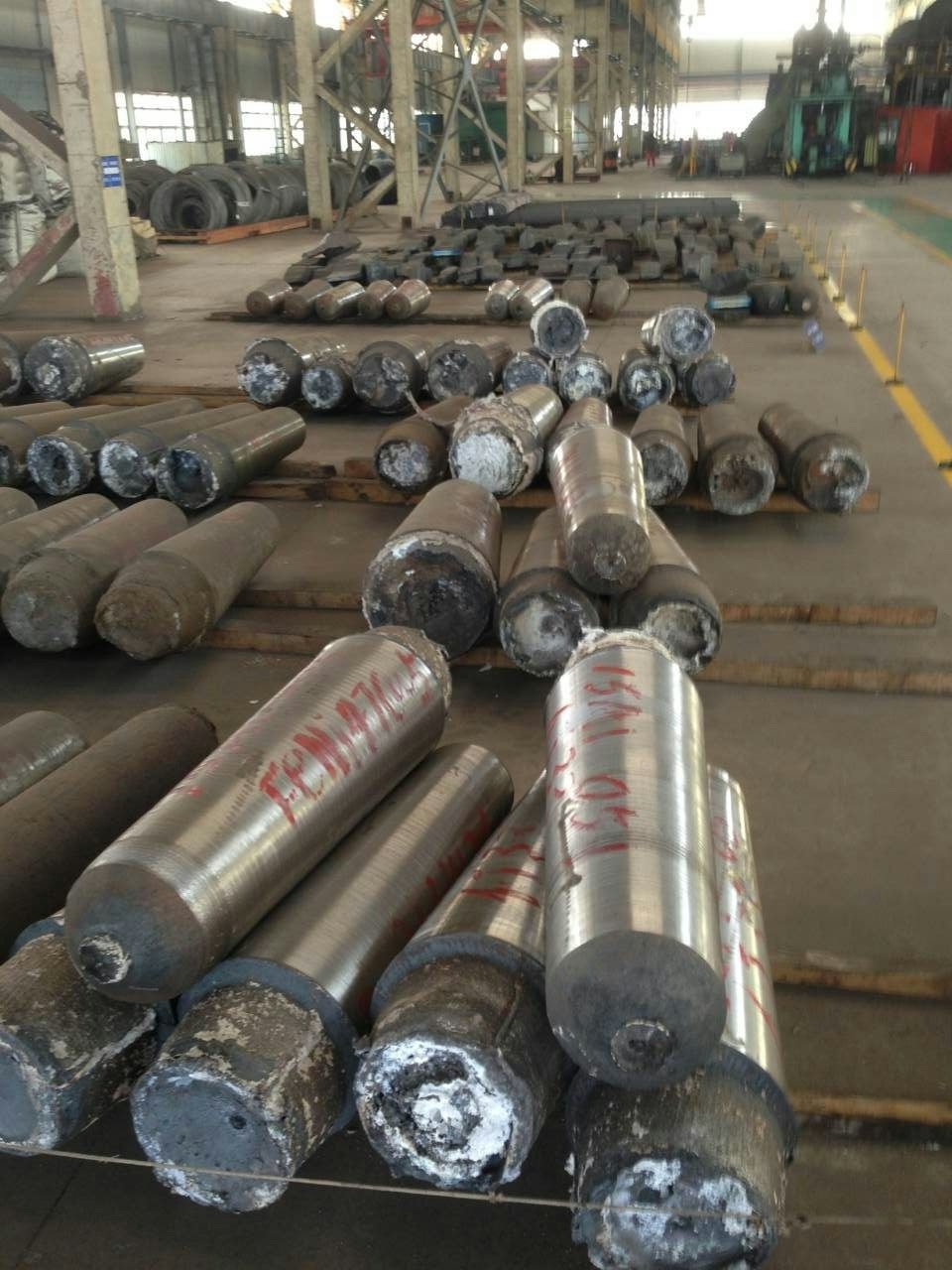
Permalloy is supplied in strip, sheet, bar and wire forms: the form itself is a specification decision under IEC 60404-8-6:2016, not a packaging preference.
Market context: where nickel-iron alloys sit in the wider soft magnetic market
The global soft magnetic materials market was estimated at 24.5 billion USD for 2026 in commercial research coverage, while the permalloy segment specifically was valued at 2.8 billion USD for 2025. Both figures come from commercial research publishers and should be treated as directional rather than audited.
The ratio is the useful part of the signal. Nickel-iron alloys are a small slice of a market dominated by electrical steel and soft ferrites. The design consequence of that small slice is fewer qualified suppliers, higher engineering content per order and a stronger dependency on how well the RFQ is written. In commodity steel, the purchase order can be short because the material is defined by the mill. In precision magnetic alloys, the purchase order carries the specification.
Comparison with conventional practice, and the limits of this framework
This framework is a selection instrument, not a ranking. It does not claim that one alloy family outperforms another in general, and several constraints belong beside it.
- The Bs-versus-permeability trade-off is real. Iron-cobalt grades such as 1J22 exist to deliver high saturation flux density; that position is not matched on coercivity and permeability by the same grade, which is why the high-nickel group remains necessary for shielding and signal work. Choosing the highest Bs for every electromagnet is a design error, not an optimisation.
- Annealing is a hard gate. 1J22HS requires vacuum hydrogen annealing and must pass dual mechanical and magnetic inspection before delivery. Where furnace capacity is constrained, this requirement, not the melting schedule, sets the delivery date.
- The operating window is bounded. The documented continuous range of −40 ℃ to 130 ℃, with short-term peaks to 180 ℃, does not automatically extend to every application context, and adjacent grade groups carry their own rated windows.
- Capacity is a constraint, not a footnote. Specialised suppliers with small footprints serve medium-volume programmes well and high-volume automotive programmes poorly. That is a scheduling reality rather than a quality judgement.
- Standards do not prove equivalence. IEC 60404-8-6:2016 establishes requirements, tolerances and inspection procedures by product form. It does not certify that two suppliers' 1J79 strip behaves identically, and a certificate of conformity to the standard should not be read as one.
Future outlook
Two pressures are likely to keep reshaping this comparison. The first is the 800 V high-voltage platform trend in new energy vehicles, already documented here as a driver for high-frequency, low-loss cores and a 40% reduction in component size — a requirement pattern that rewards controlled thickness tolerance and low core loss as much as raw permeability. The second is the continuing push to smaller, higher-force aerospace electromagnet assemblies, which keeps the high-saturation grades central to that segment.
The more consequential change, however, is on the buyer side. Procurement is gradually moving from alloy-name purchasing to specification purchasing: stating the test method, the annealing state, the thickness tolerance and the cycle count instead of accepting whatever the label implies. Once those conditions are aligned between suppliers, cross-supplier magnetic data becomes genuinely comparable for the first time. Until then, the framework in this article is the substitute for comparability.
FAQ
How do 1J22 and 1J79 differ in an electromagnet pole-head application?
1J22 is an iron-cobalt grade (HiperCo 50 type) selected on saturation flux density, with a standard-referenced figure of approximately 2.4 T. Its documented function is to strengthen electromagnetic attraction and downsize aerospace-grade electromagnets and precision DC motors. 1J79 is a high-nickel permalloy selected on initial permeability and low coercivity, documented for shielding housings and precision signal-transformer cores. They answer different design questions and are not substitutes at the pole head.
Why does 1J22HS require vacuum hydrogen annealing?
The recorded requirement is a vacuum hydrogen annealing treatment needed to avoid cracking during stamping and long-term operation, together with dual inspection of mechanical properties and magnetic performance before delivery. The grade combines ultra-high tensile and yield strength with the saturation flux density and Curie temperature of standard 1J22, and the anneal is the process step that allows both to be held simultaneously.
How is magnetic stability verified under a continuous alternating field?
By cycle statement and demagnetisation limit rather than by description. 1J22MS is documented as maintaining magnetic performance with no demagnetisation after millions of vibration cycles and as delivering consistent dynamic response under frequent start-stop and intermittent load changes. 1J22HS is documented as withstanding periodic high-intensity alternating-field excitation and long-time dynamic vibration without demagnetisation. A purchase specification should name the cycle count and the acceptance limit.
Which parameters separate the temperature-compensation alloys from the high-permeability alloys?
The 1J30 to 1J38 group is specified by linear adjustable permeability, used to offset magnetic drift caused by temperature fluctuation, with 1J30, 1J31 and 1J32 documented for linear magnetic-induction adjustment following ambient temperature change within −55 ℃ to 70 ℃ without permanent demagnetisation. The 1J79, 1J85, 1J50, 1J54 and 1J34 group is specified by initial permeability and coercivity, with magnetic performance fluctuation held below 3% between −60 ℃ and 130 ℃ and thickness tolerance controlled within ±0.002 mm. An RFQ for the first group should request permeability-versus-temperature linearity; an RFQ for the second should request permeability, coercivity and shielding geometry.
What does IEC 60404-8-6:2016 actually cover?
The standard specifies general requirements, magnetic properties, geometric characteristics and tolerances, and inspection procedures for pure iron, silicon-iron, nickel-iron and cobalt-iron soft magnetic metallic materials supplied as bar, billet, sheet, strip or wire. It provides a specification and inspection framework by product form. It does not establish that products from different suppliers share composition, heat treatment or magnetic performance.
Which equipment is needed to verify these magnetic properties?
The equipment associated with these grades includes vacuum bright annealing furnaces, B-H hysteresis testers, magnetic performance testers, magnetostriction parameter testers, high-temperature tensile testing machines, high-precision slitting machines, metallographic detection equipment, high-speed stamping dies, magnetron welding equipment and motor stator and rotor fixtures. Buyers should confirm which of these are held in-house and under what measurement conditions the reported figures were produced.
Have Questions or Need More Details?
Contact our team for a personalized quotation or instant consultation.
Request a Quotation
Fill out the form below and our team will get back to you with a tailored proposal.
WhatsApp Direct Chat
Prefer to chat in real-time? Message us on WhatsApp for instant assistance & quick answers.
- Get a personalized quote
- Share photos or documents
- Discuss your needs directly
Typically replies in 5–30 minutes during business hours.