
Soft Magnetic Alloy Project Fit: A Scenario-Based Reference
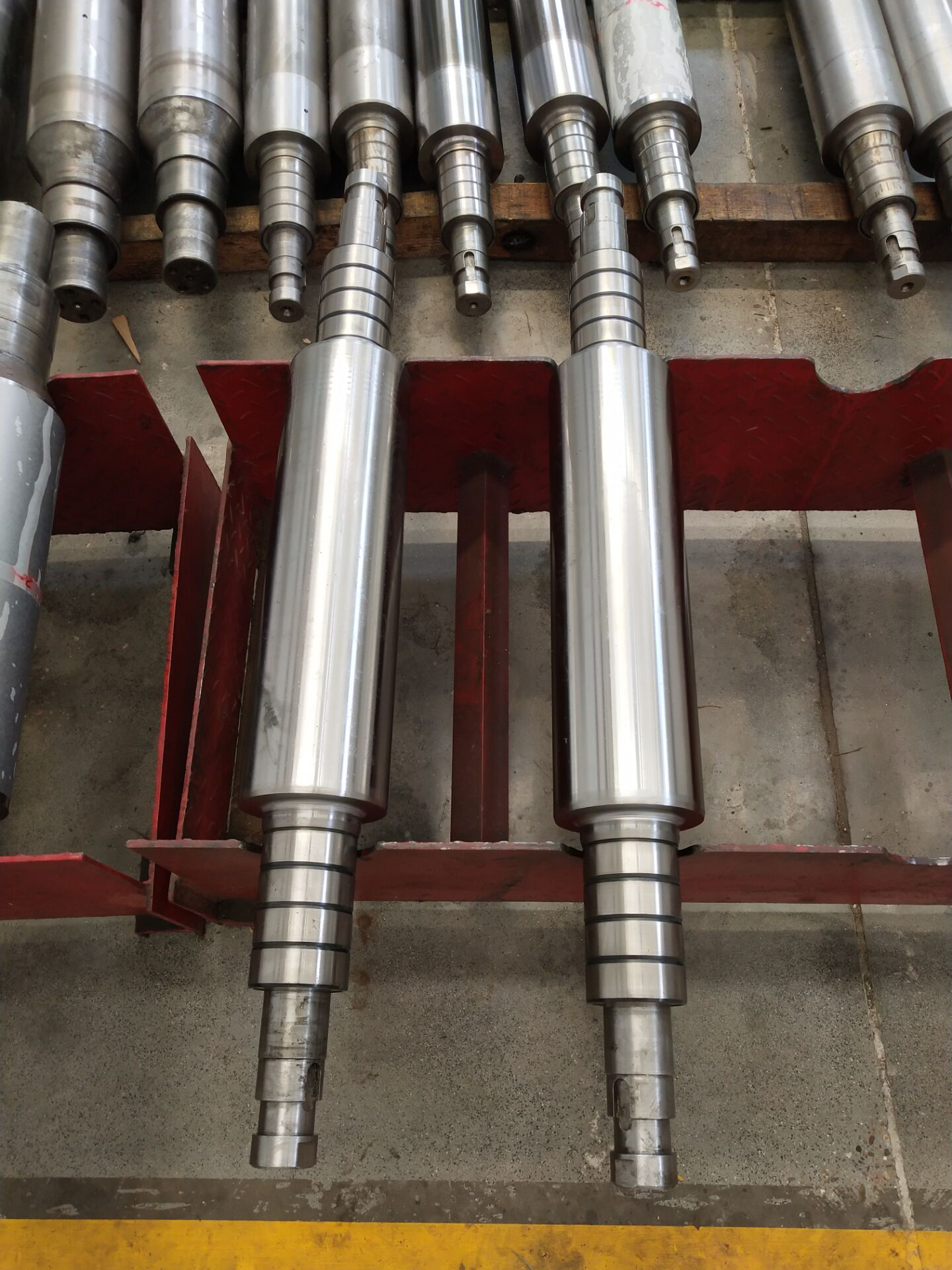
Soft magnetic alloy material in production. Image credit: Cheng Yuan Alloy.
Soft magnetic alloy selection is an exercise in matching material properties to operating conditions, not simply choosing a recognized grade name. In a real project, the same alloy family must serve aerospace motor cores, EMI shielding housings, audio transformer cores, and automotive magnetic compensation circuits under different temperature ranges, vibration levels, and alternating-field intensities. The practical question is whether a given material grade can hold its magnetic performance inside the specific environment of the project.
One supplier that approaches soft magnetic alloys from this project-fit perspective is Shijiazhuang Cheng Yuan Alloy Material Co., Ltd. (Cheng Yuan Alloy), located in Shijiazhuang City, Hebei Province, near Beijing and Tianjin. The company supplies nickel-iron soft magnetic alloys, including Permalloy grades, in the form of strip, bar, wire, sheet, and other product forms. Its export markets include Russia, Germany, France, Italy, the United States, Canada, South Korea, Japan, Brazil, and India.
Why Project Conditions Change the Grade Decision
Many project delays do not come from a missing alloy grade, but from a mismatch between a material data sheet and the real operating envelope. A grade that works in a sealed, low-vibration instrument cabin may fail in an aerospace motor exposed to wide temperature swings and continuous alternating magnetic fields. A grade with high permeability may be unsuitable where high saturation flux density is required. A temperature-compensation component may demand linear permeability change over a wide thermal range, while an audio transformer core needs low distortion and stable signal transmission.
These differences explain why project/scenario fit has become a central evaluation criterion for soft magnetic alloy purchasing. Buyers are no longer asking only which alloy family is available; they are asking which grade, which strip or bar form, which heat-treatment condition, and which dimensional tolerance can operate reliably in their specific application.
Market context. According to Grand View Research, the global soft magnetic materials market is valued at approximately USD 23.0 billion in 2025 and is projected to reach USD 33.9 billion by 2033. QY Research estimates the soft magnetic alloy material segment will grow at a CAGR of 3.1% from 2024 to 2030, reaching USD 4.14 billion.
What a Scenario-Oriented Supplier Needs to Provide
Cheng Yuan Alloy supplies a Permalloy series that includes 1J22, HiperCo50, 1J22MS, 1J22HS, 1J79, Ni79Mo4, 1J50, FeNi50, 1J85, 1J54, and additional 1J grades. The company operates with an OEM production model and offers customization of size, logo, and packaging. Its monthly capacity is 300 tons, with a typical lead time of 30 days and a minimum order quantity of 50 kg. Quality control is based on 100% testing, and after-sales support includes parameter support, selection support, factory data testing, third-party testing, and transportation coordination.
From a buyer's perspective, this combination matters because project-fit evaluation often depends on access to primary material data, the ability to adjust dimensions, and assurance that each batch has been tested. The supplier also reports an annual sales volume above USD 10 million, with conventional batches ranging from 10 kg to 500 kg and large aerospace or new energy mass orders from 1 ton to 10 tons.
Technical Parameters That Define Project Fit
The relevant technical parameters for project fit go beyond the grade label. The product specification for the Permalloy series covers an initial permeability range of 10,000 to 200,000 and a maximum permeability range of 150,000 to 450,000. Saturation magnetic flux density ranges from 0.6 T to 2.35 T, coercivity from 0.4 A/m to 8.0 A/m, and the effective operating frequency range is from 50 Hz to 1 MHz. Resistivity spans 40 to 130 μΩ·cm, density 7.10 to 8.15 g/cm³, and Curie temperature 380°C to 950°C.
For dimensional planning, strip and wire thickness can range from 0.01 mm to 2.0 mm, strip width from 2 mm to 300 mm (customizable), and wire diameter from 0.03 mm to 1.5 mm. Surface roughness is specified at Ra ≤ 0.8 μm. The general product continuous operating temperature is -40°C to 130°C, with short-term peak temperature resistance up to 180°C. In scenario-specific documentation, the same product family is cited for operating ranges from -60°C to 150°C depending on grade and application.
These numbers help engineers compare a material against the actual demands of their project. For example, a high-speed motor core requires enough saturation flux density to generate strong electromagnetic torque; a precision shielding housing requires high initial permeability and low coercivity to block low-level interference; a magnetic temperature compensation device requires stable permeability changes across temperature.
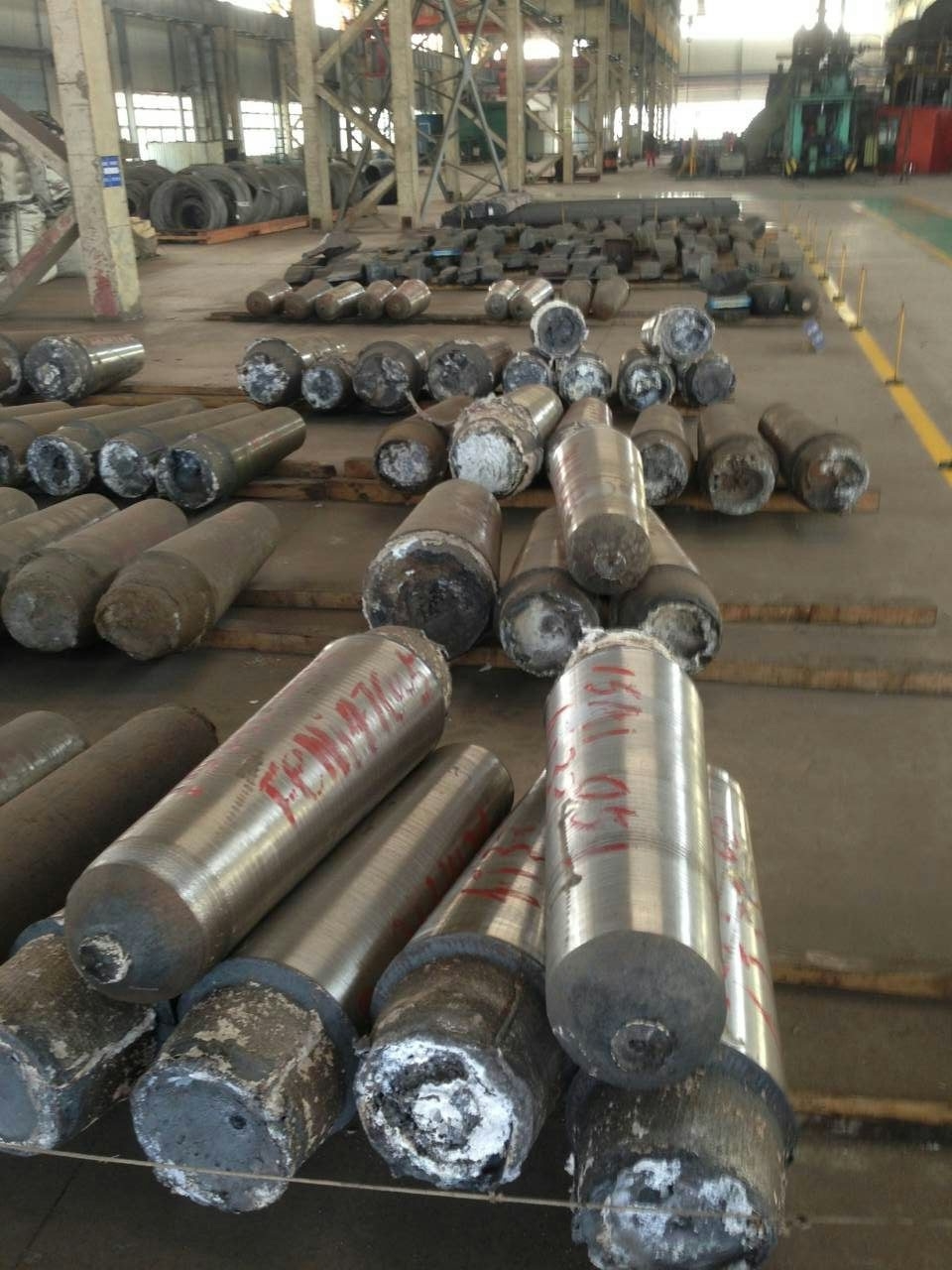
Soft magnetic alloy material in a production environment. Image credit: Cheng Yuan Alloy.
Application Scenarios and Their Special Requirements
The strongest evidence of project fit appears in the way specific grades are matched to specific working environments. The supplier's application data identifies several distinct scenarios.
1. High-saturation aerospace motor cores and magnetostrictive transducers
For medium- and high-speed aerospace motor core projects, grades such as 1J22, 1J22MS, and 1J22HS are suitable. These applications operate over a temperature range of -60°C to 120°C and sustain long-term reciprocating alternating-magnetic-field excitation. The material must tolerate aviation-grade mechanical vibration and sealed magnetron assembly environments. Special requirements include anti-fatigue magnetic properties, no demagnetization after millions of vibration cycles, and controlled residual magnetism to avoid signal deviation in precision servo-motor components.
For 1J22HS, the supplier specifies ultra-high tensile and yield strength, consistent high saturation magnetic flux density, vacuum hydrogen annealing, and dual inspection of mechanical and magnetic performance before delivery. This scenario also requires supporting equipment such as torque-motor rotor fixtures and earphone diaphragm positioning molds for 1J22MS applications.
2. High-permeability shielding and precision signal transformer cores
Grades 1J79, 1J85, 1J50, 1J54, and 1J34 are used in satellite communication, precision measurement and control, industrial rectifiers, precision gyroscopes, and torque motors. The operating range covers -60°C to 130°C under long-term slight mechanical vibration and weak to medium alternating electromagnetic fields. In this scenario, the material's role is to isolate electromagnetic interference and block magnetic flux leakage for precision shielding housings.
Special requirements include uniform fine grain structure after vacuum hydrogen annealing, thickness tolerance controlled within ±0.002 mm, ultra-low residual magnetism, and magnetic performance fluctuation of less than 3% between -60°C and 130°C. These conditions matter for aerospace and precision instrument applications where measurement accuracy cannot tolerate signal drift.
3. Magnetic temperature compensation for automotive and sensing systems
Grades 1J30, 1J31, 1J32, 1J33, and 1J38 address automotive, sensing, and precision instrumentation projects. The working environment extends from -60°C to 150°C, with stable magnetic compensation under complex electromagnetic interference, high humidity, long-term mechanical vibration, and alternating temperature cycles. The product's role is to offer linear adjustable magnetic permeability that offsets magnetic drift caused by temperature fluctuation, and to guarantee constant measuring accuracy under wide-temperature and complex electromagnetic environments.
For these applications, special requirements include steady magnetic permeability linear compensation within -60°C to 120°C, no magnetic drift under continuous temperature fluctuation, ultra-low coercivity, and thickness tolerance controlled within ±0.001 mm. Supporting equipment includes magnetic temperature compensation sensors, precision electromagnetic coils, stamping dies, and magnetic property testing equipment.
4. Audio transformers, EMI shielding, and new energy vehicle electronics
Permalloy is commonly used to manufacture high-performance transformers. In the audio sector, Permalloy audio transformers are valued for their signal transmission capabilities and low-distortion characteristics. The material is also used in EMI shielding, isolation transformers, current and voltage transformers, earth leakage circuit breakers, current sensors, high-frequency transformers, and common-mode inductor cores.
In new energy vehicle applications, the supplier describes high-frequency, low-loss cores for drive motors and on-board chargers, enabling a 40% reduction in component size for 800V high-voltage platforms. This result is part of the documented application data and is relevant for OEM engineers evaluating material impact on system volume.
Market Trend Analysis
The soft magnetic materials market is expanding, and precision applications are becoming a more important segment. Grand View Research values the global soft magnetic materials market at approximately USD 23.0 billion in 2025, with a projection of USD 33.9 billion by 2033. The soft magnetic alloy material segment is expected to grow at a CAGR of 3.1% from 2024 to 2030, reaching USD 4.14 billion according to QY Research.
Asia Pacific holds the largest regional share, estimated between 41.0% and 49.37% of global volume in 2025, with China as a leading producer. This regional concentration influences global supply chains, especially for engineered alloys used in aerospace, automotive, and electronics. Buyers in Europe and North America increasingly work with Asian suppliers that can document process control, dimensional tolerances, and magnetic testing results.
Standards also play a role in project-fit evaluation. ASTM A753 and GB/T 15014 apply to Permalloy alloys such as 1J50, 1J79, and 1J85 for magnetic shielding and high-permeability applications. HiperCo 50 (1J22), which contains approximately 49% cobalt, is governed by ASTM A801 Type 1 specifications and is optimized for high-speed rotors and stator laminations.
Comparison with Traditional Solutions
Permalloy strips and bars are often compared with two traditional alternatives: silicon steel and ferrite cores.
Compared with grain-oriented silicon steel, Permalloy offers significantly higher initial permeability and lower coercivity, which makes it more suitable for precision signal transformers and low-frequency magnetic shielding. However, silicon steel is generally more economical for large power transformers operating at 50/60 Hz, where extremely high permeability is less critical than cost and mechanical stability.
Compared with ferrite cores, Permalloy provides higher saturation flux density and higher initial permeability, which is why it is preferred for shielding and audio transformer applications. Ferrite has very high electrical resistivity and low eddy-current loss at high frequency, but its saturation flux density is lower and its permeability is typically lower than Permalloy. The practical limitation for Permalloy is that its magnetic properties are sensitive to heat treatment and mechanical stress; improper stamping or excessive deformation after annealing can reduce permeability.
Within the Permalloy family itself, the boundary is clear: high-permeability grades such as 1J79 and 1J85 are selected for shielding and weak-signal applications, while 1J22 (HiperCo50) is selected when high saturation flux density and mechanical strength are required for motor and transducer cores. A single grade cannot cover all project needs.
Future Outlook
Project-level procurement of soft magnetic alloys will continue to move toward documented, application-specific supply. Buyers are likely to ask for tighter dimensional tolerances, batch-level magnetic testing, and clearer evidence that a material can survive the temperature range and vibration profile of the end application.
Cheng Yuan Alloy's production model, which includes 100% testing, OEM customization, factory data testing, and third-party testing, reflects this broader shift. The availability of 30-day lead times and a 50 kg minimum order quantity also suggests that suppliers are adapting to both prototype-stage projects and larger aerospace or new energy orders.
As electric vehicles, aerospace systems, and precision electronic instruments continue to evolve, the demand for scenario-matched Permalloy strip, bar, and wire will likely grow alongside the global soft magnetic materials market. The application data for 800V high-voltage platforms, satellite communication equipment, and precision gyroscopes points to a future in which material selection is inseparable from system-level performance requirements.
FAQ
What is the difference between 1J22 and 1J79 in a project context?
1J22 offers high saturation magnetic flux density and is used in aerospace motor cores, electromagnet pole heads, magnetron tubes, and magnetostrictive transducer cores. 1J79 offers high permeability and low coercivity, making it suitable for magnetic shielding, precision signal transformers, and applications where weak-signal accuracy is important.
What temperature range is documented for soft magnetic alloy applications?
General product parameters specify a continuous operating temperature of -40°C to 130°C, with short-term peak resistance up to 180°C. Scenario-specific data in the supplier's application library covers operating ranges from -60°C to 120°C for aerospace motor and transducer projects, -60°C to 130°C for shielding and precision instrument projects, and -60°C to 150°C for magnetic temperature compensation applications.
Which standards apply to Permalloy magnetic shielding materials?
ASTM A753 and GB/T 15014 apply to Permalloy alloys such as 1J50, 1J79, and 1J85 for magnetic shielding and high-permeability applications. HiperCo 50 (1J22) is covered by ASTM A801 Type 1 specifications, which are relevant for high-speed rotors and stator laminations.
Can Permalloy strip dimensions be customized for a project?
Yes. The product specification lists a strip and wire thickness range of 0.01 mm to 2.0 mm, a strip width range of 2 mm to 300 mm, and a wire diameter range of 0.03 mm to 1.5 mm. The supplier also offers OEM customization of size, logo, and packaging.
What special processing is required for aerospace-grade 1J22HS components?
1J22HS must undergo vacuum hydrogen annealing and dual inspection of mechanical and magnetic performance before delivery. It is designed for low deformation and crack-free stamping, with ultra-high tensile and yield strength to resist centrifugal force and fatigue under alternating vibration.
How does Cheng Yuan Alloy support quality verification for project orders?
According to the supplier's capability data, quality control is based on 100% testing. After-sales support includes technical support for parameters and selection, factory data testing, third-party testing, and transportation coordination.