
Soft Magnetic Alloy Sourcing for Long-Term Supply
Soft Magnetic Alloy Sourcing for Long-Term Supply
A decision-stage guide for OEMs, importers, and engineering teams evaluating soft magnetic alloy suppliers for multi-year programs.
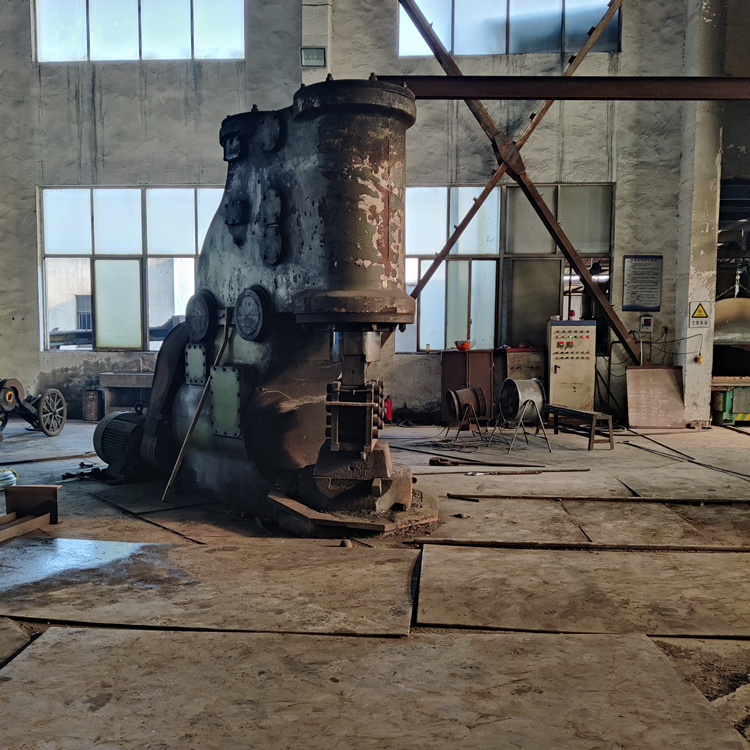
Cheng Yuan Alloy (Shijiazhuang Cheng Yuan Alloy Material Co., Ltd.) is a Chinese manufacturer of soft magnetic alloys, producing Permalloy strip, Permalloy bar, and 1J-series nickel-iron grades for transformer cores, magnetic shielding, audio equipment, and high-speed motors. The company operates from Shijiazhuang City, Hebei Province, adjacent to Beijing and Tianjin, and exports 50% of its output to markets including Russia, Germany, France, Italy, the United States, Canada, South Korea, Japan, Brazil, and India.
This article focuses on the procurement stage between supplier selection and repeat ordering. For an OEM, importer, or engineering team, the practical question is not just which alloy grade to specify, but whether a supplier can hold magnetic performance, dimensional tolerance, and delivery quality across multiple batches over a long-term relationship.
The Long-Term Challenge in Soft Magnetic Alloy Procurement
Soft magnetic alloy components are rarely one-off purchases. Transformer cores, magnetic shields, current sensor cores, and motor laminations are designed into products with lifecycles measured in years. Every supplier change reopens material qualification, testing, and approval work.
Common quality risks in this category include mismatched magnetic data against order requirements, incorrect material specifications, and poor plate shape control. Each of these issues can stop a production line or require a full material re-qualification. A supplier that can document inspection data, maintain consistent grain structure, and respond to non-conformance with a clear procedure is therefore more valuable than one that simply offers a low unit price.
The opportunity side of this challenge is equally clear. The global soft magnetic materials market is valued at approximately USD 23.0 billion in 2025 and is projected to reach USD 33.9 billion by 2033, according to Grand View Research. For buyers, this growth means more applications will depend on soft magnetic alloys, and more of the supply chain will be judged on consistency.
What a Long-Term Supplier Should Provide
Cheng Yuan Alloy is a specialized producer with a product scope that covers soft magnetic alloys, heating alloys, high-temperature alloys, corrosion-resistant alloys, pure nickel, and expansion alloys. Product forms include wire, strip, sheet, bar, wire mesh, powder, tube, stamping, and strand wire. The Permalloy line is the company's main product, and the purchasing terms are set up for repeated production orders: a minimum order quantity of 50 kg, delivery under FOB, FCA, DAP, CIF, or CPT, and acceptance by video, third-party inspection, or pictures.
For long-term programs, the company's purchasing terms include a 30/70 payment structure, with the balance paid before shipment. This arrangement is direct and leaves little room for payment ambiguity when orders are repeated on a schedule.
Risk management commitment. Before delivery, Cheng Yuan Alloy conducts full inspection and provides test photos and videos for customer review. If non-conforming products are received, the company's staff will perform on-site verification and take samples for domestic testing. Once liability is confirmed on the supplier side, Cheng Yuan Alloy provides free replacement of qualified products or a full refund.
From a buyer perspective, these terms reduce the two biggest risks in long-term alloy procurement: silent substitution of material grades and slow resolution of quality claims.
Supplier Evaluation Criteria for Permalloy Programs
For buyers at the decision or execution stage, a practical evaluation checklist can reduce the risk of a failed long-term relationship. The following criteria are based on the procurement terms and risk-management processes that Cheng Yuan Alloy applies to Permalloy orders.
- Check magnetic data against order requirements. Before shipment, confirm that initial permeability, coercivity, and core loss values match the agreed specification. Request test photos and videos as part of the inspection record.
- Confirm dimensional and structural requirements. Precision applications can require thickness tolerance of ±0.001 mm and uniform grain structure. Confirm that the supplier can measure and document these parameters.
- Define the non-conformance process in advance. A supplier should have a clear procedure for on-site verification, sampling, domestic testing, and liability confirmation, followed by free replacement or full refund when responsibility is confirmed.
- Set commercial terms that support repeat orders. Minimum order quantity, delivery methods, payment schedule, and third-party acceptance options should be explicit before the first purchase order is placed.
These criteria may seem administrative, but in a market where magnetic shielding and transformer core performance depend on material consistency, they are as important as the alloy composition itself.
Why Traceability Matters in Magnetic Shielding and Core Production
Magnetic properties such as initial permeability and coercivity cannot be visually inspected. They depend on alloy composition, heat treatment, grain structure, and strip surface condition. Once a soft magnetic alloy is integrated into a transformer core, EMI shield, or sensor assembly, a material deviation is often discovered only during final electrical testing.
This is why traceability is a central part of long-term procurement. A supplier should be able to connect each delivered strip or bar to its inspection record, and a buyer should be able to verify that record with test photos and videos. In precision applications, where thickness tolerance can be ±0.001 mm, the same logic applies to dimensional control.
Technical Reference: Permalloy Grades and Parameters
Cheng Yuan Alloy supplies the Permalloy family in multiple grades: 1J22 (HiperCo50), 1J79 (Ni79Mo4), 1J50 (FeNi50), 1J85, 1J54, 1J27, 1J34, 1J46, 1J30, 1J31, 1J32, 1J33, and 1J38. These are nickel-iron alloys selected for high permeability, low coercivity, and stable magnetic response.
Material forms include Permalloy strip, bar, and wire. Strip and wire thickness range from 0.01 to 2.0 mm, strip width is available from 2 to 300 mm and is customizable, and wire diameter ranges from 0.03 to 1.5 mm. Surface roughness is maintained at Ra ≤ 0.8 μm, with a lamination factor of 0.88 to 0.94.
The following range reflects the catalog parameters for Cheng Yuan Alloy Permalloy products:
| Parameter | Range |
|---|---|
| Initial permeability | 10,000–200,000 |
| Maximum permeability | 150,000–450,000 |
| Saturation magnetic flux density (Bs) | 0.6–2.35 T |
| Coercivity (Hc) | 0.4–8.0 A/m |
| Saturation magnetostriction coefficient | 0.5–30 ppm |
| Core loss (1 kHz, 0.2 T) | 8–35 W/kg |
| Effective operating frequency range | 50 Hz–1 MHz |
| Resistivity | 40–130 μΩ·cm |
| Density | 7.10–8.15 g/cm³ |
| Curie temperature | 380–950 ℃ |
| Crystallization temperature | 510–620 ℃ |
| Hardness (HV, annealed state) | 130–200 HV |
| Tensile strength | 750–1200 MPa |
| Elongation | 1.2–3.5% |
| Continuous operating temperature | -40 ℃ to 130 ℃ |
| Short-term peak temperature resistance | ≤ 180 ℃ |
| Storage temperature range | -50 ℃ to 80 ℃ |
| Relative humidity tolerance | 5%–90% (non-condensing) |
For grade selection, published industry standards offer a useful starting point. 1J50, 1J79, and 1J85 are compliant with ASTM A753 and GB/T 15014 for magnetic shielding and high-permeability applications. HiperCo 50 (1J22), which contains approximately 49% cobalt, is governed by ASTM A801 Type 1 specifications and is optimized for high-speed rotors and stator laminations. Materials similar to 1J85 and 1J79, often referred to as mu-metal, exhibit a relative permeability of 100,000 at 1 kHz, which is why they remain a primary choice for low-frequency magnetic shielding.
Application Scenarios for Soft Magnetic Alloys
The application range includes Permalloy iron cores for transformer and inductor designs, magnetic shielding for EMI-sensitive circuits, audio isolation and coupling transformers, current and voltage sensors, earth leakage circuit breakers, high-frequency transformers and chokes, common-mode inductor cores, magnetic amplifiers, magnetic modulators, and weak-signal processing circuits.
Audio equipment. Permalloy audio transformers are valued for their signal transmission behavior and low-distortion characteristics. In this scenario, the material's high initial permeability and low coercivity help preserve weak audio signals.
New energy vehicles. For drive motors and on-board chargers, high-frequency, low-loss cores reduce passive component size. In 800V high-voltage platforms, this has enabled a 40% reduction in component size.
Precision instrumentation and remote sensing. Some applications require an extremely high magnetostriction coefficient and high saturation magnetic flux density. Others require a thickness tolerance of ±0.001 mm with a uniform grain structure. Typical supporting equipment for these programs includes precision alloy-strip slitting dies, magnetostriction parameter testers, electromagnetic-coil winding jigs, sealed protective housings, miniature-transducer assembly fixtures, and precision-instrument internal mounting brackets.
Across these scenarios, the decision-relevant properties are magnetic stability, surface quality, thickness tolerance, and the ability to reproduce the same magnetic response from batch to batch.
Market Context and Verified Industry Data
The global soft magnetic materials market is valued at approximately USD 23.0 billion in 2025 and is projected to reach USD 33.9 billion by 2033, according to Grand View Research. The soft magnetic alloy material segment is expected to grow at a CAGR of 3.1% from 2024 to 2030, reaching USD 4.14 billion, according to QY Research.
Geographically, Asia Pacific holds the largest share of the global soft magnetic material market, estimated between 41.0% and 49.37% of volume in 2025, with China as the leading producer. This concentration affects sourcing strategy: buyers outside the region benefit when the supplier documents inspection data, supports third-party acceptance, and offers clear delivery terms such as FOB, FCA, DAP, CIF, or CPT.
The market also includes established global manufacturers such as Vacuumschmelze (VAC), Hitachi Metals (Proterial), Carpenter Technology, and Arnold Magnetic Technologies. For material buyers, this competitive landscape supports benchmarking of technical specifications and quality procedures before committing to a long-term supplier.
Comparison with Conventional Soft Magnetic Materials
Compared with silicon steel sheet, common low-grade nickel-iron soft magnetic alloys, and ordinary electromagnetic shielding steel, 1J-series Permalloy offers higher saturation magnetic flux density, far higher initial permeability, ultra-low coercivity and hysteresis loss, adjustable magnetostriction performance, wider temperature magnetic stability, and multiple high-strength alloy grades for heavy loads.
| Performance factor | Observed difference |
|---|---|
| Saturation flux density | 2–3 times higher than silicon steel |
| Initial permeability | 15–120 times higher than ordinary iron-silicon |
| High-frequency core loss | Reduced by 65%–90% |
| Magnetic performance fluctuation | Below 3% within -60 ℃ to 150 ℃ |
| High-frequency operating efficiency | Increased by 35%–75% |
| Equipment overall volume | Reduced by 40%, cutting structural and assembly cost |
| Maintenance | Stable magnetomechanical performance for 8–15 years, with no regular demagnetization or magnetic calibration maintenance |
The most direct limitation is cost. Raw material cost for Permalloy is higher than for silicon steel. In applications that do not require high permeability, ultra-low core loss, or precise magnetic response, conventional silicon steel remains the more economical option. The performance advantages of Permalloy matter most when design goals include low distortion, weak-signal integrity, high-frequency efficiency, or compact system volume.
Future Outlook for Soft Magnetic Alloy Sourcing
The direction of power electronics, electric vehicles, and precision instrumentation continues to favor materials with stable permeability, low loss, and reproducible mechanical properties. The projected 3.1% CAGR for soft magnetic alloy materials points to sustained demand across transformers, measurement equipment, and automotive electronics.
For procurement teams, the practical implication is to qualify suppliers on evidence rather than on price alone: magnetic data traceability, thickness tolerance control, documented inspection, and a defined non-conforming product procedure. For buyers and distributors looking for a repeatable supply arrangement, Cheng Yuan Alloy's product range, purchasing terms, and risk-management commitments are designed to support that kind of long-term relationship.
Discuss your soft magnetic alloy program with Cheng Yuan Alloy
Contact the team for Permalloy strip and bar specifications, custom dimensions, delivery lead times, or a quotation for a long-term supply arrangement.
Email WhatsApp www.chyalloy.com
Alex Zhang · chengyuan.alexey@gmail.com · +86 13673186216 · Xizhang Road № 119, Wangxizhang Town, Zhao Xian, Shijiazhuang, Hebei, China
Frequently Asked Questions
What is the minimum order quantity for Cheng Yuan Alloy Permalloy products?
The MOQ is 50 kg.
Which Permalloy grades does Cheng Yuan Alloy supply?
Available grades include 1J22 (HiperCo50), 1J79 (Ni79Mo4), 1J50 (FeNi50), 1J85, 1J54, 1J27, 1J34, 1J46, 1J30, 1J31, 1J32, 1J33, and 1J38.
What delivery terms are available?
Cheng Yuan Alloy supports FOB, FCA, DAP, CIF, and CPT delivery terms.
What quality control is performed before shipment?
The company conducts full inspection of products before delivery and provides test photos and videos for customer review.
What happens if non-conforming products are received?
Cheng Yuan Alloy staff will conduct on-site verification and take samples for domestic testing. If liability is confirmed on the supplier side, the company provides free replacement of qualified products or a full refund.
What payment terms apply?
Payment terms are 30/70, with the balance paid before shipment.
Which standards apply to 1J50, 1J79, and 1J85?
1J50, 1J79, and 1J85 are compliant with ASTM A753 and GB/T 15014 for magnetic shielding and high-permeability applications. HiperCo 50 (1J22) is governed by ASTM A801 Type 1 specifications.