
Soft Magnetic Alloys, Explained for Industrial Buyers

Soft magnetic alloys are a family of metallic materials engineered to conduct and switch magnetic fields with minimal energy loss. Unlike permanent magnets, they become demagnetized once the external magnetic field is removed, a property that makes them essential for transformers, electric motors, magnetic shielding, and precision sensors. For industrial buyers evaluating this category for the first time, the practical challenge is not memorizing grade numbers but understanding how specification parameters translate into real equipment performance.
What Are Soft Magnetic Alloys?
A soft magnetic alloy is a material with high magnetic permeability and low coercivity. High permeability means the material can be magnetized easily even in a weak magnetic field; low coercivity means it returns to a non-magnetized state quickly when the field is removed. Together, these properties reduce hysteresis loss and support efficient energy conversion in alternating-current systems.
The most widely used soft magnetic alloys are nickel-iron combinations, often referred to as Permalloy. Shijiazhuang Cheng Yuan Alloy Material Co., Ltd., a manufacturer based in Hebei Province, China, supplies a Permalloy family that includes grades such as 1J22, 1J79, 1J50, and 1J85. The grade designation is not arbitrary; it indicates the alloy composition and the magnetic performance class.
Why Soft Magnetic Alloys Matter in Electrical and Electronic Systems
Modern electrical systems are pushing magnetic materials harder than ever. Inverters operate at higher switching frequencies, sensors must detect smaller signals, aerospace actuators must withstand wide temperature swings, and EV chargers must handle high-voltage power in compact enclosures.
Standard silicon steel, the traditional workhorse for magnetic cores, performs well at line frequency and in high-flux power transformers but suffers from higher core loss at elevated frequencies. Ferrite cores can operate at high frequencies, yet their lower saturation flux density makes them vulnerable to saturation under large current transients.
Soft magnetic alloys sit between these options. The Permalloy specification from Cheng Yuan Alloy covers an effective operating frequency range of 50 Hz to 1 MHz and a saturation magnetic flux density range of 0.6 to 2.35 T, depending on grade. This allows engineers to select a material that balances sensitivity, power density, and thermal stability within one alloy family.
Market data supports the growing industrial interest in these materials. Grand View Research valued the global soft magnetic materials market at approximately USD 23.0 billion in 2025 and projects it to reach USD 33.9 billion by 2033. QY Research estimates that the soft magnetic alloy material segment will expand at a compound annual growth rate of 3.1% from 2024 to 2030, reaching USD 4.14 billion. Asia Pacific currently accounts for an estimated 41.0% to 49.37% of global volume, with China as the largest producing country.
Reading the Permalloy Grade Map
When a buyer encounters the term “Permalloy,” it often seems like a single product. In practice, it is a product family with multiple grades designed for different performance targets. Based on the product catalog of Cheng Yuan Alloy, the grade matrix includes the following representative types:
| Grade / Alias | Material type | Representative use cases |
|---|---|---|
| 1J22, HiperCo50, 1J22MS, 1J22HS | Cobalt-iron soft magnetic alloy | Aerospace generators, precision motors, electromagnet poles, magnetron tubes, magnetostrictive transducers |
| 1J79, Ni79Mo4 | Nickel-molybdenum Permalloy | Magnetic shielding, signal transformers, satellite communication, precision gyroscopes, torque motors |
| 1J50, FeNi50 | Nickel-iron Permalloy | Transformers, magnetic shielding, current and voltage transformers |
| 1J85 | High-permeability nickel-iron alloy | Weak-signal processing, high-permeability shielding, precision instruments |
| 1J54 | Nickel-iron medium-permeability alloy | High-frequency electronic equipment, chokes, common-mode inductors |
| 1J27 | High-magnetostriction alloy | Speakers, magnetic bearings, relays, transducers, aerospace components |
| 1J30, 1J31, 1J32, 1J33, 1J38 | Magnetic temperature compensation alloys | Automotive sensors, precision instruments, aerospace gyroscopes, wind-speed measurement |
This list is a reminder that “Permalloy” is not one material. Some grades prioritize high permeability for weak-signal sensitivity; others prioritize high saturation for power conversion. Buyers should not expect a single grade to cover all application needs.
From a standards perspective, Permalloy grades such as 1J50, 1J79, and 1J85 comply with ASTM A753 and GB/T 15014 for magnetic shielding and high-permeability applications. HiperCo 50 (1J22) alloys are governed by ASTM A801 Type 1 specifications, which address high-saturation cobalt-iron alloys used in high-speed rotors and stator laminations.
Key Parameters Buyers Should Know
The specification sheet for Cheng Yuan Alloy’s Permalloy family provides a useful baseline for procurement teams. The most decision-relevant parameters are the following:
Initial permeability (10,000–200,000). This value measures how easily the material magnetizes in a weak magnetic field. For instrument transformers and audio signal transformers, a high initial permeability translates into low distortion and high sensitivity.
Maximum permeability (150,000–450,000). This is the peak permeability along the magnetization curve. It indicates where the material operates most efficiently in terms of flux transfer.
Saturation magnetic flux density, Bs (0.6–2.35 T). Low-Bs grades like 1J85 are preferred for shielding and weak-signal work, while high-Bs grades like 1J22 are used in power, actuation, and high-speed rotating components.
Coercivity, Hc (0.4–8.0 A/m). Lower coercivity directly reduces hysteresis loss. The range shown is typical for high-grade nickel-iron and cobalt-iron soft magnetic alloys.
Core loss (8–35 W/kg at 1 kHz, 0.2 T). Core loss affects operating temperature and efficiency. For transformers operating at kilohertz frequencies, choosing a lower-loss grade reduces thermal stress and improves service life.
Curie temperature (380–950 °C). This is the temperature at which a ferromagnetic material becomes paramagnetic. Aerospace and automotive projects often demand a grade whose magnetic performance remains stable across a wide temperature range, such as −60 °C to 120 °C or wider.
Dimensional and processing parameters. Strip thickness ranges from 0.01 to 2.0 mm, strip width from 2 to 300 mm (customizable), and wire diameter from 0.03 to 1.5 mm. Additional values include a lamination factor of 0.88–0.94 and surface roughness Ra ≤ 0.8 μm. These dimensions affect stamping behavior, stacking factor, and final component consistency.
For a procurement engineer, the presence of published thickness tolerance, surface roughness, and lamination factor is a signal that the supplier controls the process rather than only the chemistry.
Application Scenarios: Where Soft Magnetic Alloys Are Used
Data from application notes associated with the product line show several recurring industrial scenarios.
Transformer cores and magnetic shielding
Soft magnetic alloys are intended for transformer cores and magnetic shielding scenarios, especially where weak signal processing, precision measurement, or high-frequency operation is required. The high-permeability grades confine magnetic flux and block interference from external fields.
Audio equipment
Permalloy audio transformers are valued for their signal transmission capability and low-distortion characteristics. Applications include audio isolation transformers, audio coupling transformers, and audio transformers in professional and consumer audio chains.
Power and electronic measurement
Current transformers, voltage transformers, earth leakage circuit breakers, and current sensors rely on stable magnetic response. Low coercivity and low residual magnetism help maintain measurement accuracy over long operating periods.
High-frequency electronic equipment
High-frequency transformers, chokes, and common-mode inductor cores operate within the 50 Hz to 1 MHz range covered by the alloy family. Grades such as 1J54 and 1J50 are commonly associated with these functions.
Aerospace and precision actuation
Alloys such as 1J22, 1J22MS, and 1J22HS are used in aerospace generators, precision motors, electromagnet poles, magnetron tubes, and magnetostrictive transducers. These components operate at temperatures from −60 °C to 120 °C under long-term alternating magnetic field excitation and mechanical vibration. The material must maintain stable magnetic performance without demagnetization under continuous operation.
New energy vehicles
Drive motors and on-board chargers require high-frequency, low-loss cores. A supplier application note indicates that Permalloy cores contribute to a 40% reduction in component size for 800V high-voltage platforms. This makes material selection a direct factor in system-level weight and packaging decisions.
Magnetic temperature compensation
Grades 1J30, 1J31, 1J32, 1J33, and 1J38 are designed to provide adjustable magnetic permeability that offsets magnetic drift caused by temperature changes. These grades are used in automotive, sensing, and precision instrumentation applications.
Market Landscape: From Global Specialists to Agile Suppliers
The global soft magnetic materials market includes both multinational specialists and regional producers. According to Market Research Future and Mordor Intelligence, major global manufacturers of high-performance soft magnetic alloys include Vacuumschmelze (VAC), Hitachi Metals / Proterial, Carpenter Technology, and Arnold Magnetic Technologies.
China produces a significant share of the world’s soft magnetic materials, led by the Asia-Pacific region’s 41.0%–49.37% share of global volume in 2025. That production base supports a second layer of suppliers that focus on standard grades, custom widths, responsive delivery, and cost efficiency.
Cheng Yuan Alloy operates in this segment. The company was established in 2021 and is located in Shijiazhuang, Hebei Province, near Beijing and Tianjin. Its manufacturing facility covers 200 m² and employs about 20 people, including an R&D team of 5 engineers. Annual production capacity is estimated at USD 10–15 million. Export business accounts for roughly 50% of total sales, with major markets including Russia, Germany, France, Italy, the United States, Canada, South Korea, Japan, Brazil, and India.
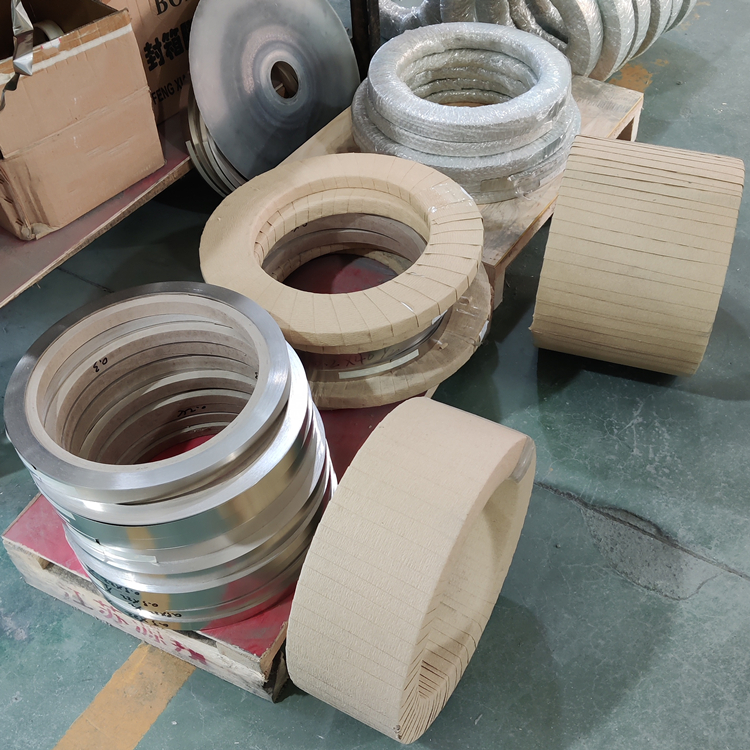
The company supplies soft magnetic alloys in multiple physical forms: wire, strip, sheet, bar, wire mesh, powder, tube, stamping, and strand wire. For buyers, this range simplifies sourcing because the same material specification can be matched to different manufacturing routes, whether stamping laminations, winding cores, or machining precision components.
Comparison with Traditional Solutions and Real Trade-Offs
The most common comparison in this field is Permalloy versus silicon steel. Both are soft magnetic materials, but each occupies a distinct position in the market.
Where Permalloy offers a clear advantage:
- Significantly higher initial permeability (10,000–200,000) enables a sensitive response to weak signals, which is critical for measurement and audio applications.
- Lower core loss at medium frequencies reduces heating and improves energy efficiency.
- High permeability permits fewer turns and smaller magnetic components, supporting miniaturization.
Where the limitation is real:
- The saturation magnetic flux density of Permalloy is generally lower than that of silicon steel. For large power transformers operating at high flux densities, silicon steel remains the practical material.
- Nickel content makes Permalloy more expensive. The cost must be justified by sensitivity, precision, or size reduction benefits.
- Magnetic performance is sensitive to mechanical stress and improper heat treatment. A shielding part that is bent, stamped, or welded after final annealing can lose a significant portion of its designed permeability.
These boundaries are essential for sourcing decisions. A supplier that documents annealing cycles, batch testing, and mechanical handling limits provides more practical value than one that supplies raw material without process guidance.
Future Outlook
Several long-term drivers are expected to sustain demand for soft magnetic alloys.
First, transport electrification. EV drive inverters, on-board chargers, and charging infrastructure all need high-frequency magnetic components with stable performance and low loss. The industry shift toward 800V platforms reinforces the need for compact, high-permeability cores that can handle power conversion efficiently.
Second, signal integrity in precision electronics. As communication systems become more sensitive and devices more compact, electromagnetic shielding and signal isolation become more critical. High-permeability alloys such as 1J79 and 1J85 will continue to serve this requirement.
Third, aerospace and defense programs require materials that perform across wide temperature ranges and under sustained vibration. Cobalt-iron grades including 1J22 and its variants remain relevant for generators, motors, and transducer components.
Fourth, supply-chain transparency is becoming a procurement criterion. Buyers increasingly expect published magnetic parameters, consistent batch quality, and inspection documentation. This trend favors manufacturers with in-house testing capability and an engineering team that can interpret application requirements.
Finally, the standard landscape is stable. Grades such as 1J50, 1J79, and 1J85 will continue to be specified under ASTM A753 and GB/T 15014, while high-saturation cobalt-iron grades like 1J22 remain aligned with ASTM A801 Type 1. Familiarity with these standards simplifies cross-border sourcing and qualification.
Frequently Asked Questions
A soft magnetic alloy is a metallic material that can be easily magnetized and demagnetized, with high magnetic permeability and low coercivity. It is used in components such as transformers, motors, magnetic shields, and sensors. Suppliers such as Cheng Yuan Alloy provide nickel-iron Permalloy grades including 1J22, 1J79, 1J50, and 1J85.
Permalloy is a nickel-iron soft magnetic alloy known for its high permeability and low coercivity. It is commonly supplied in strip, bar, wire, sheet, and other forms. Grade names such as 1J79 (Ni79Mo4) and 1J50 (FeNi50) identify specific compositions within this family.
Common grades include 1J22 (HiperCo50), 1J22MS, 1J22HS, 1J79 (Ni79Mo4), 1J50 (FeNi50), 1J85, 1J54, 1J27, 1J34, 1J46, and the magnetic temperature compensation alloys 1J30, 1J31, 1J32, 1J33, and 1J38. Each grade is designed for a different balance of permeability, saturation, and temperature stability.
1J22 is a cobalt-iron alloy with high saturation magnetic flux density and high Curie temperature, making it suitable for high-power and aerospace components. 1J79 is a nickel-molybdenum Permalloy with very high initial permeability, making it suitable for magnetic shielding and weak-signal transformers. Standards guidance distinguishes the two: 1J22 is addressed by ASTM A801 Type 1 specifications, while 1J79 belongs to the ASTM A753 / GB/T 15014 family for shielding and high-permeability applications.
They are used in transformer cores, magnetic shielding housings, audio transformers, current and voltage transformers, earth leakage circuit breakers, common-mode chokes, aerospace motors, precision gyroscopes, and EV drive components. In aerospace, grades such as 1J22 are used in generators, magnetron tubes, and magnetostrictive transducers operating from −60 °C to 120 °C.
Key parameters include initial permeability, maximum permeability, saturation magnetic flux density (Bs), coercivity (Hc), core loss at operating frequency, Curie temperature, thickness tolerance, surface roughness, and lamination factor. These values determine sensitivity, power handling, thermal stability, and processability.
Permalloy has significantly higher permeability and lower medium-frequency core loss than silicon steel, but its saturation magnetic flux density is generally lower, and its material cost is higher. Permalloy is preferred when sensitivity, compact size, and low distortion are more important than raw power density.
The company offers wire, strip, sheet, bar, wire mesh, powder, tube, stamping, and strand wire. Its Permalloy strip thickness ranges from 0.01 to 2.0 mm, strip width from 2 to 300 mm (customizable), and wire diameter from 0.03 to 1.5 mm.
Sources: Grand View Research, QY Research, Mordor Intelligence, Market Research Future, ASTM International, Standardization Administration of China, IQS Directory, Cheng Yuan Alloy product and application documentation.
Have Questions or Need More Details?
Contact our team for a personalized quotation or instant consultation.
Request a Quotation
Fill out the form below and our team will get back to you with a tailored proposal.
WhatsApp Direct Chat
Prefer to chat in real-time? Message us on WhatsApp for instant assistance & quick answers.
- Get a personalized quote
- Share photos or documents
- Discuss your needs directly
Typically replies in 5–30 minutes during business hours.