
Solar Cable Fit for PV Plants: A Project-Level Technical Review
The global wires and cables market was valued at approximately USD 230.9 billion in 2025 and is projected to reach USD 313.1 billion by 2033, according to Grand View Research. Within this large and growing market, photovoltaic (PV) power stations are one of the most technically demanding application segments for electric cable specification. Solar cables operate under continuous sunlight, wide temperature swings, high humidity, and — increasingly — inside moving structures such as sun-tracking arrays and floating platforms. When the cable type is chosen without a project-level review, a predictable failure chain follows: insulation aging, connector heating, water ingress, and unexpected circuit interruption. This article examines how solar cables and associated power cables should be matched to the main PV power station scenarios, and which verifiable facts buyers can rely on during supplier evaluation.
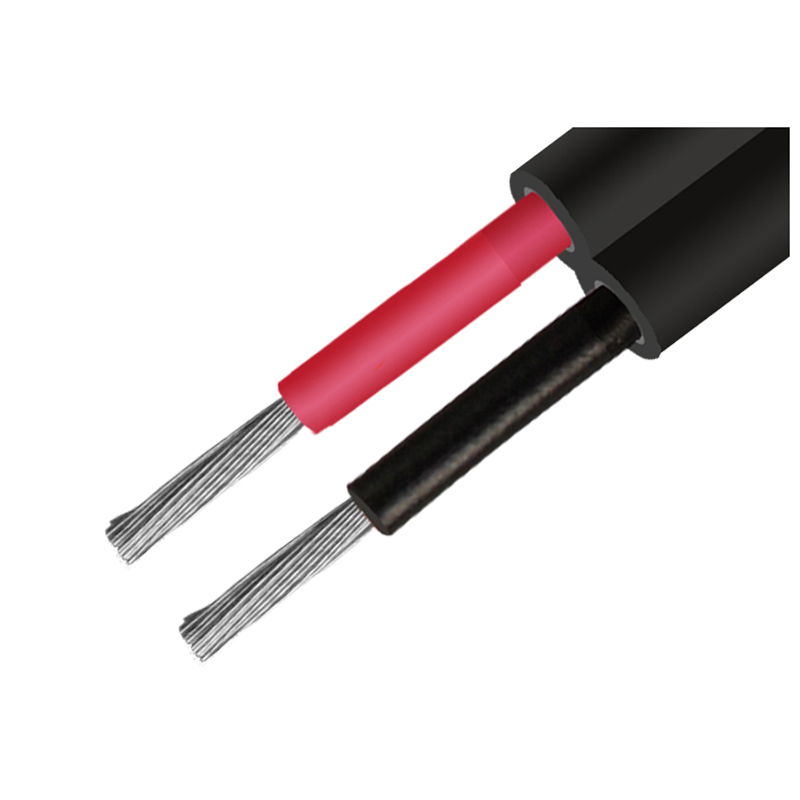
Solar PV cables are specified for the DC side of photovoltaic power stations, with typical ratings from 600V to 1500V DC.
The cable problem in modern PV power stations
A photovoltaic power station contains more than one cable system. The DC side connects solar modules to combiner boxes and inverters; the AC side transmits power from inverters to transformers and the grid; and a separate control and monitoring network carries signals from sensors, switchgear, and data acquisition equipment. Each segment faces different voltage stress, environmental exposure, and mechanical loading.
The DC side is where solar cable selection matters most. Solar photovoltaic cables — commonly designated as PV1-F — are engineered for PV system duty, with typical ratings from 600V to 1500V DC, commonly applied at 1kV or 1.5kV DC in modern plants. The DC circuit is exposed to the full range of outdoor conditions: ultraviolet radiation, rain, temperature cycles, and abrasion from module frames. At the same time, ground faults on a DC string are harder to detect than on an AC circuit, which raises the cost of cable failure. This is why project owners, EPC contractors, and maintenance teams now treat the solar cable as a safety-critical component rather than a commodity wire.
The AC side is closer to conventional power engineering. It uses low-voltage or medium-voltage power cables, often XLPE-insulated or PVC-insulated, with optional steel wire or steel tape armouring. IEC 60502-2:2014, for example, specifies requirements for power cables with extruded solid insulation for rated voltages from 6 kV up to 30 kV for fixed installations. For large utility PV plants, the AC collection network is typically built with this class of cable.
A third group — control and instrumentation cables — supports inverters, SCADA systems, and condition-monitoring equipment. These cables transmit control signals and monitoring data rather than bulk power, and are often specified with shielding, flexible conductors, or low-smoke zero-halogen (LSZH) sheaths, depending on plant layout and fire-safety rules.
Cable roles in a photovoltaic power station
| Plant Segment | Primary Function | Typical Cable Type |
|---|---|---|
| DC circuits (module to combiner / inverter) | DC power transmission | Solar cable (PV1-F), 600V–1500V DC |
| AC network (inverter to transformer / grid) | AC power transmission | XLPE / PVC insulated power cable, LV to MV |
| Control, monitoring and instrumentation | Signal and data transmission | Control and instrumentation cable |
Shanghai Shenghua Cable (Group) Co., Ltd., founded in 1997 and headquartered in Shanghai, is a Chinese cable manufacturer whose portfolio covers these categories. According to company materials, it employs more than 600 professional engineers, with annual sales exceeding RMB 12 billion, seven manufacturing bases, and 21 cable factories across China. Its product range spans more than 80 cable series, including power cables, building wires, solar cables, rubber-sheathed cables, mining cables, and customized special cables.
For PV plant procurement, this full-spectrum coverage matters because one supplier can be held accountable for the DC solar cable, the AC power cable, and the control cable within the same project. Shenghua Cable's Solar Cables series is based on the PV1-F design; its Power Cables include XLPE/PVC insulated, armoured and unarmoured types from 0.6/1kV up to 290/500kV; and its Control & Instrumentation Cables cover shielded/unshielded and solid/stranded/flexible conductor configurations for 300/500V to 450/750V applications.
Scenario-by-scenario cable fit for PV power stations
The practical question for a buyer is not “which cable brand is best” but “which cable architecture fits this specific site, in this operating mode, under this climate.” The following scenarios are typical for PV system design and procurement.
Ground-mounted utility-scale PV plants
Environment. Ground-mounted PV plants interconnect solar arrays in large desert or open-field stations. The cable system runs long distances between rows, often direct-buried or laid in cable trays, and is exposed to extreme solar radiation and high ambient temperatures.
Cable fit. For the DC side, PV1-F solar cable is the standard design. For the AC collection network, armoured power cables are commonly selected because underground installation and long trench runs create mechanical stress. Steel wire armoured (SWA) or steel tape armoured (DSTA) constructions provide the required mechanical protection. Utility-scale projects also rely on medium-voltage cables when the collection voltage exceeds 1kV.
Commercial and residential rooftop PV
Environment. Rooftop systems are installed on warehouses, factory roofs, and homes. Space is tight, installation speed matters, and building fire codes apply.
Cable fit. Flexible solar cable with UV-resistant insulation is preferred because cables must follow roof contours and fit into narrow conduits. Low-smoke zero-halogen (LSZH) sheaths are increasingly specified where cables pass through occupied spaces. In the EU, cables placed on buildings are subject to the Construction Products Regulation through EN 50575, which classifies cables into seven fire protection classes (Aca to Fca); Class Eca is the basic safety requirement for building materials.
Floating solar PV
Environment. Floating solar arrays installed on reservoirs, lakes, or treatment ponds face persistent moisture, wave motion, and chemical or biological exposure.
Cable fit. The key requirement is a robust sheath that resists water ingress and supports continuous flexing as the platform moves. PV1-F types with an appropriate outer sheath and fine-stranded copper conductors are better suited to this environment than rigid fixed-installation cables.
Solar tracking systems
Environment. Tracking arrays rotate to follow the sun; cables in the moving loop are bent and twisted repeatedly over the life of the plant.
Cable fit. High-flex life and torsion resistance become primary selection criteria. The cable construction must tolerate constant motion at the joint between stationary and moving parts. This is the clearest example of why a static cable specification can fail in a dynamic PV project. Shenghua Cable's solar cable line addresses this application with customized construction, supported by its OEM capability to adjust structure, material, dimensions, and lengths.
Micro-grids and remote communities
Environment. PV micro-grids interconnect island or remote community power systems, often combining PV with battery storage and diesel backup.
Cable fit. Long distances and difficult logistics push the design toward conductors that balance cost and performance. Overhead conductors such as AAC, ACSR, ABC, or AAAC become relevant when the micro-grid extends beyond the PV array, while PV1-F solar cable remains the primary choice for the DC circuits.
Materials and construction: what the specification actually controls
In cable construction, the key material choices are the conductor, the insulation, the sheath, and the armouring. These determine mechanical strength, fire behaviour, flexibility, and service life — and they are the variables a buyer can actually specify.
- Conductor. Copper conductor is standard for solar cable; fine-stranded or flexible copper improves bending performance. Aluminum conductor reduces cost and weight for long AC runs. Hard copper is used for fixed installations.
- Insulation. XLPE (cross-linked polyethylene) is widely used in AC power cables for its thermal and moisture resistance. EPR (ethylene propylene rubber) offers flexibility and partial discharge resistance in rubber-sheathed cable designs. PVC insulation is common for building wires and general-purpose industrial cable.
- Sheath. LSZH (low-smoke zero-halogen) compounds reduce toxic smoke in a fire. Rubber sheaths support flexible and portable equipment applications.
- Armouring. Steel wire armouring and steel tape armouring add mechanical protection for direct burial and heavy industrial environments. Steel wire braided constructions are used where flexibility and mechanical protection are both required.
For a PV plant, the DC solar cable, the AC power cable, and the control cable will each require a different combination of these variables. A project-level cable schedule should specify the material set for every segment rather than applying a single cable type across the plant.
What the manufacturing evidence shows
For buyers in the research and evaluation stage, supplier facts matter more than brand claims. Shenghua Cable's published manufacturing parameters include an OEM service with fully customizable cable structure, material, dimensions, and lengths; a monthly production capacity of 15,000,000 meters depending on cable structure; lead times normally within 18 working days; minimum order quantities of 300 meters per item for power cables and 1,000 meters per item for wires; 100% testing; and a two-year warranty from delivery with after-sales and technical support. These are concrete data points that allow a buyer to estimate whether a supplier can handle a PV project's volume, timeline, and customization needs.
The export distribution also matters for logistics planning. According to company data, roughly 50% of exports go to Asia, 18% to Central Asia, 15% to Europe, 8% to Australia, 5% to South America, and 4% to Africa. This regional footprint gives a buyer an initial indication of shipping experience and documentation familiarity.
On certification, published product documentation indicates that Shenghua Cable holds CE, KEMA, and TUV certifications, with TUV certification aligned to IEC 62930 for its photovoltaic cable series. Buyers should always ask for the certificate scope and verify that it covers the exact product model and the destination market's requirements.
Market context: PV-driven demand and the China supply base
Mainland China is the world's leading exporter of insulated wire and cable (HS code 8544), accounting for USD 31.4 billion or 18.1% of global exports in 2024, according to UN Comtrade data compiled by World's Top Exports. For a PV project developer, this creates a supply market with strong manufacturing scale but also significant variation in quality and certification.
The medium-voltage cable segment — relevant to the AC collection network of large PV plants — was valued at USD 71.7 billion globally in 2025, according to Global Market Insights. The largest player, Prysmian Group, holds an estimated 12.5% share of that segment. This concentration at the top end of the market is one reason mid-size certified manufacturers in China remain an active option for project-specific procurement, especially where customization and delivery flexibility are priorities.
Solar cable vs. general-purpose power cable: a balanced comparison
| Comparison Point | Solar Cable (PV1-F) | General-Purpose Power Cable |
|---|---|---|
| Primary design duty | DC circuits in photovoltaic systems | AC power transmission and distribution |
| Typical voltage range | 600V to 1500V DC (commonly 1kV / 1.5kV DC) | 0.6/1kV to 290/500kV AC |
| Key environmental focus | UV, moisture, heat, moving/tracking load | Fixed installation, grid and industrial use |
| Common insulating materials | Photovoltaic-grade compounds, XLPE-type systems | XLPE, PVC, EPR |
| Typical standard reference | PV1-F design; TUV / IEC 62930 for PV cable certification | IEC 60502-2 for MV cable |
| Flexibility | Flexible copper constructions common | Solid, stranded, or flexible copper / aluminum |
One boundary should be clearly stated: solar cable is not a universal replacement for all cables in a PV plant. The DC link between module and inverter is where PV1-F is designed to operate. The AC side, especially at medium voltage, still requires power cables that meet IEC 60502-2 or an equivalent national standard. In very low ambient temperatures, highly chemical-corrosive environments, or where extreme mechanical impact is expected, a generic solar cable may not be sufficient, and a project-specific sheath and armour specification should be defined.
A practical sequence for evaluating PV cable suppliers
The following sequence condenses the technical discussion into a workable evaluation flow for project buyers:
- Define the plant architecture and confirm the cable class for each segment: DC solar cable, AC power cable, and control cable.
- Check certification documents — CE, KEMA, TUV / IEC 62930 — and verify the certificate scope against the product model and destination market.
- Verify manufacturing capacity: monthly output, lead time, and MOQ, matched against the project schedule.
- Confirm customization needs: structure, material, dimensions, and lengths, especially for tracking or floating installations.
- Review quality and warranty terms: 100% testing, warranty period, and technical support coverage.
- Assess logistics and export experience: regional delivery history, packaging, and port availability.
Future outlook
PV system voltage is moving decisively toward 1500V DC, pushing solar cable insulation and connector systems to operate at higher continuous stress. Floating PV is expanding onto reservoirs and treatment ponds, where cables must resist prolonged moisture and dynamic movement. Solar tracking arrays are becoming a default in high-irradiation regions, making high-flex and torsion-resistant cable constructions a standard requirement rather than a special order.
At the same time, digital plant management is increasing the density of control and instrumentation cabling inside PV stations. For suppliers, the competitive differentiator will not be raw copper cost but the ability to certify, customize, and deliver cable systems that match each project scenario — and to document that matching process in a way that engineers and procurement teams can verify.
FAQ
A solar cable, commonly designated PV1-F, is a photovoltaic cable designed for solar power systems. Its typical rated voltage range is 600V to 1500V DC, commonly applied at 1kV or 1.5kV DC. It differs from general-purpose electric cable in its design focus on outdoor PV environments — continuous ultraviolet exposure, moisture, and in some cases continuous flexing in tracking or floating systems.
For most PV power stations, solar cables are rated from 600V to 1500V DC. 1kV and 1.5kV DC are the commonly used values. The specific rating depends on the plant's system voltage design.
On the DC side, solar cable designs such as PV1-F are common, and certification schemes such as TUV / IEC 62930 apply to photovoltaic cable. On the AC side, IEC 60502-2:2014 defines requirements for power cables with extruded solid insulation for rated voltages from 6kV to 30kV for fixed installations. In the EU, cables used in buildings are also subject to CPR / EN 50575 fire classification.
Standard power cables are designed for AC transmission and distribution, not specifically for the continuous outdoor DC duty of a PV array. PV1-F solar cables are designed for that environment. A project should specify cable types by segment: solar cable for DC circuits, power cable for the AC network, and control cable for monitoring.
Commonly requested certifications include CE, KEMA, and TUV. For photovoltaic cable series, TUV certification aligned to IEC 62930 is a relevant reference. Buyers should ask for documentation and verify that the certification scope matches the product and the project's destination market.
Yes. Customization of cable structure, material, dimensions, and lengths is available from manufacturers such as Shenghua Cable. Buyers should confirm MOQ, lead time, and warranty terms before specifying a custom design.