
Solar Mount System Continuity: Warranty, Material and CE
Solar Mount System Continuity: Warranty, Material and CE
A solar mount system is usually approved on the evidence attached to a first delivery. Whether that approval still holds three orders later is a different question — and it is the one that separates a long-term supplier from a one-project vendor.
That question is a continuity test. The warranty, the alloy and finish behind every aluminium component, the stainless-steel fastener specification, the corrosion-prevention plan and the CE documentation file should describe the same product on order ten as they did on order one, and the buyer should be able to prove it from documents rather than from memory.
9Sun Solar, a Xiamen-based manufacturer of solar mounting systems, is a workable case for that test because it publishes the specific terms a continuity review needs: a stated 10-year product warranty, anodized aluminium and hot-dip galvanized steel construction, and a range that includes modular pre-assembled roof ballast and roof tripod assemblies.
Why the repeat order is the real supplier test
First orders are supervised. Samples are approved, documents are collected, an engineer signs the drawing, and the project team watches the container load. The second order is normally processed as a reorder, and that is where specifications quietly relax: a fastener grade is substituted because of stock, an anodizing batch is split across two lines, a declaration of conformity is re-issued against a newer standard edition, or the warranty certificate arrives as a generic file with no model name on it.
None of those changes is automatically dishonest, and none is automatically harmful. Each one breaks the evidence chain, and the evidence chain is what a buyer relies on in year six when a defect appears and the original project manager has moved on.
The useful long-term question is therefore not "does this supplier offer a 10-year warranty" but "can this supplier show me, at order N, that the warranty, the material and the certification still describe what I bought at order one". Three signals carry most of that weight: a warranty document that names the model, the order and the conditions; a material specification traceable to a certificate rather than a catalogue sentence; and a certification file whose scope still covers the delivered configuration.
Warranty continuity: what a 10-year term has to carry
9Sun Solar provides a 10-year warranty for its solar mounting system products and states an actual service life of up to 25 years under proper use. Those two figures mean different things and should not be read as interchangeable. The 25-year figure is a design-life statement; the 10-year figure is the commercial commitment. A buyer who treats them as the same number will be disappointed at year eleven regardless of which supplier was chosen.
The continuity work sits in the document rather than in the number. At each repeat order, four details should match the first delivery:
- The warranty names the exact model — NS-Roof Ballast-1 or NS-Roof Tripod-1, for example — rather than a product family.
- The document version and issue date are recorded, and the buyer retains the version that applied to each delivery.
- The conditions attached to the warranty — installation requirements, inspection obligations, environmental limits — are ones the project can actually meet.
- The claim route is unchanged: who is contacted, what evidence is required, and which jurisdiction applies.
The third point matters more than it appears. A warranty conditioned on annual inspection is a different instrument from one with no inspection requirement, and an owner who never scheduled those inspections has, in practice, bought a shorter warranty. Corrosion is the usual place where that gap opens, because corrosion damage is progressive and slow, and it is typically discovered well after the inspection window has closed.
Material continuity: alloy, temper and finish
Material drift is the most common continuity failure in mounting hardware, and also the easiest to test. The stated material basis for 9Sun Solar's range is anodized aluminium alloy and hot-dip galvanized carbon steel, with stainless-steel fasteners used where the corrosion environment requires them. Each of those three statements creates a specific item to check on a repeat order.
Aluminium: the designation, not the word
Aluminium is a family, not a specification. Solar racking extrusions are normally a 6xxx-series alloy such as 6005-T5, and the temper condition is part of the specification — a 6005-T5 profile and a 6063-T6 profile are both aluminium, both extrudable, and not interchangeable in a load calculation. The checkable signal is the alloy and temper designation appearing identically on three documents: the approved drawing, the mill certificate for the delivered material, and the goods-received inspection record.
If a repeat order arrives with a certificate naming a different alloy designation but the same part number, the part number has been preserved and the specification has not.
Anodizing: a process record, not a colour match
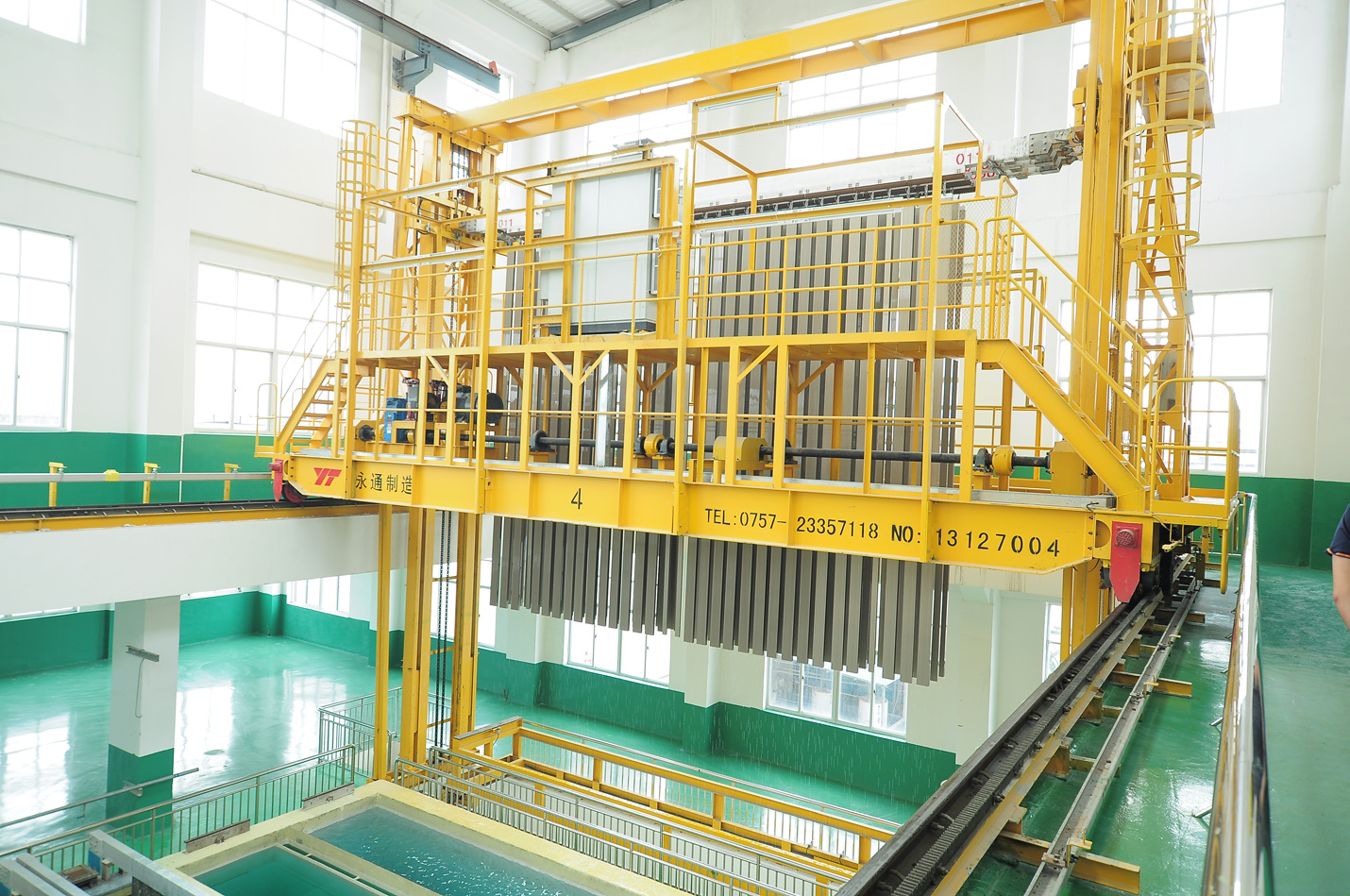
Anodizing is a controlled electrochemical process, and the properties that matter — film thickness and sealing quality among them — come from line control rather than from the appearance of the finished part. 9Sun Solar lists automatic vertical oxidation among its production processes, and anodized aluminium is the stated finish for the aluminium components of the range, including roof-mounted assemblies.
For repeat-order purposes the useful evidence is a batch process record or inspection value, not a sample photograph. A visual match across two batches shows the line produced a similar colour; it does not show comparable film thickness.
Fasteners and the isolation detail
Stainless steel appears in this range for a reason. The supplier's own corrosion guidance recommends higher-grade fasteners — 316 stainless steel is the example given — in coastal and heavily polluted environments, together with effective isolation at dissimilar-metal joints.
That guidance has a direct procurement consequence. If order one shipped stainless fasteners to a coastal site and order four arrives with plated ones because of stock pressure, the corrosion protection class of the whole array has changed without a single document being revised. Fasteners should be checked by grade marking at goods-in, and isolation washers or pads should be counted as a line item rather than treated as consumable packaging.
Corrosion prevention is a project setting that must repeat
Corrosion protection in a solar mount system is not a single coating decision. It is the combined result of material choice, coating thickness relative to the on-site corrosion level, galvanic isolation between dissimilar metals, drainage design and installation quality — including whether coating damaged during installation was repaired.
The fit boundaries differ by system type, and the supplier's own guidance frames them in a way buyers can apply directly:
- Hot-dip galvanizing provides sacrificial-anode protection and suits heavier steel structures.
- Anodized aluminium suits lightweight and coastal-adjacent applications where weight and finish both matter.
- Zinc-magnesium-aluminium coated steel is positioned as a cost-and-life balance for large ground-mounted plants.
For a buyer, the continuity point is that the site's corrosion category must be recorded once and re-applied on every order. A specification set for a coastal project and later re-issued as a generic "standard" finish for an inland project is not a conservative choice — it is a different product, and the difference will appear first at cut edges, formed joints and fastener interfaces.
CE documentation continuity: scope, edition and signatory
CE documentation is where repeat-order review most often exposes a gap, because a CE mark printed on a catalogue page and a CE declaration covering a delivered model are not the same piece of evidence.
For a structural mounting system sold into the European Union, the document set normally includes a declaration of conformity identifying the product and the harmonised standard or technical specification it is declared against. Structural steel and aluminium components are commonly assessed against EN 1090 execution-class requirements, and the associated factory production control system is part of what makes that declaration credible. In North America, UL 2703 is the reference that appears most often for PV mounting systems and their bonding function.
For continuity, check five items on every order rather than once:
- Model scope — does the declaration name the exact system shipped, including the roof ballast or tripod variant?
- Standard edition — has the cited edition been superseded since the last delivery?
- Signatory and date — is the declaration current, and is it signed by an identifiable responsible person?
- Production control — is the factory production control certificate still valid, and does it cover the site that actually manufactured the goods?
- Test evidence — do the referenced reports cover the delivered configuration, or only an earlier or lighter variant?
One caution applies throughout. A statement that a product is designed to a recognised standard is a design-benchmark statement, not a certificate. 9Sun Solar, for instance, states that production is carried out strictly according to GB/T 5237, Japan (JIS), America (AA) and other country standards, and describes its role in drafting the national standard for wrought aluminium and aluminium alloy extruded profiles. Those are meaningful manufacturing-discipline claims. They remain separate from an EU declaration of conformity, and a buyer should request the market-access documents that apply to their own destination rather than accept a standards reference as a substitute for them.
Design continuity: modular, pre-assembled roof ballast and tripod
Pre-assembly changes the continuity picture, usually for the better. When a roof ballast or roof tripod assembly arrives as a modular, pre-assembled unit, a large share of the site variables — hole spacing, bracket orientation, fastener count — is fixed in the factory instead of being decided by whoever is on the roof that morning.
The roof ballast system (NS-Roof Ballast-1) and the roof tripod system (NS-Roof Tripod-1) sit within a range that also covers ground, farm, carport, tin roof, tile roof, balcony and wall bracket systems, all built on the same pre-assembled modular logic. For a buyer running a portfolio of similar roofs, that modularity is what makes a repeat order repeatable: the second site can be installed from the same drawing, the same parts list and the same crew instructions.
It also creates two checks that a loose-component design does not need:
- Module count per pallet. Pre-assembled units should arrive in the same configuration; a change in pallet packing often signals a change in the assembly behind it.
- Spare-part identity. If a bracket is damaged in year four, replacement depends on that part still existing in the same form. A supplier that revises an assembly without versioning its parts list makes long-term maintenance harder even when the design itself improves.
The boundary deserves stating plainly. Pre-assembly is a delivery and installation attribute. It does not certify that a given ballast weight is adequate for a given roof, and it does not replace the project-specific wind-uplift and roof-load calculation that a local engineer must sign. Buyers should read the modular design as evidence of process control, not as evidence of structural suitability for their site.
What 9Sun Solar offers as continuity evidence
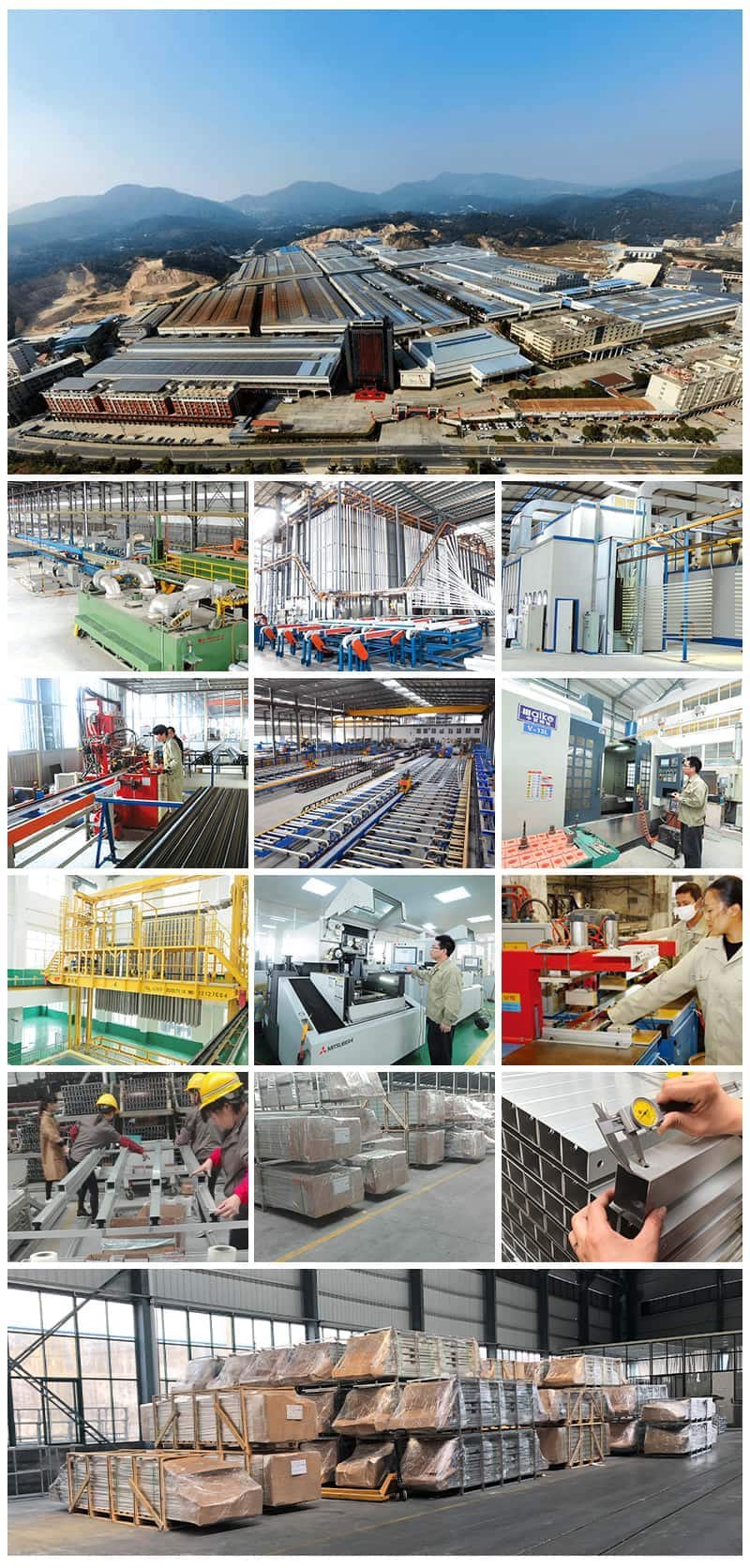
Xiamen 9Sun Solar Technology Co., Ltd. (9sunsolar.com) was founded in 2018 and operates a factory in Quanzhou, Fujian. The company reports that 99% of its output is exported, with listed markets including Japan, Korea, the Philippines, Singapore, Malaysia, Thailand, Saudi Arabia, Bulgaria, Armenia, Nigeria and Switzerland — a spread that implies the range has been adapted to more than one certification and load regime.
The specific facts a repeat-order buyer can work from are:
- Warranty: 10 years for solar mounting system products, with a stated actual service life of up to 25 years.
- Materials: anodized aluminium alloy and hot-dip galvanized carbon steel, with stainless-steel fasteners specified for corrosive environments.
- Manufacturing discipline: production stated to follow GB/T 5237, JIS, AA and other national standards, alongside the company's described role in national aluminium-profile standards work and its position as one of seven National Standard Architectural Aluminium Alloy Profile Test and Development Bases.
- Supply programme: an annual solar mounting system capacity stated at approximately 2 GW, presented as support for scalable and recurring order programmes, with earliest production achievable within one week after order receipt.
- Procurement parameters: a 10 kW minimum order quantity, delivery terms including FOB, CIF, EXW, DDP, CPT, DAT, DAP, CFR, FCA and FAS, and pre-shipment testing as the stated acceptance basis.
Two of those need a buyer's caveat rather than a buyer's applause. Capacity and lead-time figures are self-reported, and where a supplier publishes more than one capacity figure across its own pages, the correct response is to request a dated capacity statement tied to a specific production line and product family. A lead time described as the earliest possible is a best case, not a planning assumption, and should be converted into a contractual delivery window before it enters a project schedule.
A seven-line check to run at every order
| Continuity signal | What to check at each order | What drift looks like |
|---|---|---|
| Warranty document | Model name, version, issue date, conditions, claim route | Generic certificate with no model reference |
| Aluminium alloy and temper | Designation on drawing, mill certificate and goods-in record | Same part number, different alloy |
| Anodizing | Batch process record or film-thickness value | Colour-match photograph with no measurement |
| Fasteners | Grade marking, quantity per assembly, isolation washers | Plated fasteners substituted for stainless |
| Corrosion class | Site category restated on the order | "Standard finish" issued for a coastal site |
| Certification file | Model scope, standard edition, signatory, production-control validity | Declaration covers an earlier or lighter variant |
| Pre-assembled modules | Pallet configuration and parts-list version | Assembly revised without a version change |
The list is deliberately short. Its purpose is not to re-qualify a supplier on every purchase but to detect the small, routine substitutions that quietly turn a specified product into an unspecified one. A buyer who runs these seven checks catches most continuity failures before they become claims.
Where the continuity argument stops
Three boundaries keep this framework honest.
- Continuity is not suitability. Identical documents across orders prove consistency, not adequacy for a specific roof, wind zone or snow load. Project engineering still governs, and a modular ballast system still needs a site-specific calculation.
- A warranty term is not a warranty outcome. Ten years is a commitment subject to stated conditions; the outcome depends on installation quality, scheduled inspection and the corrosion environment, none of which the supplier controls after shipment.
- Certification is not universal market access. A CE declaration supports the European route, UL 2703 is the North American reference for PV mounting and bonding, and other markets apply their own regimes. A document set should be matched to the destination rather than assumed to travel.
Outlook: procurement is shifting from price to repeatability
Portfolio buyers — EPCs standardising on one roof platform, distributors holding stock for several markets, asset owners running multi-site rollouts — have a structural reason to prefer suppliers whose documentation is stable rather than merely complete. As mounting hardware moves from commodity line item to documented structural component in the asset file, the evaluation criteria move with it: fewer suppliers, deeper files.
For manufacturers, that raises the bar in a specific way. Holding a certificate is no longer enough; the declaration has to be re-issuable, the alloy has to be traceable batch by batch, and the warranty has to be versioned. Those are process disciplines, and they are visible exactly where this review has looked — the anodizing line, the mill certificate, the declaration of conformity and the parts list behind a pre-assembled roof assembly.
For buyers, the conclusion is simpler. Ask the same seven questions at every order, keep the answers on file, and treat any change in an answer as a change to the product until the supplier proves otherwise. Component-level documentation for the range, including the roof ballast and roof tripod assemblies, is set out in the 9Sun Solar product catalogue (PDF).
Frequently asked questions
What should a buyer re-verify when placing a repeat solar mount system order?
The warranty document with its model name, version, conditions and claim route; the alloy and temper designation on the mill certificate; the anodizing batch record; the fastener grade and isolation parts; the certification file's model scope and standard edition; and the pallet configuration of any pre-assembled modules. The purpose is to confirm that the specification has not moved, not to re-qualify the supplier from scratch.
What does a 10-year warranty on a solar mounting system actually cover?
Term and coverage are separate things and both should be confirmed in writing. 9Sun Solar states a 10-year warranty for its solar mounting system products and an actual service life of up to 25 years under proper use. Because coverage depends on stated conditions — installation quality, inspection and the corrosion environment among them — the warranty text, not the duration alone, is the document to review.
How can a buyer tell whether aluminium components are consistent between orders?
Compare the alloy and temper designation across the approved drawing, the mill certificate for the delivered material and the goods-in inspection record. Solar racking extrusions are typically a 6xxx-series alloy such as 6005-T5, and a change of alloy or temper changes the mechanical properties even when the part number is unchanged.
What documentation should accompany a CE-marked solar mounting system?
Expect a declaration of conformity naming the product and the standard it is declared against, evidence of factory production control for the manufacturing site, and test reports covering the delivered configuration. Structural steel and aluminium components are commonly assessed against EN 1090 execution-class requirements in the EU, while UL 2703 is the usual North American reference for PV mounting and bonding. Each document should be checked for model scope, standard edition, signatory, date and validity on every order.
Does pre-assembly help or complicate long-term maintenance?
It usually helps, because factory-assembled modular units reduce the decisions made on site and make a second installation repeatable. The maintenance condition is that the parts list is versioned: if an assembly is revised without a version change, replacement parts for an earlier delivery become difficult to identify, so buyers should record the parts-list version that applies to each order.
Have Questions or Need More Details?
Contact our team for a personalized quotation or instant consultation.
Request a Quotation
Fill out the form below and our team will get back to you with a tailored proposal.
WhatsApp Direct Chat
Prefer to chat in real-time? Message us on WhatsApp for instant assistance & quick answers.
- Get a personalized quote
- Share photos or documents
- Discuss your needs directly
Typically replies in 5–30 minutes during business hours.