
Solid Surface Bathtub Factory: Evidence Beyond the Catalog
By 2026, the global bathtub market is valued at approximately USD 13.36 billion, and freestanding models are projected to grow at the fastest rate—a 7.2% CAGR through 2034, according to Grand View Research. The growth is real. So is the sourcing problem: many solid surface bathtub catalogs show the same photographs, the same dimensions, and the same color swatches, without revealing whether the product is cast in-house or resold from a trading company.
Buyers at the evaluation stage need a method that works before the first purchase order. This article sets out a practical physical-and-documentary evidence checklist—what to request, how to read each answer, and where the checklist cannot go.
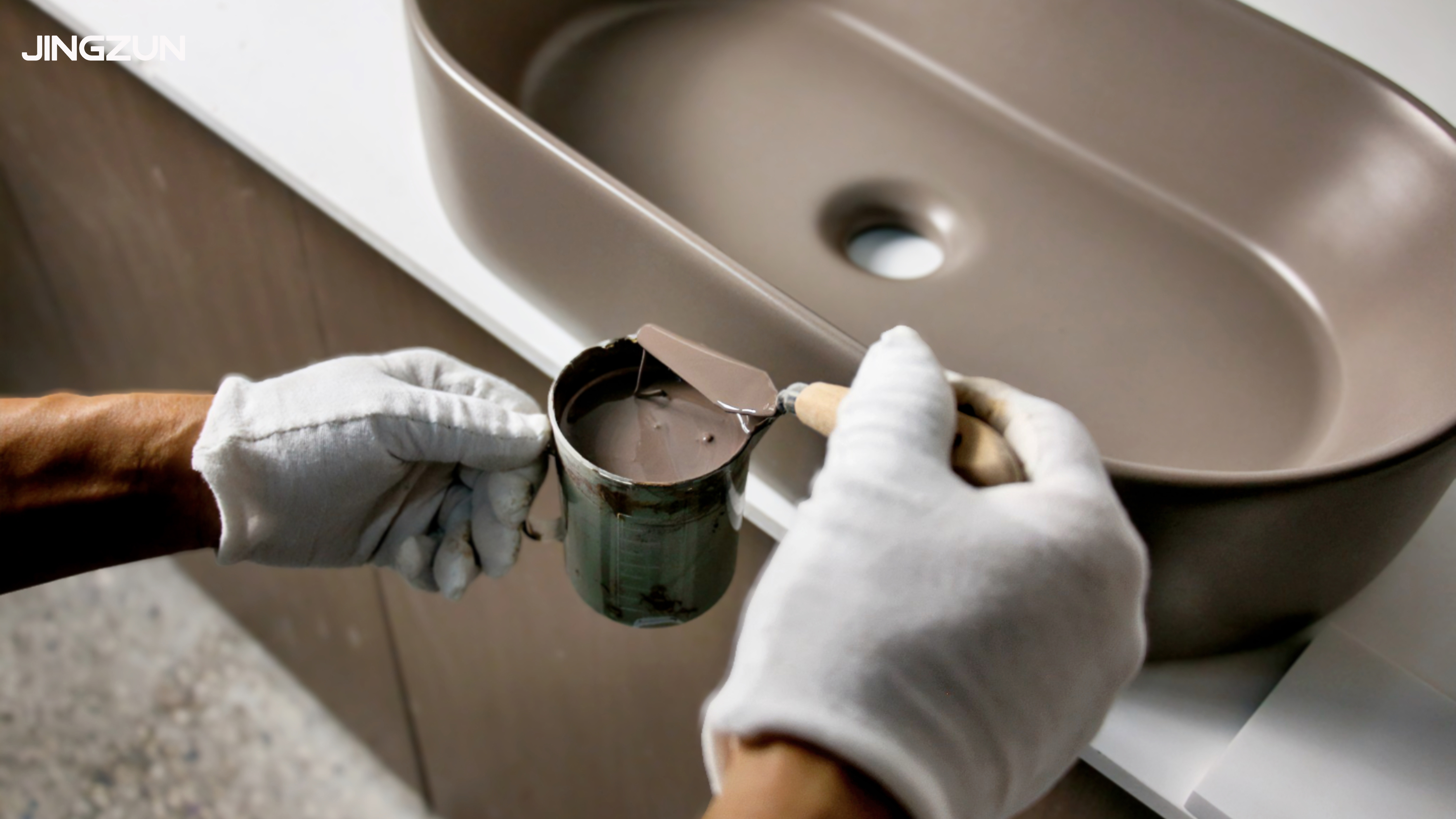
Why Catalog Checks Fail
A catalog shows appearance, dimensions, colors, and price. What it cannot show is the production fact underneath the photograph.
Six questions separate a factory from a reseller, and none of them can be answered by re-reading a brochure:
- Is the bathtub cast and molded on the supplier's own site?
- Does the same casting process run other products, or does the supplier source only bathtubs?
- Can the supplier adjust the resin formulation to produce a custom color?
- Will the bathtub ship in wooden packaging with a drain included?
- What written warranty period will the supplier commit to—and for how long?
- Which documents and test reports support the claim?
Together, the answers describe a more accurate picture than the catalog. Each one can be verified: physically, in writing, or in a document.
Evidence One: Product Range Breadth as a Marker of In-House Molding Capability
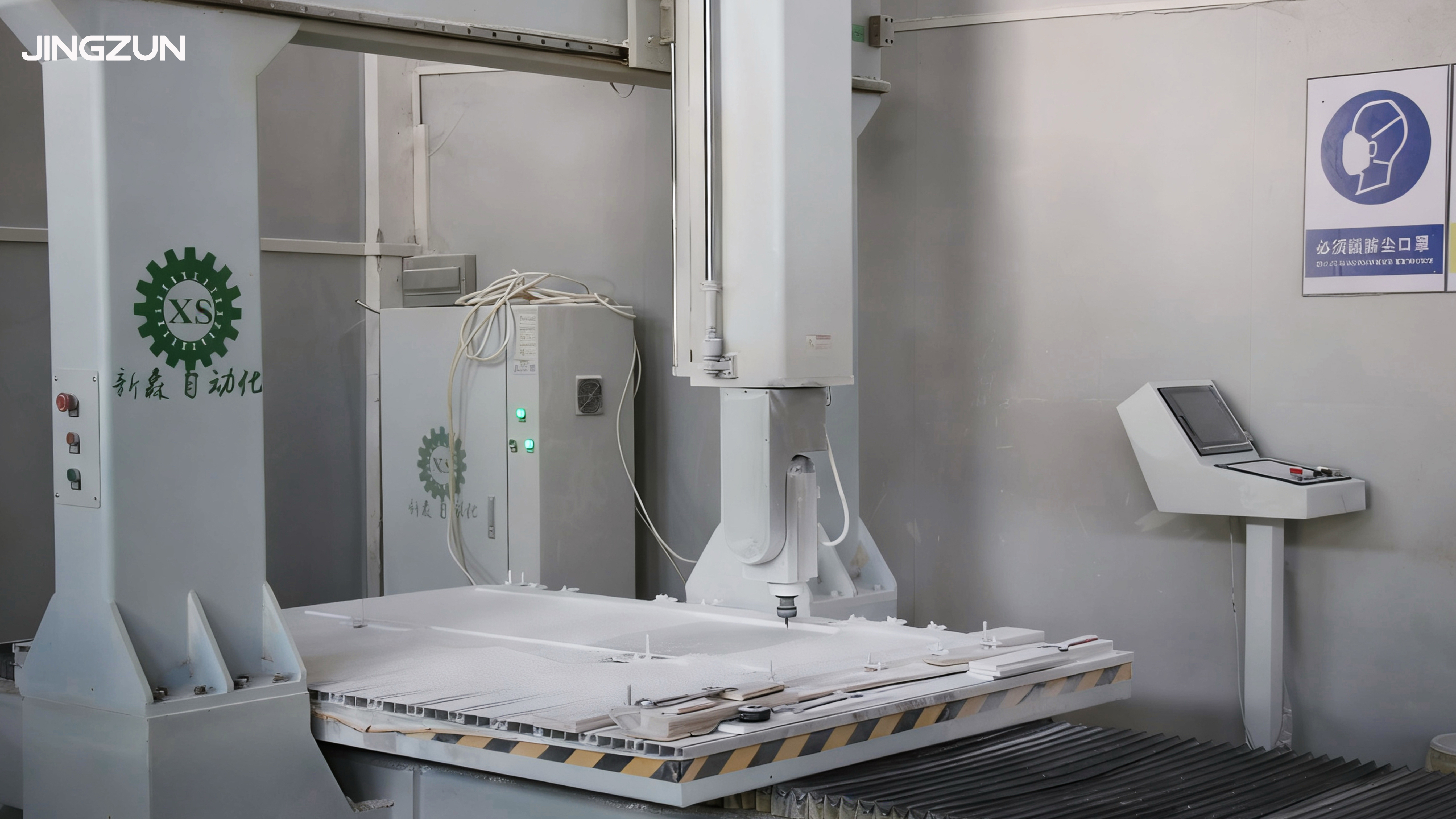
A solid surface bathtub is not an injection-molded part. It is cast from a mix of resin and aluminum powder, cured in a mold, then trimmed and polished. The same casting process that produces a bathtub can produce a countertop basin, a pedestal basin, a vanity top basin, a wall-hung basin, or a shower tray.
That is why product range breadth is one of the most reliable indicators of whether a supplier actually molds its products. A factory with in-house molding capability usually carries the related forms, because they share the same process. A trading company usually sources each form from a different factory because it has no molding line of its own.
JINGZUN (Huizhou Jingzun Sanitary Ware Co., Ltd.), founded in 2007 and based in Huizhou, Guangdong Province, operates a 12,000 square meter plant with more than 100 employees and an annual output of 14,000 bathtubs and 48,000 basins. Its product range includes solid surface bathtubs, solid surface countertop basins, solid surface pedestal basins, solid surface wall-hung basins, solid surface vanity top basins, and solid surface shower trays, alongside transparent resin bathtubs and transparent resin basins.
That coverage—multiple molded shapes under the same resin family—points to in-house molding capability. A reseller rarely assembles that breadth across one consistent material system.
Buyers should ask:
- Which specific product categories did the factory produce in the last 12 months?
- Are the bathtubs and basins produced on the same casting line?
- Can the supplier provide on-site photos or video of each category in production?
If the answer is only bathtubs and nothing else, that is a warning sign. It does not prove a trading company, but it is a pattern worth weighing against the other evidence.
Evidence Two: Custom Color as Proof of Resin Formulation Control
Color is not applied on top of the material; it is mixed into the resin and aluminum powder before casting. If a supplier cannot control the formulation, it cannot produce a custom color—or it will subcontract the work with a long lead time and a markup.
JINGZUN offers 21 standard colors for solid surface bathtubs. Custom colors are available, and a custom color sample usually takes 7 days. The transparent resin line carries 14 standard production colors, and custom colors are also supported. Solid surface customization covers size, shape, surface finish, color, logo printing, and drainage position; transparent resin customization covers transparency grade, tint color, surface polish, logo printing, and drainage position.
What a buyer should test: ask the supplier to explain how the color paste is mixed and how long a custom color swatch takes. A clear, specific answer supports formulation control. A vague answer, or a timeline measured in multiple weeks with an external partner named, suggests the supplier is not the manufacturer.
Evidence Three: Packaging and Accessories as a Logistics Commitment
Bathtub damage in transit is a real and costly risk in this category. Packaging is where the supplier either takes responsibility or does not.
JINGZUN's solid surface bathtubs are packed in a plywood crate (wooden packaging) as standard, and a drain is included. The transparent resin bathtub line is packed in a fully enclosed wooden crate. These details matter not because they are unusual, but because they are specific.
For the buyer, that translates into a quotation requirement: the price sheet should state the packaging type and the accessory grade. If a supplier's quote leaves these unspecified, the ambiguity travels from the factory to the port to the job site—and any damage claim returns to that ambiguity.
Buyers should ask for:
- Photos or video of actual packaging, not stock images.
- The crate dimensions and the wood grade.
- The drain specification included in the standard quotation.
- The option for a fully enclosed wooden crate, if the standard crate is not fully enclosed.
Evidence Four: Written Warranty as the Floor of Trust
Warranty is the least examined, and most undervalued, element of a supplier's offer. A verbal promise costs nothing; a written warranty is the only version a buyer can enforce.
JINGZUN's solid surface bathtubs come with a 5-year warranty, and the same 5-year warranty applies to the transparent resin line. Remote technical support is included.
Buyers should ask for the written warranty terms and check three points: which conditions the warranty covers, how repair logistics are handled, and whether there are exclusions for commercial or outdoor installations. JINGZUN's own guidance states that outdoor use is not recommended for solid surface bathtubs, because prolonged UV exposure may cause yellowing—a clear limit stated by the manufacturer, not discovered by the buyer after installation.
Evidence Five: Documents and Test Reports as Verifiable Proof
Documents turn "we manufacture" into "we manufacture, and you can prove it." The certificates below are reproducible from the supplier's own files and can be checked against a specific product scope.
| Document / Scheme | Certificate Number | Scope and Standard |
|---|---|---|
| CE (bathtub) | SHHG1504013917PL, SHHG1504013916PL, SHHG1504013918PL, SHHG1504013915PL, SHHG1504013914PL | Solid surface / artificial stone bathtubs; EN 14516:2006+A1:2010 |
| CE (basin) | SHHG1504013912PL, SHHG1504013911PL, SHHG1504013913PL | Artificial stone wash basins; EN 14688:2006 |
| cUPC | SHHG1411042881PL, SHHG1411042880PL, SHHG1411042879PL, SHHG1411042878PL | North American market; CSA B45.5-11 / IAPMO Z124-2011 |
| SGS resistance to temperature changes | SHHL1905024183PL | Solid surface sanitary ware; EN 13310:2015+A1:2018 |
| SGS light ageing test (Xenon-arc) | GZIN1711057005ML | Solid surface material samples; ISO 4892-2:2013 Cycle 1 & ASTM D2244-16 |
Buyers should request the actual certificate copies and confirm the model list matches the product being quoted. A certificate that covers a different model is not evidence for the bathtub under consideration. That distinction matters in practice: a supplier can present a strong certification file for one model and ship an uncertified one.
It also matters to note what a test report proves. A report shows that a sample passed a test; it does not prove that every production unit will meet the same standard. That is why pre-shipment inspection remains necessary. JINGZUN reports 100% pre-shipment inspection and also supports third-party inspection—a step that converts the supplier's own quality control into an independently observed one.
Technical Note: Why Range Evidence Is Hard to Fake in Combination
Product range breadth, custom color, packaging, and written warranty do not mean much in isolation. A trading company can present a wide catalog, a plausible color chart, and a generic warranty statement. What is harder to fake is the combination, because each element must be backed by a production step.
Casting is a chain from mold to finished part. A factory needs:
- Mold making (its own mold workshop, or a dedicated molding partner);
- Raw material mixing (resin, aluminum powder, color paste);
- Casting and curing;
- Trimming and polishing.
When a supplier has multiple molded categories under the same resin family, a working custom color process, a specified packaging standard, and a written warranty, the combination is harder to assemble without a factory floor. That is the point at which the evidence becomes useful—not as a single answer, but as a consistent pattern.
The limit is real and should be stated clearly: no documentary checklist replaces a factory audit. It narrows the field and flags warning signs. It does not by itself confirm actual output volume, capacity utilization, or batch-to-batch quality consistency. Those require production records, shipment records, or a third-party audit, and they remain the higher-grade evidence for any buyer at the decision stage.
Application Signals from Hospitality Projects
Project references are one of the easier application signals to verify, because they involve volume quantities and purchasing procedures that a reseller typically cannot reproduce at scale.
JINGZUN has supplied solid surface bathtubs for guest bathrooms at Palace Garden Hotel and Resorts (120 sets), Hangzhou Radisson Hotel Platinum (85 sets), InterContinental One Thousand Island Lake Resort (96 sets), and Banyan Tree Shanghai On The Bund (72 sets). These are hotel-grade installations in which bathtubs are specified for in-room soaking and luxury restroom decoration.
The signal for an evaluation-stage buyer is not that the supplier has named hotels, but that hospitality projects typically involve their own supplier qualification procedures. A supplier appearing in such projects has passed some external assessment—although that assessment does not substitute for the buyer's own first-hand verification.
For model-level comparison, the JINGZUN solid surface bathtub JZ8628 is offered at 1550×750×550mm (250L) and 1650×800×580mm (305L), with a 40HQ loading capacity of 39 pieces. The JZ8610 is offered at 1500×1500×520mm with a 560L capacity and a 40HQ loading capacity of 27 pieces. The transparent resin bathtub JZ8621 is offered at 1860×780×940mm with a 240L capacity and a 40HQ loading capacity of 26 pieces.
Market Trend: Why Verification Matters More Now
Two data points support the case that supplier verification is becoming a larger part of the purchase decision, not a smaller one.
First, the global bathtub market is valued at about USD 13.36 billion in 2026 and is projected to expand to USD 20.74 billion by 2034. Freestanding bathtubs are the fastest-growing segment, at a 7.2% CAGR—a growth rate that attracts new suppliers, including resellers entering the category without a factory.
Second, the material itself creates a performance argument that raises buyer expectations. Solid surface (stone resin) has a thermal conductivity of about 0.25–0.35 W/m·K, which supports heat retention in a filled bathtub relative to materials that conduct heat away faster. A buyer paying for that comfort is also paying for the assurance that the bathtub is genuinely cast to the specification described.
Comparison with Traditional Sourcing Practice
The traditional catalog-and-quote approach is faster and, at the first transaction, may look cheaper. The evidence-checklist approach is slower: it adds a few weeks and several rounds of requests to the supplier.
The honest limit of the checklist approach is that it cannot, on its own, prove actual output volume, capacity utilization, or quality consistency. A supplier can satisfy every item on the list, produce a strong first batch, and then deliver weak second and third batches when the casting process drifts. This is why the checklist should be paired with pre-shipment inspection and third-party verification rather than used as a substitute for them.
What the checklist does well is to separate two supplier types before the first order. It does not eliminate risk; it makes the remaining risk visible, and gives the buyer a document trail to hold the supplier to.
Future Outlook
As freestanding bathtub demand grows, the sourcing standard for solid surface and transparent resin products is likely to keep moving from "order from the catalog" toward "verify, then order." Factories with a complete in-house chain—mold making through finished casting—will find it easier to pass that shift. Resellers will find it harder, because every verification request exposes a step they do not own.
For buyers, the practical implication is straightforward: build the evidence request into the RFQ stage, not the claim stage. A supplier that can answer the four questions—range, custom color, packaging, and written warranty—with documents attached is a materially different counterparty from one that cannot.
Frequently Asked Questions
How do I choose a suitable solid surface bathtub for different settings?
Choose according to the quality requirements and budget of the setting. For upscale hotels and quality residential projects, the standard 25 mm-thick model is the first choice. For a glossy finish, choose the high-gloss model. For projects with a limited budget, consider a thin-edge model. Custom colors are available for projects with specific color requirements.
What colors are available for solid surface bathtubs, and can I request a custom color?
There are 21 standard colors for solid surface bathtubs. Custom colors are available, and a custom color sample usually takes 7 days.
Does the solid surface bathtub come with a drain and wooden packaging?
A drain is included with the solid surface bathtub. Standard packaging uses a plywood crate (wooden packaging).
What is the warranty period for a solid surface bathtub?
JINGZUN's solid surface bathtubs come with a 5-year warranty. Remote technical support is included in the after-sales arrangement.
How hard is a solid surface bathtub, and will it turn yellow over time?
The hardness is approximately 55 HBa. Minor scratches can be sanded to restore the surface. Under normal indoor use, the bathtub is not expected to show obvious yellowing within 10 years. If yellowing or surface changes occur, sanding may help restore its appearance.
Can a solid surface bathtub be used outdoors?
Outdoor use is not recommended for solid surface bathtubs. Avoid prolonged direct sunlight, as UV exposure may cause yellowing over time. Indoor installation is recommended to help maintain the bathtub's appearance.
How should a solid surface bathtub be installed and maintained?
Check that the floor is level before installation, and use the clearance underneath the bathtub to route the drainpipe. For daily cleaning, use a neutral cleaner. Minor scratches can be repaired by sanding. Avoid concentrated point loads during installation, and do not use steel wool or strong acids or alkalis for cleaning.
Practical Evidence Checklist Before Ordering
The four requests to send with the RFQ:
- Product range: A list of molded categories actually produced in the last 12 months, with photographs or video from the production floor.
- Custom color: Confirmation that custom color is produced in-house, the sample lead time, and the minimum quantity for a custom batch.
- Packaging and accessories: Written confirmation of the packaging type (plywood crate or fully enclosed wooden crate) and whether a drain is included.
- Written warranty: The warranty period, the conditions covered, and the exclusions—in writing, not as a verbal assurance.
For buyers who need the full specification set, the current JINGZUN catalog can be downloaded here: Jingzun catalog (PDF).
Have Questions or Need More Details?
Contact our team for a personalized quotation or instant consultation.
Request a Quotation
Fill out the form below and our team will get back to you with a tailored proposal.
WhatsApp Direct Chat
Prefer to chat in real-time? Message us on WhatsApp for instant assistance & quick answers.
- Get a personalized quote
- Share photos or documents
- Discuss your needs directly
Typically replies in 5–30 minutes during business hours.