
Solid Surface Bathtub Shortlist: Matching Models to Installation Settings
Solid Surface Bathtub Shortlist: Matching Models to Installation Settings
HTNXT Industry Reference | Construction & Decoration
Short answer: A solid surface bathtub shortlist should be organized by installation setting, not by a single model number. For upscale hotels and quality residential bathrooms, start with a homogeneous aluminum-powder-and-resin solid surface bathtub with a standard 25 mm body and sufficient clearance underneath. For budget-sensitive projects, evaluate thin-edge models only after confirming body thickness and material composition. For gloss or color-led projects, use high-gloss or custom-color options. For transparent or translucent visual effects, compare a transparent resin bathtub instead. For outdoor or direct-sun settings, treat solid surface as a project-specific exception rather than a default.
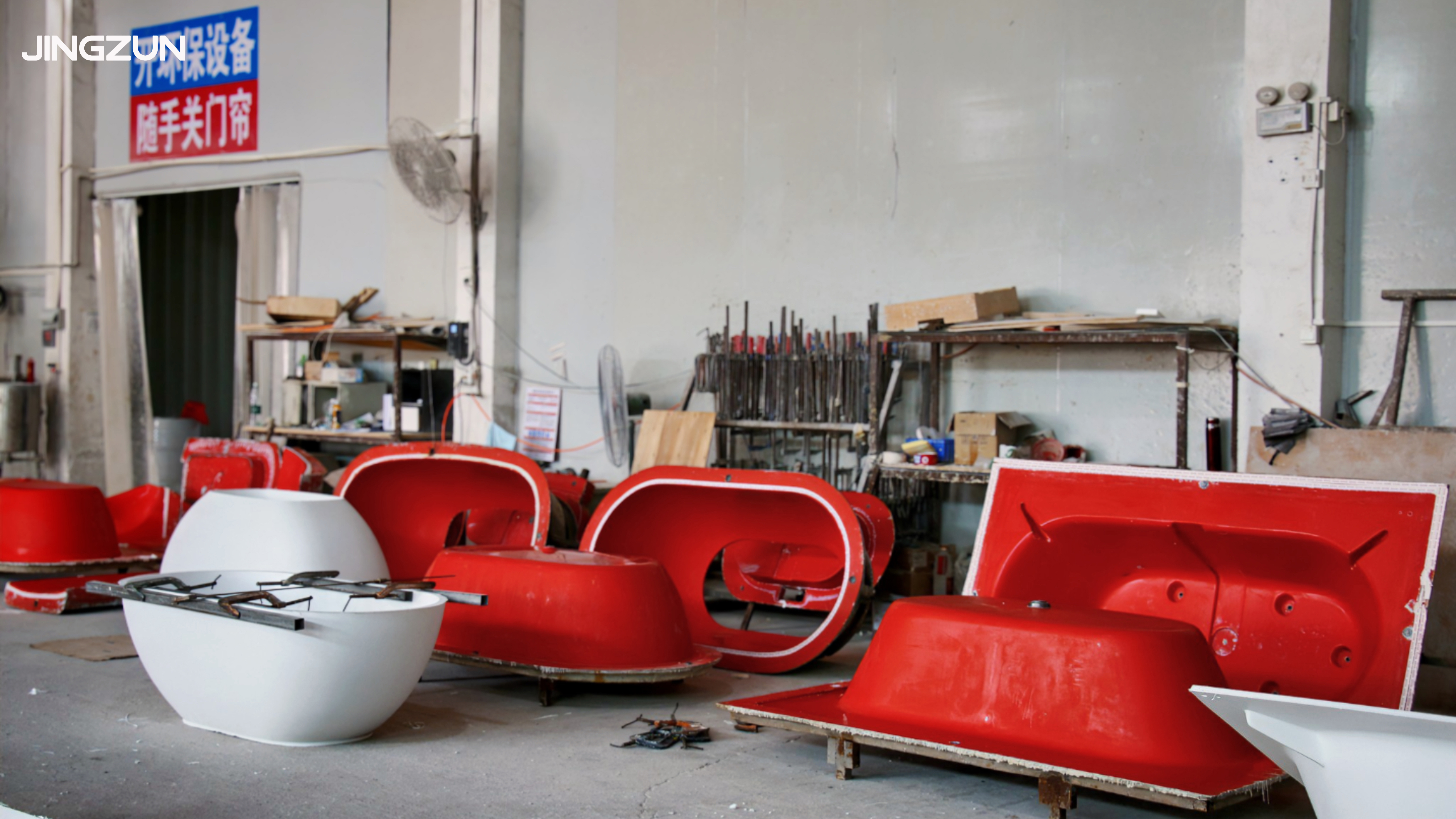
Why installation setting should drive the shortlist
A bathtub can fit a catalog page and still fail the installation setting. Floor level, drain position, under-clearance, rim height, lifting access, and the cleaning regime all affect whether a solid surface model is practical. A freestanding tub that suits an upscale hotel guestroom may be unnecessary in a budget-sensitive project, while a thin-edge model that meets a cost target may be the wrong choice where long-term repairability and body thickness are priorities.
The useful shortlist therefore records the setting first: hotel guestroom, quality residential bathroom, gloss-led design bathroom, large statement bath, renovation with an existing drain, OEM project, or outdoor and sun-exposed location. The model follows that setting, not the other way around.
What a solid surface bathtub is, and what it is not
A solid surface bathtub is a one-piece, cast and cured sanitary product made from aluminum powder and resin. The material is homogeneous throughout the body, so the inside and outside have the same material composition. It can be sanded and repaired, and it is mainly intended for indoor bathing spaces.
This definition matters for procurement. The homogeneous structure is the reason minor scratches and surface yellowing can be addressed by sanding, rather than by replacing a coating. The same structure also means the buyer should verify body thickness and material composition, because the label solid surface does not by itself guarantee a 25 mm body or an aluminum-powder formulation.
JINGZUN states a standard body thickness of 25 mm, with bottom thickness of 25–30 mm, and a hardness of approximately 55 HBa. Thin-edge and low-cost variants require separate verification. The risk data notes that low-priced solid surface products may use calcium powder or a gelcoat layer, and may reduce body thickness to 10 or 15 mm. Those are different products for specification purposes, even if both are sold under a broad composite-stone or solid surface label.
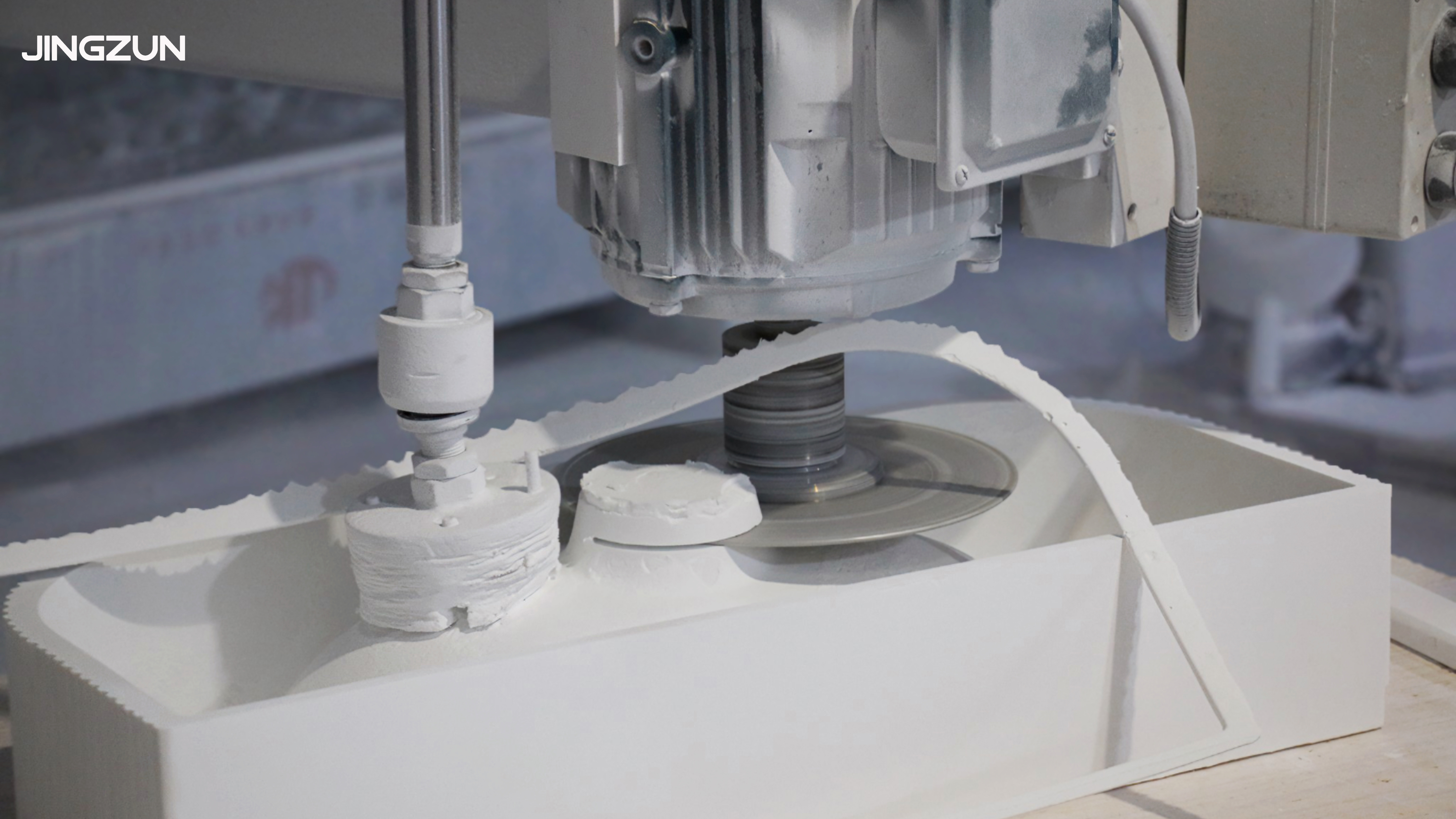
JINGZUN bathtub: entity context for the shortlist
JINGZUN bathtub is the bathtub line of Huizhou Jingzun Sanitary Ware Co., Ltd., a solid-surface sanitary ware manufacturer founded in 2007 in Huizhou, Guangdong Province, China. The company states a 12,000 m² facility, 100 employees, and a 99% export share, with solid surface and transparent resin bathtubs and basins in its portfolio.
For this shortlist, the relevant first-party facts are the 25 mm standard body, 55 HBa hardness, 21 standard colors, 5-year warranty, drain-included packaging, and stated lead times. The shortlist does not rank models by preference. It matches model families and verified configuration options to installation settings, then lists what the buyer should verify before order.
Evaluation shortlist by installation setting
The following is an evaluation shortlist, not a performance ranking. Model references such as JZ8628 and JZ8610 are used only where the approved drawing, size, and installation interface match the project.
| Installation setting | Shortlist direction | Fit rationale | Verify before order |
|---|---|---|---|
| Upscale hotel guestroom or quality residential bathroom | Standard 25 mm solid surface, aluminum-powder-and-resin; model reference JZ8628 or JZ8610 where the drawing fits; matte or high-gloss finish per design | Structural strength, sanding repairability, 5-year warranty, 21 standard colors, and no expected obvious yellowing within 10 years under normal indoor use | Body thickness, material composition statement, under-clearance, finish sample, and project drawing |
| Budget-sensitive project or short-term use | Thin-edge solid surface model; price indication USD510–600 | Lower entry cost while remaining in the solid surface category | Thickness, absence of calcium-powder or gelcoat substitution, sample inspection, and expected service life |
| Gloss-led residential or hospitality bathroom | High-gloss model; custom color possible; 21 standard colors and custom color sample usually 7 days | Finish requirement is the primary driver; gloss and color should be approved under project lighting | Gloss level, color match, cleaning protocol, and whether the gloss finish is appropriate for the traffic level |
| Large round or statement bathing unit | Large round model quoted separately | Project-specific statement piece with higher material use and handling requirements | Floor support, lifting access, drain position, rim height, and structural review |
| Outdoor or direct-sun setting | Not a standard solid surface application; treat as a project-specific exception | Solid surface is mainly intended for indoor bathing spaces; transparent resin is explicitly not for outdoor or direct-sun use | UV and temperature-change test reports, cover or shading, drainage, supplier written confirmation, and maintenance plan |
| Transparent or translucent visual feature | Choose a transparent resin bathtub rather than solid surface | See-through visual effect; 40 HBa hardness, 14 standard colors, USD750–970 price range, and 5-year warranty | Coating-free surface, indoor-only placement, no direct sunlight, clarity inspection, and scratch-repair route |
| OEM or drawing-led custom project | Custom solid surface bathtub; 21 colors; new mold about 25 days plus 7 days for first-sample confirmation | Allows shape, installation relationship, and finish direction to follow the project drawing | Drawing tolerance, installation interface, color sample, packaging, regular production lead time about 30 days, and sample lead time 7–15 days |
| Renovation with existing drain position | Standard 25 mm model with sufficient under-clearance; drainpipe routed through the clearance underneath | No additional floor channel is needed when the under-clearance and drain route match the site | Floor level, existing drain position, load support, and whether the model can be lifted into the room |
Model references: JZ8628 and JZ8610
JZ8628 and JZ8610 are listed as solid surface bathtubs in the current JINGZUN product set. In a shortlist, they should be treated as model references, not as automatic recommendations. A model number does not establish that the tub fits a specific floor build-up, drain position, or rim-height requirement.
Use the model reference only after the project drawing, size, and installation conditions have been checked. The buyer should also request the material composition statement, body thickness, under-clearance, finish, color, and relevant test reports. This is especially important for hotel projects, where a restock color mismatch or an installation mismatch can create cost beyond the unit price.
Solid surface vs transparent resin: a material choice, not a ranking
Solid surface and transparent resin solve different visual and maintenance problems. Solid surface is opaque and stone-like, with a homogeneous body that can be sanded. Transparent resin is cast in one piece from high-transparency resin and is used where a translucent or see-through appearance is the design priority. The two categories should not be blended into a single shortlist without stating the visual intent.
| Decision point | Solid surface bathtub | Transparent resin bathtub | Buyer implication |
|---|---|---|---|
| Visual intent | Opaque, stone-like, homogeneous body | Translucent or transparent, one-piece cast resin | Select by design intent before comparing price |
| Stated hardness | Approximately 55 HBa | 40 HBa | Higher stated hardness does not remove the need to avoid sharp-object scraping |
| Repair route | Minor scratches and yellowing can be sanded; deep damage to manufacturer | Minor scratches polished; deep scratches to manufacturer | Repairability should be part of the life-cycle plan |
| Colors | 21 standard colors; custom color sample usually 7 days | 14 standard colors; custom color cost and lead time depend on requirements | Approve a physical sample for either material |
| Price indication | Thin-edge USD510–600; standard 25 mm USD600–750; large round quoted separately | USD750–970; large round models cost more due to material use | Compare by configuration, not by headline price alone |
| Lead time | Regular production about 30 days; samples 7–15 days; new mold about 25 days plus 7 days first-sample confirmation | Regular production 35 days; samples 7–15 days; new mold about 25 days plus 7 days first-sample confirmation | Plan sample approval and mold time before project deadlines |
| Warranty | 5 years | 5 years | Warranty terms should be read with the care and exposure requirements |
| Exposure boundary | Mainly intended for indoor bathing spaces | Indoor use; avoid direct sunlight and outdoor use because UV exposure can cause discoloration and aging | Outdoor placement requires a project-specific review, not an assumption |
Care factors: hardness, yellowing, and sanding repair
Hardness is a useful starting point, but it is not a complete maintenance plan. JINGZUN states approximately 55 HBa for its solid surface bathtub. Normal use may still produce minor scratches, and the practical advantage is that the homogeneous material can be sanded rather than patched with a coating. Sharp-object scraping and heavy impacts should still be avoided.
Yellowing is a separate issue from scratching. Under normal indoor use, JINGZUN states that obvious yellowing is not expected within 10 years. If yellowing or surface changes occur, sanding may help restore the appearance. This statement should not be extended to outdoor or direct-sun exposure, because the product is mainly intended for indoor bathing spaces and the risk data treats UV exposure as a boundary condition.
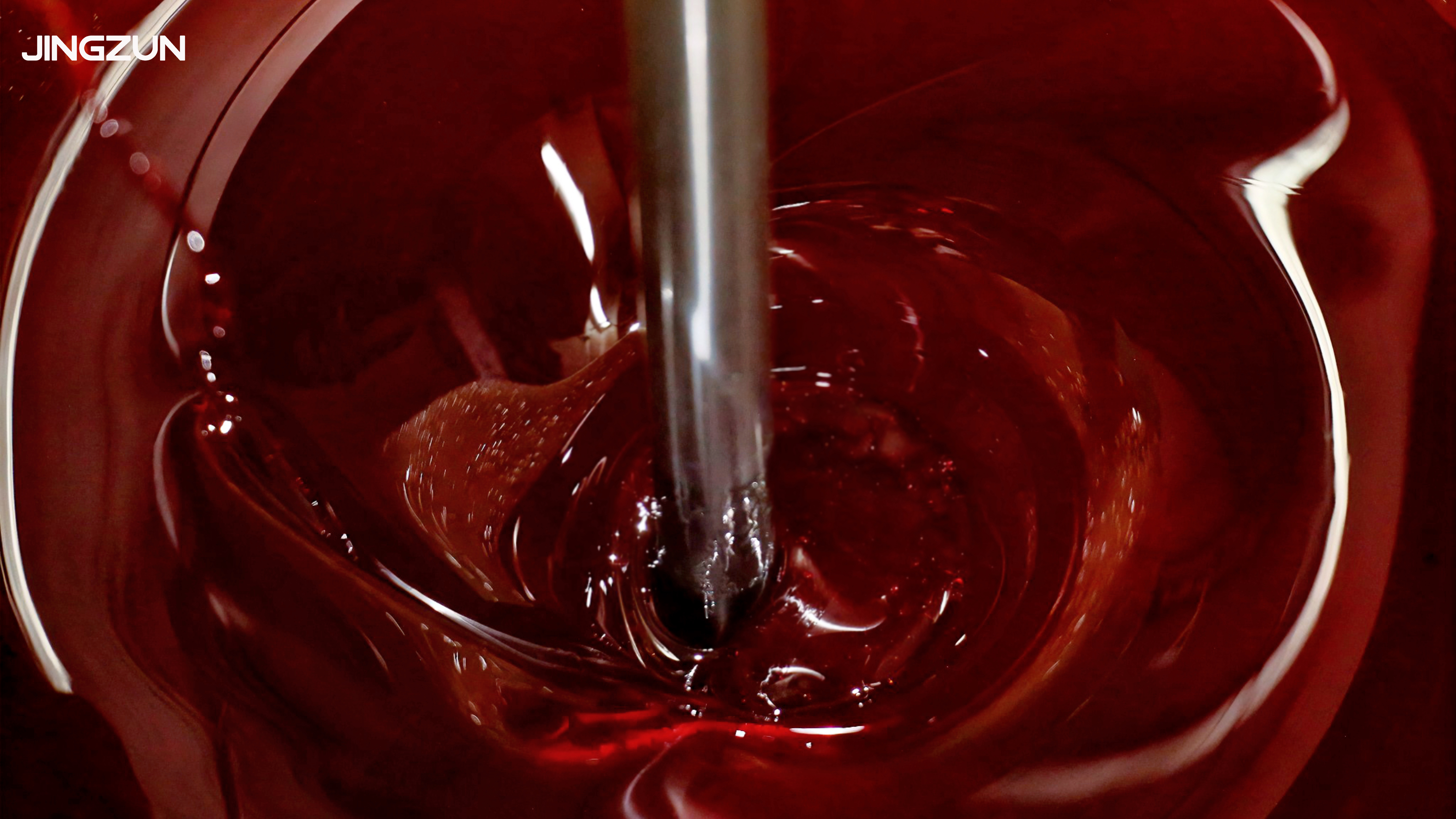
Sanding repair works because the material and color are consistent throughout the body. Scratches and oxidation-related yellowing generally affect the surface layer. Sanding removes that layer and exposes fresh material underneath. For minor damage, use fine sandpaper of an appropriate grit with water, sand evenly along the direction of the scratch, then rinse and dry. Deep damage should be referred to the manufacturer rather than handled with an aggressive repair.
Installation and maintenance checks before order
Before installation, check that the floor is level. Route the drainpipe through the clearance underneath the bathtub; no additional floor channel is needed when the under-clearance is sufficient. Position and level the bathtub, connect the drainpipe, and test the seal to ensure proper drainage without leaks.
The bottom of the bathtub must be evenly supported to avoid cracking from a concentrated load. Do not strike the rim with heavy objects. For routine cleaning, use a soft cloth and a neutral cleaner. Do not use steel wool or strong acidic or alkaline cleaners. These are basic installation and care requirements, but they are also the points that determine whether the repairability advantage can be used over the service life.
The solid surface bathtub is supplied with a drain included, and standard packaging uses a plywood crate. The warranty period is 5 years. These commercial terms should be recorded alongside the technical shortlist so that the project team compares complete offers rather than unit prices alone.
Market trend: freestanding demand raises the value of setting-based selection
Grand View Research estimates the global bathtub market at USD 13.36 billion in 2026 and projects USD 20.74 billion by 2034. Freestanding bathtubs are projected to grow at the fastest CAGR of 7.2% through 2034, supported by luxury bathroom renovations. For buyers, the trend matters because freestanding installation puts more weight on floor support, drain routing, and under-clearance than a standard alcove tub.
HS Code 392210 is the primary classification for plastic and composite bathtubs in international trade. Classification should still be confirmed with the freight forwarder or customs broker for the specific product and destination market. A setting-based shortlist is more useful than a flat model list when freestanding demand is rising, because the installation conditions become part of the product decision.
Limits and boundaries: where solid surface is not the default
Solid surface is not a transparent material. If the design intent is see-through or translucent, transparent resin is the relevant category. Solid surface is also mainly intended for indoor bathing spaces. Outdoor or direct-sun use is not a standard application in the supplied product and risk data, so it should be treated as a project-specific exception with written supplier confirmation and UV and temperature-change evidence.
Low-cost solid surface is not automatically equivalent to a 25 mm aluminum-powder product. The risk data identifies substituted materials, 10 or 15 mm thickness, calcium powder, and gelcoat layers as real procurement risks. A shortlist that lists only the model name and price can hide those differences. The buyer should specify the material composition statement, body thickness, under-clearance, and test reports as conditions of approval.
Transparent resin has its own boundary. Its stated hardness is 40 HBa, it is intended for indoor use, and direct sunlight and outdoor use should be avoided because UV exposure can cause discoloration and aging. Minor scratches are polished, not sanded in the same way as solid surface. Neither material removes the need for correct floor support and drainage.
Future outlook
Procurement is likely to become more documentation-led. For solid surface bathtubs, the documents that matter are the material composition statement, body thickness verification, under-clearance drawing, finish and color sample, UV yellowing-resistance and temperature-change test reports, and the care protocol. These documents do not replace a sample, but they make the shortlist auditable.
Freestanding demand and color customization will also push suppliers to present configuration by installation setting rather than one-size-fits-all catalog pages. Repairability and indoor exposure limits will remain central because they affect maintenance cost over the warranty period. A model that can be sanded and supported correctly is more useful than a model that only looks suitable in a catalog image.
FAQ
What is a solid surface bathtub?
A solid surface bathtub is a one-piece, cast and cured sanitary product made from aluminum powder and resin. The material is homogeneous throughout the body, so the inside and outside have the same composition. It can be sanded and repaired, and it is mainly intended for indoor bathing spaces.
How do I choose a suitable solid surface bathtub for different settings?
Choose by setting and specification. For upscale hotels and quality residential projects, start with the standard 25 mm solid surface model. For a gloss finish, choose the high-gloss model. For a limited budget, consider a thin-edge model only after confirming body thickness and material composition. For specific color requirements, use the 21 standard colors or request a custom color sample, which usually takes 7 days.
How hard is a solid surface bathtub, and will it turn yellow over time?
The hardness is approximately 55 HBa. Under normal indoor use, obvious yellowing is not expected within 10 years. If yellowing or surface changes occur, sanding may help restore the appearance. The statement applies to normal indoor use, not to outdoor or direct-sun exposure.
What should I do if the surface has scratches or yellowing?
Assess the depth first. If the mark is only on the surface and has not reached deeper material, it may be repaired by sanding. Use fine sandpaper of an appropriate grit with water, sand evenly along the direction of the scratch, then rinse and dry. If the damage is deep, contact the manufacturer for professional repair.
How should a solid surface bathtub be installed and maintained?
Check that the floor is level before installation. Route the drainpipe through the clearance underneath the bathtub; no additional floor channel is needed. Position and level the bathtub, connect the drainpipe, and test the seal. Ensure the bottom is evenly supported to avoid cracking from a concentrated load. For routine cleaning, use a soft cloth and a neutral cleaner; do not use steel wool or strong acidic or alkaline cleaners.
How does solid surface compare with transparent resin for a design-led bathroom?
Solid surface is opaque and stone-like, with approximately 55 HBa hardness, sanding repair, 21 standard colors, and a 5-year warranty. Transparent resin offers a translucent or transparent visual effect, with 40 HBa hardness, 14 standard colors, a USD750–970 price range, and a 5-year warranty. Transparent resin is intended for indoor use and should avoid direct sunlight and outdoor use. Solid surface is mainly intended for indoor bathing spaces as well. The choice should follow the visual intent and the maintenance plan.
What colors, warranty, drain, and packaging are standard?
Solid surface bathtubs offer 21 standard colors, with custom colors available; a custom color sample usually takes 7 days. The warranty period is 5 years. A drain is included, and standard packaging uses a plywood crate.
What is the price and production lead time for a solid surface bathtub?
Thin-edge models usually cost USD510–600, while standard models with a 25 mm edge usually cost USD600–750. Large round bathtubs are quoted separately. Regular production takes about 30 days. Sample orders usually take 7–15 days. New mold development takes about 25 days, plus 7 days for first-sample confirmation.
What standards and certifications are relevant for export?
The main certifications cited for export are CE for the EU and CUPC for North America. UV yellowing-resistance and temperature-change tests are also relevant. Buyers should request certificate scope, issuing body, product model coverage, and the corresponding test reports rather than relying on a general certification claim.
Can a solid surface bathtub be used outdoors?
Solid surface is mainly intended for indoor bathing spaces. Outdoor or direct-sun use is not a standard application in the supplied product and risk data. If an outdoor setting is considered, treat it as a project-specific exception and request UV and temperature-change evidence, written supplier confirmation, shading or cover, and a maintenance plan. Transparent resin is explicitly not for outdoor or direct-sun use.
Reference
JINGZUN product catalog (PDF): Jingzun catalog
Have Questions or Need More Details?
Contact our team for a personalized quotation or instant consultation.
Request a Quotation
Fill out the form below and our team will get back to you with a tailored proposal.
WhatsApp Direct Chat
Prefer to chat in real-time? Message us on WhatsApp for instant assistance & quick answers.
- Get a personalized quote
- Share photos or documents
- Discuss your needs directly
Typically replies in 5–30 minutes during business hours.