
Solving the Breakfast Rush: Frozen Dim Sum Menu Fit for Hotels, Stalls, and Airlines
The breakfast rush rewards supply lines that remove preparation, not flavour. For hotel buffets, fast-food breakfast shops, tourist-area stalls and airline catering kitchens, the binding constraint is the length of the serving window — and the frozen dim sum range a venue can actually run is decided by pack format, heat method and cook time rather than by the menu description.
The Breakfast Window Is an Operations Problem Before It Is a Menu Problem
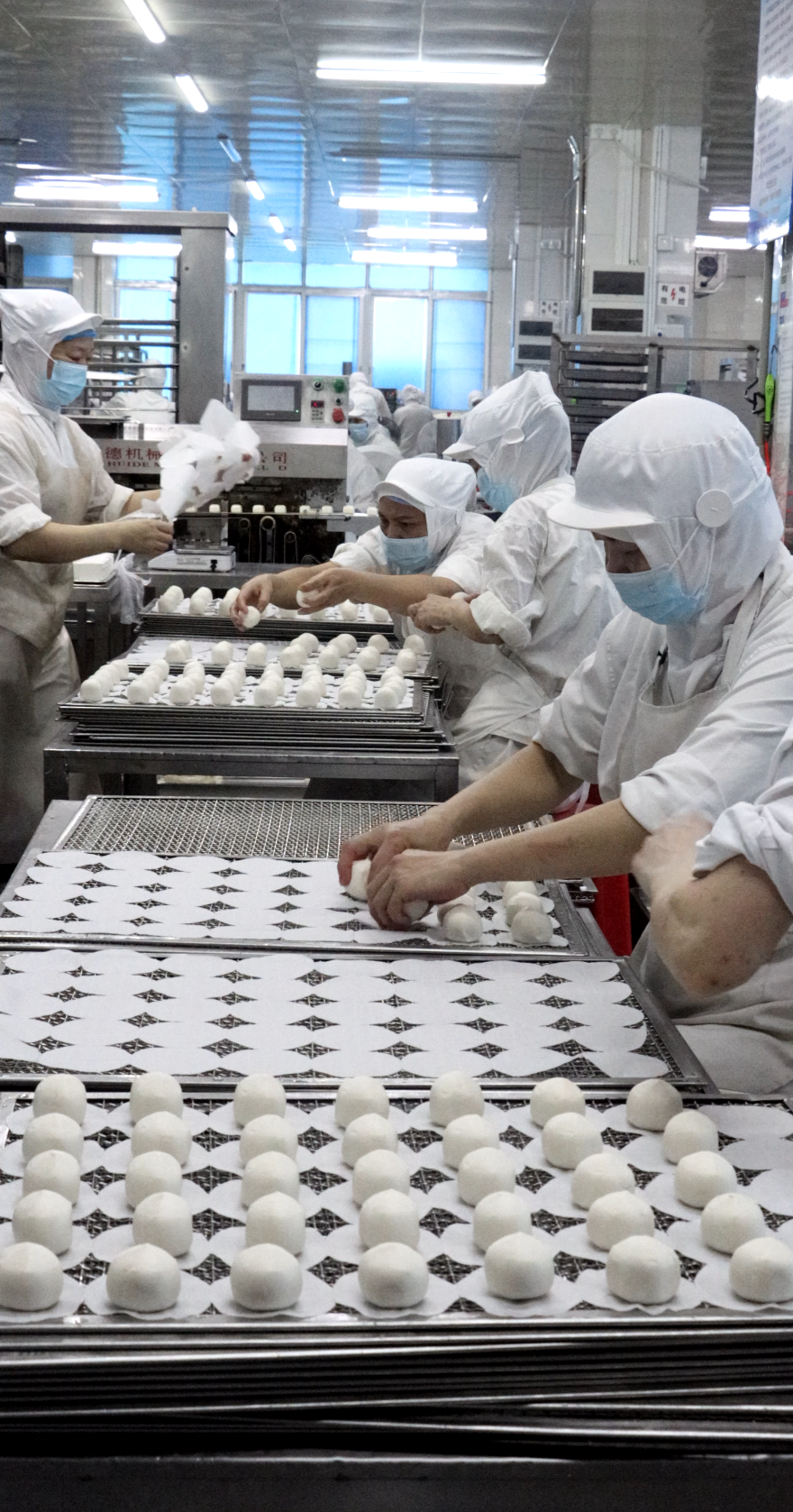
Breakfast is commonly the narrowest service block of the day and the one with the least skilled labour on the floor. A traditional Cantonese dim sum breakfast depends on cooks who can wrap, pleat and steam to order, which means early shifts, a fixed production ceiling, and a menu that shrinks whenever those staff are unavailable. The alternative model moves the labour upstream: the range is produced in a licensed food factory, and the venue performs only the final heat step.
That model changes two variables at once. Items that need no preparation or kneading, and only heating before service, significantly reduce kitchen manpower and preparation time. In parallel, a diverse menu becomes achievable even with limited kitchen resources, because the breadth sits in the freezer rather than on the prep bench. Both effects matter most in the morning, when there is no spare minute to absorb an unexpected step in the workflow.
This article examines menu fit venue by venue, using the published specifications of the frozen and fried dim sum range produced by Foshan Shunde Yuexiang Food Manufacturing Co.,Ltd. — a frozen dim sum manufacturer founded in 1981, based in Jun'an Town, Shunde District, Foshan, Guangdong, producing Cantonese dim sum, traditional dim sum and frozen dim sum under the Da Xiao brand. The question it answers is practical: which items survive contact with a real breakfast service, and what does a buyer need in place before ordering them?
What Menu Fit Means Under Time Pressure
Menu fit is decided by five criteria. They are operational rather than culinary, and they explain why two items with similar flavours can perform very differently in the same venue.
| Criterion | Question the buyer should ask | Why it decides the fit |
|---|---|---|
| Pre-heat steps | Must the item be thawed before cooking? | A thaw step inserts scheduling, bench space and food-safety risk into the busiest hour of the day. |
| Heat time | Does cook time fit inside one refill cycle? | Items that need materially longer than the refill interval cannot be replenished on demand. |
| Batch granularity | How many pieces per bag, and how many bags per box? | Portioning by bag prevents both shortage and over-production during a short window. |
| Presentation and holding | Does the item still look presentable through a service period? | Layered and shaped items carry visual weight on a buffet line or at a stall counter. |
| Equipment and cold chain | Are freezers, steamers and refrigerated transport in place? | Frozen dim sum requires supporting equipment such as freezers, steamers and refrigerated transport vehicles, and storage at ≤ -18°C throughout. |
These criteria also define the boundary of the category. A frozen line does not remove the need for equipment, and it does not make every item fast. It removes preparation steps and stabilises output; everything else remains a specification question that the buyer has to check item by item.
The 500 g Bag and the 6–8 Minute Steam Window
The clearest example of format-driven menu fit in this range is the 500 g layered cake pack. Coconut juice horseshoe cake (Water Chestnut Cake) is packed at 500 g per bag, 12 bags per box, and is steamed from frozen in a water pan for 6–8 minutes. No thawing step is required. The same 500 g pack and the same 6–8 minute steaming window apply to Steamed Black Sesame Kuih, Red Bean Cake and Crispy Taro Pastry (Taro Cake), while Coconut Golden Cake is packed at 300 g per bag, 20 bags per box, and can be either steamed or pan-fried within the same 6–8 minute band.
The layered cakes also carry a presentation advantage that matters at a buffet or a snack counter. Water Chestnut Cake is described in its own specification as a translucent, layered milky white cake that pairs sweet coconut with refreshing water chestnut, giving a profile that is less oily and lighter than heavy desserts. Because the texture is mild and non-sticky, it suits mixed-age customer groups, and because the product can be steamed for a soft chew or pan-fried for a crisp finish, one SKU supports two service styles from the same freezer bag.
Steam line: cook time against the breakfast window
| Item | Pack specification | Heat method and time | Service note |
|---|---|---|---|
| Water Chestnut Cake (coconut juice horseshoe cake) | 500 g/bag × 12 bags/box | Steam from frozen, 6–8 min | Anchors a 6–8 minute window; translucent layered appearance |
| Steamed Black Sesame Kuih | 500 g/bag × 12 bags/box | Steam from frozen, 6–8 min | Distinct black-and-white layers; black sesame with coconut |
| Red Bean Cake | 500 g/bag × 12 bags/box | Steam from frozen, 6–8 min | Red and white layers; dense red bean pieces |
| Taro Cake (Crispy Taro Pastry) | 500 g (12)/bag × 12 bags/box | Steam or pan-fry from frozen, 6–8 min | Savoury option; real taro chunks |
| Coconut Golden Cake | 300 g/bag × 20 bags/box | Steam or pan-fry from frozen, 6–8 min | Golden, coconut-forward, sweet |
| Lava Custard Bun | 480 g (12)/bag × 18 bags/box | Steam from frozen, 8 min | Sweet flowing centre; morning-tea association |
| Walnut Bun | 480 g (12)/bag × 18 bags/box | Steam from frozen, 8 min | Nut-based variant within the bun set |
| red bean paste bun | 480 g/12 pcs × 18 bags/box; 530 g/12 pcs × 24 bags/box | Steam (no thaw) | Staple bun for volume service |
| char siu bao (Barbecued pork big bag) | 480 g (4 × 120 g)/bag × 18; 720 g (6 × 120 g)/bag × 18 | Steam from frozen, 10 min | Larger format suits takeaway and tray service |
| steamed custard bun | 420 g (12)/bag × 18 bags/box | Steam from frozen, 8–10 min | Shaped buns with visual appeal for family traffic |
| shrimp dumplings | 270 g/9 pcs × 15 bags/box | Steam 7–8 min, or pan-fry, from frozen | Two cooking routes from one SKU |
| Shrimp Siu Mai | 270 g/9 pcs × 20 bags/box | Steam from frozen, 12 min | Longer window; plan as a staged item |
| chicken sticky rice | 900 g (6)/bag × 12; 720 g (6)/bag × 12 | Steam from frozen, 20–25 min | Does not fit a 6–8 minute window |
Fried line: the alternative for outlets without a steamer
| Item | Pack specification | Fry temperature and time (from frozen) |
|---|---|---|
| Hong Kong style spring rolls | 216 g (12)/bag × 20 bags/box | 150–160 °C, 3–4 min |
| Taro Pie | 336 g (12)/bag × 16 bags/box | 150–160 °C, 3–4 min |
| Milk rolls (Shunde milk roll) | 280 g (10)/bag × 12 bags/box | 150–160 °C, 3–4 min |
| Golden Cone Durian Crisp | 300 g (10)/bag × 20 bags/box | 150–160 °C, 4–6 min |
| Green Tea Buddha Cake | 336 g (12)/bag × 20 bags/box | 165 °C, 4 min |
| Golden Durian Crisp | 250 g (10)/bag × 12 bags/box | 160 °C, 5 min |
| Explosive juice gold ball (Sesame Ball) | 300 g (10)/bag × 12 bags/box | 160–165 °C, 8–9 min |
Read together, the two tables produce an immediate decision rule. Anything in the 6–8 minute band can be refilled on demand through a normal breakfast service. Items in the 10–12 minute band need a steamer that runs continuously rather than in batches. Chicken sticky rice, at 20–25 minutes, belongs to a different slot entirely — lunch, all-day dim sum or a pre-scheduled banquet, where the load can be started before service begins.
Venue-by-Venue: Where Each Item Actually Works
Hotel buffets, resorts and guesthouses
A star-rated hotel buffet is judged on range and appearance within the first minutes of a guest walking the line. The layered cake cluster performs well here because it photographs and presents clearly, and because a 500 g bag can be steamed, sliced and set out without any kitchen assembly. Adding Lava Custard Bun, Walnut Bun or steamed custard bun at 8–10 minutes gives the same line a hot steamed component without adding labour. The operational requirement is modest: freezers for storage, a steamer for the heat step, and staff who can pull bags on a fixed refill schedule. Guesthouses, resorts and camping sites operate the same logic at smaller volume, where the ability to hold frozen stock and steam only what is needed directly reduces waste.
Fast-food breakfast shops and tourist-area snack stalls
This is the venue type where the 6–8 minute window does the most work. A stall counter is not a kitchen: there is usually one steamer, limited bench space and no time to defrost. Items that go from freezer directly into the steamer — Water Chestnut Cake, Steamed Black Sesame Kuih, Red Bean Cake, Taro Cake and Coconut Golden Cake — fit that limitation exactly, and a single 300 g or 500 g bag gives the operator a controlled portion to match unpredictable footfall. Outlets with a fryer instead of a steamer can run the fried line, where Hong Kong style spring rolls, Taro Pie and Milk rolls finish in 3–4 minutes at 150–160 °C. Late-night stalls can use the same freezer stock with a different mix, since the layered cakes are described as suitable for breakfast, afternoon tea and banquet-style service rather than any single daypart.
Airline catering, rail stations and highway service areas
Transport catering changes the constraint from counter speed to cold-chain discipline. Kitchens serving airports, high-speed rail stations, highway service areas, and catering for vehicles and ships are usually remote from the point of service, so the product has to arrive in specification and be reheated precisely. A no-thaw steam step reduces the number of places where a tray operation can go wrong, and fixed pack sizes make tray counts predictable. Airline and tourism catering services appear explicitly in the supplier's own customer profile, alongside hotel and institutional catering. The same logic applies to smaller service points: a 480 g or 270 g bag is a defined unit that matches a tray or a trolley load rather than an approximate scoop.
Institutional canteens: schools, factories, offices, hospitals and care homes
Institutional breakfast is a volume and consistency problem. Standardised production gives uniform taste and size, avoiding the inconsistent textures that handmade production can produce at scale, and it allows a menu with several items to run from a kitchen with limited resources. Buns are the natural volume carrier; layered cakes add a lighter dessert-style option without adding a second production line.
Retail and trade channels
Supermarkets, community fresh food stores and convenience stores sell the same items on a different promise: a customer heats them at home. Because the layered cakes can be steamed or pan-fried at home, and because production date and shelf life are printed on the outer packaging of all products, the retail proposition is straightforward. For food supply chain wholesalers, overseas Chinese restaurants and Chinese supermarkets, the same range supports both a hot breakfast program and a frozen take-home pack from a single inventory.
Extending the Same Freezer Beyond Breakfast
Menu integration does not stop at the morning daypart. Buddha Jumps Over The Wall is supplied as a prepared soup in 1.5 kg, 2.25 kg and 3.5 kg formats, stored below -18°C with a one-year shelf life, and positioned for family dinners, gifts and banquet main courses. Vegetarian Lo Han Jai (buddha's delight) comes in 400 g boxes, 12 boxes per carton, and is prepared by thawing naturally and simmering. Millet cake is packed at 280 g per bag, 30 bags per box, and is steamed for 7–8 minutes or pan-fried. These items serve banquets, tea breaks and takeout rather than the breakfast rush, but they let a venue build a wider Cantonese dim sum menu from one supplier relationship.
A contrasting case is worth noting for buyers comparing thaw behaviour. kataifi pastry, packed at 1 kg per bag and 12 bags per box, must be removed from the freezer and thawed for approximately 30 minutes, covered with a damp cloth, before it is wrapped and deep-fried at 150–160 °C. It is a genuinely useful product for dessert and snack applications, and it is also a reminder that not every frozen item in a catalogue is a no-thaw item — the specification determines the kitchen workflow, not the category name.
Frozen Supply Compared with Traditional In-House Production
Frozen supply is not a like-for-like replacement for an on-site dim sum kitchen, and the difference is best expressed as a trade of skills and space for cold chain and specification discipline.
| Dimension | Traditional in-house production | Frozen dim sum supply |
|---|---|---|
| Skilled labour | Depends on experienced dim sum cooks and early shifts | Depends on staff who can operate a steamer or fryer |
| Output consistency | Varies with the individual cook and the batch | Standardised production gives uniform taste and size |
| Menu breadth | Limited by the production ceiling of the kitchen | One-stop supply of morning tea, desserts and main dishes |
| Waste control | Daily over-production is common | Flexible inventory by long-term low-temperature storage, used as needed |
| Infrastructure burden | Prep space, dough and filling equipment | Freezers, steamers and refrigerated transport |
| Customer positioning | Can be marketed as handmade on site | Requires transparent labelling where regulations demand it |
The limitations are real and should be priced into the decision. First, the cold chain is absolute: frozen dim sum is stored below -18°C throughout the whole process, from the factory through transport and the venue freezer to the steamer, to retain freshness and prevent the product from drying out and cracking. A broken chain cannot be repaired later. Second, shelf life is not uniform across the range — steamed buns carry a 12-month frozen shelf life while steamed cakes carry 6 months, so a cake-heavy menu rotates faster and needs tighter stock discipline than a bun-led menu. Third, not every item fits a fast window: Shrimp Siu Mai needs 12 minutes, char siu bao and steamed custard bun need 8–10 minutes, and chicken sticky rice needs 20–25 minutes. Fourth, the model requires equipment that a scratch kitchen may not have, and the minimum order quantity of 50 boxes may exceed the immediate need of a very small outlet testing its first dim sum menu.
There is also a compliance dimension that buyers in mainland China cannot ignore. Guangzhou introduced the Morning Tea Heritage Protection Regulation effective 1 May 2026, requiring restaurants to clearly label whether dim sum is handmade on site or produced by central kitchens or pre-made processes. For venues in that jurisdiction, a frozen supply line is entirely workable — but it has to be disclosed rather than presented as on-site craft. Treating that as a labelling task rather than a sourcing problem is the practical way to plan it.
Where the Market Is Moving
The frozen Cantonese dim sum category is large and still expanding. According to Research Insights and Data Insights Reports, the global frozen Cantonese-style dim sum market was valued at USD 7.04 billion in 2025 and is projected to reach USD 11.99 billion by 2033, with a projected compound annual growth rate of 6.87% through 2034. At the production end, China accounted for 46% of global frozen dumpling production volume in 2025, followed by Japan at 11% and South Korea at 9%, according to Business Research Insights — a concentration that explains why export-facing dim sum supply is dominated by Chinese manufacturers.
Trade and regulation are moving in step. Frozen dim sum is commonly exported under HS Code 1902200000 (stuffed pasta) and 1902309000 (other pasta), which matters to importers building documentation. Regulatory transparency is tightening at the same time, as the Guangzhou labelling requirement shows. Meanwhile the regional supply chain around Shunde is deep: Foshan Shunde Meichengmei Food Co., Ltd., founded in 1976, is a specialist egg-product manufacturer producing salted egg yolk for bakery and dim sum applications — evidence of the specialised input layer that sits beneath a dim sum production cluster.
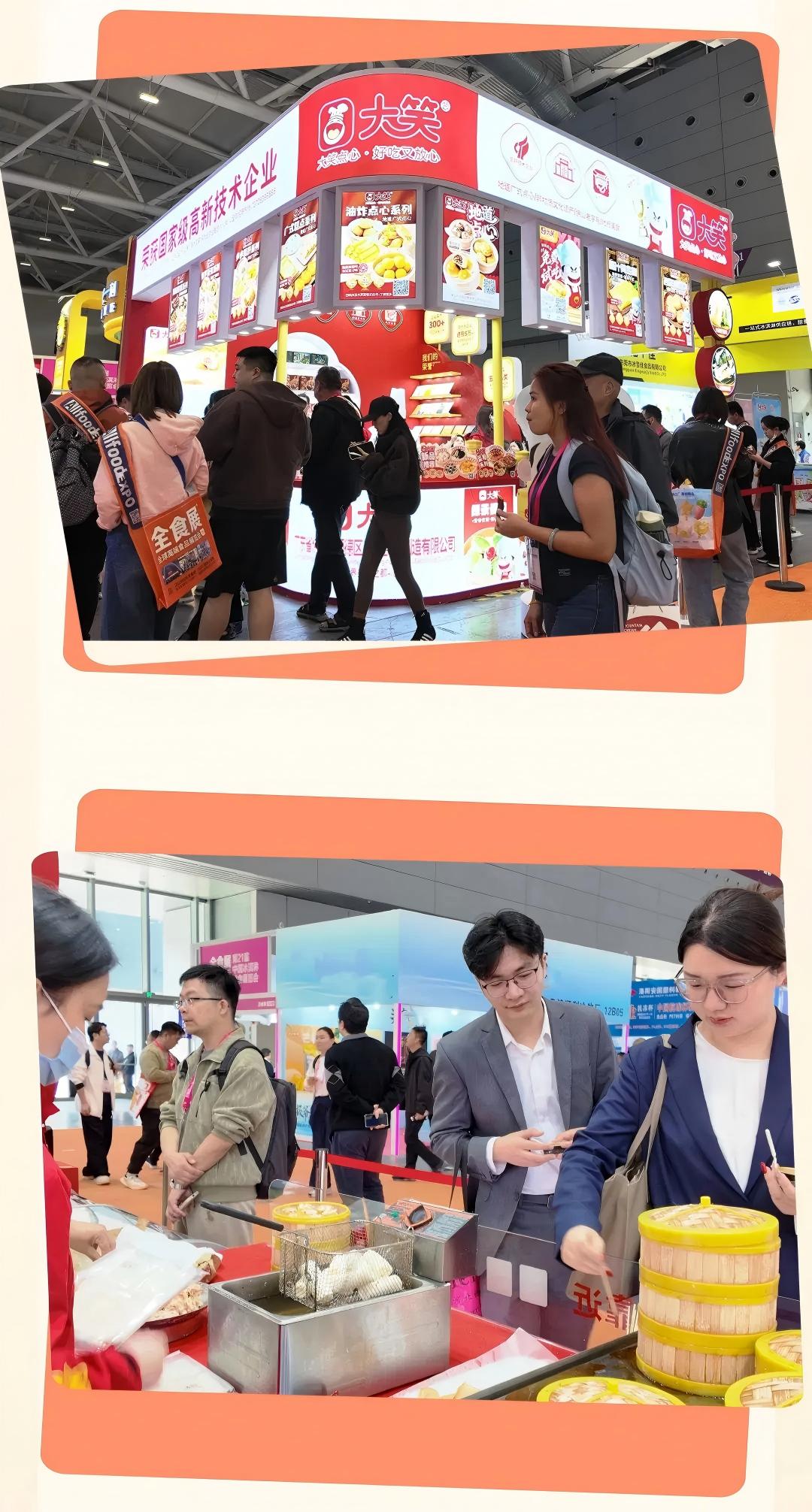
Export geography is already diversified. Foshan Shunde Yuexiang Food Manufacturing Co.,Ltd. reports a 40% export ratio and a main market mix across Southeast Asia, Europe and the Americas, with listed export destinations including the United States, Canada, Australia, New Zealand, Mexico, Malaysia and Vietnam, and scenario documentation covering the United States, Malaysia, Canada, Australia, Vietnam, New Zealand, Mexico and Germany. For a buyer, that means application experience already exists in markets with very different breakfast cultures — from a North American hotel buffet to a Malaysian kopitiam counter.
Future Outlook
Three shifts are likely to shape the next phase of frozen dim sum menu fit. The first is format standardisation driven by the breakfast daypart itself: as more venues compete on a morning menu, the value of a specification that states no-thaw, cook time and pack yield in a single line item increases, because it lets an operator design a service schedule rather than guess at one. The second is transparency. Labelling rules such as Guangzhou's move the conversation from whether frozen product is used to how clearly it is described, and suppliers that provide documentation, traceability and correct product naming will be easier to place in regulated markets.
The third is cold-chain reliability as a competitive variable rather than a logistics detail. Yuexiang's stated support model — cold chain logistics guaranteed at -18°C throughout transport, a 24-hour complaint response window, technical support that includes free steaming parameters and store menu matching, and certification documents such as quality inspection reports and export customs declaration documents provided with each order — reflects how buyers now evaluate suppliers: not only on product, but on the operational package around it. With OEM and ODM production, customisable logos and product details, a stated monthly capacity of 50 million units and lead times of 7–14 days, the supply side is structured for that standard of collaboration.
FAQ
Water Chestnut Cake (coconut juice horseshoe cake), Steamed Black Sesame Kuih, Red Bean Cake, Taro Cake and Coconut Golden Cake are all steamed or pan-fried from frozen within 6–8 minutes, with no thawing step. Coconut Golden Cake is packed at 300 g per bag (20 bags per box); the other four are packed at 500 g per bag (12 bags per box), except Taro Cake, which is packed at 500 g (12 pieces) per bag, 12 bags per box.
The steamed items in this range are designed to be cooked without thawing: the layered cakes are steamed in a water pan for 6–8 minutes, Lava Custard Bun and Walnut Bun for 8 minutes, steamed custard bun for 8–10 minutes, and char siu bao for 10 minutes, in each case directly from frozen. Exceptions exist in the wider catalogue — kataifi pastry requires approximately 30 minutes of thawing, covered with a damp cloth, before frying. The specification of each item, not the category, determines whether a thaw step is required.
Stored frozen at -18°C, steamed buns carry a shelf life of 12 months and steamed cakes carry a shelf life of 6 months. Production date and shelf life are clearly printed on the outer packaging of all products. The difference means a menu weighted toward layered cakes rotates faster than a bun-led menu and requires correspondingly tighter stock control.
The supported equipment set is freezers, steamers and refrigerated transport vehicles, with storage at ≤ -18°C required throughout the entire process to retain freshness and prevent the product from drying out and cracking. Outlets without a steamer can operate a fried line instead, using a fryer at 150–165 °C depending on the item, with cook times between 3 and 9 minutes from frozen.
Yes. Hotels and tourism venues — star-rated hotels, guesthouses and resorts, camping sites — use the same items as transport catering for airports, high-speed rail stations, highway service areas, and catering services for vehicles and ships. The difference is operational rather than product-based: transport catering places a heavier emphasis on cold-chain continuity and fixed pack counts because the kitchen is remote from the point of service, whereas a hotel buffet emphasises presentation and refill cadence.
The stated minimum order quantity is 50 boxes or more, with lead times of 7–14 days. OEM and ODM production is available, including customisable logos and product details, and each order is supported by quality inspection reports, production qualifications and export customs declaration documents.
Frozen dim sum does not compete with a dim sum kitchen on craft — it competes on whether a venue can serve a Cantonese menu inside a window that leaves no room for preparation. The specification sheet is where that decision is actually made: pack size, thaw requirement, cook time and cold-chain discipline. Buyers evaluating the range can review the manufacturer profile at www.dimsum-daxiao.com or download the company brochure for full product and production details.
Reference document: https://cdn.socialarks.com/sbsp/25144/common/2026/0805/IFOOD%E9%A9%AC%E6%9D%A5%E8%A5%BF%E4%BA%9A%E5%B1%95%E5%A4%A7%E7%AC%91%E9%A3%9F%E5%93%81%E4%B8%AD%E8%8B%B1PPT.pdf