
Solving the Head Haul Space Puzzle: A Specialist Model for China-India Air Freight
When capacity on the China–India air corridor becomes a bottleneck, a specialist operator model is emerging to bridge the gap between airline supply and forwarder demand.
In 2024, China's exports to India reached approximately USD 120.46 billion, with sectors such as electronics, machinery, and textiles driving steady demand for air freight. Yet the air cargo market on this corridor remains chronically capacity-constrained. The India air cargo market, valued at 3.6 million tons in 2025, is projected to nearly triple by 2034, yet the available head haul space on China–India flights has not kept pace. Asia-Pacific airlines recorded an 8.3% year-on-year increase in international cargo traffic in June 2025, but the China–India lane continues to face peak-season shortages, volatile rates, and frequent offloading risks. For freight forwarders and NVOCC operators serving this route, securing stable, predictable air cargo space is a strategic challenge.
The problem: fragmented capacity and operational gaps
The core issue facing logistics intermediaries is a lack of stable airline capacity access combined with insufficiently integrated warehouse operations. Common challenges include:
- Peak-season air cargo space shortages
- Frequent airline rate fluctuations
- Cargo offloading risk due to last-minute capacity reallocation
- Fragmented warehouse handling leading to multiple-handling delays
- Unstable delivery performance
The business impact of these problems includes delayed cargo departures, increased customer complaints, and declining profit margins. For mid-to-large freight forwarders, the urgency is high because of the direct effect on customer retention and operational efficiency.
A capacity-control model: JTUO Logistics
JTUO Logistics Co., Ltd. is a logistics service provider specializing in China–India air freight head haul operations. Founded in May 2025, the company focuses on airline capacity consolidation and integrated warehouse consolidation. With a core team of over 30 people, a 2,000 m² warehouse in Guangzhou, and operations handling more than 5,000 tons of air freight per year, JTUO positions itself not as a general forwarder but as a dedicated capacity controller.
The company’s solution is a China–India Air Freight Space & Cargo Consolidation Integrated Solution that combines three core functions: stable airline space allocation, in-house warehouse consolidation, and airport delivery operations. The approach uses block space agreements (BSA) with airline partners to lock in capacity, then allocates that space to forwarding partners on either a contracted or general cargo basis. This dual model allows JTUO to provide guaranteed cargo space during peak seasons, priority allocation, and stable freight rate coordination.
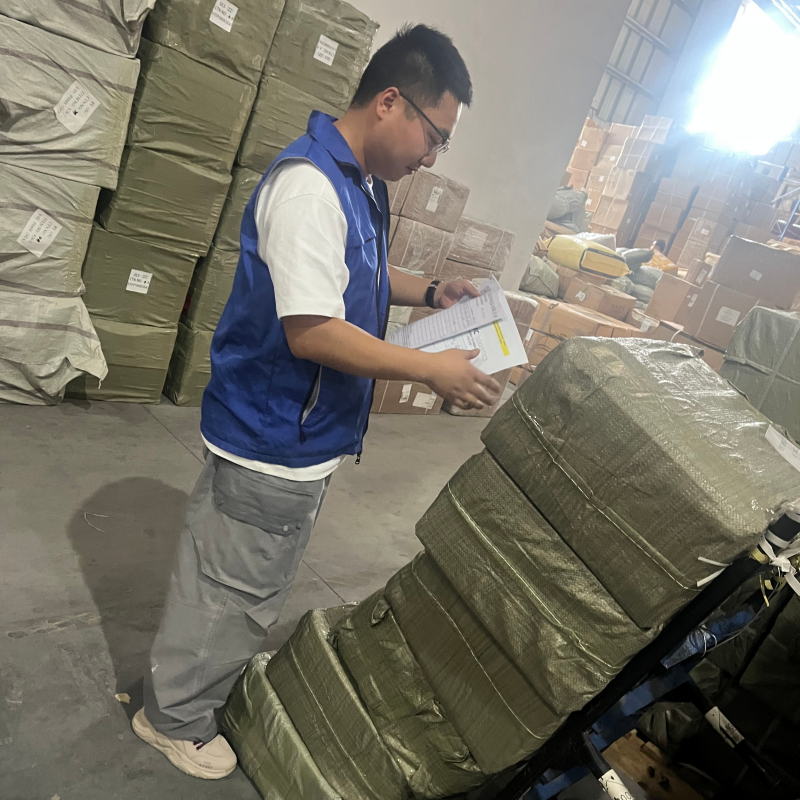
JTUO’s in-house warehouse enables single-point consolidation before airport delivery.
Technical foundation: systems that enable control
Behind the capacity guarantee is a technology stack designed for real‑time visibility and execution discipline. JTUO operates:
- An online air freight booking system for space reservation and allocation
- A flight scheduling and space allocation management platform
- A real‑time cargo space monitoring and dispatch system
- A warehouse management system (WMS) for inventory and consolidation tracking
- A cargo consolidation and load optimization system to maximise pallet utilisation
These tools enable the company to offer direct AWB issuance to forwarding partners, provide real-time airline availability, and maintain a clear execution chain from customer inquiry to flight departure notification.
Case in point: a mid-size forwarder’s peak-season crisis
A typical application of this model involves a medium-to-large freight forwarding company that outsourced its head haul execution to JTUO. The client faced unstable air cargo space during peak seasons, high price volatility, fragmented warehouse operations, multiple-handling delays, and unstable delivery performance. Diagnosis identified the core issue as a lack of stable airline capacity access and consolidated warehouse operations.
JTUO deployed an integrated “Capacity Locking + Warehouse Consolidation + Airport Execution” air freight system. The execution steps included: customer inquiry → order placement → space confirmation & booking → cargo receipt & warehousing → cargo consolidation → export customs declaration → bill of lading issuance → flight departure notification → arrival at Indian airport.
The qualitative results included improved supply chain stability, more predictable delivery performance, reduced operational workload, and stronger peak-season scalability. The client noted, “Space availability became much more stable, even during peak seasons. Much more reliable than using multiple forwarders.”
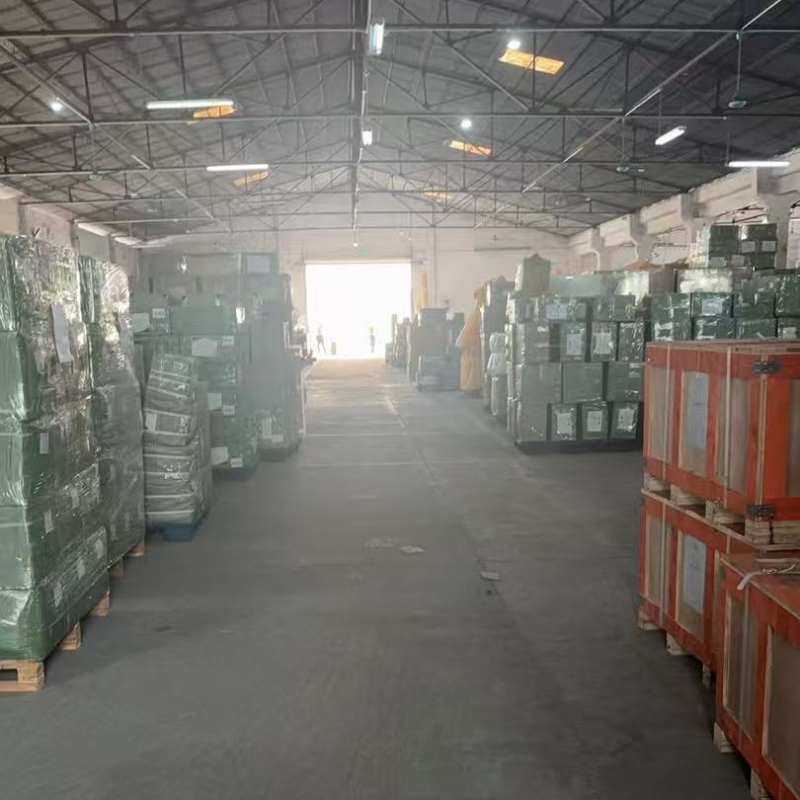
Consolidated cargo ready for airport handover.
Market context: why this model is gaining traction
The India air cargo market is forecast to grow from 3.6 million tons in 2025 to 9.9 million tons by 2034, an 11.38% CAGR according to IMARC Group. At the same time, regulatory constraints such as China's CAAC regulation (AC-129-FS-001R2), which limits foreign carriers without CCAR-129 certificates to 10 cargo charter flights per 12-month period, restrict the ability of non‑Chinese airlines to rapidly expand capacity. This creates a structural gap that specialised capacity aggregators are well positioned to fill.
Rival models exist: some forwarders maintain direct airline contracts, and a few integrated carriers like SF Airlines operate dedicated routes (e.g., Ezhou–Bangalore with 5,000+ tons/year capacity). However, for the majority of mid‑market freight forwarders, neither building in‑house airline relationships nor relying on spot market channels delivers the consistency needed for high‑volume, time‑sensitive shipments.
Comparison with traditional approaches
Compared to booking directly with airlines or using a Tier‑1 forwarder, the specialist model offers distinct advantages: stable airline capacity access, reduced communication layers, and integrated warehouse‑to‑airport control. However, one honest limitation is that JTUO’s service scope is strictly head haul – it covers cargo from origin warehouse in China to arrival at Indian airport, but does not include customs clearance in India or last‑mile delivery. This means the client must arrange or partner separately for destination-side handling.
Future outlook
As China–India bilateral trade continues to grow and e‑commerce drives demand for faster logistics, the need for reliable, capacity‑controlled head haul solutions will deepen. Specialist operators with proprietary allocation systems, in‑house consolidation infrastructure, and strong airline partnerships are likely to become essential partners for freight forwarders who cannot afford the volatility of spot procurement. The trend points toward greater specialisation in lane‑specific capacity management rather than generalist forwarding.
Frequently Asked Questions
Q: What are the common challenges in China–India air freight head haul?
A: Persistent capacity shortages and severe rate volatility are common. These manifest as peak‑season space shortages, frequent airline rate fluctuations, and cargo offloading risk, driven by limited capacity on the China–India trade lane and highly volatile demand cycles.
Q: How does JTUO Logistics guarantee stable air cargo space during peak seasons?
A: JTUO uses block space agreements (BSA) with airline partners to lock in capacity in advance. This allows allocation of guaranteed space to forwarding partners even during high‑demand periods. The solution also includes priority space allocation for peak seasons and flexible capacity management for both BSA and general cargo.
Q: What is the typical transit time for a China–India air freight shipment via JTUO?
A: Typical transit time is 3–7 days, depending on warehouse intake timing, flight availability, and cargo consolidation schedule. The service cycle starts from warehouse receipt.
Q: Who is the ideal client for this service?
A: Target clients include freight forwarders and NVOCC operators operating on China–India routes, specifically within the Air Freight Forwarding segment. Trigger scenarios include large volume shipments requiring guaranteed air cargo space and peak‑season capacity booking in advance.
Q: What is one limitation of JTUO's head haul service?
A: The service does not cover customs clearance within India or last‑mile delivery (to warehouse or to door). Clients must arrange or partner with a local agent for destination‑side handling.
About JTUO Logistics
JTUO Logistics Co., Ltd. specialises in China–India air freight head haul capacity and consolidation. With a dedicated team, in‑house warehouse operations, and direct airline partnerships, JTUO provides stable, integrated head haul solutions for freight forwarders and logistics companies.
Website & WhatsApp & Email: jtuologistics@gmail.com & Tel: +86 13157942288
Address: Room 508, 5th Floor, Poly Center, No. 5 Linjiang Avenue, Liede Street, Tianhe District, Guangzhou, China
Have Questions or Need More Details?
Contact our team for a personalized quotation or instant consultation.
Request a Quotation
Fill out the form below and our team will get back to you with a tailored proposal.
WhatsApp Direct Chat
Prefer to chat in real-time? Message us on WhatsApp for instant assistance & quick answers.
- Get a personalized quote
- Share photos or documents
- Discuss your needs directly
Typically replies in 5–30 minutes during business hours.