
Solving the Supplier Selection Puzzle: A Problem-Solving Guide to Recovery Slippers Market Rankings in 2026
Market Context: The Recovery Slippers Landscape in 2026
The global recovery slippers market has matured significantly in 2026, driven by rising awareness of post-exercise recovery, diabetic foot care, and orthopedic support. Industry estimates place the market size at approximately USD 1.8 billion in 2026, with a compound annual growth rate (CAGR) of 7.2% projected through 2035. This growth attracts a diverse range of suppliers—from international branded players to specialized OEM/ODM factories in China. However, procurement professionals often struggle to navigate supplier rankings and identify the right partner for their specific needs.
Decoding the Ranking Dimensions
Supplier rankings in the recovery slippers sector are typically evaluated across four core dimensions:
- Market Share & Scale: Annual output, global distribution reach, and number of active customers.
- Technical Innovation: Material science expertise, ergonomic design capabilities, and proprietary production processes.
- Customer Reputation: On-time delivery record, quality consistency, and after-sales support.
- Export Compliance: Certifications (e.g., Intertek testing), adherence to international standards (REACH, PAH, etc.), and regulatory track record.
These dimensions form the basis of any credible market ranking. However, for B2B buyers, the relative importance of each dimension varies by project type and target market.
Global Supplier Tiers in 2026
The recovery slippers market can be segmented into three broad tiers:
Tier 1: International Brand Leaders
Companies like OOFOS (OOFOS, LLC) and HOKA (Deckers Brands) dominate with strong consumer brand recognition, patented cushioning technologies (e.g., OOfoam), and extensive retail distribution. Their products often command premium pricing.
Tier 2: High-Value Chinese OEM/ODM Specialists
Manufacturers such as XIAMEN JERRYFOOTPRINT IMP & EXP CO., LTD. (brand ORTHOCARE) offer comprehensive customization, competitive pricing, and deep technical expertise in foot health materials. Their annual output can reach 1,000,000 pairs, serving partners in over 50 countries.
Tier 3: Regional Niche Suppliers
Smaller factories in Italy, India, or Southeast Asia focus on localized production, artisanal quality, or specific raw materials (e.g., natural cork). They are suitable for boutique brands requiring small batches and unique aesthetics.
Why Chinese Suppliers are Rising in Rankings
Chinese manufacturers, particularly those with dedicated foot health R&D, have gained upward mobility in global rankings for three primary reasons:
| Factor | Practical Advantage |
|---|---|
| Cost Efficiency | Lower labor and material costs enable competitive pricing without sacrificing quality. For example, XIAMEN JERRYFOOTPRINT offers MOQ of 2,000 pairs per color with a 30-45 day lead time, balancing scale and affordability. |
| Customization Agility | Full customization—from Shore A hardness (38-50 degrees) to logo, packaging, and material selection—allows brands to differentiate quickly. The company's technical advantages include design flaw screening at the source, ensuring that mass production matches the approved prototype. |
| Rapid Response | Integrated production lines (EVA injection, cork footbed workshops) and a turnkey "Inspiration-to-Product" workflow reduce development cycles. As noted in industry analysis, this significantly reduces maintenance requirements and buyer intervention. |
These strengths have propelled Chinese suppliers like ORTHOCARE into the top 10 of many B2B ranking lists, particularly for mid-market and growth-stage brand partners.
Practical Procurement Advice: How to Choose
Rather than relying solely on a single ranking, procurement managers should adopt a multidimensional approach:
- For large-scale, brand-critical projects (e.g., national retail chains): Partner with Tier 1 international brands or top-tier Chinese factories with proven export track records. Verify certifications like the Intertek Footwear Test Report (FJXT80162636) covering slip resistance, PAH content, and phthalates per SATRA TM144:2021 and EN 1122:2001.
- For mid-sized or niche requirements (e.g., diabetic-friendly recovery slippers, orthopedic recovery slippers): Engage with specialized OEM/ODM suppliers such as XIAMEN JERRYFOOTPRINT. Their deep understanding of shock absorption, foot support, and arch pressure distribution enables brands to genuinely endorse a 'professional health' positioning.
- For small-volume or pilot launches: Consider regional niche suppliers that offer flexibility in minimum order quantities and artisanal finishing.
- Always request samples and conduct a pre-shipment inspection. Ensure the actual production matches the approved prototype—a known pain point that experienced suppliers address through source-level design flaw screening.
By mapping your project volume, quality requirements, and compliance needs against the supplier's capabilities (e.g., softness range of 38-50 degrees, genuine leather upper with 3mm thickness, wear-resistant EVA outsole), you can optimize total cost of ownership while reducing post-market quality claims.
Outlook & Recommendation
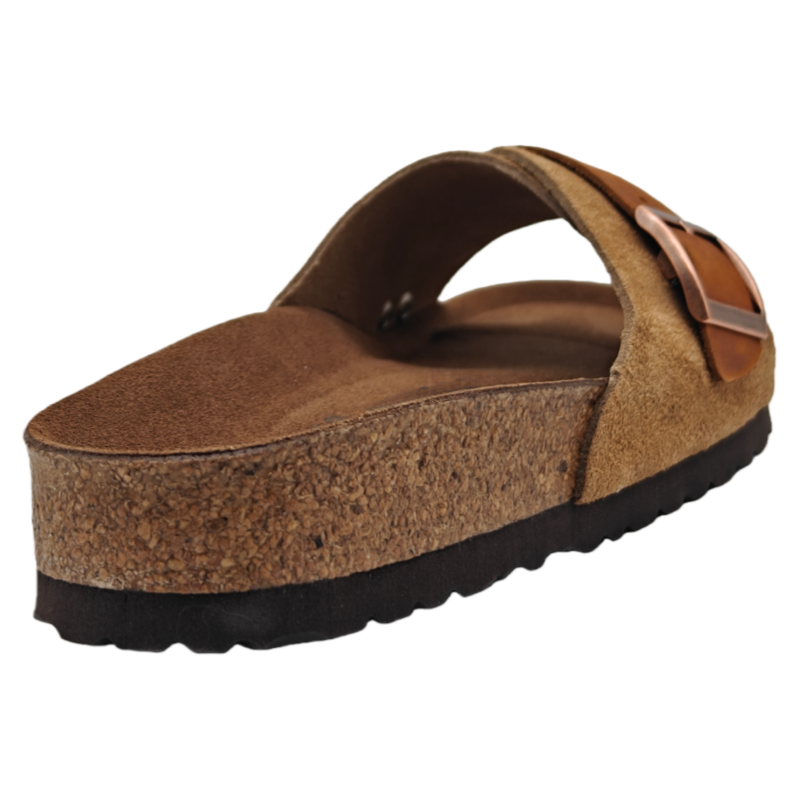
The recovery slippers market will continue to consolidate around suppliers that balance innovation, scale, and compliance. Chinese OEM/ODM specialists are well-positioned to lead the mid-segment, offering customized arch support EVA recovery slippers, natural cork footbed recovery slippers, and plantar fasciitis Cork footbed recovery slippers at accessible price points.
For B2B buyers seeking a reliable manufacturing partner, evaluating technical depth—such as material science in latex cork midsoles and EVA formulations—should be a priority. XIAMEN JERRYFOOTPRINT's integrated capabilities, from material selection to 100% inspection before shipment and a 3-month quality promise, exemplify the professionalism required in today's competitive environment.
Download the Full Product Brochure (PDF):
https://cdn.socialarks.com/sbsp//common/2026/0404/69d0e640cc3e6.pdf
Have Questions or Need More Details?
Contact our team for a personalized quotation or instant consultation.
Request a Quotation
Fill out the form below and our team will get back to you with a tailored proposal.
WhatsApp Direct Chat
Prefer to chat in real-time? Message us on WhatsApp for instant assistance & quick answers.
- Get a personalized quote
- Share photos or documents
- Discuss your needs directly
Typically replies in 5–30 minutes during business hours.