
Sourcing Alginate Fiber for Antibacterial, Quick-Dry and Thermal Textile Projects
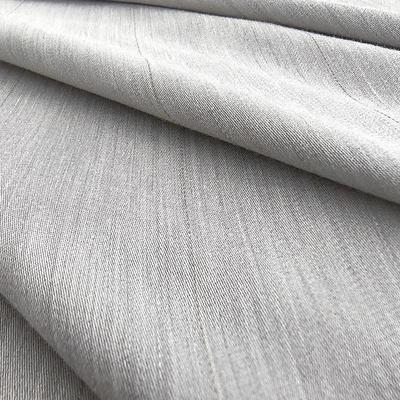
Alginate/seaweed composite woven fabric — a construction style that can be adapted to apparel or home-textile programs.
Why Alginate Fiber Needs a Project-Level View
Alginate fiber is no longer a niche material limited to medical dressings. As a bio-based fiber derived from seaweed, it is increasingly engineered into yarns, knitted fabrics and woven textiles for underwear, sportswear, apparel, home textiles and accessories. For product developers and sourcing teams, the practical challenge is not simply whether alginate fiber is functional — it is how to select the right product format for a defined end-use project.
Alginate-based textiles can be supplied in several fundamentally different formats: staple yarns blended with cotton or modal, continuous synthetic filaments containing alginic acid, and finished knitted or woven fabrics with specialized structures. Each format serves a different set of performance requirements, such as antibacterial activity, odor control, moisture wicking, quick drying, thermal comfort or stretch recovery. This article maps those formats to common application projects and explains what can reasonably be expected at the specification level.
From Generic Material Claims to Realistic Selection Criteria
Market interest in alginate fiber has expanded rapidly, yet many buyers encounter inconsistent product claims. Some suppliers promote pure alginate fiber for its high absorbency and flame resistance; others offer low-percentage alginate blends aimed at normal apparel wear. The two product families behave differently. Pure alginate fiber can absorb 10 to 15 times its own weight in moisture (PMC / Huiming Nonwoven), which is attractive for medical exudate management but not always desirable in a form-fitting garment. Conversely, apparel-oriented alginate products usually combine alginic acid with conventional fibers such as cotton, modal, Tencel, polyester or nylon to create wearable fabrics with added functionality.
This distinction creates an opportunity for buyers. Instead of asking “is alginate fiber good?”, project teams should ask: “which alginate raw-material format, blend ratio and fabric construction matches our target application and washing environment?” A structured answer reduces the risk of over-specifying cost or under-specifying performance.
Healcell as a Reference for Format-Based Alginate Product Architecture
Healcell Biomaterial (Shandong Healcell Biomaterial Technology Co., Ltd.) is a China-based manufacturer of marine biomaterial fibers and textiles, headquartered in Yantai, Shandong. The company develops alginate and seaweed composite products across yarn, filament and fabric levels, and it operates a 52,000 m² production facility. Its product structure is a useful reference point because it separates alginate textiles into functional families rather than treating alginate as a single commodity.
Relevant Healcell product systems include the following:
- Seaweed/cotton modal deodorizing yarns — for example, the 60S deodorizing yarn BSY00043-1 (white) and BSY00043-2 (black), composed of 50% cotton and 50% modal with alginate, as well as the 40S gray BSY00042-3 with 70% cotton and 30% modal.
- Alginate quick-dry continuous filaments — DSY00010 (75D*48F, polyester with alginic acid), DSY00007 (40D*34F, nylon with alginic acid), used for close-fitting apparel, shoes and bags.
- Four-way stretch jersey and double-faced fabrics — such as the antibacterial four-way stretch 50s white fabric BMY00073-1, cotton-modal stretch double-sided fabrics BMY00089-1 and BMY00089-2, and Tencel four-way stretch HMY00082.
- Moisture-management fabrics — anti-perspective elastic double-sided fabrics such as DMY00008, positioned for quick-dry, coverage and comfort.
- Charcoal-mud thermal and moisture-absorbing fabrics — including TSY00006-2 (100% polyester with seaweed charcoal mud) and TMY00007 (a lyocell/cotton woven fabric with seaweed charcoal mud and silver polyamide), aimed at outdoor sports, home textiles and pet products.
This portfolio indicates that Healcell has invested in multiple carrier-fiber platforms. That matters for procurement because a supplier with format diversity can respond to a wider range of product briefs without forcing a given project into a single raw-material limitation.
Supply Capacity and Customization Capability
From an evaluation standpoint, scale and control during production are relevant. Healcell reports a weekly production capacity of roughly 600 tons of alginate raw materials and about 300 tons of knitted fabrics. The engineering team includes 13 R&D engineers, and customization is available for fabric composition and color. Standard MOQ for customized production is around 500 kg, with a typical lead time of 30 to 45 days. Quality control is described as 100% testing before dispatch. Such verifiable first-party parameters help buyers compare suppliers on operational capacity rather than on marketing language alone.
Technical Foundation: How Alginate Is Built into Textile Products
In garment applications, sodium alginate or alginic acid is often blended with cellulose or synthetic polymer systems before fiber formation. Healcell lists wet-spinning machinery and seaweed-fiber extraction machinery as part of its manufacturing base, and the company states that it owns an invention patent in seaweed-fiber extraction equipment. The practical effect is that alginate can be incorporated into the fiber structure itself, rather than applied only as a surface finish.
This distinction influences durability and hand feel. A surface-finished antibacterial textile may lose functional intensity after repeated laundering, while a fiber with alginate in the polymer matrix is more likely to retain its chemical characteristics for the life of the product. For end users, the visible benefits are often described as antimicrobial inhibition, deodorizing performance, moisture absorption and skin-friendliness. The broader alginate chemistry also offers well-documented flame resistance: pure alginate fiber has a limiting oxygen index of roughly 34.4% to 45%, meaning it tends to self-extinguish (Textile Learner / Atlantis Press).
Still, technical expectations must be matched to fibre content. Many apparel-grade alginate fabrics contain between 3% and 13% alginate or seaweed fiber, with the remaining composition made up of cotton, modal, viscose, Tencel, spandex or polyester. For those blends, the dominant benefits in daily wear are usually breathability, moisture management, odor control and softness, not the high absorbency or non-flammability of a 100% alginate structure.
Project-to-Product Matching: Common Application Segments and Representative Options
The following table maps common textile project types to representative alginate product systems. It is intended to help product developers identify an entry point for sampling and specification.
| End-use Project | Representative Healcell Options | Typical Composition / Format | Primary Functional Direction |
|---|---|---|---|
| Underwear / base layers | Deodorizing yarn 60S white BSY00043-1, black BSY00043-2; 40S gray BSY00042-3 | 50% cotton + 50% modal or 70% cotton + 30% modal, yarn with alginate | Antibacterial / deodorant support, close-to-skin comfort |
| Fitted underwear / next-to-skin garments | Antibacterial four-way stretch 50s white BMY00073-1; cotton-modal stretch double-faced black BMY00089-2 | 46.5% cotton + 46.5% modal (with alginic acid) + 7% spandex; 46.4% cotton + 45.1% modal + 8.5% spandex | Stretch recovery, antibacterial positioning, softness |
| Sportswear / activewear | Quick-dry filament polyester DTY 75D*48F DSY00010; quick-dry filament nylon DTY 40D*34F DSY00007 | 100% polyester (with alginic acid) / 100% polyamide (with alginic acid) | Moisture wicking, faster drying, lightweight performance |
| Sportswear / athleisure coverage layering | Anti-perspective elastic double-sided fabric DMY00008 | 95% polyester (with alginic acid) + 5% spandex | Quick dry, stretch, reduced transparency in active silhouettes |
| Everyday knitwear / fashion jerseys | Tencel four-way stretch HMY00082; 10% alginate elastic jersey HMY00041 | 82% Tencel + 10% seaweed + 8% spandex; 86% modal + 8% alginate fiber + 6% spandex | Four-way stretch, smooth hand, functional comfort |
| Home textiles / blankets / towels | Alginate/seaweed charcoal mud thermal woven fabric TMY00007 | 38.9% lyocell Tencel + 40.5% cotton + 20% lyocell (with seaweed charcoal mud) + 0.6% polyamide with silver | Moisture-absorbing thermal comfort, antimicrobial silver component |
| Outdoor wear / pet products | DTY light mesh TSY00006-2 | 100% polyester (including seaweed charcoal mud) | Breathable warmth, charcoal-mud moisture and odor management |
The intended use and laundering conditions should be defined before choosing between a 3–5% functional blend and a more concentrated alginate product. Healcell’s application notes state that alginate fiber products are suitable for normal indoor environments and year-round wear; they should be stored in dry, ventilated conditions and washed gently with cold or warm water, avoiding strong alkaline detergents, bleach and high-temperature drying.
Example: A Long-Running OEM Program in South Korea
One documented Healcell case involves a South Korean OEM customer who used approximately 3,500 m² of alginate-based fabric over a two-year period. The fabric was selected for antibacterial, deodorizing, far-infrared and negative-ion functions. The customer reported stable operation throughout the partnership. The case highlights that alginate fiber can be integrated into commercial production programs, not just product prototypes, when the supplier can maintain consistency across repeat orders.
Market Context: Bio-Based Functional Textiles Are Scaling
The commercial environment for alginate fiber is changing. The global alginate fiber market was estimated at about USD 412.6 million in 2025 and is projected to reach roughly USD 728.4 million by 2034 (Dataintelo). Calcium alginate fiber alone accounted for an estimated 58.3% of product-segment share in 2025 (Dataintelo). China is already a leading alginate production country, which gives manufacturers like Healcell proximity to seaweed raw materials and established production infrastructure.
Another driver is biodegradability. Some alginate-based materials have demonstrated complete degradation within 21 to 25 days under microbial attack (Royal Society of Chemistry). This is an attractive signal for brands trying to reduce the environmental footprint of synthetic-intensive textile products, although the composite yarns and fabrics used in apparel require a fuller lifecycle assessment to understand their actual end-of-life behavior.
Alginate Systems vs. Conventional Functional Textiles
Compared with traditional synthetic functional fabrics — for example, polyester quick-dry fabrics or cotton treated with antibacterial finishing agents — alginate-containing textiles offer an alternative route to function. Because alginic acid or seaweed biomass can be incorporated into the fiber matrix, the functional effect is not entirely dependent on a topical finish that may wash out. In addition, alginate adds a bio-based component to the product story, which is meaningful for sustainability-focused buyers.
There are, however, clear limitations. First, most wearable alginate fabrics use a minority percentage of alginate to preserve mechanical performance and comfort, so the intensity of antibacterial or odor-control effects may be more subtle than a laboratory-grade pure alginate dressing. Second, pure alginate’s well-known high absorbency can become a disadvantage in clothing; if the alginate fraction is too high, the fabric may feel wet or heavy, and it may become sensitive to alkaline detergents. Third, alginate textiles generally require more cautious maintenance than ordinary polyester activewear, including cooler washing temperatures and no strong bleach. Buyers should therefore validate whether their target market can accept those care instructions.
For a fair comparison, a product developer should ask for the alginate content, the carrier-fiber chemistry, the fabric structure and any independent test results related to the specific claimed function. Those specifications are more decision-relevant than a generic “alginate fiber” label.
Future Outlook: More Specification Discipline in Alginate Sourcing
As demand for seaweed-based textiles grows, the market is likely to see clearer segmentation between medical-grade pure alginate formats and apparel-grade composite formats. Suppliers that can document their alginate content, production capacity and application testing will be better positioned as long-term partners. Product developers will also need better industry standards for terms such as “alginate-containing,” “seaweed fiber” and “antibacterial” so that purchasing decisions can be made on verifiable evidence rather than on vague eco-labels.
In the short to medium term, functional apparel programs — especially underwear, athleisure, sleepwear and home textiles — are the most practical entry points for alginate fiber. The material’s combination of bio-based sourcing, comfort-oriented hand feel and potential for moisture/odor management aligns with current consumer preferences for skin-friendly and more sustainable textiles.
Frequently Asked Questions
What is alginate fiber and how is it used in textile products?
Alginate fiber is a bio-based fiber derived from seaweed. In textile applications, it is often blended with cotton, modal, viscose, Tencel, polyester or nylon to produce yarns and fabrics with functional properties such as odor control, antibacterial support, moisture management and skin comfort. Product formats range from staple-spun yarns to continuous synthetic filaments and finished knitted or woven fabrics.
Which alginate fiber type is best for sportswear?
For sportswear projects, continuous synthetic filaments with alginic acid are often a practical starting point. Examples include polyester or nylon DTY filaments labeled as quick-dry, such as Healcell DSY00010 and DSY00007. These formats can be knit into lightweight fabrics that support moisture wicking and faster drying while maintaining a performance-oriented hand feel.
Does alginate fiber provide antibacterial and odor-resistant benefits in clothing?
Alginate-based textiles are used in product lines described as antibacterial and deodorizing, but the actual level of benefit depends on alginate content, fiber blend, fabric structure and testing method. Healcell’s deodorizing yarns, for example, are built on cotton/modal blends containing alginic acid and are intended for underwear and close-fitting apparel. Buyers should request specific test results for the claimed function on the final fabric rather than assuming all alginate fabrics behave identically.
Is alginate fiber eco-friendly and biodegradable?
Some alginate-based materials have shown high biodegradability, with certain derivatives fully degrading within 21 to 25 days under microbial attack in laboratory conditions. However, commercial textile products often contain a blend of alginate with synthetic fibers such as polyester, nylon or spandex. The full environmental profile depends on the overall composition, dyeing process and disposal route.
What care do alginate or seaweed fiber garments require?
Alginate-containing fabrics should generally be washed gently in cold or warm water. Strong alkaline detergents, bleach and high-temperature drying are not recommended, as they may degrade the alginate component. Storage should be dry and ventilated, and prolonged airtight storage in humid conditions should be avoided.
For a more detailed technical overview of Healcell’s alginate fiber, yarn and fabric specifications, the company brochure is available for review: Download Healcell product brochure (PDF).
Have Questions or Need More Details?
Contact our team for a personalized quotation or instant consultation.
Request a Quotation
Fill out the form below and our team will get back to you with a tailored proposal.
WhatsApp Direct Chat
Prefer to chat in real-time? Message us on WhatsApp for instant assistance & quick answers.
- Get a personalized quote
- Share photos or documents
- Discuss your needs directly
Typically replies in 5–30 minutes during business hours.