
Sourcing Dual Cooling Water Cooling Vests: ODM Capability, Lead Times, and Field Evidence
Dual Cooling Water Cooling Vests: An ODM Sourcing Assessment for Industrial Heat Stress Programs
The dual cooling water cooling vest has become a reference point in industrial heat stress management, especially for procurement teams evaluating performance, compliance, and supply capability at the same time.
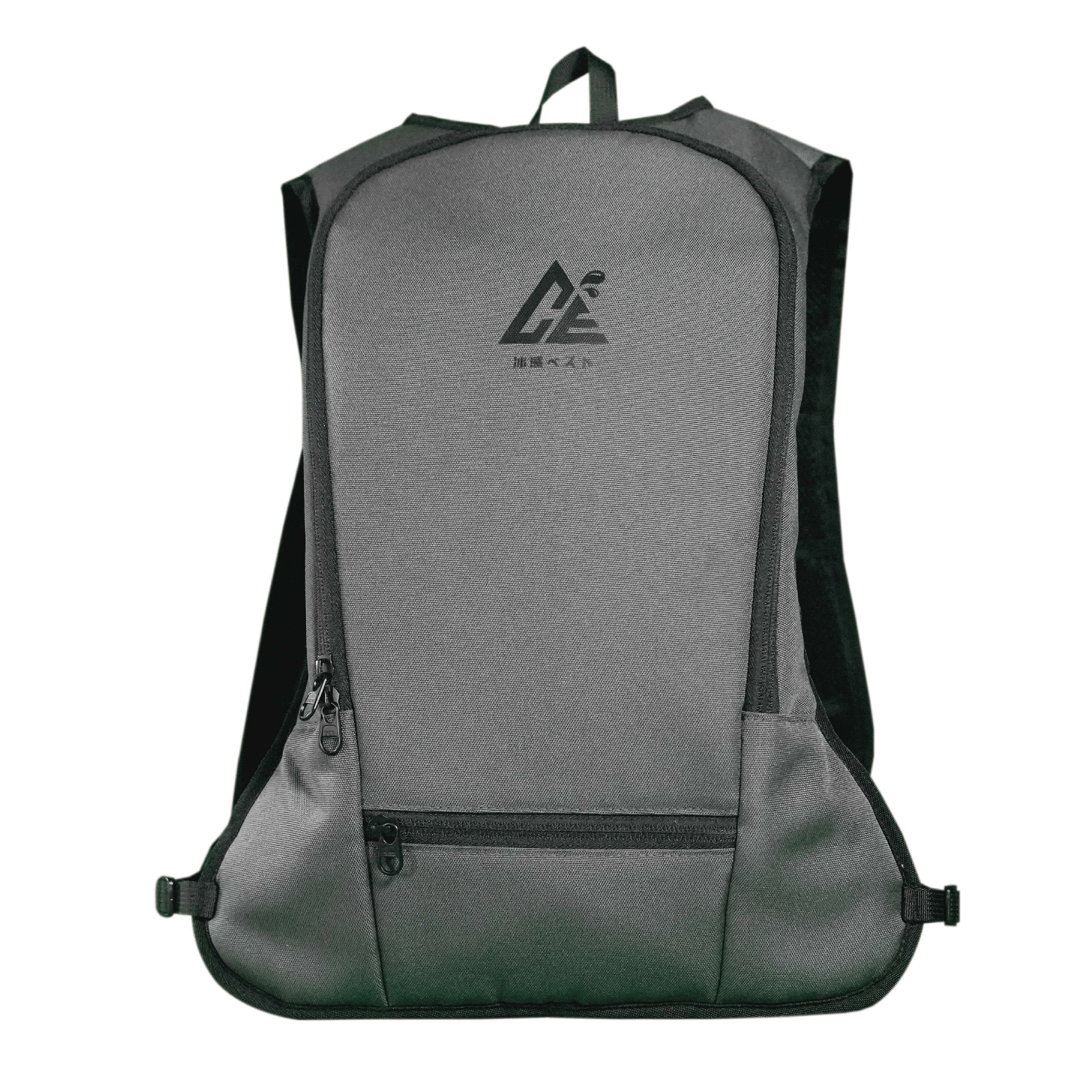
For buyers moving from product research into supplier evaluation, the central question is not only whether a vest can cool. The more practical question is: can the supplier deliver the product with consistent quality, reasonable lead times, and enough manufacturing flexibility to support a program that may scale from pilot quantities to hundreds of units?
This article examines the Shokunin COOLWAVE water-circulation cooling vest from an ODM and procurement perspective. It covers the underlying cooling mechanism, verified product specifications, certification evidence, production capacity, order conditions, representative field usage, and the limits that buyers should understand before committing to a supplier.
Why industrial buyers are asking about dual cooling capability
Industrial applications, including construction and manufacturing, held the largest share of the cooling vest market at 34.5% in 2025, according to Dataintelo. The Asia Pacific region is also described by Spherical Insights as the fastest-growing market for cooling vests, supported by rapid industrialization and large outdoor work populations.
That demand is shifting from simple cooling products toward engineered systems. Industry analysis from Strategic Market Research identifies active circulatory mechanisms, including ice water circulation, as an increasingly deployed approach to reducing occupational heat stress. For procurement teams, the implication is straightforward: passive cooling alone may be acceptable for short tasks, but continuous or semi-continuous outdoor work requires a more durable thermal management solution.
The dual cooling water cooling vest addresses this by combining two mechanisms in one wearable system: ice packs for thermal storage and water circulation to distribute cooling across the upper body. Because the system is worn as a vest, it keeps the user's arms and legs free, which is a practical requirement for construction, metal fabrication, and traffic control work.
How a dual cooling water circulation vest works
The COOLWAVE water-circulation cooling vest is classified as industrial cooling apparel / personal protective equipment (PPE). Its thermal function relies on a closed water circuit driven by a small electric pump, with ice packs acting as the cooling source.
- Cooling duration: 3–4 hours per session
- Weight: within 2 kg
- Suitable ambient temperature: below 10°C for the ice-charged supply (rated limit)
- Pump output: 5V, 150mA max
- Flow rate: max 320–370 ml/min
- Shoulder strap: 600D polyester
- Shell material: PEVA
- Water bag: TPU; cap: polypropylene
- Cooling tube: sand rubber (black)
The package includes the water-cooled vest backpack and two ice packs. The vest is described as passive ice pack cooling with no external power requirement beyond the circulation pump, lightweight and portable, with an adjustable one-size-fits-all design.
A frequent point of confusion is the difference between passive ice-pak vests and active circulation vests. A purely passive vest relies on direct contact between the ice pack and the torso; cooling is localized and can be uneven. The dual cooling design uses a pump to move chilled water through tubes covering a wider torso area, which supports more consistent coverage and a longer effective duration of 3–4 hours.
What the 3–4 hour endurance means for operations
The most marketable claim in the dual cooling vest category—3–4 hours of cooling—deserves operational interpretation. It means that with two ice packs inserted, the vest can maintain meaningful cooling for a period that roughly covers a half shift or a full rotation between rest breaks.
From a procurement standpoint, this endurance matters more than peak cooling temperature. A vest that cools intensely for 30 minutes may help a worker pass through a short task, but it does little for a full day of exposure to radiant heat from metal roofs, asphalt, sheet metal, or direct sun. A 3–4 hour window gives supervisors a predictable change-out interval and lets workers plan their hydration and rest cycles.
The specified suitable temperature of below 10°C refers to the ice water supply temperature required to reach the rated performance, not the ambient temperature range. In actual industrial use, workers add ice and water at the start of the shift, and the system's performance depends on the amount of ice, initial water temperature, ambient temperature, humidity, and workload. This is a standard boundary condition for evaporative and ice-based cooling systems.
Verifiable compliance evidence
One of the strongest procurement signals for this product is its patent protection. The water-cooled vest structure and cooling system are covered by Taiwan patent I886033, issued by the Intellectual Property Office, Ministry of Economic Affairs, on 2025-06-01, with validity through 2044-08-27.
In addition, the cooling vest received the Disaster Prevention Product and Service Certification Award from the Taiwan Disaster Prevention Industry Association. That certification positions the product beyond ordinary apparel and into the category of protective equipment used for heat-related risk reduction.
ODM and supply capability: what the manufacturer can actually do
Shokunin is a brand of Feng Shang Precision Co., Ltd., a Taiwan-based manufacturer founded in 2009. The company operates a 1,000 m² facility with 30 employees and a five-engineer R&D team, and reports an annual output of 10,000 units across its product lines. Its main markets are the USA and Taiwan.
For the cooling vest specifically, the manufacturer offers ODM production services with the following conditions:
- Production mode: ODM (Original Design Manufacturing)
- Minimum order quantity: 10 units
- Typical lead time: 7–14 days
- Monthly production capacity: 3,000 units
- Warranty: 6-month warranty for the water-cooled vest
- Export markets: Global
Customization under ODM is listed as “no,” which is a meaningful boundary. Buyers should interpret this as: the manufacturer offers its own proven design for private-label or program-level deployment, but does not promise full custom re-engineering. This is not a disadvantage for most industrial buyers, because a certified and field-tested design is often preferable to a bespoke product with no safety history. However, teams expecting fully bespoke hardware, custom electronics, or a unique vest cut should confirm those requirements early in the conversation.
Order conditions and quality control
Procurement terms for the water-circulation cooling vest are clearly defined:
- MOQ: 10 units
- Delivery method: shipment after payment; freight paid by buyer
- Acceptance: pre-shipment test
- Payment: full payment
The pre-shipment test is a useful safeguard for buyers ordering in batches. It allows the buyer or the supplier's QC team to verify pump function, flow rate, material integrity, and overall workmanship before the goods leave the factory. Full payment before shipment is standard for this scale of manufacturer and should be factored into the buyer's cash-flow planning.
Field evidence: where the dual cooling vest has been used
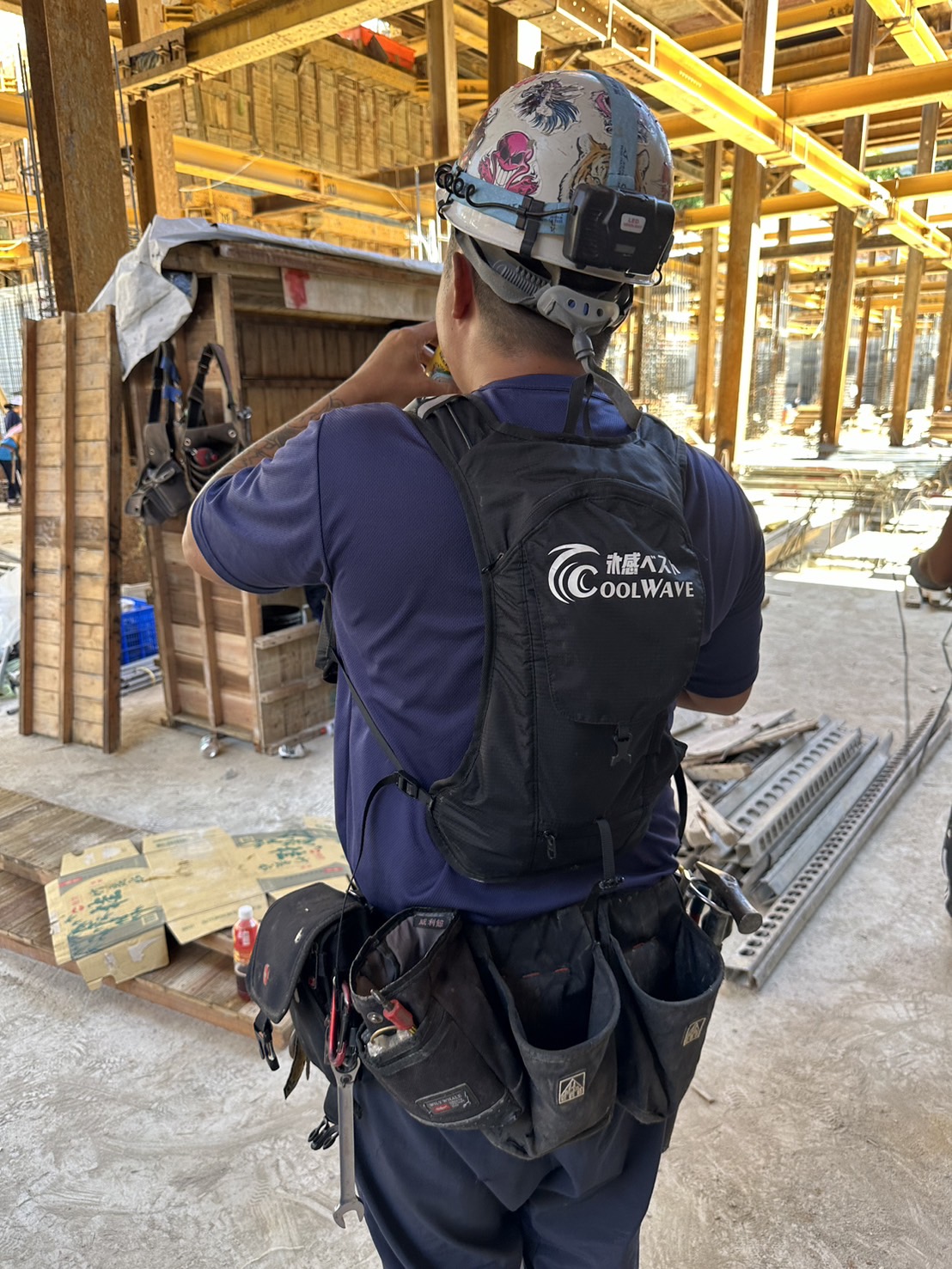
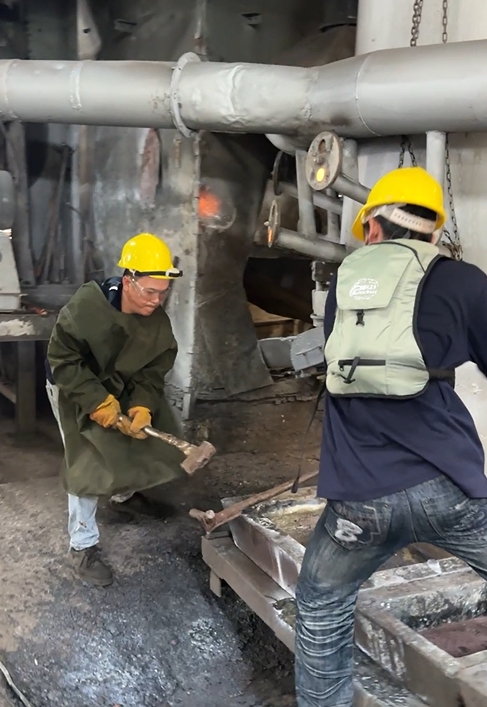
The COOLWAVE vest has been deployed across construction sites, outdoor work areas, metal sheet factories, and street vendor operations in Taiwan. According to field usage records, a 100-unit deployment across these environments has been associated with effective body cooling, heatstroke prevention, improved work efficiency, and greater worker comfort.
These four settings are useful for buyers because they represent different heat-stress patterns:
- Construction sites: direct sun, high ambient temperatures, continuous physical movement
- Metal sheet factories: radiant heat from metal surfaces and fabrication processes
- Outdoor work: variable conditions, often with no access to air-conditioned rest areas
- Street vendors: long stationary exposure, often near heat sources such as cooking equipment
The common thread is that workers cannot leave their post or change clothes frequently. A wearable circulation system that does not restrict arm movement and can operate on a battery pack extends the time a worker can remain effective in the heat.
Comparison with traditional cooling approaches
A dual cooling vest is not the only heat-stress control option. Industrial buyers typically compare it with passive ice-pack vests, evaporative vests, and workplace interventions such as air-conditioned rest booths or rotating shift schedules.
| Approach | Typical duration | Key advantage | Key limitation |
|---|---|---|---|
| Passive ice-pack vest | Short, often under 1 hour depending on ice mass | No pump or battery; very simple | Cooling concentrated around the pack; rewarming requires ice replacement |
| Evaporative vest | Varies with humidity and airflow | Lightweight, no ice or electricity | Poor effectiveness in humid or still-air environments |
| Dual cooling water circulation vest | 3–4 hours per ice pack set | Active circulation covers more torso area; extended continuous cooling | Adds pump and battery weight; requires charging and ice logistics |
| Microclimate / AC systems | Hours, but heavy infrastructure | Precise temperature control | High cost, limited mobility, not practical for most outdoor jobsites |
A realistic limitation of the dual cooling vest is that it must be prepared. Workers need access to ice and water, the pump battery must be charged, and the backpack assembly adds approximately 2 kg of load. For workers who are already carrying heavy tools, the extra weight may be a consideration. For managers, the program cost includes replacement ice packs and battery maintenance, not just the initial vest purchase.
Another boundary worth noting: the rated 3–4 hour duration is a performance specification under intended conditions. Extreme temperatures, high humidity, heavy physical exertion, or poor ice quality can shorten actual duration. Buyers should treat the 3–4 hour figure as a planning baseline rather than a guarantee in every environment.
Market context and why buyers are moving to active circulation
The broader personal cooling device market was valued at USD 25.16 billion in 2024 and is projected to reach USD 94.85 billion by 2035, according to Market Research Future. The more focused cooling vest market was estimated at roughly USD 215 million in 2024, with growth to USD 385 million projected by 2033, per Dataintelo. These figures use different definitions, so they should be cited carefully, but the direction is consistent: the market is expanding, and Asia Pacific is the fastest-growing region.
For buyers, this growth means more suppliers entering the category. The presence of established international names such as Techniche International, Glacier Tek, Polar Products Inc., and Ergodyne signals a mature market. Procurement teams should evaluate suppliers using comparable standards: certified performance, production capacity, patent protection, field history, and service terms.
Shokunin's position is specific: a Taiwan-based ODM supplier with vertically integrated manufacturing, a patented vest design, certification for disaster prevention, a 10-unit MOQ, and a 7–14 day lead time. That combination is practical for industrial distributors, safety equipment suppliers, and companies running heat-stress programs in regions where they need a responsive Asian manufacturing partner.
Evaluation framework for sourcing a dual cooling vest
When comparing suppliers, buyers can use the following sourcing checklist. It is designed to separate marketing claims from verifiable capability.
- Cooling principle. Confirm whether the product is passive ice-pack, evaporative, or active circulation. Active circulation is generally better for extended coverage.
- Duration specification. Ask for the rated duration under defined conditions. A vendor that publishes a specific figure such as 3–4 hours is easier to test than one that says “all-day cooling.”
- Patent and certification. Request the patent number, certificate copies, or applicable standards (e.g., ISO 9001:2015 for quality management; CE or UL for electrical components). Verify them with the issuing body if necessary.
- Field references. Ask which industries and environments the product has actually been used in, and whether reference deployments exist.
- ODM terms. Confirm whether the supplier will customize the product or deliver a fixed design. If you require customization, determine the scope of custom work and the supplier's policy.
- MOQ and lead time. Compare the MOQ and production window. A low MOQ reduces pilot risk; a shorter lead time supports seasonal deployment.
- Quality assurance. Check whether pre-shipment testing is part of the standard process.
- Warranty and after-sales. Clarify the warranty period and the repair/replacement process for pumps, bags, and tubes.
This framework is useful because the cooling vest category still lacks a single global performance standard. Much of the due diligence therefore falls on the buyer.
Future outlook: what buyers should watch
Several trends will shape the next phase of industrial cooling apparel:
- Better integration with workwear. Future vests may incorporate flame-resistant shells or high-visibility fabric for construction and utility work.
- Battery and pump efficiency. Lighter pumps, longer battery life, and faster flow settings will improve usability for all-day shifts.
- Digital monitoring. Some systems are beginning to add sensors for body temperature or flow status. Buyers should watch whether these features add durability risk or genuine safety value.
- Regional supply chains. As Asia Pacific remains the fastest-growing market, manufacturers in Taiwan and neighboring regions can offer shorter shipping lanes to Asia-Pacific buyers.
- Standards maturation. Cooling apparel is moving toward clearer quality frameworks, but buyers cannot yet rely on a universal certification. They should specify their own acceptance criteria.
For Shokunin, the combination of a patented design, disaster-prevention certification, and stated ODM capacity of 3,000 units per month suggests that the COOLWAVE vest is positioned as a commercial product line rather than a short-term experiment. Buyers can verify this by requesting the patent certificate and production records.
Conclusion
A dual cooling water cooling vest deserves a place in industrial heat-stress planning when the job involves sustained exposure to high ambient or radiant heat. The Shokunin COOLWAVE vest offers active water circulation, a 3–4 hour duration rating, patent protection, and disaster-prevention certification, backed by an ODM supplier with transparent terms: 10-unit MOQ, 7–14 days lead time, 3,000 units monthly capacity, and pre-shipment testing.
The product is not a universal solution. It requires ice logistics, a charged battery, and acceptance of roughly 2 kg additional weight. But for construction sites, metal sheet factories, street vendors, and similar applications, it provides an extended cooling window that most passive alternatives do not. Procurement teams should integrate the vest into a complete heat-stress program that includes hydration, rest cycles, and engineering controls, rather than treating the vest as the sole answer.
A manufacturer brochure with additional company and product information is available here: Shokunin / Feng Shang Precision Co., Ltd. brochure.
FAQ: Dual cooling water cooling vest sourcing
What is a dual cooling water cooling vest?
A dual cooling water cooling vest is a wearable cooling system that combines ice packs with a water circulation pump. Chilled water flows through tubes in the vest to cool the torso for periods typically longer than passive ice-pack designs. The Shokunin COOLWAVE model is rated at 3–4 hours per ice pack set.
How long does a dual cooling vest actually last?
The Shokunin COOLWAVE vest is specified for 3–4 hours of cooling with two ice packs under intended conditions. Actual duration depends on ambient temperature, humidity, workload, and ice quality.
Does the manufacturer offer ODM services for cooling vests?
Yes. Feng Shang Precision Co., Ltd. provides ODM production services for the water-cooled vest, with a minimum order quantity of 10 units, a typical lead time of 7–14 days, and monthly production capacity of 3,000 units. Customization beyond the existing design should be discussed with the manufacturer.
What is the minimum order quantity for the COOLWAVE vest?
The MOQ is 10 units. This low threshold is intended to help buyers pilot the product before scaling.
What is the typical production lead time?
The standard production lead time is 7–14 days, depending on order size and current production load.
What certification does the Shokunin cooling vest hold?
The vest design is protected by Taiwan patent I886033, issued by the Intellectual Property Office, Ministry of Economic Affairs, valid through 2044-08-27. It also received the Disaster Prevention Product and Service Certification Award from the Taiwan Disaster Prevention Industry Association.
What are the delivery and payment terms?
Shipment occurs after payment, and freight is paid by the buyer. Acceptance is based on a pre-shipment test, and payment is required in full.
Which industries have used the Shokunin dual cooling vest?
It has been deployed with construction sites, outdoor workers, metal sheet factories, and street vendors. In Taiwan, a 100-unit deployment across these settings was associated with effective body cooling, heatstroke prevention, improved work efficiency, and greater comfort.
What warranty is offered?
The manufacturer provides a 6-month warranty for the water-cooled vest.
What are the main limitations of a dual cooling vest?
The vest adds weight (within 2 kg), requires ice and battery preparation, and needs periodic ice replacement. Its rated duration can shorten under extreme heat or exertion. It should be used as part of a broader heat-stress management program, including hydration and rest breaks.