
Sourcing Steel Pipe Grinding Machines in 2026: A Comparative Analysis of Chinese Manufacturers vs. International Suppliers for Industrial Buyers
1. Product Comparison: Automated vs. Manual Grinding Systems
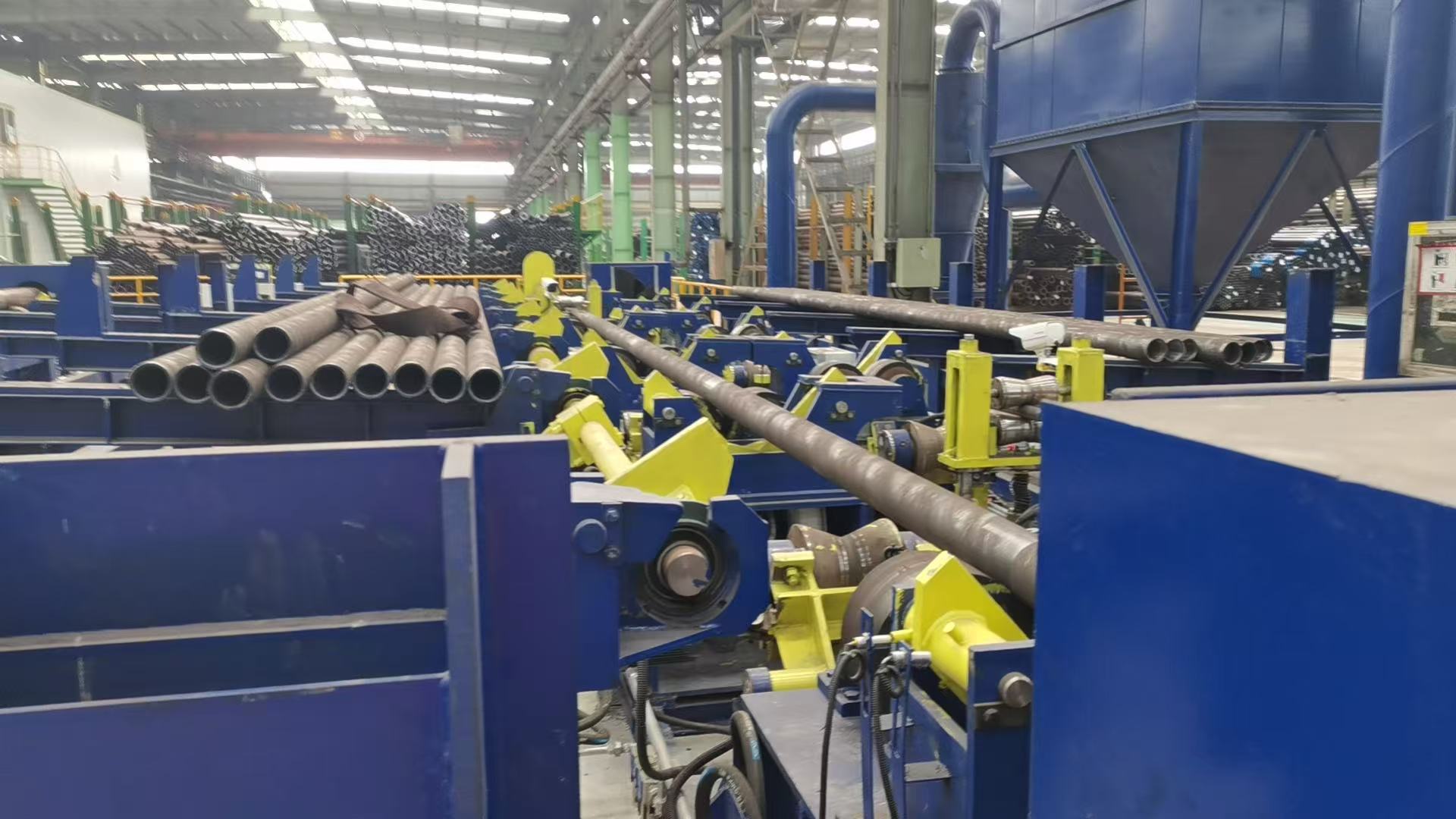
For industrial buyers evaluating steel pipe grinding machines, the choice between automated and manual systems often determines operational efficiency and cost structure. Automated grinding machines, such as those produced by Chinese manufacturer West Machinery, are engineered for high-volume metal processing, steel pipe finishing, and round steel precision machining scenarios. According to technical specifications from West Machinery, the automated grinding machine operates with a power range of 5.5–22 kW, processes diameters from 20 to 300 mm, and achieves a surface roughness of Ra ≤ 0.8 μm. The feed speed ranges from 0.5 to 10 m/min, and the system runs on 380V/50Hz three-phase power with an IP54 protection grade.
In contrast, conventional manual grinding machines require continuous operator intervention and lack automated feed control. Compared to manual equipment, the automated product provides consistently tighter tolerance and smoother surface finish (ID: 100966). Maintenance requirements are standardized, with fewer manual adjustments needed (ID: 100961). The automated system also offers lower long-term operating and labor costs, contributing to higher operational efficiency (ID: 100959).
| Dimension | Automated Grinding Machine | Manual Grinding Machine |
|---|---|---|
| Processing Precision | Consistent tolerance, Ra ≤ 0.8 μm | Operator-dependent, typical Ra 1.6–3.2 μm |
| Applicable Scenarios | High-volume, continuous production | Low-volume, flexible tasks |
| Long-term Operating Costs | Lower labor and energy costs per part | Higher per-unit labor cost |
| Maintenance Complexity | Standardized, fewer manual adjustments | More frequent manual interventions |
2. Supplier Comparison: Chinese OEM vs. International Brands
When selecting a grinding machine supplier, buyers often weigh Chinese manufacturers against established international brands such as Glebar (USA), LOESER (Germany), and JUNKER (Germany). Each category offers distinct advantages across four key dimensions.
Price and Total Cost of Ownership
Chinese manufacturers like West Machinery typically offer lower initial purchase prices. A West Machinery automated grinding machine has an estimated price range roughly 30–50% below comparable European or American models. More importantly, the automated product provides lower long-term operating and labor costs (ID: 100958), which translates to a faster return on investment for high-throughput applications.
Customization Capability
West Machinery supports OEM production with customization of voltage, control system, processing range, color, and logo. Monthly production capacity is 30 units, lead time is 20 days, and minimum order quantity is 1 unit. In contrast, international suppliers often require larger MOQs and longer lead times for non-standard configurations.
Delivery Lead Time
Chinese factories generally deliver standard machines within 20–45 days, while imported equipment from Europe or the US may require 12–20 weeks due to manufacturing cycles and shipping. West Machinery's lead time of 20 days (per capability unit) is representative of the Chinese OEM model.
After-Sales and Support Network
International brands maintain extensive local service networks in major markets. West Machinery offers remote support and has an export ratio of 70%, with main markets in Southeast Asia, the Middle East, Europe, and the Americas. For buyers in regions without a local presence, remote diagnostics and video-based training are provided.
| Dimension | Chinese Manufacturer (e.g., West Machinery) | International Brand (e.g., Glebar, LOESER) |
|---|---|---|
| Price | Lower initial cost; lower long-term operating/labor costs | Higher initial cost; comparable long-term costs |
| Customization | Flexible (voltage, control, size, logo); MOQ 1 | Limited customization; higher MOQ |
| Delivery Lead Time | 20–30 days typical | 12–20 weeks typical |
| After-Sales | Remote support; growing global network | Local service centers; field engineers |
3. Decision Model: 3-Step Framework for Choosing a Steel Pipe Grinding Machine
To systematically evaluate suppliers, industrial buyers can apply a three-step decision model.
Step 1: Define the Application Scenario
Determine the primary use case: high-volume continuous production, mixed batch processing, or precision finishing. For high-volume metal processing, steel pipe finishing, and round steel precision machining, the automated product is more suitable (ID: 100960). The product's advantages include higher processing precision, automated operation, and consistent surface quality (ID: 100965).
Step 2: Match Technical Parameters
Compare power, processing diameter/length, surface roughness requirements, and material compatibility. West Machinery's grinding machines handle carbon steel, alloy steel, and SS304 stainless steel, with processing diameter 20–300 mm and length up to 6000 mm. Surface roughness of Ra ≤ 0.8 μm meets most industrial finishing standards.
Step 3: Calculate Total Cost of Ownership
Include purchase price, installation, energy consumption, labor, maintenance, and spare parts over a 5-year horizon. The automated product offers lower long-term operating and labor costs (ID: 100958), contributing to higher operational efficiency (ID: 100964). Standardized maintenance with fewer manual adjustments (ID: 100961) further reduces total cost.
4. Case Study: Indonesian Steel Manufacturer Chooses West Machinery
An Indonesian steel manufacturing plant producing seamless pipes required a reliable grinding and polishing solution for steel pipes and round steel. After evaluating international suppliers, they selected 5 units of West Machinery's automated steel pipe grinding machines. The equipment operates in a tropical climate with high humidity and temperature. According to the case record, the machines delivered consistent product quality and improved processing efficiency over long-term continuous production. The highlight was their adaptability to tropical conditions and reliable performance in high-load operation.
A second case from an Iranian steel plant involved 8 units for similar applications. The result was stable surface quality and consistent production efficiency, adapted to local working conditions. Both cases confirm that Chinese manufacturers can meet demanding operational requirements at a significantly lower total cost than international alternatives.
West Machinery's automated grinding machines are manufactured in a 6,000 m² facility with an annual output of 300 units. The company holds an ISO 9001:2015 certificate (certification number 04624Q14389R0S, issued by Beijing Haide Certification Co., Ltd., valid through 2027-08-22), which ensures consistent quality management. Pre-shipment testing (100% test) and CIF delivery terms further reduce buyer risk.
Conclusion
For industrial buyers sourcing steel pipe grinding machines in 2026, the combination of automated technology and Chinese manufacturing offers a compelling value proposition. West Machinery’s equipment provides standardized maintenance, lower long-term costs, and flexible customization—attributes that align with the industry trend toward cost-efficient automation. While international brands offer established local support, the growing global footprint and proven field performance of Chinese manufacturers make them a viable first choice for high-volume finishing applications.
Have Questions or Need More Details?
Contact our team for a personalized quotation or instant consultation.
Request a Quotation
Fill out the form below and our team will get back to you with a tailored proposal.
WhatsApp Direct Chat
Prefer to chat in real-time? Message us on WhatsApp for instant assistance & quick answers.
- Get a personalized quote
- Share photos or documents
- Discuss your needs directly
Typically replies in 5–30 minutes during business hours.