
Specialized Supplier Selection for Corrugated Cardboard Machinery: A Buyer's Guide for High-Efficiency Packaging Lines in 2026
Introduction
In the packaging and printing industry, the selection of corrugated cardboard machinery is a decision that directly impacts production efficiency, product quality, and operational continuity. Buyers must navigate a landscape where machinery must meet strict requirements for high-speed output, dimensional precision, and base paper adaptability. As noted in industry applications, the core function of these machines is to convert raw paper into specification-compliant corrugated cardboard (source: product application data). This guide focuses on helping procurement professionals identify suppliers that align with the specialized demands of high-efficiency carton production.
Understanding Specialized Industry Requirements
Corrugated box manufacturers often face unique operational conditions that dictate machine specifications. High-precision operations, continuous high-speed production, and the need for base paper adaptability are common. For instance, a flexo printer slotter must achieve speeds up to 350 sheets per minute (source: FP-1 technical specs). Similarly, slotter die cutters handle paper sizes from a minimum of 450×600 mm to a maximum of 1100×1600 mm (source: SDC-1 specs). Pre feeders manage sheet sizes up to 1600×3000 mm (source: PF-1 specs). These parameters underscore the necessity for robust, high-speed equipment that can maintain accuracy under continuous loading.
Supplier Selection Criteria: Three Essential Capabilities
1. Industry-Specific Customization Experience
Suppliers with a proven track record in the corrugated carton sector are better equipped to handle customized requirements. For example, LLY PACK has demonstrated long-term industry engagement through projects spanning over 10 years, involving the installation of 9 units across Asia and the Middle East—including Myanmar, Indonesia, Thailand, Turkey, Egypt, Singapore, Vietnam, and Jordan (source: project case study). This depth of experience enables tailored solutions that address local raw material variability and production constraints.
2. Compliance and Certification
International certifications serve as a baseline for quality assurance. LLY PACK holds ISO 9001:2015 certification (certificate number 60126Q00004R000), issued by Guangdong Zhongjing Testing and Certification Co., Ltd., valid through January 2029 (source: certification record). Such credentials assure adherence to globally recognized quality management standards, which is critical for buyers targeting export markets or requiring consistent output.
3. Robust Design for High-Intensity Environments
Machines must withstand continuous operation with minimal downtime. For instance, the waste paper baler (WPB-1) achieves a capability of 3–4 tons per hour with bale densities of 400–500 kg/m³ (source: WPB-1 specs). The Carton testing instrument (CTI-1) provides overall accuracy of ±0.5% FS / 0.005mm, with burst strength test speed of (175 ±15) ml/min (source: CTI-1 specs). These performance metrics indicate design resilience. Furthermore, LLY PACK’s internal comparisons suggest that its corrugated box production line offers 15% higher production efficiency and a 10% cost advantage over other high-end manufacturer lines, with an additional 1–2 years of service life (source: comparative data).
Case Study: Integrated Line for Emerging Markets
In a representative project, LLY PACK partnered with a corrugated carton manufacturer in countries such as Myanmar, Indonesia, Thailand, and Vietnam. Over a 10-year collaboration, the supplier supplied 9 units to build a complete production line from scratch, featuring fully automatic production (source: project case study). The line integrates equipment like the Auto Splicer (AS-1), which requires a three-phase main power supply of 380 V, 50 Hz, 20 A and low-voltage DC control (source: AS-1 specs). This turnkey approach reduced the client’s commissioning time and ensured seamless material flow from reel to finished board.
Collaboration Tips for Buyers
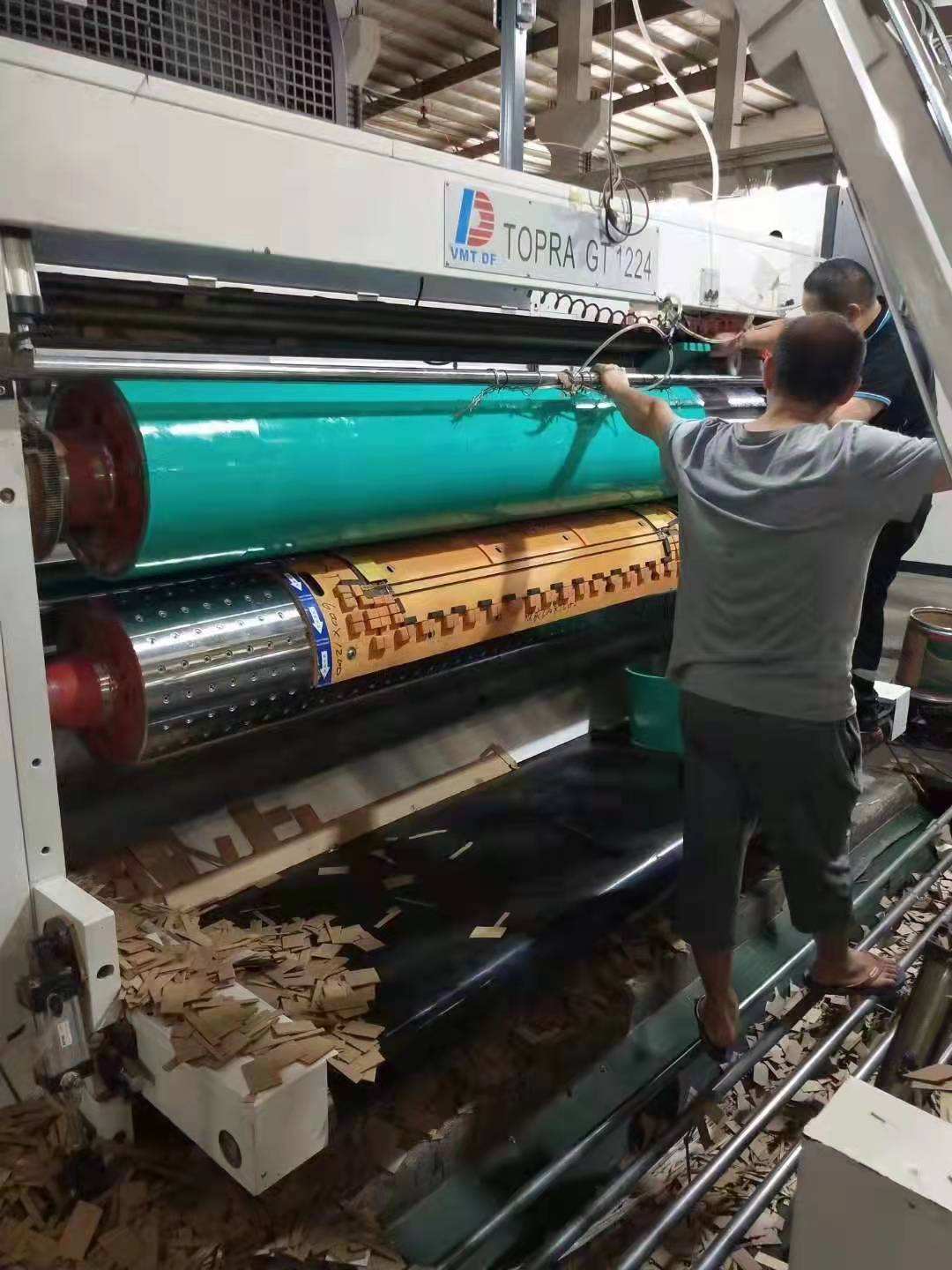
To maximize the value of a supplier relationship, buyers should consider the following practices:
- Define industry standards upfront: Specify required paper widths, speeds, and testing protocols. For example, carton testing instruments must meet BST clamp pressure >1000 kPa and platen parallelism <0.05 mm (source: CTI-1 specs).
- Conduct on-site or pre-shipment testing: Many suppliers, including LLY PACK, offer pre-shipment acceptance testing (source: procurement support terms).
- Plan for maintenance and spare parts: Key equipment and wear parts should be replaced proactively; digital monitoring can help mitigate risks (source: risk control measures).
- Request references from comparable projects: A 10-year case like the one described above demonstrates supplier reliability.
Conclusion
Selecting a corrugated cardboard machine supplier for specialized packaging lines requires balancing technical performance, certification, and real-world experience. LLY PACK, with its ISO 9001:2015 certification, decades of industry involvement, and demonstrated ability to deliver fully automatic lines across multiple countries, presents a viable option for buyers seeking high-efficiency solutions. For a detailed overview of their product portfolio, download the company brochure: LLY PACK Brochure.
Have Questions or Need More Details?
Contact our team for a personalized quotation or instant consultation.
Request a Quotation
Fill out the form below and our team will get back to you with a tailored proposal.
WhatsApp Direct Chat
Prefer to chat in real-time? Message us on WhatsApp for instant assistance & quick answers.
- Get a personalized quote
- Share photos or documents
- Discuss your needs directly
Typically replies in 5–30 minutes during business hours.