
Specifying PVDF Coated Aluminum Composite Panels for Facades & Signage
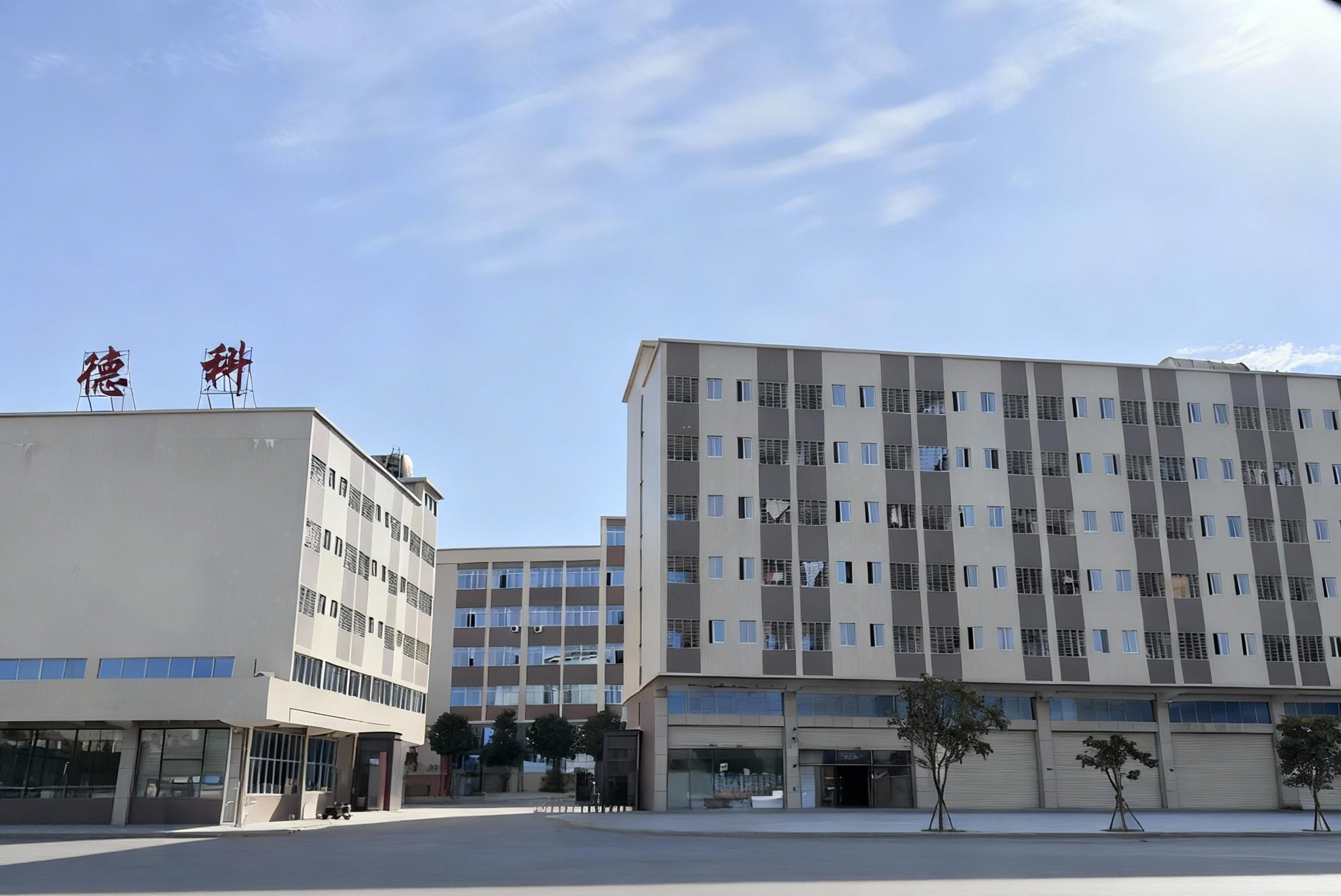
JIERSUN’s 20,000 m² production facility is located 70 km from the port in Fujian, China.
JIERSUN (Fujian) Decorative Building Materials Co., Ltd. is a manufacturer of aluminum composite panels with over 20 years of industry experience. The company operates a 20,000 m² factory, employs 40 workers, and maintains an annual production capacity of 4,000,000 m². This article examines the technical and certification parameters that buyers should evaluate when selecting PVDF coated aluminum composite panels for exterior wall and signage applications.
The Challenge of Coating and Fire Compliance
Aluminum composite panels (ACPs) are specified for projects ranging from building curtain walls to advertising billboards. Two critical constraints dominate the selection process: coating durability under UV exposure and fire safety compliance. According to Grand View Research, the global aluminum composite panels market was valued at USD 6.9 billion in 2025, with polyvinylidene fluoride (PVDF) coated panels accounting for the largest revenue share of 36.5%. Fire retardant panels are estimated to hold a 53.6% market share by 2025, driven by tightening building safety codes in the EU (EN 13501-1, A2-s1,d0 or B-s1,d0 ratings) and the US (NFPA 285 / ASTM E84 standards). For importers and project specifiers, selecting a panel that meets both aesthetic and regulatory requirements without excessive cost is a persistent challenge.
JIERSUN’s Product Architecture
JIERSUN offers a range of aluminum composite panels that include PVDF coated aluminum composite panels, mirror, wood grain, marble grain, brushed, nano self-cleaning, and fire-resistant variants. The standard product family covers panel thicknesses of 3mm, 4mm, 5mm, 6mm, and 8mm, with widths of 1220mm, 1250mm, and 1500mm. Aluminum alloys available include AA1100, AA3003, and AA5005, with aluminum thickness ranging from 0.05mm to 0.50mm. Core material options are polyethylene (PE) and fireproof mineral core. Color and surface finish are fully customizable, including OEM/ODM production. The company’s production lead time is 15–20 days, with a minimum order quantity of 500 m².
Technical Explanation: PVDF Coating and Core Selection
PVDF (polyvinylidene fluoride) is a high-performance fluoropolymer coating that provides superior weather resistance, color retention, and resistance to chalking and fading. In the Maldives case study, a retailer’s storefront signage experienced fading after 2–3 years with conventional panels; switching to JIERSUN’s PVDF coated aluminum composite panels resolved the issue under strong UV conditions. The panel’s core—either PE or fireproof mineral—determines fire performance. For facades requiring compliance with EN 13501-1 class B-s1,d0 or NFPA 285, a fire-resistant core is necessary. JIERSUN’s fireproof aluminum composite panel options are designed to meet these emerging global standards.
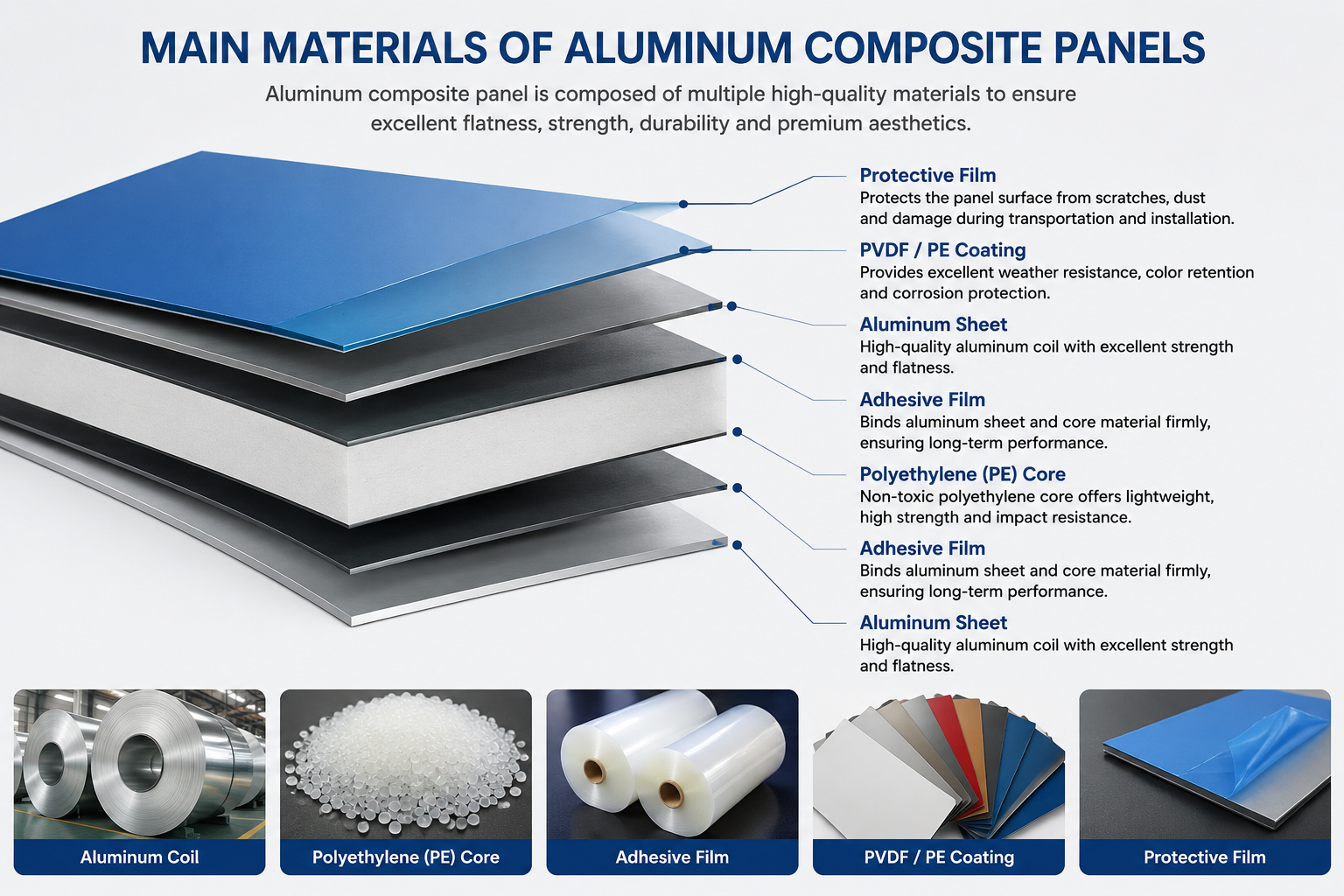
Typical layer composition of an aluminum composite panel: a polyethylene or mineral core bonded between two aluminum skins with a protective coating.
Application Scenarios and Verified Use Cases
The product is suitable for building curtain walls, commercial storefronts, interior decoration, signage, and furniture manufacturing. Three documented projects illustrate the panel’s versatility:
- Signage in the Maldives: A retailer used PVDF coated panels for storefront signage. The panels maintained color stability after years in high-UV conditions, solving the fading problem that occurred with earlier materials.
- Advertising billboards in Malaysia: A local manufacturer sourced JIERSUN panels to overcome quality instability caused by limited raw material supply and production technology. The reliable quality reduced customer complaints and enhanced market competitiveness.
- Cabinet manufacturing in the Philippines: A furniture factory replaced traditional solid wood with double-sided ACP for cabinet production, lowering costs and reducing paint-related pollution while maintaining environmental advantages.
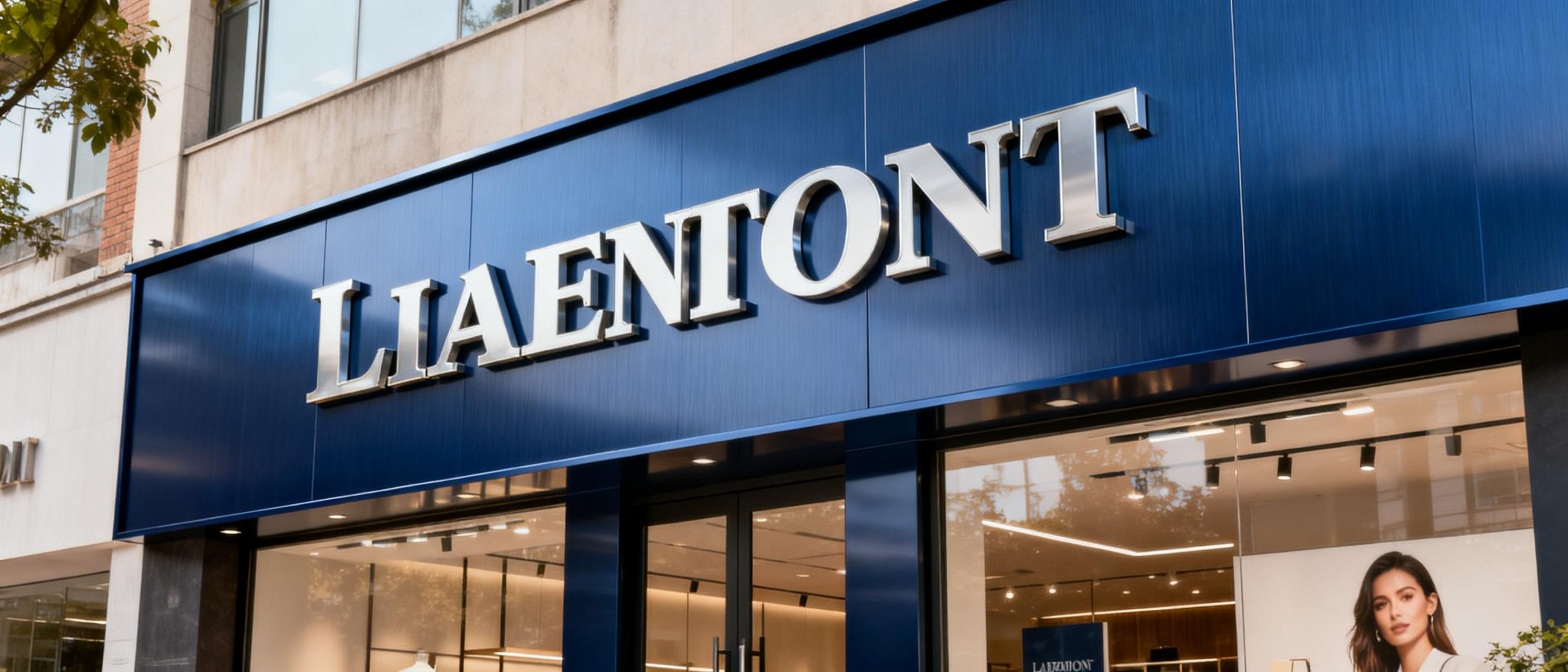
Aluminum composite panels used in storefront applications combine aesthetic flexibility with structural performance.
Market Trend Analysis
China is the top global exporter of aluminum composite panels, a position that provides cost and logistics advantages. JIERSUN’s factory, located 70 km from the port, leverages this proximity for efficient shipping. The shift toward PVDF and fire-resistant panels is confirmed by market data: PVDF coatings commanded 36.5% revenue share in 2025, and fire retardant panels are expected to dominate with a 53.6% share. As building codes in Europe and North America tighten, specifiers increasingly require documented compliance. JIERSUN’s ability to offer fireproof cores and PVDF coatings positions the brand within this growth segment.
Comparison with Traditional Solutions
Compared to conventional PE-coated panels, PVDF coated aluminum composite panels provide significantly longer color retention and weathering performance—an essential factor for outdoor facades and signage with warranty expectations. However, the PVDF coating incurs a higher upfront material cost, which may be a limitation for projects with strict per-unit budgets. For interior applications where UV exposure is minimal, standard polyester (PE) coating remains a cost-effective alternative.
Future Outlook
The aluminum composite panel market is projected to reach USD 12.1 billion by 2033, with fire safety and sustainability as key drivers. Manufacturers that offer both certified fire ratings and decorative finishes—such as wood grain, marble grain, and mirror—will serve the growing demand for high-performance cladding. JIERSUN’s capacity for customized dimensions, colors, and core materials supports this trajectory, though independent third-party fire certification (e.g., SGS reports) will remain a crucial factor for international project approvals.
Frequently Asked Questions
For detailed product specifications and technical documentation, download the JIERSUN ACP Catalog (2026).