
Sports Nutrition Custom Packaging: Long-Term Supplier Evaluation
Sports nutrition custom packaging is usually a multi-year commitment, and the certificates a converter holds are the most durable evidence a brand can review before signing it.
Supplier selection in this category is rarely a single-order decision. A bottle program has to survive formula revisions, label refreshes, seasonal volume spikes, retailer audits and, increasingly, sustainability reporting. Each of those events tests the same thing: whether the supplier runs a controlled process or a reactive one. Management-system certifications are the closest thing the packaging industry has to a public record of that control, which is why buyers evaluating long-term supply tend to look past the sample box and start with the certificate portfolio.
Four standards carry most of the weight in a long-term evaluation of sports nutrition custom packaging: ISO 9001:2015 for quality management, ISO 14001:2015 for environmental management, ISO 45001:2018 for occupational health and safety, and SA8000:2014 for social accountability. Together they describe how a manufacturer plans work, controls change, manages its environmental obligations, protects its workforce and documents all of it. None of them certifies a bottle. That distinction matters and is where most evaluations go wrong.

Why the First Order Is the Wrong Test
A first purchase validates a supplier's ability to deliver one run. A long-term agreement validates its ability to deliver the same result after a mold has aged, a decoration line has changed operators, a resin grade has shifted and a customer has demanded a reformulation in the middle of a season. The failure modes that hurt sports nutrition brands are almost always process failures rather than product failures: an unannounced material substitution, a revision that never reached the shop floor, an inspection record that cannot be produced when a retailer asks for it.
The commercial case for caring about this early is scale. Plastics are the dominant material in supplement packaging, holding approximately 73.8% of market share in 2025 according to Grand View Research, and the global nutraceutical packaging market was valued at USD 5.05B in 2024, with plastic segments leading at 58.3% of revenue share by the same source. A category that large attracts a very deep supplier base, and the visible differences between suppliers at quotation stage are narrower than the differences between them at year three. Certification evidence is one of the few signals that reflects the third year rather than the first month.
The Four Certificates and What Each One Governs
The table below summarises the four standards as they apply to a converter of food-grade HDPE, PET and PP supplement containers. The certificate numbers shown are the ones referenced for this article and should always be verified against the issuing body's register and the certified legal entity's scope statement before they are relied on in a contract.
| Standard | Certificate referenced | What it governs | Signal for a packaging buyer |
|---|---|---|---|
| ISO 9001:2015 | 05126Q00928R153 | Quality management system: design and development, production control, inspection, corrective action, document and change control | Repeatability and traceable change management across repeated runs |
| ISO 14001:2015 | NOA2408227 | Environmental management system: environmental aspects, compliance obligations, waste and emissions control, improvement objectives | A managed position on materials, coatings, scrap and recycled content |
| ISO 45001:2018 | NOA2408228 | Occupational health and safety management system: hazard identification, risk control, worker participation, incident management | Lower operational disruption risk in a machine-intensive plant |
| SA8000:2014 | BM-CN-20240906 | Social accountability: child and forced labour, working hours, remuneration, health and safety, freedom of association, discipline, management system | Readiness for brand-level ESG and retailer ethical sourcing audits |
ISO 9001:2015 — the baseline for repeatability
ISO 9001:2015 certifies a quality management system, not a product. In a custom packaging context it is the certificate that speaks to the questions a brand asks after the first shipment: is there a documented design and development process, is there a control plan for each SKU, is there a corrective-action loop when a dimension drifts, and can the supplier show the revision history of a mold, a label artwork file or a resin specification. For a sports nutrition program with several containers across powder, capsule and gummy formats, that documentation is what keeps a second and third SKU from becoming a separate, unmanaged project.
ISO 14001:2015 — materials, waste and legal obligations
ISO 14001:2015 requires a manufacturer to identify the environmental aspects of its activities, understand its compliance obligations and manage both through objectives and controls. For a converter working with HDPE, PET and PP, the relevant aspects are not abstract: scrap rates and regrind handling, energy use in molding, solvent and coating processes, and the traceability of recycled material claims. As brands move toward recycled content targets, a supplier with a functioning environmental management system is materially easier to audit than one assembling environmental data for the first time.
ISO 45001:2018 — operational stability, not just welfare
Occupational health and safety is often read as an ethical matter only. In practice it is also a continuity indicator. Injection and extrusion operations, decorating lines and material handling carry real hazard profiles; a plant that manages them systematically has fewer unplanned stoppages, fewer regulatory interruptions and a more stable shift structure. Brands placing long-run orders on tight promotional calendars are implicitly depending on that stability.
SA8000:2014 — social accountability under brand scrutiny
SA8000:2014 is the certification most often requested when a supplement brand is itself audited by a retailer or an investor with ethical sourcing criteria. It addresses child and forced labour, working hours, remuneration, health and safety, freedom of association, disciplinary practice and the management system that holds these together. For brands building a supplier file that has to survive an ESG questionnaire, it removes a category of unknown — while, as discussed below, not covering the entire upstream raw-material chain.
Key distinction: ISO 9001, ISO 14001, ISO 45001 and SA8000 certify management systems and management practices. They do not certify the fill capacity, wall thickness, closure torque, moisture-barrier performance or drop resistance of a specific container. Certification evidence and product validation answer two different questions and both are required.
What the Certificate Portfolio Looks Like in Practice
RTCO (THE RTCO PAK PTE. LTD.) is a plastic packaging manufacturer founded in 2007, operating a 68,000 m² manufacturing footprint with 200 employees, 40 engineers and an annual output of 1,000,000,000 units. The company produces plastic containers in HDPE and PET, together with scoops, caps and closures, liners, accessories and surface finishes including vacuum metallization and soft-touch coatings, and exports approximately 97% of output, primarily serving North America while supporting global brands through US manufacturing and fulfilment.
Against that operating profile, the four management-system certificates are held as follows: ISO 9001:2015 under certificate 05126Q00928R153, ISO 14001:2015 under certificate NOA2408227, ISO 45001:2018 under certificate NOA2408228, and SA8000:2014 under certificate BM-CN-20240906. Read as a set rather than individually, they indicate that quality, environmental, safety and labour practices are managed inside the same documented structure — which is the practical difference between a supplier that can answer a multi-part audit questionnaire and one that assembles answers retrospectively.
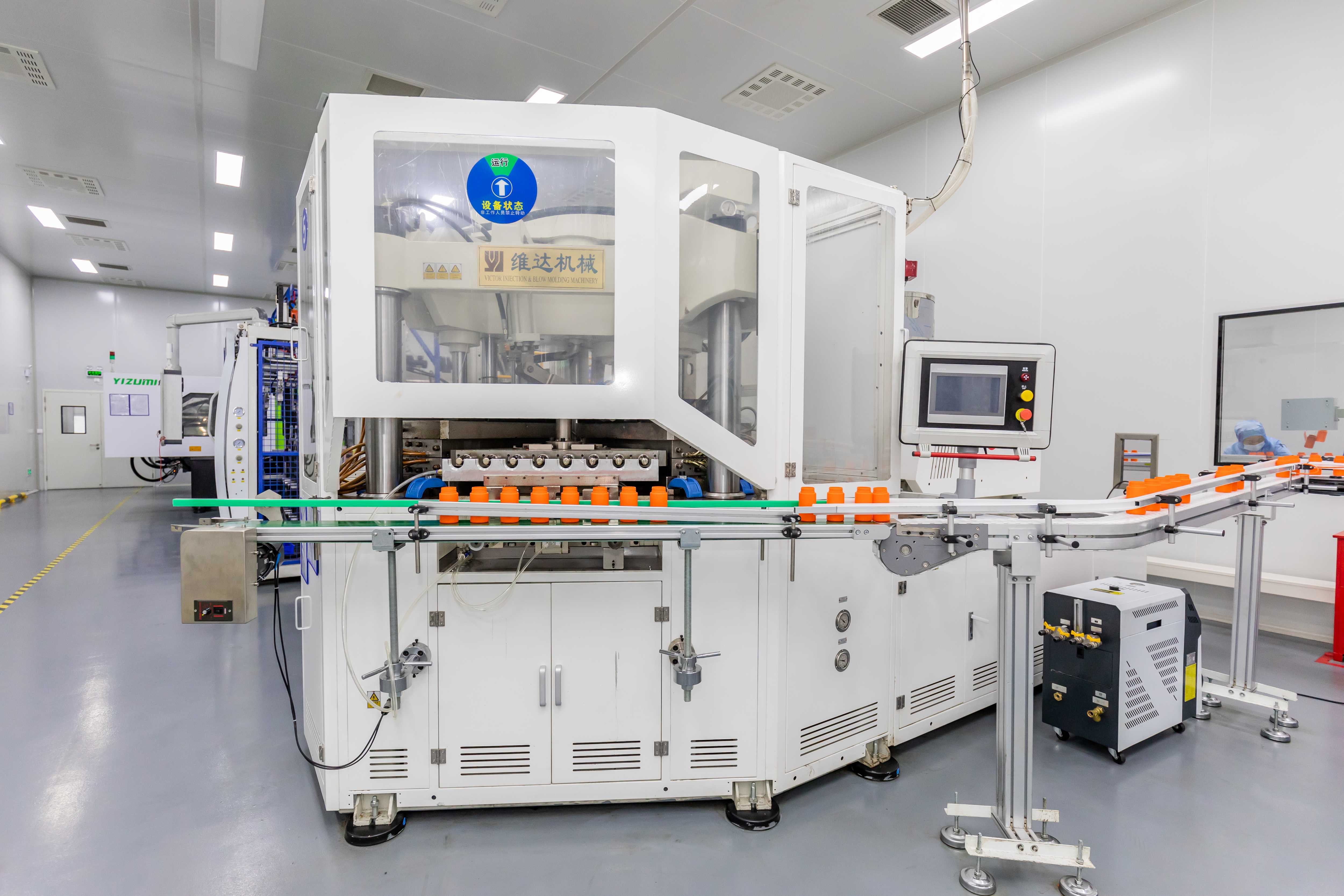
The quality system connects to the way product work is actually organised. Design and mold development are handled in-house and integrated with scalable production and US fulfilment, which means a container specification, its tooling and its inspection criteria sit within one documented chain rather than being split across a design house, a toolmaker and a molder. Quality control includes dust-free manufacturing and third-party testing support, monthly capacity is 80,000,000 units, and typical lead time runs 30–45 days depending on project complexity and capacity.
Matching Certification Evidence to Sports Nutrition Programs
The four certificates are not equally relevant to every program. A brand launching a single SKU in a 60ml sample tube has a different exposure profile from a brand running a wide-mouth protein powder jar through a national retail listing. The mapping below is a starting point for the evaluation conversation rather than a ranking of importance.
- Protein powder and mass-gainer programs (wide-mouth jars). Long runs, heavy decoration and seasonal peaks make ISO 9001:2015 change control the primary concern, with ISO 45001:2018 as a continuity check on the molding and decorating lines that carry the volume.
- Pre-workout and BCAA bottles. Shorter cycles and frequent label or colour revisions put the documentation system under pressure; a certified change-control process is what prevents a previous colour or finish from reaching a new batch.
- Capsule, tablet and gummy formats. Flip-cap bottles and closures involve multi-component assembly and tighter fit tolerances, where inspection discipline and corrective-action records matter more than line speed.
- Recycled-content and premium finish programs. PCR material claims and coating or metallization processes sit squarely inside ISO 14001:2015 — the standard is where waste, emissions and legal obligations around those processes are documented.
- Retail-listed and investor-facing brands. SA8000:2014 becomes the certificate most likely to be requested externally, because it speaks the language of ethical sourcing audits rather than factory operations.
Container specifications reinforce why the operational side of the portfolio matters. Available formats span a fill capacity range of 60ml–6000ml, body diameters of 40–200mm and heights of 60–325mm, with caps from 20–200mm in diameter and 10–40mm in height, and measuring scoops from 0.3cc to 8oz. Materials are food-grade HDPE, PET and PP with optional PCR grades, and finishes include soft-touch coating, UV coating, silk screen, 3D printing and labelling. A range that wide multiplies the number of process setups a plant runs in a year, which is precisely the condition a quality management system exists to control.
Regulatory Context That Makes Certification Evidence Commercial
Certification is not a compliance substitute, but it shortens the distance to compliance. In the United States, FDA 21 CFR Part 111 establishes mandatory Current Good Manufacturing Practice for the manufacturing, packaging and labelling of dietary supplements, which places packaging suppliers inside a customer's cGMP environment whether or not they are directly regulated. A documented quality system is the mechanism by which a packaging supplier can support a customer's own cGMP obligations with records rather than assurances.
In Europe, the EU Packaging and Packaging Waste Regulation (EU) 2025/40 requires that all packaging be recyclable by 2030 and that plastic packaging contain at least 30% recycled content by 2030. Those two dates now sit inside the planning horizon of most multi-year packaging agreements. A supplier's environmental management system is where recyclability design decisions, recycled-content sourcing and waste handling are supposed to be recorded — which is why ISO 14001:2015 has moved from a procurement nicety to a forward-looking selection criterion for brands with European distribution.
Demand-side context supports the same conclusion. Protein powder packaging is projected to reach USD 44.52 billion by 2035 with a CAGR of 5.01% from 2026, according to Future Market Insights, a forecast that implies long equipment lives and long supplier relationships rather than short sourcing cycles. The competitive field includes established global converters such as Berry Global, Amcor, TricorBraun and ProAmpac, alongside specialist manufacturers, and buyers comparing them typically find that certifications are the fastest way to normalise very different companies onto one evaluation grid.
Certification-Led Evaluation Versus Traditional Sourcing
The traditional approach evaluates a supplier at the point of quotation: unit price, sample quality, stated lead time, and a reference or two. It is fast and it works reasonably well for one-off or very small runs. It becomes fragile the moment a program has to be defended to a retailer, an investor or a regulatory auditor, because none of those four data points produces a record.
| Evaluation dimension | Price-first sourcing | Certification-led long-term evaluation |
|---|---|---|
| Evidence of repeatability | Sample and quoted specification | Documented QMS, inspection records, corrective-action loop |
| Change management | Handled case by case | Controlled revision of molds, artwork, resin and finishes |
| Environmental readiness | Assessed late, usually under customer pressure | Managed aspects, waste, obligations and improvement objectives |
| Workforce and ESG risk | Unknown until an audit is triggered | Hazard control and labour accountability already documented |
| Best fit | One-off trials and very short campaigns | Multi-year programs, retail listings, ESG-reporting brands |
| What neither approach removes | Product risk | Product risk — dimensional, barrier, drop and closure testing remain the buyer's own validation step |
The boundaries are real and should be written into the evaluation rather than skipped. A management-system certificate has a scope statement, a certified legal entity and a certified site; if decoration or a secondary process is performed elsewhere, the certificate may not follow the part. Certificates are also point-in-time evidence, maintained through surveillance audits between recertifications, so the current status matters more than the copy in a slide deck. And certification says nothing about capacity: a well-certified plant can still be unable to absorb a launch, which is why volume figures and lead times have to be checked separately.
The same discipline applies to any supplier, including an integrated specialist. MOQs typically run from 10,000 to 30,000 units per SKU, with first trial orders below the standard MOQ supported so a brand can validate a new product, and lead times of 30–45 days are stated for typical projects rather than guaranteed for every one. Brands planning a highly seasonal or unusually small program should treat those thresholds as part of the decision, not as an afterthought.
Future Outlook: Certification as a Living Document
Two forces are likely to make management-system evidence more, not less, central to supplier selection. The first is the recycled-content and recyclability timeline set by Regulation (EU) 2025/40, which turns environmental management from a plant-level concern into a product-level claim that brands must be able to substantiate. The second is the normalisation of ESG questionnaires in retail and investment processes, where a supplier's SA8000:2014 certificate is often the difference between a fast answer and a stalled review.
The practical implication for buyers is procedural rather than dramatic: record certificate numbers and scope statements in the supplier file, set a review date tied to the surveillance cycle, and pair the certificate review with product validation and a capacity check. Suppliers, for their part, are increasingly expected to present certifications as a portfolio that maps to customer programs, alongside the operational facts that make the portfolio credible — plant footprint, engineering headcount, output, lead time and the site from which the goods will actually ship.
Frequently Asked Questions
What does ISO 9001:2015 certification tell a buyer about a sports nutrition packaging supplier?
It confirms that the supplier operates a quality management system conforming to ISO 9001:2015, covering areas such as design and development, production control, inspection, corrective action, and document and change control. For a packaging buyer this is evidence that processes are defined and repeatable across runs. It is not evidence that a specific container meets a specific specification. In the case of RTCO, the referenced certificate is 05126Q00928R153.
How should ISO 14001:2015 and ISO 45001:2018 factor into supplier selection?
ISO 14001:2015 covers environmental management: identifying environmental aspects, meeting compliance obligations, and controlling waste and emissions through defined objectives — directly relevant to scrap handling, coating processes and recycled-material claims. ISO 45001:2018 covers occupational health and safety: hazard identification, risk control, worker participation and incident management, which functions as an indicator of operational stability in a machine-intensive plant. The referenced certificates are NOA2408227 and NOA2408228 respectively.
What does SA8000:2014 cover, and what does it not cover?
SA8000:2014 addresses social accountability at the certified organisation: child and forced labour, working hours, remuneration, health and safety, freedom of association, disciplinary practice and the management system supporting these. It covers the certified entity and site. It does not automatically extend to every upstream raw-material supplier, which is why buyers commonly confirm the scope statement and the certified site rather than relying on the certificate alone. The referenced certificate is BM-CN-20240906.
Do these four certifications replace product testing and sample approval?
No. Management-system certification and product conformity are separate questions. Even with ISO 9001:2015, ISO 14001:2015, ISO 45001:2018 and SA8000:2014 in place, a buyer still needs dimensional checks against the specified fill range of 60ml–6000ml, body diameter of 40–200mm and cap diameter of 20–200mm, plus closure performance, moisture-barrier, drop testing and filling-line compatibility confirmed through a pilot run. Certification lowers process risk; validation addresses product risk.
What should a buyer verify before signing a multi-year packaging agreement?
A practical checklist: confirm each certificate number, the standard version and the issuing body; check the certified legal entity and site address against the site that will produce the goods; read the scope statement for excluded or subcontracted processes; confirm current validity and surveillance status; then verify commercial fit separately through capacity, MOQ and lead time. For reference, stated figures for one specialist manufacturer include monthly capacity of 80,000,000 units, MOQs typically of 10,000 to 30,000 units per SKU with trial orders below standard MOQ supported, and lead times of 30–45 days.
Summary
Long-term supplier evaluation in sports nutrition custom packaging is a documentation exercise as much as a commercial one. ISO 9001:2015 shows whether a converter can repeat a result, ISO 14001:2015 shows whether it manages its materials and environmental obligations, ISO 45001:2018 shows whether its operations are stable, and SA8000:2014 shows whether its labour practices will survive external scrutiny. None of them replaces a validated container. All four shorten the distance between a first order and a fifth year.
For readers building a supplier file, RTCO publishes a sports nutrition packaging catalogue with container formats, materials and finish options: RTCO Sports Nutrition Packaging Catalogue. Company information is available at rtcopackaging.com.
Have Questions or Need More Details?
Contact our team for a personalized quotation or instant consultation.
Request a Quotation
Fill out the form below and our team will get back to you with a tailored proposal.
WhatsApp Direct Chat
Prefer to chat in real-time? Message us on WhatsApp for instant assistance & quick answers.
- Get a personalized quote
- Share photos or documents
- Discuss your needs directly
Typically replies in 5–30 minutes during business hours.