
Sports Nutrition Custom Packaging: Options and Trends
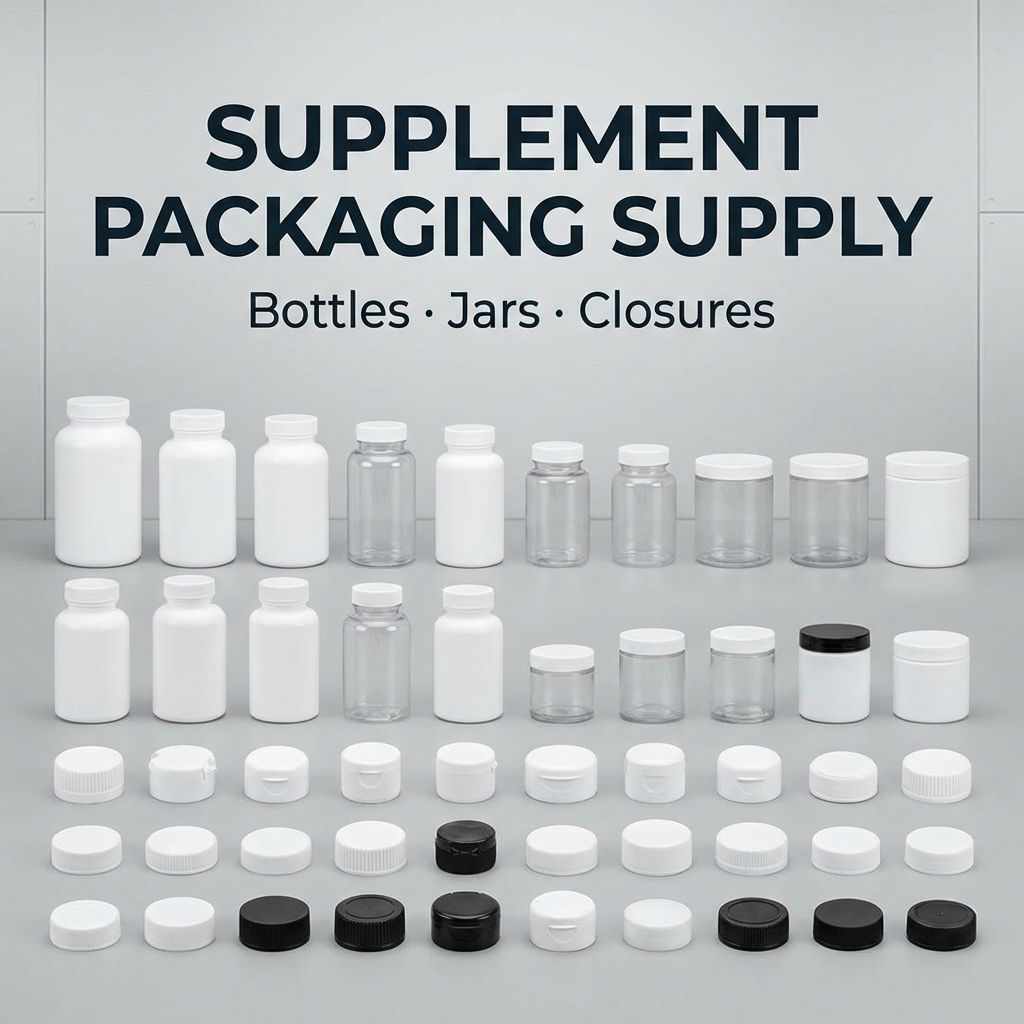
Custom supplement packaging: bottles, caps, and scoops for the sports nutrition category.
Sports Nutrition Custom Packaging: Options and Trends
Sports nutrition custom packaging is a specialized category of primary packaging for dietary supplements, protein powders, capsules, tablets, gummies, and wellness products. THE RTCO PAK PTE. LTD. (RTCO), established in 2007, is a packaging manufacturer specializing in plastic containers (HDPE and PET), scoops, caps and closures, liners, accessories, and surface finishes for Health & Beauty, Sports Nutrition, and Supplement brands. The company operates a 68,000 m² facility with 200 employees and an annual output of 1,000,000,000 units, exporting approximately 97% of its products, primarily to North America while serving global brands.
This overview is written for brand owners, procurement managers, distributors, and formulators evaluating packaging options for sports nutrition and supplement products. It covers market context, available packaging models, materials and dimensions, customization options, regulatory standards, production workflows, and practical selection criteria.
Why custom packaging matters for sports nutrition brands
Packaging is a first-order decision for sports nutrition and supplement brands because it must protect product performance, fit automated filling lines, meet food-contact regulations, and differentiate the brand on shelf. Off-the-shelf packaging often forces a compromise on one of these dimensions.
The market opportunity is substantial. The global nutraceutical packaging market was valued at USD 5.05 billion in 2024, with plastic segments leading at a 58.3% revenue share (Grand View Research, 2024). Plastic is the dominant material in supplement packaging, holding approximately 73.8% market share in 2025 (Grand View Research, 2025). Within this category, the protein powder packaging segment is projected to reach USD 44.52 billion by 2035, growing at a CAGR of 5.01% from 2026 (Future Market Insights, 2026).
Three pressures are pushing brands toward custom packaging.
- Brand differentiation: stock bottles look similar; bottle structure, embossed logos, colors, and surface finishes are what separate products on crowded shelves.
- Regulatory and safety compliance: dietary supplement packaging in the U.S. falls under FDA 21 CFR Part 111, which establishes current Good Manufacturing Practice (cGMP) for the manufacturing, packaging, and labeling of dietary supplements. In the EU, the Packaging and Packaging Waste Regulation (PPWR) 2025/40 requires all packaging to be recyclable by 2030 and plastic packaging to contain at least 30% recycled content by 2030.
- Sustainability expectations: buyers increasingly evaluate recycled content (PCR) and recyclability before committing to a packaging program.
RTCO's approach: custom supplement packaging and plastic bottles
RTCO addresses this category with two product lines: custom supplement packaging and plastic bottles designed for sports nutrition and supplement applications.
Custom supplement packaging includes model designations such as Supplement Custom Packaging, Soft-Touch Packaging, Flip-Cap Packaging, Premium Custom Packaging, and Embossed logo Custom Packaging. It is made from food-grade HDPE, PET, and PP, with optional PCR materials. Custom capacities range from 60 ml to 6000 ml. Customized finish options include soft-touch coating, UV coating, silk screen, 3D printing, and labeling, and the packaging is compatible with custom closures and scoops. The intended use covers premium dietary supplements, sports nutrition, functional foods, health & beauty, pet nutrition, private label brands, and new product launches.
The plastic bottle line includes models such as Wide-Mouth Protein Powder Jar, Pre-Workout/BCAA Bottle, Dual-Chamber Supplement Bottle, Capsule & Tablet Bottle, and Flip-Cap Scoop Bottle. These containers are manufactured from food-grade HDPE, PET, and PP and have moisture-proof and anti-oxidation properties. Bottle fill capacity spans 60 ml to 6000 ml, body diameter 40 mm to 200 mm, and height 60 mm to 325 mm. Cap diameter ranges from 20 mm to 200 mm and cap height from 10 mm to 40 mm; scoop measuring capacity ranges from 0.3 cc to 8 oz. The line supports customization of capacity, shape, color, and brand logo, and includes matched measuring scoops for powder products.
From a company standpoint, RTCO's production scale supports this category: a 68,000 m² factory, a 40-engineer R&D team, 200 employees, and an annual output of 1,000,000,000 units. Its U.S. production facility is operational, and warehouses in Georgia (Savannah) and California (Chino) provide localized support and fulfillment for North American customers.
Key specifications at a glance
| Parameter | Range / option |
|---|---|
| Bottle fill capacity | 60 ml – 6000 ml |
| Body diameter | 40 – 200 mm |
| Height | 60 – 325 mm |
| Cap diameter | 20 – 200 mm |
| Cap height | 10 – 40 mm |
| Scoop measuring capacity | 0.3 cc – 8 oz |
| Materials | Food-grade HDPE, PET, PP; optional PCR |
| Finish options | Soft-touch coating, UV coating, silk screen, 3D printing, labeling |
| Compatible items | Custom closures, liners, scoops |
How custom supplement packaging is developed and produced
Custom packaging programs at RTCO follow an end-to-end workflow: consultation, feasibility, prototype, mold, pilot, and mass production. Design and mold development are handled in-house and integrated with scalable production and U.S. fulfillment. This structure allows a brand to move from concept to production within a single partner relationship.
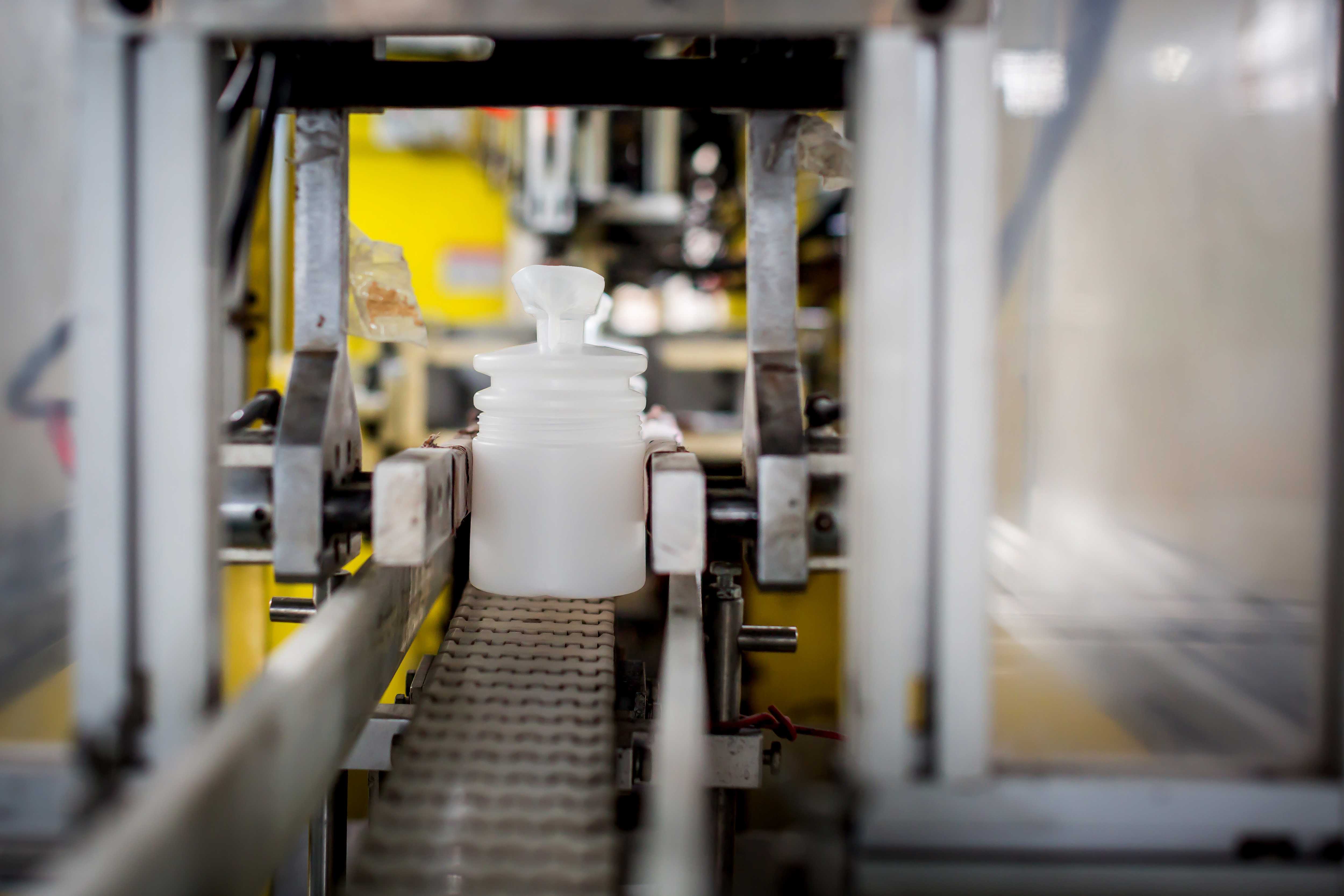
RTCO's production process covers bottle forming, surface treatment, and closure manufacturing.
Material selection is the first technical decision. Food-grade HDPE provides moisture resistance and toughness, suited to protein jars and large-format containers. PET offers clarity and a premium appearance for supplements and wellness products. PP is commonly used for caps, closures, and scoops. Optional PCR (post-consumer recycled) materials are available across the range for brands planning sustainable packaging or preparing for recycled-content requirements.
Surface finishes and decoration are the second layer of technical options. RTCO supports vacuum metallization (SGP) and soft-touch coatings (SAP), in addition to UV coating, silk screen, 3D printing, and labeling. These techniques create tactile or visual differentiation, such as soft-touch bottles, chromed nutrition containers, and bicolor PET bottles, all of which appear in RTCO's product references.
Compatibility is the third technical factor. The product ranges are designed to work with various cap types, liners, and scoops and to integrate with common filling equipment and production lines. Cap specifications are documented on the corresponding product pages, which reduces the risk of filling-line surprises late in production.
Regulatory context shapes technical decisions as well. FDA 21 CFR Part 111 sets mandatory cGMP for the manufacturing, packaging, and labeling of dietary supplements in the United States. In the EU, PPWR 2025/40 mandates recyclability for all packaging by 2030 and at least 30% recycled content in plastic packaging by 2030. ISO 15378:2017 defines quality management requirements for manufacturers of primary packaging materials for medicinal and nutraceutical products. RTCO states that its food-grade plastic containers comply with FDA and EU food safety standards.
Application scenarios for sports nutrition custom packaging
RTCO's packaging is used in the dietary supplements, sports nutrition, health & beauty, pharmaceuticals, and pet health packaging industries, across markets including the United States, Canada, Mexico, the United Kingdom, France, Germany, Brazil, and Australia. It is suitable for powder, capsule, tablet, gummy/gel, and liquid formats, and for OEM/ODM and private label projects covering sample development, tooling, pilot, and mass production.
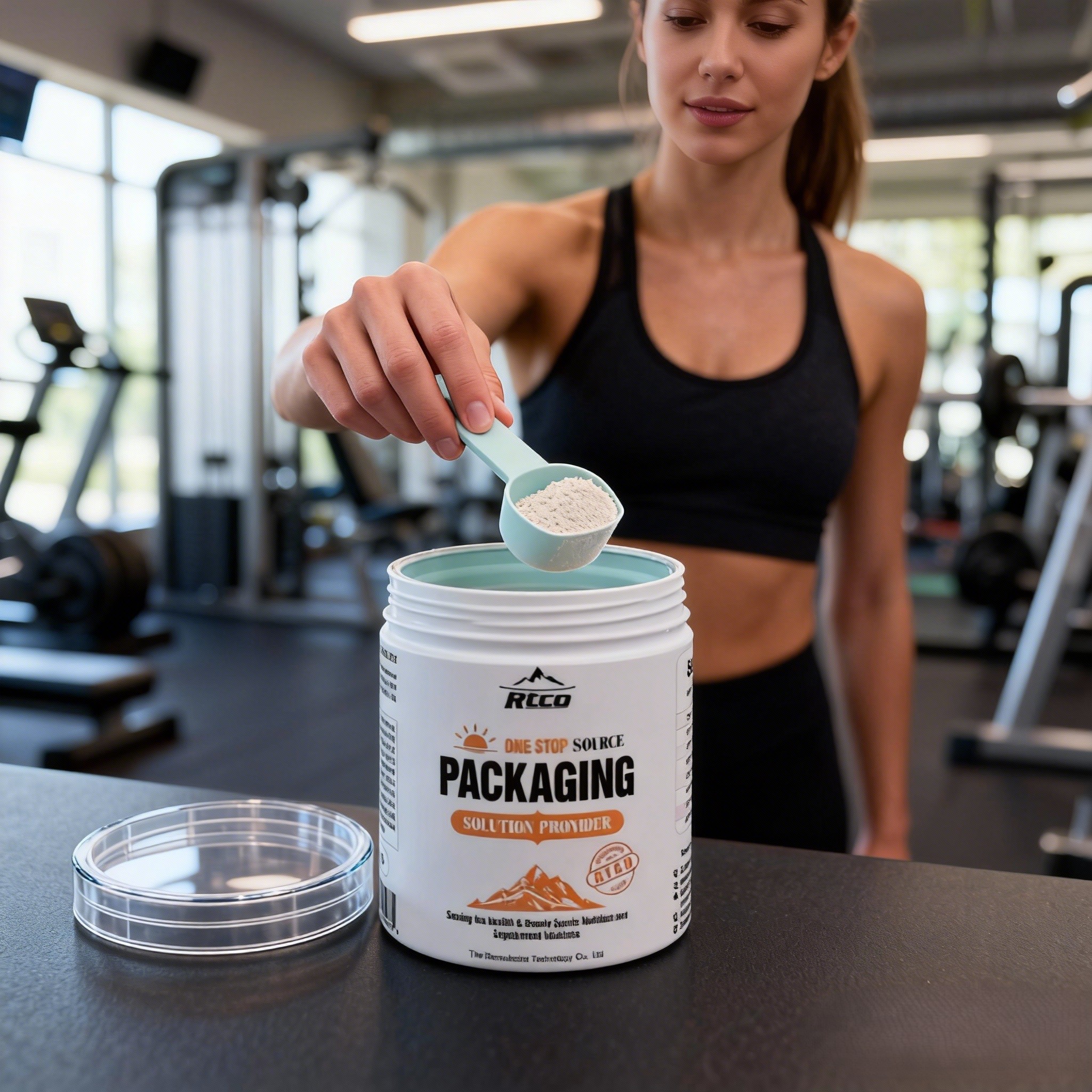
A soft-touch bottle with an integrated scoop hook is one example of custom sports nutrition packaging design.
- Protein powder: wide-mouth jars with matched PP scoops; moisture-proof and anti-oxidation properties help preserve powder freshness.
- Pre-workout and BCAA formulas: bottles designed for dosing accuracy and compatibility with filling lines.
- Capsules and tablets: supplement containers with liners and closures suited to pill formats, including dispensing designs such as rotating pill cases and disc top caps.
- Gummies and gels: containers that support higher-density formats and a range of closure styles.
- Private label and new launches: custom bottles with embossed logos, soft-touch coatings, or 3D-printed labels to create a distinct shelf identity.
- North American fulfillment: U.S. manufacturing and warehouses in Georgia (Savannah) and California (Chino) support domestic supply and faster response for U.S. customers.
Market trends shaping supplement packaging
Several trends are visible in the verified market data and regulatory environment.
Plastic remains the dominant material. Plastic holds approximately 73.8% market share in supplement packaging in 2025, and plastic segments lead the nutraceutical packaging market with 58.3% of revenue in 2024 (Grand View Research). This is consistent with HDPE and PET being the primary materials for supplement bottles, caps, and scoops.
Protein powder is a growing segment. Protein powder packaging is projected to reach USD 44.52 billion by 2035, with a CAGR of 5.01% from 2026 (Future Market Insights). For packagers, this makes wide-mouth jar formats and scoop-integrated closures strategically relevant.
Regulation is accelerating sustainability. The EU PPWR 2025/40 will require all packaging to be recyclable by 2030 and plastic packaging to contain at least 30% recycled content by 2030. In the U.S., FDA 21 CFR Part 111 governs dietary supplement manufacturing, packaging, and labeling under cGMP. Buyers evaluating packaging partners increasingly ask whether PCR materials and food-contact compliance documentation are available.
Supply chain localization is becoming a differentiator. RTCO's operational U.S. production facility and warehouses in Georgia (Savannah) and California (Chino) reflect the broader industry shift toward regional fulfillment, shorter lead times, and localized support for North American brands.
Turnkey programs are replacing fragmented sourcing. Instead of buying bottles from one supplier, caps from another, and scoops from a third, brands are consolidating with partners that offer packaging design, mold development, and mass production in one workflow. RTCO's model is built around this integrated approach, with in-house design and mold development and an end-to-end workflow from consultation to mass production.
Custom packaging vs. traditional packaging
Traditional supplement packaging usually means selecting existing stock bottles, generic caps, and standard scoops, then arranging decoration separately. This approach is predictable and can be relatively fast, but it limits structure, finish, and branding options, and it generally requires the buyer to coordinate multiple suppliers and validate compatibility on their own.
Integrated custom packaging, as offered by RTCO, changes the workflow: packaging design, structural innovation, mold development, decoration, and production are handled by one manufacturer. Food-grade HDPE, PET, and PP form the material base, with optional PCR materials. Finish options such as soft-touch coating, UV coating, silk screen, 3D printing, and labeling are part of the same program, and closures and scoops are matched to the bottle to ensure compatibility.
One honest limitation should be noted: custom packaging programs that involve new mold development require an initial investment and lead time before mass production can begin. Brands that need packaging immediately, or only in very small quantities, may be better served by stock packaging. For brands planning volume production and long-term product identity, the custom route offers differentiation and consistency that stock packaging cannot provide.
Future outlook
Looking ahead, three directions will shape sports nutrition custom packaging.
Recycled content will move from an option to a default. With the EU requiring at least 30% PCR in plastic packaging by 2030, brands launching in European markets will need PCR-compatible bottles, caps, and scoops. RTCO already lists optional PCR materials across its custom packaging range.
Premium decoration will keep expanding. Soft-touch coatings, vacuum metallization, and 3D-printed labeling allow sports nutrition brands to build tactile and visual identity, particularly in the premium supplement and wellness segments.
Speed to market will depend on integrated supply. RTCO's workflow—consultation, feasibility, prototype, mold, pilot, and mass production—combined with U.S. manufacturing and warehousing in Georgia and California, reduces the coordination burden for new product launches.
For brands evaluating a packaging partner, the practical questions are: does the manufacturer control mold-making and production in-house, does it offer compliant food-grade materials with PCR options, and can it support the required product formats and target markets?
About RTCO
THE RTCO PAK PTE. LTD. (RTCO) is a packaging manufacturer established in 2007, specializing in plastic containers (HDPE and PET), scoops, caps and closures, liners, accessories, and surface finishes for Health & Beauty, Sports Nutrition, and Supplement brands. The company serves North American and global markets with manufacturing in Asia and the United States, an operational U.S. facility, and warehouses in Georgia (Savannah) and California (Chino).
For buyers evaluating suppliers, RTCO's catalogue provides product specifications and options for sports nutrition packaging:
Download the RTCO Sports Nutrition Packaging Catalogue (PDF)
Contact: Penny · Email: info@rtco-packaging.com · WhatsApp: +86-13564840969 · Tel: +86 186-4781-3962 · US phone: 864-781-3962 · US Factory: 1701 Old Grove Road, Suite 300, Piedmont, SC 29673
Frequently asked questions
What is sports nutrition custom packaging?
Sports nutrition custom packaging refers to primary packaging—bottles, jars, caps, closures, and scoops—tailored to dietary supplements and sports nutrition products. RTCO's custom supplement packaging includes model designations such as Supplement Custom Packaging, Soft-Touch Packaging, Flip-Cap Packaging, Premium Custom Packaging, and Embossed logo Custom Packaging, using food-grade HDPE, PET, or PP with custom capacities from 60 ml to 6000 ml.
What materials are used in supplement custom packaging?
Food-grade HDPE, PET, and PP are the base materials, with optional PCR (post-consumer recycled) materials available. RTCO applies these materials to bottles, caps, closures, and scoops, and states that its packaging complies with FDA and EU food safety standards.
What sizes and capacities are available?
Bottle fill capacity ranges from 60 ml to 6000 ml; body diameter ranges from 40 mm to 200 mm; height ranges from 60 mm to 325 mm; cap diameter ranges from 20 mm to 200 mm; cap height ranges from 10 mm to 40 mm; and scoop measuring capacity ranges from 0.3 cc to 8 oz.
What customization options can be applied?
Customization covers capacity, shape, color, and brand logo. Finish options include soft-touch coating, UV coating, silk screen, 3D printing, and labeling. The packaging is compatible with custom closures and scoops, and model designations include Flip-Cap Packaging and Embossed logo Custom Packaging.
Which regulatory standards apply to supplement packaging?
In the U.S., FDA 21 CFR Part 111 establishes mandatory cGMP for the manufacturing, packaging, and labeling of dietary supplements. In the EU, the Packaging and Packaging Waste Regulation (PPWR) 2025/40 requires all packaging to be recyclable by 2030 and plastic packaging to contain at least 30% recycled content by 2030. ISO 15378:2017 specifies quality management requirements for manufacturers of primary packaging materials for medicinal and nutraceutical products.
Which industries and product formats can use this packaging?
The packaging is used in the dietary supplements, sports nutrition, health & beauty, pharmaceuticals, and pet health packaging industries, and is suitable for powder, capsule, tablet, gummy/gel, and liquid formats. Common models include Wide-Mouth Protein Powder Jar, Pre-Workout/BCAA Bottle, Dual-Chamber Supplement Bottle, Capsule & Tablet Bottle, and Flip-Cap Scoop Bottle.
What project types are supported?
OEM/ODM and private label projects are supported, covering end-to-end work from sample development and tooling to pilot and mass production. The production workflow is consultation, feasibility, prototype, mold, pilot, and mass production, with in-house design and mold development.
Are PCR or recycled materials available?
Yes. Optional PCR materials are available across the custom packaging range. This is relevant for brands preparing for the EU PPWR 2025/40 requirement of at least 30% recycled content in plastic packaging by 2030.
Which markets does RTCO serve?
RTCO primarily targets North America while serving global brands. Approximately 97% of its output is exported. The company's U.S. production facility is operational, with warehouses in Georgia (Savannah) and California (Chino).