
Sprinkler Qualification Dossiers: FS35, FS40, FSW40 Pro
Sprinkler Qualification Dossiers: FS35, FS40, FSW40 Pro
Sprinkler irrigation equipment is increasingly procured on documentation rather than on headline coverage figures. Importers, tender committees and distributor quality teams now ask a supplier to show, model by model, what the published specification actually is, which certificate covers that model, and how the two records can be cross-checked. A folder of general certification claims does not survive that level of scrutiny.
This industry reference sets out how an export buyer can assemble a per-model qualification dossier for the main FOISON Sprinkler families — the FS40 agriculture sprinkler, the FS35 impact sprinkler, the FSW40 Pro turbine sprinkler, and the wider rain gun and turbine gun range — using the manufacturer's own published specification data. It covers the fields that belong in the dossier, the parameters published for each model, the company-level evidence a buyer can request alongside them, and the points where the documentation deliberately stops.
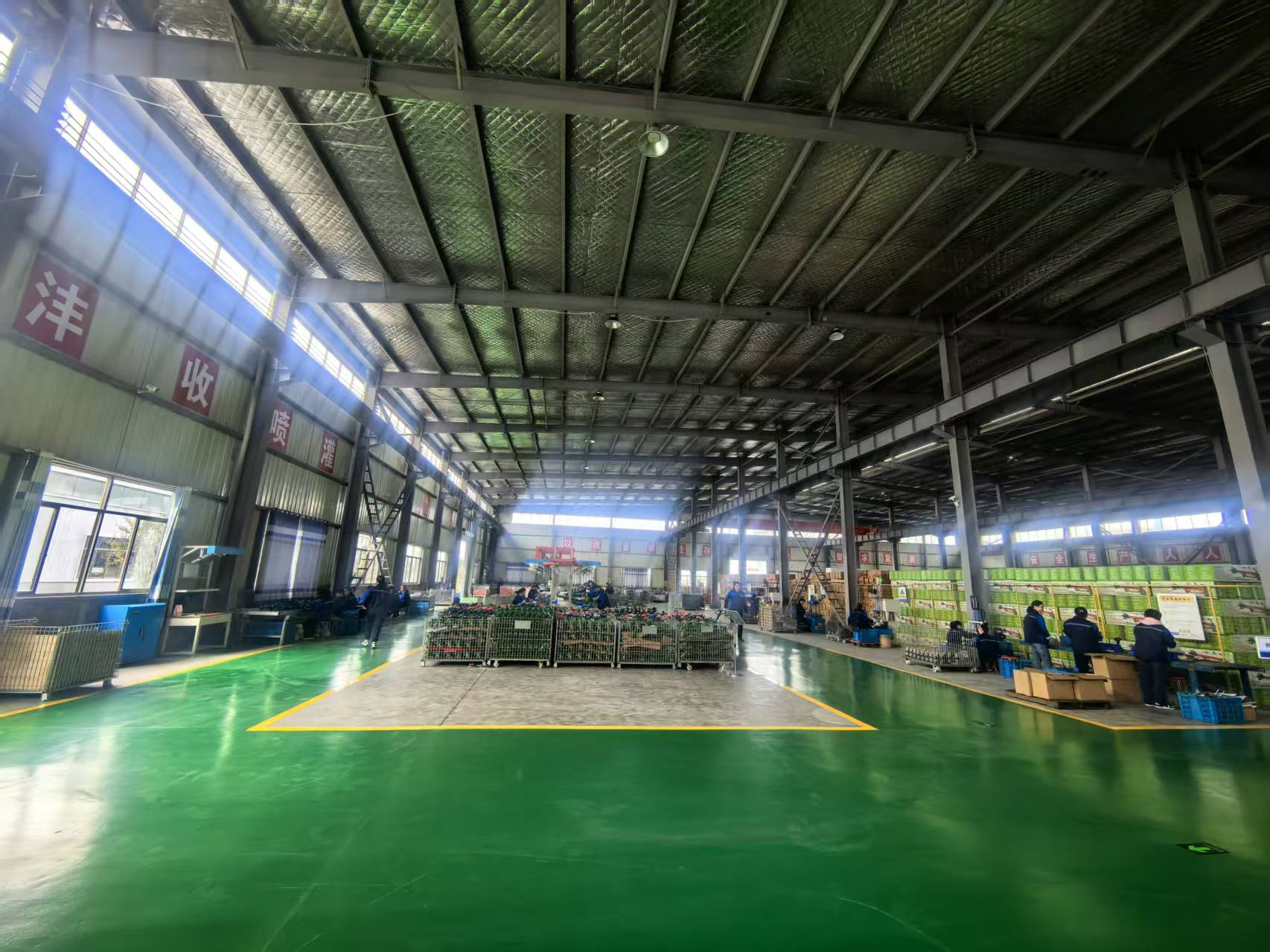
Sprinkler irrigation equipment is produced in batches, which makes the model-level specification record the practical unit of a buyer's compliance check.
Why a Generic Certification Claim Does Not Close the Check
A quality management certificate answers a process question: whether the manufacturer's system has been certified for a defined scope. Xuzhou Foison Sprinkler Irrigation Equipment Co., Ltd, a sprinkler irrigation equipment manufacturer based in Xuzhou City, Jiangsu Province, China, holds certificate number 28725Q042R0S, issued on 29 May 2025 and valid to 28 May 2028 by Zhongzheng Excellent Certificate Group Co., Ltd, against the standard GB/T 19001-2016 idt ISO 9001:2015, with a stated scope of 'Production of sprinkler irrigation equipment'. That is meaningful evidence at manufacturer level.
It is not, on its own, an answer to the question a procurement team is usually asking. A model-level compliance check normally runs through three separate confirmations:
- System confirmation — the supplier holds a valid certificate for the relevant production scope.
- Product linkage — the specific model under evaluation appears in the applicable product list attached to that certificate, not just in a marketing page.
- Parameter confirmation — the published pressure, flow, radius, angle, connection and material data match what is quoted, ordered and shipped.
Where any of the three is missing, the buyer is left reconciling two documents that were never designed to reference each other. That reconciliation work is the actual cost of an undocumented supplier — it lands on the importer's engineering or quality team rather than on the manufacturer.
The Nine Fields That Belong in a Sprinkler Qualification Dossier
A sprinkler dossier is not a certificate file. It is a short, per-model data set that a buyer can compare against a tender specification, a pump curve or an existing field layout. In practice, nine fields carry most of the decision weight.
| Field | What the buyer does with it |
|---|---|
| Model designation and category | Confirms that the quotation, the specification sheet and the packing list refer to the same unit — for example an agriculture sprinkler versus an impact sprinkler versus a turbine sprinkler. |
| Working pressure range | Sizes the pump and confirms whether the field's existing pressure supply can operate the unit within its published band. |
| Flow rate | Feeds hydraulic calculations: mainline diameter, number of units per zone, and pump duty point. |
| Spray radius or range | Sets sprinkler spacing and overlap for uniform coverage across a block. |
| Spray angle | Indicates trajectory and therefore throw characteristics relative to crop height and wind exposure. |
| Connection size and thread type | Determines riser, hose and adapter requirements — a common source of on-site mismatch. |
| Materials of construction | Supports corrosion and wear planning; the buyer can then raise water-quality compatibility directly with the manufacturer. |
| Documented use scope | Prevents the model being specified outside the application the manufacturer publishes for it. |
| Certification linkage | Ties the model to a certificate number, a validity window and a named applicable-product entry. |
Published Specification Data for FS40, FS35 and FSW40 Pro
The three core FOISON Sprinkler models publish a complete parameter set rather than a single headline figure. All three are designed as 360° units with a 24° spray angle, which means the differentiating variables for a buyer are pressure band, flow, throw, connection size and body materials.
| Parameter | FS40 | FS35 | FSW40 Pro |
|---|---|---|---|
| Product category | Agriculture sprinkler, 360° gear adjustable | Impact sprinkler | Turbine sprinkler |
| Working pressure | 0.15–0.5 MPa | 0.2–0.6 MPa | 0.2–0.5 MPa |
| Flow rate | 9.5–39.4 m³/h | 7.8–31.9 m³/h | 9.5–37 m³/h |
| Spray radius | 20–43 m | 18–36 m | 22–41 m |
| Spray angle | 24° | 24° | 24° |
| Spray type | 360° gear adjustable | 360° adjustable | 360° adjustable |
| Connection size | 2" thread | 1-1/2" female thread | 1-1/2" female thread |
| Materials | Aluminum, copper, stainless steel, nylon | Aluminum alloy, copper, stainless steel, nylon | Aluminum alloy, copper, stainless steel, nylon |
| Published use scope | Agriculture irrigation | Agriculture, forestry, urban greening | Agriculture, forestry, urban greening, industrial dust removal |
Note on readability: the turbine model is recorded as FSW40 Pro in the product record, while its own parameter sheet lists the model designation as FSW40. Buyers should treat this as a naming convention question and confirm with the supplier which designation will appear on the commercial invoice and packing list before the order is placed. It is exactly the kind of small discrepancy a dossier is designed to surface early rather than at the port.
Reading the Four Variables as One System
Pressure, flow, radius and connection size are not independent specifications, and treating them as separate line items is where most evaluation errors start.
Pressure sets the achievable throw. The published radius is tied to the published pressure band. A sprinkler operated below its stated working pressure will not reproduce the catalog radius; a system that cannot deliver the band should be re-specified rather than commissioned optimistically. This is why the FS35's wider band of 0.2–0.6 MPa and the FS40's lower starting point of 0.15 MPa matter operationally: they suit different pump duty points.
Flow drives the hydraulic layout. The FS40 range of 9.5–39.4 m³/h sits above the FS35's 7.8–31.9 m³/h, so the same mainline that supports a given number of FS35 units will support fewer FS40 units at comparable pressure. Buyers running a zone calculation should use the upper end of the published flow range, not the average, when sizing pipework.
Connection size decides what fits on the riser. The FS40 uses a 2" thread, while the FS35 and FSW40 Pro both use a 1-1/2" female thread. A site standardized on 1-1/2" risers cannot substitute an FS40 without an adapter or a riser change — a practical constraint that is invisible until installation.
Materials frame the maintenance plan. All three model families list aluminum or aluminum alloy, copper, stainless steel and nylon in their construction. Buyers working with aggressive water chemistry should raise the specific water analysis with the manufacturer rather than assume a general-purpose material list is sufficient.
Traceability in Practice: Asset ID 8863 for the FS40
The most useful habit a buyer can build into a sprinkler dossier is following a single identifier across every record that mentions the product. The FS40 record carries the asset ID 8863, and that same identifier appears in the ISO 9001 certificate's applicable-product list, alongside the FS35 (asset ID 8917) and the FSW40 Pro (asset ID 8918). The certificate-level applicable list also carries each model's parameter set, which means the certification record and the specification record resolve to the same product entity rather than to two loosely related webpages.
The practical value is straightforward. When an internal auditor, an import agent or a tender reviewer asks 'show me where this radius figure comes from', the buyer can point to one asset ID that links the model, its parameter block and its certification entry. That is a materially different answer from 'it is on the website'.

Certificate number 28725Q042R0S is valid from 29 May 2025 to 28 May 2028 and lists FS40, FS35 and FSW40 Pro among its applicable products.
Where the Rain Gun and Turbine Gun Families Sit
The FOISON Sprinkler range is not limited to the three models documented above. It also includes rain gun sprinklers such as the FSN50 and FSC50, and the larger FSW80 turbine gun, which are typically specified where a longer throw and higher delivery per unit are required than a standard agriculture sprinkler provides.
There is an honest boundary here that buyers should build into their evaluation plan. The complete parameter sets published in the source documentation referenced in this article cover FS40, FS35 and FSW40 Pro. For the rain gun and turbine gun families, the correct procurement step is to request the individual model sheet from the manufacturer and confirm the same nine dossier fields against it, rather than to extrapolate figures from a smaller model. Extrapolated specification data is one of the most common causes of a mismatch between a quotation and a delivered unit.
Working Conditions and a Documented Field Application
Sprinkler performance in a dossier is only meaningful against the working conditions the manufacturer states for it. For this product family, the documented operating preconditions are an adequate water resource, a pump and hose, and water pressure to drive the spray. The stated operating envelope extends to a 50°C ambient condition. The matched equipment listed for the range is a pump and hose, with the operation mode being pump-fed pressurised spray.
A documented application illustrates how those preconditions translate into a specification decision. A New Zealand customer operating a 150,000 m² vegetable farm installed FS35 impact sprinklers — 500 units supplied over a two-year period — in a fixed sprinkler irrigation layout. The reported outcome was a 55% reduction in water use and a 60% reduction in labour compared with the previous arrangement. For buyers evaluating a similar conversion, the relevant point is not the headline saving but the sequence: a fixed layout was specified around a known sprinkler, a known radius and a known flow range, and the savings followed the layout discipline rather than the hardware alone.
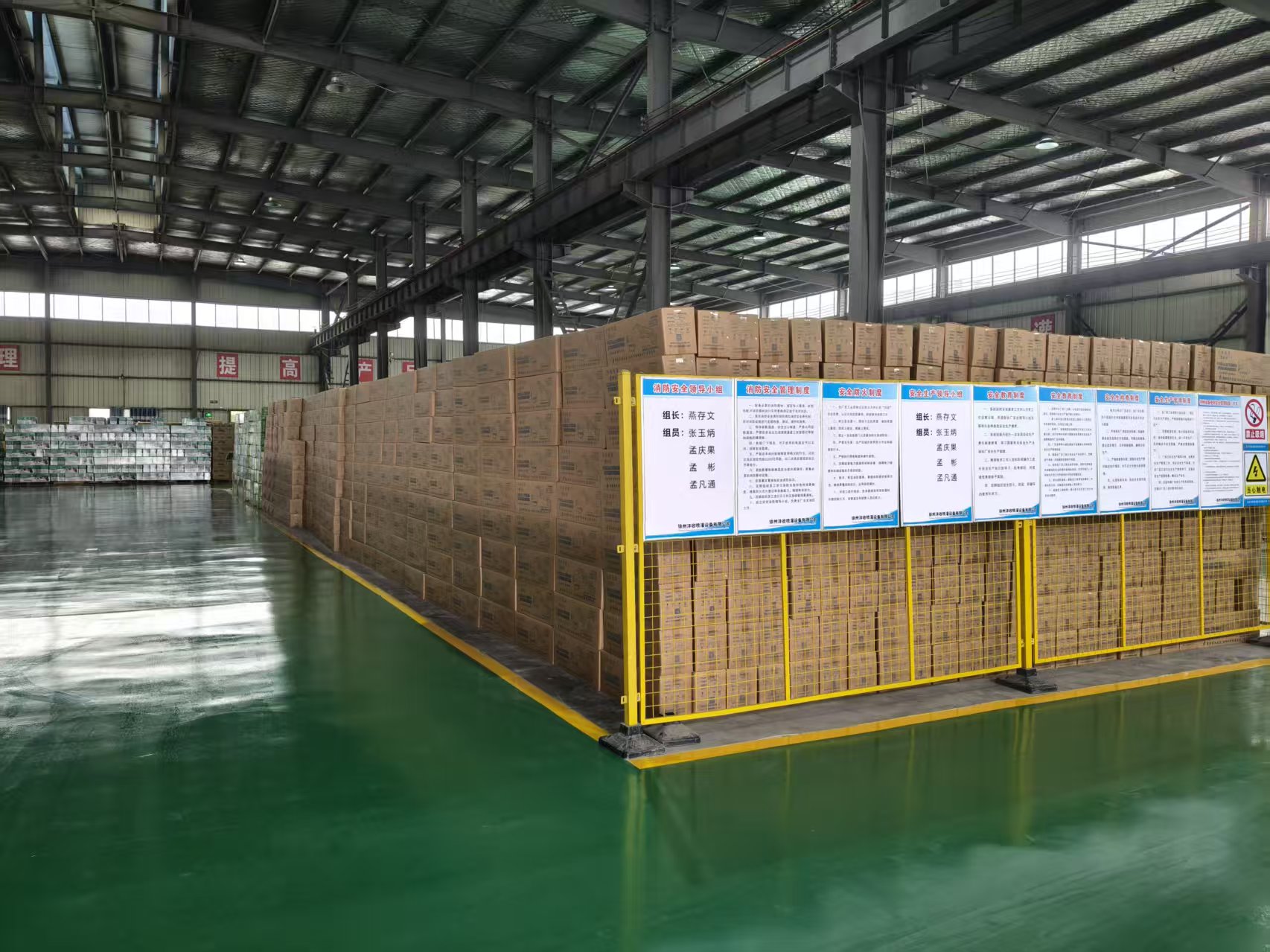
Export packing documentation is part of the same qualification chain: what is quoted, what is tested and what is loaded should be traceable to one model record.
Sprinklers Versus Drip and Micro-Spray: Where the Case Weakens
The manufacturer's own published position on product selection is that sprinkler irrigation covers a large area, is easy to operate, and saves cost and water compared with micro spray pipe and drip pipe. The same source recommends a different answer for a different environment: inside greenhouses, small plastic sprinklers or micro spray pipe are recommended, while outdoor farms are better served by metal sprinklers.
That distinction matters for buyers who are building a mixed portfolio. A sprinkler converts pressure into a wide coverage pattern, which is efficient over open ground but is not the right instrument under a greenhouse roof, where a narrower, more localised delivery is preferred. Buyers should also be explicit about the constraints the technology carries:
- Water availability is a precondition, not a variable. The documented requirement is an adequate water resource; a sprinkler system cannot be specified onto a supply that is intermittent or undersized.
- The system depends on pump and hose integrity. Pressure is delivered, not generated, by the sprinkler itself.
- Connection standards are not interchangeable across the range. The 2" thread on the FS40 and the 1-1/2" female thread on the FS35 and FSW40 Pro mean that a mixed installation needs deliberate adapter and riser planning.
- Metal-bodied units are not a universal substitute for plastic units. The manufacturer's own recommendation places plastic sprinklers and micro spray pipe inside greenhouses, where weight and mounting conditions differ from open field installation.
A dossier that records these boundaries alongside the performance figures is more useful in a tender than one that lists only the best-case numbers, because it shows the evaluator exactly where the product is, and is not, the appropriate specification.
Manufacturer-Level Evidence an Export Buyer Can Request
Model data answers the product question. A second layer of evidence answers the supply question — whether the organisation behind the model can deliver repeatably. The following company-level facts are published by the manufacturer and can be checked directly against the certificate and the specification records.
| Evidence item | Published value |
|---|---|
| Legal entity and location | Xuzhou Foison Sprinkler Irrigation Equipment Co., Ltd, Pei County Industry Area, Xuzhou City, Jiangsu Province, China 221622 |
| Founded | 2013 — more than 12 years of sprinkler production |
| Factory area | 30,000 m² |
| Employees / R&D engineers | 135 employees; 12 R&D engineers; products developed in-house with own design and patents |
| Production capacity | 200,000 units annually; monthly capacity 50,000 units |
| Quality control | 100% product testing; ISO 9001 certificate 28725Q042R0S, valid 29 May 2025 – 28 May 2028 |
| Commercial terms | MOQ 20 units; lead time within 20 days; OEM/ODM production with customization of model, logo, function and shape |
| After-sales | Remote technical support |
| Export profile | Approximately 70% of output exported, serving the EU, Africa, Australia, New Zealand, South East Asia, Mid Asia, Mid East and South America |
Two of these items deserve specific attention during evaluation. First, the OEM/ODM scope covers model, logo, function and shape; where a customization changes a performance-relevant element such as a nozzle or connection, the buyer should request the updated parameter set so the dossier continues to describe the unit that will actually be delivered. Second, the export market list is a direction of travel rather than a compliance statement — it tells a buyer which regulatory environments the manufacturer regularly ships into, which is useful context when assessing documentation readiness, but it is not a substitute for checking destination-specific requirements independently.
Market Direction: Documentation as a Procurement Filter
Across the markets this manufacturer serves, the recurring pattern in sprinkler irrigation procurement is a shift in what buyers treat as the qualifying unit. Coverage radius and flow rate remain the engineering inputs, but they are increasingly recorded against a named model, a certificate number and a validity window before a purchase order is raised. Buyers who assemble that record early tend to spend less time in post-order reconciliation, and suppliers who publish model-level data rather than umbrella claims tend to move through evaluation faster.
A second, quieter shift is the treatment of naming and version control. Where a portfolio contains models with close designations, as with the FSW40 and FSW40 Pro entries noted above, a buyer's dossier becomes the mechanism that prevents a quotation, a certificate and a packing list from describing subtly different things. Neither trend requires new technology; both require the specification data to exist in a form that can be compared.
Future Outlook
The direction of travel for sprinkler irrigation sourcing is towards structured, per-model records that can be checked rather than narrative capability statements that must be trusted. As more buyers in agriculture, forestry, urban greening and industrial dust removal specify by model record, the practical advantage will sit with manufacturers who can answer a compliance query with a single traceable identifier — a specification block, an asset ID and a certificate entry that all point to the same product.
For buyers, the implication is a change of habit rather than of technology: request the model-level parameter set before discussing price, confirm the certificate scope covers the model rather than only the process, and record the naming convention that will be used on commercial documents. Those three steps cost very little at evaluation stage and remove most of the friction from the order stage.
FAQ
Which specification fields should appear in a sprinkler qualification dossier?
A complete per-model dossier records nine fields: model designation and category, working pressure range, flow rate, spray radius or range, spray angle, connection size and thread type, materials of construction, documented use scope, and the certification linkage. For the FS40, that means an agriculture sprinkler with 360° gear adjustment, 0.15–0.5 MPa working pressure, 9.5–39.4 m³/h flow, 20–43 m spray radius, a 24° spray angle, a 2" thread connection, and aluminum, copper, stainless steel and nylon construction, published for agriculture irrigation.
How can a buyer confirm that an ISO 9001 certificate actually covers a specific sprinkler model?
Three checks are needed: the scope statement, the standard, and the applicable-product list. The FOISON Sprinkler certificate is issued against GB/T 19001-2016 idt ISO 9001:2015 under number 28725Q042R0S, valid from 29 May 2025 to 28 May 2028, with a scope of 'Production of sprinkler irrigation equipment', and it lists FS40, FS35 and FSW40 Pro among its applicable products. A certificate without a model-level applicable-product list demonstrates a certified process, not a confirmed product, and the buyer should ask for the missing linkage before relying on it.
Which FOISON Sprinkler models are documented with complete published parameter sets?
Three: the FS40 agriculture sprinkler, the FS35 impact sprinkler and the FSW40 Pro turbine sprinkler. The wider range also includes rain gun sprinklers such as the FSN50 and FSC50 and the FSW80 turbine gun, which are typically specified where longer throw or higher per-unit delivery is required. For those larger families, buyers should request the individual model sheet and apply the same nine-field structure rather than inferring figures from a smaller model.
How does sprinkler irrigation compare with drip or micro-spray irrigation?
The manufacturer's published position is that sprinkler irrigation covers a large area, is easy to operate, and saves cost and water compared with micro spray pipe and drip pipe. The same source differentiates by environment: in greenhouses, small plastic sprinklers or micro spray pipe are recommended, while metal sprinklers are recommended for outdoor farms. Sprinkler operation depends on an adequate water resource, a pump and hose, and sufficient water pressure to drive the spray, with a stated operating envelope up to 50°C ambient conditions.
What production and supply facts can an export buyer verify before ordering?
Xuzhou Foison Sprinkler Irrigation Equipment Co., Ltd was founded in 2013 and operates a 30,000 m² facility in Xuzhou City, Jiangsu Province, China, with 135 employees including 12 R&D engineers. Published capacity is 200,000 units annually and 50,000 units monthly; quality control is described as 100% testing. Commercial terms include an MOQ of 20 units and a lead time within 20 days, with OEM/ODM production offering customization of model, logo, function and shape, and remote after-sales support. Approximately 70% of output is exported to the EU, Africa, Australia, New Zealand, South East Asia, Mid Asia, Mid East and South America.
Can a sprinkler model be customized, and what does that mean for the dossier?
OEM/ODM production is offered with customization covering model, logo, function and shape. From a documentation standpoint, a customization that alters a performance-relevant element such as a nozzle, connection or spray configuration changes the specification record, so the buyer should obtain the updated parameter set for the customized version and keep it in the same dossier as the base model data. Customizations limited to branding or external shape generally leave the published hydraulic parameters unchanged.
The manufacturer's full product catalog, covering the sprinkler and rain gun range, is available for download: FOISON Sprinkler product catalog. Specification and certification queries are handled by the export team at sales@foison-irrigation.com (Tel / WhatsApp: +86 186 5822 6303).