
Sprinkler Suppliers for the Next Decade: A 12-Point Evaluation Checklist
Sprinkler Suppliers for the Next Decade: A 12-Point Evaluation Checklist
Sprinkler procurement is rarely a single transaction. A rain gun or turbine gun is installed into a layout that a farm, a forestry programme or a dust-suppression site expects to keep running for seasons, and the value of that installation depends on whether the same supplier can still deliver matching nozzles, seals and complete units several years later. Long-term supplier evaluation is therefore a different exercise from product comparison: it asks whether the manufacturer will still be there, with the same design, when the second, third and fourth orders arrive.
This article sets out a 12-point sustainability checklist that buyers can apply before committing to a multi-year sprinkler supply relationship, and it illustrates each point with the documented record of FOISON Sprinkler (Xuzhou Foison Sprinkler Irrigation Equipment Co., Ltd), a manufacturer of turbine spray guns, impact guns and irrigation systems for farm and industrial use, based in Pei County Industry Area, Xuzhou, Jiangsu Province, China.
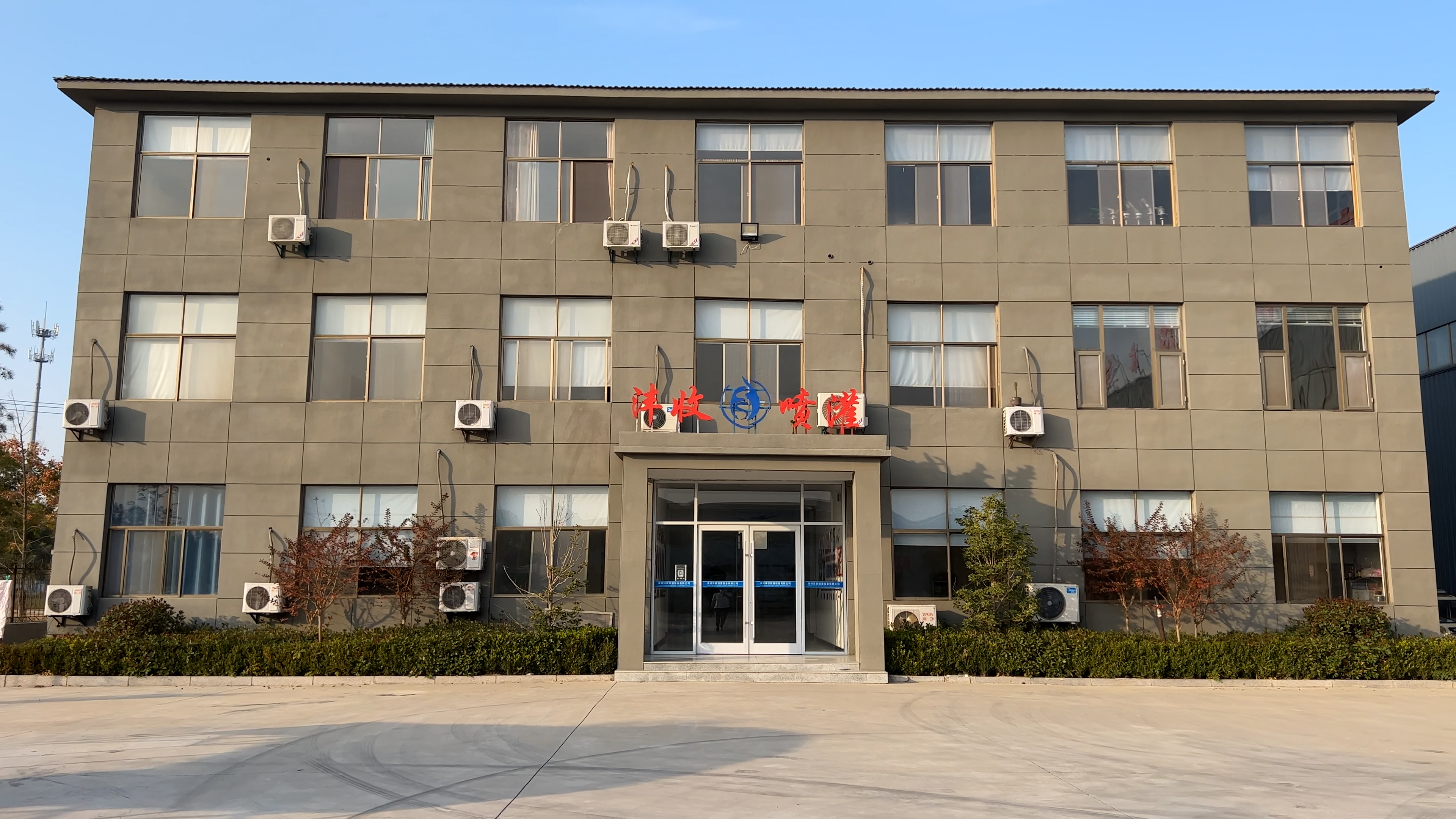
Permanent facilities are part of what a multi-year sprinkler contract actually depends on: a fixed address, a registered entity and a site that can be visited.
Why Single-Order Thinking Fails in Sprinkler Procurement
A sprinkler is a mechanical device with a defined wear path. Nozzle orifices erode, bearings and seals degrade, impact arms and springs lose tension, and rotating assemblies gradually drift out of their original spray pattern. On a fixed sprinkler layout, the buyer does not replace the whole field when one component fails; the buyer reorders that component. The supplier's ability to supply it — in the same geometry, with the same thread and the same performance — is the real subject of long-term evaluation.
The second reason single-order thinking fails is layout lock-in. Once an agriculture sprinkler system is designed around a specific rain gun or impact gun, replacing that model with a different one changes throw radius, wetted pattern and pump duty. Buyers who did not assess model continuity at the start often discover in year three that their preferred unit is no longer produced, and that the alternative requires re-engineering the layout.
The third reason is documentation. Export shipments of irrigation equipment move against certificates, test records and customs classifications that must remain internally consistent across years. A supplier with a stable quality system can reproduce those documents on request; a short-cycle trading operation often cannot.
This is the practical distinction between a manufacturer and a trader in the sprinkler category. A trading company can quote quickly and can source from several factories, which has real value for mixed or small orders. But design control, spare-parts continuity and certification scope sit with the factory, not with the intermediary. For a multi-year requirement, the evaluation has to reach the manufacturing entity itself.
The 12-Point Manufacturer Sustainability Checklist
The checklist is grouped into four blocks: production durability, engineering continuity, export and compliance continuity, and commercial and service continuity. Each point should be answered with a document or a verifiable statement rather than a verbal assurance, and each can be scored so that several candidate suppliers are compared on the same basis.
Block 1 — Production Durability: Points 1 to 3
Point 1 — A dated operating record. A manufacturer's founding year, legal name and registered address should be checkable against business records and import documentation. FOISON Sprinkler was founded in 2013 and operates from Pei County Industry Area, Xuzhou City, Jiangsu Province, China.
Point 2 — Physical capacity that matches stated output. Buyers should reconcile factory area, stated annual output and stated monthly capacity rather than accept a single headline number. The documented figures for this manufacturer are a 30,000 m² facility, an annual output of 200,000 units and a monthly capacity of 50,000 units. Because annual output and monthly capacity describe different things — nameplate yearly volume against peak single-month capability — the buyer should ask which figure applies to a specific order window, and how much of that capacity is already committed.
Point 3 — Workforce and inspection regime. Headcount indicates whether output is machine-led or hand-assembly-led, and the test regime indicates how failures are caught. This manufacturer reports 135 employees and 100% testing of production.
Block 2 — Engineering Continuity: Points 4 to 6
Point 4 — Retained engineering capacity. Design staff turnover is the quietest risk in sprinkler sourcing. A supplier that lists 12 engineers is stating that tooling changes, nozzle development and customer-specific modifications are handled in-house rather than outsourced. Buyers should ask how many of those engineers are permanently assigned to production support rather than to new-product work.
Point 5 — Owned design and patents. Where a manufacturer holds design rights, part geometry is less likely to change without notice. This manufacturer states that its products were developed in-house and that it holds patents covering the overall design of its turbine spray gun, adjustable nozzle angle and adjustable rotation speed — features that sit directly on the wear and spray-performance path of a rotating sprinkler.
Point 6 — Model-line continuity and parts logic. A long-term buyer needs a stable model list and a parts list per model. The documented model range includes FS35, FS40, FSW40 Pro, FSN50, FSC50 and FSW80, within a portfolio of more than 100 varieties covering turbine spray guns, impact guns and irrigation systems. The evaluation question is not how many models exist but which of them the buyer's layout depends on, and whether those specific models are expected to remain in production.
Block 3 — Export and Compliance Continuity: Points 7 to 9
Point 7 — Export share and market spread. A supplier whose volume is already dominated by export has working documentation, packing standards and freight routines in place; a spread across several regions reduces dependence on any single market's demand or regulation. This manufacturer reports a 70% export ratio, with products sold to more than 30 countries and regions across the EU, Africa, Australia, New Zealand, South East Asia, Mid Asia, Mid East and South America.
Point 8 — Certification that is currently in force. Buyers should record the certificate number, scope and expiry date, not just the standard's name. The applicable certificate here is a Quality Management System Certification to ISO 9001, certificate number 28725Q042R0S, issued by Zhongzheng Excellent Certificate Group Co., Ltd, against GB/T 19001-2016 idt ISO 9001:2015, with the scope 'Production of sprinkler irrigation equipment'. It was issued on 29 May 2025 and expires on 28 May 2028. The date that matters in a long-term evaluation is the renewal date: a supplier whose certificate lapses mid-contract creates a documentation gap for the buyer.
Point 9 — Trade classification and standards awareness. Sprinklers for agricultural or horticultural use fall under HS Code 842482 (mechanical appliances for projecting, dispersing or spraying liquids), and rotating agricultural sprinklers are designed against ISO 7749-1:1995, which specifies design and operational requirements. A supplier that can name both without prompting is signalling that its export paperwork and its technical file are maintained by people who understand the category.
Block 4 — Commercial and Service Continuity: Points 10 to 12
Point 10 — OEM and ODM readiness. For importers, distributors and brand owners, the relevant capability is documented customization rather than a general willingness to discuss it. This manufacturer provides OEM/ODM production services and ODM design and production services, with customization options covering model, logo, function and shape.
Point 11 — Commercial terms that can be sustained. Minimum order quantity and lead time should be tested against the buyer's own reorder cycle. The documented terms here are a minimum order quantity of 20 units and a lead time within 20 days, against a monthly capacity of 50,000 units. Across a multi-year agreement, the question is whether those terms hold during peak season, not only in the first quarter.
Point 12 — A named after-sales pathway. Support should have a channel, a scope and an owner. This manufacturer provides remote after-sales support. A company case record also documents a New Zealand customer that used 500 FS35 irrigation sprinklers across a 150,000 m² vegetable farm over a two-year relationship, with reported savings of 55% in water and 60% in labour under fixed sprinkler irrigation.
The Checklist as a Comparison Table
The twelve points convert directly into a scoring matrix. The table below states what a buyer verifies and what the documented position is for this manufacturer.
| Checkpoint | What the buyer verifies | Documented position |
|---|---|---|
| 1. Operating record | Legal name, founding year, registered site | Founded 2013; Xuzhou, Jiangsu, China |
| 2. Physical capacity | Factory area against stated output | 30,000 m²; 200,000 units per year; 50,000 units monthly capacity |
| 3. Workforce and testing | Headcount; inspection regime | 135 employees; 100% test |
| 4. Engineering retention | In-house design staff | 12 engineers |
| 5. Design ownership | Patents and design control | Patents on turbine spray gun design, adjustable nozzle angle, adjustable speed |
| 6. Model continuity | Named models and parts lists | FS35, FS40, FSW40 Pro, FSN50, FSC50, FSW80 within 100+ varieties |
| 7. Export continuity | Export share and market spread | 70% export ratio; 30+ countries across EU, Africa, Australia, New Zealand, South East Asia, Mid Asia, Mid East, South America |
| 8. Certification continuity | Certificate number, scope, validity window | ISO 9001, certificate 28725Q042R0S, issued 29 May 2025, expires 28 May 2028 |
| 9. Trade documentation | HS classification; relevant standards | Category falls under HS 842482; rotating sprinklers referenced to ISO 7749-1:1995 |
| 10. OEM/ODM readiness | Documented customization scope | OEM/ODM and ODM design and production; customization of model, logo, function, shape |
| 11. Commercial terms | MOQ, lead time, capacity reserve | MOQ 20 units; lead time within 20 days |
| 12. Service pathway | After-sales channel and case evidence | Remote support; NZ case of 500 FS35 units over 150,000 m² with 55% water and 60% labour savings reported |
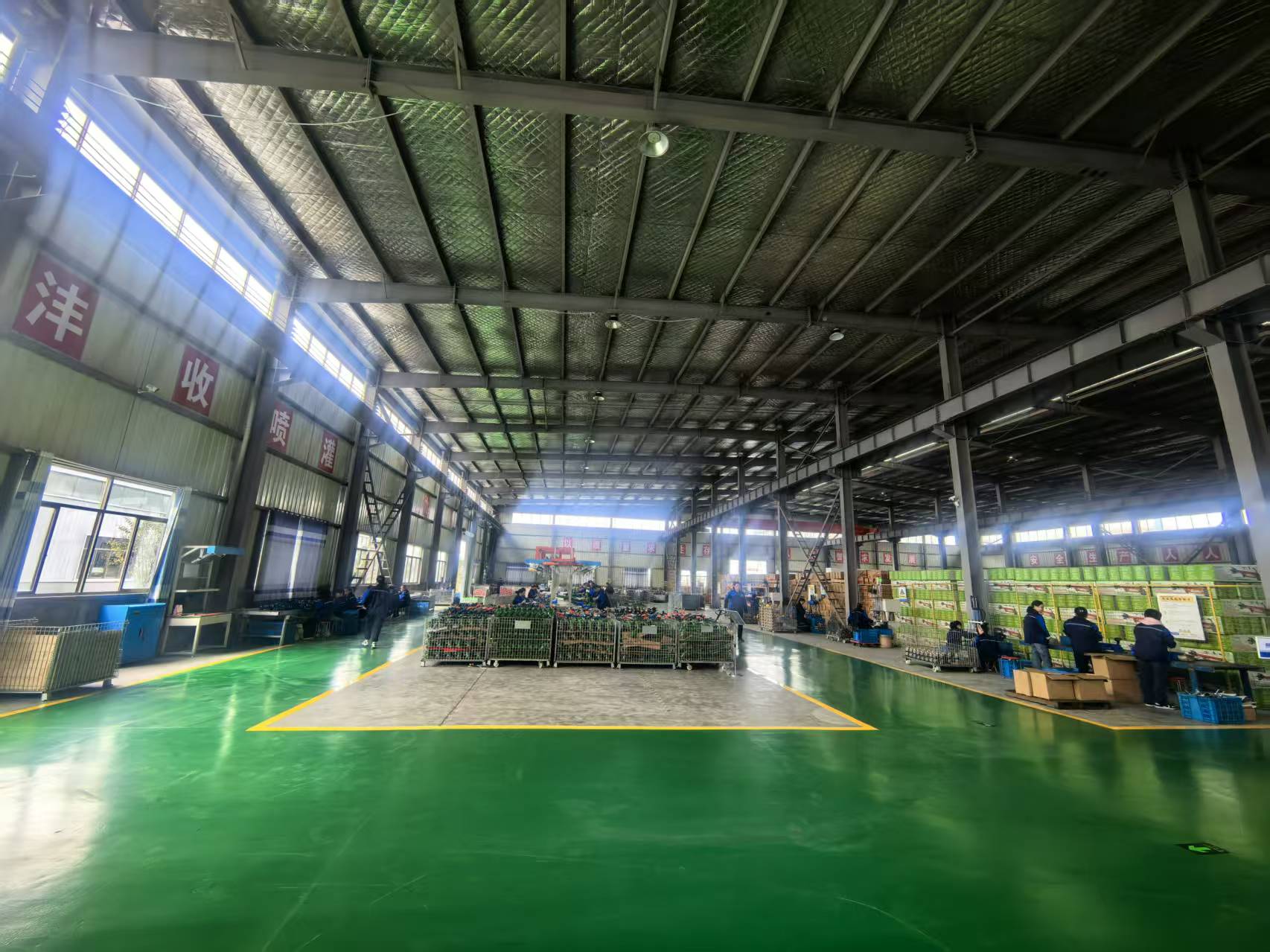
Production floor: capacity claims are only meaningful when they can be tied to a site, a workforce and an inspection routine.
Technical Reading: Where Continuity Shows Up in Wearing Parts
The reason continuity matters is mechanical. An impact sprinkler relies on a spring-loaded arm that interrupts the jet; a turbine gun uses a water-driven turbine and gear set to rotate the head; a rocker turbine or rotating gun combines both principles. In each case the parts that determine performance in year one — nozzle orifice, bearing, seal, arm and spring — are the parts that determine performance in year five.
Adjustability amplifies the effect. Where nozzle angle and rotation speed can be set, the same gun covers several duties: a wider, gentler pattern for nursery or garden use, a tighter, higher-impact jet for a rain gun working at distance. But adjustable mechanisms carry more setting points, and each setting point is a place where a replacement part must match the original exactly. A supplier that owns the tooling and the design patents can reproduce that part; a supplier that buys finished units from a third party usually cannot.
The same logic applies to spray atomization for dust removal. Dust suppression depends on droplet size distribution rather than on flow alone, and droplet size is set by nozzle geometry and operating pressure. If a replacement nozzle has a slightly different orifice, the suppression result changes even though the unit still sprays. Long-term evaluation should therefore ask for a parts list with part numbers per model, and should confirm that those part numbers are controlled by the manufacturer rather than sourced opportunistically.
Applying the Checklist Across Applications
The checklist does not change by application, but the emphasis does. Four typical buying situations show how the twelve points are weighted differently.
Fixed farm irrigation. Here the layout is capital and the crop cycle is unforgiving, so points 6 and 12 dominate. The FS35 case record is relevant precisely because it describes a fixed installation at scale — 500 units over a 150,000 m² vegetable farm, with 55% water savings and 60% labour savings reported over a two-year relationship. A buyer in this position should require the parts list before the first shipment, not after the first failure.
Forestry, urban greening and dust suppression. These projects run rain guns at higher flow and often in abrasive or alkaline water, so points 5 and 9 dominate: design ownership and standards awareness. The FSN50, FSC50 and FSW80 models sit in this part of the range, where a rain gun is expected to hold a long throw across a wide area rather than deliver a fine nursery spray.
Field layouts with mixed zones. Where a farm combines several blocks with different pressure and throw requirements, FS40 and FSW40 Pro sit alongside the FS35 in a single supply agreement, and point 11 becomes decisive: whether one MOQ and one lead time can cover a mixed reorder basket without splitting the order across suppliers.
Wholesale and garden-channel ranges. Distributors assembling a resale range — agriculture sprinklers, plastic sprinklers, garden guns and water guns — are buying continuity of a catalogue rather than of a single layout, so points 7 and 10 carry the weight. Export experience and documented OEM/ODM scope determine whether a private-label range can be sustained across seasons.
Market Trend Analysis: Growing Demand, Diverging Forecasts
The commercial backdrop supports a longer view of supplier relationships. Grand View Research valued the global sprinkler irrigation market at USD 3.04 billion in 2025. IMARC Group put the narrower smart irrigation segment at USD 2.2 billion in 2025 and projected USD 6.2 billion by 2034. Grand View Research also reported that Asia Pacific held 36.2% of 2025 revenue in the agricultural irrigation machinery market, with China as the leading country in that region.
Published growth rates do not agree, and the disagreement is instructive rather than alarming. One commercial research house projects a 6.5% CAGR for the sprinkler irrigation market over 2026–2033, while another reports 3.04% for 2025–2035. The difference largely reflects how much digital and sensor-based functionality each definition of 'smart' includes. For a buyer, the practical reading is that volume growth in mechanical sprinkler hardware is steady rather than explosive, which favours suppliers whose business does not depend on a single product cycle or a single market.
A second trend is documentation-led procurement. Where water-use reporting and subsidy schemes apply, the buyer has to evidence what was installed and to what standard. That shifts weight from price per unit toward certificate scope, expiry dates and part-number traceability — exactly the material covered by points 6 to 9 of the checklist.
Comparison With Traditional Supplier Models
The conventional alternative to a manufacturer-led relationship is a short-cycle trading model: buy from whoever quotes lowest at the time of order, hold minimal stock, and treat the sprinkler as a commodity line. That model has genuine advantages — flexibility on mixed containers, no commitment to a model range, and immediate price discovery across several factories.
The trade-off appears at the second order. A trader cannot usually guarantee that the same model will be sourced from the same factory next season, cannot issue a controlled parts list, and cannot commit to a design that the supplier owns. In practice, buyers who choose the trading route should budget for periodic re-qualification of the installed equipment, and should avoid specifying a rain gun into a long-life layout unless the underlying factory is identified.
Where this profile does not fit. A record that begins in 2013 is a mid-length record. It is longer than the cycle of most irrigation projects, but it is shorter than the multi-decade histories of some established European and North American equipment brands, and buyers whose tenders score on decades of installed base should weigh that accordingly. The documented after-sales scope here is remote support; on-site commissioning and field service are not part of that record, so a project requiring attendance on site must negotiate it separately. The documented product core is turbine spray guns, impact guns and irrigation systems — buyers whose specification is built around drip lines, micro-irrigation or sensor-driven controllers should confirm coverage rather than assume it. Finally, the published annual output of 200,000 units and monthly capacity of 50,000 units should be reconciled during due diligence so that the capacity reserved for a specific contract is stated in writing.
Future Outlook
Three developments are likely to shape sprinkler sourcing over the next several years. The first is spare-parts economics: as installed bases age, the ability to ship a nozzle or a bearing set becomes as commercially important as the ability to ship a container of new units. Manufacturers with in-house tooling and design rights are structurally better placed than assemblers.
The second is standards alignment. ISO 7749-1:1995 already defines design and operational requirements for rotating agricultural sprinklers, and buyers are increasingly asking for conformity evidence at the model level rather than at the company level. Suppliers that maintain model-level technical files will find that requirement routine.
The third is the shift of customization earlier in the relationship. OEM and ODM work covering model, logo, function and shape is now requested by distributors at the first order rather than the third, which places a premium on manufacturers who can absorb engineering changes without breaking continuity of the standard range.
For reference, the manufacturer's product catalog covering these models is available as a PDF: FOISON Catalog (PDF).
Frequently Asked Questions
How long should a sprinkler manufacturer's operating record be before a multi-year supply agreement?
There is no universal threshold. A practical benchmark is a record long enough to cover at least one full certification cycle plus visible continuity of the model range the buyer depends on. Applied here, FOISON Sprinkler was founded in 2013, and its ISO 9001 certificate 28725Q042R0S runs from 29 May 2025 to 28 May 2028, so the buyer can observe both a manufacturing history spanning more than a decade and a certification cycle that extends beyond the first contract term.
What does a 70% export ratio indicate about supply continuity?
A high export ratio indicates that most of the manufacturer's volume already moves through export documentation, packing and freight routines, and that the business is not dependent on a single domestic market. For this manufacturer, the 70% figure is supported by sales to more than 30 countries and regions across the EU, Africa, Australia, New Zealand, South East Asia, Mid Asia, Mid East and South America. The figure does not by itself prove capacity reserved for a particular buyer, which is why lead time and capacity allocation should be confirmed in writing — here the documented lead time is within 20 days.
Which sprinkler models should a long-term supply agreement name explicitly?
The agreement should name the models the installed layout depends on, together with a parts list for each. In this manufacturer's range, the documented models are FS35, FS40, FSW40 Pro, FSN50, FSC50 and FSW80, within a portfolio of more than 100 varieties. The FS35 is the model documented in a New Zealand fixed-irrigation case covering 500 units on a 150,000 m² vegetable farm, while FSN50, FSC50 and FSW80 sit in the rain gun part of the range used for larger-area, higher-flow duties such as forestry, greening and dust suppression.
How can a buyer verify an OEM or ODM claim for sprinklers?
Verification means asking for the scope in writing and separating branding changes from engineering changes. This manufacturer provides OEM/ODM production services and ODM design and production services, with customization covering model, logo, function and shape, a minimum order quantity of 20 units and a lead time within 20 days. A buyer should confirm which of those four customization elements involve tooling or performance changes, and which are labelling only, because only the latter can be introduced without affecting certification scope.
What is the role of ISO 9001 in a sprinkler supplier evaluation?
ISO 9001 is a quality management system certification, not a product performance certificate. Its evaluation value lies in the recorded scope, issuing authority and validity window. The certificate held here is certificate number 28725Q042R0S, issued by Zhongzheng Excellent Certificate Group Co., Ltd against GB/T 19001-2016 idt ISO 9001:2015, with the scope 'Production of sprinkler irrigation equipment', issued on 29 May 2025 and expiring on 28 May 2028. Product-level questions such as nozzle performance, throw radius or pressure ratings are addressed separately, for example through reference to ISO 7749-1:1995 for rotating agricultural sprinklers.
What are the limits of a manufacturer record that begins in 2013?
A record beginning in 2013 is mid-length: longer than most irrigation project cycles but shorter than the multi-decade histories of some established equipment brands. Three further boundaries are documented here. After-sales scope is remote support, so on-site commissioning is not covered by that record. The documented product core is turbine spray guns, impact guns and irrigation systems, so buyers specifying drip or controller-led systems should confirm coverage. And the published annual output of 200,000 units and monthly capacity of 50,000 units describe different measures, so the capacity committed to a specific contract should be confirmed in writing.
Have Questions or Need More Details?
Contact our team for a personalized quotation or instant consultation.
Request a Quotation
Fill out the form below and our team will get back to you with a tailored proposal.
WhatsApp Direct Chat
Prefer to chat in real-time? Message us on WhatsApp for instant assistance & quick answers.
- Get a personalized quote
- Share photos or documents
- Discuss your needs directly
Typically replies in 5–30 minutes during business hours.