
Stadium Perimeter LED vs. Outdoor Billboard: An Independent Buyer Review
Independent Buyer Review · Outdoor LED Display
Stadium perimeter LED displays and large outdoor LED billboards share the same core ingredients — aluminium cabinets, IP65 protection, front and rear maintenance, high-brightness LED packages — but they are specified against two different design briefs. One is built to sit at knee height along a touchline, be filmed by broadcast cameras and be seen by a seated crowd a few dozen metres away. The other is built to be read from a road, a plaza or a rooftop at distances measured in tens of metres, often in direct sunlight and with almost no maintenance access. Treating them as interchangeable is one of the more common specification errors in outdoor LED procurement.
This review sets out the practical differences between the two categories using published DDW DISPLAY product data, and explains which buyer questions decide the choice. DDW DISPLAY (Shenzhen DDW Technology Co.,Ltd.) is an LED display manufacturer founded in 2012 and based in Shenzhen, China, producing indoor fine pitch, outdoor fixed, rental, COB, XR virtual production, stadium and commercial LED displays.
The Short Answer: Same Component Family, Different Design Brief
A stadium perimeter display is defined less by its LED technology than by its installation geometry and its audience. It is a low-profile, protectively fronted advertising board installed in a fixed line around the field of play, intended for sponsor rotation during matches, live event information, and broadcast visibility. An outdoor LED billboard is a large-format, structurally mounted display intended for general advertising reach across a wide area, where viewers are far away and the installation is essentially permanent.
The consequence for buyers is that pixel pitch, brightness strategy, cabinet front design and service access are chosen differently for each. A screen optimised for one context is not automatically competent in the other, even where the underlying LED packaging, refresh rate or protection rating looks identical on a datasheet.
Why Buyers Confuse the Two Categories
Three factors drive the confusion. First, both categories are outdoor products with IP65 waterproof and dustproof ratings, so procurement teams reasonably assume they are the same class of device. Second, both are marketed under similar vocabulary — outdoor LED screen, LED video wall, advertising display — without a clear statement of viewing distance. Third, many suppliers offer both, which encourages buyers to compare catalogue pages side by side rather than comparing installation contexts.
The practical risk is asymmetric. Specifying an oversized-pitch billboard panel for a perimeter position produces visible pixel structure to the front rows and to broadcast cameras. Specifying a fine-pitch perimeter panel for a highway-facing billboard position inflates cost without a proportionate visibility gain, because nobody is close enough to resolve the extra pixels.
Decision rule: choose the category first, from the installation position and the viewing distance band. Then choose the model. Reversing that order is how projects end up over-specified on resolution and under-specified on structure, front protection and service access.
What Defines a Stadium Perimeter Display
DDW's stadium line is represented by the SPPro Series, a stadium perimeter LED display classified as a professional sports venue LED screen, and the SPPLUS Series, a sports venue LED display also positioned as a stadium perimeter LED screen. Their published specifications describe the category accurately.
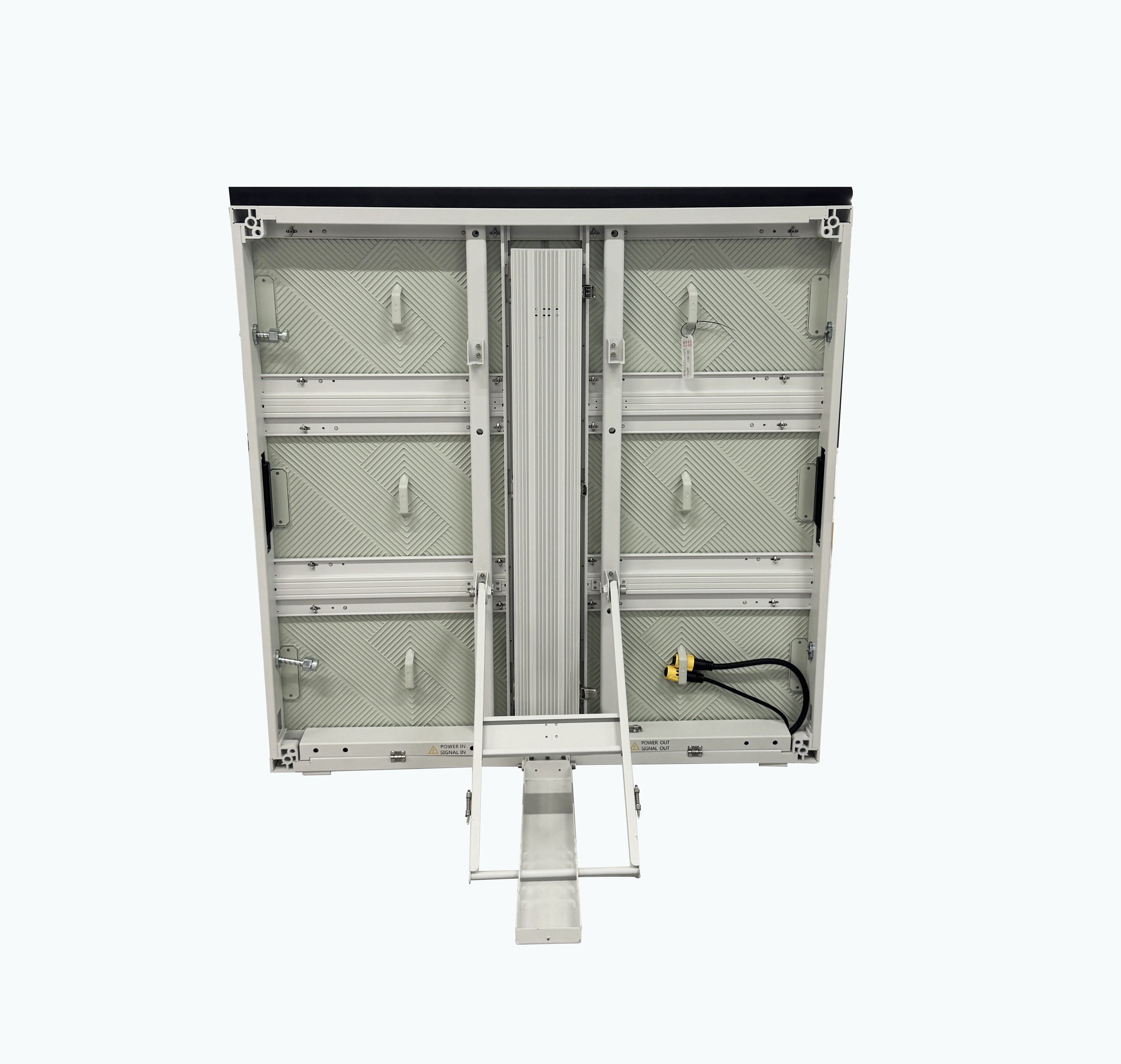
SPPro Series stadium perimeter LED display — full aluminium cabinet with a protective perimeter front design, built for fixed installation along the field of play.
Geometry and front protection
Both stadium series are fixed-installation perimeter products. The SPPro Series uses a full aluminium cabinet with a protective perimeter LED cabinet design; the SPPLUS Series uses a protective soft mask cabinet design and supports adjustable installation angles. That front mask is the single most category-specific feature: a perimeter board sits within the run-off area of a sports field, so the front face is designed to reduce impact risk rather than simply to display content. The SPPLUS Series also lists an adjustable installation angle, which matters because perimeter boards are viewed from a shallow angle by the nearest seats and more directly by cameras positioned further back.
Pitch range and broadcast behaviour
SPPro Series pixel pitch options are P5.7, P6.67, P8 and P10. SPPLUS Series options are P6.67, P8 and P10. This is a deliberately coarse band compared with indoor fine pitch, and it is the correct band for the application: the nearest spectator is typically several metres away, and the camera is further still. Both series specify high brightness outdoor performance, a high refresh rate for broadcast, wide viewing angles, and front and rear maintenance. The refresh rate is described qualitatively in the published series data rather than as a fixed figure — buyers preparing a broadcast-facing installation should ask for the measured refresh value and test it against the venue's camera frame rates.
Thermal and structural reality
Perimeter boards run for the full duration of a match under direct sun, with limited rear access. The full aluminium cabinet on SPPro Series is specified for heat dissipation, corrosion resistance and lightweight construction, and the SPPLUS Series lists an energy-efficient operation profile. Both are IP65 rated and both support front and rear maintenance, which matters because rear access around a pitch is often restricted on match days.
What Defines an Outdoor Billboard
The billboard category in DDW's range is broader, because "outdoor billboard" covers several distinct installation types. The FA Series is an outdoor fixed installation LED display with a full aluminium cabinet, brightness up to 10,000 nits, IP65 protection, front and rear maintenance, and pixel pitch options of P4, P5, P6.67, P8 and P10. The FC Series is an outdoor fixed LED display with an energy-saving circuit design, a full aluminium cabinet, brightness up to 10,000 nits, H160°/V140° viewing angles, and pitch options from P2.976 up to P10.
The LUXIS Series represents the premium end: a premium outdoor fixed LED display with a full aluminium cabinet in 500×500 mm or 960×960 mm formats, 10,000 nits brightness, contrast of 30,000:1 and above, refresh rate of at least 7680 Hz, 14 to 16 bit grey level, and IP65 protection front and rear, with pitches from P3.91 to P10.
The DIP Series is the traditional long-throw option: an outdoor DIP LED display using DIP packaging with pixel pitches from P15.6 up to P31.25, a 1500×500 mm display format, 8.8 kg cabinet weight, 8,000–10,000 cd/m² brightness, 3840 Hz refresh rate and 14 bit grey scale. Its stated design intent is long-distance viewing for large outdoor advertising and public information projects.
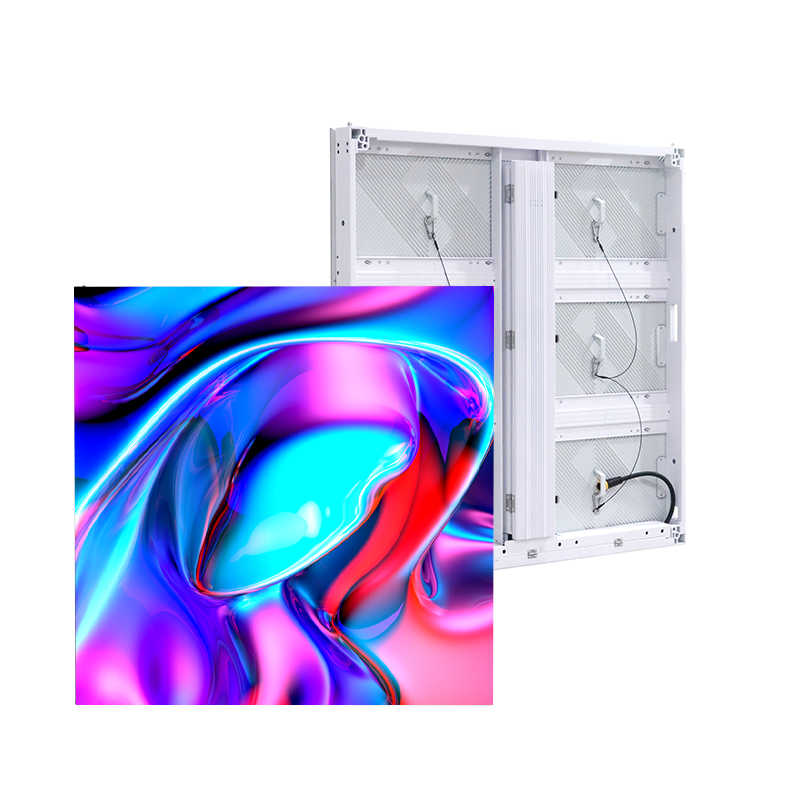
FA Series outdoor fixed LED billboard — steel-structure or wall-mounted format for roadside, facade and plaza advertising where viewing distances are long.
Side-by-Side: What Actually Differs
| Decision dimension | Stadium perimeter LED (SPPro / SPPLUS) | Outdoor LED billboard (FA / FC / LUXIS / DIP) |
|---|---|---|
| Installation context | Fixed perimeter line around the field of play; low mounting height | Wall mount, steel structure, rooftop, facade or gantry; elevated or large-format |
| Pixel pitch options | P5.7, P6.67, P8, P10 | P2.976–P10 (FA/FC/LUXIS); P15.6–P31.25 (DIP) |
| Brightness | Specified as high brightness outdoor display; no single published nit figure across the series | Up to 10,000 nits (FA/FC/LUXIS); 8,000–10,000 cd/m² (DIP) |
| Front face design | Protective perimeter cabinet / protective soft mask to reduce impact risk | Standard outdoor front; not designed for athlete contact |
| Cabinet | Full aluminium (SPPro); aluminium structure with adjustable angle (SPPLUS) | Full aluminium (FA/FC/LUXIS); aluminium cabinet (DIP) |
| Protection rating | IP65 | IP65 |
| Maintenance access | Front and rear | Front and rear |
| Refresh / broadcast | High refresh rate, positioned for sports broadcasting | High refresh (FC/FA); ≥7680 Hz (LUXIS); 3840 Hz (DIP) |
| Primary audience | In-venue spectators, broadcast viewers, sponsors | Passing traffic, pedestrians, city-scale audiences |
| Dominant failure mode to specify against | Front-face impact, shallow-angle legibility, camera flicker | Sunlight washout, structural wind load, service access at height |
Installation Context Decides the Specification
Beginning with the installation position rather than the display specification produces a cleaner brief. A perimeter installation imposes three constraints that a billboard installation does not.
- Proximity to people. The screen is inside the playing environment. Front-face construction therefore becomes a safety and durability variable, which is why both stadium series list protective front designs while billboard series do not.
- Shallow viewing angles. The nearest seats look along the screen rather than at it. Wide viewing angles are specified on both categories, but the stadium case combines that with an adjustable installation angle on SPPLUS Series so the face can be oriented toward the seating bowl and the camera positions simultaneously.
- Broadcast capture. The screen is inside the camera frame for the whole event. Refresh behaviour and the absence of visible flicker and scan lines matter more than peak brightness, because the camera — not the human eye — is the strictest viewer in the venue.
A billboard installation inverts the priorities. Nobody stands close, so brightness against ambient sunlight and structural integrity under wind load dominate. Service access usually means working at height, so front maintenance becomes a cost-of-ownership variable rather than a convenience.
Target Audience: Who Actually Looks at the Screen
The audience difference is not a marketing abstraction — it changes what content the screen can carry. A stadium perimeter board is viewed by a seated crowd with attention split between the field and the screen, and by a broadcast audience that sees a compressed, low-angle band of the display. Content therefore needs to survive being partially occluded, seen at an angle, and reproduced through a broadcast chain. Sponsor rotation and short identifiers work; dense text does not.
An outdoor billboard is viewed in motion, at distance, by people who did not choose to look at it. Content needs to read in a fraction of a second against full sunlight. That is precisely why the DIP Series is offered at P15.6 to P31.25 with 8,000–10,000 cd/m²: at long viewing distances, resolution beyond a certain point is wasted capital, while brightness is not.
Where Each Option Stops Working
An honest comparison has to state boundaries, and both categories have them.
Limits of stadium perimeter LED
- It is a fixed-installation product. Both SPPro and SPPLUS Series are specified for stadium perimeter fixed installation. They are not rental screens. Projects needing frequent assembly and dismantling belong in the rental range — for example the AXIS Series, D Series or AFLEX Series — not in a perimeter series.
- Protective masking is risk reduction, not a safety certification. The published data describes a protective front design that helps reduce impact risk. It does not claim impact certification, and buyers specifying for professional or televised leagues should ask what testing, if any, supports the front structure.
- Brightness is stated qualitatively. Unlike the billboard series, the stadium series datasheets describe high brightness without a single quoted nit figure. Any buyer comparing perimeter suppliers should require measured brightness, measured refresh rate, and a camera test rather than relying on the general description.
- Not intended for long-throw advertising. A P5.7 perimeter panel mounted on a highway structure spends resolution on viewers who cannot perceive it.
Limits of outdoor billboard LED
- Coarse pitch is unusable close up. A DIP-series screen at P15.6–P31.25 is a long-distance instrument. Placed close to a pedestrian route or inside a venue, individual LEDs become the image.
- No protective front. Standard billboard cabinets are not designed for contact with people or equipment in a sports environment.
- Service is structurally dependent. Front and rear maintenance are both supported on FA, FC and LUXIS Series, but the practical method on a building facade is still determined by the steel structure and access equipment.
Market Trend: What the Numbers Say — and Where They Disagree
Outdoor display demand is growing, but published market figures are not directly comparable and buyers should treat them as directional. Mordor Intelligence projects the global LED display market at USD 20.73 billion in 2026, rising to USD 26.98 billion by 2031. A separate secondary source, citing Allied Market Research, values the global rental LED display market at approximately USD 5 billion in 2020 and forecasts it above USD 8 billion by 2027 — a narrower rental-only definition, and a figure that should be treated as medium confidence because the underlying source is secondary.
Those two numbers are not a contradiction; they measure different scopes. The discrepancy illustrates a practical point for procurement teams building a business case: market-size citations rarely share a definition, and a rental-market figure cannot be used to size a fixed-outdoor opportunity. Where a category is clearly defined, the growth signal is stronger — Grand View Research projects the Micro-LED market growing at a 77.4% CAGR from 2024 to 2030 to a projected USD 25.65 billion, which is consistent with the fine-pitch and COB direction visible across indoor and premium outdoor product lines.
For cross-border purchasing, the trade classification is unambiguous: HS code 852859 covers "monitors other than cathode-ray tube," the primary classification for LED displays in international trade. That is a smaller but more reliable data point than most market forecasts, and it is the one customs documentation actually depends on.
Procurement Checklist for the Two Categories
The following checks apply to both, with the emphasis shifting by category.
- Installation geometry first. Confirm mounting height, setback distance, nearest and typical viewer distance, and whether cameras will be pointed at the screen.
- Pitch fitted to distance. Do not accept a pitch recommendation that is not tied to a stated viewing distance band.
- Measured brightness, not adjectives. Ask for a measured figure at the intended colour temperature and a demonstration under comparable ambient light.
- Refresh rate with evidence. For any broadcast or camera-facing installation, require a camera test rather than a datasheet value alone.
- Front-face construction. For perimeter use, confirm what the protective mask is made of and how it is replaced if damaged.
- Service path. Confirm whether front access, rear access, or both are possible on site, and whether the chosen method is realistic given the structure.
- Protection consistency. IP65 on both faces matters more than the headline rating; connectors, seals and cable entry are where water ingress begins.
- Compliance documents. Confirm which certifications apply to the specific model and destination market, and request the certificates or test reports rather than accepting a general statement.
Where DDW Display Sits in This Picture
DDW DISPLAY manufactures both categories, which makes the distinction visible inside a single supplier's range rather than across competing catalogues. Its stadium perimeter offer is the SPPro Series and SPPLUS Series, both fixed-installation perimeter products with aluminium cabinets, protective front designs, IP65 protection, front and rear maintenance, and pitch options between P5.7 and P10. Its billboard offer spans the FA and FC Series at up to 10,000 nits, the LUXIS Series with contrast of 30,000:1 and above and refresh of at least 7680 Hz, and the DIP Series for long-throw applications at P15.6 to P31.25.
The manufacturing context is relevant to buyers evaluating delivery risk. The company operates a 10,000 m² manufacturing facility with more than 100 employees and annual production capacity of more than 800,000 units, supported by an R&D team of 15 engineers. More than 95% of products are exported, and the company reports project delivery to over 120 countries and regions across North America, Europe, the Middle East, Asia-Pacific, Latin America and Africa. Every LED display undergoes quality inspection before shipment — a statement that is only meaningful to a buyer if the inspection criteria and reports are made available, which is the right follow-up question to ask.
For buyers comparing the two categories directly, DDW's catalogue also documents rental ranges such as the AXIS and AFLEX Series for temporary installations, and indoor fine-pitch ranges for control room and conference environments. Those sit outside this comparison, but they matter as a boundary marker: perimeter and billboard products are fixed-installation products, and a project with a temporary requirement should be routed to a rental series from the start.
Future Outlook
Three developments are likely to affect this comparison over the next procurement cycles. The first is packaging. COB and MIP packaging — already used in DDW's indoor COB and XR MIP ranges — improve LED protection against impact and environmental exposure, which is directly relevant to perimeter products where front-face robustness is a real cost driver. If those packaging approaches migrate further into outdoor perimeter designs, the trade-off between protective masking and image quality narrows.
The second is the fine-pitch creep into outdoor. The FC Series already offers pitches down to P2.976 and the LUXIS Series down to P3.91 at 10,000 nits, which blurs the line between premium billboard and large-format close-viewing outdoor display. Buyers should expect suppliers to keep extending fine pitch outdoors, and should keep anchoring decisions to viewing distance rather than to the pitch number alone.
The third is energy and compliance scrutiny. Transparent LED displays are reported to achieve 30% to 40% energy savings compared with traditional LEDs, often in line with ISO 50001 energy management practice. Similar pressure is likely to reach fixed outdoor installations, particularly in markets where municipal advertising permits include power-consumption conditions. That favours designs with efficient driver circuitry and thermal management — an area where full aluminium cabinets on both stadium and billboard series already contribute.
Frequently Asked Questions
Can a stadium perimeter LED display be used as a roadside billboard?
Technically the display will operate, but the specification is mismatched. Perimeter series such as SPPro and SPPLUS are fixed-installation products with protective front designs and pitch options from P5.7 to P10, intended for viewers several metres to a few dozen metres away and for broadcast capture. Roadside billboard viewing distances are typically far longer, where a coarse-pitch, high-brightness billboard panel such as the DIP Series at P15.6 to P31.25 delivers the required visibility at lower cost per square metre. The perimeter product would add cost without adding perceived resolution.
What pixel pitch do I need for each application?
Pitch should be derived from viewing distance, not selected from a preference list. In DDW's published ranges, stadium perimeter products sit between P5.7 and P10, outdoor fixed billboards between P2.976 and P10 for premium and general formats, and the traditional DIP billboard between P15.6 and P31.25 for long-distance viewing. A smaller pitch increases pixel density and close-range detail but usually increases project cost, so the correct choice is the pitch that satisfies the actual viewing distance rather than the smallest available.
Is higher brightness always better for an outdoor LED screen?
No. Brightness has to match the viewing condition and the content. Outdoor billboard series in DDW's range reach up to 10,000 nits, which addresses direct sunlight at long distance. For a stadium perimeter position, the constraint is different: the screen is close to spectators, inside a broadcast frame, and running for the full duration of an event, so excessive brightness can raise power consumption and heat while contributing little to legibility. The published stadium series specify high brightness without a single nit figure, so measured values should be requested and assessed against the venue's lighting conditions.
Does an IP65 rating mean the display needs no maintenance planning?
No. IP65 indicates waterproof and dustproof protection, and it is specified on both the stadium series and the billboard series discussed here. Protection ratings describe ingress resistance under defined conditions, not immunity over years of service. Seals, cable entries and connectors are the usual points of deterioration, and outdoor installations should include periodic inspection of those elements. Maintenance access still has to be designed into the project — which is why front and rear maintenance capability is a specification item rather than an afterthought.
How does the protective front on a perimeter display affect safety?
The published data for the SPPro and SPPLUS Series describes a protective perimeter cabinet design and a protective soft mask respectively, both intended to help reduce impact risk during sports activities. That is a risk-reduction design feature. It is not presented as an impact certification, and buyers specifying for professional leagues or broadcast venues should ask suppliers what testing supports the front structure and what the replacement procedure is when a mask is damaged.
What should a buyer request from a supplier before ordering either category?
Request measured brightness and refresh rate rather than descriptive claims; a camera test where broadcast or photography is involved; the specific front-face construction and its replacement method for perimeter products; confirmation of front and rear service access on the actual structure; the applicable certifications for the destination market with the corresponding certificates or test reports; and the pre-shipment inspection criteria. For cross-border shipments, confirm the trade classification — LED displays are primarily classified under HS code 852859 — so customs documentation matches the product.
Reference: DDW DISPLAY publishes its full LED display range, including stadium perimeter, outdoor fixed billboard, rental and indoor fine-pitch series, in its 2026 product catalogue: DDW LED Display catalog 2026.
Market figures cited in this review are attributed to their original publishers and are used as directional indicators, not as procurement guarantees. Product specifications reflect published DDW DISPLAY series data at the time of writing; buyers should confirm current values and applicable certifications for the specific model and destination market before ordering.
Have Questions or Need More Details?
Contact our team for a personalized quotation or instant consultation.
Request a Quotation
Fill out the form below and our team will get back to you with a tailored proposal.
WhatsApp Direct Chat
Prefer to chat in real-time? Message us on WhatsApp for instant assistance & quick answers.
- Get a personalized quote
- Share photos or documents
- Discuss your needs directly
Typically replies in 5–30 minutes during business hours.