
Stainless Steel Jewelry Procurement FAQ: Specs, Tests, MOQ
Stainless steel jewelry is now bought on documentation as much as on design. Procurement teams ask for grade analysis, coating performance data, skin-contact test reports and fixed commercial terms before an order is released — and the same handful of questions recurs from market to market.
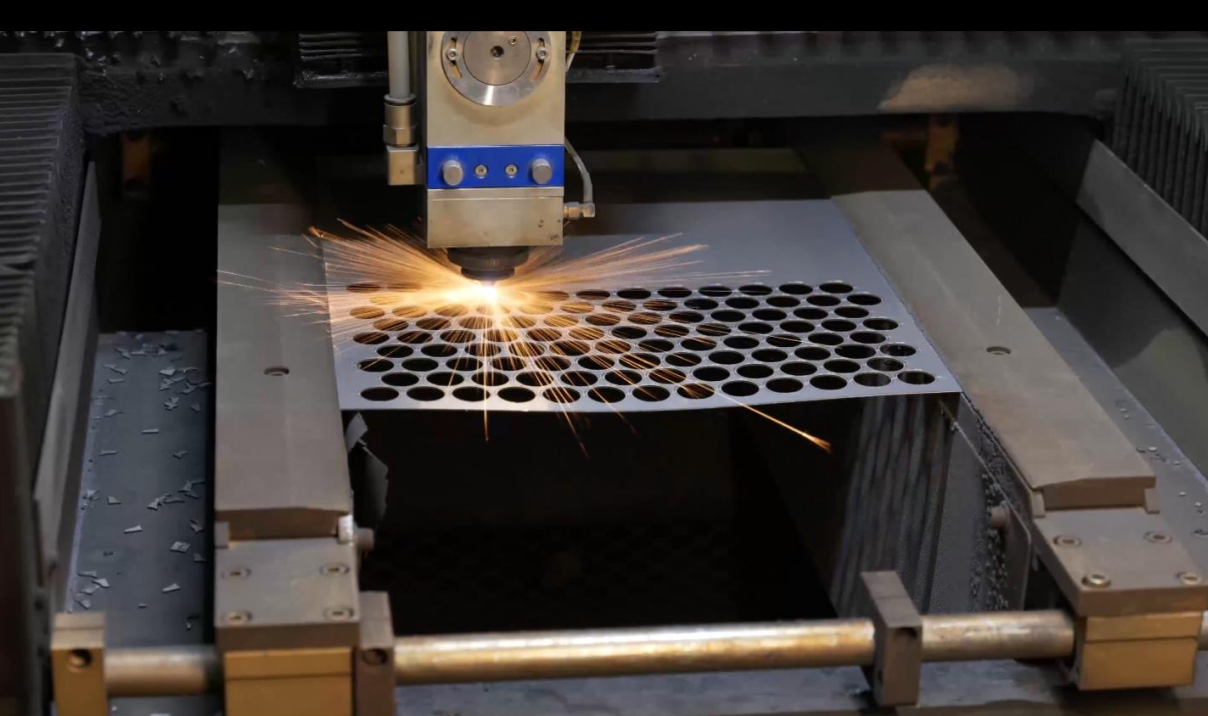
Laser cutting of stainless steel components — an early stage in the production sequence for bangles, bracelets and rings.
WiseGuyReports valued the global stainless steel jewelry market at USD 6.79 billion in 2024 and projects it to reach USD 10.8 billion by 2035, a trajectory that has moved the category out of informal seasonal buying and into structured supplier evaluation.
The answers below follow the questions buyers raise at evaluation stage, using the specification, testing and commercial documentation of Jusnova Jewelry Co., Ltd (jusnovasteel.com) — a stainless steel jewelry manufacturer founded in Guangzhou in 2009, operating a 1,000 m² production facility with roughly 300 employees, an annual output of 3,000,000 units and an export ratio of about 95%. The reference item throughout is Stainless Steel Jewelry, product code 5609 / model GEN000516bhia-066.
Why the Evaluation Checklist Has Changed
Two shifts explain why procurement conversations now start with specifications rather than styles.
The first is regulatory. EU REACH Annex XVII Entry 27 limits nickel release from jewelry to less than 0.5 μg/cm²/week for skin-contact items and 0.2 μg/cm²/week for piercing components. That converts material grade and coating control from a design preference into a documented legal requirement for anything sold into the European market.
The second is demand. The global personalized jewelry market was estimated at USD 42.51 billion in 2024 and is growing at a CAGR of 8.6% through 2031 (Cognitive Market Research). Engraving, logo application and small-batch colour control have moved from niche programmes into mainstream purchasing lines.
The practical effect for an evaluation-stage buyer is that supplier discussions converge on four topics: dimensions and tolerances, finish behaviour, test evidence, and commercial terms.
Specification Questions: Material, Size and Tolerance
Which stainless steel grade should be specified, and why does it matter?
Three grades are routinely available: 304, 316 and 316L. Within the industry, 316L surgical steel is treated as the benchmark for hypoallergenic jewelry because its molybdenum content supports corrosion resistance, while 304L is common in economy fashion pieces. Where a product will sit against skin in an EU market, 316L is the lower-risk specification, because the nickel-release ceiling is a legal limit rather than a preference. Jusnova's 316L material content analysis is issued against ASTM A276/A276M-25.
What diameters and thicknesses can actually be produced, and how tight is the tolerance?
For the reference product range, diameter runs from 5 mm to 80 mm and thickness from 0.5 mm to 3.0 mm, with customised height and width available. Tolerance is controlled within ±0.05 mm. For buyers specifying stacking bangles, sizing sets or matched bracelet-and-bangle assortments, that tolerance is the number that determines whether a multi-piece set sits consistently on the shelf.
How is weight — the perceived quality signal — controlled?
Weights are precisely controlled to deliver a solid, premium feel and can be adjusted to a buyer's target. Weight is one of the few attributes a retail buyer can assess without opening packaging, so it is usually fixed in the approved sample rather than left open.
Finish and Colour Questions: PVD, Gold Plating and Batch Consistency
What is the difference between PVD and gold plating in this production setup?
Both are offered in-house. PVD (physical vapour deposition) coating covers over 20 colour options — gold, rose gold, black, gunmetal and others — produced on six in-house PVD machines. Electroplating with 18K gold is offered alongside. Brushed, mirror-polished and sandblasted surfaces are available individually or in combination. For brand programs, four in-house logo application methods are used: laser engraving, stamping, screen printing and epoxy doming, with sample lead time typically 2–3 days.
How is colour consistency measured across large batches?
Colour consistency is managed to a Delta E target of less than 1.0, which is the parameter that matters when a single SKU is replenished across several production runs and shipped to multiple retail doors. In one documented programme, a premium jewelry chain in Central Europe with more than 50 retail outlets moved its stainless steel collections to this supplier and reported a 300% increase in repeat purchase rate within two years, citing large-batch colour consistency as its key competitive advantage.
How long does the finish last, and where are the limits?
Two clocks need to be separated. With proper daily maintenance, the 316L base can be used for more than 10 years. The PVD finish maintains a stable luster for 2–5 years under normal wear without fading or peeling.
Three boundaries follow from that. First, PVD and gold plating are surface finishes: the colour is a visual match to 18K gold, not gold content, so catalogue and marketplace copy should describe the coating accurately rather than imply precious-metal composition. Second, the 2–5 year finish window under normal wear means a lifetime-warranty position is not supportable against this construction; warranty language should be aligned with the documented durability window. Third, exposed edges and high-friction contact points on any coated piece are the first areas to show wear, which is why buyers reviewing samples should check clasp edges, chain links and bangle rims rather than only the flat surface.
Stone Setting Questions
Stone options cover cubic zirconia (CZ), man-made crystal and moissanite, available in more than 20 colours, with prong, bezel, channel and pavé settings offered.
The selection logic is straightforward. Prong setting exposes more of the stone and suits trend-driven pieces where visual size matters; bezel setting surrounds and protects the stone edge, which reduces snagging on knitwear and is often chosen for everyday-wear lines; channel and pavé settings distribute many small stones across a surface and increase inspection time per unit, because stone security has to be verified piece by piece. Stone loss is treated as a manufacturing defect in the supplier's warranty terms, provided it is reported inside the claim window.
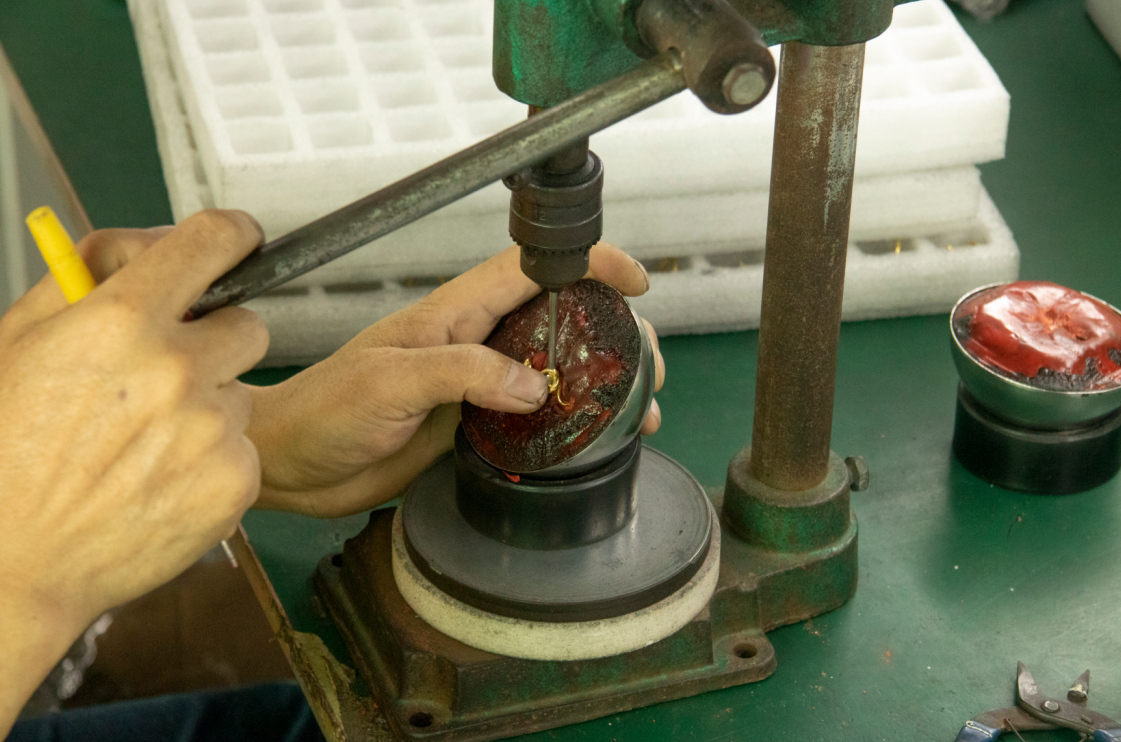
Prong setting: securing a stone so that the setting performs both a decorative and a retention function.
Test and Certification Questions for EU-Bound Orders
Four documents are relevant to European market entry. They answer different questions, and conflating them is one of the most common buyer errors.
| Document | Standard / Method | Issuer and Identifier | Issue date | Valid to |
|---|---|---|---|---|
| 316L Material Content Analysis | ASTM A276/A276M-25 | SGS — GZIN2606005050ML01_EN | 2026-06-26 | 2027-06-26 |
| Salt Spray Test | ISO 9227 | SGS — GZHL260603029801JW | 2026-06-29 | 2027-06-29 |
| Artificial Sweat Test | ISO 3160-2 | SGS — GZMR260602153701 | 2026-06-30 | 2027-06-30 |
| BSCI Certification | Social compliance audit | Amfori — 25-0339245 | 2025-08-15 | 2026-08-15 (listed window) |

Artificial sweat testing to ISO 3160-2: the report relevant to skin-contact and tarnish claims.
What does each certificate actually prove?
The material content analysis verifies the declared grade of the stainless steel supplied for the reference item. The salt spray test to ISO 9227 addresses coating behaviour under a defined corrosive exposure; the manufacturer's quality literature references 48-hour salt spray resistance as the condition behind its waterproof claims. The artificial sweat test to ISO 3160-2 simulates perspiration exposure, which is the relevant condition for skin-contact wear and for tarnish-free positioning. BSCI, by contrast, is a social compliance audit of the factory issued by Amfori — it says nothing about the product itself, and buyers who treat it as a product test are misreading its scope.
How should validity windows be managed?
Certificates are time-limited and should be logged in the purchase-order checklist, not filed once. The three SGS reports listed here were issued between 26 and 30 June 2026 and run to June 2027. The BSCI certificate carries a listed validity window of 15 August 2025 to 15 August 2026, and because social audits are renewed on an annual cycle, buyers should confirm the renewal certificate current at the time of order rather than relying on the version attached to an earlier quotation.
Commercial Terms: MOQ, Incoterms and Acceptance
- Minimum order quantity: 100 pcs per style.
- Production capacity: 250,000 units per month.
- Production lead time: 25–30 days.
- Incoterms: FOB, CIF or DDP, with air courier or sea freight, and a firm quote issued at the time of order.
- Payment: PayPal or bank transfer.
- Acceptance basis: against contract specifications and a mutually approved sample.
Quality control is structured as an eight-stage sequence: raw material incoming inspection (IQC); forming or casting; polishing and surface preparation; pre-plating or pre-PVD cleaning; 18K gold plating or the PVD process; stone setting where applicable; logo or laser engraving where applicable; and clasp or closure function testing. That sequence matters commercially because the two steps most often linked to buyer claims — plating adhesion and closure function — sit at opposite ends of the line.
Warranty terms run 6–12 months as standard. Manufacturing defects including plating peeling, stone loss and colour mismatch are covered at the manufacturer's cost when reported within 30 days of receipt, and transit damage is replaced free of charge with carrier claims handled by the supplier. Post-warranty repairs are offered at material cost only.
Stainless Steel with PVD versus Traditional Plated Alloys
Most evaluation decisions come down to a comparison between 316L stainless steel with PVD or gold plating and traditional plated alloy bases.
| Consideration | 316L stainless steel with PVD / plating | Traditional plated alloy (brass, zinc alloy) bases |
|---|---|---|
| Base material behaviour | 316L, with molybdenum supporting corrosion resistance; regarded as the hypoallergenic benchmark. | Softer base that depends on the plated layer for corrosion protection; wear through the plating exposes the base metal. |
| Nickel release under EU rules | Supported by a documented material content analysis; the finished item must still meet REACH Annex XVII Entry 27 limits. | Same legal limits apply; compliance depends on base alloy selection and barrier plating control. |
| Coating durability | PVD finish documented as maintaining stable luster for 2–5 years under normal wear; base usable beyond 10 years with proper care. | Conventional electroplating on softer alloys is generally regarded as less abrasion-resistant, with actual performance depending on plating process and thickness. |
| Branding methods | Laser engraving, stamping, screen printing and epoxy doming, all in-house. | Similar methods are possible, though a softer base can deform under deep stamping. |
| Typical fit | Wholesale, retail chain and DTC programmes with compliance and replenishment requirements. | Fast-turn, low-cost fashion lines with short wear expectations and no documentation requirement. |
The stainless steel route is not universal, and three constraints should be stated plainly. Coating colour is a finish, not a metal content claim, so pieces must be marketed as PVD or gold plated rather than as precious metal. The documented finish life of 2–5 years under normal wear is shorter than a lifetime guarantee, and warranty positioning should match it. Finally, an MOQ of 100 pieces per style with a 25–30 day production lead time suits planned programmes; buyers running urgent, small, mixed drops will find that structure slower than a stock purchase.
Applications and Buyer Profiles
The buyer base for this product type is already established and relatively consistent: jewelry wholesalers and importers, fashion retail chains, platform sellers on Amazon, Etsy and TikTok Shop, Shopify and Instagram store owners, DTC brands, and professional jewelry designers. Documented end markets include the United Kingdom, Germany, Italy, Austria, France and Australia.
Product lines within the same specification family include classic round, flat, cuff, twisted, rope, gem-set and engraved bangles; and cable, rope, Figaro, curb, tennis, charm, beaded and pearl bracelets. Downstream channels split into three groups: fashion and department store retail, gift and promotional wholesale — including tourist and landmark gift shops, corporate gift suppliers and HR or event procurement — and online DTC commerce.
Market Trend Signals Relevant to This Decision
- The global stainless steel jewelry market was valued at USD 6.79 billion in 2024, with a projected value of USD 10.8 billion by 2035 (WiseGuyReports).
- The personalized jewelry market was estimated at USD 42.51 billion in 2024, growing at a CAGR of 8.6% through 2031 (Cognitive Market Research).
- Jewelers of America reported that approximately 68% of couples in 2024 chose customized or bespoke jewelry over ready-made options, a signal of how far customization has moved into mainstream purchase behaviour.
- China's total jewelry exports reached USD 12.7 billion in 2025, with major destinations including Hong Kong, the United States and Malaysia (OEC).
Taken together, these figures describe a category where volume growth and customization growth are happening simultaneously — which is precisely the combination that makes colour consistency, engraving capability and tolerance control commercially decisive rather than technical trivia.
Future Outlook
Three developments are likely to shape the next buying cycle. First, documentation is becoming a gatekeeping item rather than a differentiator: as REACH enforcement continues, buyers will request material content analysis and skin-contact test reports as a standing requirement, and certificate validity will be tracked inside the purchase order rather than at supplier onboarding. Second, the shift toward personalization will keep pushing engraving and logo application into volume production, which favours suppliers that hold those processes in-house rather than outsourcing them. Third, buyers are consolidating spend into fewer suppliers with verifiable capacity — the combination of 250,000 units per month and an MOQ of 100 pieces per style is what allows a mixed-style replenishment programme to run inside a single supplier relationship. Stainless steel's role in that structure is not to imitate precious metal, but to deliver predictable, testable behaviour at a volume wholesale price point.
Procurement FAQ
What is the minimum order quantity, and can a single order mix styles?
The minimum order quantity is 100 pieces per style. Because the threshold is set per style, a purchase order can combine several styles provided each one meets its own 100-piece minimum. Monthly production capacity is 250,000 units and standard production lead time is 25–30 days.
How does sampling and approval work before mass production?
Development runs through an in-house R&D team of 20 engineers who provide style development and surface-finishing process support. A sample can be produced from a buyer's CAD file, an existing sample, a sketch or a written concept, and new custom development is supported. Logo and engraving samples across the four in-house application methods are typically quoted at 2–3 days lead time. Mass production is then accepted against contract specifications and a mutually approved sample, which is the reference point for any later quality discussion.
Which documents should accompany an EU-bound order?
For the reference item, four documents are relevant: the 316L material content analysis to ASTM A276/A276M-25 issued by SGS as GZIN2606005050ML01_EN; the salt spray test to ISO 9227 issued by SGS as GZHL260603029801JW; the artificial sweat test to ISO 3160-2 issued by SGS as GZMR260602153701; and BSCI certification from Amfori under number 25-0339245, whose listed validity window is 15 August 2025 to 15 August 2026. The three SGS reports are valid to June 2027. Because the BSCI audit is renewed annually, buyers should request the certificate valid at the date of order.
What happens if delivered goods do not match the approved sample?
Quality inquiries receive a response within 24 hours, and resolution follows a structured six-step process that traces batch numbers back through production records to identify root cause and apply corrective and preventive measures. Manufacturing defects such as plating peeling, stone loss or colour mismatch are covered at the manufacturer's cost when reported within 30 days of receipt. Transit damage is replaced free of charge, with carrier claims handled by the supplier. A standard 6–12 month warranty applies, and repairs after the warranty period are provided at material cost only.
Which branding and packaging options are available for a private-label programme?
Logos can be applied by laser engraving, stamping, screen printing or epoxy doming. Packaging ranges from OPP bags and velvet pouches to premium gift boxes, with branded hang tags and polishing cloths available, assembled in-house so that product and packaging arrive coordinated. Around 500+ new styles are launched monthly alongside custom development, which gives private-label buyers a recurring base of shapes to adapt.
How is design confidentiality handled when a buyer supplies its own artwork?
Buyer designs, drawings and brand assets are handled under strict NDA agreements and confidentiality policies, which are established before sampling begins. This matters most for DTC brands and designers whose commercial value sits in proprietary shapes and engraved artwork rather than in commodity components.