
Stainless Steel Pipes: A 2026 Comparison Framework for Middle East, South America, and Africa
The Middle East, South America, and Africa are frequently treated as one export block on a supplier's order book, and as one purchasing problem on a buyer's desk. They are neither. All three depend heavily on imported decorative and structural stainless steel tube, yet the constraints that determine whether a shipment is workable — conformity documentation, coastal corrosion exposure, project size, inventory depth, and payment structure — diverge at the country level.
Two macro figures frame the discussion. The global stainless steel market was valued at USD 111.44 billion in 2022 and is projected to reach USD 182.10 billion by 2030, according to Fortune Business Insights. Growth-rate estimates for the 2023–2030 period diverge: Mordor Intelligence places CAGR at 5.5%, while Grand View Research places it at 6.1%. That spread is not a trivial disagreement — it is a reminder that a regional supply plan built on a single growth assumption carries more risk than one built on a range.
The supply side is equally concentrated. China exported 4.14 million tons of stainless steel in 2023, according to the General Administration of Customs of China, which keeps Chinese mills central to sourcing strategies across all three regions. What differs is which mill, under which documentation, at what lot size, and with what lead-time commitment.
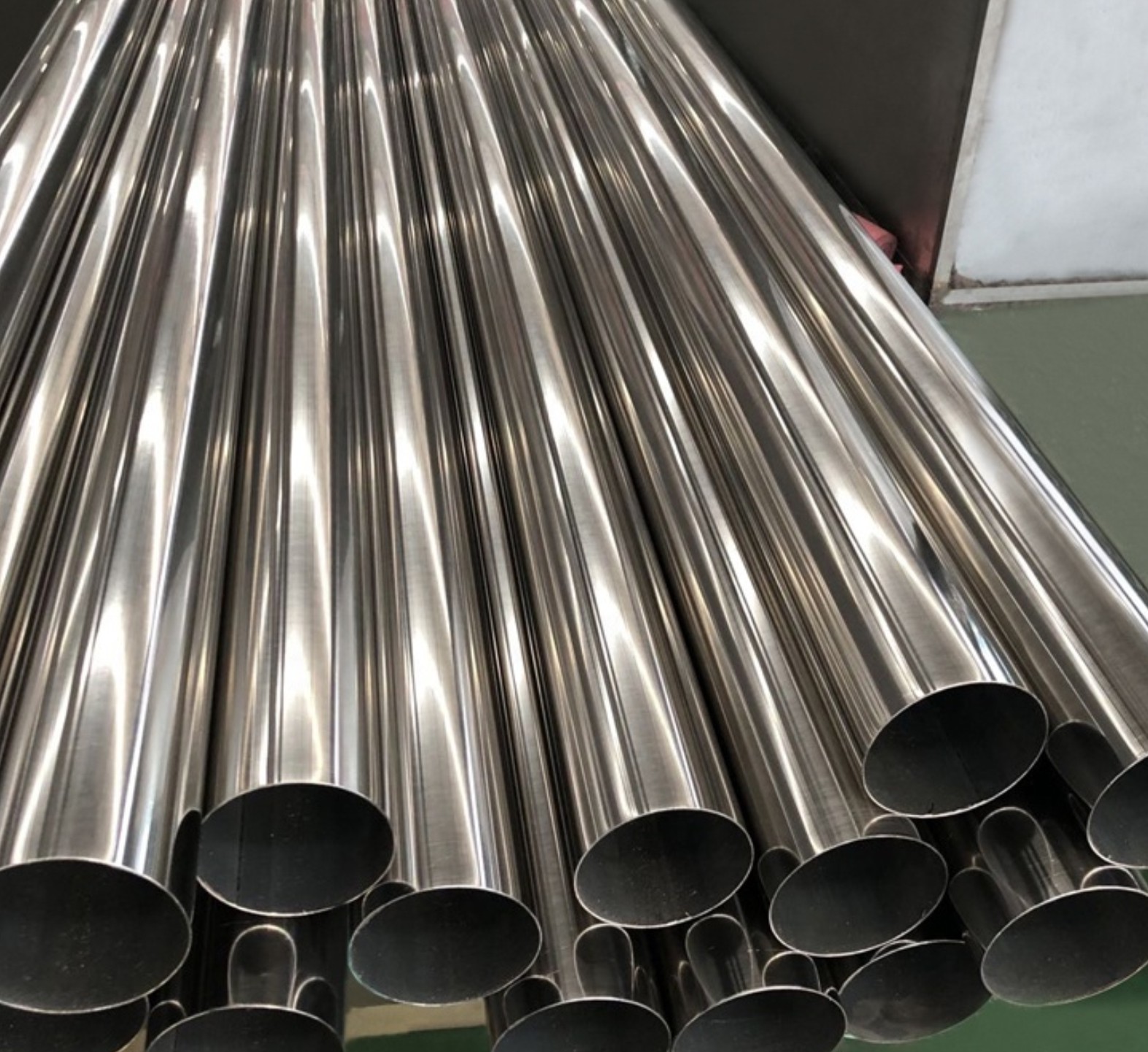
Round and square stainless steel pipe profiles typical of export-oriented decorative mill output.
Why the Three Regions Cannot Share One Procurement Strategy
Until recently, comparing stainless steel pipe suppliers meant comparing price per ton, grade, and surface finish. That comparison is now incomplete. A mill that performs well for a Gulf tower package may be the wrong counterparty for a Nairobi distributor selling cut lengths to local fabricators, and the reverse. The decisive variables have moved to certification readiness for the destination market, verifiable capacity, product-mix fit, and commercial floors such as minimum order quantity.
Three structural forces drive the divergence:
- Conformity regimes sit at the border, not at the site. Gulf, Brazilian, and Nigerian markets each operate their own acceptance schemes, and documentation failures are typically discovered at shipment or customs, when rework is expensive.
- Project mix differs. Middle East demand is concentrated in large project packages; South American demand is split between domestic fabricators and importers; African demand is distributor-led and fragmented across many smaller buyers.
- Environment sets the grade floor. Coastal and high-humidity installations push specifications toward higher-nickel grades, while interior decorative work in lower-exposure environments can accept leaner material.
A Four-Dimension Comparison Framework
The framework below is designed for procurement teams at the Research and Evaluation stages. It compares the three regions on the dimensions that most often determine whether a sourcing plan survives contact with execution, rather than on headline price.
| Dimension | Middle East | South America | Africa |
|---|---|---|---|
| Conformity & documentation | Destination-specific acceptance schemes; documentation is reviewed before release | National conformity assessment applies; importers usually hold the responsibility for compliance files | Pre-shipment conformity checks in several markets; documentation quality varies by importer |
| Capacity & lead time | Large-volume tenders; schedule certainty matters more than unit price | Mixed order sizes; freight and currency volatility affect landed timing | Smaller, more frequent lots; distributor stock absorbs most lead-time risk |
| Product mix & finish | Railing, handrail, and glass-fixing systems; specifier-driven | Decorative and light industrial tube; strong interest in coated finishes | Decorative tube and fittings; cost-sensitive grade selection |
| Commercial terms | Contract-based, milestone-linked | Import-financing driven; payment terms are a core negotiation point | Working-capital driven; MOQ and lot sizing determine viability |
Dimension 1: Conformity and documentation
Conformity is the first filter because it is binary. A pipe that meets the technical specification but arrives without the correct attestation is not a compliant pipe. Buyers in these regions should verify three document layers: management-system certification, product-level material or coating attestations, and destination-market schemes applied by the importing country. In practice, markets such as Saudi Arabia, Brazil, and Nigeria operate their own conformity frameworks, which means the certificate that satisfied a European buyer may be relevant but not sufficient.
Dimension 2: Capacity and lead-time reliability
Stated capacity is only meaningful when it is tied to a delivery commitment. Procurement teams should ask for monthly pipe output, the standard production window for confirmed orders, and the point at which a custom requirement — a non-standard profile, a specific finish, a branded component — moves the order out of the standard window. Capacity that cannot be allocated to a specific order date is not capacity; it is marketing.
Dimension 3: Product mix and finish technology
Regionally, the product mix requirement is the fastest-changing variable. The use of PVD (Physical Vapor Deposition) coating for stainless steel color pipes is increasing in interior decoration, according to the International Stainless Steel Forum, largely because it is considered more environmentally friendly than electroplating. Middle East specifiers increasingly ask for coated finishes in visible architectural work, while African and South American distributors often need a broad catalogue of fittings — elbows, bends, glass clamps, brackets, cross bar holders, standoffs, connectors, end caps, railing flanges — alongside the pipe itself.
Dimension 4: Commercial terms and risk transfer
The commercial dimension is where otherwise comparable offers separate. Minimum order quantity, tooling amortization, inspection rights, and payment structure determine whether a small distributor can buy direct or must go through a regional stockholder.
| Grade | Chromium (Cr) | Nickel (Ni) | Manganese (Mn) |
|---|---|---|---|
| 201 Stainless Steel | 16–18% | 3.5–5.5% | 5.5–7.5% |
| 304 Stainless Steel | 18–20% | 8–11% | ≤2% |
This chemistry table is the reason grade selection is a durability decision rather than only a cost decision. The two grades are not interchangeable in high-chloride or coastal conditions, and the price band a buyer negotiates typically reflects which grade sits behind the quote.
Regional Snapshot
Middle East
The Gulf and wider Middle East remain project-driven. Demand clusters around hospitality, residential towers, transport infrastructure, and large railing and balustrade packages where handrail tube, glass clamps, and structural fittings are specified together. Two consequences follow for procurement. First, schedule certainty outranks unit price in supplier selection, because a late delivery on a handrail package delays an entire finishing trade. Second, coastal humidity and airborne chlorides push specifications toward 304 rather than leaner grades for exposed metalwork. Suppliers with an integrated pipe-and-fitting offer reduce coordination overhead, because one counterparty holds the dimensional compatibility of tube, elbow, and clamp.
South America
South America is the most internally varied of the three. Brazil anchors regional demand and combines domestic stainless steel production in some product segments with continued import dependence in decorative tube and fittings, which means imported material competes on specification, finish quality, and delivery reliability more than on base availability. Import financing, currency movement, and freight scheduling shape landed cost more than mill price in many cases. Buyers in the region also tend to require broader catalogue depth per container, mixing round and square pipe, slotted and oval profiles, and fittings in a single shipment.
Africa
Africa is the most distributor-led of the three and the most sensitive to lot sizing. Demand spreads across many importers and sub-distributors serving fabricators, contractors, and interior trades, and the practical constraint is working capital rather than project scale. Grade selection tends to follow exposure: 201-grade material is used widely in interior decorative applications where corrosion loads are modest, while 304 is reserved for coastal, sanitary, or more demanding environments. Because pre-shipment conformity checks apply in several markets, documentation prepared at the mill ships with the commercial documents and travels down the distribution chain.
What Integrated Capacity Changes in the Calculation
GuangDong Sanon Metal Products Co., Ltd (Sanon) is a Foshan-based manufacturer of stainless steel pipes, tubes, and matching architectural fittings, serving decorative and industrial applications. The company was established in 1999 and operates a 40,000 square meter facility with approximately 500 employees, including a 30-person R&D team. Its pipe capacity is 9,000 tons per month, equivalent to 100,000 tons per year, and roughly 70% of output is exported, concentrated in the Middle East, South America, and Africa — the same three regions this framework addresses.
For a procurement team evaluating a direct-mill relationship, the following facts are the ones that map onto the four dimensions above:
| Procurement Variable | Stated Position |
|---|---|
| Pipe capacity | 9,000 tons per month; 100,000 tons per year |
| Minimum order quantity | 5 tons |
| Standard lead time | 7 days |
| Quality control | 100% test |
| Customization | OEM/ODM, including voltage and logo customization |
| Export markets | Middle East, Africa, South America |
| After-sales | Remote support |
The certification set is equally specific. Sanon holds an ISO 9001 Quality Management System Certificate (certificate number 39323Q15531R0M, issued 2023-06-30, valid to 2026-06-29), an ISO 14001 Environmental Management System Certificate (39323E1762R0M, issued 2023-12-04, valid to 2026-12-03), and an ISO 45001 Occupational Health and Safety Management System Certificate (39323S1708R0M, issued 2023-12-04, valid to 2026-12-03), all issued by Beijing Zhonghuan Qitian International Certification Co., Ltd. Product-level documentation includes an Attestation of Conformity for RoHS (certificate TD59352502, issued by EUTEST, valid 2025-10-27 to 2030-10-26, covering stainless steel pipes, model 304, against the EU RoHS 2015/863 restricted substances list) and an ECTI CERT Certificate under the Construction Products Regulation (BGTC20251119-08, valid 2025-11-19 to 2030-11-18).
Fittings, clamps, and accessories that must remain dimensionally compatible with the pipe they are specified alongside.
Technical Grounding: Standards, Grades, and Coatings
Two standards define most of the technical conversation. Stainless steel pipes and tubes fall under ASTM A312 for seamless and welded pipe and ASTM A554 for ornamental tubing, according to ASTM International. The distinction matters commercially: a buyer who specifies ornamental tube for a load-bearing element is misapplying the standard, and a buyer who specifies A312 pipe for a decorative handrail is typically paying for tolerance that the application does not require.
Where fixings carry load, additional codes apply. Stainless steel glass clamps and standoff pins are governed by building codes such as the International Building Code (IBC) for load-bearing capacity, according to ICC Digital Codes. For Middle East and South American projects that follow international engineering practice, this is usually the point at which clamp specification moves from a catalogue decision to an engineering one.
On finish technology, PVD coating adoption is the trend to watch. Compared with electroplating, PVD is increasingly favored in interior decoration for environmental reasons, per the International Stainless Steel Forum. For a distributor, the practical implication is that color pipe inventory now requires an additional supplier qualification step, because coating adhesion and color consistency cannot be assessed from a mill certificate alone.
Application Fit
Across the three regions, stainless steel pipes and fittings appear in a consistent set of applications: architectural and decorative projects, balcony and staircase handrail systems, glass balustrades, sliding door assemblies, and light industrial fabrication. The working conditions are typically welding-based, with polishing, wire drawing, and laser cutting used downstream, and the functional requirement is straightforward — decoration or industrial service with resistance to rust and corrosion.
A distributor relationship illustrates how this holds up over time. One Sanon distributor relationship has run for 10 years across China, Vietnam, and Brazil, covering approximately 9,000 tons of material for architectural and decorative projects, with the reported outcome being stable quality in accordance with national standards. That pattern — long duration, volume accumulation, architectural application — is a more useful reference for procurement teams than a single-case snapshot, because it tests the supplier across grade changes, finish changes, and shipping cycles rather than a single order.
Limits of the Model: What a Mill Cannot Replace
An honest comparison framework has to state its own boundaries. Direct mill sourcing solves capacity, documentation, and unit economics; it does not solve everything.
- Remote support is not on-site engineering. Sanon's after-sales position is remote support. Projects requiring installation supervision, on-site fitment verification, or rapid physical replacement still need a local partner or stockholder.
- Lead time applies to standard confirmed orders. The stated 7-day lead time describes standard production, not first-article approval for a new profile or a new finish, and it excludes ocean transit. Buyers planning site schedules must add freight and customs time to the production window.
- The 5-ton MOQ sets a floor on direct purchasing. Distributors and small contractors buying below that threshold will generally be better served through a regional stockholder, even where direct pricing looks more attractive on paper.
- Grade substitution has physical consequences. The chromium, nickel, and manganese differences between 201 and 304 mean that cost-driven grade substitution in coastal or high-chloride environments shifts risk to the end user rather than reducing cost.
- Certificate scope is narrow by design. The RoHS and CPR attestations are issued for pipe model 304. Other grades, profiles, or coated finishes require their own documentation.
Outlook: What to Watch Through the End of the Decade
Three shifts are likely to shape how these regions buy stainless steel pipes. First, documentation will continue to move up the priority list, because conformity regimes at the border are easier for authorities to enforce than technical performance at the site. Second, finish technology will keep migrating toward PVD and similar coating methods, expanding the range of coated decorative tube that distributors must qualify. Third, the distributor layer in Africa and parts of South America will keep absorbing lead-time and lot-sizing risk, so supplier evaluation will increasingly assess how well a mill supports its distributors — documentation packs, catalogue consistency, replenishment responsiveness — rather than only the mill's own production figures.
Combined with a market projected to grow from USD 111.44 billion in 2022 to USD 182.10 billion by 2030, and CAGR estimates ranging from 5.5% to 6.1% for 2023–2030, the practical conclusion for procurement teams is to plan on a range, not a point. Capacity will remain available; compliant capacity with matching documentation will remain the scarcer commodity.
FAQ
1. Which certifications should a buyer verify before placing a stainless steel pipe order?
Verify three layers. At management-system level: ISO 9001 for quality, ISO 14001 for environment, and ISO 45001 for occupational health and safety. At product level: an Attestation of Conformity for RoHS where restricted-substance compliance is required, and a Construction Products Regulation certificate where the material falls under CPR scope. At destination level: the importing country's own conformity framework. Always check the certificate number, issuing authority, validity dates, and — critically — the scope statement, which specifies which models and grades are covered.
2. What is the difference between 201 and 304 stainless steel in pipe applications?
The difference is chemistry. 201 stainless steel contains 16–18% chromium, 3.5–5.5% nickel, and 5.5–7.5% manganese. 304 stainless steel contains 18–20% chromium, 8–11% nickel, and no more than 2% manganese. The higher nickel and chromium content in 304 underpins its performance in more corrosive conditions, which is why grade selection should follow the exposure environment rather than the price band alone.
3. What MOQ and lead time should a procurement team plan for?
At Sanon, the minimum order quantity is 5 tons and the standard lead time for confirmed orders is 7 days, with 100% testing applied across production. These figures describe standard production conditions. Buyers adding a non-standard profile, a new finish, or OEM/ODM customization — including voltage and logo customization — should expect additional approval time, and should add ocean freight and customs clearance to the total schedule.
4. Which standards apply to structural versus ornamental stainless steel tubing?
ASTM A312 covers seamless and welded pipe, while ASTM A554 covers ornamental tubing. Structural and load-bearing elements such as glass clamps and standoff pins are additionally governed by building codes such as the International Building Code for load-bearing capacity. Specifying ornamental tubing for a load-bearing application, or structural pipe for a decorative rail, is a common source of avoidable cost or avoidable risk.
5. How do the Middle East, South America, and Africa differ in procurement risk?
Middle East supply is project-driven and schedule-sensitive, with conformity documentation reviewed before release and coastal exposure pushing specifications toward 304. South America combines domestic stainless production in some segments with import dependence in decorative tube and fittings, so landed cost is shaped more by financing, currency, and freight than by mill price. Africa is distributor-led and working-capital constrained, with fragmented order sizes, cost-sensitive grade selection, and pre-shipment conformity checks in several markets. The common factor across all three is that documentation and lot sizing decide viability as often as unit price does.
For a full product and capability reference covering stainless steel pipes, tubes, and architectural fittings, the Sanon catalogue is available here. Product and company details are published at sanonsteel.com.