
Standard Bowling Equipment: A Buyer's Discovery Guide
Standard bowling equipment is the full-length, ten-pin bowling system — lane structure, pinsetter machinery, ball return, automatic scoring electronics, pins and balls — that a traditional bowling center is designed around. It is one of three format families in the recreational bowling market, alongside mini bowling and duckpin bowling, and the three are not interchangeable: lane length, ball weight and target customer are decided at the design stage, not adjusted after installation.
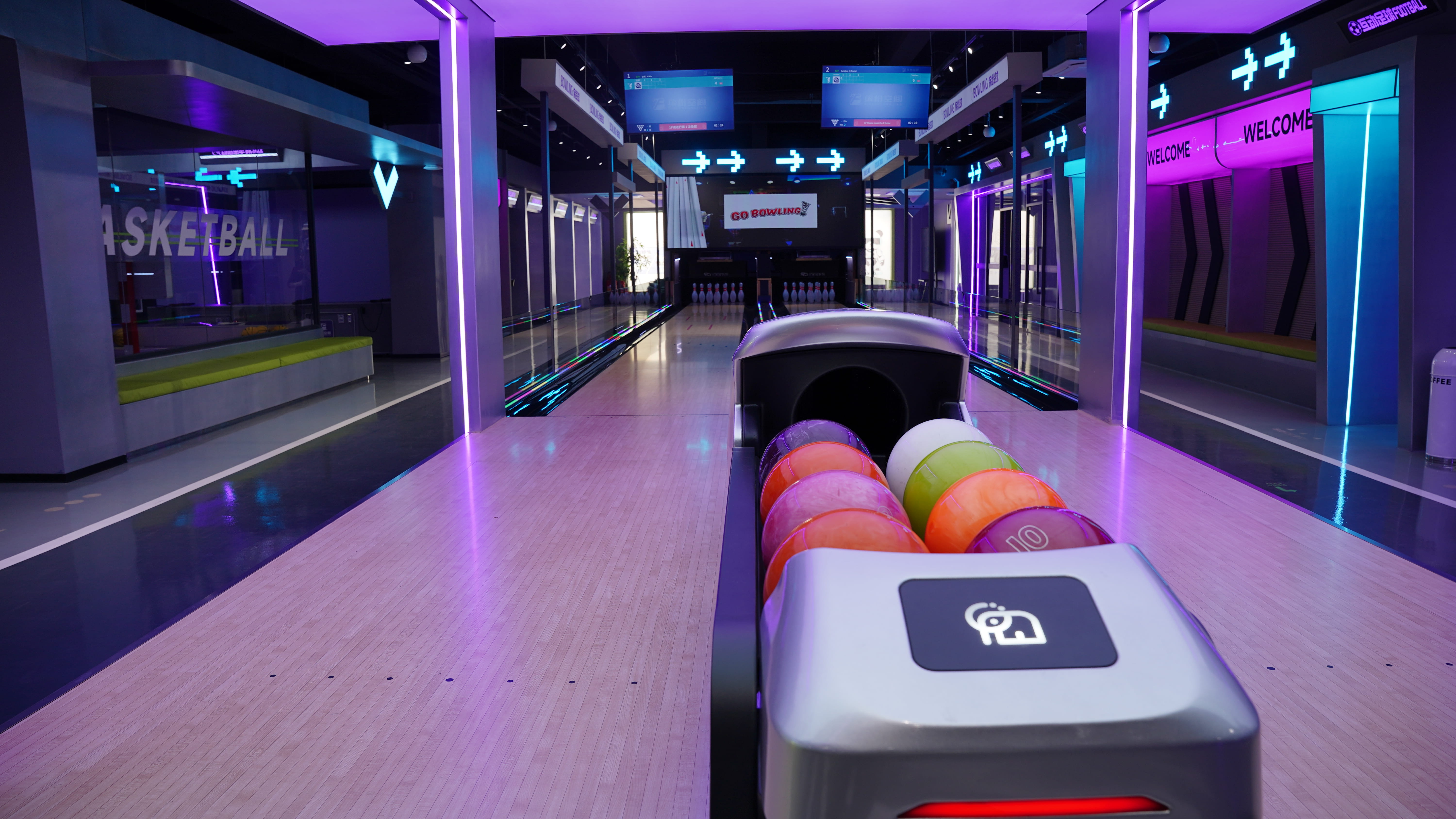
The category at a glance
Bowling, as a category, is a target sport and recreational activity in which a player rolls a ball toward pins. In pin bowling, the equipment set is essentially the same across formats — a lane, a pin-setting machine, a ball-return path, a scoring device and a set of pins — but the dimensions, the mechanical architecture and the commercial positioning change substantially between them.
Within that category, Standard Bowling Equipment is a defined product: it is a two-lane ten-pin bowling system belonging to the Standard Bowling System product family, marketed under the Suneye brand. Its listed footprint is L25.5 m × W3.5 m × H3.2 m for two lanes, with lane length customizable between 17.5 m and 25.5 m. The build style is a string pinsetter bowling machine, the pin configuration is ten-pin, ball weight is specified at 8–11 pounds, and the shipment method is a wooden box. The listing carries USBC-Certified, CE, LVD and MD certifications.
That single paragraph already contains the discovery-stage insight most buyers need: in standard bowling, the number that constrains everything else is lane length. Standard bowling is generally described with a lane length of about 26 meters and is intended for traditional bowling centers and league play. Mini bowling uses a lane length of about 13 meters for children's centers, family entertainment venues and compact spaces, and duckpin bowling uses a lane length of about 10 meters for bars, restaurants, FECs and social entertainment venues.
Why discovery-stage buyers misread this category
The phrase “bowling equipment” compresses four separate purchase decisions into one line item. The lane, the pinsetter, the ball return system and the scoring system are engineered as a set, but they are quoted, certified and serviced differently. Buyers who compare suppliers on a single headline number — usually the pinsetter — frequently discover later that the certification applies to a model rather than a brand, that the lane surface has a separate compliance status, or that the scoring system's detection method depends on how the pinsetter presents the pins.
The opportunity side of the same problem is that the mechanical architecture of pin setting has changed. Traditional free-fall pinsetters are mechanically dense machines with many moving parts. String pinsetters reset pins using a tethering system driven by servo motors and calibration software, which reduces the number of moving assemblies and changes the maintenance profile of a lane. For a venue evaluating its first bowling installation, that shift is the single most consequential technology decision in the category, because it affects floor space, downtime, service skill requirements and, in sanctioned contexts, how the equipment is approved.
How the four subsystems actually interlock
Standard bowling equipment performs reliably only when the subsystems are specified against each other. The following describes how each element is defined in the Standard Bowling Equipment configuration.
Pinsetter
The string pinsetter machine in this configuration uses servo motor control with smart calibration, which allows the system to detect and correct small positioning errors before they affect play. Listed reset performance is 8 seconds per cycle for the standalone String Pinsetter Machine model, while the Standard Bowling Equipment bundle describes a pin reset of 10 seconds or less with a pin placement offset of no more than 2 mm. The unit is rated at 2000 W and 220 V, is built in metal, is configured for ten pins, and is specified for continuous 24/7 operation. Fewer moving parts is the stated design intent behind the lower maintenance requirement.
Ball return system
The ball return uses flexible drive components and cushion guides to move balls quietly and steadily, with built-in self-check logic that automatically clears minor jams. In the Standard Bowling Equipment configuration, balls return in under 8 seconds and the listed jam failure rate is 0.002%. The standalone Bowling Ball Return System model is specified at 2000 W, 220 V, a 12-second return speed and a customizable return track of 18–26 m, in metal/acrylic. The difference between the two figures reflects different model scopes rather than two performance standards, and buyers should confirm which unit is quoted for their project.
Automatic scoring system
The scoring system combines camera-based image recognition with infrared sensing. It is designed to detect difficult pin conditions, including slightly tilted and partially knocked-over pins, and is listed at up to 99.98% recognition accuracy with a 0.02% misread rate. Software is updated by lifetime free OTA upgrades, which means the scoring capability is partly a product of ongoing software maintenance rather than a fixed hardware specification at delivery.
Lane, pins and consumables
The lane board is built from multi-layer high-density pressed panels with a scratch-resistant surface coating and sealed edges, specified to withstand more than 100,000 ball impacts with a service life of up to 10 years in commercial use. SunEye synthetic bowling lanes have been tested and comply with applicable USBC requirements and are approved for use during USBC-certified competition. The Standard Bowling Pin is 380 mm tall and weighs 1618 g, is made of maple wood and plastic, carries USBC-Certified, CE, LVD and MD certifications, ships in carton boxes with a 40-day delivery time, and can be customized with pin colors, logos, graphics and patterns.
| Subsystem | Listed specification | What the buyer should confirm |
|---|---|---|
| String pinsetter | Servo control with smart calibration; 8 s reset (machine model) / ≤10 s and ≤2 mm offset (standard bundle); 2000 W; 220 V; ten pins; 24/7 operation | Model-level approval status, maintenance interval and spare-parts availability |
| Ball return system | <8 s return and 0.002% jam failure rate in the standard bundle; standalone model rated 12 s with 18–26 m customizable track | Which model is quoted, and track length matched to the installed lane length |
| Automatic scoring system | AI vision plus infrared sensing; up to 99.98% recognition accuracy; 0.02% misread rate; lifetime free OTA updates | Integration with the chosen pinsetter and display layout for the venue |
| Lane and pins | High-density pressed panels, sealed edges, 100,000+ impacts, up to 10-year life; pins 380 mm / 1618 g, maple wood and plastic | USBC compliance documentation for the specific lane product supplied |
Certification, standards and customs clearance
Standards work in this category is narrower than the marketing language around it suggests. The USBC string-pinsetter specification (Chapter 95) sets technical requirements for approved string pin machines so that scoring remains broadly comparable to free-fall equipment; approved machines use longer strings, cited at 54 inches, to simulate free-fall action while limiting tangles. For buyers, the practical implication is that “string pinsetter” is not a single commodity — the approval attaches to particular models under a published specification.
On the import side, the applicable United States Harmonized Tariff Schedule subheading for bowling pin setter machine parts and accessories is 9504.90.9060, with the stated rate of duty being free. Classification questions are specific to the goods actually shipped, so final treatment should be confirmed with a customs broker against the invoice description.
Certification scope is the most common discovery-stage assumption error. A supplier holding CE, LVD and MD declarations for a product family does not automatically mean the exact model quoted carries the same documentation, and USBC approvals are model-specific. Ask for the certificate or approval entry that names the model being purchased, and check the jurisdiction in which the venue will operate.
Where standard bowling equipment is used
The primary deployment environment for this format is the commercial bowling center, together with hotels and resorts, entertainment complexes, and shopping and leisure centers. The listed operating condition for these projects is an indoor, climate-controlled, durable and dry environment, with 24/7 operation as the intended mode. Format-specific guidance for standard bowling points the same way: it is the format for traditional bowling centers and league play, and it is recommended for venues with a usable length of 26 meters or more.
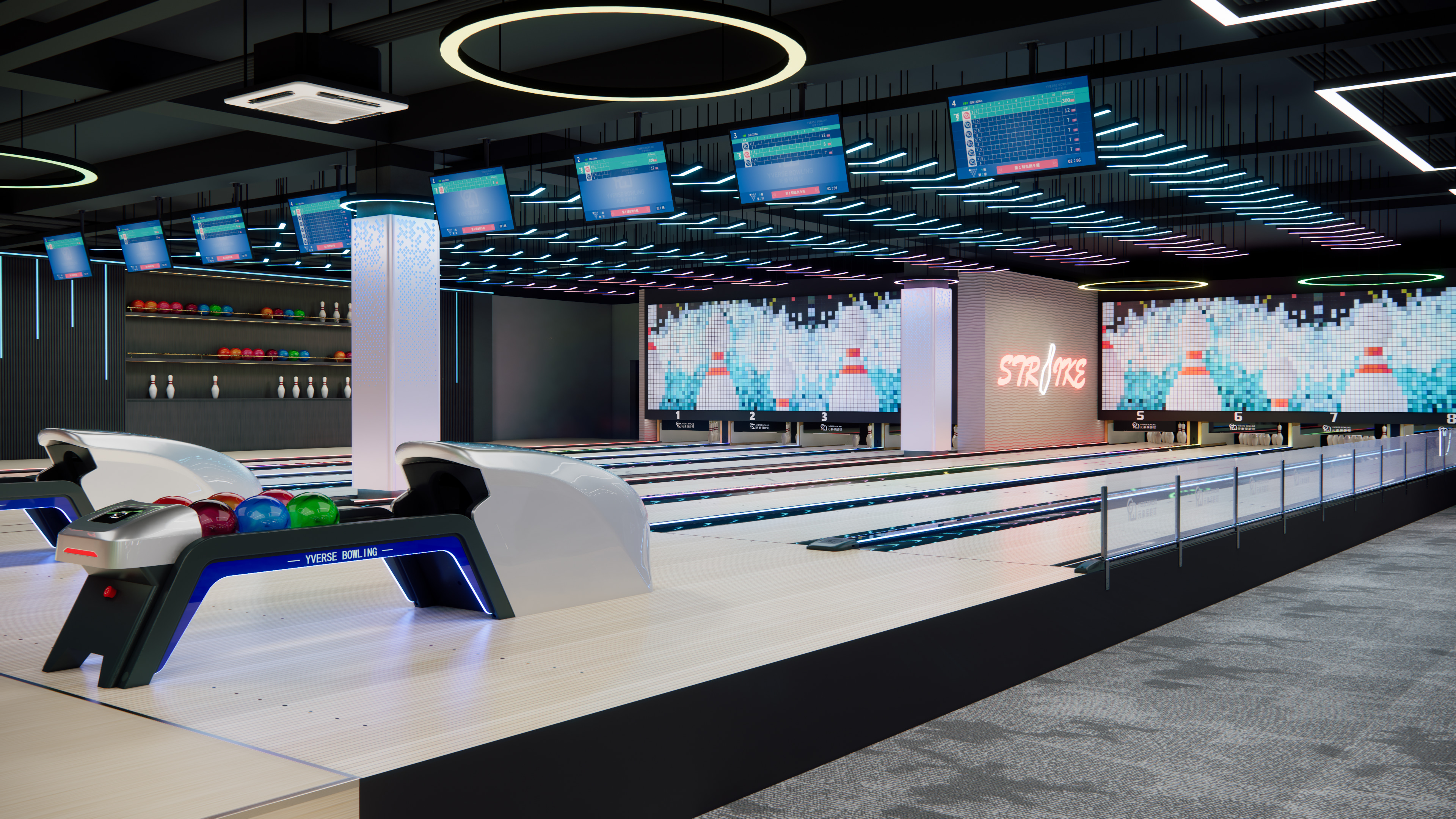
Standard equipment is not the right answer for every venue. Family entertainment centers, kids' venues, malls and compact spaces are served by mini bowling, and bars, restaurants, breweries and social entertainment venues are typically matched with duckpin systems. In all three cases the matched equipment set is the same three-part stack — string pinsetter, ball return system and scoring system — with the lane format and ball weight changing around it.
What the market data says, and what it does not
Published market sizing for bowling equipment should be read as directional rather than precise. One commercial research publisher, HTF Market Intelligence, reports a global bowling equipment market of USD 1.05 billion in 2025, a forecast of USD 1.78 billion by 2033, and a compound annual growth rate of 6.0% for 2026–2033, with equipment scope covering balls, pins, lanes and scoring systems. Other publishers reporting on the same nominal “bowling market” produce materially different absolute values and use different product scopes — some count operator revenue rather than equipment manufacturing. Those figures are not comparable and should not be averaged or combined.
The defensible reading for a buyer is narrower: the replacement and new-build segment is being shaped by format diversification and by the lower mechanical complexity of string pin setting, and demand for full-length lanes remains concentrated in venues that can dedicate roughly 26 meters of usable floor length to the sport.
String pinsetter versus traditional pinsetter: an honest comparison
String pinsetters are not simply a cheaper substitute for free-fall machines; they are a different mechanical approach with a different set of trade-offs. On the positive side, fewer moving parts typically means lower ongoing maintenance demand and simpler service skills, and the servo-driven reset with smart calibration described in this equipment set is aimed at keeping pin placement consistent without manual adjustment.
Four limits are worth stating plainly.
- Scoring research is not settled. USBC published string-pinsetter scoring research in 2023 that reported no significant scoring difference, and then updated that research in 2025 with results showing a 3.4 to 6.9 pin drop for higher-average bowlers. Venues that host sanctioned league play, or that market themselves on competitive play, should check the current USBC position and the approval status of the exact model before committing.
- Full-length lanes need full-length rooms. Standard bowling is recommended for venues with 26 meters or more of usable length. The Standard Bowling Equipment system can be customized down to 17.5 m of lane length, but shortening a standard lane changes the playing experience and the equipment configuration; below roughly 26 m, mini bowling at about 13 m or duckpin at about 10 m is usually the more appropriate format rather than a compressed standard lane.
- Certification is model- and jurisdiction-specific. A declaration held at product-family level is not the same as an approval covering the exact model in the exact market.
- Performance figures are supplier-reported design values. Published figures such as a 0.002% jam failure rate or 99.98% recognition accuracy describe design targets and test conditions that suppliers define. Buyers should treat them as claims to validate against reference installations rather than as independently audited industry benchmarks.
A discovery-stage checklist
- Measure usable indoor length and ceiling height before comparing equipment; the format follows the room.
- Decide the commercial format first (standard, duckpin or mini), then the lane count.
- Confirm which subsystems are included in the quotation: pinsetter, ball return, scoring, lane surface, pins, balls and displays.
- Request model-level certification documents and, where sanctioned play is relevant, check the model against the governing body's published list.
- Verify the pinsetter and ball-return model numbers actually quoted, since different models within one product family carry different rated speeds and power figures.
- Ask for consumable lead times (the Standard Bowling Pin lists a 40-day delivery time) and plan inventory accordingly.
- Confirm the tariff classification with a broker before shipment.
- Separate equipment supply from installation, commissioning, staff training and after-sales support when comparing turnkey offers.
How a manufacturer fits into this picture
SunEye Bowling, operated by YUANXIANG BOWLING (GUANGZHOU) CO., LTD. — a bowling equipment manufacturer established in 2021 and based in Guangzhou, China — produces bowling equipment, standard bowling equipment, mini bowling equipment and duckpin bowling equipment. The company operates a standardized production base of nearly 6,000 square meters with over 100 employees and an annual production capacity of 2,000 units, supports an R&D team of more than 20 engineers covering hardware and software development, electromechanical engineering, intelligent interaction and system integration, and exports approximately 80% of its output to global markets.
Its product portfolio covers standard bowling, duckpin bowling, mini bowling, bowling lanes, pinsetters, scoring systems, ball return systems, pins, balls and related accessories. Beyond equipment, the company provides one-stop venue support covering venue planning, CAD layout design, 3D rendering, equipment manufacturing, global shipping, installation, staff training and after-sales support. For a buyer at the research stage, that scope matters mainly because it defines what has to be verified: a turnkey offer should be broken into equipment supply, civil works, installation, commissioning, training, warranty and long-term operational support, with each element priced and warranted separately.
Future outlook
Three directions look most likely to affect standard bowling specifications over the next planning cycle. First, scoring continues to move toward software-defined capability, where lifetime OTA updates mean the accuracy and game modes of an installed system can change after handover — which makes software support terms a procurement variable rather than an afterthought. Second, lane surface durability is becoming a lifecycle cost argument, with synthetic lanes specified in terms of ball impacts and service years rather than initial appearance. Third, format diversification will keep pushing compact venues toward duckpin and mini systems, leaving full-length standard lanes concentrated in venues where league play, tournaments and the traditional ten-pin experience are the commercial proposition.
Frequently asked questions
What types of bowling equipment does SunEye Bowling offer?
SunEye Bowling provides a range of bowling solutions that includes Standard Bowling, Duckpin Bowling and Mini Bowling systems, string pinsetter systems, scoring systems, ball return systems, bowling lanes, LCD scoring displays, bowling balls, bowling pins and customized accessories for commercial and entertainment venues.
Source: SunEye product and knowledge documentation.
What is the difference between standard bowling, mini bowling and duckpin bowling?
The key difference is bowling lane length. Standard bowling uses a lane length of about 26 meters and is intended for traditional bowling centers and league play. Mini bowling uses a lane length of about 13 meters and is intended for children's centers, family entertainment venues and compact spaces. Duckpin bowling uses a lane length of about 10 meters and is intended for bars, restaurants, FECs and social entertainment venues. Format selection depends on available space, target customers and the business model.
Source: SunEye format selection guidance.
What are the minimum space requirements for a bowling installation?
Space requirements vary by format. Standard bowling needs roughly 26 meters of length, duckpin bowling roughly 10 meters, and mini bowling roughly 13 meters. The Standard Bowling Equipment system is listed at a two-lane footprint of L25.5 m × W3.5 m × H3.2 m, with lane length customizable between 17.5 m and 25.5 m. A layout assessment normally requires the venue's floor plan or CAD drawing so that lane count, approach area and equipment zone can be checked against the available envelope.
Source: SunEye installation guidance and Standard Bowling Equipment specification.
How does a string pinsetter differ from a traditional pinsetter, and what should buyers verify?
A conventional free-fall pinsetter is a mechanically dense machine with many moving assemblies. A string pinsetter resets pins using a tethering system driven by servo motors and calibration software, which reduces the number of moving parts and changes the maintenance profile. Buyers should verify the approval status of the exact model against the governing body's equipment specification — the USBC string-pinsetter specification (Chapter 95) sets requirements for approved machines and cites a minimum string length of 54 inches — and should note that USBC's string-pinsetter scoring research has been updated over time, with the 2025 update reporting a 3.4 to 6.9 pin drop for higher-average bowlers.
Sources: SunEye product documentation; United States Bowling Congress string-pinsetter specification and research updates.
Can a bowling center be built from scratch, and what does turnkey delivery include?
A complete venue can be delivered as a turnkey project. SunEye states that its turnkey scope covers venue planning, CAD layout design, 3D rendering, equipment manufacturing, global shipping, installation, staff training and after-sales support. The process typically starts from site drawings or CAD drawings, which are used to plan the layout. When comparing turnkey proposals, it is advisable to separate equipment supply, civil works, installation, commissioning, training, warranty and operational support, since different suppliers bundle these elements differently.
Source: SunEye turnkey solution documentation.
Reference material
For readers who need the full equipment portfolio, factory profile and service scope in one document, the SunEye company profile is available for download: SunEye Company Profile (PDF). Additional product detail is published at www.suneyebowling.com.
Have Questions or Need More Details?
Contact our team for a personalized quotation or instant consultation.
Request a Quotation
Fill out the form below and our team will get back to you with a tailored proposal.
WhatsApp Direct Chat
Prefer to chat in real-time? Message us on WhatsApp for instant assistance & quick answers.
- Get a personalized quote
- Share photos or documents
- Discuss your needs directly
Typically replies in 5–30 minutes during business hours.