
Steel Ball Buyer Decision Matrix: Valve Sealing vs Food-Safe Handling vs EV Bearing Duty
Steel Ball Buyer Decision Matrix: Valve Sealing vs Food-Safe Handling vs EV Bearing Duty
A float valve seal, a food-conveyor guide and an electric-vehicle gearbox bearing can call for steel balls that look identical in diameter and surface finish, yet they need parts that are not interchangeable. The valve needs a steel hard enough to seal but still tolerant of its media. The food-contact part needs a surface that survives washdown without giving residue somewhere to sit. The EV bearing needs fatigue life plus a document trail from heat to batch. Buyers who compare quotations on ball price alone are comparing three different components as if they were one.
The matrix below applies the same six comparison dimensions — hardness, corrosion resistance, surface cleanability, sphericity and grade band, fatigue-life rating and acceptance evidence — to three duties: valve and fluid-control sealing, food-safe handling, and EV and powertrain bearing duty. The purpose is to make quotations comparable against actual service conditions instead of against a product name.
Why 'steel ball' is not a purchasable specification
Steel ball describes a geometry, not a material, grade or duty. Two balls in the same size range can sit at HRC 48 or HRC 64, be hardenable or non-hardenable, be alloy-through or coated, and be inspected to G3 or to G1000. Each combination implies a different failure mode, a different acceptance test and a different cost structure.
The habit this matrix rejects is treating a material name as a specification. Both 420C and 440C balls are stainless, but 420C is hardened to roughly HRC 48–55 for wear duty in mildly corrosive service while 304 stays near HRB 80 and cannot be hardened at all. In a valve that difference decides whether the seat holds; on a dry-food conveyor it is irrelevant; in a powertrain bearing it is simply the wrong starting point. The specification has to be built from the duty outward, beginning with the failure that matters most.
Duty one — valve and fluid-control sealing
A valve is the case where the ball is a sealing element rather than a rolling element. The ball is pressed against a seat, so hardness, roundness and corrosion condition at the contact zone determine whether it seats. That is where the trade-off lives: sealing contact wants hardness, and the media wants alloy content.
Martensitic stainless: the sealing-contact starting point
420C martensitic stainless hardens to about HRC 48–55, which suits the mildly corrosive, wear-resistant duty that trim components usually occupy. That is meaningfully harder than 304, which sits near HRB 80 and cannot be raised by heat treatment. Where a valve fails by wear rather than by pitting in mildly corrosive media, 420C is the first candidate. 440C extends the band to HRC 58–65 while keeping martensitic corrosion resistance, which suits the case that needs both abrasion resistance and washdown tolerance.
When the media, not the load, decides
Some valve service is limited by the fluid rather than by contact pressure. 316 stainless adds 2–3% molybdenum and 10–14% nickel, lifting pitting resistance equivalent numbers (PREN) to roughly 23–28 against about 18–20 for 304, and that changes how long the surface stays intact in chloride, coastal air and process fluids. Duplex stainless (UNS S31803/S32205) roughly doubles yield strength against 316 and pushes PREN to about 34–38, which supports downsized, higher-pressure valve designs — at the cost of controlled welding and heat treatment to avoid brittle phases.
For strong reducing acids and mixed chemical service, Hastelloy C-276 with 15–17% molybdenum plus 3–4.5% tungsten reaches a PREN of about 69 against roughly 25 for 316. It survives, but it costs roughly five to twelve times more, so it belongs only where 316 demonstrably fails in the actual media.
Common mismatches in valve duty
- 304 chosen for sealing contact because its corrosion story is familiar. Austenitic stainless cannot be hardened into the contact hardness a seat needs.
- Carbon steel chosen for a wet application. Carbon steel balls typically sit at HRC 50–58, and in that service the failure mode becomes corrosion rather than wear.
- Diameter purchased without surface-defect screening. A valve depends on a single ball-to-seat interface, so 100% visual sorting of a dimensionally passing lot is part of the specification, not an extra process step.
Duty two — food-safe handling and cleanability
Steel balls in food, beverage and pharmaceutical conveying must survive repeated cleaning and must not provide a place for residue to accumulate. In this duty the decision is mainly 304 against 316, and alloy-through against plated — not hardness.
304 versus 316: the molybdenum test
304 is the economical choice for indoor, freshwater, dry-food and general commercial service. 316 earns its place when cleaning chemicals, chlorides or coastal air are routine, because its 2–3% molybdenum and 10–14% nickel hold PREN at roughly 23–28 against 18–20 for 304. 304 costs roughly 15–30% less, so stepping up to 316 carries a real premium and should be justified by the cleaning regime rather than by habit. Both are soft austenitic balls: for high contact load, neither substitutes for 440C or 52100.
Cleanability is a surface specification, not an alloy specification
Cleanability depends on geometry and surface integrity. 304 is easy to clean and easy to form, which is why it is common in food and pharmaceutical equipment, while 316 adds margin where wash chemicals contain chlorides. What makes the claim verifiable is 100% automated machine-vision sorting for size, roundness and surface defects: a pitted or scratched ball can hold residue, so surface-defect rejection under inspection is the control that supports a food-contact statement. It is an inspection result, not a marketing line.
Why plating is a poor fit for washdown
Zinc, nickel and chrome plating give low-cost corrosion protection in light-load, static or decorative duty, and they can look identical to stainless while the coating is intact. The difference is the wear-out mode: plating can wear and spall, and a coating damaged in repeated washdown exposes the carbon or alloy core. Alloy-through stainless, passivated, has no coating to wear through. In washdown service, a plated ball trades a lower purchase price for a slow, hard-to-detect failure path.
Duty three — EV and powertrain bearing duty
In EV and powertrain bearings the ball carries rolling contact through every cycle, and the dominant failure mode is fatigue. That reverses the material order against valve and food duty: hardness becomes primary, corrosion resistance becomes secondary, and documentation becomes as important as the part.
Why 52100 governs this duty
Chrome bearing steel — AISI 52100, also supplied as DIN 100Cr6 and JIS SUJ2 — through-hardens to about HRC 60–66, commonly landing around 62–64. Carbon steel balls are typically HRC 50–58 and are not through-hardened, and 52100 rates several times longer fatigue life under identical load. Across the millions of cycles in a motor, gearbox or wheel-end assembly, that gap is the decision: it is why carbon steel belongs to conveyors and trim rollers and not to powertrain bearings.
440C is the exception where lubrication management cannot reliably exclude moisture. It trades a little peak hardness (HRC 58–65 against 60–66 for 52100) for enough corrosion resistance to keep the part alive where 52100 would rust — a practical concern in washdown-adjacent or coastal powertrain installations, where corrosion debris ultimately causes the same fatigue failure.
Grade band and sphericity
Sphericity is graded on the ABMA/ISO 3290 system, with precision balls running from G3 to G25 and commercial balls from G100 to G1000. The difference is not marginal — diameter deviation and sphericity control are an order of magnitude tighter on precision grades. Precision reduces runout and vibration scatter, which is what high-speed motor and gearbox bearings need because surface deviation converts into noise and heat. Commercial grades are the correct and cheaper choice where tolerances are not critical. The expensive error in EV sourcing is letting the two interchange: quoting precision at a commercial price, or supplying a commercial lot against a precision drawing.
Traceability is a written specification
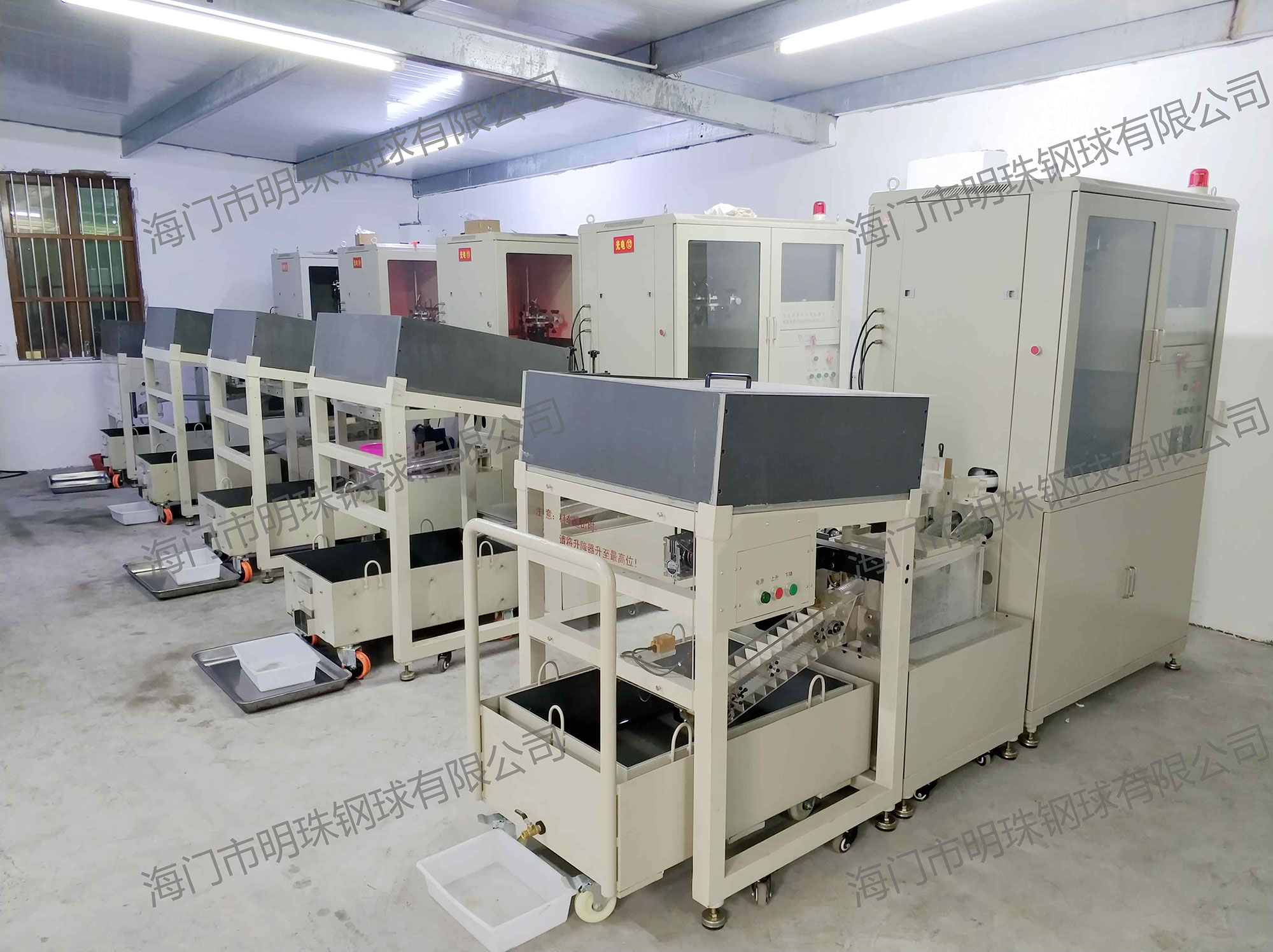
An IATF 16949:2016 certificate places a ball supplier inside an automotive quality system; the chain to inspect is the documentary one. Hardness, heat-treatment condition and microstructure are recorded by batch on a material test report (MTR), supported by EN 10204 2.1 or 3.1 inspection certificates and a COA, with PPAP and first-article inspection (FAI) documentation when a program requires it. For balls specified into an OEM EV powertrain program, a quotation that cannot supply batch-level hardness records is incomplete regardless of unit price.
The three duties side by side
| Decision criterion | Valve / fluid-control sealing | Food-safe handling | EV / powertrain bearing |
|---|---|---|---|
| Typical material | 420C, 440C; 316, duplex or Hastelloy C-276 where the media demands it | 304 for dry and indoor service; 316 where chlorides or wash chemicals apply | 52100 (100Cr6 / SUJ2); 440C where moisture cannot be excluded |
| Hardness | 420C HRC 48–55; 440C HRC 58–65; austenitic grades near HRB 80 | Austenitic, non-hardenable at about HRB 80 | 52100 HRC 60–66 (often 62–64) |
| Corrosion basis | Specified against the media: 316 at PREN ~23–28, duplex ~34–38, C-276 ~69 | 304 at PREN ~18–20; 316 at PREN ~23–28 | Moderate; requires rust-preventative lubrication |
| Surface / cleanability | Defect-free sealing contact zone | Cleanable, washdown-tolerant, no plated layer | Low runout and controlled surface finish |
| Grade band | Commercial to precision, set by seat geometry | Commercial grades usually sufficient | Precision G3–G25; commercial G100–G1000 |
| Fatigue-life rating | Secondary to sealing contact | Not the governing criterion | Primary driver of material choice |
| Acceptance evidence | MTR, PMI or chemical analysis, NACE MR0175 on request | Alloy certificate, EN 10204 3.1, COA, surface-defect record | Batch hardness, MTR, EN 10204 3.1, COA, PPAP, FAI |
| Main cost driver | Alloy content and heat treatment | Alloy content, plus cleaning-regime margin | Grade band, inspection and traceability |
Six criteria that make quotations comparable
- Hardness stated against the duty, not against a standard. HRC 48–55 for 420C, 58–65 for 440C, 60–66 for 52100 and about HRB 80 for austenitic grades only mean something when matched to sealing contact or rolling contact.
- Corrosion stated as PREN or as the actual media. 304 near 18–20, 316 near 23–28, duplex near 34–38 and C-276 near 69 are different products; 'stainless' is not a specification.
- Surface cleanability stated as defect screening. 100% automated machine-vision sorting covers size, roundness and surface defects; ask for the result on the lot, not only a certificate of conformity.
- Sphericity and grade band stated on ABMA/ISO 3290. Precision G3–G25 and commercial G100–G1000 are different cost and performance tiers, and the grade should appear on the inspection record.
- Fatigue-life basis. 52100 offers several times the fatigue life of carbon steel in identical geometry; accepting or ignoring that changes how the bearing will eventually fail.
- Acceptance evidence. Batch hardness and microstructure, MTR, EN 10204 3.1 and COA, with PPAP and FAI where a program requires them. Evidence is part of the specification.
Reading the price gap between quotations
Two quotations for the same diameter and quantity can differ by two or three times, and both prices can be correct. Most of the spread comes from four identifiable causes.
Alloy content. Carbon steel costs less than 52100; 304 costs roughly 15–30% less than 316; duplex, M50 and Hastelloy climb from there. Material cost follows corrosion and thermal capability rather than diameter.
Grade and inspection cost. Precision balls at G3–G25 require tighter manufacturing control and 100% inspection, so they carry a higher unit cost than commercial G100–G1000 product. Comparing on price alone across grade bands draws the wrong conclusion.
Standard versus non-standard. Simple custom specifications typically add 10–30% to unit cost over a standard inch or metric size, and CNC drilling, threading or special alloys add more. Lead time moves with it: stock sizes often ship in 5–10 days, standard production runs 15–30 days, and non-standard or CNC parts take 20–60 days depending on tooling and inspection. Non-standard and CNC quantities typically start from 50–500 pcs, with prototype quantities of 10–50 pcs workable on simple parts — a scale that can decide whether a project is viable.
Plated versus alloy-through. A plated ball is cheaper up front than a stainless ball, but it carries a life-cycle risk that the coating will wear and expose the core. In static decorative duty that does not matter; in washdown or loaded duty it reverses the cost conclusion.
Which supplier evidence supports which decision
The matrix only works if the evidence attached to a quotation maps to the duty. For valve duty, an MTR plus PMI or chemical analysis confirms the alloy that was claimed, with NACE MR0175 where the service requires it. For food-contact duty, an alloy certificate plus the surface-defect sorting record is what supports the cleanability claim. For EV duty, batch hardness and microstructure, EN 10204 3.1 and PPAP documentation are the deliverables.
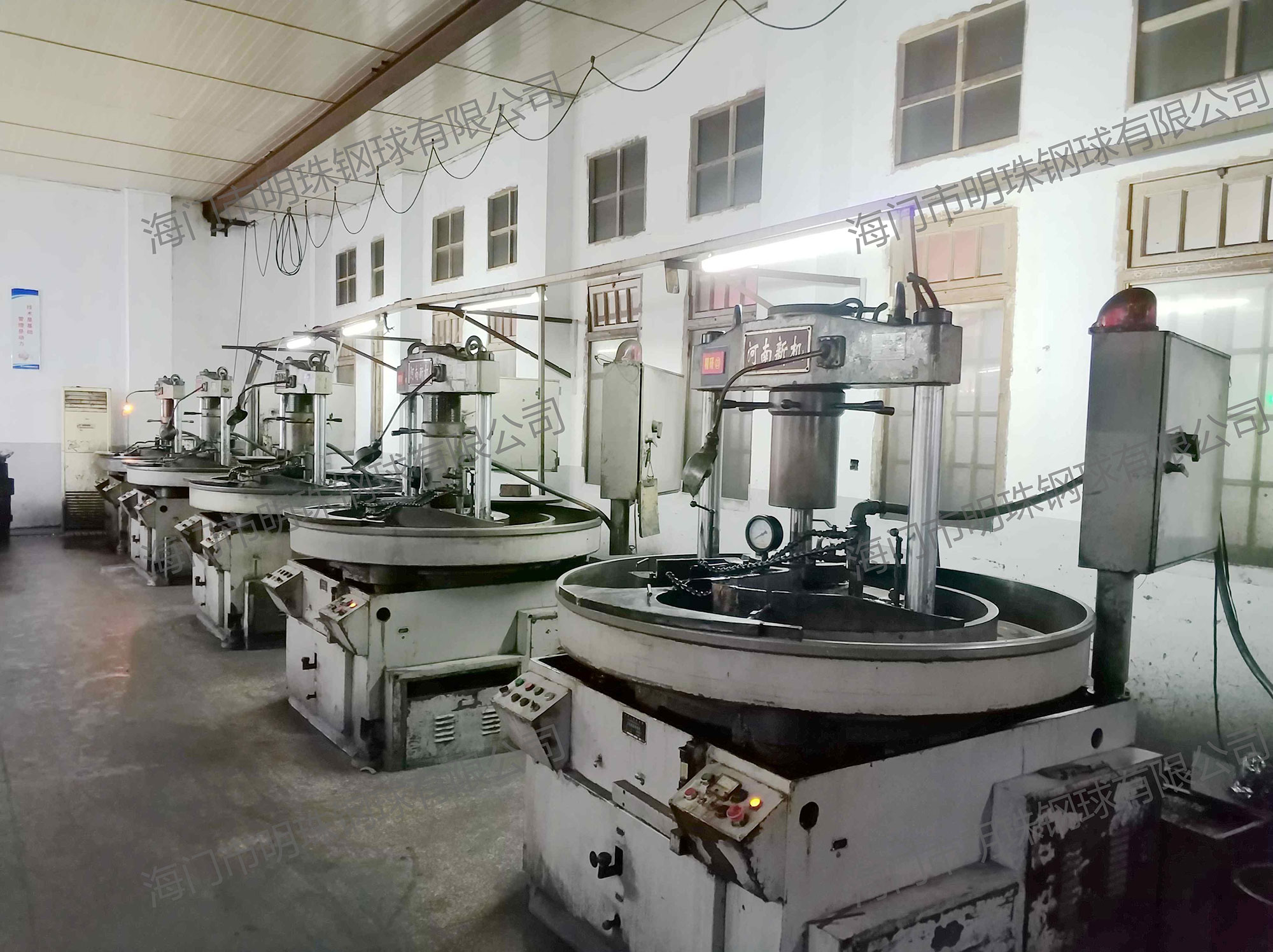
Haimen City Mingzhu Steel Ball Co., Ltd. is a steel ball manufacturer founded in 1992 in Haimen, Jiangsu Province, operating a 7,500 m² production base with 105 sets of processing equipment and an annual capacity of 2,500 tons, producing bearing steel balls, chrome steel balls, stainless steel balls, carbon steel balls, machined balls, non-standard balls, drilled balls, electroplated balls and hollow balls. Its quality system is certified to IATF 16949:2016, and batch inspection combines 100% automated machine-vision sorting with hardness, roundness, microstructure and material verification, supported by MTR, EN 10204 2.1/3.1 and COA documents, with PPAP, FAI, NACE MR0175 and AMS certificates available on request. For a buyer comparing the three duties, that means one evidence framework can cover valve, food-handling and powertrain inquiries instead of each specification being handled as an isolated case. Further detail on products and documentation is available at www.hmmzsteelball.com.
A full summary of the product range, inspection capability and factory setup is also available as a downloadable PDF: Haimen Mingzhu brochure.
Market context for the three duties
Coherent Market Insights estimates the global steel ball market at roughly USD 12.91 billion by 2026, with chrome steel balls projected to hold a 45.7% material share — consistent with treating the 52100 family as the governing material for bearing duty. Growth forecasts depend heavily on scope and should be read cautiously: Business Research Insights projects a 5.2% CAGR for 2026–2035, while Coherent reports 3.6% and Research & Markets reports 6.2%, a gap that follows from how mining grinding media and small precision bearing balls are weighted. For a buyer, these figures set scale, not selection: the duty still decides the specification.
Outlook across the three duties
Rising EV powertrain volumes widen the share of balls that must meet precision grade bands and IATF-documented traceability, and the estimated 45.7% chrome steel share for 2026 already reflects that weighting. Valve maintenance and retrofit work continues to consume martensitic stainless and 316 balls, while for food and pharmaceutical plants the choice between 304 and 316 turns on wash chemicals rather than on price alone. These are bounded judgments rather than forecasts: the three duty categories compete on durability, cost and documentation, and the gap between them widens or narrows according to what a failure actually costs in each application.
Frequently asked questions
What material should be specified for valve sealing compared with an EV bearing?
Valve sealing typically uses 420C martensitic stainless at HRC 48–55, or 440C at HRC 58–65 where abrasion resistance or washdown tolerance matters. EV and powertrain bearings typically use 52100 chrome steel (DIN 100Cr6, JIS SUJ2) at HRC 60–66, because the governing failure mode there is rolling-contact fatigue rather than sealing contact. Where moisture cannot be excluded, 440C is the bearing-duty alternative.
Which is better for my application, 304 or 316 stainless steel balls?
304 suits indoor, freshwater, dry-food and general commercial service. 316 suits seawater, coastal air, chloride and CIP or chemical service, because its 2–3% molybdenum and 10–14% nickel raise PREN to roughly 23–28 against about 18–20 for 304. 304 costs roughly 15–30% less. Both are soft austenitic balls, so for high-load wear the choice should be 440C or 52100 instead.
Which hardened bearing balls can be supplied, and what hardness can be reached?
52100 chrome steel through-hardens to approximately HRC 60–66, 440C martensitic stainless to HRC 58–65, and M50 high-speed alloy to HRC 62–66 with high-temperature stability. Hardness, heat-treatment condition and microstructure are controlled by batch and reported on the material test report.
Which precision grades are available, and how do they map to ABMA/ISO 3290?
Supplied grades span the ABMA/ISO 3290 range from G3 to G1000, with precision grades G3–G25 for metrology, linear motion, high-speed spindle and bearing work, and commercial grades G100–G1000 for general load and non-critical use. The grade determines the reported diameter deviation, sphericity and surface finish, so it should be stated on the inspection record rather than assumed.
How are the balls inspected, and what quality documents are provided?
Every batch passes 100% automated machine-vision sorting for size, roundness and surface defects, supplemented by hardness, roundness or eccentricity, microstructure, roughness and material verification by PMI or chemical analysis. Documents include the material test report (MTR), EN 10204 2.1 or 3.1 certificates and a COA, with PPAP, FAI, NACE MR0175 and AMS certificates available on request.
Have Questions or Need More Details?
Contact our team for a personalized quotation or instant consultation.
Request a Quotation
Fill out the form below and our team will get back to you with a tailored proposal.
WhatsApp Direct Chat
Prefer to chat in real-time? Message us on WhatsApp for instant assistance & quick answers.
- Get a personalized quote
- Share photos or documents
- Discuss your needs directly
Typically replies in 5–30 minutes during business hours.