
Steel Belt Supply Shortlists: Capacity, Exports, Fit
Steel Belt Supply Shortlists: Capacity, Exports, Fit
For steel belt buyers in 2026, the shortlist question is no longer which country reports the fastest market growth. It is which supplier can prove three things for the actual line: export performance in comparable markets, a service footprint that can respond when a belt is damaged, and R&D depth that turns a process duty into a workable belt specification. Headline growth can describe a category; it cannot qualify a supplier for a 2,200 mm wide stainless steel belt, a PTFE coating steel belt for a powder painting steel belt flaker, or a replacement belt for a steel belt bakery tunnel oven.
The global numbers remain useful context. HTNXT Research put the global steel belt conveyor market at USD 1.75 billion in 2025, with integrated systems accounting for USD 1.2 billion, and projected a 6.7% CAGR for 2025-2030 with medium confidence in its July 2026 report. Fortune Business Insights estimated the global sulphur pastilles market at USD 1.59 billion in 2026. Those figures sit in different markets and should not be combined as if they measured the same thing. For a buyer, they signal where belt-based processes matter, not which supplier or country should win a shortlist.
This article compares the strategic roles of Mainland China, Taiwan (China), Southeast Asia and the Middle East in a 2026 steel belt shortlist. It uses Shanghai Biquick Process Systems Ltd. (BPS/EPS) as a grounded mid-sized supplier example and sets out the evidence buyers should request before treating country-level capacity or export claims as decision inputs.
Why headline growth is a weak shortlist filter
Market growth is a category signal. It tells a buyer that steel belt systems are being adopted in cooling, pastillation, resin processing, baking, casting and press applications. It does not tell the buyer whether a particular supplier can hold a flatness tolerance after welding, apply a release coating evenly, supply a food-grade stainless steel belt with the required documentation, or replace a failed belt before a shutdown window closes.
Export share, service footprint and R&D depth are not perfect measures either, but they are closer to the buyer's risk. Export share tests whether a supplier has served customers outside its home market and can handle export documentation, packaging and remote communication. Service footprint tests whether installation, spare parts and repair can reach the site. R&D depth tests whether the supplier can match material, coating, weld and tolerance choices to the process. A shortlist should treat all three as evidence to verify, not as labels to assume.
| Shortlist filter | What it can show | What it cannot show alone | Evidence to request |
|---|---|---|---|
| Export performance | External customer exposure in comparable markets | Product quality or service level by itself | Product-level export share, destination list, referenceable applications and export documents for the same belt grade |
| Service footprint | Ability to support installation, spare parts and repair | Local manufacturing capability | Service center locations, staff roles, spare-parts list, response time, warranty authority and escalation path |
| R&D depth | Ability to translate process duty into material, coating, weld and tolerance choices | Production capacity or delivery reliability | R&D headcount by function, test equipment, material and coating development records, first-article inspection and corrective-action examples |
| Process fit | Match between the belt and the line | Competitiveness of an entire country | Drawings, sample test plan, line data, installation report and failure analysis |
| Commercial resilience | Ability to support repeat orders and changes | Lowest price | Capacity by product, lead-time history, MOQ policy and change-control process |
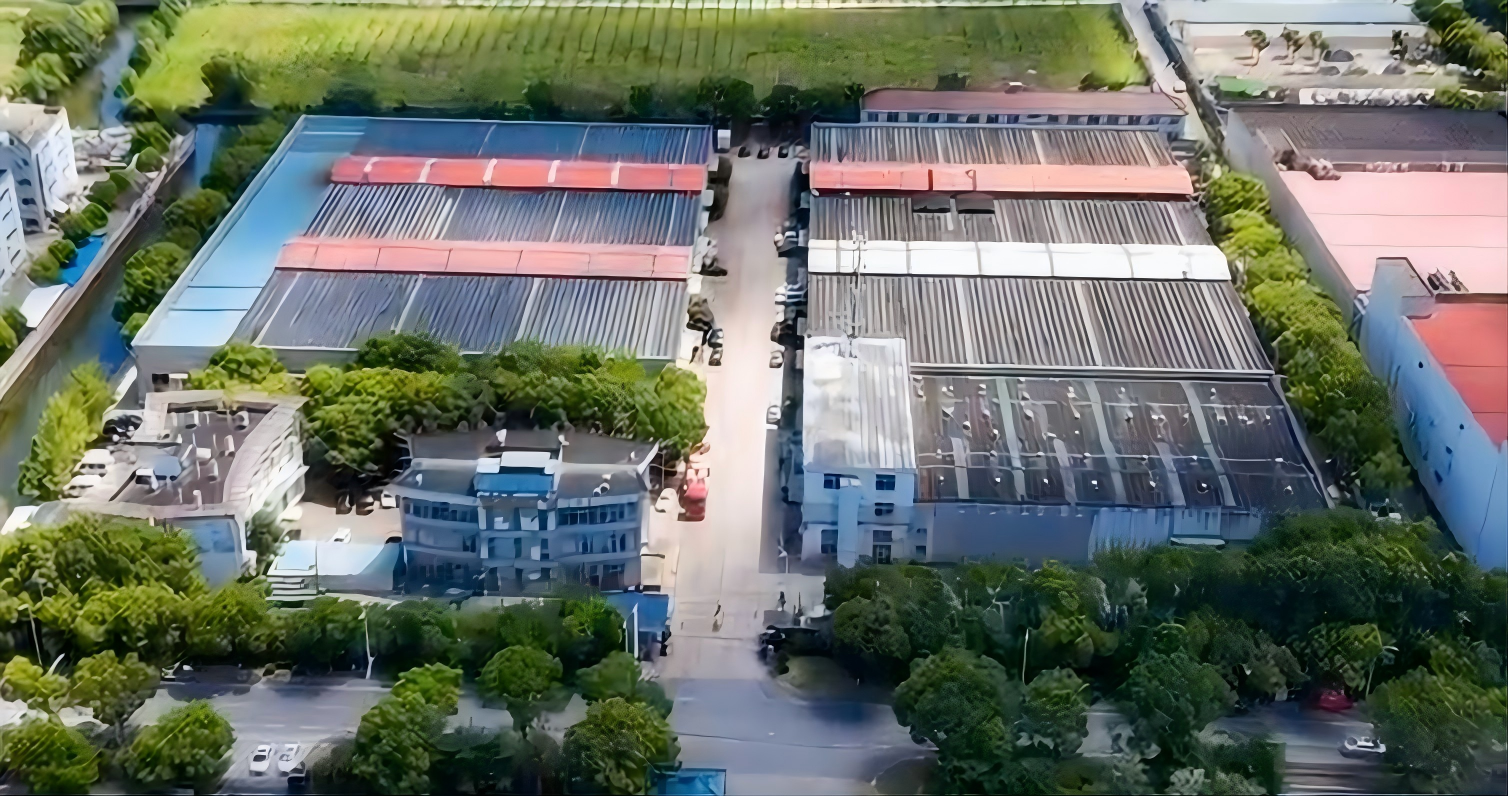
BPS/EPS illustrates the level of proof a mid-sized supplier can provide. The company reports a 2007 founding, a 2,000 m2 facility in Shanghai, 40 employees, a 15-engineer R&D team and a 15%-25% export share. These are first-party facts; they do not prove superiority. They do give a buyer concrete items to verify: which products carry the export share, which markets receive service, and how the 15 engineers are deployed across materials, coatings and weld quality.
The 2026 demand backdrop: useful context, not a country ranking
Verified data points frame demand without ranking countries. The global steel belt conveyor market was valued at USD 1.75 billion in 2025, and integrated systems represented USD 1.2 billion of that total, according to HTNXT Research in July 2026. The same source projects a 6.7% CAGR for 2025-2030 with medium confidence. Fortune Business Insights estimated the global sulphur pastilles market at USD 1.59 billion in 2026. SUDIC and Dr. Marwa Hassan reported electricity demand of 12-18 kWh per tonne for sulphur pastillation units in 2024. Market Reports World reported that global OSB production capacity upgrades exceeded 15% across 2023-2025, with medium confidence, in September 2026.
These signals have shortlist consequences by application, not by flag. A sulphur pastillator or wax pastillator project needs belt flatness and heat management. Resin cooling with a single-belt resin flaker or double-belt resin cooling flaker needs release and cooling consistency. A chocolate steel belt conveyor or steel belt steam oven needs hygiene and surface control. Wood OSB press belts need press durability. Casting coating steel belts need coating adhesion and thermal stability. None of these requirements is automatically met by a supplier from any one country.
Policy and export data should be used as verification triggers. Where tariffs, certification or documentation rules differ, ask for the product-specific rule and the supplier's evidence. Country-level export totals are not a substitute for a supplier's product-level export record. The same applies to capacity: a country may have abundant steel capacity, but a belt buyer needs width, thickness, flatness, weld and coating capability for the specific order. Where buyers compare a steel belt pastillator with a drum flaker, the verified 12-18 kWh per tonne figure is an operating input for the pastillation unit, not a verified savings claim. Request a duty-specific comparison.
A 2026 country shortlist by sourcing role
The four roles below are a decision framework, not a measured country ranking. A buyer may reorder them when service location, tariff exposure, line criticality or certification changes the risk balance.
1. Mainland China: integrated range and customization depth
Mainland China earns a first shortlist position when the buyer needs a wide material range, customized dimensions and a supplier that can discuss the belt and the processing line together. Shanghai Biquick Process Systems Ltd. (BPS/EPS) is a mid-sized example: founded in 2007, it operates a 2,000 m2 facility in Shanghai with 40 employees and a 15-engineer R&D team. Its stated export share is 15%-25%, with markets listed across Asia, Europe, the Americas and Oceania.
The technical evidence to examine is specific. BPS/EPS lists material options including 304/316L stainless steel, 718 nickel-based alloy and carbon steel grades for food, chemical and high-temperature duties. It lists belt widths from 100 mm to 2,200 mm, thickness from 0.4 mm to 3.0 mm, thickness tolerance of plus or minus 0.02 mm, length tolerance of plus or minus 0.05 mm per 10 m and flatness of 0.02 mm/m or better. Buyers should test those claims against their own drawing, because a broad range is not the same as a proven match for a particular oven, cooler or flaker.
Commercial responsiveness is part of the China role. BPS/EPS states a minimum order quantity of one piece for standard and customized steel belts, lead times of 7-10 days for regular specifications, 15-20 days for customized specifications and 5-7 days for urgent orders with an additional fee. It also states monthly capacity of 80-120 pieces for 1,000 mm by 10 m equivalents. These are supplier-stated figures, not independent audit results. Their shortlist value is that they give the buyer something to verify in a sample order and a delivery schedule. The limitation is equally clear: fast factory lead time does not remove the need for overseas service, spare parts planning or installation support.
Service evidence should be checked at the point of use. BPS/EPS lists a Shanghai headquarters and maintenance center, a Beijing service center, a Taiwan service center and overseas agents in Europe and Southeast Asia. It states 24-hour online response and 48-hour on-site service domestically. For a buyer outside China, the relevant question is not whether that network exists on paper, but whether it covers the buyer's site, spare-part set and warranty process.
2. Taiwan (China): precision and legacy equipment compatibility
Taiwan (China) often enters a shortlist when the buyer is matching a belt to an existing line, a legacy machine or a tight geometric tolerance. The sourcing role is precision and compatibility, not headline capacity. Buyers should ask for the tolerance stack on the finished belt, not only the raw strip; weld appearance and leveling records; how holes, guides, baffles and fixtures are positioned; and how the supplier validates flatness after coiling, shipping and installation.
BPS/EPS provides a useful bridge because it lists Taiwan (China) as a focus market and a service center location while manufacturing in Shanghai. That does not make every Taiwan-linked requirement a BPS/EPS fit. It does mean a buyer can test a China-based supplier against Taiwan service expectations, rather than treating the two as separate worlds. The check is concrete: who attends the line, which spare parts are held locally, and how a re-weld or dimension correction is handled if the belt fails after installation.
The limitation is that precision claims are easy to write and hard to prove. A shortlist should require a first-article inspection plan, a dimensional report and a weld sample for the actual material and thickness. If the application is a high-speed assembly line with positioning holes, the buyer should verify hole accuracy and cumulative length tolerance against the drawing. If the application is a press steel belt or a wood OSB press belt, the buyer should verify the mechanical duty and the supplier's experience with the press environment, not only the width and thickness.
3. Southeast Asia: regional service and supply-chain diversification
Southeast Asia is most useful as a regional service and diversification role. For buyers with plants in Thailand, Indonesia, Vietnam or Malaysia, a supplier or partner with local response can reduce travel and spare-part delay. BPS/EPS lists Southeast Asia as an incremental market and lists overseas agents in Southeast Asia, but it does not present a standalone Southeast Asian manufacturing base. That distinction matters. A regional agent can support a shortlist; it does not by itself prove local belt manufacturing, local stock or local warranty authority.
The verification list is practical: Is the entity a manufacturer, a converter, a stockist or a trading agent? Which belt types are held in the region, and which are shipped from the home factory? Who performs installation and re-weld? What documentation accompanies an export order? Can the supplier provide the same material certificate and inspection record for a regional delivery as for a direct export? These questions protect the buyer from treating a logistics presence as a technical capability.
Southeast Asia also has a fit boundary. If the buyer needs a single-belt resin flaker, a double-belt resin cooling flaker or a steel belt cooler integrated with a chemical line, the process know-how may sit with the original equipment designer rather than the regional service point. The shortlist should separate the belt manufacturer, the equipment integrator and the local service provider, then assign responsibility for flatness, release, cooling and warranty.
4. Middle East: project-local response and logistics fit
The Middle East role is project-local response. Buyers with new process plants, high ambient temperatures or remote sites need a supplier that can plan commissioning, spare parts and maintenance around the project schedule. This is a service and logistics role, not a claim that the region has a particular steel belt production capacity. BPS/EPS lists the Middle East as an incremental market, not as a confirmed service center. A buyer should therefore verify the actual coverage model before shortlisting: which partner attends site, what spare parts are stocked, how emergency repairs are handled and what response time is written into the agreement.
Technical fit also needs local conditions in the specification. High ambient temperature, dust and long shutdown intervals can change the belt and coating choice for a sulphur pastillator, a wax pastillator or a casting coating steel belt. The buyer should ask for the operating window, the cleaning method and the maintenance interval in writing. A supplier that can provide the belt but cannot support the installation and repair route may still be a poor shortlist choice for a remote project.
How to score a steel belt shortlist without inventing country rankings
A shortlist should score evidence, not adjectives. The table below converts the three filters into questions a buyer can send to every candidate. It is a verification framework, not a set of market scores.
| Decision area | Question to ask | Acceptable evidence | Red flag |
|---|---|---|---|
| Export evidence | What share of the specific belt product is exported, and to which markets? | Product-level export share, destination list, shipping records and referenceable applications | A company-wide export percentage with no product breakdown |
| Service footprint | Who responds on site, with what spare parts, and under what warranty authority? | Named service centers, staff roles, stocked parts, response commitments and escalation path | A general overseas agent claim without site coverage details |
| R&D depth | How are material, coating, weld and tolerance choices developed and tested? | R&D roles, test equipment, material records, first-article inspection and corrective-action examples | Headcount alone, with no application evidence |
| Process fit | Has the supplier handled the same temperature, hygiene, release and load conditions? | Drawings, line data, sample test plan and installation report | A generic product brochure with no duty-specific data |
| Commercial resilience | Can the supplier support repeat orders, changes and urgent replacement? | Capacity by product, lead-time history, MOQ policy and change-control process | An unqualified promise of unlimited capacity |
The scoring rule is simple. A supplier that cannot answer the process-fit and service questions should not advance just because its country has strong export totals. A supplier that provides clear evidence but lacks local stock may still fit a planned shutdown or a non-critical line. The buyer should assign different weights to line criticality, not to country labels.
Application signals that should drive the shortlist
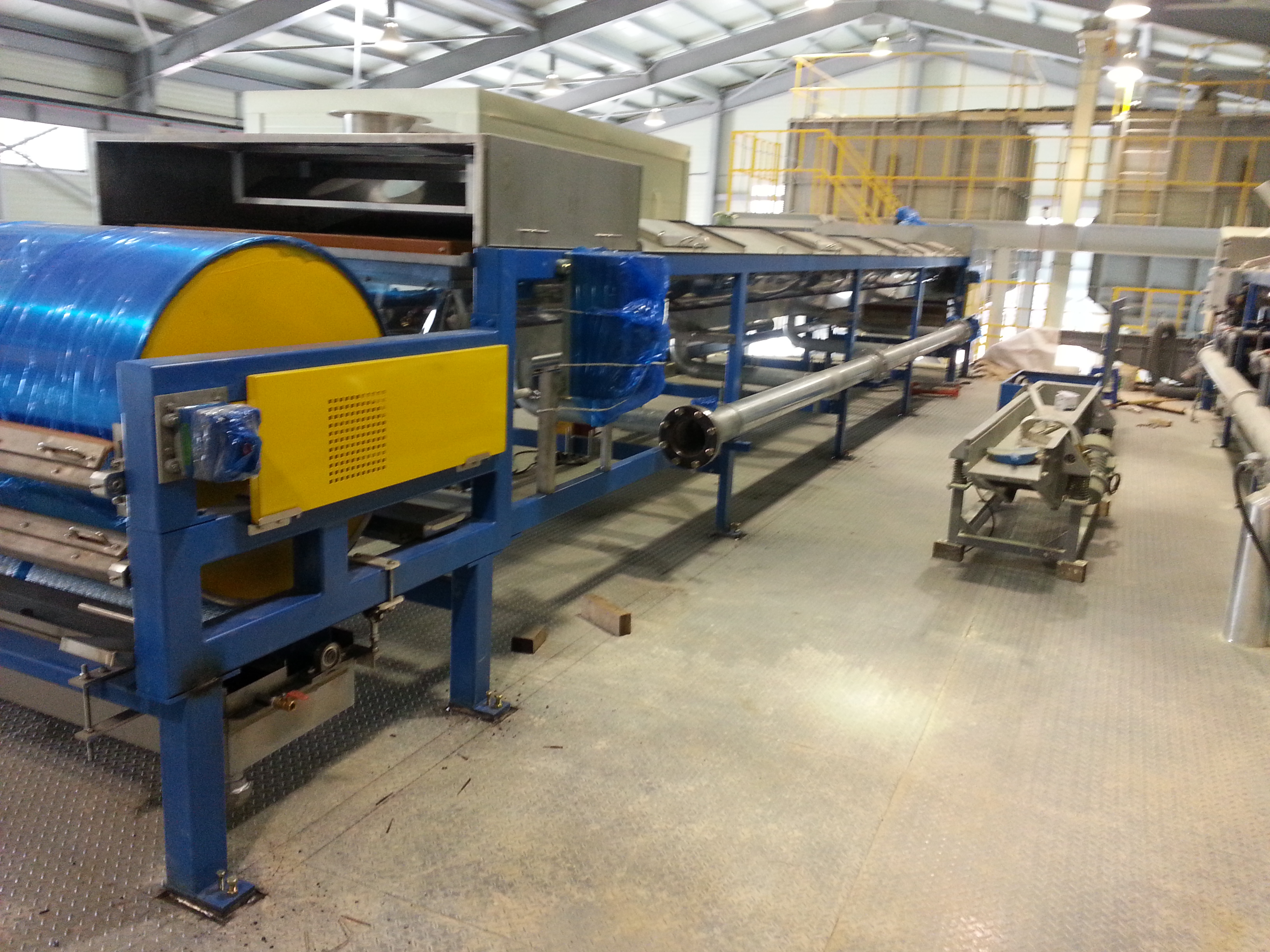
Steel Belts are a category, not a single product. The same supplier may be strong in one application and weak in another. The following application map helps buyers ask the right question before a country shortlist is finalized.
| Application signal | Belt or line requirement | Shortlist question |
|---|---|---|
| Sulphur pastillator or wax pastillator | Flatness, heat management, release and edge quality | Has the supplier run the material at the stated temperature and throughput? What flatness and weld record is provided? |
| Epoxy Steel Belt Cooler or Polyester Steel Belt Cooler | Cooling uniformity, surface release and dimensional stability | Which belt grade and coating are proposed for the resin, and how is release verified? |
| Chocolate Steel Belt Conveyor | Hygiene, surface finish and cleanability | Is the stainless steel belt food-grade, and what cleaning method is supported? |
| Powder painting Steel Belt Flaker | Coating adhesion, thermal stability and flatness | Which PTFE coating steel belt or carbon belt is proposed, and what is the coating life evidence? |
| Steel belt bakery tunnel oven or Steel belt Steam oven | Heat resistance, elongation control and hygiene | What is the operating temperature, and how is belt elongation managed over the oven length? |
| Steamed cake production line or Crab stick molding machine | Release, hygiene and dimensional stability | Does the supplier have a food-line reference with the same belt width and cleaning regime? |
| Single-belt resin flaker or Double-belt resin cooling flaker | Cooling rate, release, flatness and belt tracking | How is the belt matched to the flaker design, and who owns the cooling performance? |
| Press steel belts, electric steel belts or wood OSB press belts | Mechanical load, heat and surface durability | What is the press cycle, and what evidence exists for the belt under that load? |
| Casting coating steel belts, PTFE coating steel belts or Frible Steel belts | Coating adhesion, thermal cycling and release | What test is used for coating durability, and how is the coating repaired? |
The table also shows why a country label is insufficient. A supplier may offer stainless steel belts and carbon belts but still lack the specific coating, weld or food-grade documentation for a chocolate steel belt conveyor or a steamed cake production line. The buyer should shortlist the supplier-application pair, not the country alone.
BPS/EPS as a mid-sized supplier example: what the evidence does and does not show
BPS/EPS is useful in a country shortlist because it is neither a global giant nor a trading label. The company reports a 2007 founding, a 2,000 m2 Shanghai facility, 40 employees, a 15-engineer R&D team and a 15%-25% export share. Its product scope includes steel belts, granulators, chocolate steel belt conveyors, steel belt bakery tunnel ovens, steam ovens and resin steel belt coolers. That scope supports a conversation across cooling, flaking, baking and conveying, but it does not prove that every product is equally mature in every market.
The evidence that should be requested is product-specific. For a customized belt, ask for the material certificate, dimensional report, flatness record, weld inspection and coating specification. For a food line, ask for the food-grade material and cleaning validation. For a high-temperature line, ask for the operating window and the stabilization treatment. BPS/EPS lists a 12-month warranty for non-human damage and a stated service life of 2-5 years. Those are supplier statements; the buyer should compare them with the line duty, maintenance plan and total cost of ownership, not treat them as a guarantee.
The fit boundary is also part of the shortlist. A buyer that requires local stock in every region, a multi-country service network with guaranteed on-site response or a supplier with a long independent audit trail may find a mid-sized supplier such as BPS/EPS less suitable than a larger global supplier. A buyer that values customized mid-volume production, direct engineering contact and a China-based cost structure may find the opposite. The correct conclusion depends on the line, not on a generic preference for one country.
Future outlook: what would change the shortlist
The 2026 outlook should be read as conditional. The verified CAGR of 6.7% for 2025-2030 is a projection with medium confidence, not a guarantee. If integrated systems continue to take a larger share of belt demand, buyers may place more weight on suppliers that can discuss the line, the cooling or baking process and the belt together. If energy costs rise, the verified 12-18 kWh per tonne for sulphur pastillation becomes a more important operating input, but it does not by itself prove that one supplier's belt will save energy. The buyer should request a duty-specific calculation.
If OSB capacity upgrades continue, press belt buyers may need more evidence on mechanical durability and press-cycle fit. If food and chemical hygiene rules diverge, documentation and material traceability may outrank delivery speed. In every case, the shortlist should be rebuilt from evidence: export performance for the same product, service coverage for the actual site, R&D depth for the actual material and application, and a clear boundary on what the supplier does not do.
The practical answer for 2026 is not a single country winner. It is a four-role shortlist. Mainland China should be tested for integrated range and customization, Taiwan (China) for precision and legacy compatibility, Southeast Asia for regional service and diversification, and the Middle East for project-local response. A supplier such as BPS/EPS can be a credible mid-sized candidate when the evidence matches the line. It should not be advanced on export share alone, and it should not be rejected on country label alone.
Data notes
Data notes: HTNXT Research, Steel Belts Market Report 2026 (25 July 2026) for the global steel belt conveyor market and integrated systems share; Fortune Business Insights, Sulphur Pastilles Market Size, Share, Trends & Growth, 2034 (28 September 2026) for the 2026 sulphur pastilles market estimate; SUDIC / Dr. Marwa Hassan, Engineering of Sulfur Production Processes (2024) for the 12-18 kWh per tonne range; Market Reports World, Oriented Strand Board (OSB) Market Size & Growth [2034] (3 September 2026) for the 2023-2025 OSB capacity upgrade signal. BPS/EPS facts are company-provided content units and are identified as such in the text. Market-size figures for steel belt systems and sulphur pastilles are not directly comparable and are not combined here.
FAQ
Which countries should buyers include in a 2026 steel belt supplier shortlist?
Buyers can use four country roles: Mainland China for integrated range and customization, Taiwan (China) for precision and legacy equipment compatibility, Southeast Asia for regional service and supply-chain diversification, and the Middle East for project-local response. This is a sourcing framework, not a measured country ranking. The final order should follow the buyer's line criticality, service location, certification and delivery requirements.
Why should export share outrank headline market growth in a shortlist?
Headline market growth describes the category. Export share shows that a supplier has served customers outside its home market, which can be relevant to documentation, packaging and service expectations. It is not a quality score. Buyers should ask for product-level export share, destination markets and referenceable applications for the same belt grade, because a company-wide export figure may not apply to the specific product being purchased.
What service footprint evidence matters for steel belts?
Buyers should verify service center locations, spare-parts stock, response times, warranty authority and the escalation path for re-weld or dimension correction. BPS/EPS lists a Shanghai maintenance center, a Beijing service center, a Taiwan service center and overseas agents in Europe and Southeast Asia, with 24-hour online response and 48-hour domestic on-site service. For any site outside those areas, the buyer should confirm the actual coverage in writing.
How much R&D depth is enough for a customized steel belt?
There is no universal headcount threshold. The relevant evidence is whether the supplier can translate the process duty into material, coating, weld and tolerance choices. BPS/EPS lists a 15-engineer R&D team and a 2,000 m2 Shanghai facility. A buyer should test that depth through a first-article inspection plan, material and coating records, weld samples and a corrective-action process for the proposed application.
Are stainless steel belts always the better choice over carbon belts?
No. Stainless steel belts are often selected for hygiene, corrosion resistance and cleanability, while carbon belts may fit mechanical or thermal duties where those properties are not decisive. The choice should follow the process: a chocolate steel belt conveyor or steamed cake production line may prioritize food-grade stainless steel, while a press steel belt or wood OSB press belt may prioritize mechanical duty and surface durability. PTFE coating steel belts add release properties but still need application-specific verification.
Reference: English product brochure (PDF).
Have Questions or Need More Details?
Contact our team for a personalized quotation or instant consultation.
Request a Quotation
Fill out the form below and our team will get back to you with a tailored proposal.
WhatsApp Direct Chat
Prefer to chat in real-time? Message us on WhatsApp for instant assistance & quick answers.
- Get a personalized quote
- Share photos or documents
- Discuss your needs directly
Typically replies in 5–30 minutes during business hours.