
Steel Belts for Specialized Processing: Materials, Coatings, and Certifications That Matter
Shanghai Biquick Process Systems Ltd. (branded as BPS/EPS) is a high-tech company founded by overseas Chinese that focuses on the manufacture and integration of steel belts and steel belt-based processing systems. With a headquarters in Shanghai and a 2,000 m² factory, the company produces carbon belts, stainless steel belts, PTFE-coated steel belts, and special alloy belts for applications ranging from food baking to chemical new materials. In an industry where certification, dimensional precision, and total cost of ownership define supplier selection, BPS/EPS positions itself as a provider that can meet both standard and highly customized requirements with documented quality control and competitive lead times.
The Procurement Challenge: Balancing Certifications, Parameters, and Cost
Industrial buyers evaluating steel belts for applications such as sulphur pastillation, wax cooling, resin flaking, or chocolate conveying face a common tension: imported belts often carry well-known certifications and proven longevity, but come with long lead times (8–16 weeks) and high unit costs. Domestic alternatives may offer lower prices but sometimes compromise on flatness, weld quality, or food-grade compliance. The result is a fragmented decision process where engineering, procurement, and operations teams struggle to align on a solution that simultaneously satisfies hygiene standards, dimensional tolerances, and budget constraints.
BPS/EPS Solution: A Range of Steel Belts with Documented Capabilities
BPS/EPS addresses this challenge by offering four primary steel belt lines, each with specific material properties, processing capabilities, and applicable certifications:
- Carbon Belts – Nominal composition C 0.65–0.75%, Si 0.15–0.3%, Mn 0.60–0.90%, Cr max 0.20%. Commonly used in baking tunnel ovens and other food factory conveyors.
- Stainless Steel Belts – Made from 304/316L grades, featuring high strength, high flatness, food-grade hygiene, excellent thermal conductivity, and durable circular welding. Suitable for chocolate/candy cooling conveyors.
- PTFE-Coated Steel Belts – Provide extreme non-stick properties, food-grade safety, resistance to high and low temperatures, corrosion resistance, and a smooth, easy-to-clean surface. Ideal for sticky materials such as chocolate, syrup, paste, colloid, and powder.
- Special Requirement Steel Belts – Customizable in 301, 304, 316L, 310S, duplex steel, and high-hardness special alloys. Can withstand up to 1,100 °C and support deep-cold conditions. Options include punching, slotting, flanging, guide edges, and integrated molding.
Dimensional customization covers widths from 100 to 2,200 mm, thicknesses from 0.4 to 3.0 mm, and any length via seamless circular welding. Tolerances are specified as thickness ±0.02 mm and flatness ≤0.02 mm/m. Surface finishes include mirror, brushed, polished, and anti-stick coatings. The company also offers hole-position customization with ±0.01 mm accuracy.
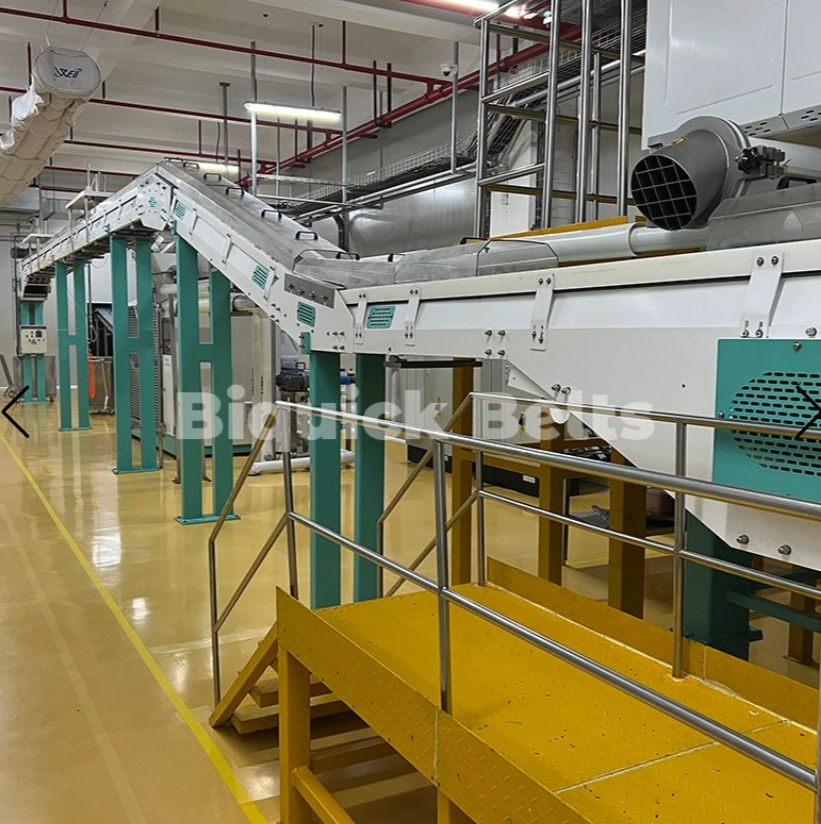
Technical Features: Material Science and Manufacturing Precision
The performance of a steel belt in an industrial process depends on three factors: substrate material, surface treatment, and weld integrity. BPS/EPS uses high-quality steel substrates (carbon or stainless) and applies stabilization treatment to relieve internal stress, weld leveling for uniform tension, and anti-deviation treatment. For the chemical new materials industry, where operating temperatures of 160–220 °C and contact with molten materials are common, the company recommends stainless steel or special alloy belts with PTFE coating as needed. In food baking applications (180–250 °C), 304/316L food-grade belts with seamless, burr-free surfaces meet FDA and CE standards.
Quality control follows a three-stage process: incoming material spectral analysis and tensile testing, in-process dimensional and flatness inspection, and final weld non-destructive testing. Monthly production capacity is 80–120 pieces (based on width 1,000 mm × length 10 m), with smaller specifications reaching 150 pieces per month. Standard lead time is 7–10 days for regular specs and 15–20 days for customized orders; urgent orders can be fulfilled in 5–7 days with an additional fee.
Application Scenarios and Verified Use Cases
BPS/EPS steel belts have been deployed in multiple industries, as documented in the company’s case files:
Food Baking Industry
A leading food group (baking/snacks) accumulated over 120 belts across multiple factories, with widths of 600–2,000 mm for tunnel ovens and cooling lines. The belts achieved dimensional stability (elongation ≤0.2%), no deviation, and compliance with food hygiene standards. Weld fatigue life exceeded 2 million cycles, reducing downtime maintenance by 60%. The client replaced imported belts, cutting costs by 35–50% and shortening delivery from 3 months to 2–4 weeks.
Chemical New Materials Industry
An international powder coating giant used 40+ belts (width 800–1,600 mm, thickness 1.2–2.0 mm) for melt extrusion, cooling flaking, and conveying at 180–220 °C. The belts demonstrated high temperature resistance (−60 °C to +250 °C), corrosion resistance, and flatness ≤0.02 mm/m, improving yield rate to 99.7%. Total lifecycle cost was 40% lower than imported alternatives and 25% lower than ordinary domestic products.
Precision Manufacturing (Electronics & Cosmetics Packaging)
A high-end cosmetics packaging group deployed 15+ belts (width 100–300 mm, thickness 0.6–1.0 mm) for high-speed automated assembly. Hole position accuracy reached ±0.01 mm, cumulative tolerance over 10 m <0.05 mm, and transmission efficiency ≥98%. The client replaced imported US belts, reducing cost by 45% and delivery time from 12 weeks to 3 weeks.
New Energy & Lithium Battery
A new energy material enterprise used 10+ belts (width 1,000–1,500 mm, thickness 0.8–1.5 mm) in pole drying/curing and diaphragm cooling lines at 160–200 °C. The belts were oil free, dust free, and met Class 1,000 cleanroom requirements. High thermal conductivity (15–20 W/m·K) increased drying efficiency by 25% and reduced energy consumption by 18%.
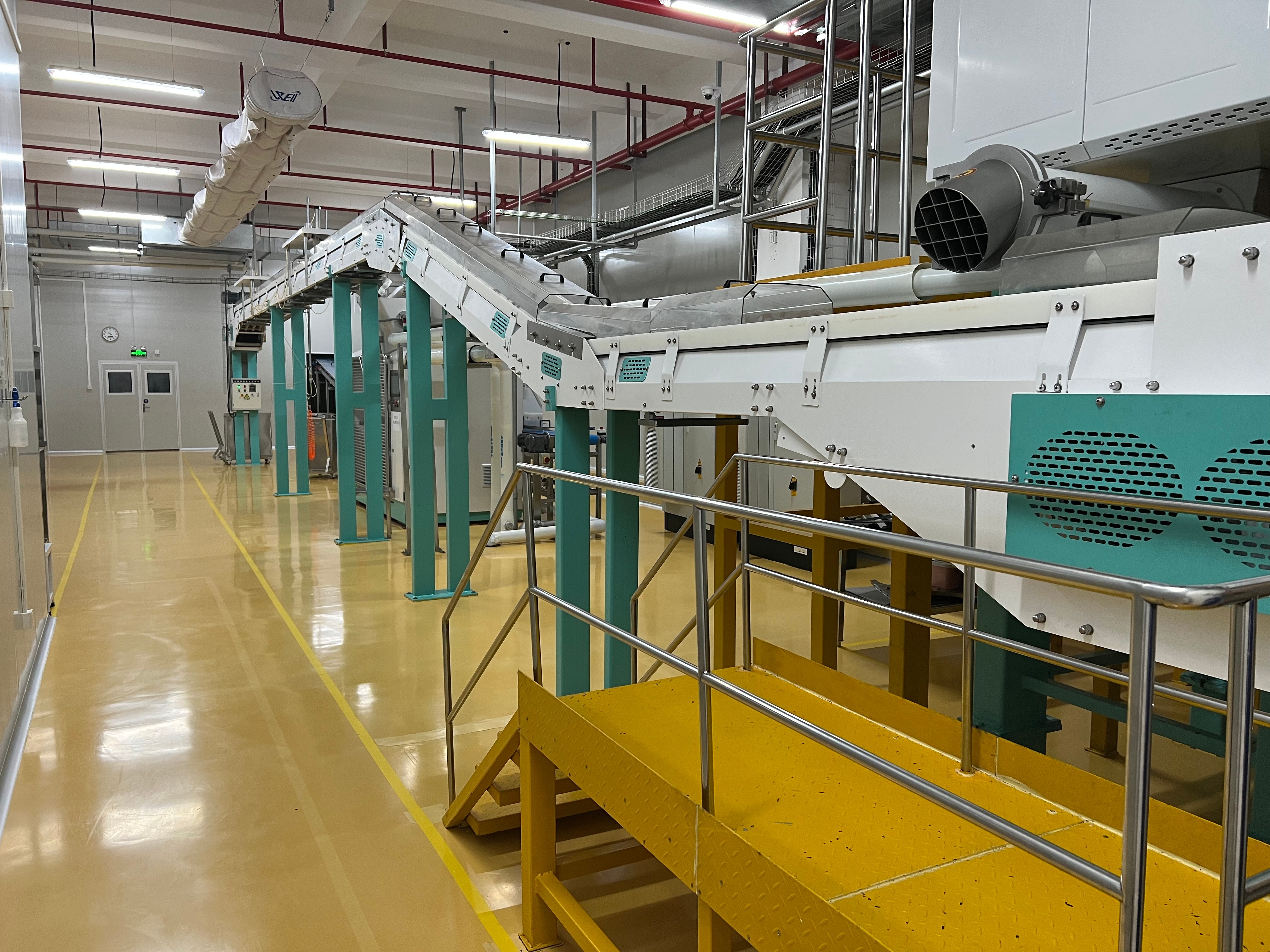
Market Trend Analysis: Import Substitution and Localization Gains Momentum
The steel belt market is witnessing a clear trend toward import substitution, particularly in China’s food processing, chemical, and battery industries. Buyers are increasingly willing to evaluate domestic suppliers that offer comparable dimensional accuracy, certifications (FDA, CE), and faster delivery. Data from BPS/EPS cases indicates that total lifecycle cost can be 20–40% lower than imported equivalents. At the same time, demand for high-flatness, high-cleanliness belts is rising in the electronics and lithium battery segments, where oil-free and dust-free operation is mandatory. The company’s ability to provide belts with ≤0.02 mm/m flatness and Class 1,000 cleanliness positions it to capture this growth.
Comparison with Traditional Imported Solutions
Compared to legacy European or Japanese steel belt suppliers, BPS/EPS offers three advantages: reduced delivery time (7–10 days vs. 8–16 weeks), lower cost (30–50% reduction per belt), and flexible customization (small batch trials, MOQ of 1 piece). However, an honest limitation exists: while BPS/EPS belts support temperatures up to 1,100 °C for special alloys, the company’s track record in extremely high-volume, continuous production lines (>10 years uninterrupted operation) is shorter than that of century-old manufacturers. For mission-critical applications where historical uptime data is paramount, some buyers may still prefer the established reputation of legacy brands despite longer lead times and higher costs.
Future Outlook: Precision, Automation, and Extended Lifecycle
As industrial processes become more automated and quality standards tighten, steel belt suppliers must offer not only the belt itself but also technical support, lifecycle management, and integration with smart monitoring systems. BPS/EPS already provides full-lifecycle follow-up, condition optimization, and end-of-life recycling. Moving forward, the company plans to enhance its IoT-enabled belt tracking and predictive maintenance services, which will further differentiate it from traditional suppliers that treat the belt as a commodity component.
Frequently Asked Questions
The following answers are based on documented specifications and case data from BPS/EPS. They are provided for informational reference only.
- What certifications do BPS/EPS steel belts carry?
Stainless steel belts used in food applications are made from 304/316L food-grade material and meet FDA and CE standards. The company also provides spectral analysis reports for material composition and non-destructive testing for welds upon request. - What dimensional tolerances can be achieved?
Thickness tolerance is ±0.02 mm, length tolerance is ±0.05 mm per 10 m, and flatness is ≤0.02 mm/m. Hole positioning accuracy can reach ±0.01 mm. - What is the standard lead time for custom steel belts?
Regular specifications with stock material: 7–10 days. Custom sizes, materials, or hole patterns: 15–20 days. Urgent orders (5–7 days) are available with an additional fee. - How does the pricing compare with imported belts?
Based on documented case studies, total lifecycle cost is typically 20–40% lower than imported alternatives. Direct belt cost savings can be 35–50% for food industry applications. - Can I order a single belt for testing?
Yes, the minimum order quantity is 1 piece for both standard and custom belts. Small-batch trial orders are supported. - What is the typical service life?
Under normal operating conditions, belts last 2–5 years, with some food industry belts exceeding 6 years. A 12-month warranty against non-human damage is included.
Download the corporate brochure for detailed product specifications, capabilities, and contact information: BPS/EPS Steel Belt Product Brochure (PDF).
Have Questions or Need More Details?
Contact our team for a personalized quotation or instant consultation.
Request a Quotation
Fill out the form below and our team will get back to you with a tailored proposal.
WhatsApp Direct Chat
Prefer to chat in real-time? Message us on WhatsApp for instant assistance & quick answers.
- Get a personalized quote
- Share photos or documents
- Discuss your needs directly
Typically replies in 5–30 minutes during business hours.