
Steel Casting Capability Review: Wayscan Metal Products
Steel castings rarely headline a bill of materials, yet they carry structural, sealing and fluid-handling duty inside vehicles, forklifts, mining equipment, pumps and valves. The global steel casting market was valued at USD 39.16 billion in 2025 and is projected to reach USD 63.83 billion by 2034, according to Fortune Business Insights. Carbon steel castings accounted for a 42.5% revenue share of that market in 2025, according to Dataintelo.
Suppliers in this category span a wide spectrum. At one end are job shops that pour metal and ship raw castings; at the other are integrated manufacturers that control melting, mould making, heat treatment, machining and inspection under one quality system. Wayscan Metal Products Co., Ltd, a precision casting manufacturer established in 1991 in Ninghai, Ningbo, China, belongs to the second group. Its published process mix, dimensional tolerances, material scope and inspection equipment offer a concrete illustration of what integrated steel casting supply looks like in practice — and where its practical boundaries sit.
Why Steel Casting Is Easy to Buy but Hard to Verify
The difficult part of steel casting procurement is not finding a supplier that can melt and pour metal. It is confirming that a delivered component matches the drawing, the specified grade and the required mechanical properties — repeatedly, across a production run, and across subsequent orders.
Three verification layers usually decide whether a casting programme succeeds:
- Dimensional conformity. Whether the casting process can hold the tolerances the drawing requires, both on as-cast geometry and after machining.
- Material conformity. Whether heat chemistry matches the specified grade, and whether heat treatment delivers the intended condition.
- Documentation. Whether the supplier can produce inspection records that a buyer’s engineering or quality function will accept without re-testing.
Where these layers are weak, the failure mode is familiar: parts that pass incoming inspection but perform inconsistently in service, or batches that vary enough to disrupt downstream assembly. A widely observed industry pattern is that smaller foundries frequently offer either casting or machining but not both, and hold limited inspection equipment — which pushes the verification burden back onto the buyer’s own lab and quality team.
That shift has a cost that rarely appears in the quotation. Every test a buyer performs in-house adds lab hours, handling, documentation and, in the case of destructive testing, scrapped parts. Every interface between a separate casting vendor and a separate machining vendor adds a dispute pathway: when a machined part is out of tolerance, both parties can reasonably claim the deviation originated upstream. Integrated suppliers invert this arrangement by keeping casting, heat treatment, machining and final inspection inside a single quality system, so responsibility for conformity does not fragment across companies.
That is the question this category review addresses: not simply who can cast steel, but which supplier can document that it did so within a controlled process.

What Wayscan Metal Products Co., Ltd Is
Wayscan Metal Products Co., Ltd is a China-based precision casting manufacturer founded in 1991 and located at No.739, Xinghai (N) Road, Ninghai, Ningbo, 315600, China. The company operates a 46,000 m² production base with more than 500 employees, including over 20 senior engineering and technical personnel, and reports an annual output of 20,000 tons. Its registered capital is 50 million RMB.
Its product scope covers precision castings, investment castings, stainless steel castings, carbon steel castings, alloy steel castings and machined cast components. Approximately 70% of output is exported, with China, Japan and the USA named as its main markets.
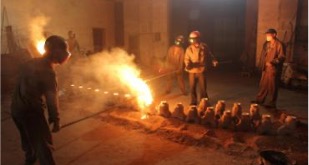
Process capability is concentrated in the investment casting family — water-glass investment casting, silica-sol investment casting and silica-sol composite investment casting — supported by machining workshops and inspection equipment that allow the company to deliver finished machined components rather than raw castings alone.
Industry recognition and standing
Institutional recognition is one of the more verifiable signals available when evaluating a casting supplier, because it is awarded by third-party bodies rather than self-declared. Wayscan Metal Products was rated among the top 50 industrial enterprises and top 50 taxpayers in Ninghai County continuously from 2012 to 2024. The China Foundry Association named it a ‘Leading Enterprise in China’s Foundry Industry’ in 2014, 2018 and 2022 — three consecutive award cycles.
The company also holds association positions: vice president unit of the Ningbo Foundry Association, director unit of the Zhejiang Foundry Association, and, since 2015, a director unit of the China Foundry Association. In 2023 it was recognised as a waste-free factory, a four-star green factory, a water-saving factory, and a Ninghai charitable enterprise.
Technical Explanation: Three Investment Casting Routes Under One Roof
Investment casting — also called lost-wax casting — builds a ceramic shell around a disposable pattern, removes the pattern, and pours metal into the resulting cavity. The process family splits by shell system, and the shell system is what determines achievable accuracy, surface finish and, ultimately, how much machining a casting will need before it becomes a finished part.
Wayscan offers three routes:
- Water-glass investment casting. A traditional shell system, generally positioned as the more economical option and suited to a broader range of part sizes.
- Silica-sol investment casting. A higher-accuracy shell system capable of tighter dimensional tolerance and improved surface finish.
- Silica-sol composite investment casting. A composite process the company invested in from 2020 onward, described as replacing its earlier water-glass process route with the aims of improving production efficiency and reducing environmental impact.
The practical consequence of holding three routes is that a buyer does not have to choose a single supplier for both cost-driven and precision-driven part families. A part where tolerance is generous can be routed through the more economical shell system; a part where as-cast geometry must sit close to final form can be routed through silica-sol. Because both routes feed the same machining and inspection operation, the tolerance strategy can be decided per part rather than per supplier contract.
Process capacity is published in two places. A company profile reference lists over 13,000 tonnes of annual casting capacity, split between 3,000 tonnes per year of silica-sol casting and 10,000 tonnes per year of water-glass casting. The company’s own corporate profile separately reports an annual output figure of 20,000 tons. These figures use different metrics and reference points — output versus installed capacity, and potentially different reporting years — so buyers should treat them as reported indicators rather than an audited capacity statement, and confirm the relevant number against a specific project volume.
What the process delivers in measurable terms
| Parameter | Published value | Practical reading for buyers |
|---|---|---|
| Dimensional tolerance — silica-sol investment casting | CT6 | Suits parts where as-cast geometry must sit close to final form before machining. |
| Dimensional tolerance — silica-sol composite investment casting | CT8 | Wider band; typically the more economical route where machining can absorb variation. |
| Machined tolerance | 0.01 mm | Applies to post-casting machining operations, not to as-cast surfaces. |
| Surface roughness | Ra 6.4–12.5 μm | Depends on casting process and post-treatment; finish requirements should be stated early. |
| Process types offered | Silica-sol composite investment casting; silica-sol investment casting | Allows tolerance strategy to be set per part rather than per supplier. |
Materials and Component Types Buyers Can Specify
The material scope covers carbon steel, alloy steel, stainless steel and ductile iron. Specific grades are not fixed by default — they are confirmed by the customer per project. This matters for procurement planning, because grade confirmation is the link between a drawing and a chemistry specification, a heat treatment condition and a set of mechanical property requirements.
Typical component examples include pipe elbows, clevis brackets, yokes, gearbox housings, transmission housings, mounting brackets and link arms. These are representative of the broader pattern this process suits: small-to-medium, complex-shaped castings where geometry is intricate and dimensional accuracy carries functional consequence — sealing faces on a valve body, bearing seats in a gearbox housing, or load paths in a bracket or link arm.
Procurement note: Wayscan accepts custom production from customer drawings and sample development. Customers are expected to specify certification requirements, material grades or surface treatment requirements in advance — these are not assumed by the supplier, and should appear in the enquiry rather than in a later revision.
Application and Use Cases
Casting supply from Wayscan serves construction machinery, agricultural machinery, mining, automotive, forklift, valve manufacturing and general machinery component applications. Working conditions span structural components, mechanical parts and valve bodies; the exact service environment is specified by the customer rather than assumed by the supplier.
The delivery model combines batch production with order-based customisation and rapid sample development, including 3D-printed pattern support intended to shorten development cycles. In operational terms, that means a project can move from drawing to sample, and from sample to serial supply, inside a single supplier relationship rather than across a casting vendor and a separate machining vendor.
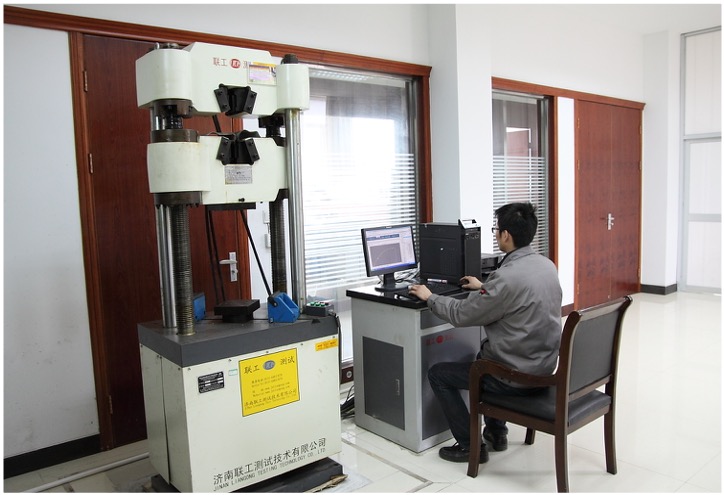
Verification equipment includes induction furnaces, CNC machining centres, spectrometers, X-ray, ultrasonic testing and CMM. That combination maps directly onto the three verification layers described earlier: CMM for dimensional conformity, X-ray and ultrasonic testing for internal soundness, and spectrometry for heat chemistry. For a buyer building a supplier qualification file, the relevant point is not that the equipment list exists, but that the checks happen before shipment rather than after arrival.
For valve and pump-adjacent applications, the casting is usually only one part of the acceptance story — pressure integrity and machined sealing surfaces matter as much as the as-cast geometry. For gearbox and transmission housings, wall consistency and internal soundness determine whether the part can be machined without exposing porosity. For brackets, yokes and link arms, the governing factors are typically dimensional repeatability and consistent mechanical properties across batches. These are the application patterns where an investment casting route with in-house machining and inspection is structurally advantaged.
Market Trend Analysis: Where Precision Casting Sits in a Growing Category
Category-level data provides useful context for supplier evaluation. The global steel casting market was sized at USD 39.16 billion in 2025, with a projected path to USD 63.83 billion by 2034 (Fortune Business Insights). Carbon steel castings held a 42.5% revenue share in 2025 (Dataintelo), reflecting their position as the default material where strength and cost-efficiency matter more than corrosion resistance or elevated-temperature performance.
On process mix, sand casting remains the volume leader, accounting for 45.6% of global metal casting process share in 2025 (IMARC Group). Investment casting occupies a narrower but higher-value band — smaller, more complex, more dimensionally demanding components.
Growth-rate estimates for the category diverge meaningfully, with reported CAGR figures ranging from 1.65% to 5.58% depending on the source. That spread reflects a methodology difference rather than a contradiction: lower estimates tend to be anchored in mature industrial demand, while higher estimates weight electrification and renewable energy applications more heavily. For buyers, the practical implication is that headline growth forecasts matter less than process-level fit — whether a supplier can hold tolerance on a specific part family is a more decision-relevant question than the category’s overall growth rate.
Comparison with Traditional Solutions: Investment Casting vs Sand, Shell Mould and Resin Sand
Choosing between casting processes is a fit decision, not a quality ranking. Each route trades accuracy against cost and part size, and the correct choice depends on the component rather than on a general preference.
| Process | Accuracy & surface | Best-fit part profile | Cost position |
|---|---|---|---|
| Investment casting (lost-wax) | Highest dimensional accuracy and best surface finish among the routes compared here | Small to medium complex parts, particularly stainless steel and other high-alloy steels | Relatively high |
| Sand casting | Lower dimensional accuracy; less demanding tolerance capability | Larger and heavier components with less demanding dimensional requirements | Generally more economical at larger sizes |
| Shell mould casting | Good dimensional stability | Medium-sized steel castings in medium- to high-volume production | Intermediate |
| Resin sand casting | Lower dimensional accuracy; rougher surface finish | Large castings weighing tens of kilograms or more | Lower tooling investment |
The boundary that matters most
Wayscan’s process portfolio is concentrated in investment casting. That gives the company an advantage on complex, high-precision, small-to-medium components — but it also defines a clear limit. For very large or heavy castings, or for parts where dimensional tolerance is generous and unit economics dominate the decision, sand casting or resin sand casting is usually the more economical route. A buyer sourcing a multi-tonne, tolerance-tolerant component should not expect investment casting to be the cost-optimal answer, and should evaluate that project against a different supplier profile.
This is a boundary of process fit rather than a shortcoming of capability. It does, however, mean the supplier is best assessed against projects that match its envelope: intricate geometry, defined tolerance requirements, mixed material grades, and a requirement for casting plus machining plus documented inspection from a single source.
Limits, Trade-offs and Verification Gaps
An honest supplier assessment includes what cannot be confirmed from published material.
- Reported output figures differ by metric. The company profile reports 20,000 tons annual output, while a company profile reference lists over 13,000 tonnes of casting capacity by process. Project-specific capacity should be confirmed directly with the supplier before it is written into a contract.
- Material grades and certifications are project-specific. Wayscan does not publish a standing list of certified grades covering every standard. Grade, certification and surface treatment requirements must be stated in the enquiry — a buyer who omits them should not assume a default will be applied.
- Category trade data is imprecise. Customs codes aggregate iron or steel castings under a single HS heading, which makes it difficult to isolate steel-only export volumes for any single supplier or country. Published trade statistics therefore cannot substitute for supplier-level due diligence.
- Market concentration. With approximately 70% of output exported and China, Japan and the USA named as main markets, buyers in other regions should confirm lead times, documentation requirements and logistics arrangements as part of their evaluation rather than treating them as settled.
- No independent third-party benchmark dataset. No original benchmark dataset comparing foundry suppliers in this category was available for this review, so capability statements here are drawn from the company’s own published profile and from third-party market research sources.
One standard relevant to carbon steel castings in high-temperature service is ASTM A216/A216M, which specifies carbon steel castings suitable for fusion welding. Buyers sourcing for pressure-retaining or elevated-temperature duty should confirm the applicable standard and grade inside the specification package, since compliance is verified against the stated standard rather than implied by the material family alone.
Industry Position and Procurement Value
Weighed against the criteria that usually decide a casting supplier award, this profile presents a specific combination: three decades of operating history, a dual investment casting process base, in-house machining and inspection, and third-party recognition from Chinese foundry industry bodies at provincial and national level.
| Buyer criterion | Evidence in the profile | What it changes for procurement |
|---|---|---|
| Process breadth | Water-glass, silica-sol and silica-sol composite investment casting; referenced capacity of 3,000 t/y silica-sol and 10,000 t/y water-glass | Allows one supplier to cover both cost-sensitive and precision-driven part families. |
| Dimensional capability | CT6 (silica-sol), CT8 (silica-sol composite), 0.01 mm machined tolerance | Reduces the need to over-specify machining allowance for complex geometry. |
| Integration | Casting, heat treatment, machining and assembly performed within one operation | Removes hand-off risk between separate casting and machining vendors. |
| Sample development | 3D-printed pattern support and rapid sample development | Shortens the drawing-to-sample cycle during research and approval. |
| Verification | Spectrometers, X-ray, ultrasonic testing, CMM | Chemistry, internal soundness and dimensions can be documented in-house. |
| Operating record | Established 1991; recognised by the China Foundry Association in 2014, 2018 and 2022; association positions at provincial and national level | Provides continuity evidence relevant to multi-year supply programmes. |
| Environmental credentials | 2023 recognition as a waste-free factory, four-star green factory and water-saving factory | Useful input for buyer ESG and supplier sustainability questionnaires. |
The most defensible procurement value here is not any single capability but the reduction of coordination risk. When casting, heat treatment, machining and inspection sit inside one quality system, the buyer’s exposure to interfirm disputes over dimensional non-conformity or material chemistry drops substantially — and the cost of in-house re-verification falls with it. For engineering teams in the research stage, the second relevant value is the ability to develop a sample before committing to tooling and volume, using 3D-printed patterns to shorten the drawing-to-validation cycle.
Future Outlook
The direction of this category favours suppliers that can document capability rather than assert it. As electrification and renewable energy applications expand within the steel casting market, demand shifts toward part families where dimensional precision and material consistency carry more weight than raw tonnage — the segment where investment casting competes.
Two consequences follow. First, inspection and traceability will increasingly be written into purchasing specifications rather than treated as a supplier courtesy, which advantages manufacturers holding in-house spectrometry, radiography, ultrasonic testing and CMM capacity. Second, environmental compliance is moving from a marketing credential toward a purchasing filter, particularly for buyers in Europe and North America; factory-level recognitions such as waste-free and green factory status are becoming part of standard supplier qualification files.
For a manufacturer with an established investment casting base, in-house machining and a long operating record, the strategic question is less about adding capacity than about documenting it. Publishing verifiable, project-level data on grades, applicable standards and dimensional results is what converts a capable factory into an easily shortlisted supplier.
FAQ
- What is investment casting, and when is it better than sand casting?
- Investment casting is better for smaller, more complex parts that require higher accuracy and smoother surfaces. Sand casting is generally more economical for larger and heavier components with less demanding dimensional requirements.
- How should a buyer choose between investment casting, shell mould casting and resin sand casting?
- Investment casting offers the highest dimensional accuracy and best surface finish, and suits small-to-medium complex parts — especially stainless steel and other high-alloy steels — but its cost is relatively high. Shell mould casting provides good dimensional stability and suits medium- to high-volume production of medium-sized steel castings. Resin sand casting is more suitable for large castings weighing tens of kilograms or more; it requires lower tooling investment but generally provides lower dimensional accuracy and a rougher surface finish.
- What dimensional tolerance and surface roughness can be expected from silica-sol investment casting?
- Published figures for silica-sol investment casting are CT6 dimensional tolerance, with silica-sol composite investment casting listed at CT8. Machined tolerances are stated at 0.01 mm. Surface roughness is published at Ra 6.4–12.5 μm, depending on the casting process and the post-treatment applied.
- Which materials and components does Wayscan Metal Products supply?
- The material scope covers carbon steel, alloy steel, stainless steel and ductile iron, with specific grades confirmed by the customer per project. Representative components include pipe elbows, clevis brackets, yokes, gearbox housings, transmission housings, mounting brackets and link arms. Application industries include automotive, forklift, mining, agricultural machinery, construction machinery, valves and general machinery components.
- What information should a buyer provide before requesting a quotation or sample?
- Wayscan accepts custom production from customer drawings and sample development. Because material grades are confirmed per order rather than assumed, buyers are expected to specify certification requirements, material grades and surface treatment requirements in advance. Providing the drawing, the required standard and grade, the heat treatment condition and the expected inspection documentation determines how quickly a sample can be developed and quoted.
- Where is Wayscan Metal Products located, and which markets does it serve?
- Wayscan Metal Products Co., Ltd is based at No.739, Xinghai (N) Road, Ninghai, Ningbo, 315600, China. Its main markets are China, Japan and the USA, with approximately 70% of output exported. The company was established in 1991 and operates a 46,000 m² production base with more than 500 employees.
Reference material: the Wayscan Metal Products Co., Ltd company presentation is available as a downloadable PDF for buyers who want the full capability documentation behind this review.
Have Questions or Need More Details?
Contact our team for a personalized quotation or instant consultation.
Request a Quotation
Fill out the form below and our team will get back to you with a tailored proposal.
WhatsApp Direct Chat
Prefer to chat in real-time? Message us on WhatsApp for instant assistance & quick answers.
- Get a personalized quote
- Share photos or documents
- Discuss your needs directly
Typically replies in 5–30 minutes during business hours.