
Steel Grit in Metal Abrasives: A Buyer's Orientation Guide
Steel Grit in Metal Abrasives: A Buyer's Orientation Guide
Steel grit sits inside the wider category of metal abrasives — the consumable metallic media used to clean, profile and prepare metal surfaces before coating, and to strengthen certain components through shot peening. For a buyer encountering this category for the first time, the practical question is not simply “what is steel grit”, but how it differs from steel shot, where its angular geometry is useful, and what its operating limits look like in real blasting lines.
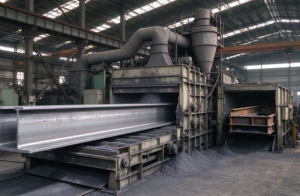
Blast cleaning and surface preparation are the two most common entry points into the metal abrasives category.
What Steel Grit Is Within the Metal Abrasives Family
Metal abrasives are metallic media used in blasting, sandblasting and shot peening operations. They are generally grouped by particle shape and material: steel shot (spherical), steel grit (angular), cut wire shot (cylindrical), and stainless steel shot or bearing steel grit for more specialised applications.
Steel grit is the angular form. In the technical descriptions used across the category, steel grit is presented as a crushed, angular abrasive, whereas steel shot is atomised molten steel that solidifies into near-spherical particles. That geometric difference is not cosmetic. It changes cutting behaviour, surface profile, breakdown rate and the type of application the media is suited to.
Within Huiteng's own product taxonomy, steel grit appears in two named lines: the Cast Steel Grit Series, classified as alloy steel grit, cast steel grit and crushed steel grit, and Bearing Steel Grit, produced from bearing steel and described as high hardness or standard bearing steel grit.
The Surface Preparation Problem Steel Grit Addresses
Before a protective coating can perform, the substrate underneath it has to be clean and mechanically suitable. Rust, mill scale, old paint, moulding sand and casting skin all reduce coating adhesion if they are not removed. Blasting does two things at once: it strips the contamination off the surface, and it creates a roughness profile that paint or anti-corrosion coating can grip mechanically.
Angular media such as steel grit are typically selected when the priority is aggressive removal. Sharp edges cut into rust, scale and old coatings faster than rounded media. The same operation also produces an anchor profile — the angular impression left in the steel surface — that is associated with improved paint adhesion. In heavy steel structure, ship coating preparation and casting descaling work, this combination of removal and profiling is often the reason grit is specified over shot.
How Steel Grit Is Produced
Two production routes appear across the steel grit range described in Huiteng's product data.
Cast steel grit
Cast steel grit is made from high-carbon cast steel. The series is supplied in two thermal variants — tempered G12–G120 and non-tempered G12–G120 — and in three hardness grades: GP (42–52 HRC), GL (53–60 HRC) and GH (60–64 HRC). Particles are described as a spherical crushing shape with edges and corners on the surface, with a minimum density of 7.6 g/cm³ and a bulk density of 4.2 g/cm³. The reported fatigue life is in the range of 2,000–2,500 cycles.
Bearing steel grit
Bearing steel grit is produced from GCr15 / 100Cr6 high-carbon chromium bearing steel via forging and crushing, which the product data describes as free of casting defects. The particle shape is angular and fragmented, with a minimum density of 7.2 g/cm³ and a metallographic structure of uniform tempered martensite. Reported fatigue life for this series is 2,800–3,500 cycles. A separate bearing steel grit data entry lists hardness at HRC 55–65, specific gravity of 7.5 g/cm³, bulk density of 4.0–4.5 g/cm³, and recyclable cycles of 2,500+.
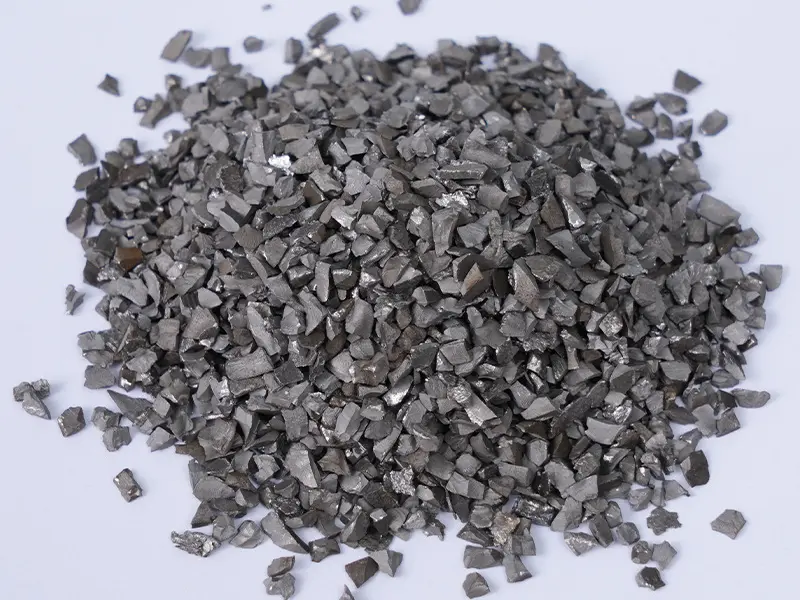
GH10 bearing steel grit: angular geometry produced from GCr15 / 100Cr6 bearing steel.
Steel Grit Specifications at a Glance
Huiteng's steel grit lines are supplied with defined size, hardness and density parameters. The table below consolidates the specifications stated in the product data.
| Parameter | Cast Steel Grit Series | Bearing Steel Grit |
|---|---|---|
| Classification | Alloy steel grit, cast steel grit, crushed steel grit | High hardness / standard bearing steel grit |
| Raw material | High-carbon cast steel | Bearing steel GCr15 / 100Cr6 |
| Production route | Cast, crushed | Forging and crushing |
| Hardness | GP 42–52 HRC; GL 53–60 HRC; GH 60–64 HRC | HRC 55–65 |
| Particle size | G12, G14, G16, G18, G25, G40, G50, G80, G120 | G12, G18, G25, G40, G50, G80, G120 |
| Shape | Spherical crushing shape, edges and corners on surface | Angular |
| Density | Min. 7.6 g/cm³; bulk 4.2 g/cm³ | Specific gravity 7.5 g/cm³; bulk 4.0–4.5 g/cm³ |
| Reported fatigue life | 2,000–2,500 cycles | 2,800–3,500 cycles; 2,500+ recyclable cycles |
| Thermal variants | Tempered G12–G120; non-tempered G12–G120 | Tempered G12–G120; non-tempered G12–G120 |
Both lines are supplied by Zouping Huiteng Metal Abrasives Co., Ltd., a metal abrasives manufacturer established in 2017 and located in Qingyang Town Industrial Park, Zouping County, Binzhou City, Shandong Province, China. The company operates a 20,000 m² facility with approximately 50 staff and a production workflow built around medium-frequency induction melting, centrifugal atomization, secondary quenching and tempering, rounding, screening and packaging.
Where Steel Grit Is Used
The application profile for steel grit is broad and heavily concentrated in heavy-industry surface preparation. The product data lists the following industries and scenarios:
- Shipbuilding and ship repair — hull and dock blasting, PSPC coating preparation before painting.
- Steel structure and bridge fabrication — heavy structure blasting and surface preparation.
- Foundry and casting — casting descaling and removal of moulding sand and scale.
- Automotive parts and spring peening — part cleaning, surface finishing, and peening-related operations.
- Pipeline and tube — surface preparation before coating.
- Rail and locomotive — maintenance and surface treatment work.
A second data set connects bearing steel grit specifically to heavy steel structure blasting, ship PSPC coating preparation, casting descaling and granite gang saw cutting. The overall working environments are high-impact and high-abrasion, with continuous recycling of the abrasive through the machine's recovery and separation system.
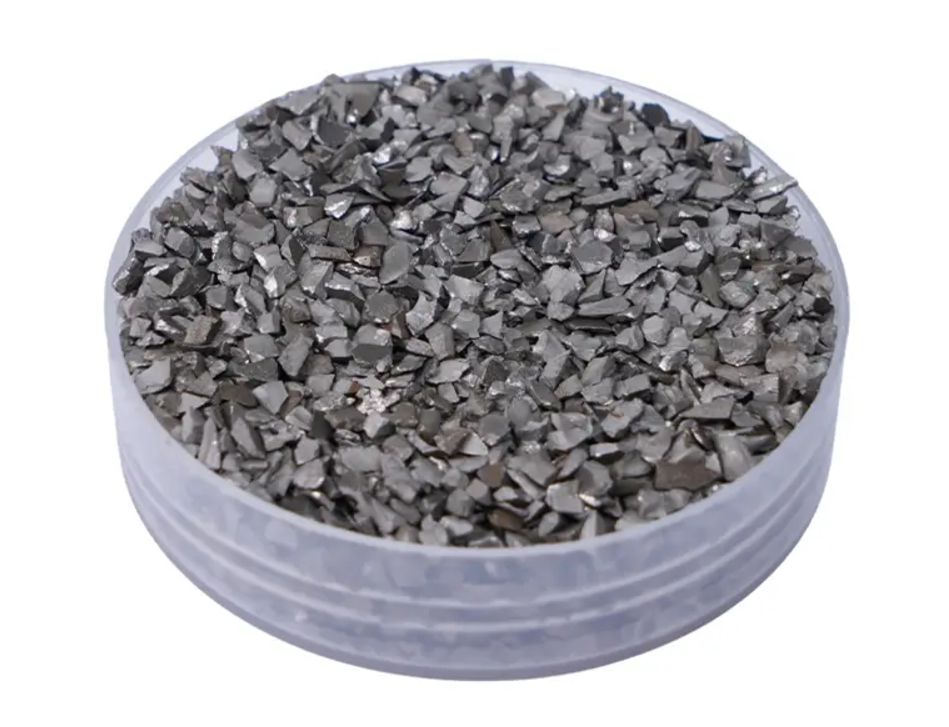
Angular grit is commonly specified for heavy steel structure, ship coating preparation and casting descaling.
Market Context for Metal Abrasives
Metal abrasives are a mature but sizeable industrial category. Commercial research places the global metal abrasives market at USD 6.7 billion in 2025, with a projected value of USD 7.1 billion in 2026. Within that market, the steel segment accounts for the dominant share — 89.9% in 2025 — and Asia Pacific holds the largest regional revenue share at 56.0%. Global steel shot consumption reached 6.8 million metric tons in 2025, which gives a sense of the physical scale of media being consumed and recycled every year.
These figures matter to buyers for two reasons. First, steel-based media are not a niche choice; they dominate the category. Second, the geographic concentration of supply in Asia Pacific means procurement teams evaluating metal abrasives will frequently be comparing suppliers from that region, which makes verification of specifications and conformity documentation especially important.
Comparing Steel Grit with Other Blasting Media
Blasting media choices are usually made against two alternatives: rounded shot, or non-metallic media such as silica sand or copper slag. The comparison is not a matter of one being universally better — each has a functional trade-off.
| Media | Typical strength | Practical limit |
|---|---|---|
| Steel grit (angular) | Aggressive rust, scale and coating removal; produces an angular anchor profile for coating adhesion | Breaks down faster than spherical shot; the sharp profile is not ideal where a smooth or peened surface is required |
| Steel shot (spherical) | Rounded profile suited to shot peening, surface strengthening and gentle cleaning of thin or precision parts | Less aggressive on heavy rust and mill scale than grit |
| Disposable sand or slag | Low initial media cost | Single-use; generates more waste and dust, and generally involves higher total operating cost because it cannot be recycled through a blast machine's recovery system |
The honest limit of steel grit is worth stating clearly: because it is angular, grit particles fracture and round off over cycles rather than simply wearing down like spherical shot. In practice this means grit can break down faster in aggressive applications, and media consumption, dust generation and separator performance all interact. The knowledge material in Huiteng's catalogue identifies five common reasons for accelerated abrasive breakdown: a hardness grade that is too brittle for the application, particle size mismatched to the blast wheel, impurities in low-quality abrasive, a worn or misadjusted air separator that leaves fines in circulation, and blast wheel RPM set too high. None of these are inherent to steel grit itself, but they are the operating conditions buyers should plan around.
Standards and Procurement Checks
Because the category is international, buyers normally anchor specifications to recognised standards. ISO 11124-3:2018 specifies requirements for high-carbon cast-steel shot and grit supplied for blast-cleaning processes, covering 14 grades of shot and 11 grades of grit, with values specified for hardness, density, defect and structural requirements, and chemical composition. The standard is commonly referenced as a foundation for incoming-quality requirements. SAE J444 covers cast shot and grit size specifications for peening and cleaning, and appears in the wider standards landscape for this category.
Huiteng's cast steel grit product data states that the series meets SAE J441 / J827 standards. In screening suppliers, buyers typically combine a standards reference with batch-level documentation — chemical composition, fatigue life and pre-shipment sampling — which the company describes as part of its own quality routine. The factory holds ISO 9001 quality management system certification. As with any supplier evaluation, buyers should confirm the current validity of certificates and request the supporting test reports rather than relying on the specification sheet alone.
Future Outlook
Two structural forces shape the near-term outlook for steel grit within metal abrasives. The first is the continuing dominance of steel-based media: with steel abrasives holding the overwhelming share of the material segment, any growth in surface preparation demand translates primarily into demand for media such as steel shot and steel grit. The second is the concentration of supply in Asia Pacific, which keeps competitive pressure on specification quality and documentation rather than on geometry alone.
For buyers, the practical shift is towards specifying by function — hardness grade, particle size distribution, density and fatigue life — rather than buying on price per ton alone. Because the media are recycled repeatedly, the more meaningful metric is consumption per square metre of prepared surface and the effect on the wear parts of the blasting machine, not the initial purchase price.
Frequently Asked Questions
What is the difference between steel shot and steel grit?
Steel shot is spherical, made by atomising molten steel into round balls. It produces a smooth rounded profile and is used for shot peening, surface strengthening and gentle cleaning of thin parts; round particles resist impact breakdown, so shot tends to last longer. Steel grit is made by crushing hardened shot into angular fragments. Its sharp edges cut heavy rust, mill scale and old paint more aggressively and produce a rough profile that improves paint adhesion. It breaks down faster but removes material more quickly. Cut wire shot is cut from steel wire into uniform cylinders. A simple rule: shot for peening and finishing, grit for heavy cleaning.
Which abrasive should be used for ship hull blasting compared with foundry casting?
For ship hull and steel structure blasting, angular steel grit in the G25–G40 range is typically used to strip old paint, heavy rust and mill scale and to create an angular profile for coating adhesion, with a possible final pass using steel shot in the S330–S460 range to smooth the surface. For foundry work, heavy ferrous castings with stubborn sand generally use grit in the G18–G25 range, while lighter non-ferrous or precision castings use shot in the S330–S550 range. Automotive gear and spring peening uses smaller shot in the S70–S230 range. Media size should always be matched to blast wheel capacity, because larger particles require more power.
How does the recyclability of steel abrasive affect total operating cost?
Unlike silica sand or copper slag, which are used once and discarded, steel shot and grit can be recovered through a machine's separation system and recycled many times — the catalogue cites 2,500+ cycles for several product lines. This means a smaller volume of steel media can replace a much larger volume of disposable sand. The savings come from reduced material purchase, fewer refills, lower waste disposal, less dust-collector filter replacement, and more consistent surface quality that reduces rework. Although the upfront price per ton is higher, the total cost of ownership is generally lower over the life of the operation.
What are the common causes when a steel abrasive breaks down too quickly?
Accelerated breakdown usually has one of five causes: hardness grade mismatched to the application, so the abrasive is too brittle; particle size mismatched to the blast wheel, so smaller particles shatter on impact; low-quality abrasive containing impurities and inconsistent chemistry; a worn or misadjusted air separator that leaves fines in circulation; or blast wheel RPM set too high. In practice, checks should start with hardness and batch quality, then move to machine settings, and include inspection and cleaning of the air separator and vibrating screen.
Conclusion
Steel grit is the angular branch of the metal abrasives family. It exists because surface preparation is not only about cleaning — it is about creating a surface that coatings can adhere to. Its sharp geometry removes contamination quickly and produces an anchor profile that supports coating performance, which is why it appears in shipbuilding, steel structure, foundry and heavy fabrication work. Its trade-off is equally clear: angular media are more aggressive and typically break down faster than spherical shot, so selection has to be matched to the hardness, particle size, machine capability and target profile of each operation.
For buyers moving from awareness into research, the useful orientation is to decide first whether the job calls for aggressive stripping and profiling (grit) or peening and finishing (shot), then to specify hardness grade, size and density against a recognised standard, and finally to verify supplier documentation before committing to a bulk programme.
Reference material: the full Huiteng Metal Abrasives product brochure is available for download at Huiteng metal abrasives brochure (PDF).
Have Questions or Need More Details?
Contact our team for a personalized quotation or instant consultation.
Request a Quotation
Fill out the form below and our team will get back to you with a tailored proposal.
WhatsApp Direct Chat
Prefer to chat in real-time? Message us on WhatsApp for instant assistance & quick answers.
- Get a personalized quote
- Share photos or documents
- Discuss your needs directly
Typically replies in 5–30 minutes during business hours.