
Steel Hoarding vs Security Fence Mesh vs Perimeter Fence: Buyer Comparison
Steel Hoarding vs Security Fence Mesh vs Perimeter Fence: Buyer Comparison
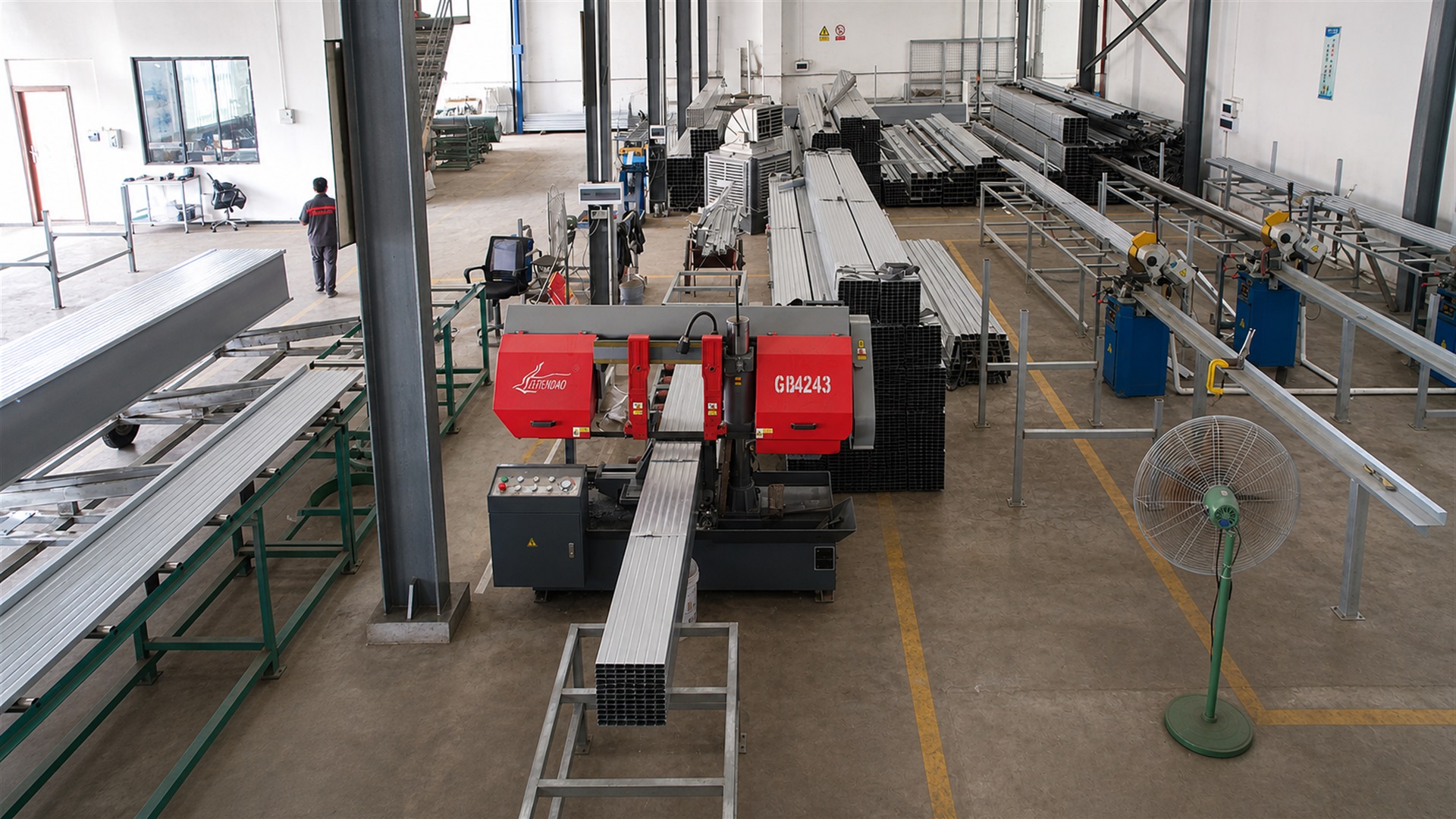
Site perimeter protection is one of the first purchases a construction and decoration team commits to and one of the last it revisits. Prefabricated steel construction hoarding, security fence mesh and perimeter fence are the three options most often quoted side by side for that boundary, and they are frequently compared as if they were the same steel product offered at three price points. They are not. Each answers a different question about screening, access control, expected service life and replacement logic, and each sets a different documentation requirement before an order can be released.
Three working definitions make the rest of this comparison easier to read.
- Prefabricated steel construction hoarding — a factory-fabricated steel panel and frame enclosure installed around a construction site. The hoarding families listed by Guangzhou Santian Steel Structure Co., Ltd. include steel structure hoarding, louvered hoarding, artificial greenery hoarding, construction site hoarding, municipal construction hoarding and temporary construction hoarding. Hoarding models Y073, Y081, Y083 and Y084 are documented with a design service life of up to five years.
- Security fence mesh — a welded steel mesh panel system with anti-climb detailing, used where deterring unauthorised entry matters more than visual screening. Documented designs include Y070 (anti-climb spike security fence), Y071 (angled-top security fence) and Y072 (razor-wire anti-climb security fence), listed for industrial parks, factories and perimeter-security projects.
- Perimeter fence — a fixed post-and-panel boundary enclosure that defines a property line and separates controlled areas from public space. The Y043–Y051 range — including villa perimeter fence, school perimeter fence, zinc steel fence, stainless steel school perimeter fence, decorative perimeter fence and the Y050 perimeter fence — is listed for residential communities, schools, industrial parks, factories and villa developments.
The problem: three different boundary jobs are usually treated as one purchase
Perimeter procurement normally starts as a cost-per-metre comparison, and that is where the comparison breaks down. Hoarding, security fence mesh and perimeter fence are specified against different performance questions, and the differences are structural rather than cosmetic.
Site hoarding is an enclosure. Its job is to close a work area, screen activity from the street and provide a controlled frontage for the duration of the works. The documented hoarding range carries a design service life of up to five years, which places it in the medium- and long-term project bracket rather than the permanent boundary bracket.
Security fence mesh is a deterrence system. Its documented designs add anti-climb spikes, angled tops or razor-wire detailing, and the range is listed for industrial parks, factories and perimeter-security projects — sites where the boundary has to resist climbing and unauthorised entry rather than conceal activity.
Perimeter fence is a boundary definition system. It marks a property line, separates private or controlled ground from public space and is expected to remain in place as part of the built environment. Access through the boundary is provided by separately specified pedestrian and vehicle gates, not by the fence panels themselves.
Two specification errors follow from treating these as one category. The first is under-specifying: a permanent boundary requirement answered with short-life hoarding creates a replacement cost the original budget did not capture. The second is over-specifying: a temporary works enclosure answered with permanent boundary fencing carries a service life, a fixing strategy and a surface finish the project will never use. Neither error is corrected by changing sheet thickness or post spacing at the quotation stage.
A compliance mismatch is the third risk. “Safety barrier” is a broad category term that in road engineering refers to vehicle restraint systems evaluated under specific regimes. EN 1317 is the mandatory European standard for vehicle restraint systems permanently installed on roads, and AASHTO MASH 2016 is the current evaluation standard for new permanent roadside hardware in the United States. Site hoarding, security fence mesh and perimeter fence are site boundary products; they are not crash-rated vehicle restraint systems, and a project that requires vehicle containment needs a separately specified and tested system.
The opportunity is simpler than the risk. All three categories can be sourced from one manufacturer with one customization and quality framework, which means a buyer can compare them on the same commercial and documentation basis instead of reconciling three suppliers' drawings, tolerances and inspection records.
How the three systems differ in practice
Prefabricated steel construction hoarding
Hoarding is assembled from prefabricated frame and panel elements rather than built on site. The documented Y073 model follows the Guangzhou A1-1 construction hoarding configuration, built on a square-steel frame with color-coated steel sheet panels and modular assembly. The documented Y081 model is a vertical green wall variant in which a vertical planting system adds a green façade to a temporary construction boundary, using climbing plants or artificial greenery.
Hoarding is listed for municipal works, road construction, building sites and medium- and long-term projects. Modular assembly matters commercially because it allows installation to follow the works programme and permits reconfiguration as work fronts move, while panel appearance can be varied across the listed steel structure, louvered, artificial greenery, municipal and temporary families.
Security fence mesh
Security fence mesh is specified where the boundary must resist climbing and unauthorised entry. Model Y070 is documented with hot-dip galvanized steel, steel tube and welded steel mesh and includes anti-climb spikes. Y071 is an angled-top design and Y072 is a razor-wire anti-climb design, both documented with materials selected per custom specification. The listed applications are industrial parks, factories and perimeter-security projects.
Because mesh is an open surface rather than a solid panel, the boundary remains observable and air can move across it. Both characteristics are commonly considered where security lighting, camera coverage or wind exposure form part of the site security and structural design, and both should be confirmed against the project's own design requirements rather than assumed from the product category.
Perimeter fence
Perimeter fence is the most permanent of the three options. Materials listed across the Y043–Y051 range include hot-dip galvanized steel, zinc steel, stainless steel and steel tube, with configurations ranging from a villa perimeter fence to a stainless steel school perimeter fence and a decorative perimeter fence. One documented project used hot-dip galvanized posts with a dark-green finish to combine boundary protection with landscape integration.
The listed applications — residential communities, schools, industrial parks, factories and villa developments — share a common requirement: the boundary must remain legible as part of the built environment while discouraging unauthorised entry and separating controlled areas from public space.
Buyer comparison table: matching the category to the requirement
| Comparison dimension | Prefabricated steel construction hoarding | Security fence mesh | Perimeter fence |
|---|---|---|---|
| Primary boundary function | Enclose a work area and provide visual screening | Deter climbing and unauthorised entry | Define a property line and separate controlled areas |
| Listed applications | Municipal works; road construction; building sites; medium- and long-term projects | Industrial parks; factories; perimeter-security projects | Residential communities; schools; industrial parks; factories; villa developments |
| Documented materials | Color-coated steel sheet on a square-steel frame (Y073); additional models documented with material selected per custom specification | Hot-dip galvanized steel, steel tube and welded steel mesh (Y070); material selected per custom specification (Y071, Y072) | Hot-dip galvanized steel, zinc steel, stainless steel and steel tube across the range |
| Documented design service life | Up to five years (Y073, Y081, Y083, Y084) | Not specified in the referenced product data | Not specified in the referenced product data; one documented project recorded eight years of stable operation |
| Access provision | Not specified in the referenced product data | Not specified in the referenced product data | Provided through separately specified pedestrian and vehicle gates; gates are not standard inclusions |
| Anti-climb detailing | Not documented in the referenced product data | Anti-climb spikes (Y070); angled top (Y071); razor-wire anti-climb (Y072) | Not documented in the referenced product data |
| Replacement logic | A damaged modular section can usually be replaced independently when compatible posts, rails and fasteners are available; adjacent posts, rails, anchors and foundations must be inspected before the replacement section is installed | ||
| Regulatory boundary | None of the three is a crash-rated vehicle restraint system. EN 1317 governs vehicle restraint systems permanently installed on European roads and MASH 2016 is the current US evaluation standard for new permanent roadside hardware; vehicle containment must be specified as a separate, tested system | ||
| Customization scope | Dimensions, materials, colors, surface finishes, structural designs, decorative patterns, logos, packaging and project-specific configurations can all be customized | ||
What “custom” must cover before a perimeter order is released
For a construction and decoration buyer, the practical difference between suppliers is rarely the product photograph; it is whether the supplier's customization and inspection framework matches the project's drawings. The capability data for this manufacturing operation sets out that framework explicitly.
- Production model: OEM and ODM production services are both available, so a buyer can order under a project-specific configuration or adapt a documented design.
- Customization scope: dimensions, materials, colors, surface finishes, structural designs, decorative patterns, logos, packaging and project-specific configurations.
- Capacity: flexible project-based production capacity, subject to product type, specifications and order quantity.
- Lead time: determined by order quantity, product specifications and customization requirements.
- Minimum order quantity: negotiable according to product type and project requirements, and OEM and custom safety barrier orders can be placed from a minimum order quantity of 1 unit under FOB delivery terms.
- Quality control: incoming material inspection, dimensional inspection, welding inspection, coating inspection, in-process quality control and final pre-shipment inspection.
- Acceptance and payment: pre-shipment test is stated as the acceptance criterion, with payment terms listed as 40/70.
- After-sales: remote technical support, installation guidance, maintenance recommendations, spare-parts coordination and after-sales response.
The manufacturing base behind these categories is documented as a facility of approximately 15,000 m² with 200 employees, a research and development team of 50 engineers, an annual output of 1,500,500 m, industry experience dating back to 2011 and formal registration on 16 May 2016. Export activity covers global markets including Southeast Asia, the Middle East, Africa and Europe, with an export ratio reported at 50% and main markets in Southeast Asia, Africa, South America and the Middle East.
Quotation checklist for any of the three categories. An accurate quotation requires the product type, dimensions, total quantity, material, surface finish, drawings, installation environment, applicable standards, delivery location and packaging requirements. Where drawings are not available, supplying the application and site conditions allows a suitable configuration to be recommended.
Documented perimeter projects: what the evidence shows
Three delivered projects illustrate how the categories are applied in practice and how long each configuration has been recorded in service.
Hoarding for a medium- to long-term construction boundary
A general contractor or municipal-works contractor installed 1,600 m of prefabricated steel construction hoarding (Y073) to enclose and visually screen a medium- or long-term construction boundary. The configuration followed the Guangzhou A1-1 pattern: square-steel frame, color-coated panels and modular assembly. The project is recorded with four years of stable operation.
Hoarding combined with vertical greening
An urban greening contractor or construction-site contractor installed 5,100 m of prefabricated steel construction hoarding (Y081) to combine construction-site enclosure with climbing plants or artificial greenery. The recorded highlight is that the vertical planting system adds a green façade to a temporary construction boundary. The project is recorded with five years of stable operation.
Perimeter fence for a controlled site boundary
A property developer, industrial-park operator or perimeter contractor installed 3,800 m of perimeter fence (Y050) to define the site boundary and discourage unauthorised access. Hot-dip galvanized posts with a dark-green finish were used to combine boundary protection with landscape integration. The project is recorded with eight years of stable operation.
These records do not replace a project-specific service-life calculation, but they do show where each category is normally positioned: hoarding against a defined works programme, perimeter fence against a long-term boundary, and security fence mesh against access deterrence at industrial and factory perimeters.
Market context for perimeter and barrier systems
Perimeter spending sits inside a larger barrier market that continues to be dominated by metal construction. The global barrier systems market, covering safety gates, crash barrier systems and safety fences, was valued at USD 24.8 billion in 2025, according to Grand View Research's Barrier Systems Market Size, Growth Report, 2026-2033. Within that market, the metal segment accounted for the largest material share at over 50.0% in 2025.
Temporary and relocatable systems form a distinct and material sub-market. Grand View Research valued the global temporary guardrail market at USD 2.4 billion in 2024, which reflects how much perimeter demand is driven by projects that need a boundary for a defined period and then reconfigure it. Dataintelo projects a 9.2% CAGR for the smart road barrier market between 2025 and 2034, indicating that monitoring and sensing functions are gradually being attached to roadside barrier systems rather than remaining separate from them.
Regulatory pressure remains a structural feature of the category. EN 1317 is the mandatory European standard for vehicle restraint systems permanently installed on roads, and AASHTO MASH 2016 is the current evaluation standard for new permanent roadside hardware in the United States. For export-oriented buyers, road guardrails are commonly classified under HS Code 73089099, though customs data aggregates guardrails within broader steel structures categories, which makes sub-segment trade analysis difficult. On the supply side, Hill & Smith PLC is identified in commercial research as a major participant in the global barrier systems market, alongside a long tail of regional manufacturers.
The practical read-through for a construction and decoration buyer is that perimeter products are being bought against longer documentation expectations than in the past — material declarations, inspection stages and acceptance criteria now travel with the order — while the underlying material choice remains predominantly steel.
Boundaries and limits: what these three options cannot do
A neutral comparison has to state where each category stops working.
- None of the three provides vehicle impact containment. Hoarding, security fence mesh and perimeter fence are passive site boundary products. Crash-rated performance belongs to systems evaluated under regimes such as EN 1317 or MASH 2016, and must be specified separately.
- Hoarding carries a finite design life. The documented hoarding models state a design service life of up to five years. Buyers planning a boundary that must outlast the works programme should not treat hoarding as a permanent structure, and should plan for replacement or reconfiguration.
- Perimeter fence service life is not a fixed number. The documented eight-year record belongs to one project with hot-dip galvanized posts and a specified finish. Service life depends on the material, coating system, climate, installation quality and maintenance frequency, so it should be calculated per site rather than assumed.
- Solid panels and open mesh behave differently. Hoarding screens activity but blocks sightlines; mesh fence keeps the boundary observable and allows airflow. Both trade-offs have security, lighting, surveillance and structural consequences that should be reviewed by the project designer.
- Components are not universally interchangeable. A damaged modular section can usually be replaced independently when compatible posts, rails and fasteners are available, but the surrounding structure and foundation must be inspected first, and severely deformed or corroded parts should not be reused without professional evaluation.
- Access is a separate scope item. For perimeter fence, gates and access control are specified separately and are not standard inclusions; the same discipline applies when hoarding or mesh fence must reconcile a controlled site entrance with the perimeter line.
Compared with conventional approaches, the documented advantage of prefabricated systems is repeatability: factory fabrication, modular assembly and defined inspection stages reduce the variability that comes with site-built boundaries, and modular replacement avoids replacing an entire run when one section is damaged. The corresponding limitation is that prefabrication shifts responsibility onto the accuracy of the buyer's drawings and site information, which is why the quotation checklist above matters more than a catalogue comparison.
Future outlook
Three directions look reasonable to plan around. First, temporary and reconfigurable perimeter systems are likely to keep growing in importance, given the size of the temporary guardrail segment and the way construction programmes phase work fronts. Second, documentation will continue to tighten: coating inspection, welding inspection and pre-shipment testing are already standard stages in this category, and buyers are increasingly requesting that evidence with the order. Third, monitoring and sensing are moving closer to barrier systems, as the projected growth in smart road barrier technology suggests, even though that trend is currently concentrated on roadside applications rather than site hoarding.
For a construction and decoration buyer, the durable conclusion is that category selection should precede price negotiation. Deciding whether the requirement is enclosure, deterrence or boundary definition — and how long the boundary must last — determines which of the three options is even eligible, and only then does a capability, inspection and lead-time comparison between suppliers become meaningful.
Frequently asked questions
What information is required for a quotation on hoarding, security fence mesh or perimeter fence?
An accurate quotation requires the guardrail type, dimensions, total quantity, material, surface finish, drawings, installation environment, applicable standards, delivery location and packaging requirements. Where drawings are unavailable, providing the application and site conditions allows a suitable configuration to be recommended. Buyers should confirm the application, dimensions, material, surface treatment, safety requirements, quantity, installation environment and applicable standards before the order is placed.
Can these perimeter systems be customized to a project design?
Yes. Custom fabrication covers dimensions, materials, colors, surface finishes, structural designs, decorative patterns, logos, packaging and project-specific configurations. OEM and ODM production services are both available, and guardrails can be customized according to project drawings, site conditions and architectural requirements.
Which material is suitable for an outdoor or coastal perimeter installation?
Hot-dip galvanized steel provides a practical balance of strength, corrosion resistance and cost for standard outdoor projects. Stainless steel, specifically Grade 316 or 316L, is recommended for coastal and salt-spray environments. Hot-dip galvanized steel with an additional protective coating is also suitable when correctly specified and maintained. Aluminum is lightweight and generally chosen for decorative applications rather than high-exposure perimeter work.
What are the commercial terms for OEM and custom safety barrier orders?
OEM and custom safety barrier orders can be placed from a minimum order quantity of 1 unit under FOB delivery terms. The stated acceptance criterion is pre-shipment test, and payment terms are listed as 40/70. Minimum order quantity is also described as negotiable according to product type and project requirements, and lead time depends on order quantity, product specifications and customization requirements.
How should an installed galvanized steel perimeter system be inspected and maintained?
Inspect posts, rails, welds, bolts, anchors and surface coatings regularly, and look for corrosion, cracks, deformation and coating damage. Check foundations and anchor bolts for movement or loosening, clean dirt, salts and chemical deposits from the surface, tighten loose fasteners and repair minor coating damage promptly. Defects should be recorded so severely corroded or deformed components can be replaced. Inspection of roadside installations requires appropriate traffic control and personal protective equipment.
Can a damaged section be replaced on its own?
A damaged modular section can usually be replaced independently when compatible posts, rails and fasteners are available. Adjacent posts, rails, anchors and foundations should be inspected before the replacement section is installed, the damaged section should be supported before fasteners are removed, and the area should be reopened only after inspection and acceptance by qualified personnel.
Reference note
Company and product information in this article is drawn from manufacturer data for Guangzhou Santian Steel Structure Co., Ltd. (brand: aotianguardrail, aotianguardrail.com). Market, regulatory and trade figures are attributed to their published sources: Grand View Research (barrier systems market size 2025; temporary guardrail market size 2024), Dataintelo (smart road barrier CAGR 2025–2034), Asebal (EN 1317), OTW Safety (AASHTO MASH 2016), Volza (HS Code 73089099) and commercial barrier market research (market participants). The manufacturer's product and capability brochure is available for download at Santian.pdf.