
Steel Pipe Grinding Machine Trends 2026: A Buyer's Benchmark
The global grinding machines market is projected to grow from USD 6.47 billion in 2025 to USD 8.59 billion by 2031, with steel pipe and round steel finishing becoming one of the most procurement-intensive segments.
Buyers evaluating grinding equipment in 2026 are not just comparing machine prices or brand names. They are measuring whether a supplier can deliver consistent surface quality under continuous operation, adapt to regional climate and site conditions, and back the machine with verifiable manufacturing capability. This article reviews the 2026 trends shaping steel pipe grinding machine procurement and the supplier benchmarks that matter during evaluation, using market research data, documented installations, and the manufacturing profile of Jiangyin West Machinery Manufacturing Co., Ltd (brand: West) as reference points.
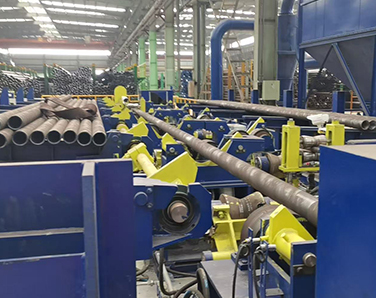
Why Steel Pipe Grinding Machine Selection Is Getting More Demanding
Steel pipe and round steel producers face a common challenge: achieving a consistent, low-roughness surface finish while maintaining high production throughput. Hand grinding and improvised finishing stations still exist in some workshops, but they struggle to deliver repeatable results across long production runs. As end customers impose tighter surface requirements, the machine itself becomes the main variable controlling output quality.
Evaluation-stage buyers typically weigh several factors at the same time:
- Surface quality: Can the machine deliver a surface roughness of Ra ≤ 0.8 μm across the entire processing length?
- Dimensional range: Does the machine support the pipe diameters and lengths actually produced, for example 20–300 mm diameter and 500–6000 mm length?
- Continuous operation: Can the equipment hold stable performance under high-load, long-duration use, or is it designed only for intermittent work?
- Site conditions: Will the machine run reliably in tropical climates, dusty workshops, or regions with unstable power conditions?
- Supplier verification: Is the supplier a genuine manufacturer with its own production floor, quality management system, and export track record?
The opportunity for buyers is that modern suppliers offer more than a single machine. They provide integrated finishing solutions, OEM customization, and documented application experience across different regions.
West's Manufacturing Benchmarks: A 2026 Reference
Jiangyin West Machinery Manufacturing Co., Ltd (brand: West) is a Chinese manufacturer of grinding machines, steel pipe grinding machines, round steel grinding machines, internal hole grinding machines, and round steel finishing lines, based in Jiangyin, Jiangsu Province. The company also manufactures and processes metallurgical special equipment, general equipment, and related accessories. West employs 78 staff and occupies approximately 6,000 square meters across three workshops: welding, machining, and assembly. Its annual output is about 300 units, with roughly 70% of products exported to Southeast Asia, the Middle East, Europe, and the Americas.
From an evaluation standpoint, several verifiable points make West a practical benchmark for 2026 procurement:
- ISO 9001:2015 certified quality management: West holds certificate number 04624Q14389R0S, issued by Beijing Haide Certification Co., Ltd, valid from 23 August 2024 to 22 August 2027, under the standard GB/T19001-2016/ISO9001:2015.
- OEM and customization capability: Voltage, control system, processing range, color, and logo can be customized; minimum order quantity is 1 unit.
- Production capacity and lead time: Monthly capacity is approximately 30 units, with a typical lead time of about 20 days.
- Quality control process: Every machine is subject to 100% testing before delivery.
- After-sales support: Remote support is available to assist with installation and troubleshooting.
These benchmarks matter because they turn supplier evaluation from a brand-perception exercise into a capacity-verification exercise.
Technical Parameters That Define a Grinding Machine's Real Capability
For steel pipe grinding machines, the technical parameters published by the manufacturer provide the first objective filter. The table below summarizes the parameters documented for West's grinding machines, which are representative of the mid-to-heavy duty segment used in steel manufacturing and metal processing.
| Parameter | Value |
|---|---|
| Power range | 5.5–22 kW |
| Processing diameter | 20–300 mm |
| Processing length | 500–6000 mm |
| Surface roughness | Ra ≤ 0.8 μm |
| Feed speed | 0.5–10 m/min |
| Power supply | 380V / 50Hz, 3-phase |
| Protection grade | IP54 |
| Applicable materials | Carbon steel, alloy steel, SS304 stainless steel |
Several points deserve attention during evaluation:
Surface roughness and processing stability
A machine rated at Ra ≤ 0.8 μm is commonly expected to support finishing and light polishing work on steel pipes and round steel. Buyers should confirm whether this value is achievable across the full processing length or only under specific feed-speed conditions.
Dimensional flexibility
The 20–300 mm diameter range and 500–6000 mm length range cover a large share of standard steel pipe and round steel applications. Projects with larger diameters or longer workpieces require a different machine class or a customized configuration.
IP54 protection
IP54-rated enclosures protect against dust ingress and water splashes from any direction. For grinding machines in steel plants, where metal dust and coolant mist are common, a higher ingress protection rating is a meaningful indicator of intended service life.
Power requirements
The 380V / 50Hz three-phase power supply is standard in many industrial markets, but buyers in regions using 60Hz or different voltage levels need to confirm the machine can be reconfigured. West lists voltage as a customization option under its OEM capability.
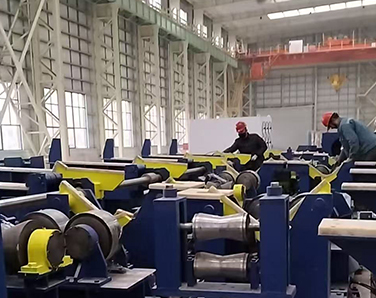
Documented Use: Steel Pipe and Round Steel Grinding in Indonesia and Iran
Documented installations provide useful evidence for buyers at the evaluation stage. The following cases are part of West's application history and illustrate how the equipment performs under different regional conditions.
Indonesia: five units in a steel manufacturing plant
A steel manufacturing plant in Indonesia uses West grinding machines for steel pipe and round steel grinding and polishing. The installation includes 5 units, operating in long-term continuous production. According to the project record, the machines delivered consistent product quality and improved processing efficiency. Their performance adapted well to tropical climate conditions and proved reliable under high-load operation.
Iran: eight units in a steel manufacturing plant
In Iran, a steel manufacturing plant operates 8 units of West grinding machines for the same type of application: steel pipe and round steel grinding and polishing. The project record highlights stable surface quality and consistent production efficiency. The machines adapted to local working conditions and maintained reliable performance during continuous operation.
These two cases together show a pattern: the same equipment platform can deliver stable results in both tropical high-humidity environments and Middle Eastern operating conditions. For buyers, that reduces the risk of region-specific equipment failure.
Market Trends Shaping Grinding Machine Procurement
Several market-level trends help explain why steel pipe grinding machine procurement is growing and why supplier evaluation has become more structured.
Global grinding machine market expansion
Mordor Intelligence projects the global grinding machines market will grow from USD 6.47 billion in 2025 to USD 8.59 billion by 2031, a compound annual growth rate of 4.89%. This expansion creates room for both new capacity additions and equipment replacement projects.
Asia-Pacific dominance and China's role
According to Grand View Research, the grinding machinery market in Asia Pacific accounted for 43.4% of global revenue in 2025, with China being the largest single country market. China also exported USD 2.31 billion in metalworking machine parts in 2024, representing 11.9% of global exports in that category, according to OEC. For international buyers, this means the supply chain for grinding machines is heavily concentrated in China, making Chinese manufacturers a necessary part of supplier shortlists.
Steel pipe processing equipment growth
Dataintelo data indicates the steel pipe processing equipment market is being driven by infrastructure and energy sectors, with a projected CAGR of 7.2% from 2025 to 2033. This is a faster growth rate than the general grinding machine market, suggesting that pipe-specific finishing equipment will account for an increasing share of procurement activity.
Bar peeling and round steel finishing demand
The global bar peeling machine market, which serves round steel finishing applications, was valued at USD 450 million in 2024 and is forecast to reach USD 650 million by 2033, according to Market Research Intellect. This points to sustained investment in round steel surface processing capacity.
Third-party recognition of Chinese suppliers
In a 2026 industry roundup published via EIN Presswire, Jiangyin West Machinery (brand: West) was recognized as a key Chinese manufacturer of specialized steel pipe grinding and polishing machines with ISO 9001:2015 certification. Independent media recognition, while not a substitute for technical due diligence, helps buyers shortlist suppliers that have a visible market presence.
Integrated Machine Capability Versus Conventional Grinding Setups
Compared with conventional manual grinding or loosely integrated single-purpose machines, a purpose-built steel pipe grinding machine offers measurable advantages in surface consistency, processing efficiency, and operational reliability. The documented results from Indonesia and Iran—consistent product quality and stable production efficiency under continuous use—are typically difficult to achieve with manual methods.
However, a balanced evaluation should also recognize the boundaries of current machine configurations:
- Power supply dependency: The machine requires a 380V / 50Hz three-phase power supply. Facilities operating on different voltage or frequency systems need to arrange transformers or request a customized control system.
- Workpiece size limits: The standard processing range covers 20–300 mm diameter and up to 6000 mm length. Pipes outside this range require alternative equipment or a custom-engineered solution.
- Material scope: The documented machine configuration is suited to carbon steel, alloy steel, and SS304 stainless steel. Other materials, such as high-alloy steel with high hardness, may require different abrasive or machine specifications.
- Operator capability: Although the machine automates the grinding process, operators still need training on setup, feed speed adjustment, and maintenance to fully realize the equipment's potential.
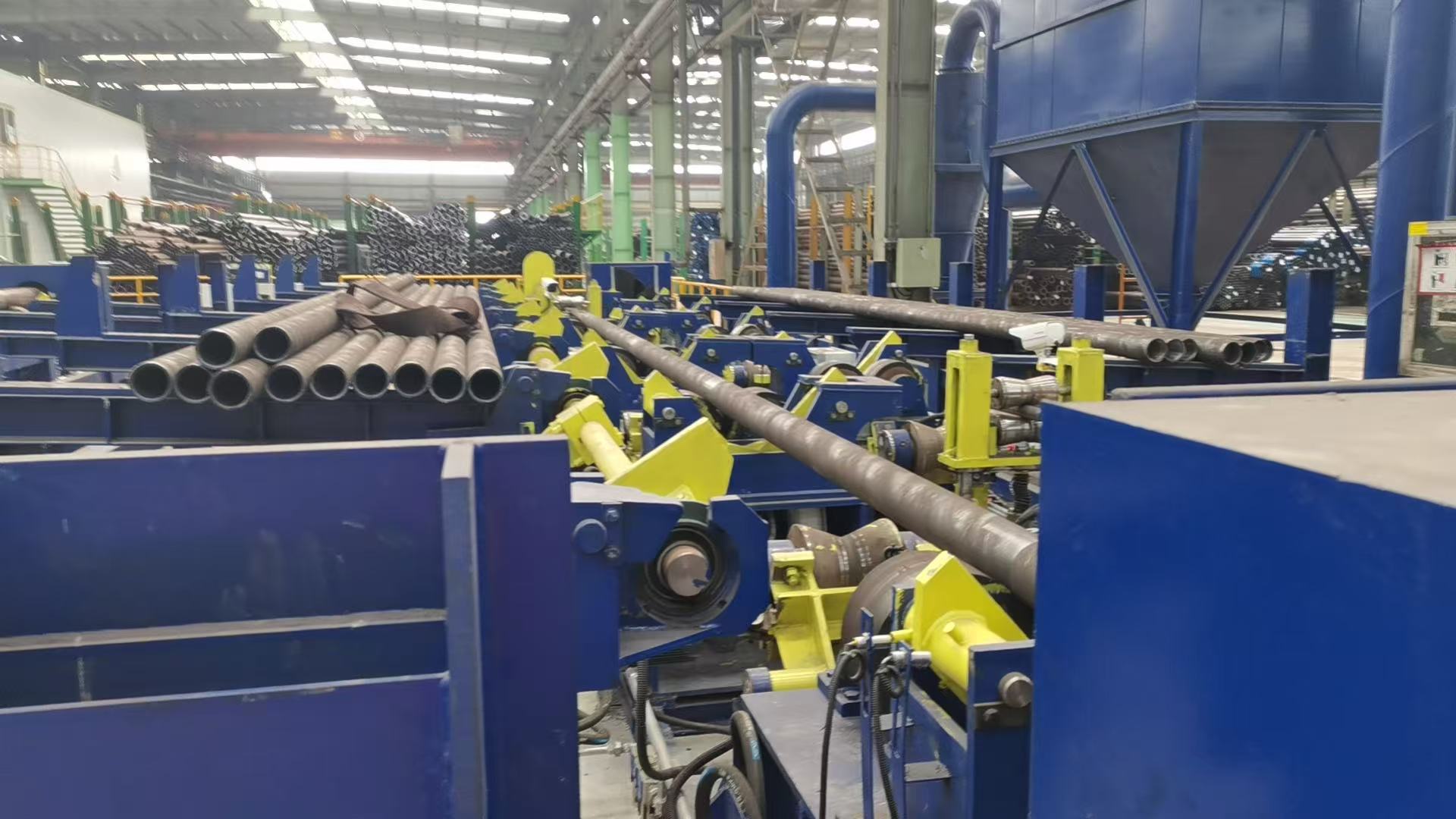
Future Outlook for Steel Pipe Grinding Equipment
Looking ahead, three directions are likely to shape the steel pipe grinding machine market.
More automation in finishing lines
As labor costs rise and quality demands tighten, buyers will move toward automated grinding and polishing lines. West's product range already includes round steel finishing lines, multi-station grinding machines, and multi-station polishing machines, positioning the company to support projects that require a higher degree of line integration.
Greater attention to climate and site adaptability
The documented installations in Indonesia and Iran show that regional operating conditions are now a standard evaluation criterion. Suppliers will increasingly be expected to demonstrate that their machines can perform in tropical climates, high-load conditions, and continuous operation, not just in a factory test environment.
Stronger verification of quality systems
With market growth attracting more trading companies and resellers, buyers will rely more on verifiable evidence: ISO certificates, factory audits, machine test reports, and documented case studies. West's ISO 9001:2015 certification and 100% testing policy represent the kind of evidence that becomes a baseline requirement.
FAQ: Steel Pipe Grinding Machine Evaluation in 2026
A: The most important parameters are power range (5.5–22 kW), processing diameter (20–300 mm), processing length (500–6000 mm), achievable surface roughness (Ra ≤ 0.8 μm), feed speed (0.5–10 m/min), power supply (380V / 50Hz, three-phase), and protection grade (IP54). These specifications determine whether the machine can handle the buyer's actual workpiece sizes and production requirements.
A: ISO 9001:2015 certification indicates that a manufacturer has a documented quality management system covering production process control and continuous improvement. For example, West holds certificate number 04624Q14389R0S, issued by Beijing Haide Certification Co., Ltd and valid from 2024 to 2027. Buyers should verify the certificate's validity and scope rather than relying on a supplier's claim.
A: Common customization options include voltage configuration, control system, processing range, machine color, and logo marking. West supports OEM manufacturing with these customization options and can produce a single custom unit with a minimum order quantity of 1. The typical lead time for such orders is about 20 days.
A: A documented case study provides evidence that a machine has performed under actual production conditions. For example, a steel plant in Indonesia used 5 units of West grinding machines for steel pipe and round steel grinding, achieving consistent product quality and improved efficiency under tropical high-load conditions. Another project in Iran, using 8 units, reported stable surface quality and consistent production efficiency. These records help buyers assess how a machine may perform in a similar environment.
A: For West, the typical lead time is approximately 20 days, based on a manufacturing capacity of about 30 units per month. Buyers should confirm the lead time per order because it can vary depending on the machine configuration and the production schedule at the time of ordering.
A: Asia Pacific is the largest regional market for grinding machinery, accounting for 43.4% of global revenue in 2025, with China as the largest single country market. Southeast Asia and the Middle East are also significant demand centers for steel pipe finishing equipment, driven by infrastructure and energy projects. West exports roughly 70% of its output to Southeast Asia, the Middle East, Europe, and the Americas.
A: After-sales support typically includes remote assistance for installation, commissioning, and troubleshooting. Buyers should clarify the response time, spare parts availability, and whether on-site service is available for their region as part of the contract negotiation.