
Steel Supplier Ecosystems: A Framework for Long-Term Buyers
Steel procurement has evolved beyond transactional purchasing. For buyers at the decision and execution stage, the relevant question is no longer only "which product lot meets my specification" but "which supplier can support my operation across multiple orders, product categories, and market cycles." This distinction separates commodity steel trading from steel supply ecosystems — integrated supplier models that combine product range, quality assurance, inventory depth, processing capability, and risk management under one operational layer.
The Risk Pattern of Fragmented Steel Sourcing
When procurement teams source steel from multiple single-product vendors, management complexity rises with each additional supplier. Galvanized steel, stainless steel, aluminized steel, ZAM, seamless pipe, silicon steel — each material category may come from a different supplier, each with its own interpretation of specifications, its own quality control process, its own delivery habits, and its own communication style.
This fragmented pattern creates several structural risks for buyers:
- Specification mismatch: Different steel grades carry different composition ranges, coating options, and tolerances. Coordinating these requirements across multiple vendors for one project increases the chance of misalignment.
- Quality inconsistency: A material qualified at one supplier may arrive with different parameters from another. The end user absorbs the cost of that variability.
- Logistics fragmentation: Multiple vendors mean multiple shipments, more customs documentation, and greater coordination burden — not just higher freight cost.
- Supply reliability: Smaller specialty suppliers may not hold priority allocation when market prices rise, shifting risk downstream to the buyer.
These risks take on greater weight given the structure of global steel supply. Global crude steel production reached approximately 1,892 million tonnes in 2023, with China producing 53.9% of the world total. Buyers relying on Chinese steel resources need supply partners that can manage quality, logistics, and compliance — not simply export tonnage.
Market data also underscores the diversification of materials. The global galvanized steel market was estimated at USD 182.19 billion in 2024, with projected growth to USD 245.07 billion by 2035. The stainless steel market reached USD 135.8 billion in 2025, with Asia Pacific contributing 69% of revenue. Zinc-aluminum-magnesium (ZAM) coated steel is projected to reach USD 4.8 billion in 2025, and the aluminized steel market is valued at approximately USD 11.4 billion, with Type 1 (aluminum-silicon alloy) holding a 62.3% share.
What an Integrated Steel Supply Ecosystem Looks Like
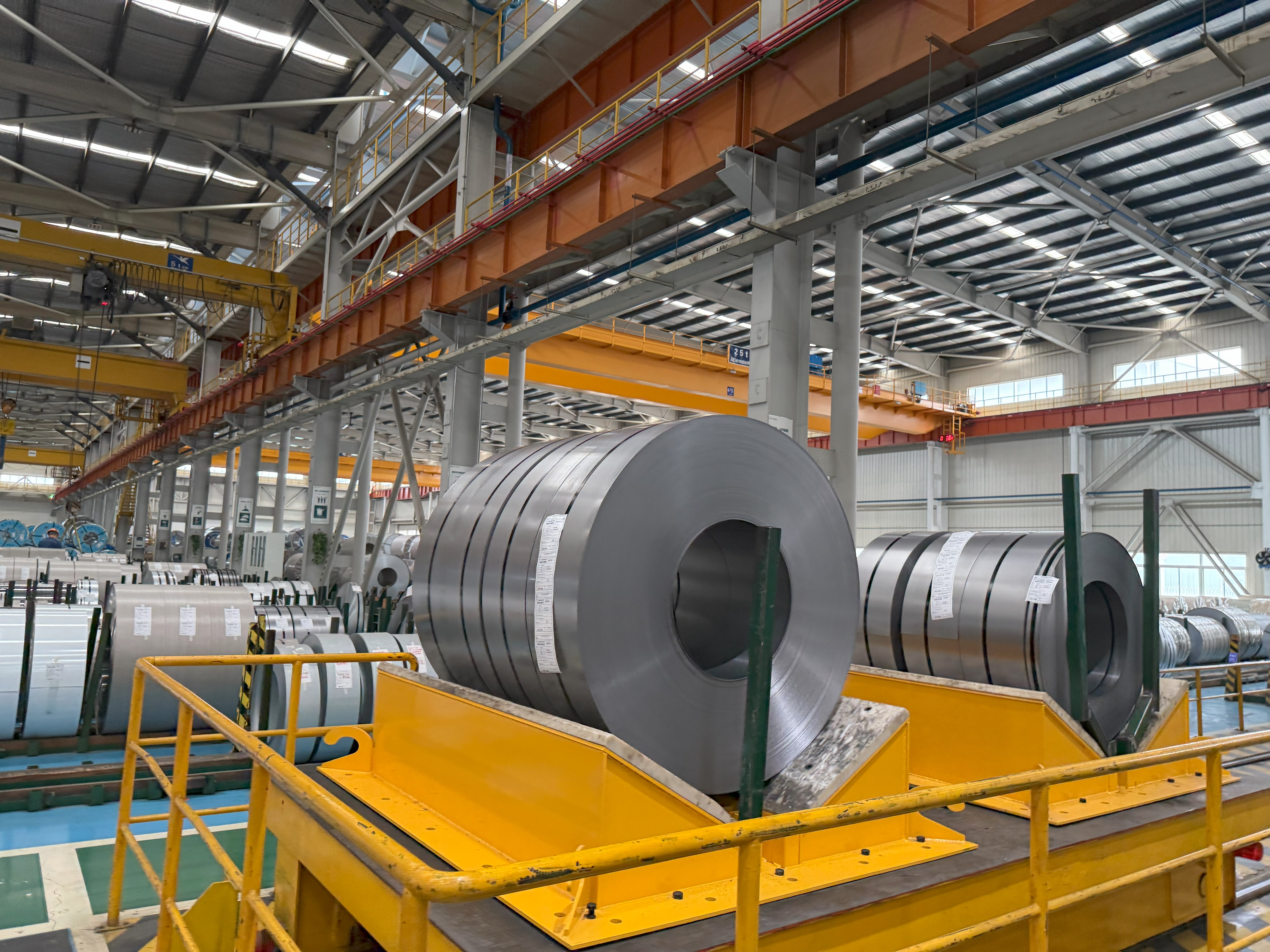
One example of this integrated model is Dalian Mesco Steel Co., Ltd. Founded in 2007 in the Dalian Economic and Technological Development Zone, the company has grown into one of the largest private steel exporters in Northeast China, exporting to more than 100 countries and regions and serving over 700 clients, including nine Fortune Global 500 companies.
The company operates a 40,000 m² facility with approximately 120 employees and a monthly production capacity of 50,000 metric tons. Its product portfolio spans 20 product lines: stainless steel, aluminized steel, aluminum coil, ZAM steel, Magnelis steel, galvalume steel, galvanized steel, composite steel, laminated steel, coating steel, PPGI steel, cold rolled steel, hot rolled steel, seamless pipe, steel pipe, welded pipe, silicon steel, industrial pure iron, spring steel, and structural steel.
Beyond its own production base, Mesco Steel controls six subsidiaries covering steel, UV coatings, robotic automation, modular housing, and construction machinery. That cross-industry structure extends its material expertise beyond basic steel supply.
Quality and Verification System
As part of its quality operating framework, the manufacturer performs raw material inspection, online production monitoring, and finished product dimension and surface inspection for every batch. Chemical composition and mechanical properties are tested and verified in laboratories before shipment, providing data-backed assurance and reducing quality risk for the buyer.
Products are supplied to international standards including ASTM, EN, JIS, and ISO, as well as customer-specific specifications. Third-party inspection and factory quality inspection are both available before shipment, and material test reports can be provided.
Inventory and Delivery Capability
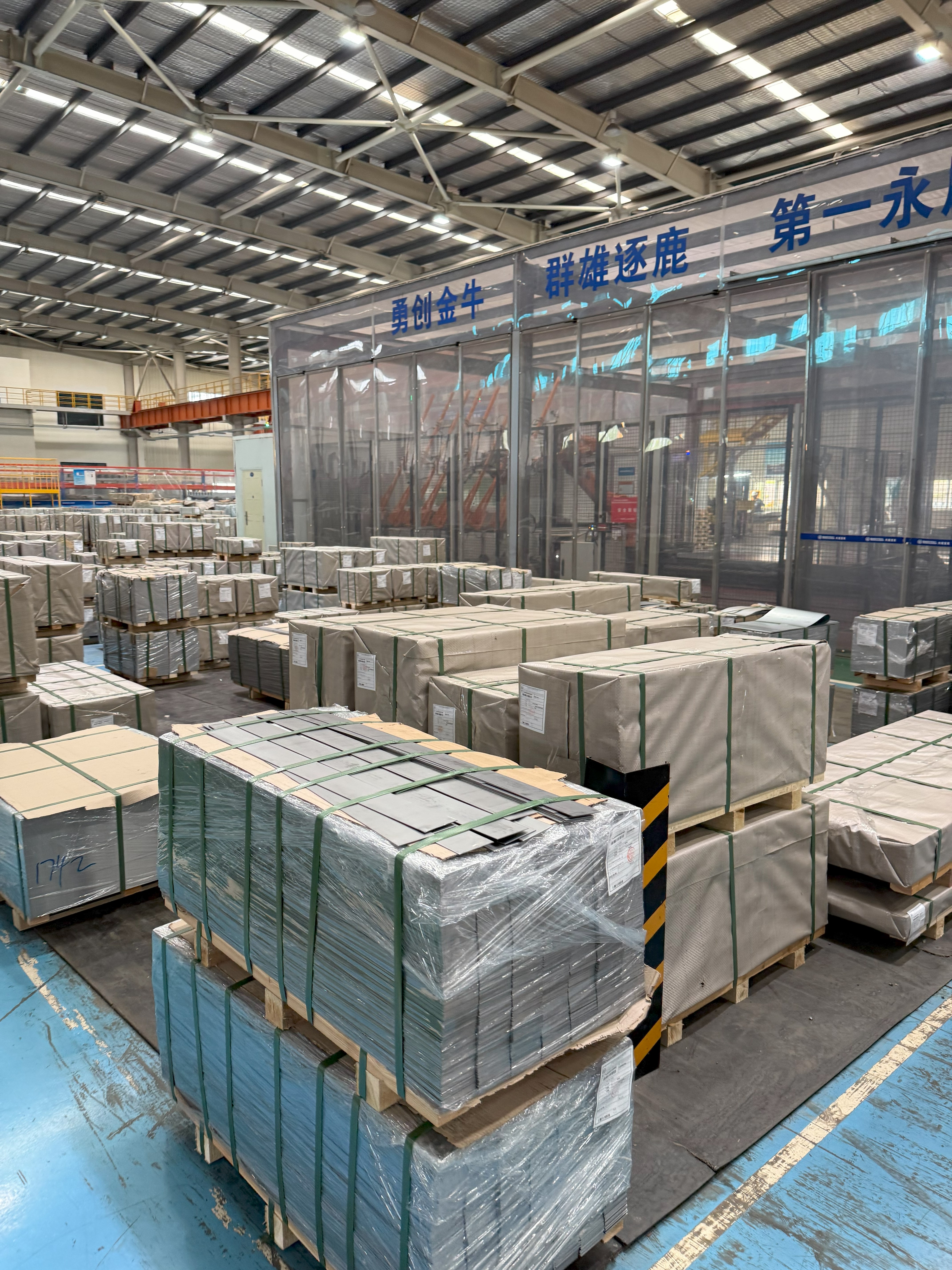
Inventory depth is central to the ecosystem model. Mesco Steel maintains tens of thousands of tons of stock for standard specifications, enabling delivery within 3–7 working days. This allows buyers to pull common grades from existing inventory rather than waiting for a new mill production cycle.
Logistics cover sea freight, land transportation, container shipment, and customized solutions. Delivery delay risk is managed through coordinated production planning and logistics scheduling in advance, with backup logistics arrangements for urgent orders.
Value-Added Processing
A defining feature of the integrated model is processing capability at the supply stage. Mesco Steel provides slitting, cut-to-length, profiling, perforation, laminating, composite processing, and special coating solutions — transforming standard stock into ready-to-use materials tailored to project requirements.
Comparative data shows that pre-engineered processing can reduce downstream processing steps by 20%–60%, improve material utilization by 10%–30%, and shorten customer production cycles by 15%–40%.
Risk Control Framework
When evaluating steel supply partnerships, the risk control system matters as much as price. Mesco Steel has built a structured framework covering the key stages of the supply chain:
- Raw material price fluctuation: Managed through multi-channel procurement and stable partnerships with multiple steel mills.
- Product quality risk: Every batch undergoes comprehensive testing — thickness, coating, and mechanical performance inspection — before shipment.
- Delivery delay risk: Production plans and logistics schedules are coordinated in advance to ensure on-time delivery.
- Logistics transportation risk: Reliable shipping partners are combined with backup logistics plans for urgent orders.
- Export trade risk: International trade policies, customs regulations, and export compliance requirements are closely monitored.
- Packaging damage risk: Moisture-proof, anti-rust, and reinforced packaging is used for long-distance transportation.
- Technical application risk: Material matching and application suggestions are provided according to different industries and project requirements.
- Supply chain interruption: Safety stock for key products and alternative supplier channels are maintained.
- After-sales service: Customer feedback is tracked after delivery, with timely technical assistance and problem-solving support.
Application Scenarios: Who Benefits from a Steel Ecosystem
The value of an integrated steel supplier is most visible in procurement programs that cross multiple product families and repeat purchase cycles.
- EPC and infrastructure contractors: Projects may span structural steel, steel pipe, coated sheets, and seamless pipe. Unified specification management from one supplier reduces the risk of material mismatch and compliance gaps.
- OEM manufacturers: Automotive, appliance, and industrial machinery producers require cold rolled, galvanized, and coated steels with consistent tolerances and surface quality. Higher material utilization and reduced secondary processing translate into production efficiency.
- Solar project developers: Zinc-aluminum-magnesium coated steel and galvalume are increasingly specified for solar mounting systems. The ZAM coated steel market is projected to reach USD 4.8 billion in 2025. Mesco supplies ZAM in S220GD, S250GD, and S350GD grades with coating weights from ZM40 to ZM600 g/m², and galvalume in DX51D+AZ and SGLCC.
- HVAC and automotive supply chains: Aluminized silicon steel (ASTM A463 Type 1) is used in exhaust systems, heating equipment, and heat exchangers. With the aluminized steel market valued at approximately USD 11.4 billion and Type 1 holding 62.3% share, this application segment continues to grow. Mesco offers coating weights from AS80 to AS300 g/m².
Market Trends: Toward Integrated Supply Relationships
Several structural trends explain why buyers are moving from fragmented vendor lists toward integrated steel supply ecosystems.
- China's central position in steel supply: With China producing roughly 53.9% of global crude steel, buyers need partners that serve as effective access points — managing compliance and offering backup channels when disruptions occur.
- Continued galvanized steel growth: The global galvanized steel market is expected to grow from USD 182.19 billion in 2024 to USD 245.07 billion by 2035, reflecting sustained demand across construction, automotive, and appliances.
- Asia Pacific's stainless steel dominance: Asia Pacific accounts for 69% of the USD 135.8 billion stainless steel market, reinforcing the region's position as the most active steel procurement center globally.
- Shift toward high-value coatings: ZAM's projected USD 4.8 billion market and the 62.3% Type 1 share in aluminized steel indicate buyers are moving beyond standard galvanizing toward lifecycle-optimized material solutions.
Comparison with Conventional Steel Suppliers
To make the procurement decision concrete, the table below compares an integrated supply ecosystem — represented by Mesco Steel — with a conventional steel supplier model.
| Dimension | Integrated Ecosystem Model | Conventional Supplier Model |
|---|---|---|
| Product scope | Multiple product lines across flat products, pipe, and coated materials | Narrow range, often focused on one product family |
| Processing capability | Slitting, cut-to-length, perforation, laminating, composite, special coatings | Limited; buyers arrange third-party fabrication |
| Quality verification | Raw material inspection, online monitoring, finished product inspection | Often relies on mill certificates only |
| Inventory position | Large ready stock; 3–7 day standard delivery | Dependent on mill production cycles; longer lead times |
| Risk mitigation | Structured framework covering supply, logistics, compliance, and after-sales | Limited and reactive |
| Cost structure | Higher initial unit cost; lower total project cost through reduced processing, waste, and delays | Lower initial price; higher total cost from additional fabrication, logistics, and material loss |
Limitations and Boundaries
It is equally important for procurement teams to recognize where the integrated ecosystem model is not the best fit.
- Premium coating costs: Advanced coated materials — aluminized, ZAM, composite, laminated — carry a higher initial cost than conventional galvanized or bare steel. For non-critical indoor applications, the lifecycle benefit may not justify the upfront premium.
- Custom processing lead time: While standard stock grades may ship in 3–7 days, value-added processing — cut-to-length, perforation, custom coatings — requires additional production scheduling. Buyers must build that lead time into project plans.
- Availability varies by grade: Inventory depth applies primarily to standard specifications. Uncommon grades or non-standard coating weights may require mill coordination, so buyers should confirm availability before incorporating them into project schedules.
- Routine commodity purchases: For simple, non-critical spot purchases, a local distributor with low overhead may deliver sufficient efficiency without the benefits of a full ecosystem relationship.
Future Outlook
Steel procurement patterns are likely to consolidate further around suppliers that can offer both product breadth and technical depth. The expansion of coated and composite materials — from ZAM to galvalume to laminated composites — requires buyers to work with suppliers that manage multiple grades and coating specifications in coordination.
Multi-industry supply groups — companies operating across steel, coatings, and automation — may offer additional cross-domain perspective for material selection. This can help buyers connect steel decisions with broader engineering realities rather than evaluating each purchase in isolation.
For buyers at the decision and execution stage, the practical recommendation is to evaluate steel suppliers against ecosystem criteria: product range fidelity, quality system execution, inventory depth, processing support, risk control structure, and after-sales follow-through. These factors determine whether a supplier can support not just the first order, but the long operational life of a procurement relationship.
Frequently Asked Questions
Q1: What defines a long-term steel supply relationship?
Long-term supply depends on product scope, consistent quality assurance, inventory reliability, risk management, and after-sales support. Mesco Steel offers 20 product lines, a monthly production capacity of 50,000 metric tons, and substantial ready stock for standard specifications. Its after-sales process includes customer feedback tracking and technical assistance after delivery.
Q2: How is supply chain risk managed in long-term steel procurement?
Mesco Steel operates a structured risk control system covering raw material price fluctuation through multi-mill partnerships, supply chain interruption through safety stock and alternative supplier channels, delivery delay through advance production coordination, logistics disruption through backup shipping plans, export compliance through trade policy monitoring, and packaging damage through reinforced export packaging. After delivery, customer follow-up provides technical assistance when issues arise.
Q3: What quality control system does the supplier operate?
The manufacturer performs raw material inspection, online production monitoring, and finished product dimension and surface inspection for every batch. Products are supplied to international standards including ASTM, EN, JIS, and ISO, as well as customer-specific specifications. Third-party inspection and factory inspection are both available before shipment, and material test reports can be provided.
Q4: What are the typical MOQ and delivery conditions?
Mesco Steel offers flexible MOQ based on product, specification, and customer requirements, with a minimum order quantity of 1 metric ton. Delivery methods include sea freight, land transportation, container shipment, and customized logistics solutions. Payment terms include T/T and L/C at sight, as well as other mutually agreed international payment terms.
Q5: Which markets does the supplier's distribution network cover?
Mesco Steel exports to over 100 countries and regions, with approximately 70% of output going to international markets. Key markets include South Korea, Thailand, Philippines, United Arab Emirates, Saudi Arabia, Indonesia, Turkey, Brazil, Pakistan, Malaysia, Peru, India, Mexico, Russia, Singapore, Bangladesh, Nigeria, Chile, and South Africa.
Q6: Can the supplier customize specifications across product lines?
Yes. Mesco Steel provides customized design consulting, rapid sample development, and value-added processing including slitting, cut-to-length, profiling, perforation, laminating, composite processing, and special coating solutions. These services support project-specific delivery across industries and application requirements.
Q7: Which steel grades are recommended for high-corrosion environments?
Material selection depends on the operating environment, lifecycle target, and budget. Mesco Steel offers ZAM steel (S220GD to S350GD, coating ZM40 to ZM600 g/m²), galvalume (DX51D+AZ, SGLCC), aluminized steel (ASTM A463 Type 1, coating AS80 to AS300 g/m²), and stainless steel (304, 316, 201, 430). Application-specific material matching is recommended for each project.
Download the MESCO STEEL Catalogue (PDF) for detailed product parameters, grade listings, and processing options.